
Ivan Sizonenko
Biography
Ivan Sizonenko was born in Paris, France on September 1960. He has lived in Geneva, Switzerland, since December 1969.
In 1983, he obtained a master’s degree in Physics at the Swiss Federal Institute of Technology located in Lausanne, Switzerland, and, in 1993, a bachelor degree in Science History and Philosophy at the University of Geneva.
After a 15-year practice in art photography, he started painting in 1994 as he felt the need for gesture, for a physical relationship with matter, the desire for more personal colors, real or virtual, the playing on the parameters and structure of images, such as composition, colors and materials.
He also felt the need to depict the synesthetic images that come to his mind when he listens to music, the need of harmony, rhythm, and balance.
This language is painting :
Harmony is driven by the golden section, Φ≈1,618, as it is naturally inscribed in nature and human environment. It is geometrical harmony, balance of the internal forces of living beings.
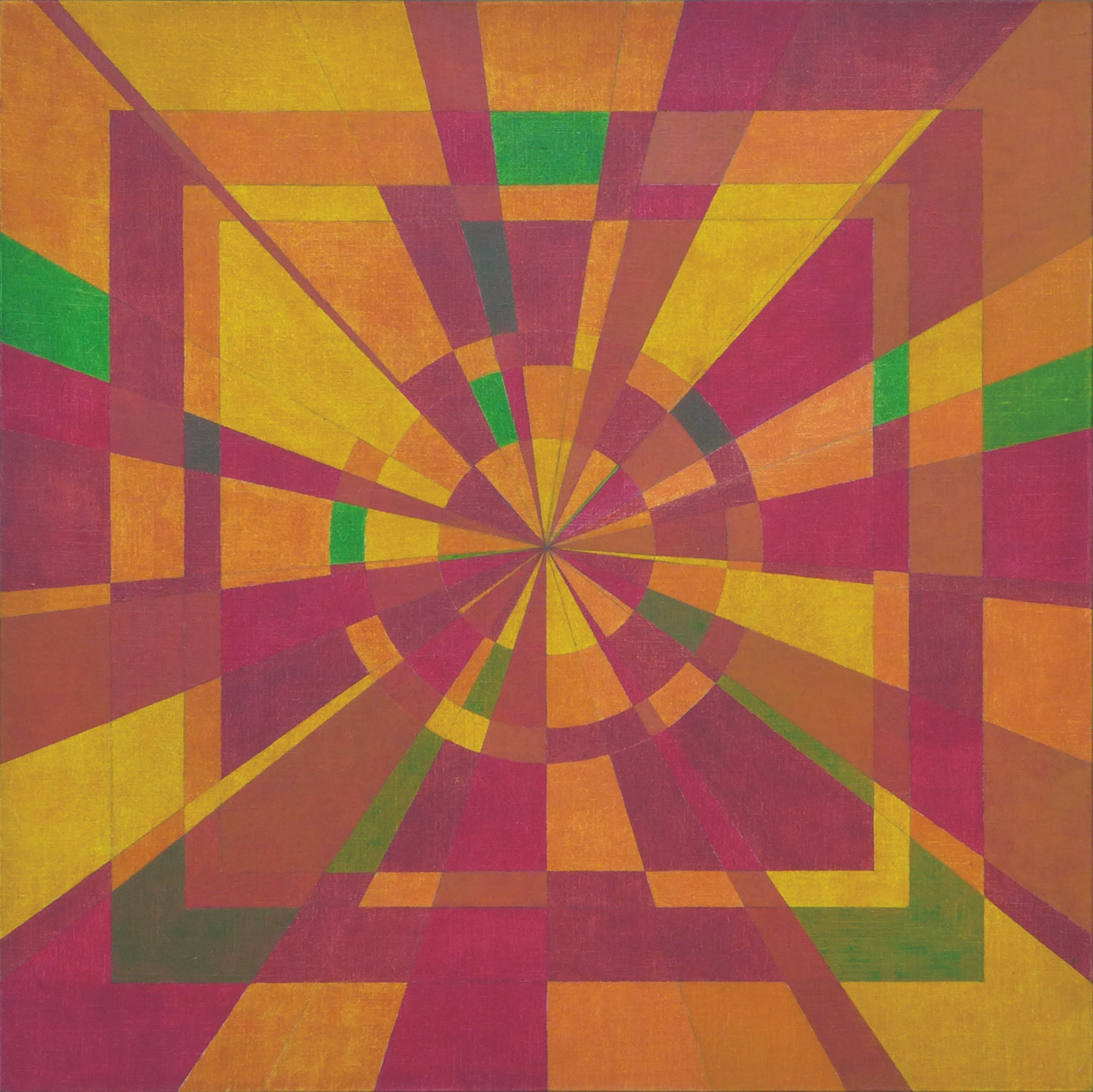
Harmony is also expressed through the Mandala paintings. Mandalas are Tibetan prayer pictures dedicated to meditation, introspection, discovery and maintenance of inner harmony.
Rhythm is given through the use of numbers from the Fibonacci sequence, 1, 1, 2, 3, 5, 8, 13, 21…, sequence linked to the golden section.
Balance is in the use of three or four “basic” transparent colors. When layered one over the other, they allow light to play through the linseed oil. The colors then blend harmoniously. The linseed oil adds depth as light passes through the paint. That is the magic of oil painting.
He has exhibited his work in Geneva, Switzerland, New-York, USA, Montreal, Canada, Paris, Tokyo, Osaka, Japan, France, Knokke-Le-Zout, Belgium…
Artist Statement
Ivan Sizonenko has been painting since September 1994, driven by a need for color, for composition and to depict the synesthetic images that come to his mind when he listens to music: harmony, rhythm, and balance.
The question has been:
how to render music pictorial or painting musical?
A music of rhythms and notes, a painting of shapes and colors.
Harmony is driven by the golden section, Φ≈1,618, as it is naturally inscribed in nature and human environment. It is geometrical harmony, equilibrium, balance of the internal forces of living beings.
For snails, it's their shell, Euler’s spiral, they have to enlarge as they grow. It is the form that requires the least amount of material and, therefore, the least energy to build.
For sunflowers or trees, it is the best geometry to capture light.
In humans, this refers to the relationship between height and the distance from the navel to the ground, as well as the proportions between the lengths of the phalanges, forearms and hands, limbs, and parts of limbs. This proportion is thus perceived by the human brain as harmonious, since it is standard for the species. It was called the “divine proportion” or “golden section” in ancient Greece because, when a line segment is divided according to the golden ratio, this proportion repeats itself infinitely, as in the golden rectangle.
Harmony is also expressed through the Mandala paintings.
Mandalas are Tibetan prayer pictures dedicated to meditation, introspection, discovery and maintenance of inner harmony.
They are composed according to the rules of serial painting and painted in a spiral rotation, clockwise (dextrogyre) or in the opposite direction (levogyre), from the outside to the center (centripetal) or from the center to the outside (centrifugal), hence the words “dextropetal”, “dextrofugal”, “levopetal” and “levofugal”.
Most are drawn and painted counterclockwise, that is, in a left-handed direction, which corresponds to the natural direction of rotation in physics and mathematics.
They are painted from the outside toward the center to symbolize introversion and the search for inner balance, and from the center outward to find balance and harmony with one's environment.
Rhythm comes with the use of numbers from the Fibonacci sequence,1, 1, 2, 3, 5, 8, 13, 21…, sequence linked to the golden section.
In this sequence, a number is the sum of the two numbers that precede it, starting with 1 and 1. The further along the sequence you go, the more the ratio between a given number and its predecessor, 1/1=1, 2/1=2, 3/2=1,5, 5/3=1,666, 8/5=1,6, 13/8=1,625, 21/13=1,6154, approaches the golden ratio 1,618. The number are used for geometric structures and for color rhythms.
Balance is in the use of three or four “basic” transparent colors. When layered, they allow light to play through the linseed oil. The colors then blend harmoniously. The linseed oil adds depth as light passes through the paint: that is the magic of oil painting.
In this way, “Serial paintings” are the result of pictorial, geometric and arithmetical rules based on the golden ratio, and color combinations or permutations based on the Fibonacci sequence.
They come under the heading of concrete art, Konstructiv Kunst.
Born in Paris on September 23, 1960, he has lived in Geneva since December 1969.
He graduated from the Swiss Federal Institute of Technology in Lausanne in 1983 with a degree in engineering-physics, and from the University of Geneva in 1993 with a degree in science history and philosophy.
After a 15-year practice in art photography, he felt the need for more in-depth research in color and materials and the need to depict the synesthetic images that come to his mind when he listens to music, the need of harmony, rhythm, and balance.
He also felt the need for gesture, for a physical relationship with matter, the desire for more personal colors, real or virtual, the playing on the parameters and structure of images, such as composition, colors and materials. This language is painting.
He has exhibited his work in Geneva, Switzerland, New-York, USA, Montreal, Canada, Paris, France, Knokke-Le-Zout, Belgium, Tokyo, Osaka, Japan.
@ivan.sizonenko1960
https://sizonenko.com/en/home-2/
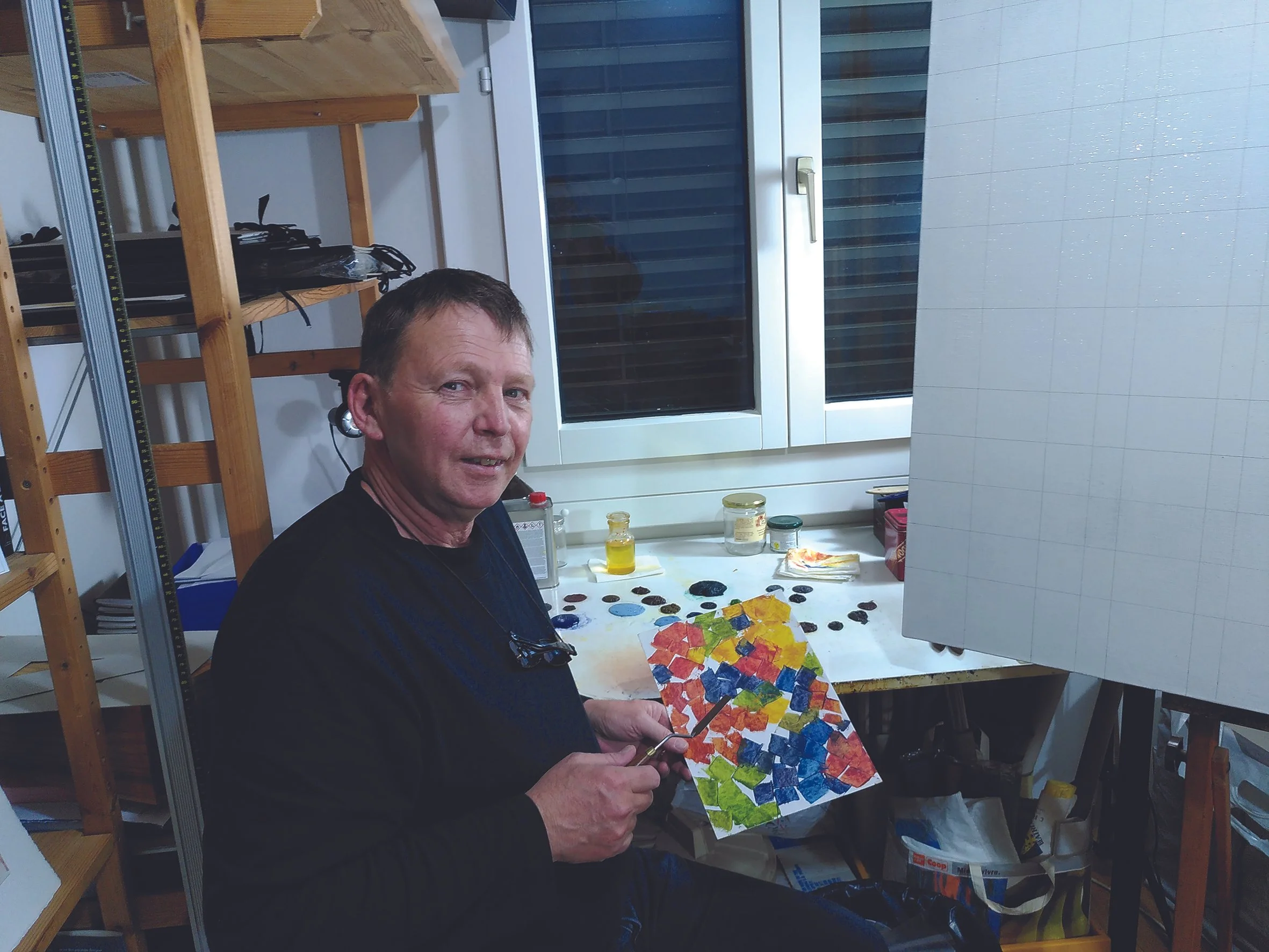
Studio photo
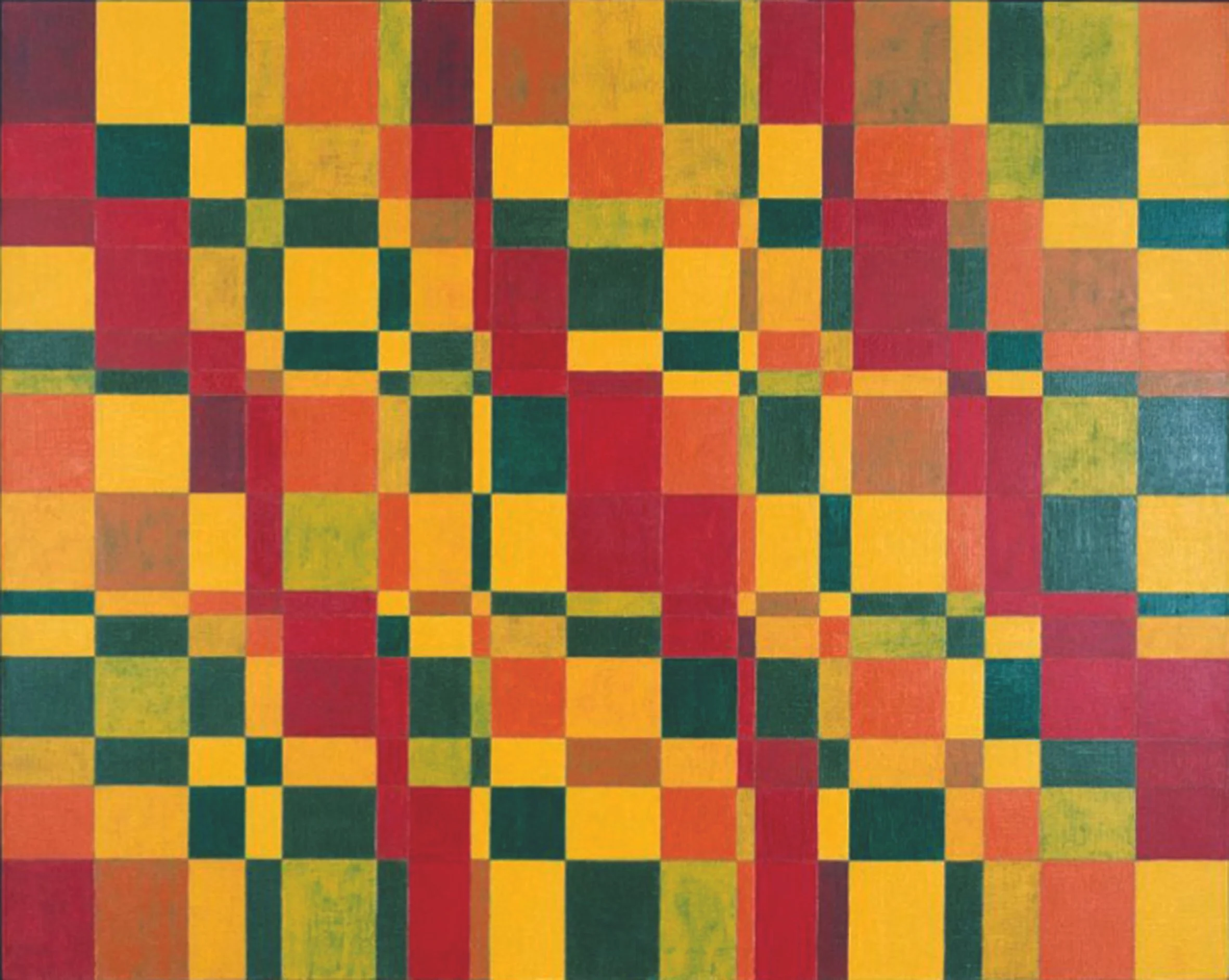
Tribute to Jimi Hendrix, 2001, oil on canvas, 100 x 127 cm
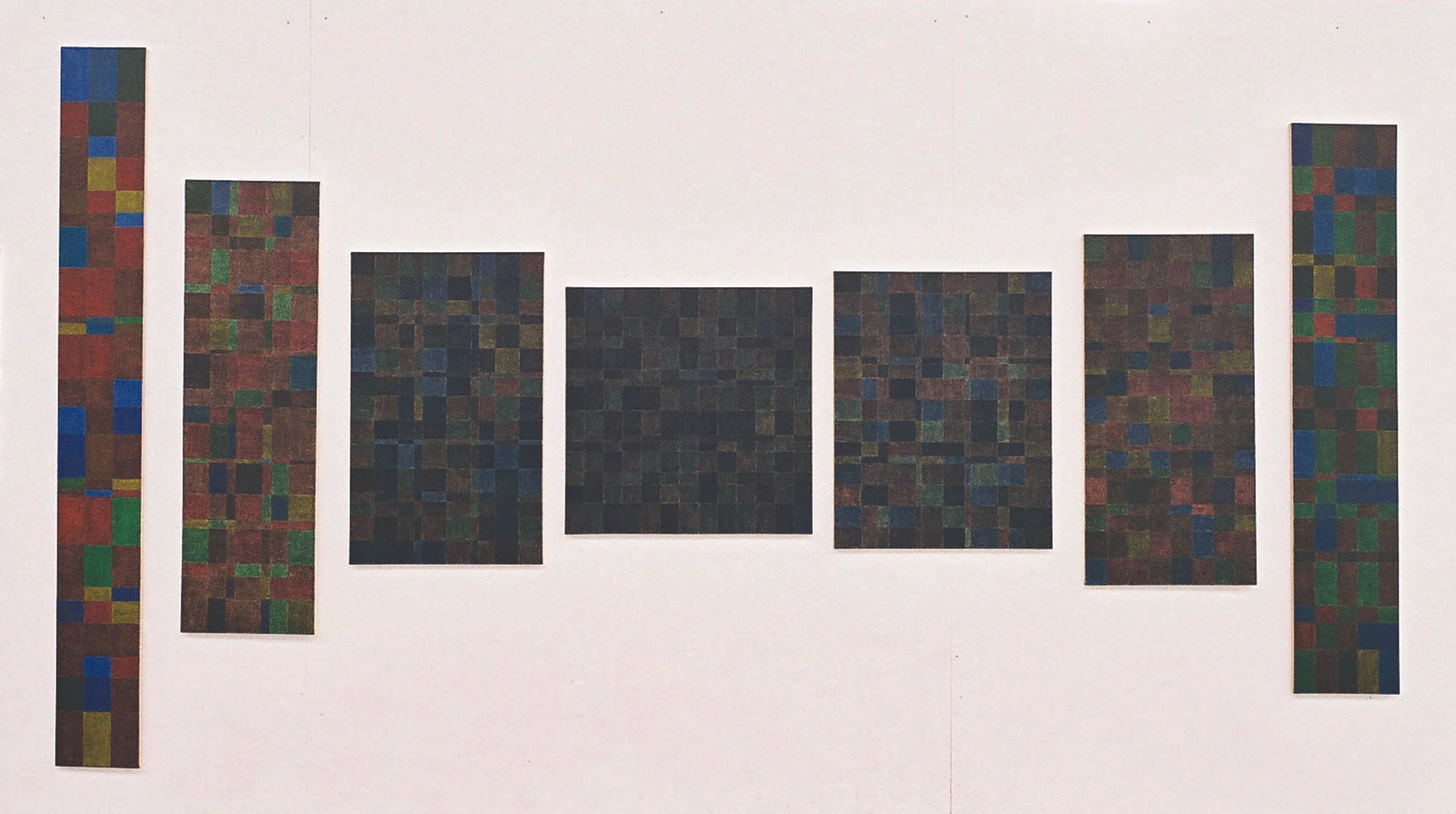
Big Bang, 2002, oil on canvas, 231 x 432 cm
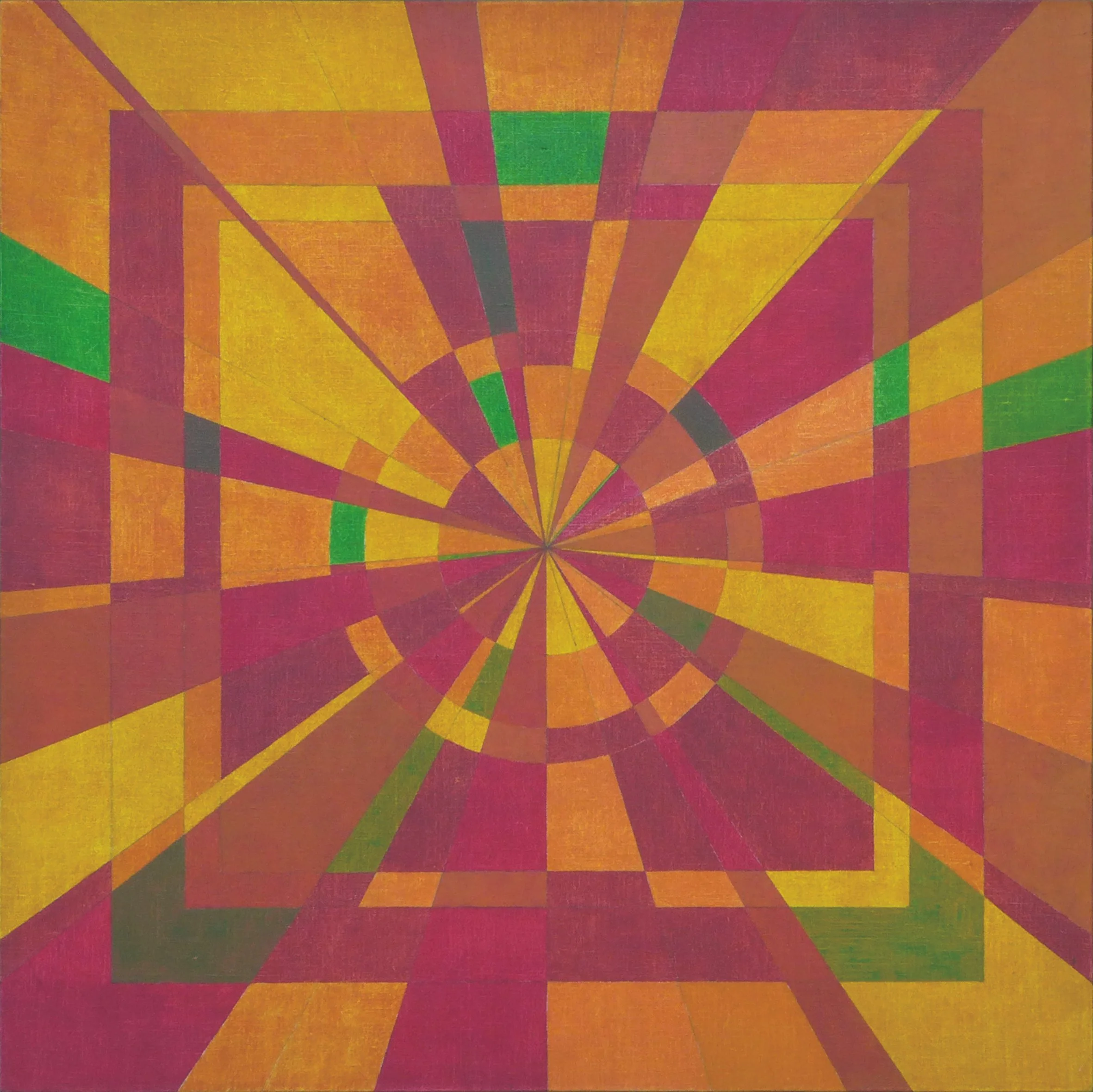
Levofugal mandala 2 Sunny, 2005, oil on canvas, 100 x 100 cm
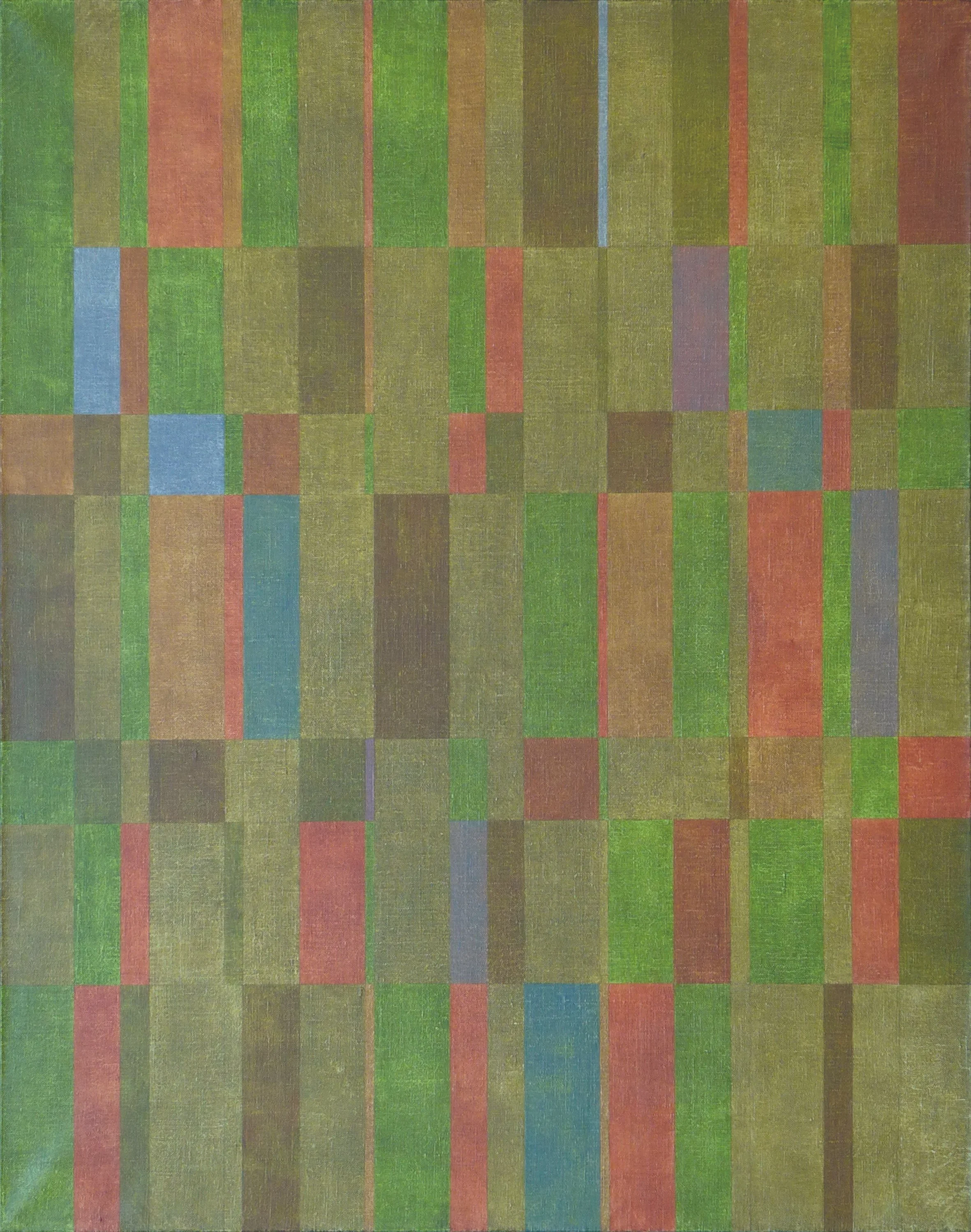
Forest rhythms, 2008, oil on canvas, 113 x 89 cm, mozambican ocher
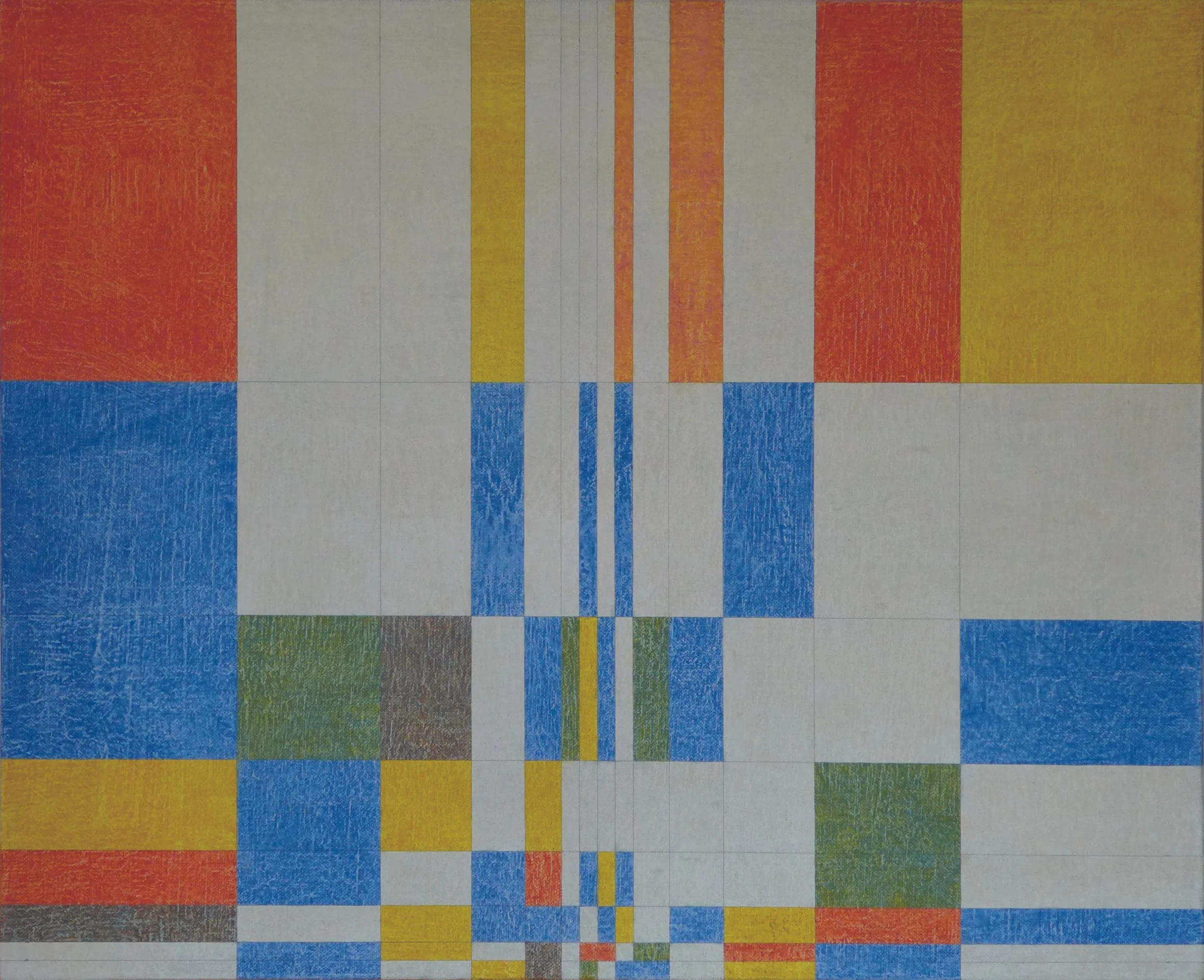
Bidimensional expansion, 2014, oil on canvas, 54 x 66 cm
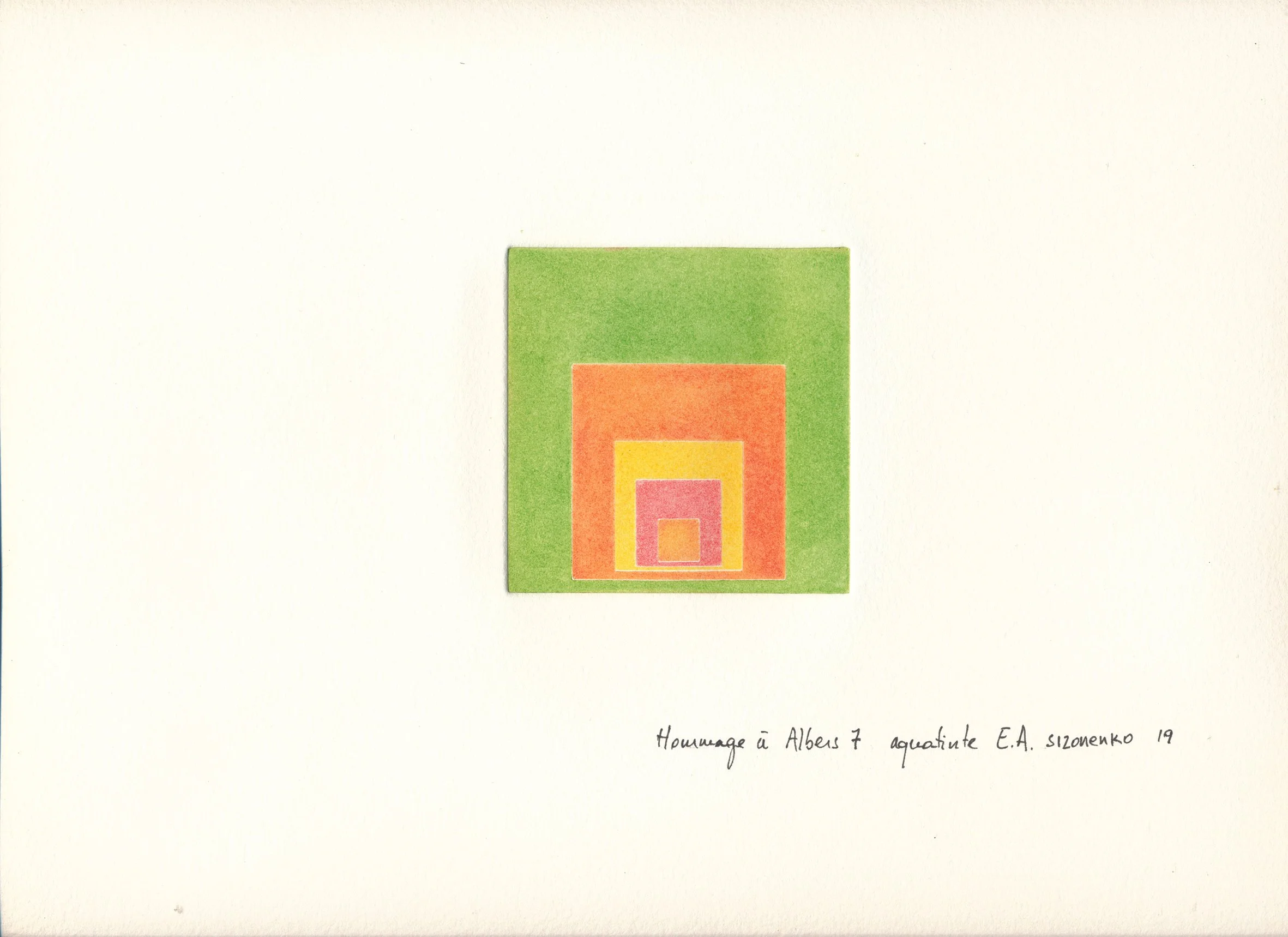
Tribute to Albers, 2019, aquatint, E.A., 30 x 40 cm
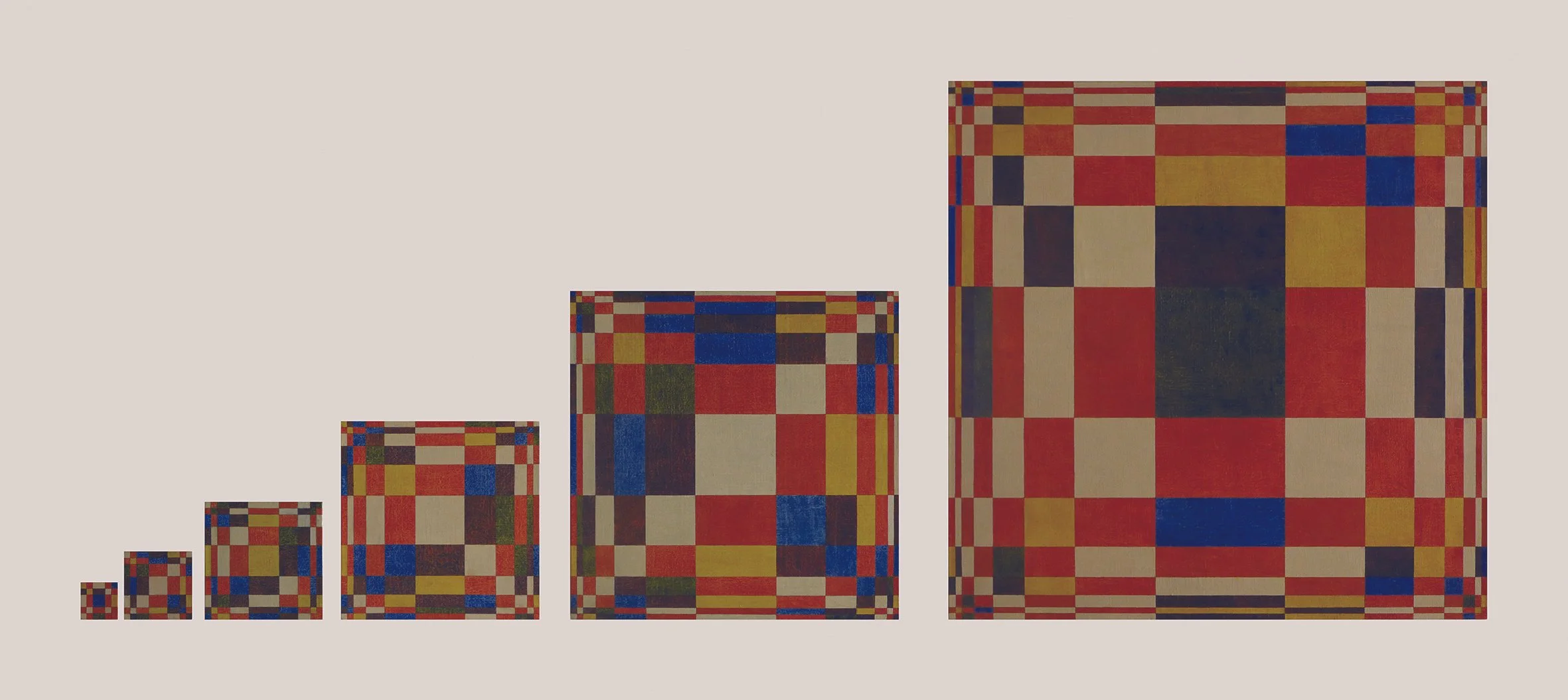
Levopetal pmandalas, polyptych, 2019, oil on canvas, 77 x 217 cm
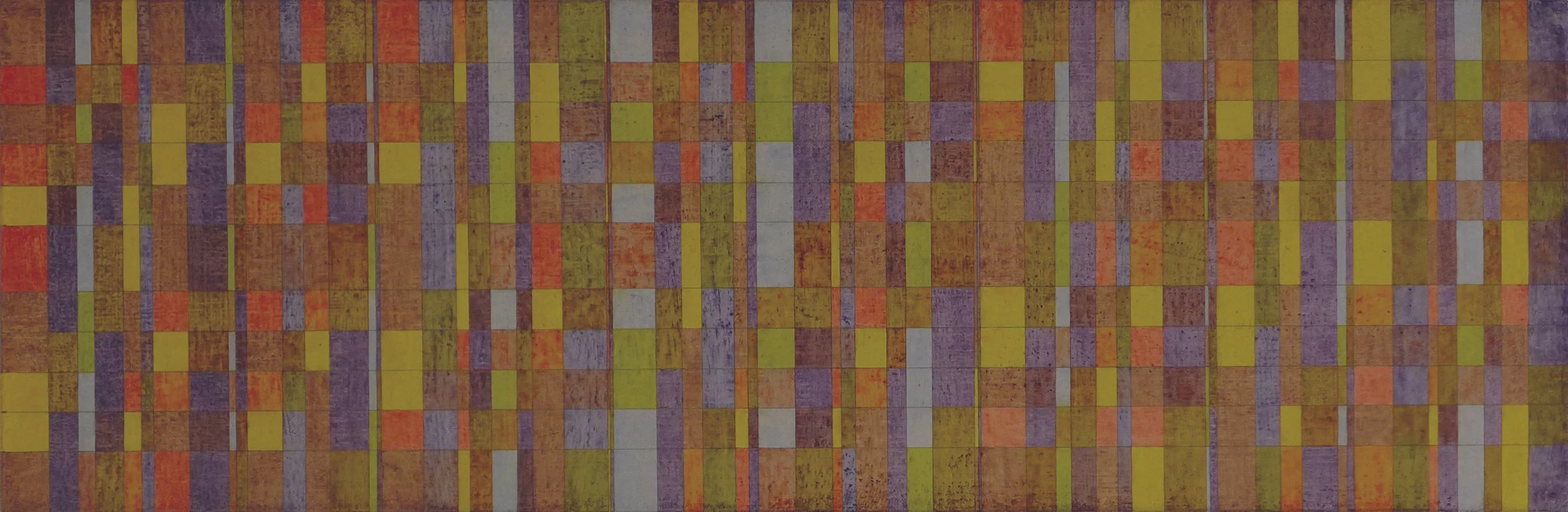
Tribute to Miles Davis Bitches Brew, 2020, oil on canvas, 33 x 101 cm
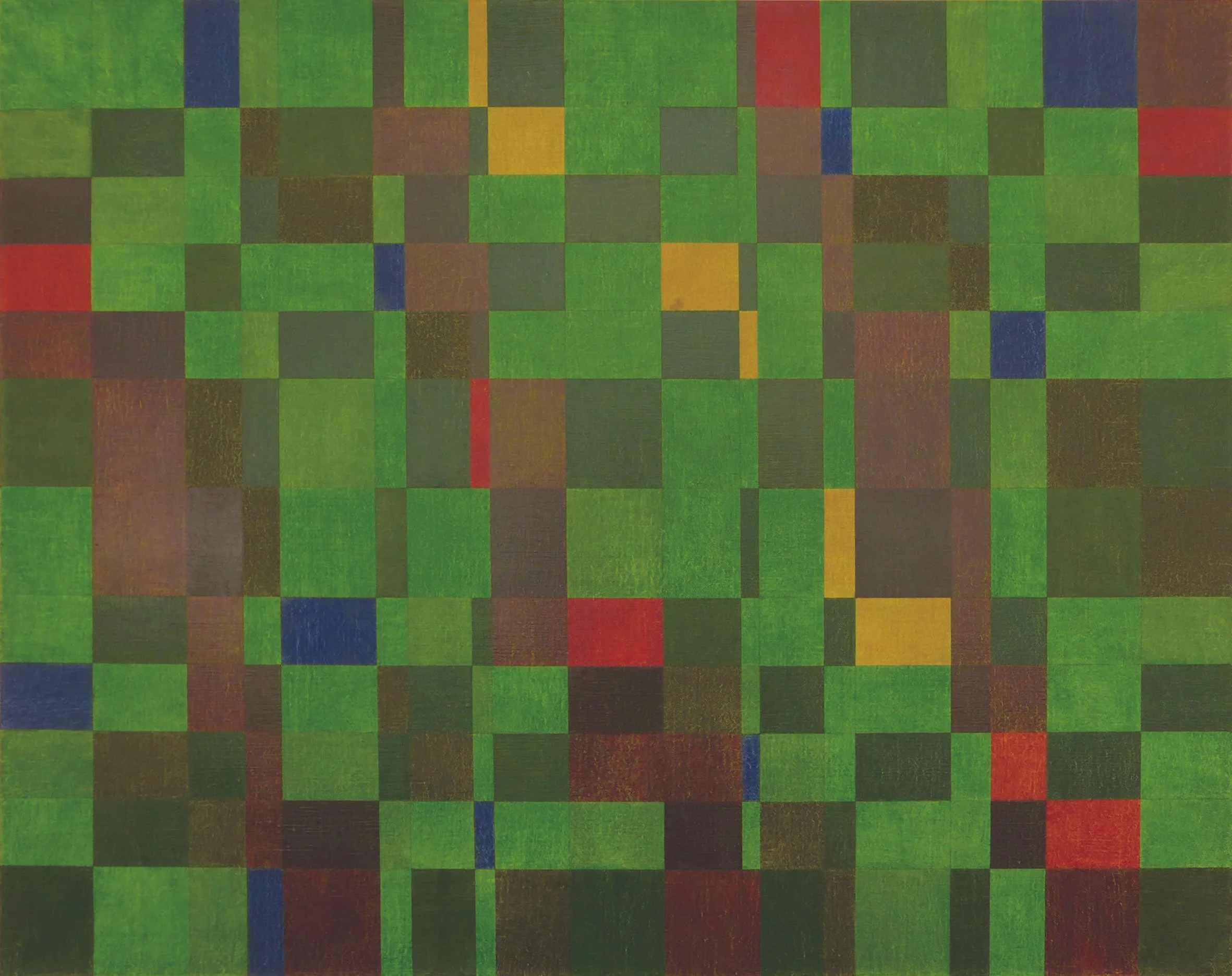
Spring variation 2, 2021, oil on canvas, 113 x 89 cm
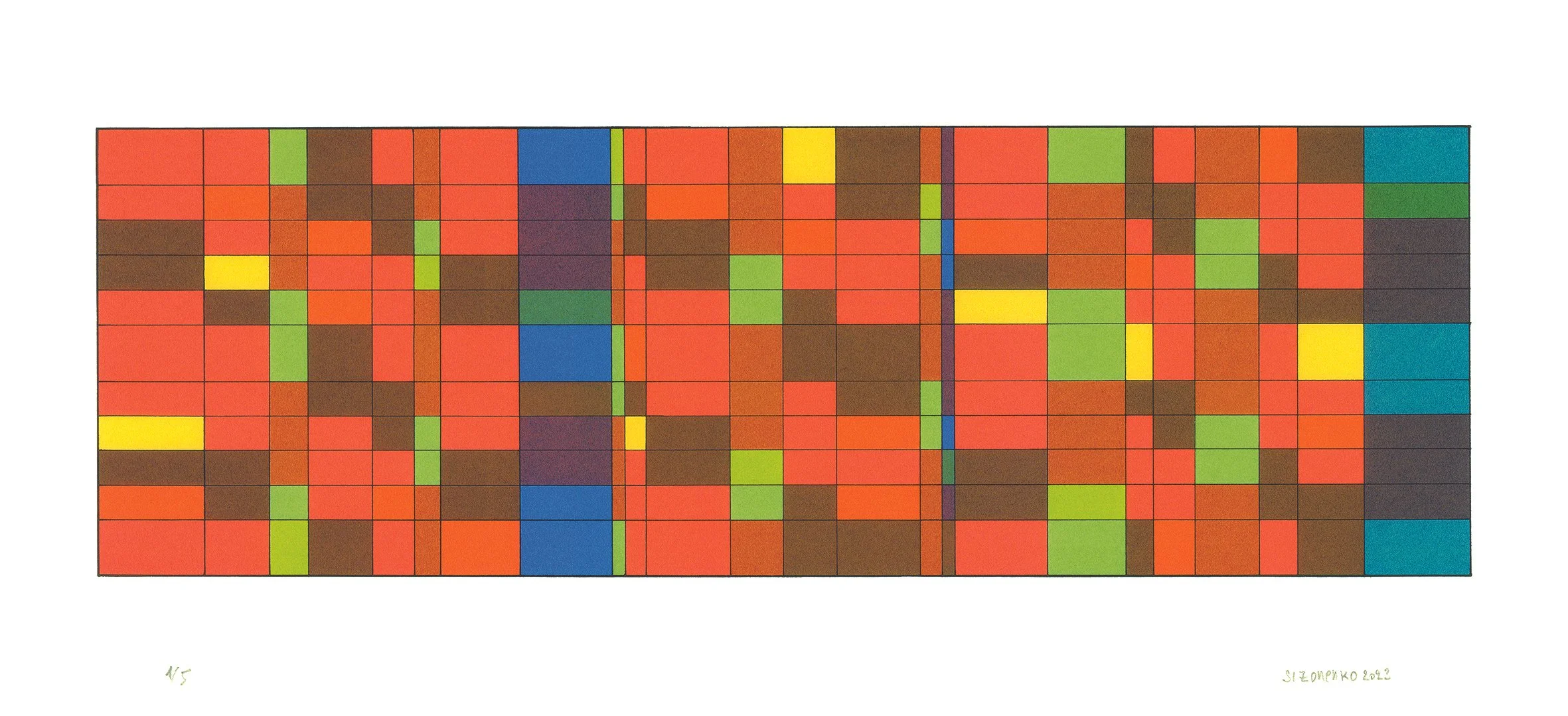
Autumn music, 2022, serigraphy, 16,5 x 50 cm