
Margaretha Gubernale
Biography
Margaretha Gubernale was born on 9 June 1941 in Zug, Switzerland, where she continues to live and work at Atelier Edera. Over the course of several decades she has developed an artistic practice distinguished by its sustained engagement with symbolism, metaphysical inquiry, philosophy, and the natural world. Working primarily in oil on canvas, while also employing acrylic and pencil, she has pursued an approach that seeks to unite the visible and the invisible, the material and the spiritual, through a pictorial language that combines figurative representation with symbolic, abstract, and surrealistic elements. Throughout her career, this search for an appropriate visual language has remained central to her work, resulting in a coherent artistic philosophy that has informed both her creative practice and her international exhibition history.
Although entirely self-taught, Gubernale's artistic development emerged from a lifelong process of observation, reflection, and disciplined independent study rather than formal academic instruction. Her earliest experiences reveal an instinctive sensitivity to beauty that would later become fundamental to her work. Among her formative childhood memories is watching her father, a master confectioner, decorate elaborate cakes with precision and care. Observing this combination of craftsmanship, imagination, and aesthetic refinement introduced her to the possibilities of artistic creation long before she began painting herself. Rather than describing this experience merely as technical influence, it represented an early encounter with the transformation of ordinary materials into objects of beauty.
Another defining childhood memory illustrates an equally enduring aspect of her artistic outlook: a profound concern for justice and an intuitive respect for nature. At approximately four years of age, while admiring a small bouquet of chickweed flowers that she had gathered, she encountered an adult who dismissed the delicate plants as weeds that should be destroyed. Her spontaneous defence of their beauty left a lasting impression and became, in retrospect, emblematic of a worldview that consistently values overlooked forms of life and finds meaning where others may not. This early episode reflects a sensibility that later matured into an artistic philosophy grounded in observation, ethical reflection, and reverence for the natural world.
Books, poetry, classical music, and time spent with her grandparents during childhood holidays likewise contributed to her intellectual and imaginative formation. Rather than functioning as isolated interests, these experiences gradually became interconnected sources of inspiration that continue to inform her practice. Literature encouraged philosophical inquiry, music nurtured an understanding of rhythm and emotional resonance, while nature became both subject and teacher. Throughout her career she has repeatedly described nature as one of her principal sources of knowledge, regarding it not simply as physical environment but as evidence of a deeper spiritual reality that reveals itself through attentive observation.
Before beginning each painting, Gubernale follows a highly structured mental process that reflects both discipline and contemplation. Her working day begins only after practical obligations have been fulfilled, whether domestic responsibilities, family commitments, or external duties. She has explained that only after clearing these demands from her mind does she feel able to enter a state of complete artistic freedom. Equally important is her habit of orienting herself within the wider political and social environment before beginning creative work. Rather than existing separately from contemporary life, her artistic process therefore emerges through reflection upon both personal and collective circumstances. This preparation allows what she describes as clear and sustainable thinking before the first mark is made upon the canvas.
The actual creation of a painting begins long before any physical work takes place. Ideas develop gradually, often over extended periods of contemplation, during which philosophical questions, observations from nature, reading, and music interact within her imagination. She has compared this stage to the formation of an embryo, suggesting that a work exists mentally long before it acquires visible form. Initial sketches are deliberately simple, serving not as finished studies but as visual traces of an internal struggle to determine how abstract thought may be transformed into comprehensible imagery. This prolonged process reflects her conviction that every formal decision must remain subordinate to the clarity of the central idea.
Central to Gubernale's artistic development has been her search for a mode of representation capable of communicating complex philosophical ideas to a broad audience. In reflecting upon her earliest works, she has explained that she became dissatisfied with the limitations of both purely figurative and purely abstract painting. Figurative representation offered clarity but appeared unable to encompass the full range of metaphysical thought that interested her. Conversely, abstraction granted expressive freedom yet often left meaning entirely dependent upon the viewer's subjective interpretation. She famously illustrated this dilemma by observing that an abstract image could suggest equally unrelated associations "Christ and salami" depending solely upon the observer's imagination. Such ambiguity did not satisfy her desire to communicate specific philosophical ideas.
Surrealism initially appeared to offer a possible solution. Its capacity to transcend ordinary reality resonated with her growing interest in spiritual and metaphysical subjects. Yet she ultimately concluded that surrealism alone could not fully express the relationship between visible reality and transcendent meaning that she sought. Her search eventually led her toward symbolism, which she recognised as a language capable of preserving recognisable forms while simultaneously extending their significance beyond literal representation. Through symbolic imagery she discovered a means of constructing visual parables in which figurative, abstract, and surrealistic elements coexist within a unified pictorial structure.
This symbolic language became the defining characteristic of her mature artistic practice. Rather than presenting narrative scenes with fixed interpretations, her paintings invite viewers into metaphysical reflections that extend beyond the depicted image itself. Figures, animals, landscapes, colours, and technical motifs function simultaneously as concrete forms and symbolic carriers of broader philosophical ideas. By employing allegory rather than direct illustration, she seeks to remove limitations imposed by conventional storytelling, allowing each painting to operate on multiple intellectual and emotional levels.
For Gubernale, symbolism does not represent an aesthetic preference alone but constitutes an ethical and philosophical method of communication. She has repeatedly described her ambition to reach every thinking person through colour and form, provided the viewer is willing to connect earthly existence with what she terms the spiritual heaven and to allow ethical considerations to guide interpretation. In this respect, symbolism becomes a means of bridging visible and invisible realities rather than merely decorating narrative content with metaphor.
Nature occupies a foundational position within this philosophy. Trees, water, skies, animals, landscapes, and elemental forces recur throughout her paintings not simply because of their visual beauty but because they embody spiritual principles that transcend physical appearance. She approaches natural forms as manifestations of deeper realities, believing that the divine may be perceived through attentive engagement with the living world. This perspective informs paintings such as Forest with Yggdrasil, where realistically rendered trees coexist with symbolic figures including a sylph representing the energetic qualities of water, while the full moon signifies abundance and a red lung suspended upon the tree of life symbolises the ignition of fire. Rather than functioning as isolated symbols, these elements participate within a carefully constructed philosophical system in which physical reality and metaphysical meaning continuously interact.
Her understanding of symbolism extends beyond traditional iconography to encompass the four classical elements earth, water, air, and fire which occupy a central role throughout her writings and artistic statements. These elements function not merely as natural phenomena but as expressions of different dimensions of human existence. Water corresponds to feeling, air to intellect, earth to material embodiment, and fire to self-consciousness, will, and creative energy. Together they provide a conceptual framework through which she explores the relationship between human experience and universal order.
This elemental structure also informs her understanding of artistic creation itself. She has described symbolic language as operating through all five senses while simultaneously engaging these four elemental dimensions of existence. The resulting work aspires to unite emotional response, intellectual reflection, physical reality, and spiritual aspiration within a single visual experience. Rather than separating these aspects of human life, her paintings seek their integration, proposing that authentic artistic expression emerges through harmony rather than division.
Among the recurring characteristics of Gubernale's paintings, colour occupies a particularly significant position, especially the colour blue. Throughout her career blue has become one of the defining features of her visual language, functioning as far more than a compositional device. She associates blue primarily with air and intellect, yet its symbolic range remains remarkably expansive. Blue may represent transparency and purity, lightness and spiritual openness, or alternatively become dense, cloudy, introspective, and contemplative. She describes it as a colour capable of existing in multiple physical states dry, rainy, and icy while continually expanding as a continuation of light itself.
Over time her treatment of blue has evolved considerably. Early works employed comparatively restrained chromatic variations, whereas later paintings reveal increasingly subtle tonal relationships and luminous transitions. She has noted this development in works such as Now and Widening, where the interaction between blue and green generates new visual harmonies and extends the emotional possibilities of colour. This evolution illustrates not a departure from earlier principles but their gradual refinement through sustained artistic practice.
Colour, for Gubernale, originates in feeling before becoming visual form. Like musical tones, colours express emotional and spiritual conditions that cannot be adequately conveyed through words alone. This relationship between painting and music reflects another important dimension of her creative life. In addition to her visual practice, she performs the church organ and composes music, activities that reinforce her understanding of rhythm, harmony, structure, and emotional resonance. She has compared the emergence of important pictorial ideas to musical notes on an organ, suggesting that colour relationships possess an inner musicality capable of communicating directly with the viewer's inner life.
Music, philosophy, and literature therefore remain inseparable from her visual practice. Reading, especially philosophical and anthroposophical texts, provides intellectual stimulation that gradually develops into pictorial concepts. Rather than illustrating philosophical doctrines directly, she absorbs ideas over extended periods of reflection until they become inseparable from visual imagination. The resulting paintings do not function as philosophical diagrams but as symbolic environments in which thought acquires sensory form.
The philosophical dimension of Gubernale's work has developed in close dialogue with her interest in anthroposophy, symbolism, and metaphysical thought. Rather than treating philosophy as an abstract intellectual exercise, she approaches it as a lived framework through which human existence, nature, ethics, and creativity become interconnected. Her paintings therefore seek not only to depict visible reality but to reveal relationships that she believes exist beyond ordinary perception. This aspiration is reflected consistently throughout both her artistic practice and her own writings, where she describes symbolism as a language capable of guiding the viewer beyond material appearances toward a broader understanding of spiritual reality.
In her essay Magic and Symbolism in the Art, Gubernale situates symbolism within a long historical continuum extending from prehistoric humanity to the present. She proposes that the earliest symbolic expressions already reflected humanity's attempt to connect material existence with the divine and argues that this impulse remains relevant in contemporary artistic practice. According to her understanding, symbolism enables artists to approach what cannot be directly represented by employing allegorical forms that remain accessible through visual experience. Rather than abandoning the physical world, symbolism incorporates it into a larger metaphysical framework, allowing visible forms to become vehicles for invisible ideas.
This conception also explains her continuing attraction to figurative imagery. Human figures, animals, landscapes, architectural forms, and natural phenomena remain recognisable within her paintings, yet they rarely function as descriptive representations alone. Each element participates in an interconnected symbolic system in which visual appearance points beyond itself. She often describes her paintings as parables, suggesting that they should be understood in a manner similar to philosophical or spiritual narratives whose meanings unfold gradually through contemplation rather than immediate interpretation.
The relationship between abstraction and representation remains one of the defining characteristics of her mature style. Instead of treating these approaches as mutually exclusive, Gubernale deliberately combines them within individual compositions. Abstract passages provide emotional atmosphere and metaphysical openness, while figurative forms establish points of recognition through which viewers may enter the work. Surrealistic elements further expand these relationships by dissolving conventional spatial or narrative logic. This synthesis enables her paintings to move simultaneously between concrete observation and symbolic reflection, allowing multiple levels of meaning to coexist within a unified visual structure.
Her own description of this process frequently returns to the image of balance. She characterises her work as a "tightrope walk," requiring continual negotiation between abstract thought and tangible reality. On one side stand philosophical concepts that cannot easily be visualised; on the other lies the physical world with its recognisable forms. The symbolic image functions as the bridge between these two realms, translating intellectual reflection into visual language without sacrificing either clarity or complexity.
This balancing act is particularly evident in works that engage with contemporary technological themes alongside classical symbolism. Although much of her imagery draws upon mythology, philosophy, and the natural world, Gubernale does not isolate these concerns from modern society. Instead, she incorporates technological motifs whenever they contribute to the broader conceptual structure of a painting.
Her work Fausta Thinks Humility offers a representative example of this approach. The composition presents a female counterpart to Goethe's Faust seated behind four books representing the classical elements, while a fifth object a laptop displaying the Google symbol introduces the contemporary world of digital knowledge. Rather than condemning technological advancement, the painting reflects upon its ethical implications. The juxtaposition of ancient symbolic wisdom with modern information systems becomes a meditation on responsibility, humility, and the dangers inherent in knowledge divorced from ethical awareness. Through this visual dialogue, Gubernale suggests that intellectual progress requires moral development if it is to avoid destructive consequences.
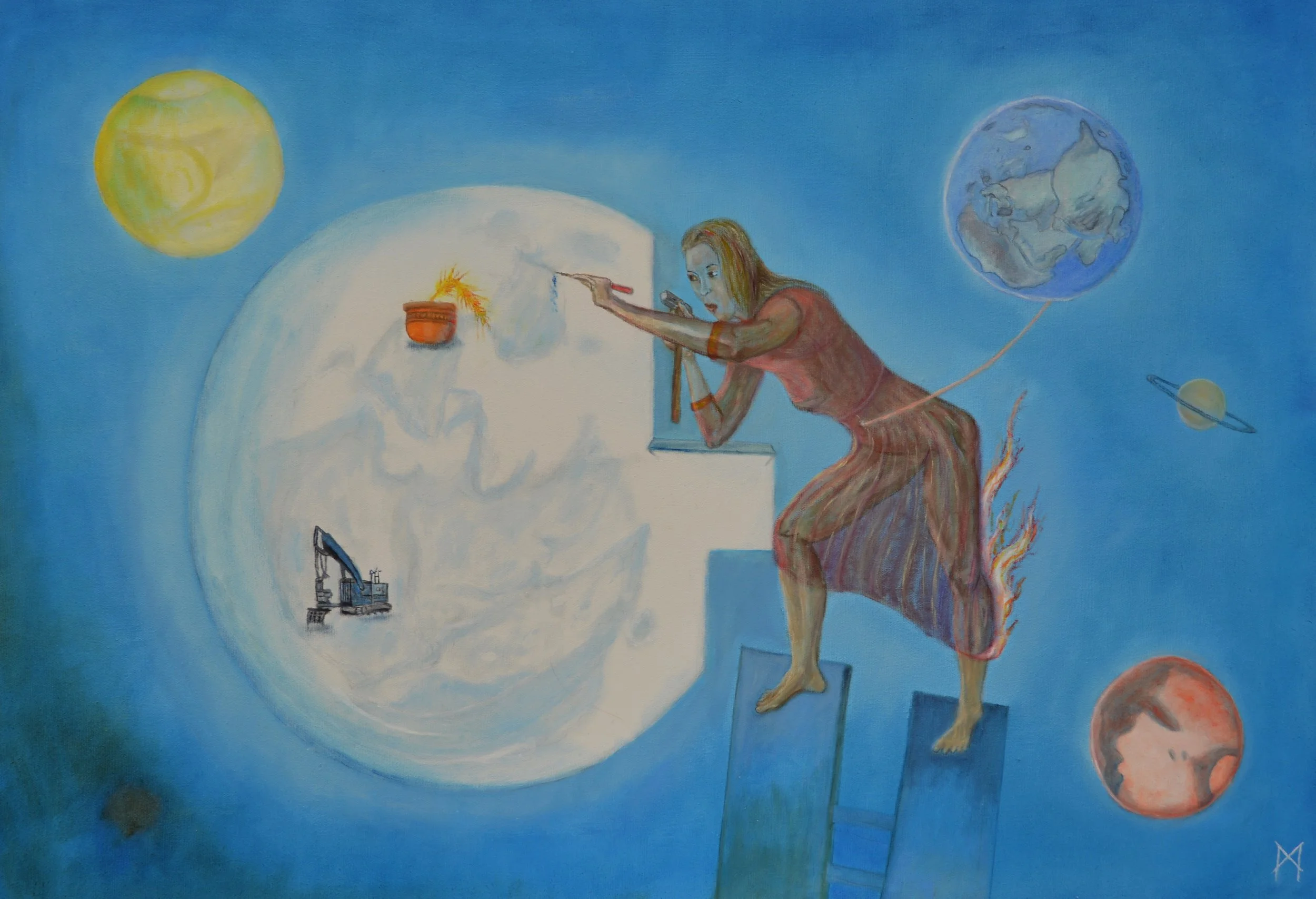
A similar concern appears in Ripping Out Roots, where humanity's technological ambitions are contrasted with its continuing dependence upon the natural world. While human beings aspire to explore distant planets, symbolic roots continue reaching toward life-giving water beneath the earth. A satellite's shadow falling across the landscape introduces another layer of meaning, referring to humanity's expanding technological presence in space while simultaneously questioning its ability to manage the consequences of its own inventions. Rather than rejecting scientific advancement, the work encourages reflection upon balance, responsibility, and foresight.
Environmental concerns likewise occupy an important place within Gubernale's symbolic vocabulary. In Global Aqueduct – My Legacy, water becomes both physical necessity and universal symbol. Observing global inequalities in access to water, she imagines a worldwide aqueduct as a metaphorical proposal for collective responsibility and practical cooperation. The painting reflects her conviction that art may contribute to discussions about shared human challenges without abandoning its symbolic and poetic character. Here, ecological awareness is integrated into a broader ethical vision in which humanity's relationship with nature becomes inseparable from questions of justice and coexistence.
Despite the intellectual complexity of her paintings, Gubernale consistently emphasises communication with the viewer. Long before beginning a new work, she imagines an encounter between the finished painting and its future audience. This imagined dialogue influences every stage of the creative process, from the selection of themes to the construction of symbolic relationships. Rather than viewing artistic creation as ending when the painting leaves the studio, she considers the viewer's interpretation an essential continuation of the work itself.
For this reason, her paintings deliberately avoid fixed conclusions. They invite viewers to contribute their own experiences, reflections, and ethical perspectives while engaging with the symbolic imagery presented before them. She hopes that each viewer will either discover new perspectives through contemplative attention or deepen their understanding of ideas already present within the work. The painting therefore becomes less an object of passive observation than an invitation to active intellectual and emotional participation.
This openness distinguishes her conception of symbolism from purely illustrative allegory. Rather than assigning rigid meanings to individual motifs, she allows symbolic relationships to remain dynamic and multilayered. A tree may simultaneously represent biological life, spiritual growth, philosophical continuity, and the interconnectedness of existence. Water may evoke emotion, ecological responsibility, purification, or the flow of knowledge. Fire embodies creative energy but also transformation, will, and self-awareness. These meanings coexist rather than replace one another, allowing each painting to sustain repeated viewing and ongoing interpretation.
Underlying this symbolic complexity is a consistent ethical orientation. Gubernale repeatedly emphasises harmony, peace, humility, and respect for human dignity as guiding principles within both her art and her broader worldview. Her interest in metaphysics does not seek escape from contemporary reality but instead aims to illuminate the moral responsibilities that accompany human freedom. Consequently, many of her paintings address questions of pride, ambition, ecological stewardship, technological development, and social responsibility through symbolic rather than literal representation.
Her admiration for thinkers such as Friedrich Nietzsche and Johann Wolfgang von Goethe illustrates the philosophical breadth of these concerns. Nietzsche's writings recur in her reflections upon artistic development, not as doctrines to be illustrated but as sources of intellectual provocation. She cites his poem To New Seas when describing her own artistic evolution, identifying with the courage required to venture into unknown creative territory while simultaneously acknowledging the overwhelming magnitude of infinity. This image captures her sense that artistic development requires both exploration and discipline.
Goethe likewise appears within her discussions of humility and human aspiration. In reflecting upon Fausta Thinks Humility, she connects the painting with both Goethe's The Diver and Nietzsche's meditations upon moderation, arguing that technological and political power must remain grounded in ethical awareness. Such literary references are never introduced merely as cultural quotations; rather, they become integral components of the philosophical framework through which her symbolic imagery is constructed.
Although her paintings frequently engage with spiritual subjects, Gubernale consistently approaches different cultures and belief systems with respect. Reflecting upon the international presentation of her work, she has explained that she consciously avoids imagery that might insult, proselytise, or disrespect particular audiences. Instead, she considers the cultural context of each exhibition while remaining faithful to her own artistic language. This sensitivity reflects her conviction that symbolism possesses the capacity to communicate across national, religious, and cultural boundaries precisely because it addresses shared aspects of human experience rather than narrowly defined ideological positions.
Her international exhibitions have repeatedly confirmed this belief. Observing responses from audiences across Europe, North America, Asia, and elsewhere, she has recognised that symbolic imagery often transcends linguistic differences, allowing viewers from diverse backgrounds to engage with common philosophical questions through visual experience. Rather than simplifying her work for different audiences, she trusts the universal potential of symbolic forms to establish meaningful dialogue.
Alongside her painting practice, Gubernale has also articulated her artistic philosophy through writing. Her essays and interviews demonstrate a sustained effort to clarify the intellectual foundations of her work, offering readers insight into the conceptual structures underlying her visual language. These texts reveal an artist deeply concerned with the historical development of symbolism, the relationship between material and spiritual existence, and the continuing role of art within contemporary society. They complement rather than explain the paintings, extending the same philosophical inquiry into written form.
Equally revealing is her conviction that every new painting represents the highest point of her artistic development at the moment of its creation. Asked repeatedly to identify her greatest achievement, she consistently refuses to privilege earlier successes over current work. For Gubernale, each completed painting embodies the accumulated experience of previous decades while simultaneously opening new possibilities for future exploration. If she were ever to believe that a new work could not surpass its predecessors in some meaningful way, she has remarked, she would have no reason to continue painting.
This commitment to continual development has sustained a career extending across several decades. Rather than repeating established formulas, she regards each new composition as the beginning of another investigation into the relationship between symbolic thought and visual form. At the time of recent interviews, she described herself as working on The Seven Deadly Sins of the Modern World, a project that exemplifies her continuing engagement with ethical, philosophical, and contemporary themes while remaining firmly rooted in the symbolic language she has cultivated throughout her career.
Her artistic philosophy therefore cannot be separated from her working practice. Every stage of creation from prolonged contemplation and philosophical reading to careful symbolic construction and final execution reflects an enduring commitment to developing a visual language capable of addressing the intellectual, spiritual, and ethical dimensions of human existence. Through this sustained pursuit, Margaretha Gubernale has established a body of work in which symbolism functions not simply as style but as a comprehensive means of understanding the relationship between humanity, nature, and the unseen realities that continue to inspire her art.
Throughout her career, Margaretha Gubernale has maintained an active international exhibition practice that reflects both the geographical breadth of her professional engagements and the consistency of her artistic vision. From the early 1980s onward, her work has been presented across Europe, North America, Asia, and the Middle East, introducing her symbolic and philosophical imagery to audiences in a wide variety of cultural contexts. Rather than adapting her artistic language to different locations, she has sought to present a body of work grounded in universal themes while remaining attentive to the cultural sensitivities of each exhibition.
Her public exhibition history began during the early years of the 1980s, when she participated in exhibitions in Germany, including presentations at the Castle of the Elector in Mainz (1983) and the Kunstkreis Baden-Baden at the Art Cabinet in Baden-Baden (1984). These early exhibitions were followed by presentations in Italy, notably at Centro Rodino in Naples and an exhibition in Parma in 1985. During this formative period, her work also reached Canada through the Biennale Québec in 1988, demonstrating an early expansion beyond Central Europe.
By the early 1990s, Gubernale's exhibition activity had become increasingly international. Following an exhibition at Galerie du Relais in Horgen, Switzerland, in 1992, she presented her work at the Montserrat Gallery in New York in 1993, marking one of her earliest significant appearances in the United States. This exhibition initiated a continuing relationship with American audiences that would later include further exhibitions in New York, Miami, Las Vegas, Los Angeles, and digital presentations in Times Square.
Her international profile continued to expand during the following decade. In 2005 she exhibited at the Centre Culturel Christiane Peugeot in Paris, an important step in establishing a lasting connection with the French art scene. Three years later, one of the defining milestones of her career occurred through her participation in the Olympic Fine Arts 2008 exhibition in Beijing, China.
Among the many exhibitions that have shaped her professional life, Gubernale has consistently described the Olympic Fine Arts exhibition as one of the most memorable. Beyond the exhibition itself, she recalls the exceptional care shown toward participating artists. Her painting was collected and transported without expense, she was awarded a gold medal, and the organisers provided a ten-day stay with full board in a five-star hotel. The programme also included visits to major cultural sites and the presentation of a torch from the 2006 Winter Olympic Games in Turin. Particularly meaningful for the artist was the permanent placement of her donated painting in a temple within the Forbidden City after the exhibition. The publication of six substantial exhibition catalogues reproducing her work further reinforced the significance of this event within her career.
While the recognition received in Beijing represented an important professional milestone, Gubernale has often emphasised the generosity and respect shown toward artists during the exhibition as equally memorable. Rather than recalling only the award itself, she remembers the atmosphere of hospitality, cultural exchange, and appreciation that surrounded the event, qualities she has repeatedly identified as essential to meaningful artistic collaboration.
Following Beijing, her exhibition activity accelerated considerably. During 2009 and 2010 her paintings appeared in Austria, Switzerland, Bosnia and Herzegovina, Croatia, Ukraine, and Russia, including exhibitions at the OFA Museum in Sarajevo, the City Hall of Banja Luka, the Museum in Kyiv during Ukrainian Art Week, and both St. Petersburg ArtWeek and Moscow ArtWeek. These exhibitions introduced her symbolic works to audiences across Eastern Europe while reinforcing the increasingly international character of her practice.
In the United States, Gubernale continued exhibiting through major New York galleries, presenting her work at AGORA Gallery in 2011 and Broadway Gallery in 2012. These exhibitions complemented an expanding series of presentations throughout Europe, including exhibitions at Museo Civico in Palermo, Suisse Arte in Basel, and Forum Zugerland in Switzerland. Rather than concentrating her activity within a single national context, she consistently embraced opportunities to exhibit across multiple countries.
The years from 2013 onward marked a particularly active period characterised by participation in numerous exhibitions, biennials, and international art fairs. Her work appeared in Milan, Palermo, Berlin, Basel, New York, Paris, Barcelona, Venice, Edinburgh, Miami, London, Verona, Malta, Tokyo, Tel Aviv, Lisbon, Amsterdam, Dubai, Athens, Palma de Mallorca, and many other locations. These exhibitions reflected not only geographical diversity but also engagement with a wide variety of artistic organisations, curators, and institutions.
Among these experiences, several exhibitions occupy a special place within her personal recollections. One such event was HanseArt Lübeck in 2015, held in the Music and Congress Hall in Lübeck, Germany. Although not necessarily the largest exhibition of her career, she remembers it with particular affection because of the exceptional atmosphere created by the organisers and the enthusiastic participation of visitors from different generations. She has recalled the gallery owner and his wife with gratitude for the care and genuine interest they extended toward participating artists, regarding this exhibition as an example of the human relationships that can develop around artistic practice.
Another decisive moment occurred in 2016 when she received First Prize in the Margherita Hack competition, organised through Spoleto Arte under the direction of Professor Vittorio Sgarbi and Salvatore Nugnes. The award resulted in a solo exhibition in Milan and Bassano del Grappa and represented one of the recognitions that she considers particularly meaningful. Reflecting upon this experience, she has spoken not only of the distinction itself but of the atmosphere of respect for artistic practice fostered by those involved in the project.
Italy has occupied a particularly significant position throughout Gubernale's exhibition history. From early exhibitions in Naples and Parma during the 1980s to repeated participation in exhibitions associated with Palermo, Venice, Verona, Milan, Spoleto, Mantua, Rome, Bassano del Grappa, and numerous other Italian cities, the country has remained one of the principal centres of her international activity. Many of these exhibitions involved collaborations with established curators, including Vittorio Sgarbi, Paolo Levi, Salvatore Russo, and other figures active within the Italian contemporary art world.
Among the numerous venues where her work has been exhibited, the exhibitions organised by the Société des Artistes Indépendants in Paris hold particular intellectual significance for Gubernale. She participated in Art Capital at the Grand Palais in 2018 and 2020, returning in 2024 for the Salon des Indépendants at the Grand Palais Éphémère. Reflecting upon these exhibitions, she has described them as especially meaningful because of the society's distinguished history and its association with artists whom she deeply admires, including Paul Cézanne, Marc Chagall, Giorgio de Chirico, Salvador Dalí, Alberto Giacometti, Henri Matisse, Amedeo Modigliani, Edvard Munch, Odilon Redon, Vincent van Gogh, and Henri Rousseau. For her, participation in these exhibitions represented not merely professional visibility but an opportunity to contribute to an ongoing artistic tradition while engaging in dialogue with contemporary artists from around the world.
The Paris exhibitions also demonstrate another characteristic feature of her career: an enduring commitment to artistic exchange. Rather than regarding exhibitions solely as opportunities for public presentation, Gubernale values them as occasions for meeting fellow artists, encountering different perspectives, and participating in broader international conversations about contemporary art.
Digital exhibition platforms have also become an important component of her recent practice. During 2023 she participated in multiple Artboxy digital projects shown through galleries in Berlin, Athens, Palma de Mallorca, Dubai, and Zug, while also presenting a digital solo exhibition through EuropaArt in Amsterdam. Her work was further exhibited by MAD Gallery and presented through a sequence of digital displays in New York's Times Square during the autumn of the same year. These projects demonstrate her willingness to embrace new exhibition formats while remaining committed to the symbolic language that defines her painting.
In 2024, her work participated in a month-long exhibition presented aboard Vueling aircraft through Contemporary Art Management, extending her audience beyond conventional gallery spaces. Such projects illustrate the increasingly varied contexts in which contemporary artists may encounter international audiences while maintaining continuity with more traditional exhibition venues.
Alongside this extensive exhibition history, Gubernale's career has been marked by numerous awards and distinctions recognising different aspects of her artistic achievement. Although she consistently emphasises that each new painting represents her greatest accomplishment, these honours nevertheless document sustained professional recognition across several decades.
Among the earliest distinctions were the Gold Medal of Kunstkreis Baden-Baden (1983), First Prize in the Florence-Europe competition (1984), and a Gold Medal in Madrid (1986). Over subsequent decades, additional recognitions included international awards associated with Palermo, Venice, Barcelona, London, Miami, Berlin, Paris, New York, and other cultural centres.
Particularly significant among these distinctions remains the Gold Medal awarded during Olympic Fine Arts 2008 in Beijing, an honour she regards as inseparable from the generosity and cultural exchange that characterised the exhibition itself. Equally important is the Margherita Hack First Prize awarded in 2016, which provided the opportunity for a solo exhibition and recognised the continuing development of her symbolic style.
Her later recognitions include the 60 Top Artists Award presented through the Metropolitan Museum in Las Vegas (2017), the Top 60 Masters Award presented by ATIM in New York (2020), the Paolo Levi Prize, and the Future of Art Global Masterpiece Award presented in 2024 by Contemporary Art Curator Magazine following what she describes as a deep and comprehensive examination of her work. Looking toward more recent years, she was also recognised through the El Greco Award, the Legends of Our Time Award, and inclusion in publications such as Art Investment & Collectors' Guide 2025, Top Investable Artists 2026, and Atlante dell'Arte Contemporanea.
Despite this long list of distinctions, Gubernale has consistently resisted measuring artistic success through awards alone. When asked how such honours influence her work, she has explained that they primarily deepen her sense of gratitude and responsibility. Recognition, in her view, does not signify the completion of artistic development but rather encourages continued refinement of her personal style and renewed commitment to creative work. Awards become obligations to continue growing as an artist rather than destinations in themselves.
Another formative experience that shaped her professional outlook occurred much earlier in her career, when she operated a gallery dedicated to figurative artists. At a time when abstract art dominated the preferences of an influential local art circle, she encountered considerable opposition because of her commitment to figurative painting. According to her recollections, members of this group publicly criticised both her own work and the artists she exhibited, even though she had carefully selected them and one was the arts-and-crafts teacher of a prominent member of the same circle.
Rather than discouraging her, these experiences ultimately reinforced her determination to continue pursuing her own artistic direction. Looking back, she observes that later international recognition gradually changed perceptions, while critical appreciation eventually emerged from viewers and writers capable of engaging thoughtfully with the symbolic complexity of her paintings. This episode illustrates not only professional resilience but also her long-standing commitment to remaining faithful to her artistic convictions despite changing fashions or external criticism.
As Margaretha Gubernale's exhibition history expanded across continents, so too did the publication and documentation of her work. Throughout her career, her paintings have been reproduced in exhibition catalogues, art books, magazines, critical essays, and international reference publications, creating a substantial printed record that accompanies her evolving artistic practice. Rather than functioning merely as documentation, these publications collectively trace the development of an artist whose work has remained remarkably consistent in its philosophical foundations while continually refining its visual language.
Long before the appearance of many of the recent international publications, Gubernale's work had already begun to attract attention through exhibition catalogues associated with her growing number of international presentations. Particularly following the expansion of her exhibition activity during the 1990s and 2000s, nearly every major exhibition was accompanied by printed documentation, allowing her paintings to circulate beyond the physical exhibition spaces themselves. This growing presence in publications gradually established an enduring record of her work within contemporary art literature.
Among the books in which her work has been featured are Inspiration Art Book No. 6 (2018), Le Scelte di Puntelli – La Solitudine dell'Angelo by Giammarco Puntelli (2019), Atlante dell'Arte published by De Agostini (2020 and again in 2026), The First Berliner Art Book (2020), Annuaire International des Beaux-Arts (2021), Massimo Troisi – Il Mio Verbo Preferito by Stefano Veneruso (2023), Ambasciatore d'Arte (2023), Logos by Annalisa Puntelli Sacchetti (2023), Internationally Recognized Artists (2024), Art Investment & Collector's Guide 2025, Collector's Art Prize – Art Legends of Our Time (2025), and Top Investable Artists 2026. These publications, together with numerous exhibition catalogues and additional books produced before 2018, document both the breadth of her exhibition history and the sustained international interest in her work.
Magazine features have likewise contributed to the dissemination of her artistic ideas. Her paintings have appeared in Contemporary Art Magazine, Art Style Magazine, Aesthetica Magazine, Future of Art Global, and Art Leaders of Tomorrow, among others. Particularly significant to the artist was her inclusion in Future of Art Global in 2024, where her work received the Masterpiece Award following an extensive critical examination conducted by editor Marta Puig. Rather than regarding this recognition solely as an award, Gubernale has described it as meaningful because of the depth with which her work was studied and discussed.
Her inclusion in these publications reflects an aspect of her career that extends beyond exhibitions alone. Through interviews, essays, catalogue texts, and reproductions, readers encounter not only the finished paintings but also the conceptual foundations that underlie them. This relationship between image and text is especially important in Gubernale's practice because she has consistently sought to articulate the philosophical principles informing her visual language. Unlike many artists who leave interpretation entirely to others, she has contributed substantially to the written discourse surrounding her own work.
One of the clearest expressions of her thinking appears in her essay Magic and Symbolism in the Art, a text that encapsulates many of the ideas developed over decades of artistic practice. Here she argues that symbolism provides a means of connecting humanity with dimensions of existence that cannot be directly perceived, tracing what she understands as a continuous historical thread from prehistoric symbolic expression to contemporary artistic practice. Although deeply personal in its formulation, the essay also reflects her sustained engagement with broader philosophical traditions and demonstrates the intellectual seriousness with which she approaches painting.
Central to this text is the concept of the Akasha, which she employs as a metaphor for an all-encompassing spiritual reality that transcends cultural, religious, and historical boundaries. In her understanding, symbolism allows artists to approach this unseen dimension by translating abstract ideas into visible form. Rather than abandoning material reality, symbolic art embraces it as the necessary vehicle through which spiritual meaning becomes perceptible. This conviction has remained remarkably consistent throughout both her paintings and her written reflections.
Equally significant is her recurring emphasis upon universality. Gubernale repeatedly argues that contemporary artists should transcend distinctions of religion, race, and national origin because the questions addressed through art ultimately concern dimensions of existence shared by all humanity. This perspective helps explain the international orientation of her exhibition practice and her belief that symbolic imagery can communicate across cultural differences without requiring linguistic translation.
Her reflections upon artistic creation further illuminate the relationship between theory and practice within her work. She frequently describes the emergence of a painting as a gradual process in which an abstract idea matures through sustained contemplation before taking visual form. Reading, classical music, philosophical inquiry, and observation of nature all contribute to this internal development. Only when the conceptual "embryo" has become sufficiently clear does she begin the physical act of painting.
The resulting image is never intended merely to illustrate an intellectual concept. Instead, Gubernale seeks to create a symbolic environment in which feeling, thought, and sensory perception operate simultaneously. Colours express emotional states, forms establish symbolic relationships, and compositional structures guide the viewer through multiple layers of meaning. Her repeated comparison between colour and musical tone reflects this holistic understanding of artistic communication, suggesting that visual experience possesses rhythms and harmonies analogous to those found in music.
Indeed, music occupies an important place within her life beyond painting. As a church organist and composer, she has long explored another form of artistic expression grounded in harmony, rhythm, and emotional resonance. Rather than existing as separate disciplines, music and painting appear mutually reinforcing within her creative practice. She has described important pictorial ideas as manifesting "like notes on an organ," indicating that musical thinking informs not only the atmosphere of her works but also their structural organisation.
The ethical dimension of her art remains equally central. Throughout interviews and writings, Gubernale consistently returns to themes of humility, harmony, responsibility, and peace. These values are not presented as abstract ideals but as practical necessities within a world increasingly shaped by technological development, environmental challenges, and political tension. Her paintings repeatedly ask how humanity may maintain spiritual and ethical balance while navigating rapid social change.
Works such as Fausta Thinks Humility, Global Aqueduct – My Legacy, Networking, Sound from Universe, Forest with Yggdrasil, and Ripping Out Roots exemplify this concern. Although each addresses distinct subject matter, they share a common ambition: to translate complex philosophical questions into symbolic images capable of engaging viewers emotionally as well as intellectually. Rather than offering definitive answers, these paintings invite reflection upon humanity's relationship with nature, knowledge, technology, and the unseen dimensions of existence.
The audience therefore occupies an essential position within Gubernale's conception of artistic practice. Long before beginning a composition, she imagines communicating with future viewers, anticipating the moment when the completed painting will encounter minds and experiences beyond her own. She hopes that viewers will actively participate in the work by bringing their own understanding to its symbolic structures. In this sense, interpretation becomes a continuation of creation rather than its conclusion.
This openness has contributed to the broad geographical reach of her work. Over the course of her career, her paintings have been presented in Switzerland, Germany, France, Italy, Spain, England, Scotland, Austria, Malta, Portugal, Denmark, Bosnia and Herzegovina, Croatia, Ukraine, Russia, Lebanon, Israel, China, Japan, Canada, the United States, the United Arab Emirates, Greece, and the Netherlands, among other locations. Although each exhibition has taken place within a distinct cultural environment, Gubernale has consistently maintained that symbolism possesses the capacity to communicate through shared human experience.
Her own approach to exhibiting internationally reflects this belief. She has explained that while she remains respectful of local cultures and avoids imagery that might be perceived as offensive or proselytising, she does not fundamentally alter her artistic language for different audiences. Instead, she seeks images capable of establishing dialogue across cultural boundaries while honouring the traditions and values of the places in which they are shown. This respect for cultural diversity aligns closely with the universal ethical principles that recur throughout both her paintings and writings.
Among the numerous exhibitions that have marked her career, the three presentations with the Société des Artistes Indépendants in Paris remain especially meaningful from an intellectual perspective. Participating in Art Capital at the Grand Palais in 2018 and 2020, followed by the Grand Palais Éphémère in 2024, allowed her to exhibit within an institution whose history she deeply admires. Her reflections on these exhibitions reveal profound respect for the generations of artists associated with the Société des Artistes Indépendants, whose commitment to artistic independence resonates with her own lifelong determination to pursue an individual symbolic language despite changing artistic fashions.
Her professional journey has not always been without difficulty. Early criticism directed toward her commitment to figurative and symbolic painting could easily have discouraged a less determined artist. Instead, Gubernale continued developing her own visual language even when it differed from prevailing artistic preferences within her local environment. Looking back across the decades, she regards this perseverance not as an act of defiance but as a necessary consequence of remaining faithful to an artistic vision that could not be compromised.
That same commitment continues to characterise her present work. When asked to identify the greatest achievement of her career, she consistently refuses to select a particular exhibition, award, or individual painting. Instead, she answers that her greatest achievement is always the work currently in progress. Every new painting, she believes, must extend the discoveries of previous works while opening new possibilities for future exploration. If she were ever to believe that a new work offered nothing beyond what had already been achieved, she has remarked, she would cease painting altogether.
This perspective reflects a lifelong understanding of artistic practice as an ongoing process rather than a completed accomplishment. Recognition, exhibitions, awards, and publications remain important milestones, but they never replace the daily discipline of creation or the continual search for more profound symbolic expression. At the centre of Gubernale's career lies not the accumulation of honours but an enduring commitment to exploring the relationship between visible reality and metaphysical thought through painting.
Working from Atelier Edera in Zug, where she has remained closely connected to the place of her birth throughout her life, Margaretha Gubernale continues to pursue the symbolic and philosophical investigations that have defined her work for decades. Her paintings seek to reconcile intellect and emotion, nature and spirit, material reality and metaphysical aspiration, drawing upon observation, philosophy, classical music, literature, and ethical reflection to construct visual parables that invite sustained contemplation.
Across more than four decades of international artistic activity, she has developed a coherent body of work distinguished by its commitment to symbolism as a living contemporary language. Rather than treating symbolism as a historical style, Gubernale employs it as an evolving means of addressing questions that remain fundamental to human existence: the relationship between humanity and nature, the responsibilities accompanying knowledge and technology, the search for spiritual meaning, and the possibility of harmony between the material and the unseen. Through this sustained exploration, her paintings continue to affirm the capacity of symbolic art to engage viewers intellectually, emotionally, and philosophically while inviting each new generation to participate in the dialogue between earth and what she describes as the spiritual sky.
Hight of Trees,
The tree nearby seems to be bigger, - he seems. - And the robot steals from these and take the way to steal from the bigger ones far away.
Maintain the Forest
The first woman drinks from the spring, the second from the fountain, the third woman strives for it with a chalice. The forest is the haven of water. The trees hold the slope and are the first settlers on earth. To the Forest be due of awe.
The Widening
Aligning human DNA with the divine DNA source expands the senses and intellect.
Artist Statement
Even in my early works, me, Margaretha Gubernale, I was looking for a way to reach everyone in the world with my thoughts, which I only achieved with a figurative representation, because through abstract painting Christ and salami appeared in one picture and only confirmed the viewer's thoughts. But my painting could not be limited to figurative painting, because she also must not want to be inferior to the freedom of abstract painting. I considered the surreal style but felt it didn't fully achieve my intended effect. So, I looked for a solution, which I found in Symbolism.
Here I represent my thoughts figuratively and extend this form metaphysically beyond myself in a parable, thus breaking all narrative boundaries, weaving in abstract and surrealistic elements and reaching every thinking person in his soul with colour and form, provided he is of good will to connect the earth with the spiritual sky and to give priority to ethics. I learn a lot from nature and feel the divine within her, which inspires me. I prefer the colour blue as a spiritual colour and often address philosophical and magical topics. For them, blue is the air as an incentive for fire and has three physical states: dry, rainy and icy and expands as a continuation of light.
www.margarethagubernale.org
https://www.contemporaryartcuratormagazine.com/ (Interviews)
facebook.com/margaretha.gubernale (Fakes from AI Meta ALSO Facebook)
instagram.com/margarethagubernale (Fakes from AI Meta ALSO Facebook)
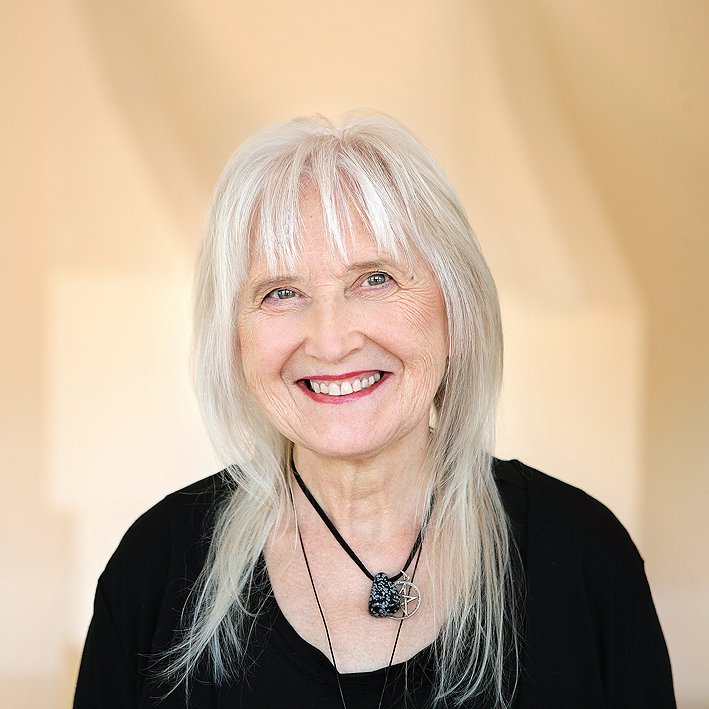
Margaretha Gubernale
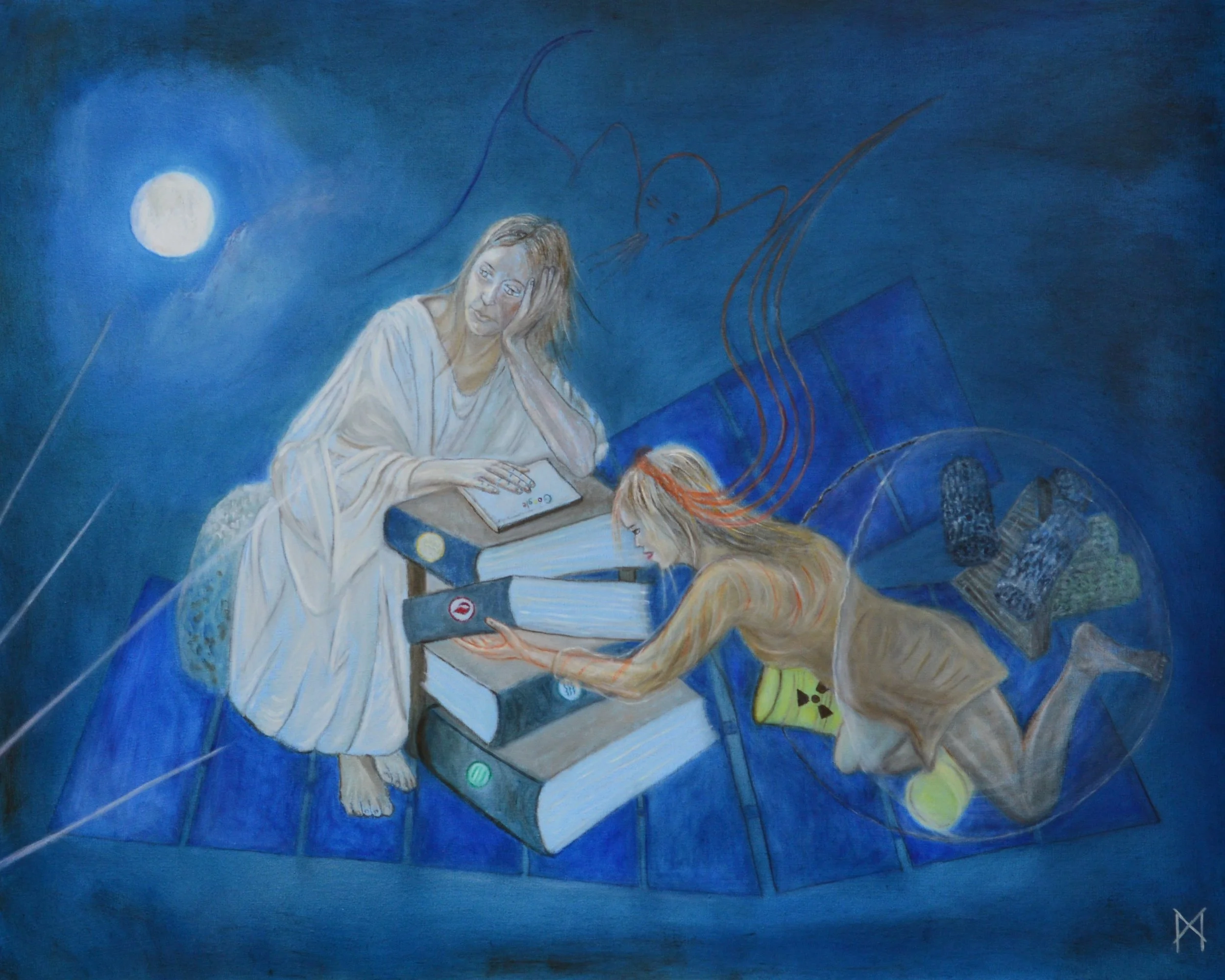
Fausta thinks Humility, 2019, oil on canvas, 80x100 cm
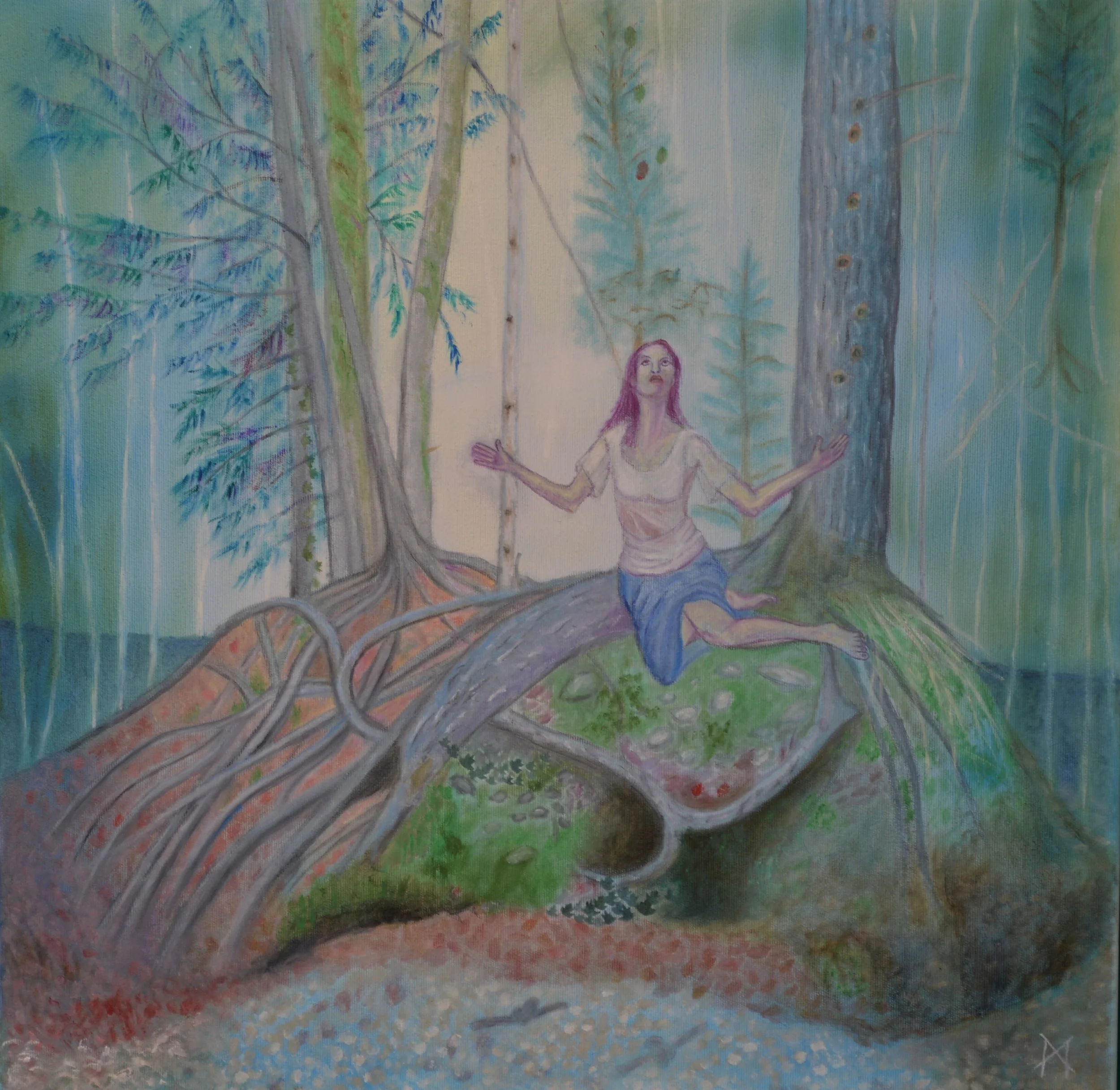
Ripping out Roots, 2023, oil on canvas, 60 cm x 60 cm
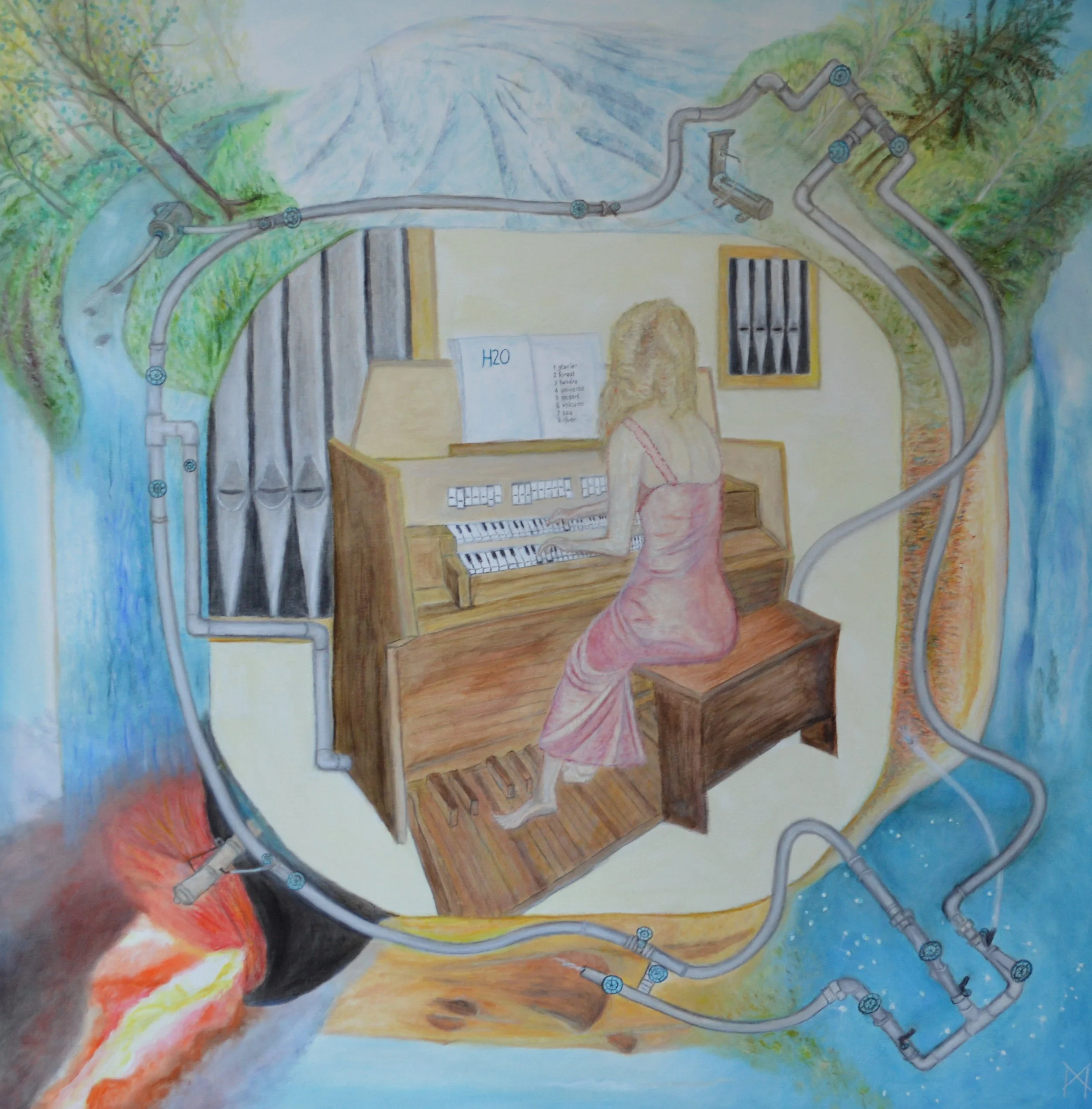
Global Aqueduct, 2021, oil on canvas, 100x100 cm
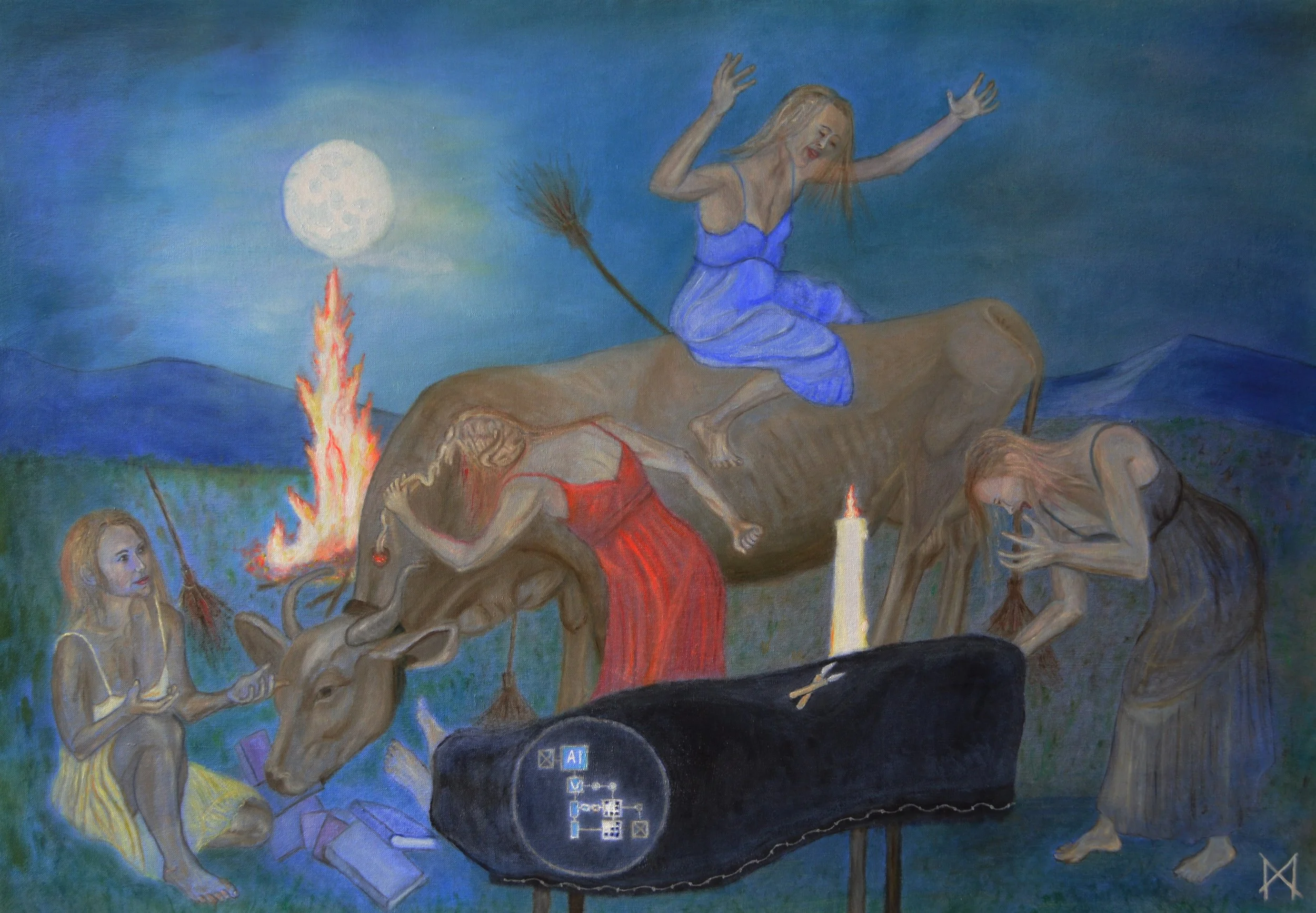
The Sorcerer's Apprentice (with Goethe), 2024, oil on canvas, 80x100 cm
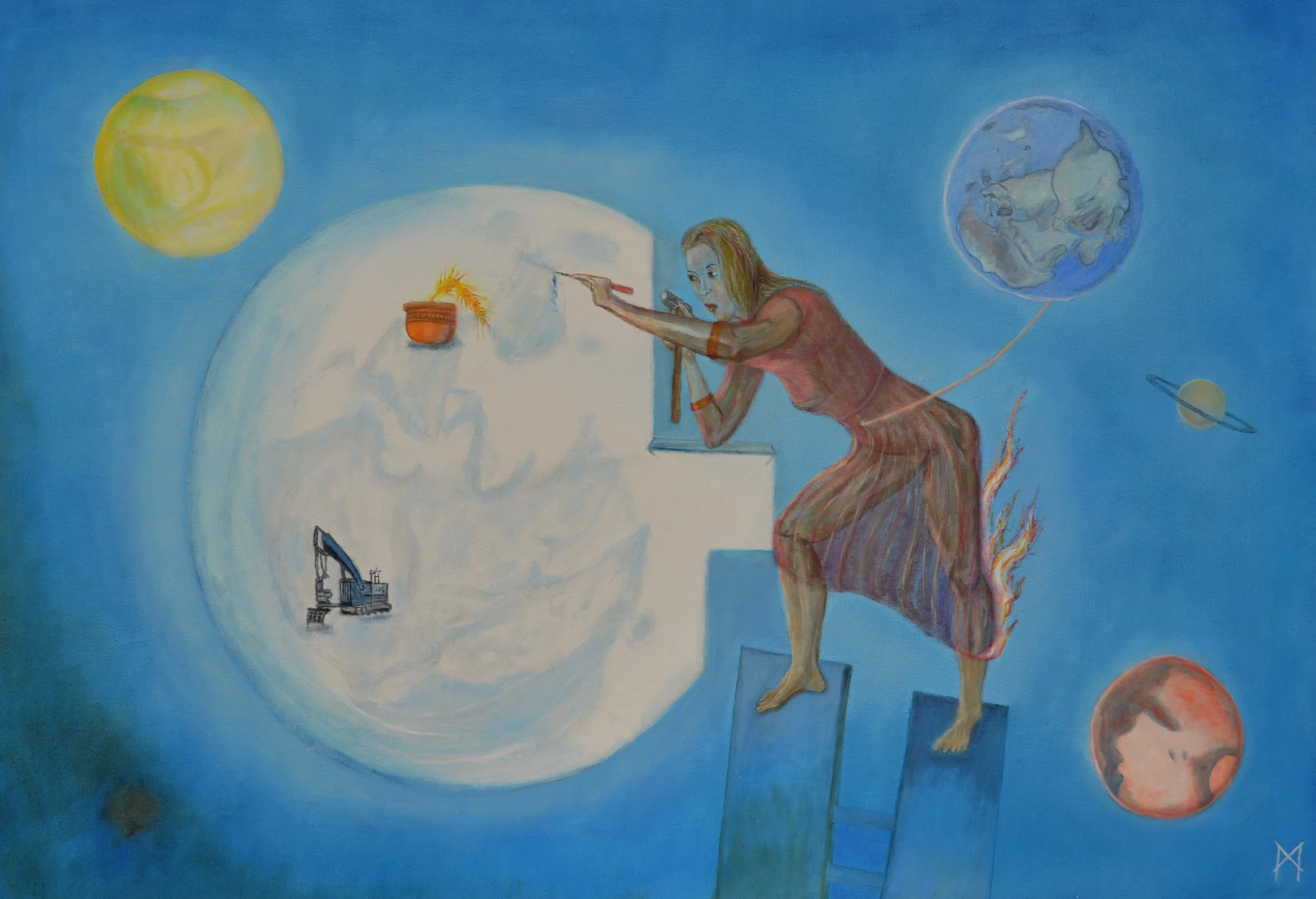
Declaration Day of the angular Moon, 2025, oil on canvas, 70x100cm
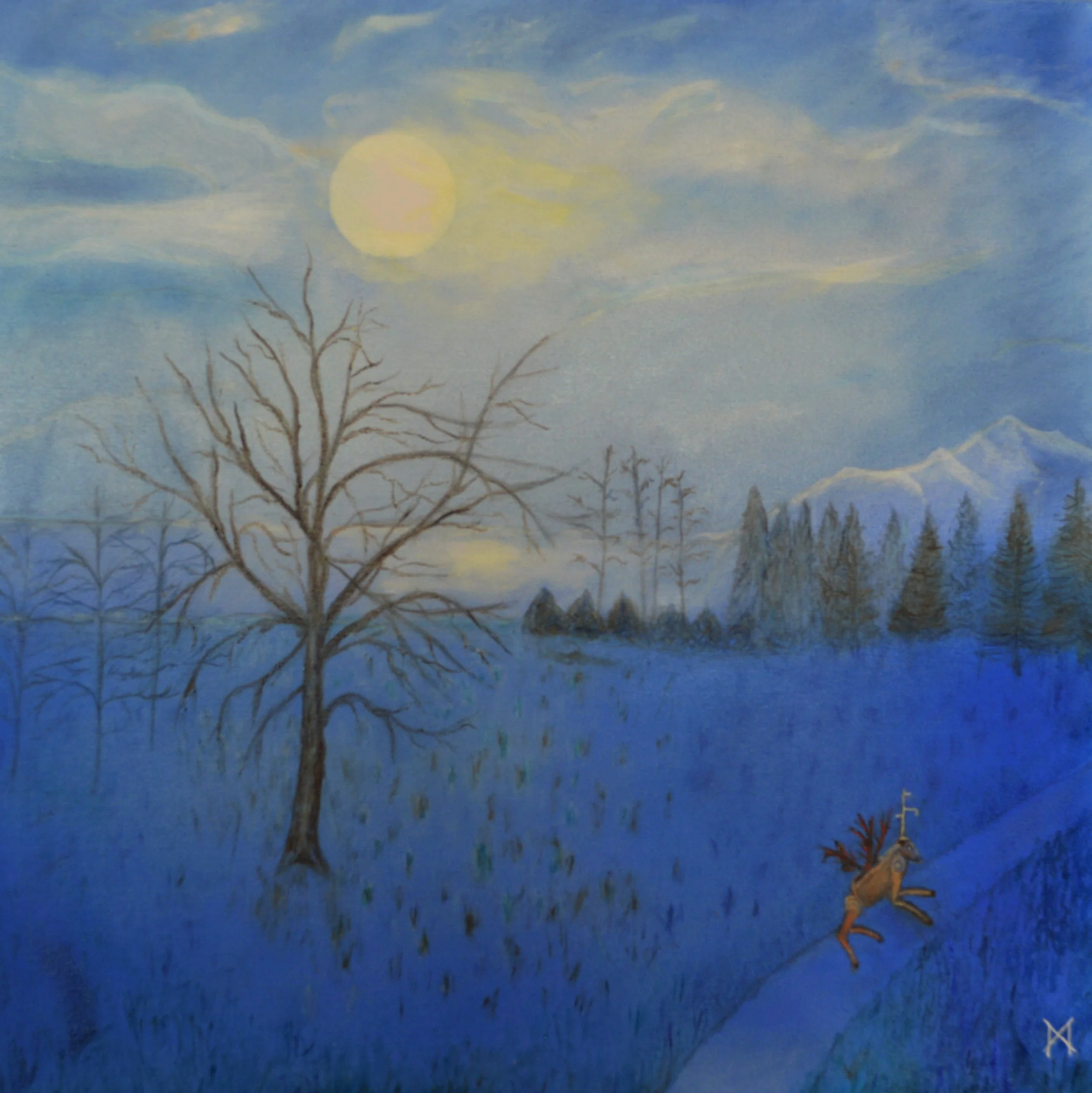
Height of Trees, 2026, oil on canvas, 60x60 cm
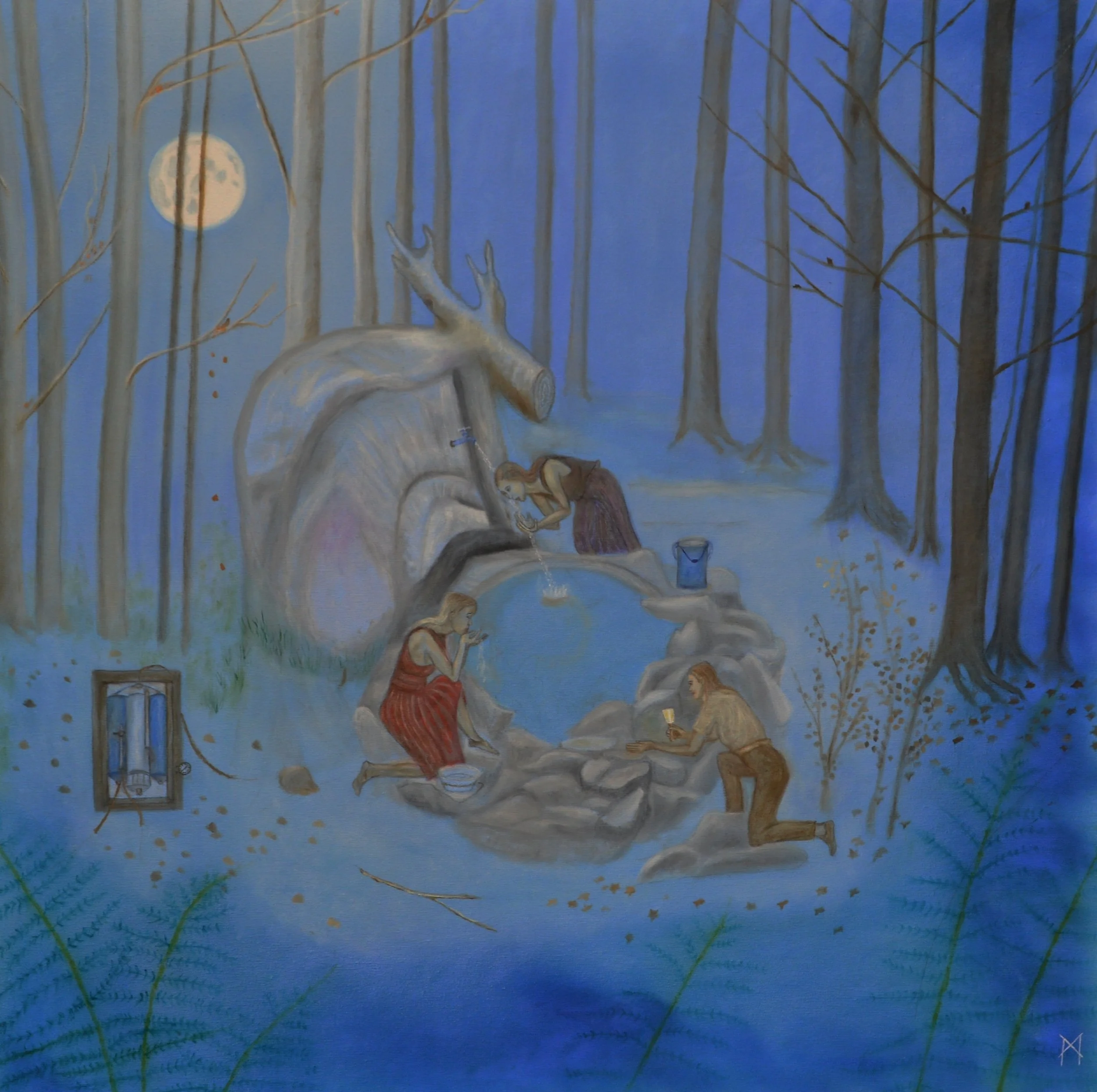
Maintain the Forest, 2025, oil on canvas, 100x100 cm
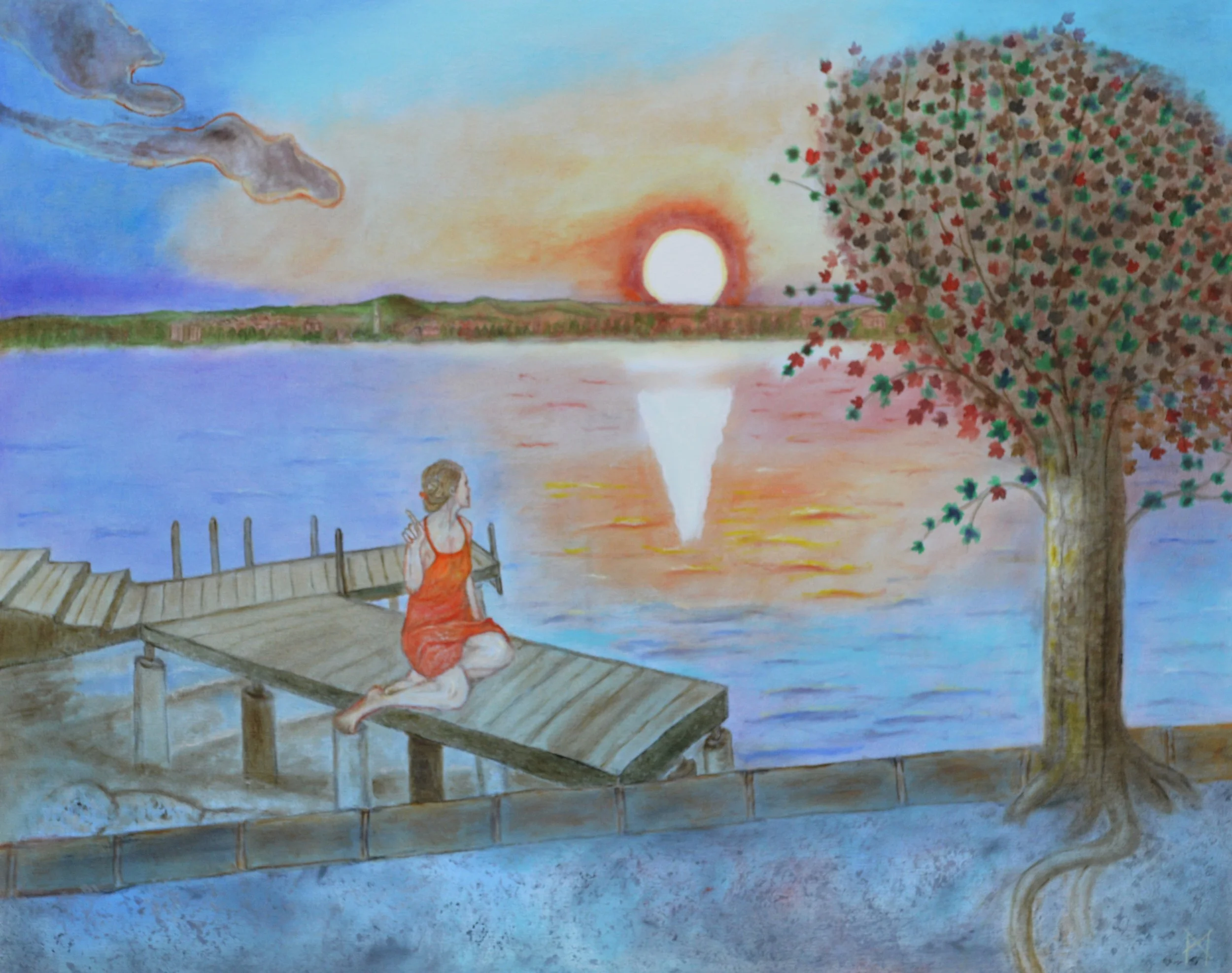
Tomorrow up, to the Mountain of Zug
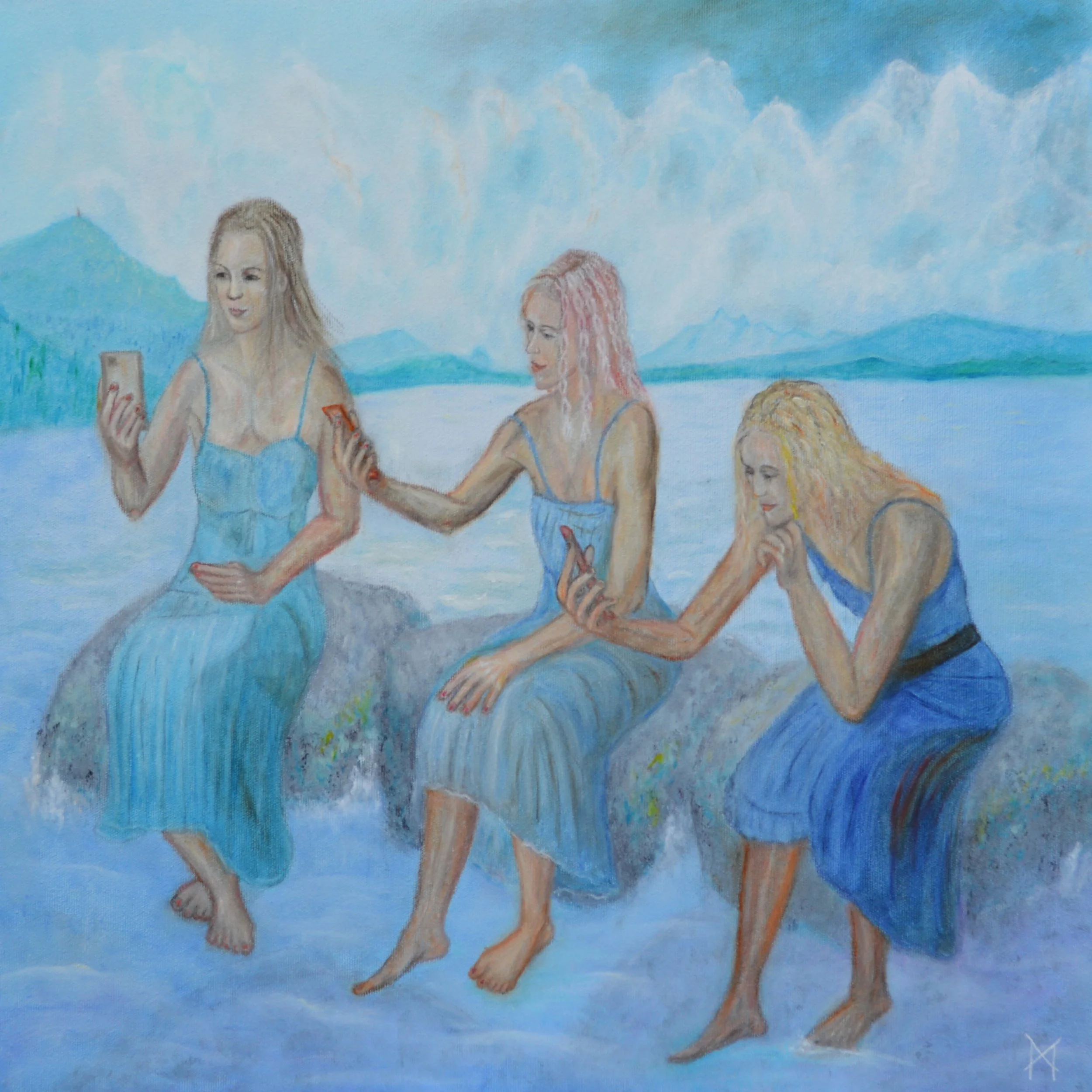
Three Graces on the Lake of Zug, 2023, oil on canvas, 60x60 cm
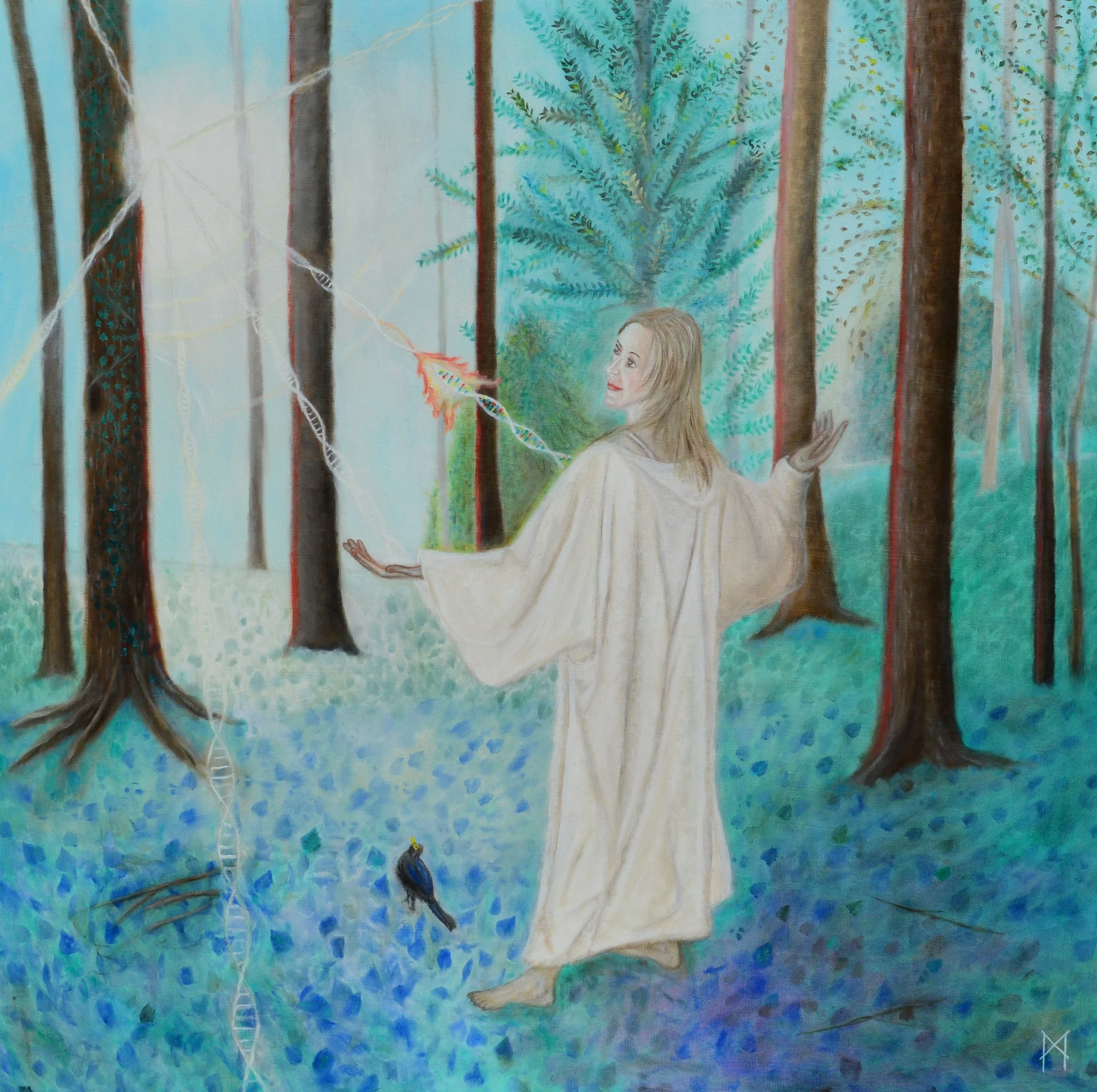
The Widening, 2021, oil on canvas, 100x100 cm