
Patricia Gagic
Biography
Patricia Karen Gagic is a Canadian artist whose career has earned some of the most significant honours in the international art world. In 2018 she became the first female Canadian to receive the Gold Medal in Photography from France’s prestigious Salon National des Beaux-Arts, presented at the Carrousel du Louvre in Paris. She served as an Honorary Commissioner at the Venice Biennale in 2007, and her work has been exhibited internationally, including at the Grand Palais in Paris and on the NASDAQ Jumbotron in Times Square, New York.
Her distinction extends well beyond the gallery. Gagic is a WXN (Women’s Executive Network) Hall of Fame inductee and Lifetime Achievement recipient, a multiple-time recipient of Canada’s Top 100 Most Powerful Women, and a Lifetime Achievement honoree of the Universal Women’s Network Women of Inspiration Awards. She is a recipient of the YMCA Peace Medal and has been honoured with medals from the Société Académique des Arts-Sciences-Lettres, Paris. A published author, her book Karmic Alibi: Gaining Expedient Wisdom by Leaving Your Excuses Behind was a finalist for both the USA Best Book Awards and the International Book Awards, and she has co-authored multiple bestselling titles. She is the founder of The Karmic Framework, a proprietary methodology uniting ancient wisdom with contemporary creative and leadership practice, and the creative force behind the Sparkmina Library — an extensive body of written, philosophical, and visual work.
Alongside her artistic and literary achievements, Gagic is a dedicated humanitarian. She led Project Cambodia — building a library, school, and orphanage near Angkor Wat — and co-founded the Colours of Freedom Foundation. She serves as an advisor to Help Heal Humanity and to the People’s Improvement Organization, and has served on the Ontario Cabinet for the Canadian Museum for Human Rights.
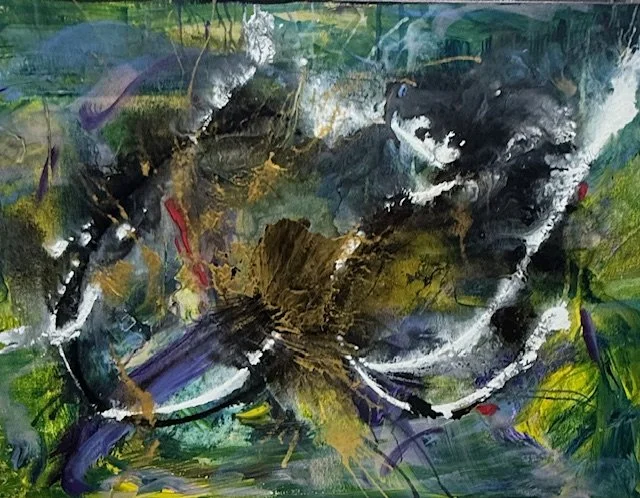
For five decades, her painting has returned to a single form — the lemniscate, the figure-eight, the endless crossing — which anchors both her visual language and her philosophy of the Lemniscate Prauscate: to cross through fire with one’s fire intact. Roman Catholic by birth and disciplined by Buddhist philosophy, she paints from equanimity and equal standing. She lives and works in Ancaster, Ontario.
Artist Statement
I paint the crossing. For fifty years my work has returned to a single form — the lemniscate, the figure-eight, the point where a line passes through itself and is not severed by the passing. In mathematics this self-intersection has a name: the crunode. It is the still centre of my visual language, and I have come to believe it is the true shape of everything that matters. We are taught to see the world as lines — this against that, self against other, cause severed from effect — but the line divides what is whole. My paintings reach for the other shape: the torus and its cross-sectional lemniscate, a closed figure with no outside, where two things meet at a crossing and neither is destroyed.
This is not metaphor imposed on the canvas; it is structure I have watched recur at every scale. The same toroidal geometry that shapes the field around a magnet, the circulation of the heart, and the protective shield of a planet is the geometry I paint — the architecture of any living system that must return its own outputs through its own centre. My compositions are built on this recurrence: on proportion and resonance, on the interplay of the constants that order natural form, and on a taxonomy of the crossing I have developed over decades — a working vocabulary of the states a figure passes through as it crosses through fire and returns.
I work from a principle I call Complex Simplicity: holding the full intricacy of a system while acting from a single, quiet centre. A finished canvas may carry great density — layered under-painting, mathematical structure, colour tuned to specific frequency — yet it must resolve into something a viewer apprehends in an instant, in the body, before the mind explains it. That instantaneous recognition is the whole aim. I am not decorating a surface; I am building a structure precise enough that a stranger can stand before it and feel, without being told, that they too are a figure that crosses and returns — connected to everything, separate from nothing.
This is where the mathematics becomes moral. If the true shape has no outside, then nothing — no person, no living thing, no consequence — can finally be cast away; it returns through the crossing. To paint that geometry honestly is to insist on it: that we are interdependent not by sentiment but by structure, and that to be genuinely seen, at the crossing, by another, is the most transforming act available to any of us. That is what I am painting toward, one lemniscate at a time — the geometry of connection, made visible.
https://instagram.com/patriciagagic
https://linkedin.com/in/patricia-gagic-594688
facebook.com/PatriciaGagic
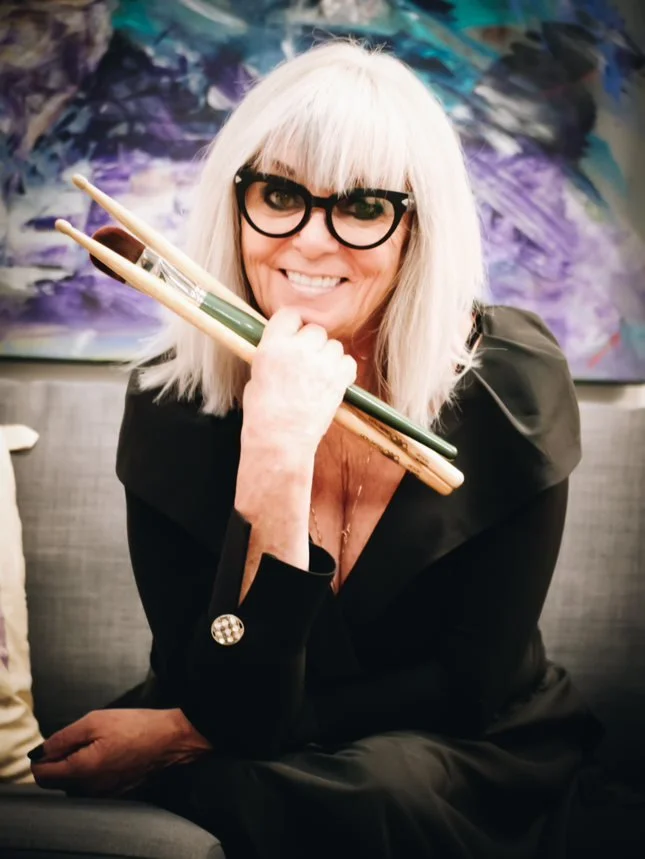
Patricia Karen Gagic
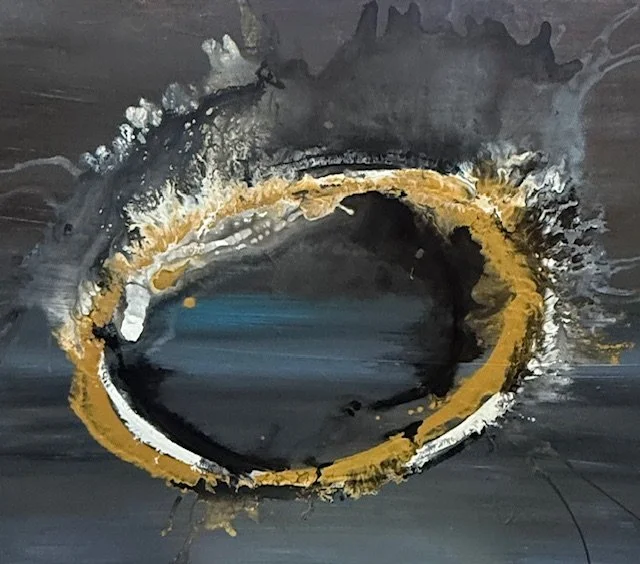
Sincerely, 2026. Acrylic on canvas. 76cm x 76 cm
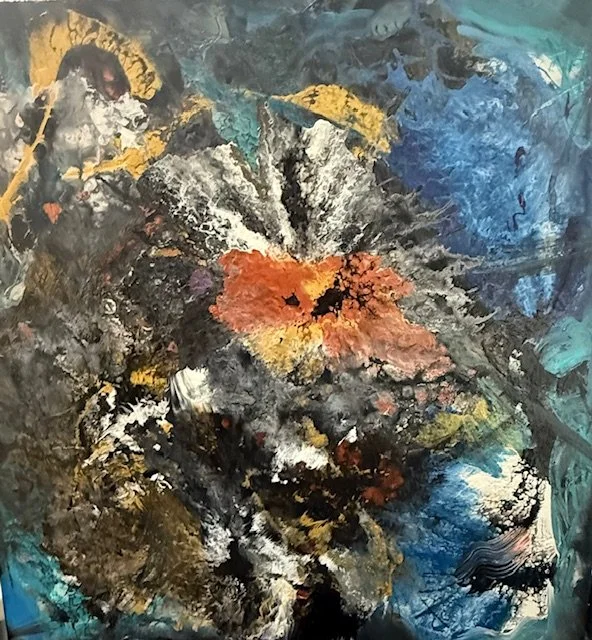
Prauscate, 2026. Acrylic on canvas. 76cm x76cm
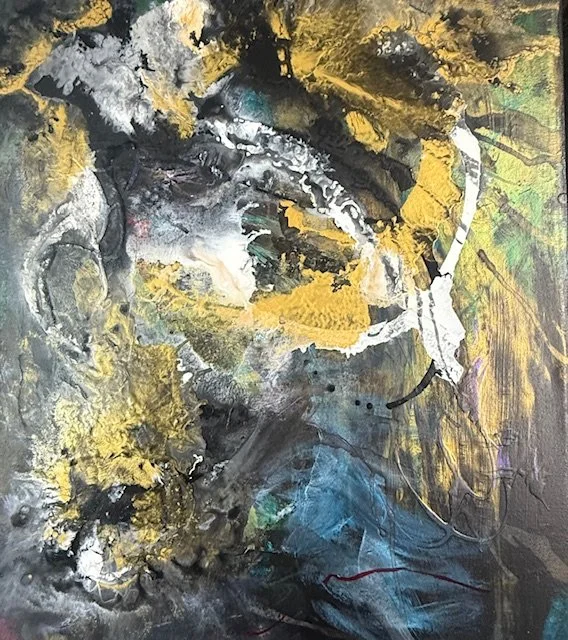
Approaching the Crossing, 2026. Acrylic on canvas. 61cm x 76cm
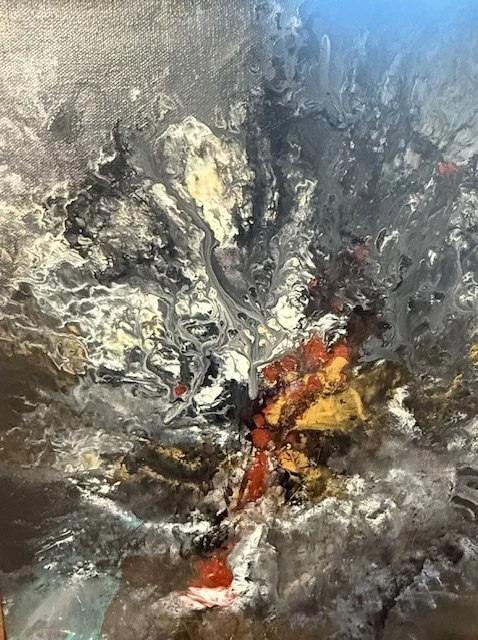
What remained Hidden, 2026. Acrylic on canvas. 76cm x 76cm
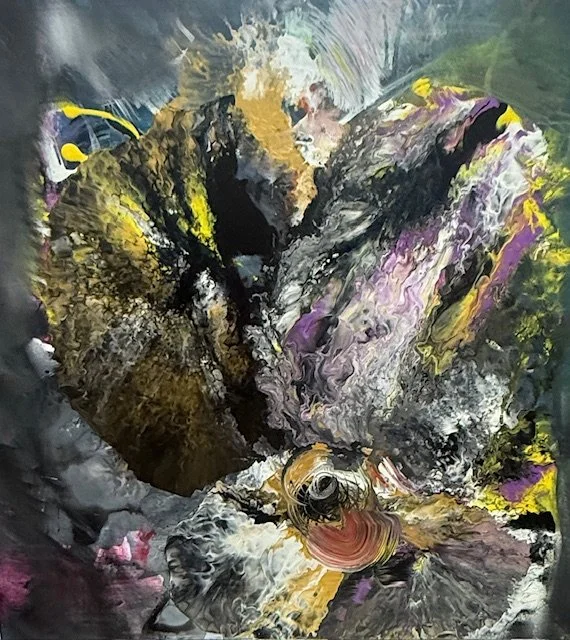
What we Carry, 2026. Acrylic on canvas.76cm x 102cm
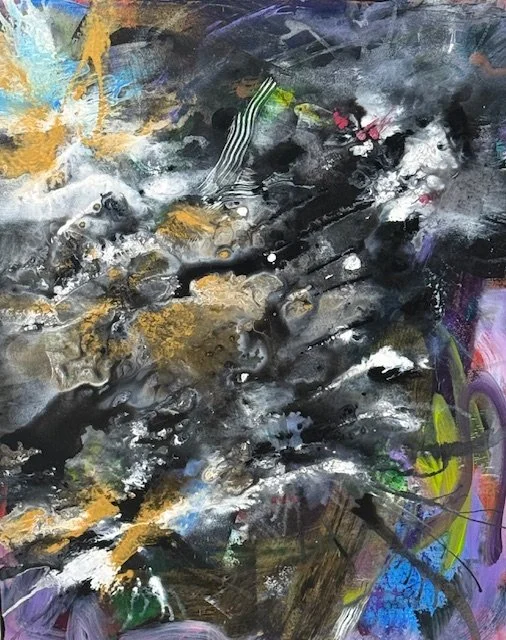
The Life We Build, 2026. Acrylic on canvas. 92cm x 92cm
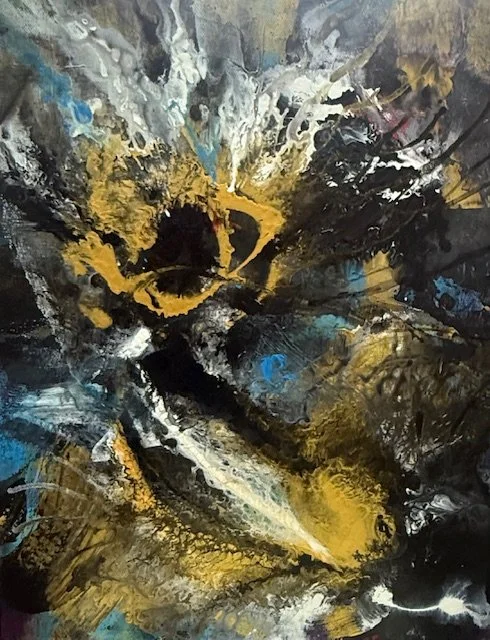
The Secret Carried, 2026. Acrylic on canvas.92cm x 92cm
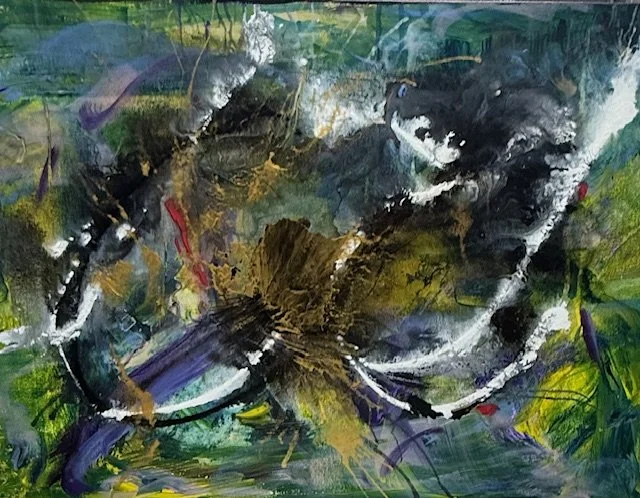
The Second Loop, 2026. Acrylic on canvas.76cm x 76cm
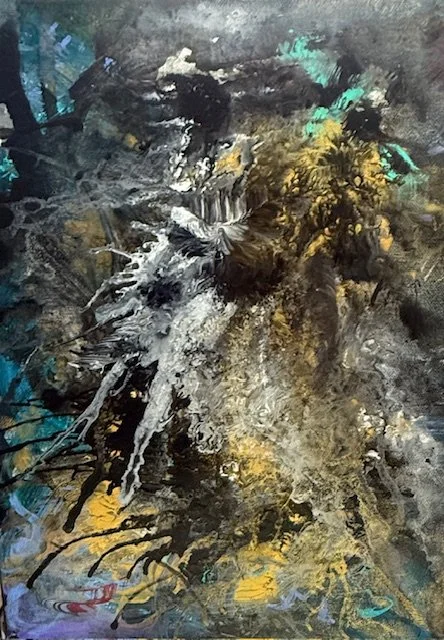
What We Hold for Others, 2026. Acrylic on canvas. 76cm x 76cm
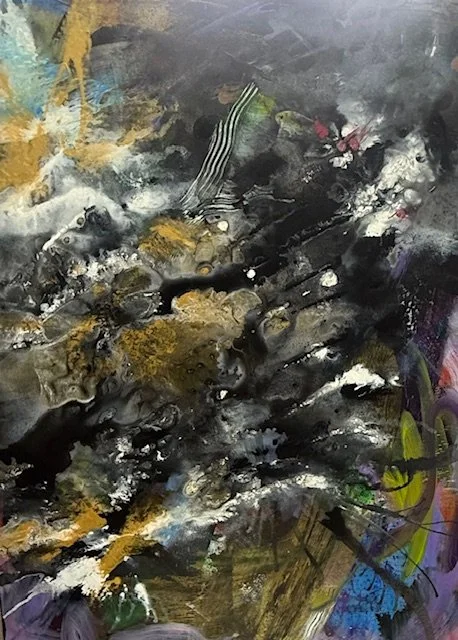
Eighty Thousand Witnesses, 2026. Acrylic on canvas. 76cm x 76cm