
Joanna Levesley
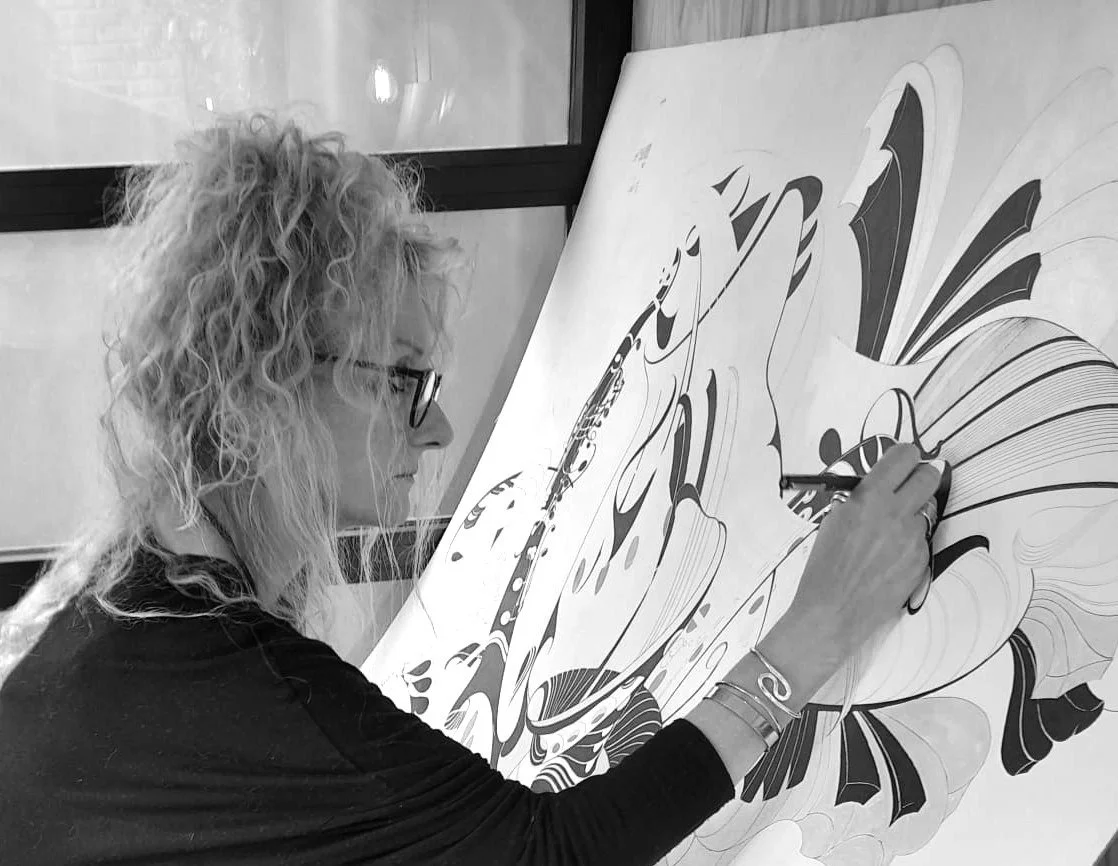
Joanna, your drawings seem to operate at the threshold between figuration and abstraction, where forms emerge only to dissolve again into ornamental systems. How do you conceive of this oscillation between image and structure, and what role does ambiguity play in sustaining the viewer’s attention over time?
I think of that threshold as one of the most interesting places to work. I’m not interested in resolving everything too neatly, because I want the viewer to remain in a state of discovery. When an image is partly revealed and partly hidden, it asks for more time. Ambiguity allows the work to breathe — it gives the viewer room to enter it, to question what they are seeing, and to return to it with fresh eyes.
In your practice, the line appears less as a descriptive tool than as a generative force, a kind of visual syntax that produces space, rhythm, and even narrative. Do you think of the line as a language in itself, and if so, what kinds of meanings or sensations are you attempting to articulate through its repetition and variation?
Yes, I do think of line as a language. It is probably the most direct language I have, but also the most expressive. Through repetition, variation, density, and restraint, line can create tension, softness, movement, and stillness. What I’m trying to articulate is often something felt rather than explained — rhythm, atmosphere, emotion, and the sense that a drawing can unfold like a thought or a piece of music.
Much of your work seems to resist a fixed focal point, instead unfolding as a continuous field of visual events. How conscious are you of this decentralised composition, and do you see it as a response to traditional hierarchies within pictorial space?
I am very conscious of it. I often want the eye to move rather than settle too quickly. In that sense, yes, it is a response to traditional hierarchies. I’m interested in compositions where every area matters, where the viewer has to explore rather than simply locate a single main subject. That creates a more immersive experience, and it feels closer to how I see the world — as layered and constantly shifting.
You describe music as a three-dimensional experience that informs your drawings. Could you elaborate on how sonic structures translate into visual rhythms, and whether certain genres or compositions shape the tempo or density of your linework?
Music has always felt spatial to me. I don’t experience it as something flat or purely auditory — I feel it as movement, texture, and structure. The tempo of a piece can affect how quickly or slowly a drawing develops, and the emotional character of the music can influence the density of the linework. I’m drawn to music that has layering, atmosphere, and emotional complexity, because those qualities naturally translate into my visual language.
Your compositions often withhold a stable or fully legible structure, inviting the viewer into a prolonged act of interpretation. Do you see this withholding as a conceptual strategy, and what kind of psychological or perceptual engagement are you hoping to provoke?
Yes, I do see it as a strategy, but not in a cold or calculated way. I want the viewer to participate in the work, not just consume it quickly. By withholding total clarity, the drawing becomes a space of curiosity. I hope it encourages a slower kind of looking — one that involves attention, uncertainty, and perhaps even a little discomfort, because that often leads to deeper engagement.
The influence of Art Nouveau, Dalí, and Escher is often mentioned in relation to your work, yet your drawings possess a distinctly contemporary sensibility. How do you negotiate the tension between historical reference and the desire to produce something that feels formally and conceptually current?
I think influence is inevitable, but I don’t want it to become imitation. What I take from artists like Dalí, Escher, or Art Nouveau is not a style to copy, but a way of thinking — about transformation, line, structure, and visual possibility. My aim is always to let those influences pass through my own experience and process so that the final work feels rooted in the present, even if it carries echoes of the past.
As a self taught artist, you developed your practice outside institutional frameworks. In what ways has this independence shaped your understanding of artistic authority, discipline, and experimentation?
Being self taught has given me a strong sense of independence. I’ve had to trust my instincts and build my own way of working, which has shaped how I think about authority. For me, discipline comes from commitment rather than instruction, and experimentation comes from curiosity rather than permission. That freedom has been important, because it has allowed my work to develop in a way that feels genuinely mine.
Many of your works draw on motifs from nature, yet they are transformed into elaborate, almost architectural systems of line. How do you approach the translation of organic forms into these intricate visual structures?
I start with the essence of something rather than its literal appearance. Nature gives me forms, patterns, and rhythms, but I’m usually interested in what happens when those forms are reimagined through line. The translation becomes a process of filtering and building — taking something organic and allowing it to evolve into something more constructed, more symbolic, or more dreamlike.
The monochrome palette in much of your work creates a strong emphasis on contrast, density, and rhythm. What draws you to this limited colour range, and how does it shape the emotional or conceptual atmosphere of your pieces?
Monochrome allows me to focus on structure, line, and contrast without distraction. I’ve always been drawn to the clarity and intensity of black and white because it creates a sense of drama and precision. It can feel quiet, but also very powerful. Emotionally, it often gives the work a timeless quality — something pared back, but still full of tension and atmosphere.
There is a sense in your drawings that time is embedded within the image, that the accumulation of lines records the duration of the act of making. Do you think of your works as temporal objects, and how important is the process of repetition to their final form?
Yes, absolutely. The drawings carry the memory of their making. Each line is a decision, and over time those decisions become visible as layers. Repetition is very important to me because it creates both structure and duration — it becomes a kind of rhythm of labour and attention. I think that is part of why the work has the quality it does: you can feel the time inside it.
Your use of French curves introduces a mechanical precision into what otherwise appears to be an organic and intuitive process. How do you understand the relationship between control and spontaneity in your practice?
I see them as working together rather than opposing each other. The French curves give me precision, but what happens with them is not entirely controlled. There is always room for variation, hesitation, and intuition. I like that balance. It reflects the way I think creatively — with structure as a foundation, but with enough freedom for the drawing to surprise me.
The viewer is often compelled to move physically closer to your works in order to register their intricate details. How important is this bodily engagement, and do you consider scale and density as tools for shaping the viewer’s experience?
Very important. I want the work to ask something of the viewer physically, not just visually. Moving closer changes the pace of looking. It creates intimacy, and it allows the work to reveal itself gradually. Scale and density are both part of that experience — they shape whether a piece feels immediate, immersive, or quietly demanding.
Many of your compositions seem to hover between the decorative and the symbolic. Do you see ornament as a conceptual element in your work, or is it primarily a formal concern?
For me, ornament is absolutely conceptual. I’m interested in the idea that something decorative can also carry meaning, weight, and psychological depth. Ornament can be dismissed as surface, but I don’t see it that way. In my work, it often becomes a way of thinking about complexity, beauty, repetition, and the human impulse to make meaning through pattern.
Your works frequently explore themes of transformation and duality. How do these ideas manifest in your visual language, and are they tied to specific personal or philosophical concerns?
Yes, they are very much tied to both. I’ve always been interested in states of becoming — things that are not fixed, but shifting. Duality appears in the tension between light and dark, structure and fluidity, presence and absence, control and instinct. These ideas reflect how I experience life as well: rarely simple, often layered, and always in motion.
The act of drawing, particularly in ink, carries an inherent sense of irreversibility. How does this condition affect your decision-making, and does it introduce a particular kind of tension or concentration into the process?
It definitely does. Ink requires a certain level of commitment, which I actually value. It forces concentration because you can’t endlessly undo or revise everything. That irreversibility creates focus, and I think it sharpens the decision-making process. There is tension in that, but it is a productive tension — it keeps me fully present while I’m working.
In some of your works, recognisable figures or objects emerge from dense abstract fields. What determines the point at which figuration enters the composition, and how do you decide how much clarity to allow?
It usually happens intuitively. I often begin with a sense of energy or structure, and then a figure or form begins to emerge when the composition asks for it. I’m very interested in that moment where something becomes recognisable but not fully resolved. Too much clarity can close the drawing down, so I try to leave enough openness for the viewer to complete some of the image themselves.
Your drawings seem to invite prolonged looking, almost as if they are constructed to resist quick consumption. How do you position your work in relation to a contemporary visual culture that often privileges speed and immediacy?
I think my work is almost a quiet refusal of that pace. We are surrounded by images that ask for only a second of attention, and I’m interested in the opposite — work that slows people down. I don’t see that as being difficult for the sake of it. I see it as creating a different kind of space, one where looking becomes more active, more reflective, and more rewarding.
The notion of the drawing as a site of contemplation appears central to your practice. Do you see your work as offering a kind of visual refuge, or is it more concerned with unsettling the viewer’s expectations?
Probably both. I would like the work to offer a moment of refuge, a place where someone can pause and enter a quieter state of attention. But I also want it to challenge expectations a little. I’m not interested in making images that simply soothe. I’d rather create something that feels contemplative, but also slightly unsettling or enigmatic.
As your career progresses and recognition increases, how do you maintain the intimacy and concentration that are so evident in your linework, particularly when faced with larger audiences and institutional contexts?
I try to keep to the same core values: attention, honesty, and process. Recognition can be encouraging, of course, but it doesn’t change the fact that the work still begins in a very private and concentrated space. I protect that as much as I can. No matter the audience, I still need to work in a way that feels intimate and sincere, otherwise the drawing loses its life.
Looking ahead, do you imagine your practice expanding into new materials, scales, or spatial configurations, or do you feel that the discipline of ink and line still holds unexplored conceptual territory for you?
I’m open to expansion, but I don’t feel finished with ink and line at all. There is still so much unexplored territory there for me — technically, visually, and conceptually. I may continue to experiment with scale or presentation, but the discipline of line is still central to my practice. It remains a very rich language, and I think I’m still learning what it can do.
Web: https://joannanouveaustudio.com/
Instagram: @joannanouveaustudio
Facebook: joannanouveaustudio
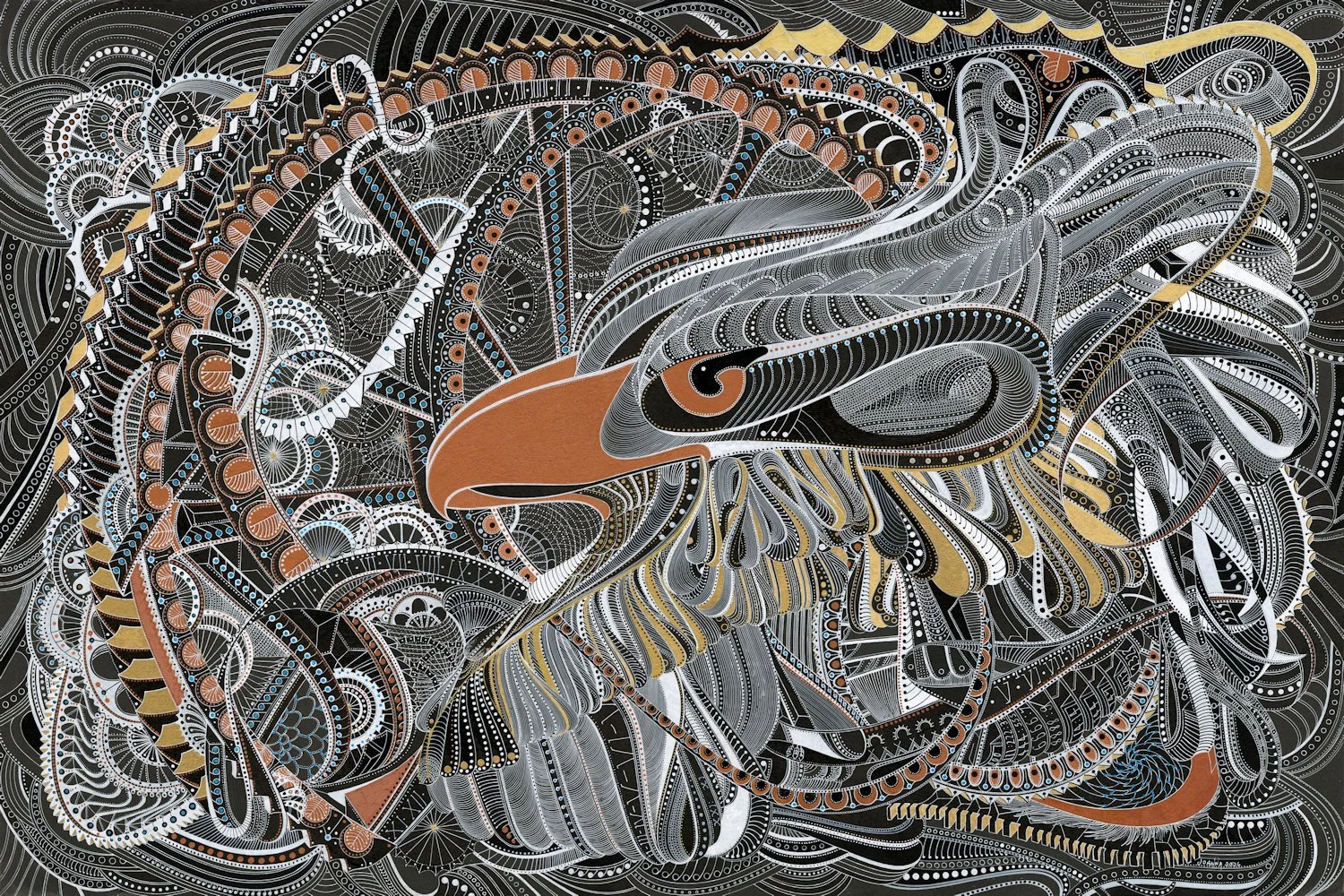
Eagle Of Nationssm
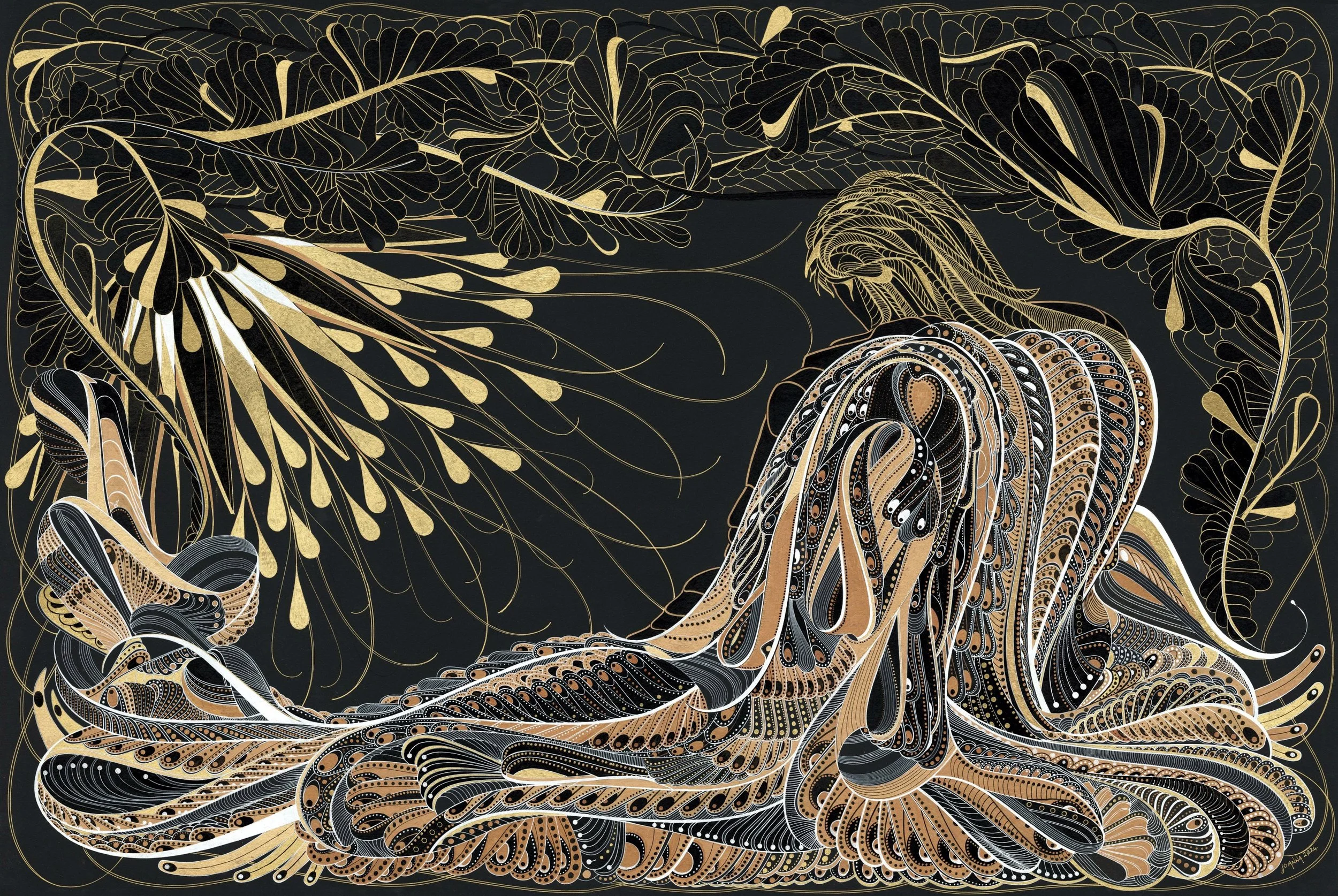
The Guardian At Sunrise
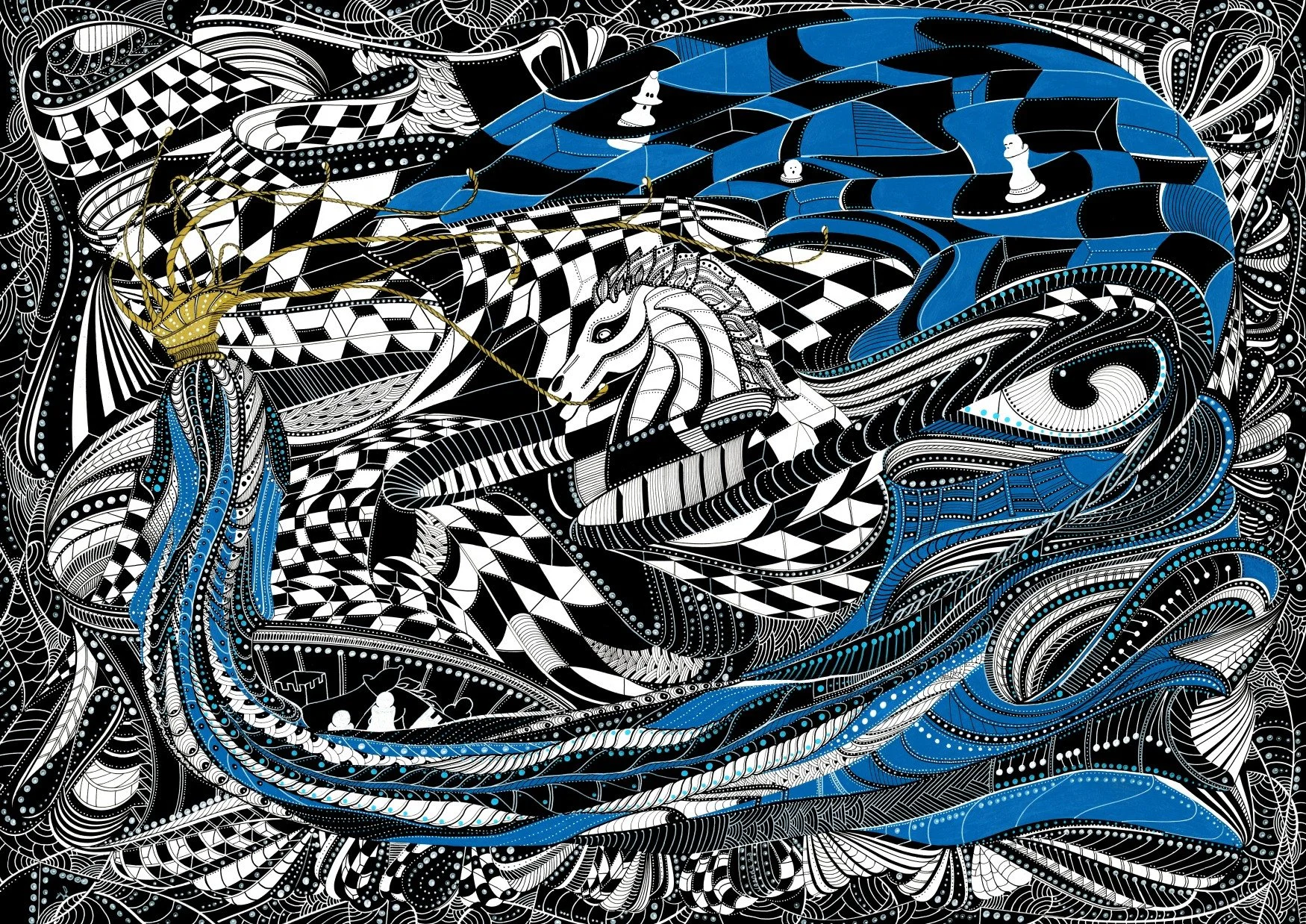
Queens Gambit
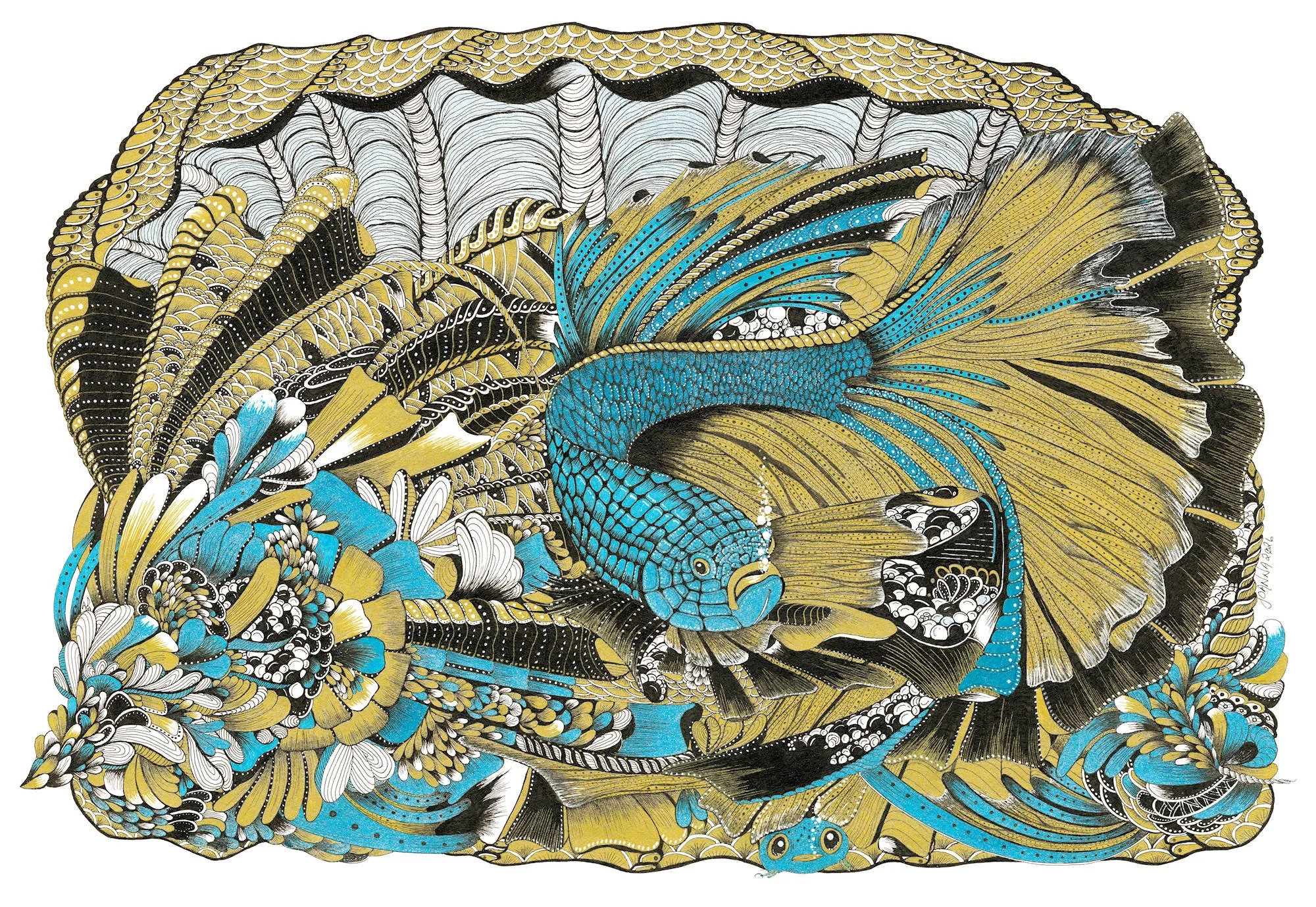
Inside the Shell
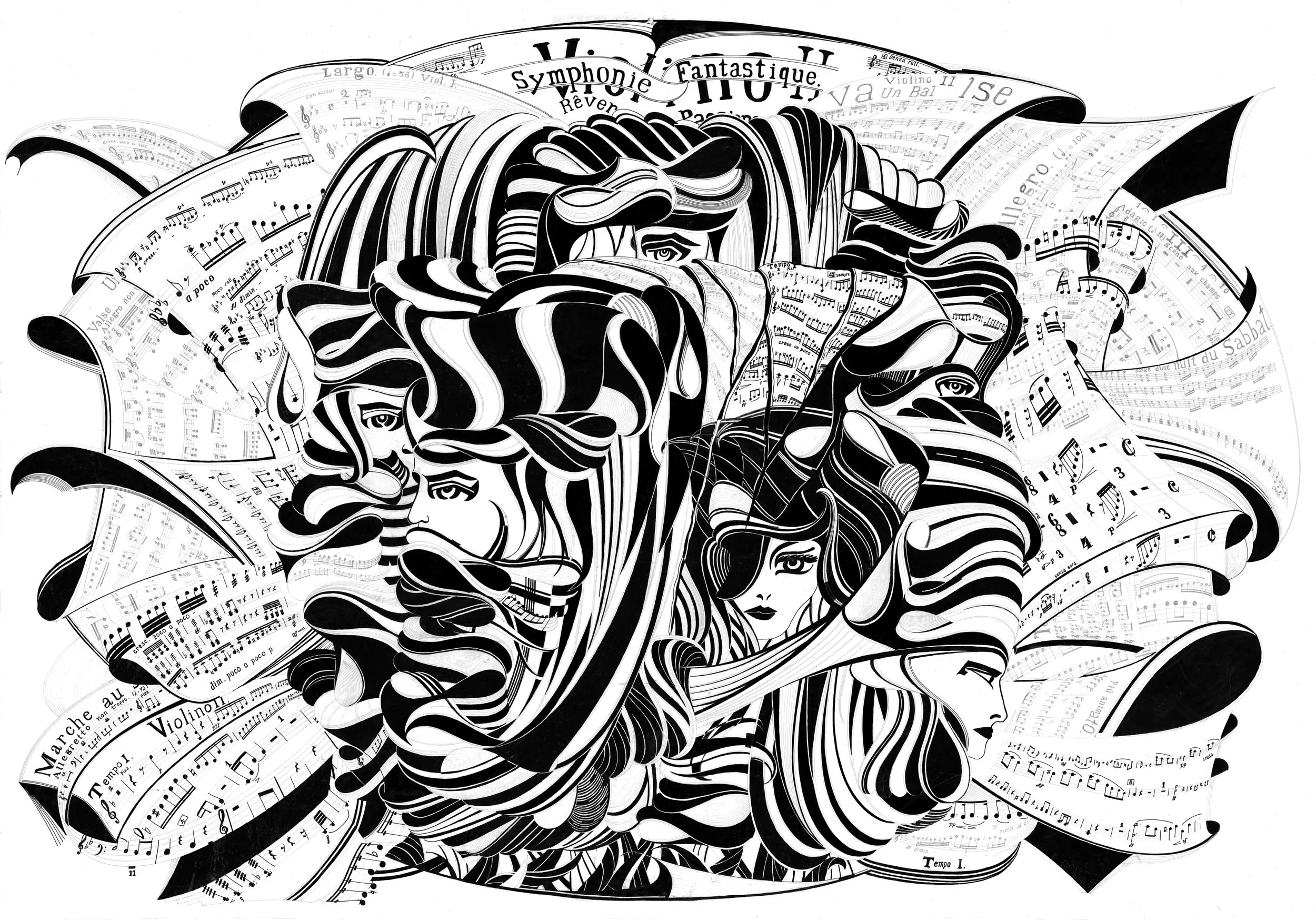
The Rhythm of Life 5
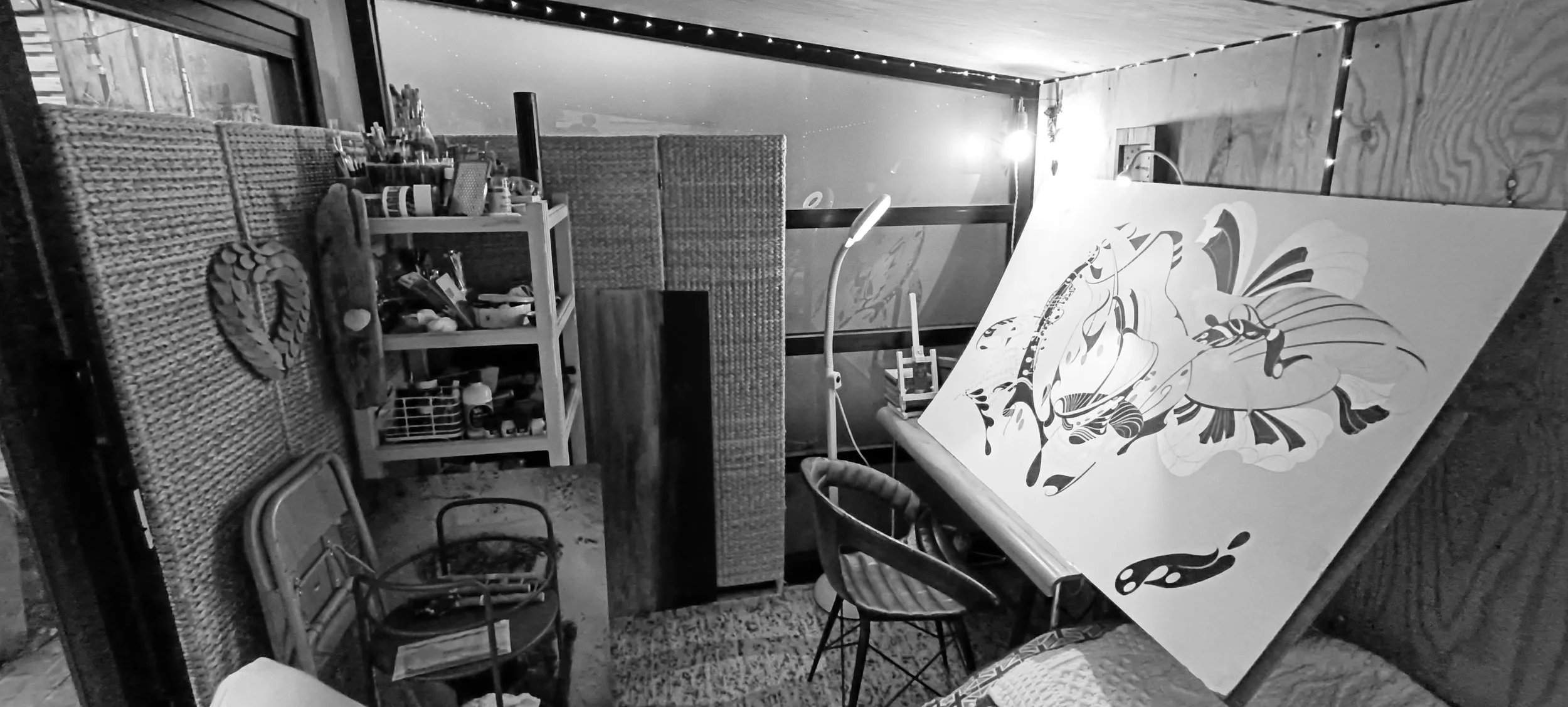
Joanna Levesley Studio
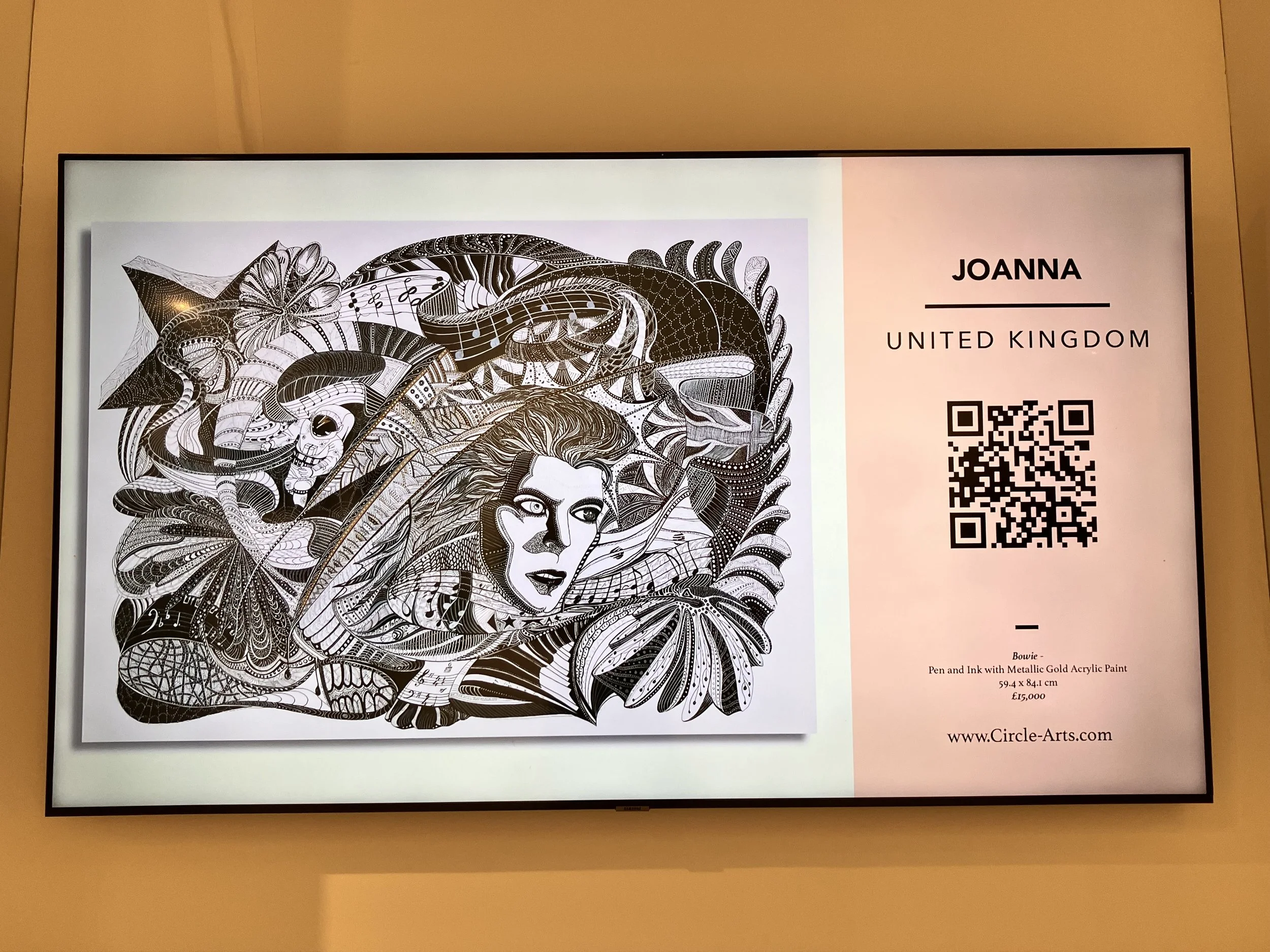
Circle Arts Red Dot 2024
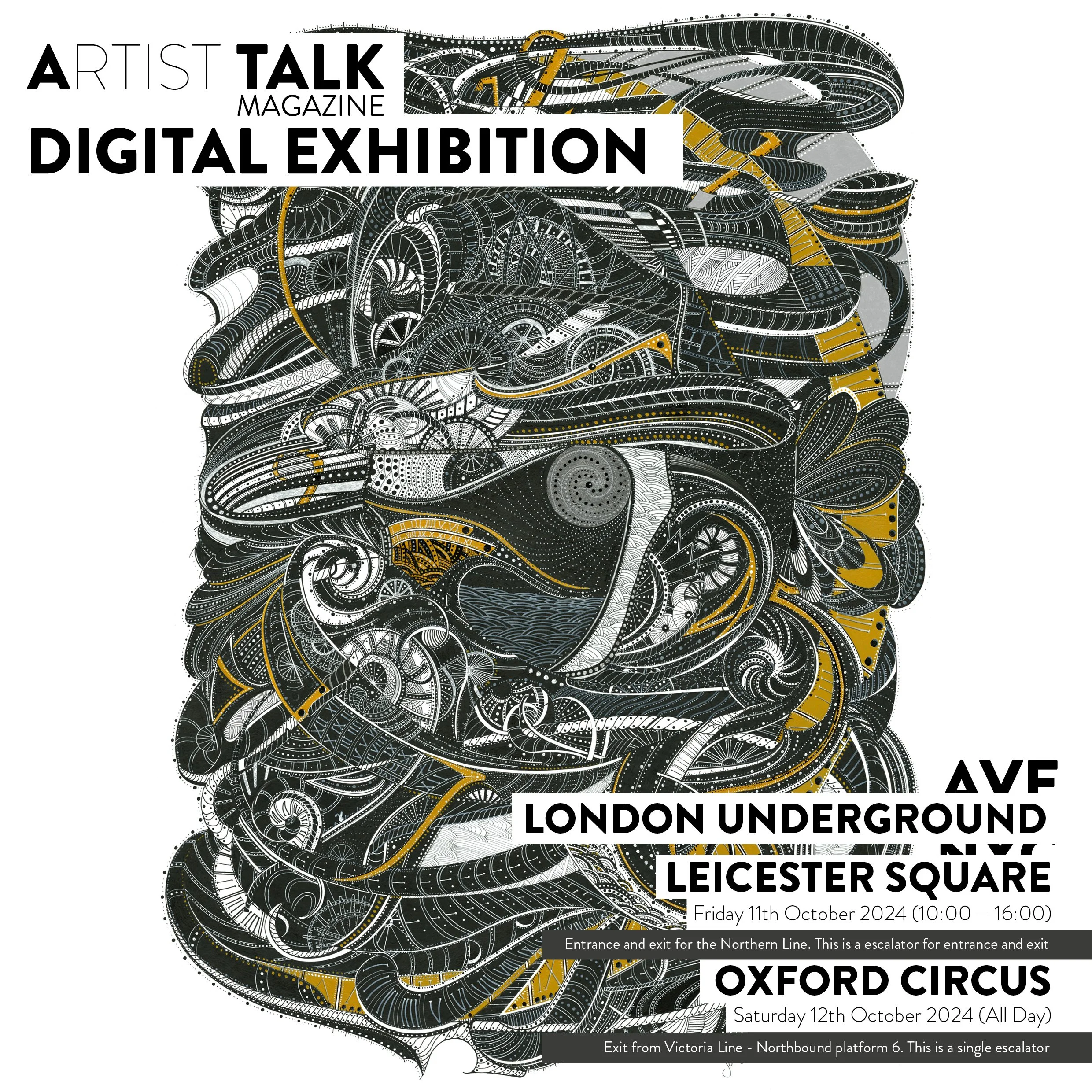
Promotion Square
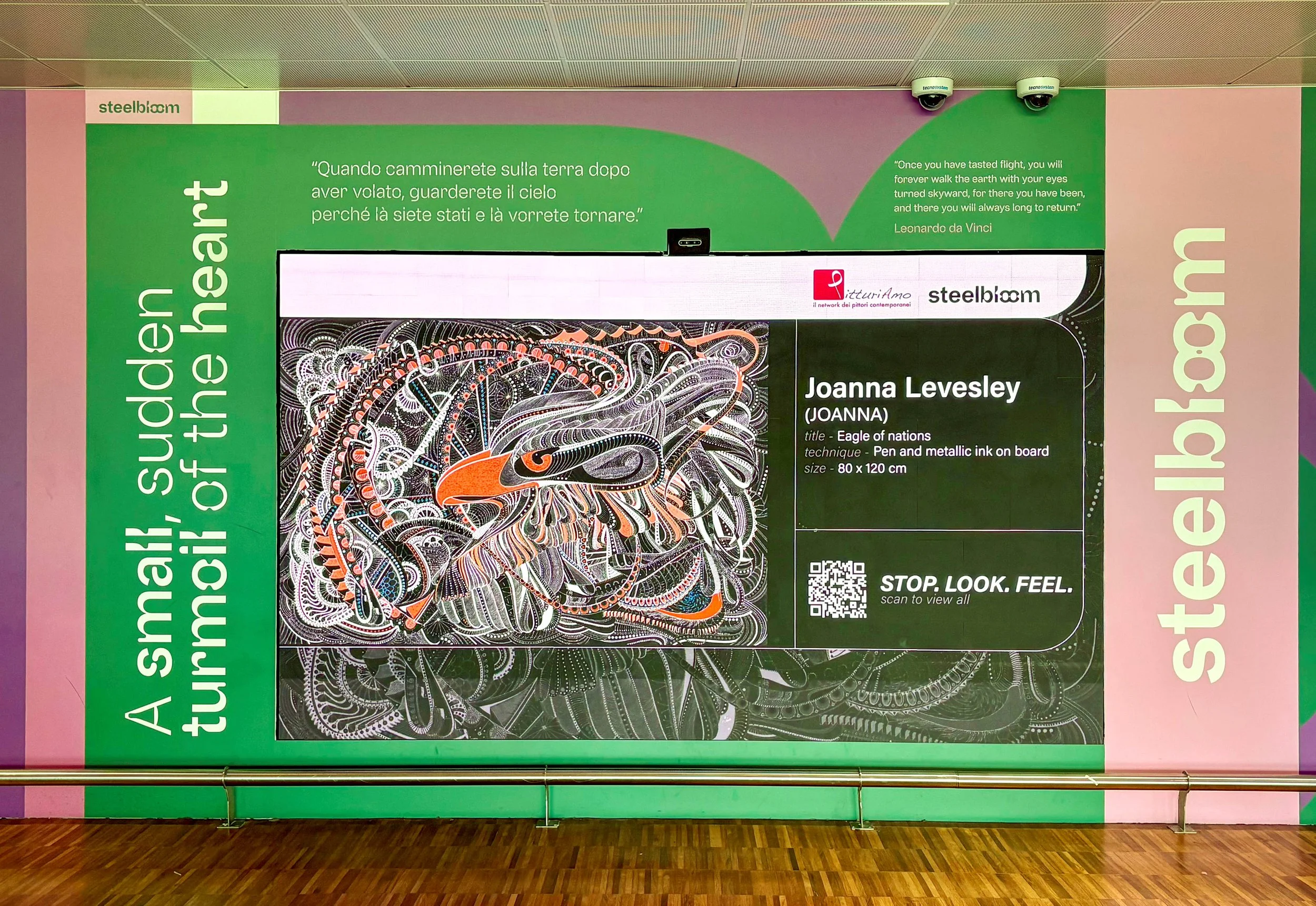
Steel Bloom Exhibit