
Vian Borchert
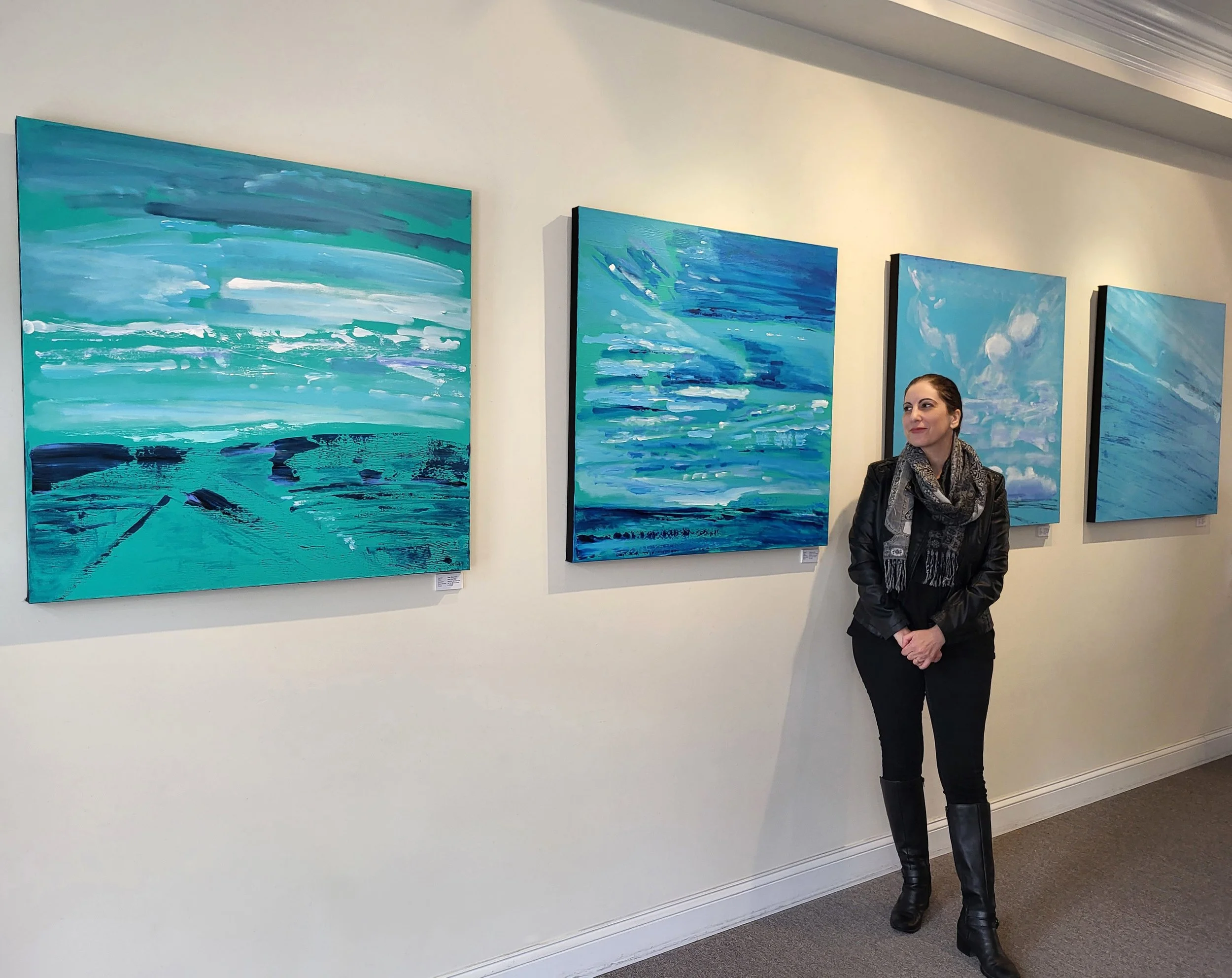
Vian Borchert is an acclaimed artist known for her abstract expressionist style, characterized by a poetic take. Vian is a graduate and "Notable Alumni" of the Corcoran College of Art and Design at George Washington University in Washington, DC. Borchert has exhibited for many years in over 100 exhibitions in both group and solo exhibitions worldwide. Borchert serves as the Art Lead for the Oxford Public Philosophy Journal, based at Oxford University, UK. Her work has been showcased internationally in museums and key galleries in major cities, including the Louvre's Museum's Carrousel du Louvre in Paris, Medinaceli DeArte Museo Contemporáneo in Spain, The SAM Museum in Pennsylvania, Bank Art Fair in Seoul South Korea, Art3f International Contemporary Art Fair in Monaco at the prestigious Chapiteau de Fontvieille, AVA Art Festival in Osaka, Japan at Enokojima Art Centre, the World Bank in NYC, the Venice Biennale, Art Basel Miami Beach, 1stDibs Design Center in NYC along with numerous private collections. Borchert's artwork has been widely published in the press, appearing in over 100 publications including esteemed World Art News, Museum Week Magazine, Artist Weekly magazine and The Washington Post. She was recently named by MSN as one of the "Top 10 Most Creative Artists". Borchert is also an art educator, teaching fine art classes to adults in the Washington DC area in venues such as the historic Arts Club of Washington. Renowned for her abstract expressionist style and what she defines as "visual poetry," Borchert transforms the essence of nature into transcendental visual metaphors for personal journeys, the human condition, and our connection to a larger world. Borchert is recognized for her philosophies on art along with pioneering intellectual thought and creativity in the art world. Besides having her artwork exhibited in key galleries, her paintings can be acquired through "1stDibs" and "Artsy", which are the world's leading marketplace of best galleries and museums.
Vian, your paintings declare themselves as visual poems, which suggests not illustration but a transfer of poetic logic into pigment. What, for you, is the equivalent of syntax in painting: the cut, the line break, the enjambment, the caesura, the moment where meaning does not resolve but deepens through suspension?
Beautiful question. As a visual artist and an award-winning poet, I have always wanted my work to carry a lyrical flow and be presented to the world much like a poem: suggestive, mysterious, yet rich with substance and meaning. The syntax in my painting is not found in literal commas, pauses, or grammatical shifts, but rather through imagery, composition, balance, movement, and, of course, color theory. These elements work together to give the painting its strength and resonance. Much like a poem that is felt deep to the bone through its emotional pull, my paintings are meant to be experienced rather than simply seen. They aim to create meaning without direct explanation, offering symbolism and philosophical visual dialogue that invite the viewer in while allowing feelings to linger, and ultimately arrive at a state of resonance.
Expressionism is often narrated as the triumph of interiority over depiction, yet your practice repeatedly returns to nature as a stabilizing and renewing force. How do you negotiate the tension between the landscape as an external field and the psyche as an internal weather system, and where does the work ultimately locate “truth”: in observation, projection, or a third register that scrambles both?
When I paint, I paint my world, yet it is filtered through my inner feelings and guided by my subconscious. My work draws from childhood memories, nostalgic journeys by the sea, and dreams that aspire to become reality. These emotional projections merge and mingle to form my body of work, a collection of abstracted seascapes and skyscapes rooted in nature which I deeply love and admire. Through my personal aesthetics and expressive style, I present an appreciation of nature and its beauty as I experience it inwardly.
In this balance, the landscapes of my life and my inner emotional truth come together on the canvas through what I call expressionist abstraction. These works capture fragments of who I am / the person behind the art. In being truthful to my world and its surroundings, that honesty is delivered within the work itself. For me, the deeper truth in painting emerges from both observing nature and projecting emotion onto the canvas, allowing the two to merge through the act of painting into an entity both unified and authentic.
You speak about art as a universal language by which all comprehend, a claim that carries both utopian aspiration and historical risk. In an art world shaped by specialized discourse, institutional gatekeeping, and unequal access, what does universality actually mean in your studio: an ethical aim, an aesthetic strategy, or a communicative wager that you continually test against misreadings?
When I say that my art is a universal language by which all can comprehend, I mean this quite literally. Regardless of language, borders, or countries, art operates visually, uniting people from all backgrounds and walks of life through shared seeing, observing, and immersion. Much like music connecting us on an emotional level beyond words, art does the same through the visual realm rather than the auditory. When I create, I create first and foremost for myself. My art is my vision: what I see, what I think, and what I offer to the world. I do not concern myself with calculations, numbers, institutions, or even the art world itself. Instead, I focus on the ideas moving through my mind, the canvas before me, and the brush that carries those thoughts onto the surface. What I ultimately present is a slice of myself, created without preconceived notions of outcomes or rewards.
For me, art equals freedom: a release from the chains that weigh us down and the barriers that separate and disconnect us. In this spirit, I invite viewers to participate by bringing their own perspectives and personal interpretations to the work, allowing the experience to evoke something uniquely their own. Hence, through my visual and artistic choices, especially in color and form, the work becomes a vehicle for emotion and a means of communication with the outside world.
Many abstract painters describe their work as non-narrative, yet you frame yours asa dialogue between humanity, painting, and nature. What are the terms of that dialogue today, when “nature” is increasingly mediated by climate anxiety, surveillance images, and digital proxies, and how does the work insist on a lived encounter rather than a picturesque idea?
In essence, my artwork aims to keep nature revived and emotionally felt and lived, not distant, especially in a highly mediated, digital age. In such, The work becomes a bridge, using abstract aesthetics to visually communicate hints of a world where nature takes center stage, celebrated for its endless beauty and the abundance it offers us. This is why I return to nature again and again, allowing it to remain the central force in my work.
For me, nature is a source of guidance. When I have questions, I look to nature. When I feel lost, I look to nature for answers. When my mind feels overwhelmed, I turn to nature to clear my thoughts and restore balance. I emphasize nature because we, as humans, come from it, belong to it, and ultimately return to it. That connection lives within all of us, and as an artist, I feel it deeply and instinctively.
I do not concern myself with how other artists define or label their work. My art reflects my personal journey and vision. Even when expressed through abstract colors and forms be it clouds, blue expanses, seascapes, and skyscapes, it remains rooted in what I love. At its core, the work also carries a quiet message: to love Mother Earth, to care for it, and to fully experience its endless beauty from sunsets and sunrises to twilight panoramas.
Your biography moves between major cultural sites, from museums and embassies to Times Square’s spectacle and art fair circuitry. How do these radically different contexts re script the viewer’s attention, and what happens to a painting’s claims to contemplation when it is thrust into environments optimized for speed, consumption, and distraction?
Of course, different settings can elicit different experiences for viewers. Yet, I have always believed that I am, at heart, a people’s artist. My art is created for everyone to love and engage with, regardless of the space it occupies or where it is displayed. The work seeks to deliver a message of elevation and transcendence guiding the viewer into a meditative state through painterly brushstrokes and lyrical fields of color. In this way, the paintings become a bridge to rejuvenation, engaging the visual, intellectual, and emotional senses while offering an ascent of the spirit and an uplifting resonance of the soul.
The work is meant to speak to every passerby, to catch the eye, invite the mind to wander, and create a moment of pause where one can truly take it in. After all, I am a firm believer in the power of art and its ability to heal, enrich lives as well as make the world a better place, regardless of the speed, consumption, and distractions that often crowd our daily lives.
The recurring blues in your work read not only as a personal signature but as an art historical pressure point: the spiritual, the melancholic, the atmospheric, the oceanic, the technological. How conscious is your relationship to blue as a coded color, and do you treat it as a vehicle of transcendence, a register of grief, a sensory index of light, or a philosophical problem that resists closure?
I believe your question touches on many important aspects of my use of blue. Yes, beyond being my favorite color, blue functions as a kind of pressure point evoking the spiritual, the melancholic, the atmospheric, the oceanic. Moreover, It serves as a vehicle of transcendence, a register of grief, a sensory index of light, and a philosophical space for questions that are still unanswered, a story slowly unfolding over time.
At its core, though, blue is deeply personal. It always brings me back to my childhood by the Mediterranean Sea where I was born. The aquas and blues of its hues, the soft summer nights scented with sea salt, the endless horizon stretching above the shore make an appearance through my work. My childhood walks along the beach, what I saw, what I felt; all of those feel-good memories transform into the blues that appear in my work, carrying both emotion and memory onto the canvas.
You describe your process as “feverish,” driven by early hours, solitude, coffee, and music, a set of rituals that sound like a self-authored ecology. What do these rituals protect you from: the noise of the market, the expectations of professionalism, the temptation to overexplain, or the fear that the work’s intuitive momentum could collapse under analysis?
My work process, in a gist, is simple and direct. I prefer working early in the morning, from the first light of dawn, when the day is just beginning. This allows me to avoid noise and distractions and to work within the stillness and silence of early morning, my favorite time of day when the sun slowly reveals itself and light gently hovers over the earth. Coffee is an essential part of this ritual. Upon waking, I pour myself a fresh cup of strong, dark coffee, not only to awaken my body but also to ignite my creative energy. During the work process, I do not overthink. I describe it as “feverish,” a state of deep concentration and focus on the task at hand, almost like a surgeon at the operating table. This level of intensity is necessary for me to enter what I would call a Zen zone, my own inner world where the noise of everyday life is completely shut out. Working in solitude during these early hours, accompanied by coffee and sometimes music, becomes an almost magical experience. It is a deeply private and immersive way of creating, one in which I build a world of my own. Ultimately, this process is meditative, guiding me into a state of calm where peace, harmony, and inner balance take precedence.
Your statement suggests that the abstractness of your images offers symbolism for a mysterious future. How do you conceive “the future” here: as a formal horizon within the painting’s space, as a political and ecological condition outside the studio, or as a psychic time that the work rehearses through repetition and variation?
One could say that my approach to “the future,” and how it is depicted in my work, is a combination of all of these elements. In this sense, the future in my work is visual, unfolding through abstraction, while also being informed by the world beyond the studio, by what is happening around us, whether through the news or through ongoing occurrences in nature. At the same time, it is psychological, emerging from within me as an individual, shaped by my inner thoughts and subconscious mind. Ultimately, the work becomes a reflection of the outer world intertwined with my own inner world, imagined and projected through abstraction.
The phrase “visual world” implies a constructed reality rather than a window onto one. What are the governing laws of this world: gravity, turbulence, drift, accumulation, erasure, rupture, harmony, and how do you decide when the world of the painting has become coherent enough to stand as an experience rather than an arrangement?
Aha! This is precisely where the distinction lies between a truly accomplished artist and one who is still dabbling at an amateur level: knowing when a painting is complete and ready to be shared with the public. I have been creating artwork for over 30 years and have worked as an art educator for 20 years. My expertise comes not only from making art, but also from teaching it, from years of experience, formal knowledge, and the natural talent that allows me to intuitively know when to add, subtract, or declare a painting a finished entity. This understanding is the result of accumulated knowledge of composition, color theory, and lived experience, coming together over time. In simple terms, this level of certainty cannot be rushed; it must be built over years of practice and reflection. Ultimately, the internal logic of my paintings, combined with my instinct for recognizing when a visual work feels whole and alive, tells me when the painting is complete, when it is enough!
You have a certificate in art therapy and speak about art as healing and rejuvenation, yet the language of healing can sometimes soften conflict and contradiction. How do you avoid producing consolation as a substitute for complexity, and where in your work do you allow discomfort, ambiguity, or even refusal to remain active rather than resolved?
Achieving a true balance between these two forces is, in itself, an art. As a professional and accomplished artist, I consciously navigate and hold both at once, embracing complexity while also allowing space for healing, reflection, and introspection to appear through the work. What I create comes from who I am: a deep and complex person, and the imagery carries that fullness. At the same time, it reflects who I aspire to become: a whole, healed individual who is attuned to inner peace and continually striving toward harmony, transcendence, and elevation, not only through the work, but within myself as well. In this sense, one must become a master of balance, using art as a vehicle for healing while still allowing challenge, discomfort, and unsettlement to remain present. The act of painting opens into a space that is not only expressive but also restorative, fueling growth and renewal in my ongoing artistic journey. I do not see conflict between these impulses; rather, they intertwine naturally, merging and coexisting within my work.
You are also an award-winning poet, which raises the question of translation across mediums. When you move between writing and painting, what gets lost and what becomes newly possible: precision versus excess, argument versus atmosphere, metaphor versus material fact, and do you ever find that one practice critiques the other?
For me, both poetry and painting are forms of self-expression, yet each carries its own distinct identity. They naturally differ from one another. In poetry, words provide precision, allowing metaphor, argument, and nuance to be carefully chosen to convey a point. Painting, on the other hand, emphasizes emotion and atmosphere, offering sensory experiences through textures, colors, and visual forms in ways words cannot. Moving between the two practices opens new possibilities and ways of seeing, which, for me, is the essence of growth and evolution as a creative person.
Your work connects past to present while approaching the future with wonder, a temporal arc that echoes both personal memory and cultural history. How does memory operate in your paintings: as a set of images you return to, a sensation of light and place, a bodily archive, and what role does abstraction play in protecting memory from becoming mere nostalgia?
In my work, I strive to weave together the past, present, and future, while allowing my personal memories and history to surface onto the canvas. Certain imagery, such as the blue sea, recur throughout my art, carrying with them the weight of memory. Through the play of light, color, and place, the emotions stored within my body are expressed and released into the work. Abstraction serves to keep these elements both alive and meaningful, allowing sentiment to exist without it being mere nostalgia.
In your interviews you speak about the subconscious and its corridors as a site the work searches. Do you consider the studio a kind of analytic chamber where the painting functions like a dream object, or is the subconscious for you less psychological than cosmological, a shared reservoir rather than an individual interior?
My art is both a personal exploration of my own mind and a way of connecting to a larger, almost cosmic space, a portal where dreams emerge. One of the main reasons I make art is to tap into my subconscious, the source of creativity, and to explore my abilities as a creative individual. The subconscious is a mysterious realm within us, where connections to a larger, almost universal intelligence occur. It is a reservoir of not only one's own psychology but also our individuality, shaping who we are. In this sense, the studio becomes a kind of “dream lab,” where the painting allows my dreams to come forth along providing a space to explore my personal psychology.
You have exhibited widely and your work circulates through collectors and marketplaces. How do you think about the painting’s autonomy once it enters private space: does it become an intimate companion, a status object, a spiritual instrument, and what responsibility, if any, do you feel to the life the work lives after it leaves your hands?
Once a painting is sold and enters a purchaser’s home, office, or personal space, it takes on a life of its own. It acts not only as a companion but also as a status symbol, enhancing and enriching the space and interior it occupies. As a creator, I pour my mind and soul into each work, much like raising a child. You nurture them carefully, and eventually they must go out into the world to make their own impact. Similarly, once my paintings are acquired, they carry their own presence, conveying their message and becoming a cherished part of a home that values and appreciates them.
Teaching for decades means you have watched multiple generations encounter painting under shifting conditions, from analog craft to algorithmic attention. What have your students taught you about how perception is changing, and how has pedagogy sharpened or challenged your own commitments to materiality, slowness, and looking?
Teaching for over two decades has surely shaped both my perspective on students' artistic growth, along with my perception of my own art practice. Reflecting on these 20+ years, mostly teaching adults, I recognize the growing need for art education in today’s fast-paced, analytical world, as people seek a creative outlet from their daily routines. In my classes, I emphasize traditional hands-on methods and observational exercises that train the eyes, brain, and hands coordination, helping students see, draw, and paint more skillfully. The fact that my classes are often fully booked, with wait lists, I believe, is a testament and speaks to the effectiveness of my approach. Students frequently tell me that what sets my teaching apart from others is my step by step demonstrations, which guide them in creating art with skill and confidence. Being an artist first and a teacher second informs my teaching style. I remain true to myself and my artistic practice while guiding others. My instruction stresses on careful observation, taking the time to thoughtfully develop each work, and exploring a variety of materials to keep the creative process engaging and enjoyable.
Your practice sits at an intersection of expressionism, abstraction, and hints of impressionism and minimalism. Do you experience these labels as useful coordinates or as curatorial cages, and when you look at a finished painting, what criteria override style: intensity, clarity, risk, generosity, or the capacity to sustain thought over time?
My art truly blends styles from expressionism to abstraction, with touches of impressionism and even minimalism. While these labels don’t define or limit me, they do help the public classify and understand the type of work I create. I don’t focus on traditional still-life or pop art; so, labels provide a useful way for viewers and collectors to situate my work within a recognizable framework in terms of what category / style the work belongs to.
When I create, however, my focus goes beyond categorization. One of my goals is to engage the viewer in an intellectual and visual dialogue, sparking thought, evoking feeling, and inviting the viewers to experience the art fully, even to fall in love with it. In this process, what truly matters in a finished work is the intensity it conveys, its clarity, and its ability to hold attention and endure thought over time.
You have written and curated, including your role as Art Lead for an academic philosophy journal. How does philosophical discourse enter your studio without turning the painting into an illustration of ideas, and what concepts do you find painting can produce on its own terms that theory tends to describe only after the fact?
Philosophy inspires my artwork by shaping the concepts I explore, rather than dictating literal ideas. For example, my work on “infinity” reflects a philosophical inquiry into a question that has fascinated thinkers, from ancient Greek philosophers such as Aristotle and Plato to contemporary artists and scientists. My paintings also arise from reflections on perception, existence, and the passage of time, allowing thought to unfold through color, form, and materiality. Rather than illustrating notions, my art generates its own intellectual and emotional responses, creating experiences that theory can only describe afterward.
Many of your exhibition sites carry institutional and symbolic power: museums, the United Nations, and embassies. How do you understand the politics of display in these spaces, and in what ways can an abstract painting still speak to collective life, diplomacy, and shared vulnerability without collapsing into decorative neutrality?
To be frank, I don’t consider my artwork to be “decorative.” While many works of art, especially those widely seen online may fall into that category. My pieces, on the other hand, transcend decoration and occupy a deeper intellectual space. I feel truly grateful to have seen my work displayed in prestigious venues like museums, the UN, and embassies. Yet, like in any space, my abstract paintings continue to engage with all through our shared human experiences, and vulnerability without the reduction to mere decoration. For me, that is the essence of creating and exhibiting art: to allow people from all walks of life to experience its power. Hence, we circle back to the earlier question and my belief that art is a universal language, one that reaches the core of our humanity and connects us through its unique, almost magical power.
You often describe nature as a place of Zen, meditation, and empowerment. In an era when “mindfulness” is frequently commodified, how do you keep your relation to contemplation from becoming a lifestyle trope, and what formal decisions allow the painting to enact attention rather than simply depict serenity?
It is true that I often speak of nature as peaceful, empowering, and a source of “mindfulness”, and it truly serves that purpose for me. My art seeks to foster mindfulness and kindness not only toward the natural world but also toward one another, encouraging awareness of our surroundings beyond simply presenting a serene scene. In this way, the work bridges two experiences: the meditative act of engaging with a beautiful painting and the rejuvenation that comes from its calm, while also inviting reflection on the ideas behind it. Through its composition and the cognitive attention it entails, viewing my work can bring the mind closer to a Zen-like state of calm, peace, and harmony.
Given your commitment to painting as visual poetry, how do you imagine the viewer engaging with the work as a kind of reading: not to decode a single message, but to move through rhythm, pause, density, and resonance? Who do you picture encountering these paintings, and what kinds of attention do you hope the work can sustain over time?
I approach my paintings as visual poetry, where the experience unfolds through rhythm, density, and resonance while delivering metrophic meaning through its symbolic abstracted imagery. I imagine viewers moving slowly through the work, letting their attention wander and return, noticing shifts in color, texture, and light. My hope is that the paintings can sustain this kind of reflective engagement over time, sparking both visual delight and intellectual curiosity while inviting emotional response and thoughtful contemplation; hence, allowing each encounter to reveal something new about perception, feeling, and the world around us.
Website: https://www.vianborchert.com/
Facebook: Vian Borchert Fine Arts
Facebook link: https://www.facebook.com/VianBorchertFineArts
Instagram: @vianborchert
Instagram link: https://www.instagram.com/vianborchert/
Twitter / X: ViansArtCorner
Twitter / X Link: https://x.com/ViansArtCorner
YouTube: @vianborchert
YouTube link: https://www.youtube.com/@vianborchert
1stDibs link: https://www.1stdibs.com/creators/vian-borchert/art/
Artsy link: https://www.artsy.net/artist/vian-borchert
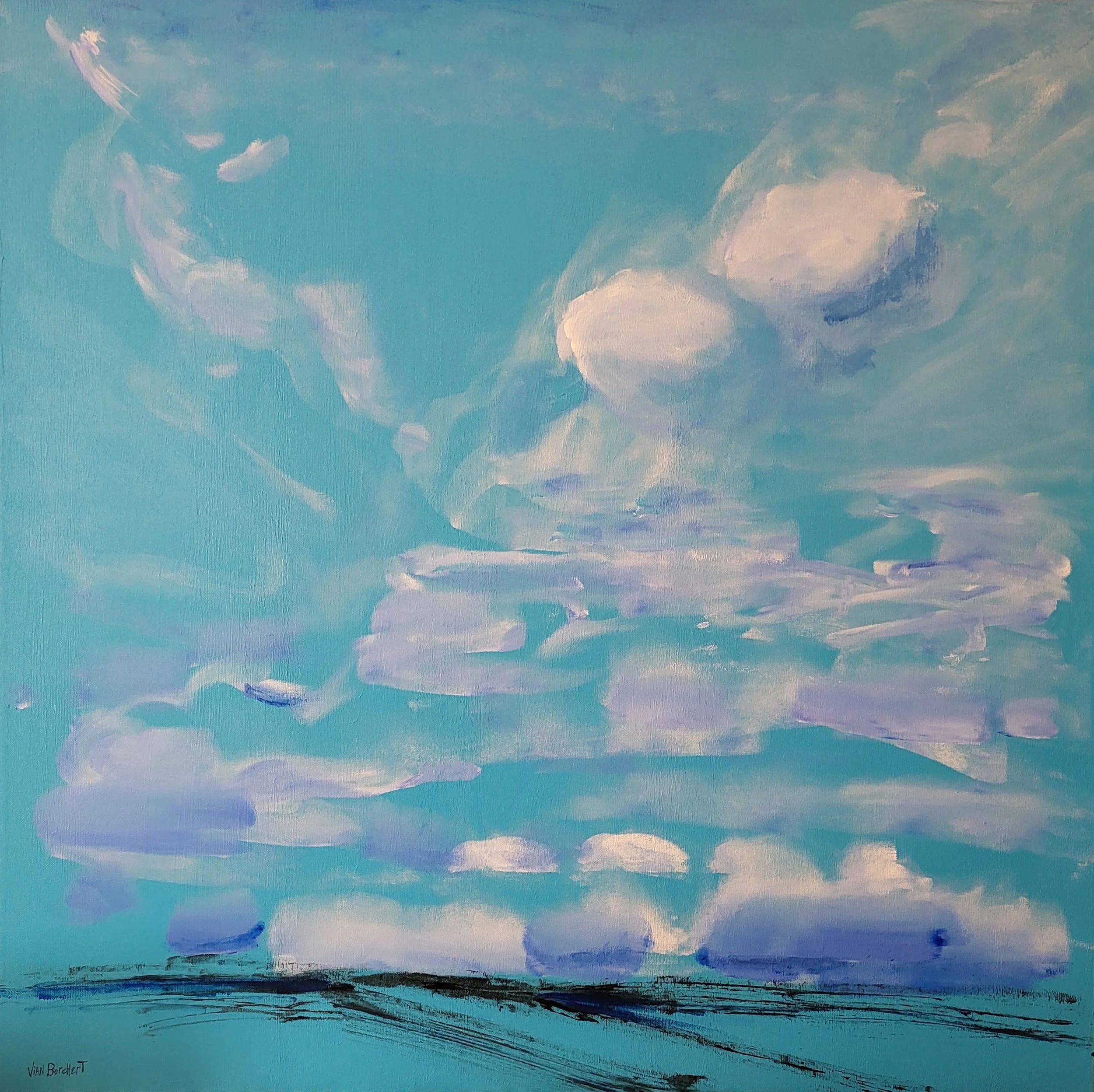
Two Happy Clouds, 2023, Acrylic on canvas, 91 x 91 cm
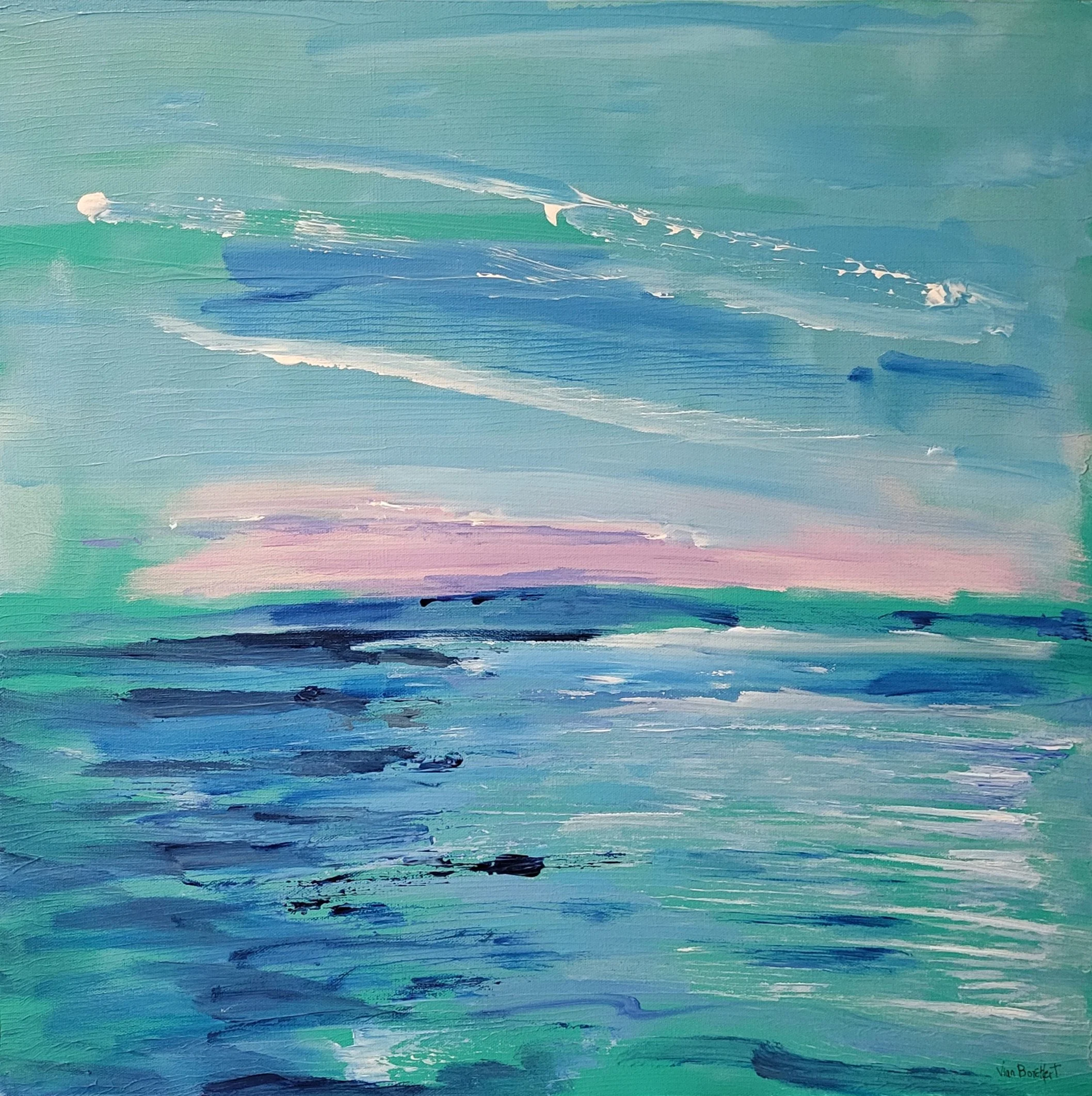
Morning Light, 2024, Acrylic on canvas, 60 x 60 cm
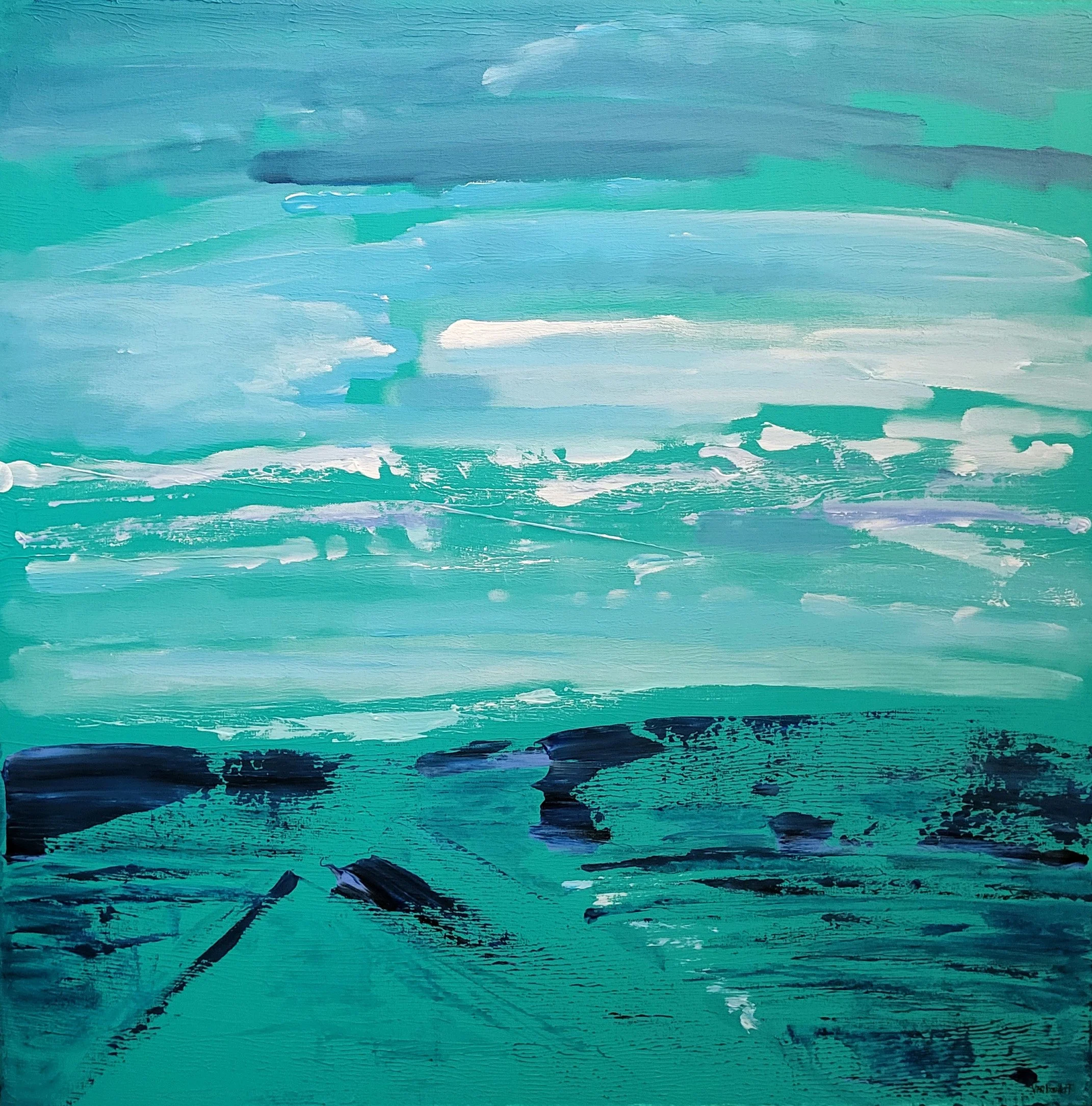
Into the Sky, 2024, Acrylic on canvas, 91 x 91 cm
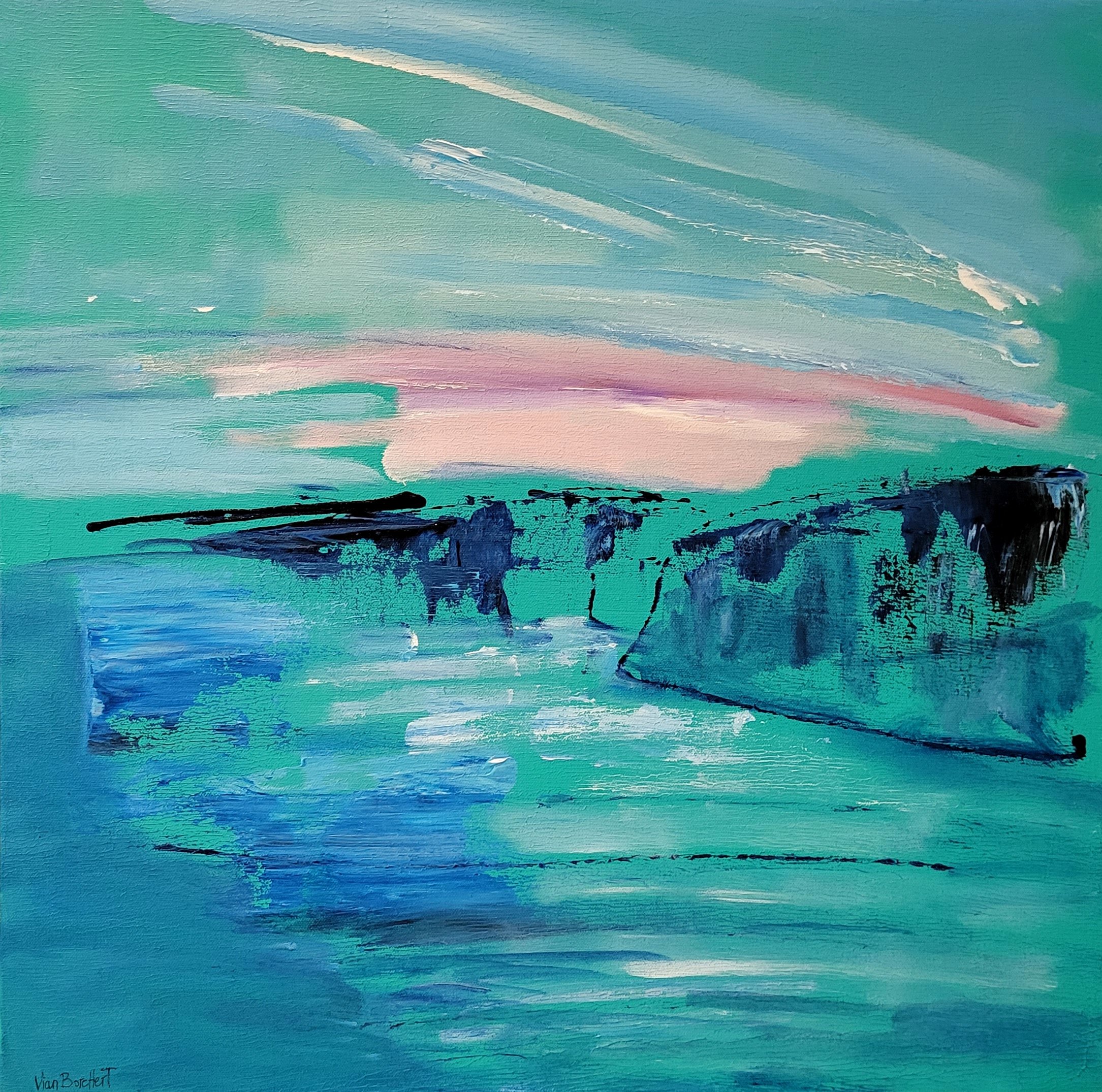
Light by the Cliff, 2024, Acrylic on canvas, 60 x 60 cm
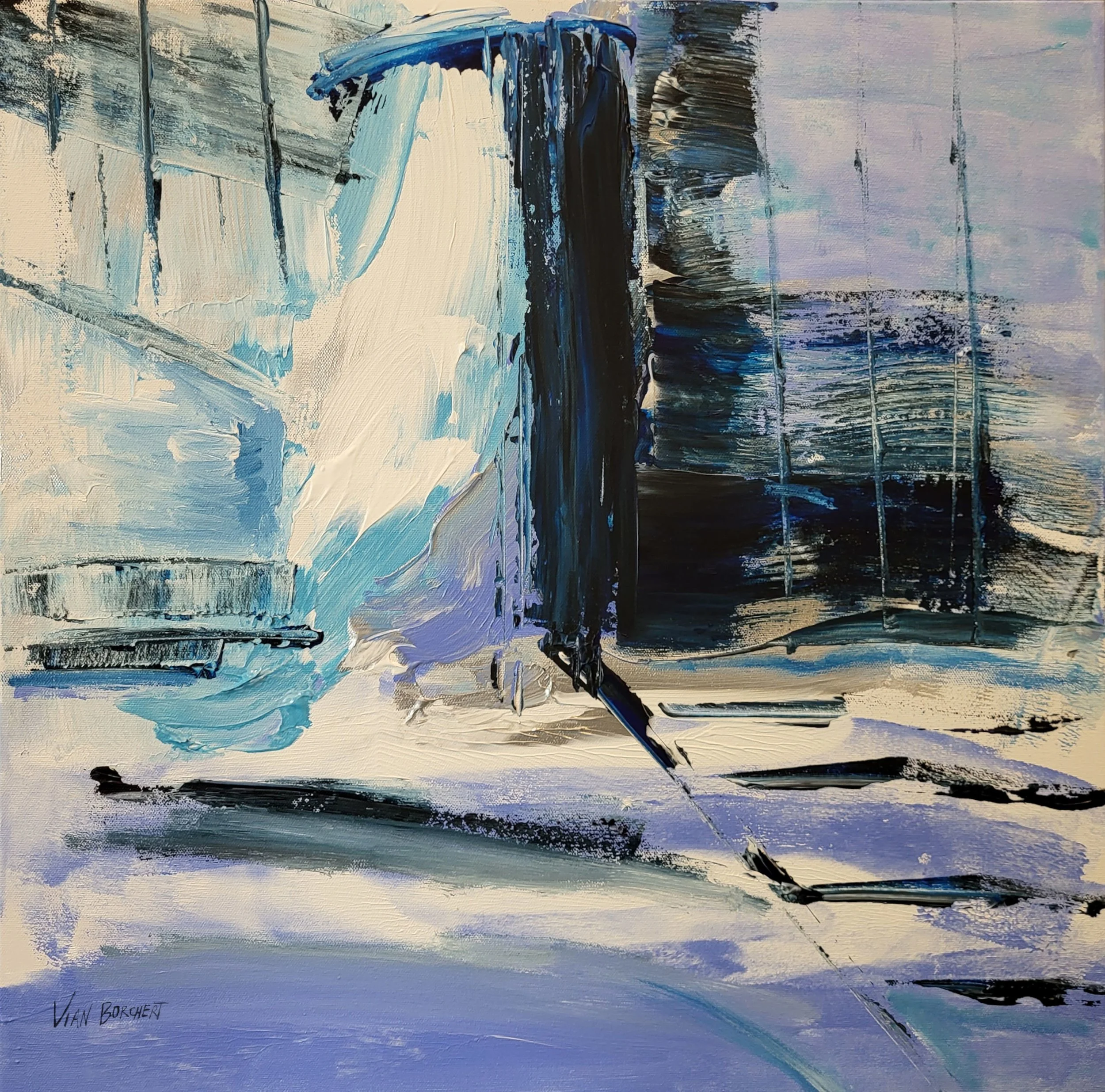
Winds of Change, 2025, Acrylic on canvas, 60 x 60 cm
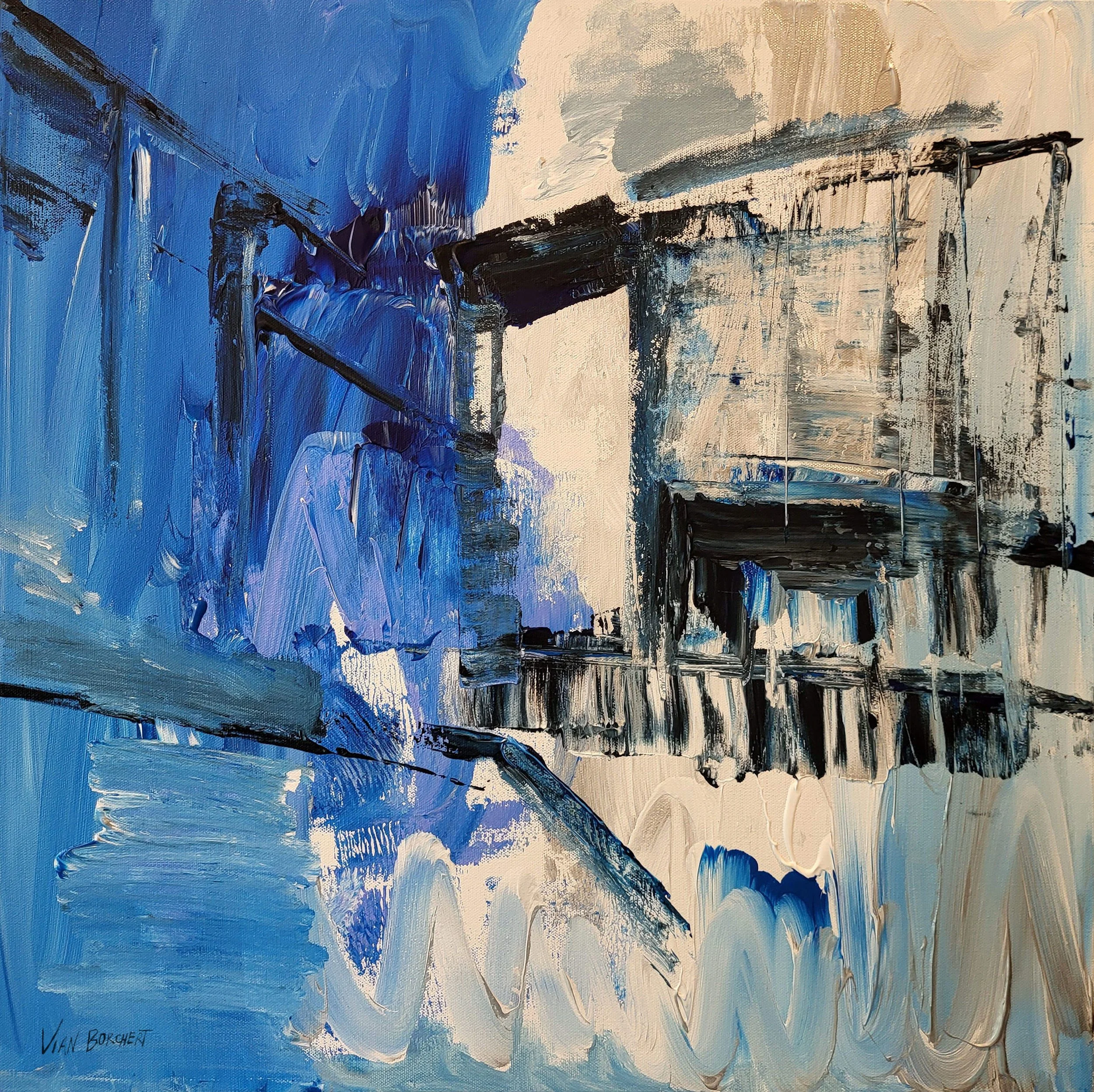
Broken Bridges, 2025, Acrylic on canvas, 60 x 60 cm
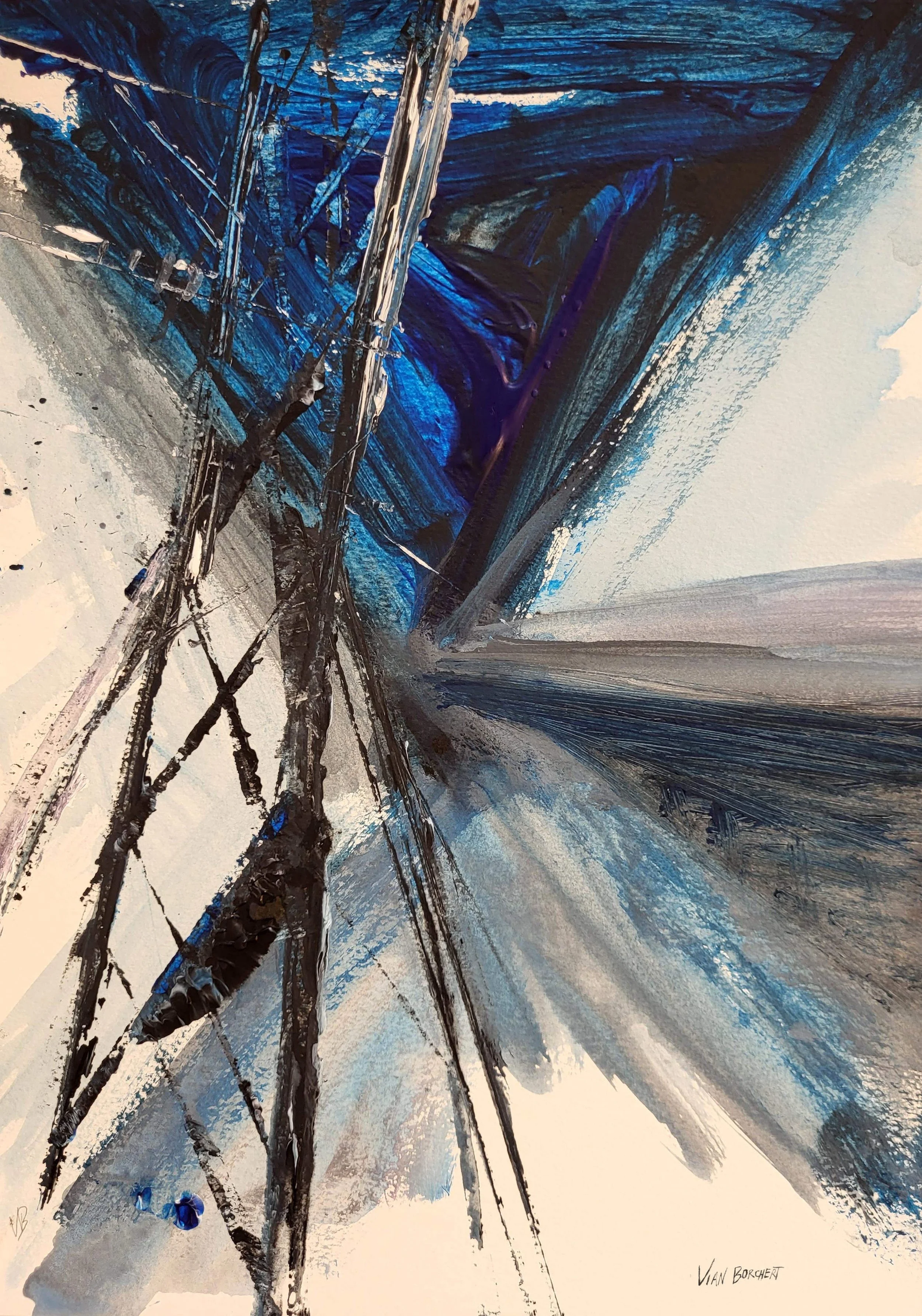
Electrical, 2025, Acrylic on paper, 30 x 22 cm
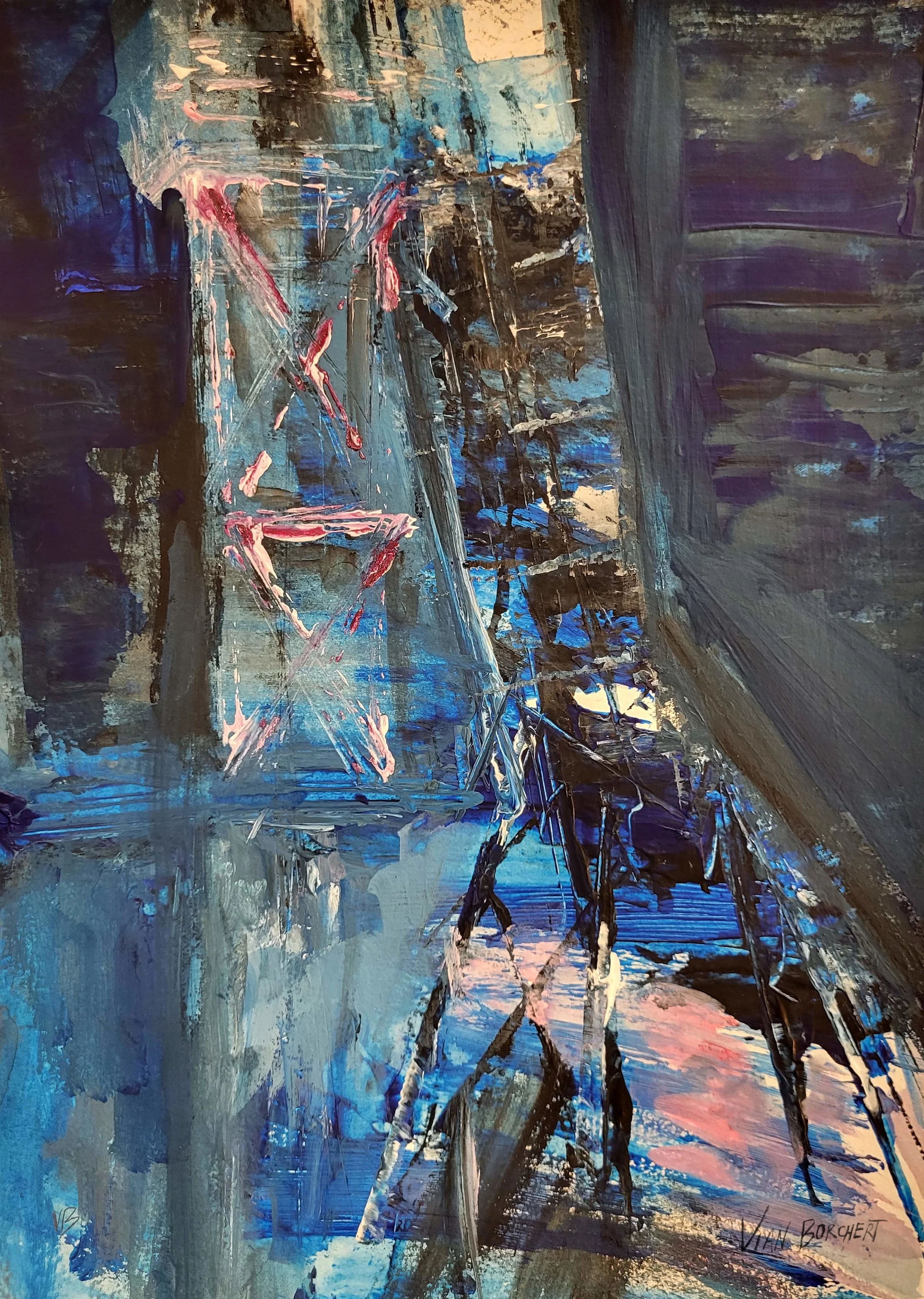
The Tower, 2025, Acrylic on paper, 30 x 22 cm
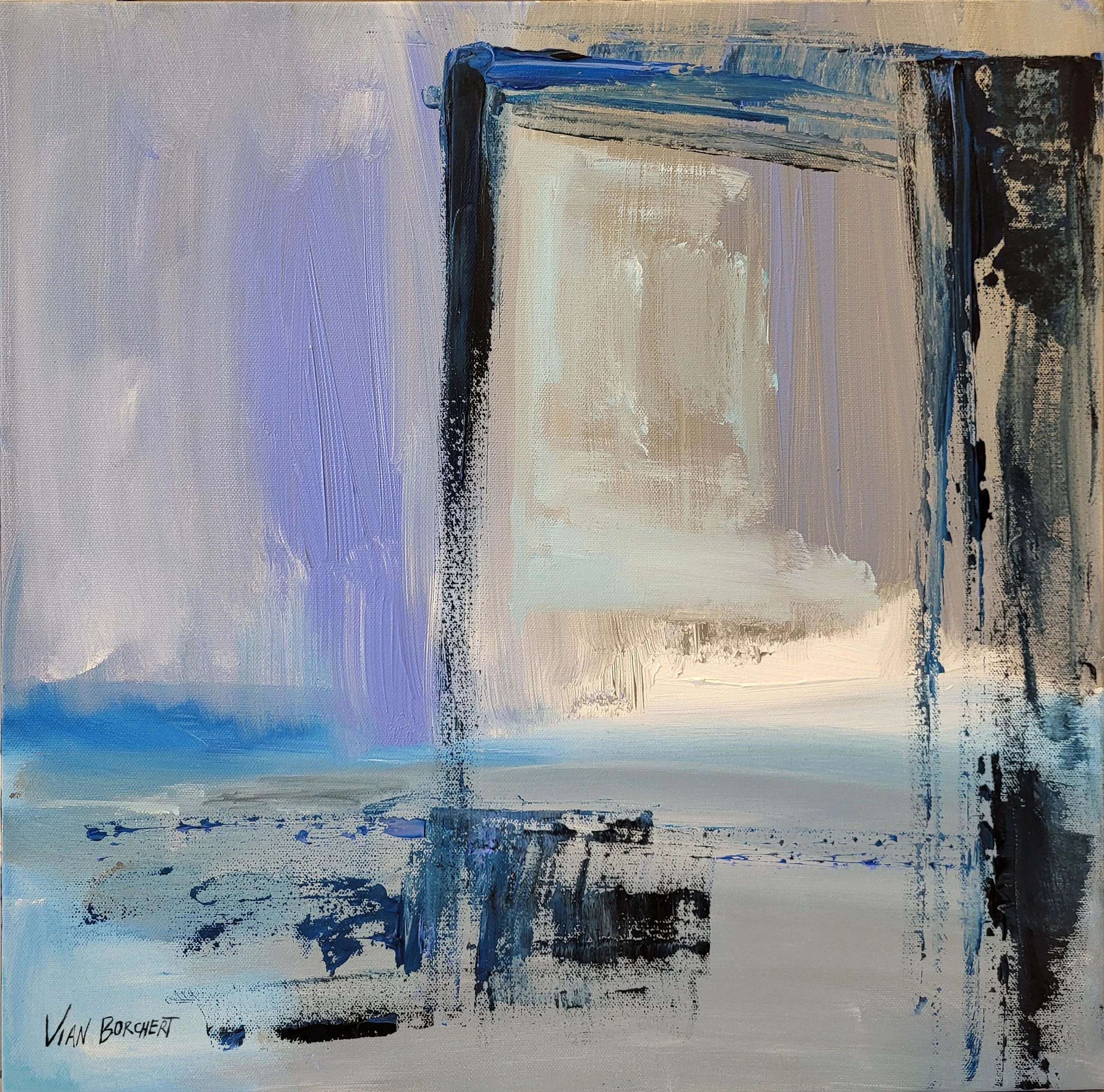
Threshold, 2025, Acrylic on canvas, 50 x 50 cm
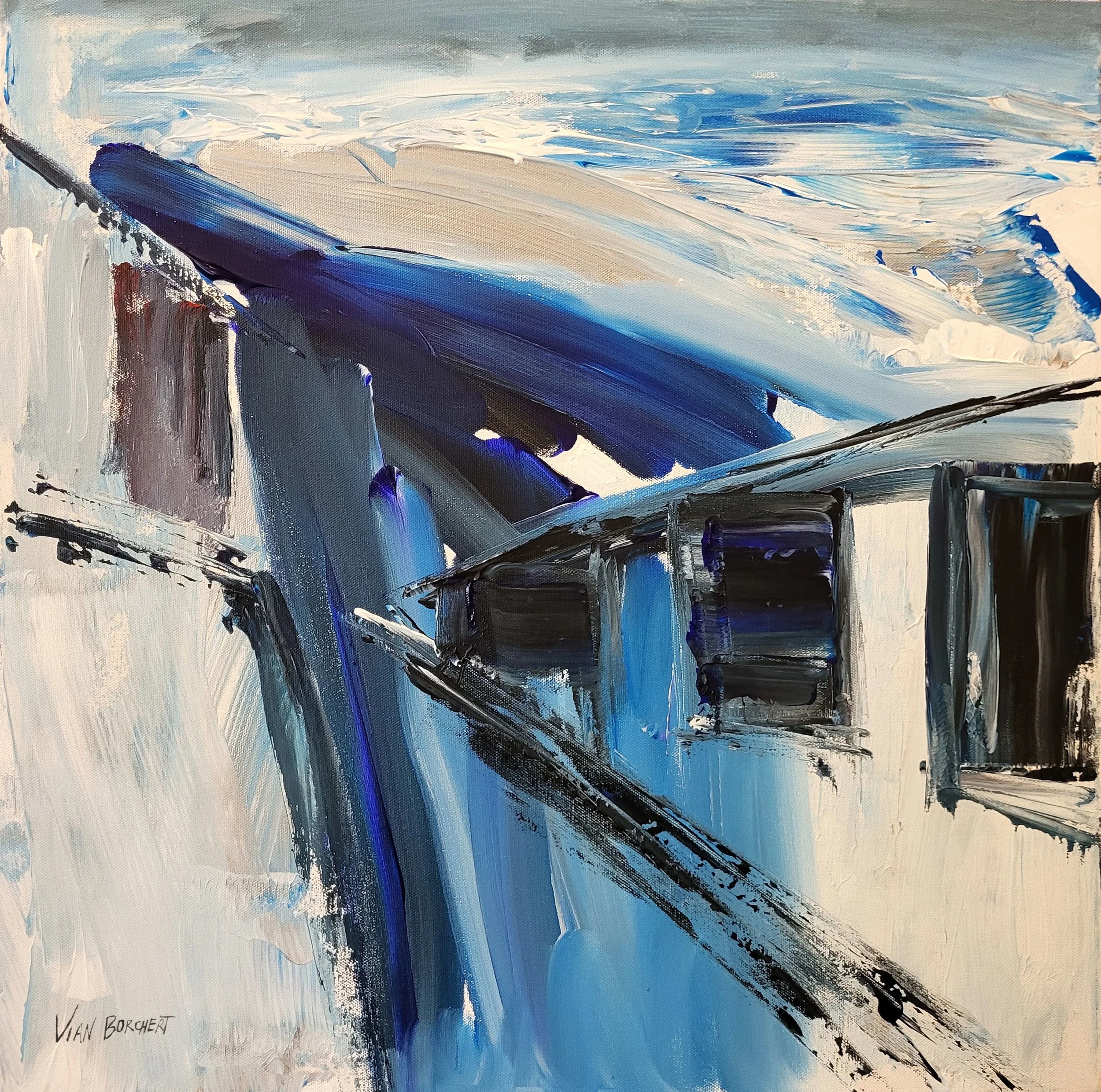
Windows to the Soul, 2025, Acrylic on canvas, 60 x 60 cm