
Jaehee Yoo
Biography
Jaehee Yoo is a Korean contemporary artist based in Seoul whose practice has grown from a lifelong relationship with East Asian painting and an enduring fascination with memory.
Trained in traditional Korean painting and East Asian art history, Yoo began with materials that had carried centuries of artistic memory before her—silk, ink, natural pigments, glue, and gold. Rather than reproducing the imagery of tradition, however, she gradually began searching for a visual language through which she could approach something more personal: the elusive traces left behind by lived experience.
For many years, this search unfolded quietly.
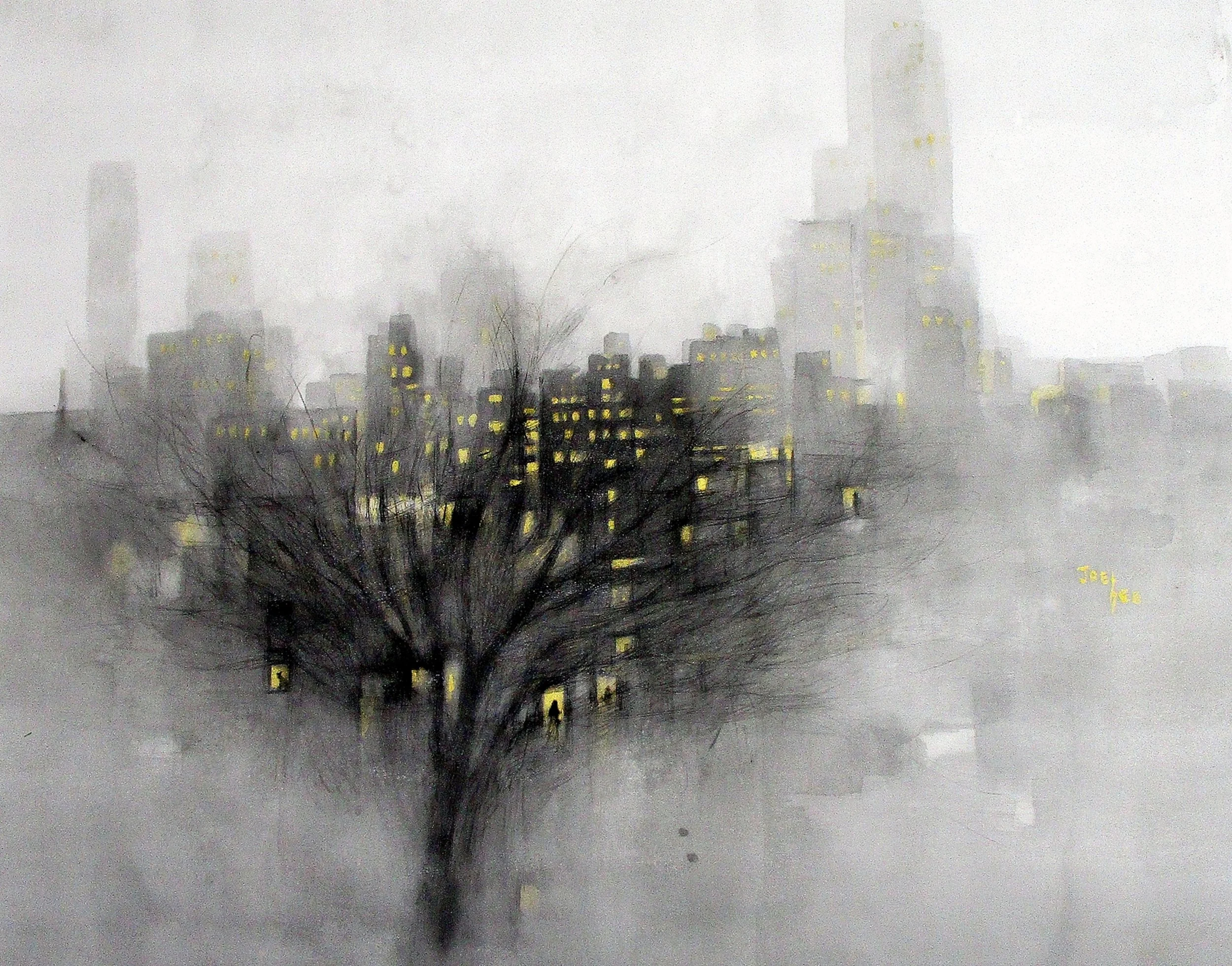
Her Memory Diaries emerged from the habit of returning to fleeting impressions: a window illuminated at night, the silhouette of a tree, two people standing close but apart, the atmosphere of a street remembered years later. She was not interested in reconstructing these moments faithfully. What remained important was often something less tangible—the feeling or resonance that continued to exist after the event itself had disappeared.
Seoul has accompanied much of this journey. Yoo has spent years walking through and observing the city, returning to familiar places as both they and she changed over time. Gradually, streets, trees, buildings, illuminated windows, and solitary figures became part of a visual vocabulary through which memories could return without being literally described.
Walking itself became increasingly important. The rhythm of the body, changes in light and air, and the simple act of paying attention to a place began to continue into drawing and painting. Her relationship with silk and ink also deepened over time, becoming inseparable from the way she experiences memory—not as something fixed, but as something continually altered by time and return.
This way of working developed slowly, often through long periods of solitude. Some of the visual language that defines Yoo’s work today—delicate accumulations of line, dissolving spaces, isolated figures, and small fragments of gold—can already be found in paintings made more than a decade ago. Rather than moving from one style to another, her practice has deepened through repetition, time, and return.
In recent years, paintings created quietly in Seoul have begun to find audiences and collectors beyond Korea. Some works made many years earlier have unexpectedly entered new lives in distant places.
Yoo regards this with particular significance.
She has long felt that a painting has its own timing. There is a moment when a work seems to leave the artist and begin another relationship with someone else. A painting that remained in the studio for years may suddenly encounter a person for whom it carries an entirely different meaning.
This has gradually changed the way she thinks about what it means to complete a work. Once a painting leaves her studio, it no longer belongs entirely to her memory. Another person brings another history, another emotion, and another time to it. The painting begins to exist somewhere between those experiences.
For Yoo, this openness is part of what allows painting to remain alive.
Perhaps this is also why she has never regarded memory as something that belongs entirely to the past. Places change, people leave and return, relationships appear and disappear, yet something remains. Painting allows her to stay with those traces without trying to preserve or explain them completely.
Her work continues to grow from this quiet exchange—between what has been lived and what remains, between the artist and the world, and eventually between the painting and the person who encounters it.
Perhaps a painting, like a memory, does not arrive at its destination immediately. Sometimes it waits for the right time, and for the person with whom it is meant to begin another story.
Artist Statement
My work begins with memory, but I am less interested in reconstructing the past than in observing how it continues to inhabit the present.
I think of my paintings as Memory Diaries. Unlike a conventional diary, however, they do not record events chronologically or preserve them intact. Memory is continually rewritten: certain images disappear, others return unexpectedly, and past and present begin to occupy the same psychological space. I am interested in this unstable condition, where time remains suspended rather than resolved into a linear narrative.
Silk has become a metaphor for this condition. Its translucent and permeable surface allows ink, pigment, and traces of previous gestures to remain visible through one another. I work from both sides of the silk, drawing, staining, layering, and partially erasing. An image gradually forms through accumulation and disappearance. What was painted yesterday may remain beneath what is painted today, just as memory persists without ever returning in exactly the same form.
Line plays a central role in this process. Drawn primarily with ink and a bamboo pen, my lines are not intended simply to describe objects. They register duration—the movement of the hand, fluctuations of attention, and the rhythm of breath.
I do not use line to express emotion directly. Instead, I wait for the subtle trembling or tension that remains in the body after emotion itself has passed to enter the mark. A line therefore carries not only a gesture, but also the accumulated time and bodily state that preceded it. It exists somewhere between decision and receptivity: I make the mark, yet I must also listen to what the material allows to happen.
The city that appears throughout my work is often Seoul, yet I do not consider these paintings urban landscapes in a conventional sense. Seoul functions as an inner landscape. Fragments of architecture, illuminated windows, streets, trees, and figures become entangled with memory and perception until it becomes difficult to distinguish the external city from the interior one.
For me, landscape is therefore not simply something observed. It is something that gradually forms through a lived relationship with a place. What remains in a painting is not necessarily what I saw most clearly, but what continued to live within that relationship.
Human figures frequently appear close to one another without touching. I am drawn to the interval between them—the distance in which intimacy and separation, waiting and possibility can coexist.
I do not think of this interval as empty.
In painting, what we call empty space is also space that has not yet been painted. Breath can move through it, gazes can cross it, and something unspoken can remain there. I am less interested in resolving these relationships than in keeping that space open.
I am not interested in resolving oppositions. I am interested in inhabiting the space between them.
Gold appears intermittently within predominantly muted fields of ink. For me, it does not signify luxury or grandeur. It is closer to a small light glimpsed in darkness—a distant window, a falling leaf, or a fleeting moment of beauty. Its luminosity carries melancholy precisely because it never feels permanent.
My practice is deeply informed by East Asian painting, not through the quotation of traditional imagery, but through its understanding of emptiness, material responsiveness, and the relationship between gesture and breath. The traditions I studied have become less something I consciously reference than a way of seeing and working that remains quietly embedded within the practice.
Increasingly, painting has become a process of relinquishing control. I do not begin with a fixed composition or attempt to impose a predetermined image. I work through intuition, repetition, and attentive waiting, allowing material and chance to participate in what emerges.
For me, intuition and reflection are not opposites. Intuition comes first; reflection allows me to understand what the painting has already discovered. That understanding then returns to the next work as another form of intuition.
I do not try to express an inner truth through an image. Rather, I try to create the conditions in which something not yet named may reveal itself.
In this sense, a painting is never entirely mine. It arises through an encounter between silk, ink, chance, memory, and my own intervention.
The work remains open—somewhere between what has disappeared and what has not yet fully arrived.
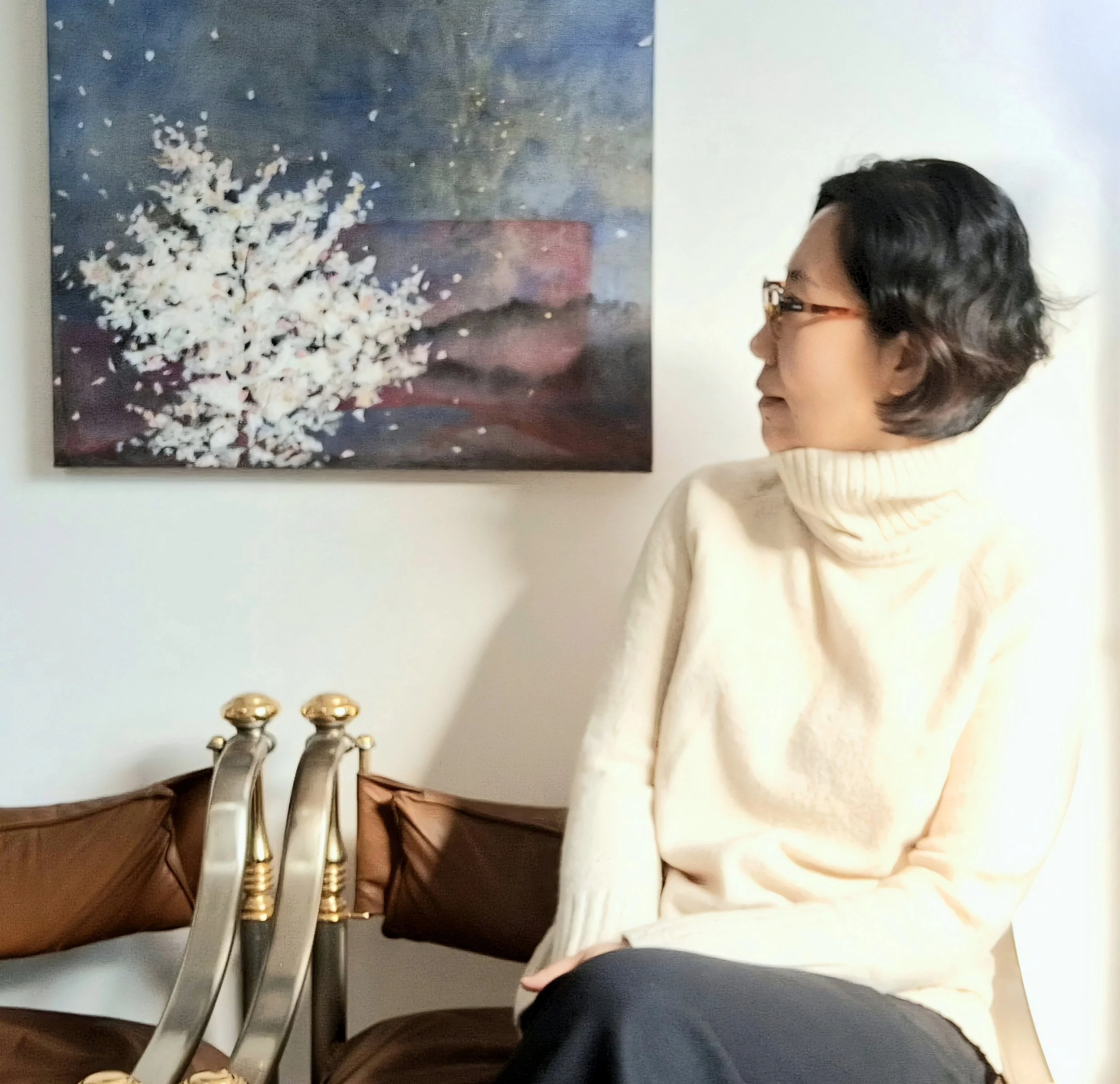
Jaehee Yoo in Her Studio

A chance reunion, 2026. Indian Ink, gold on silk, 55x63cm
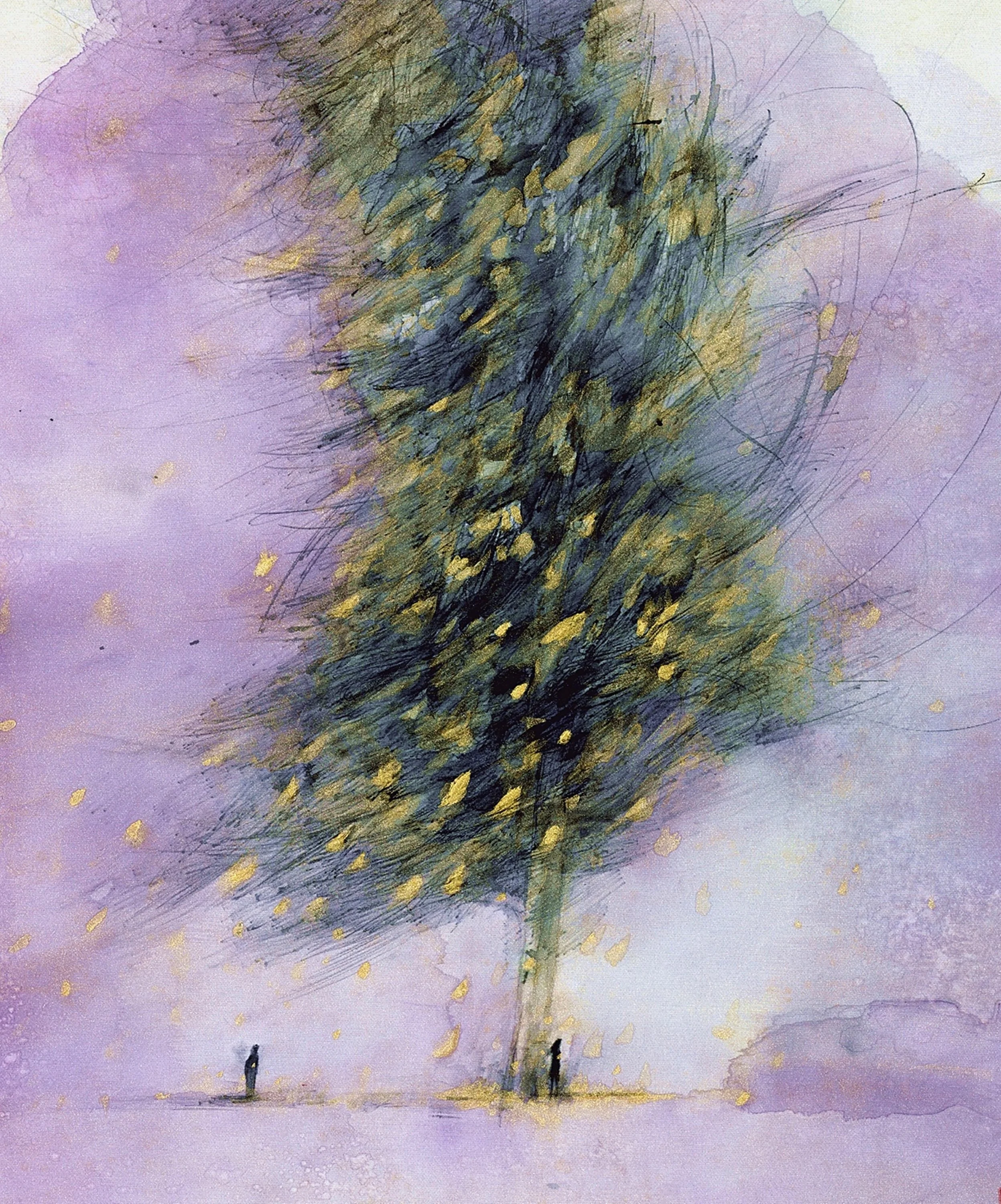
Lover under Jinko tree, 2022 Indian ink, gold on silk ,53x46cm
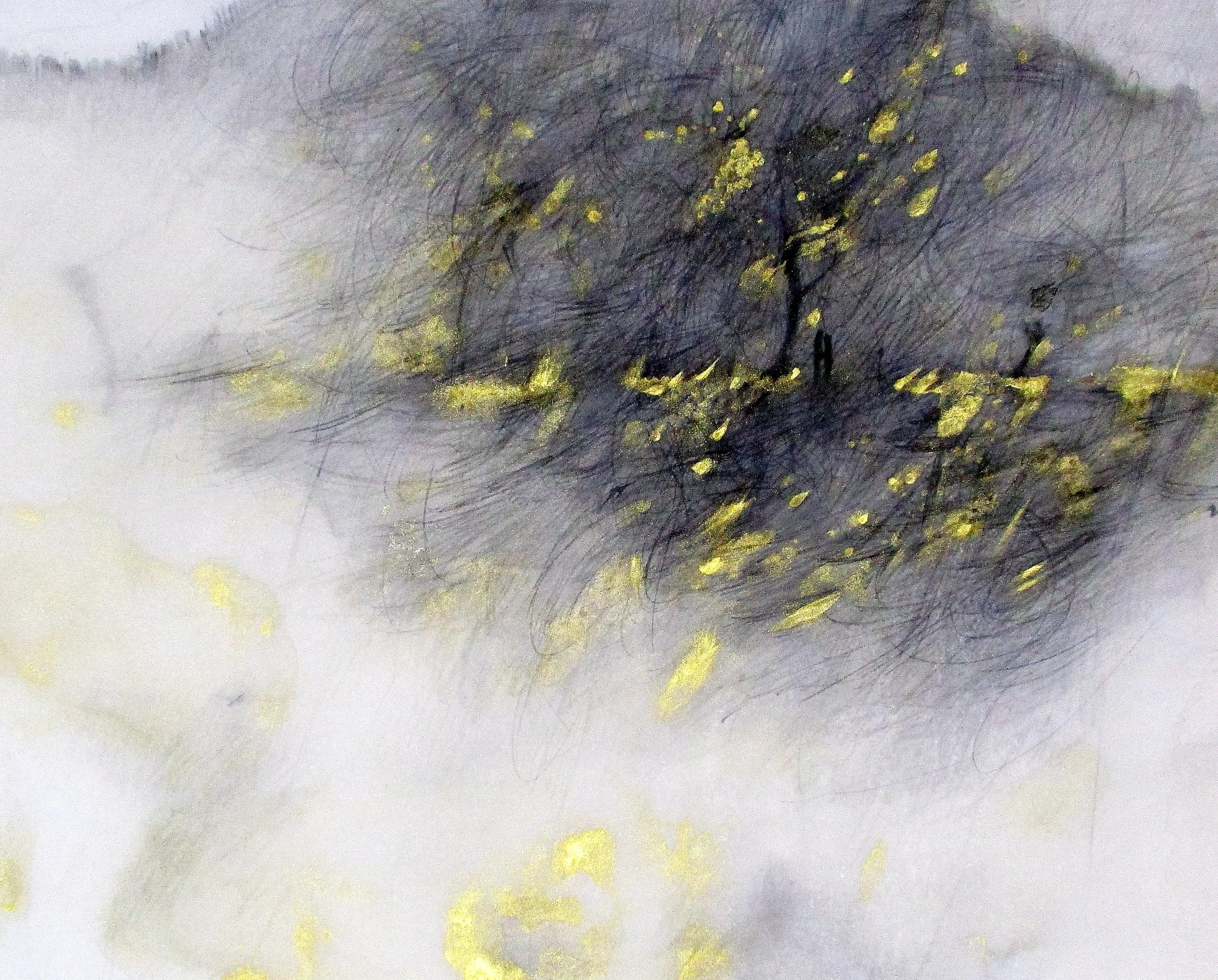
Reunion, 2024. Indian ink, gold on silk, 44x50cm
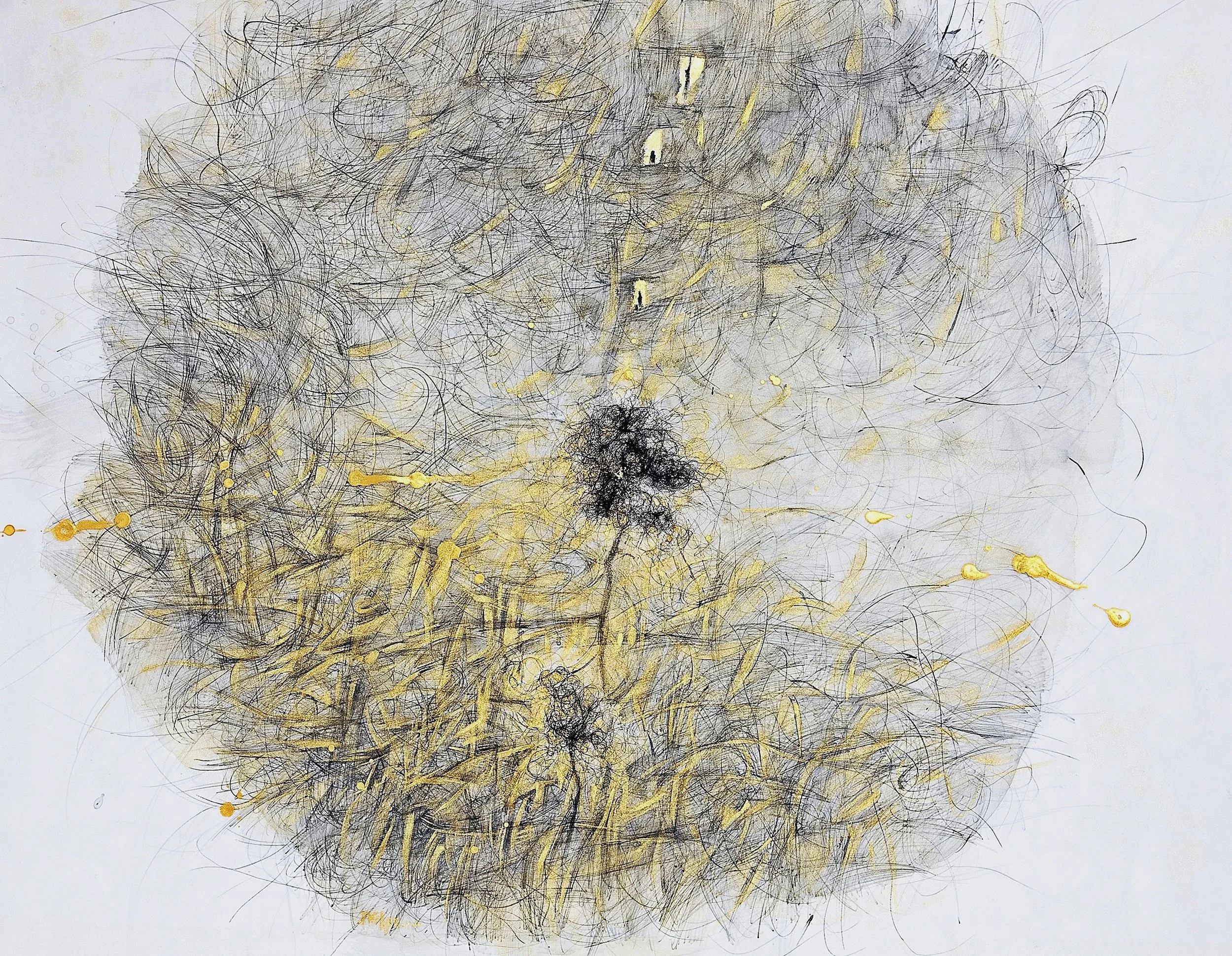
Dandelion Lover, 2026. Indian ink, gold on silk, 90x90cm
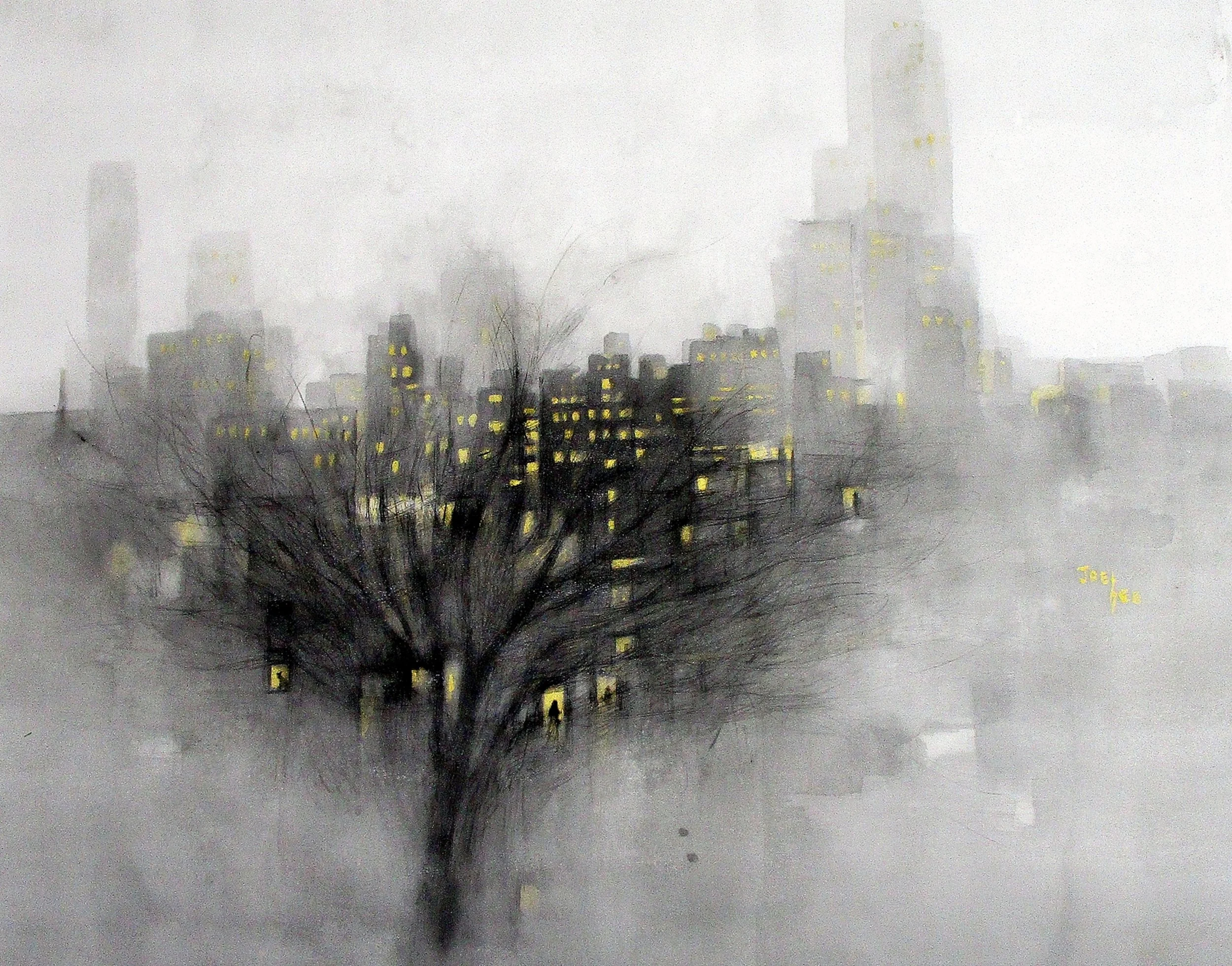
Winter city, 2025. Indian ink, gold on silk , 58x68cm
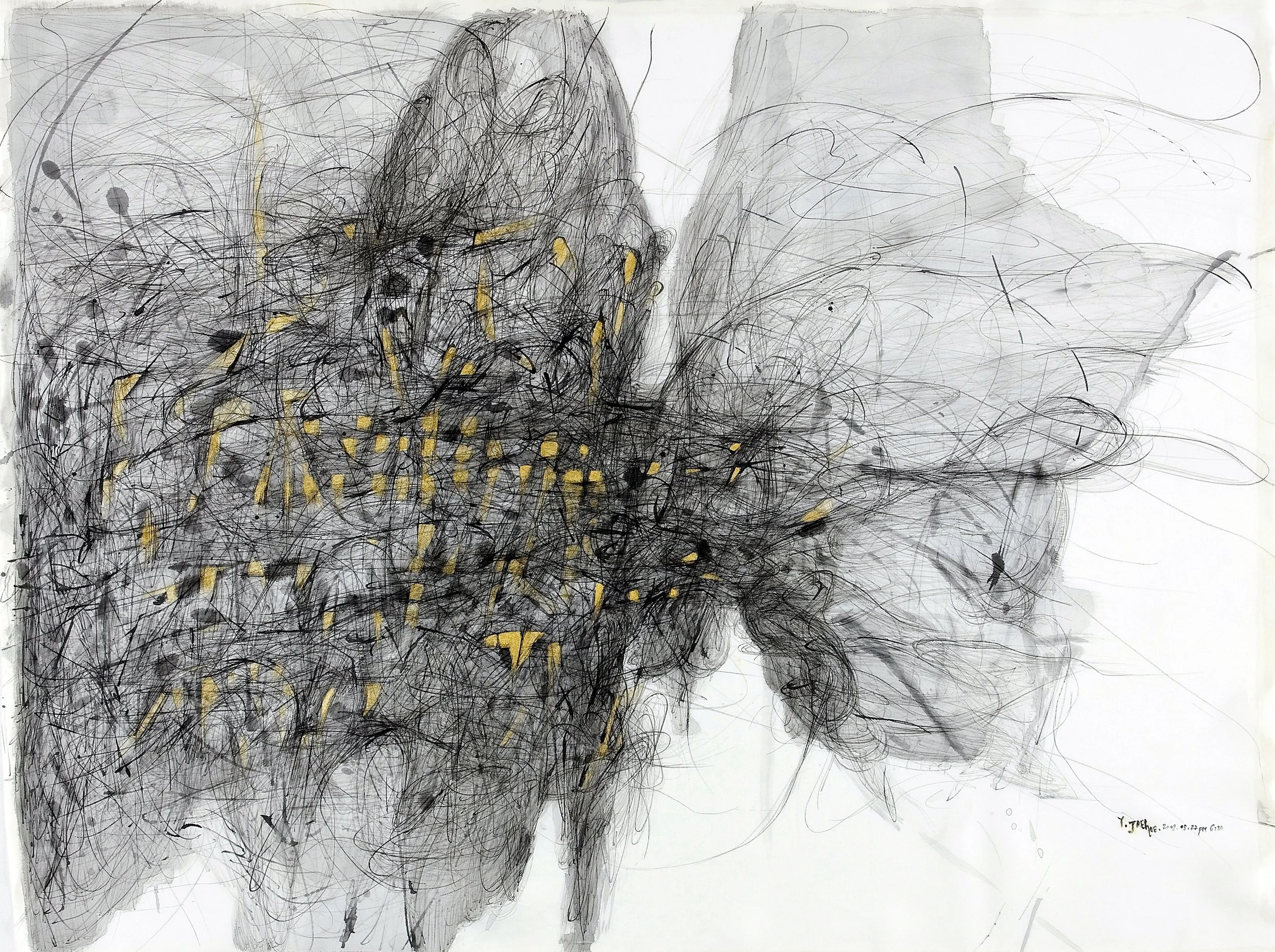
Night city, 2021. Indian ink, gold on silk, 80x100cm
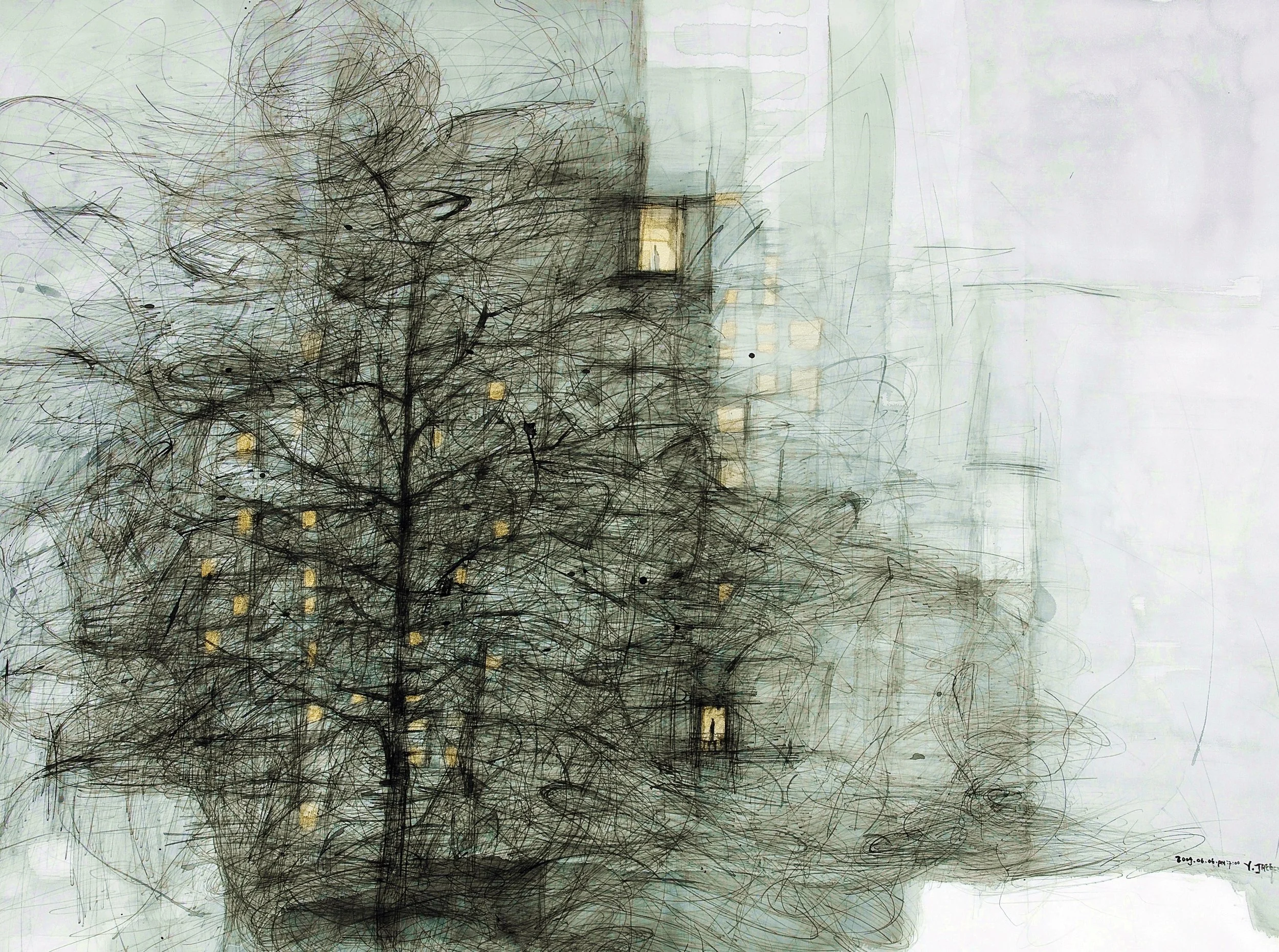
Night Seoul,2020. Indian ink, gold on silk, 80x100cm
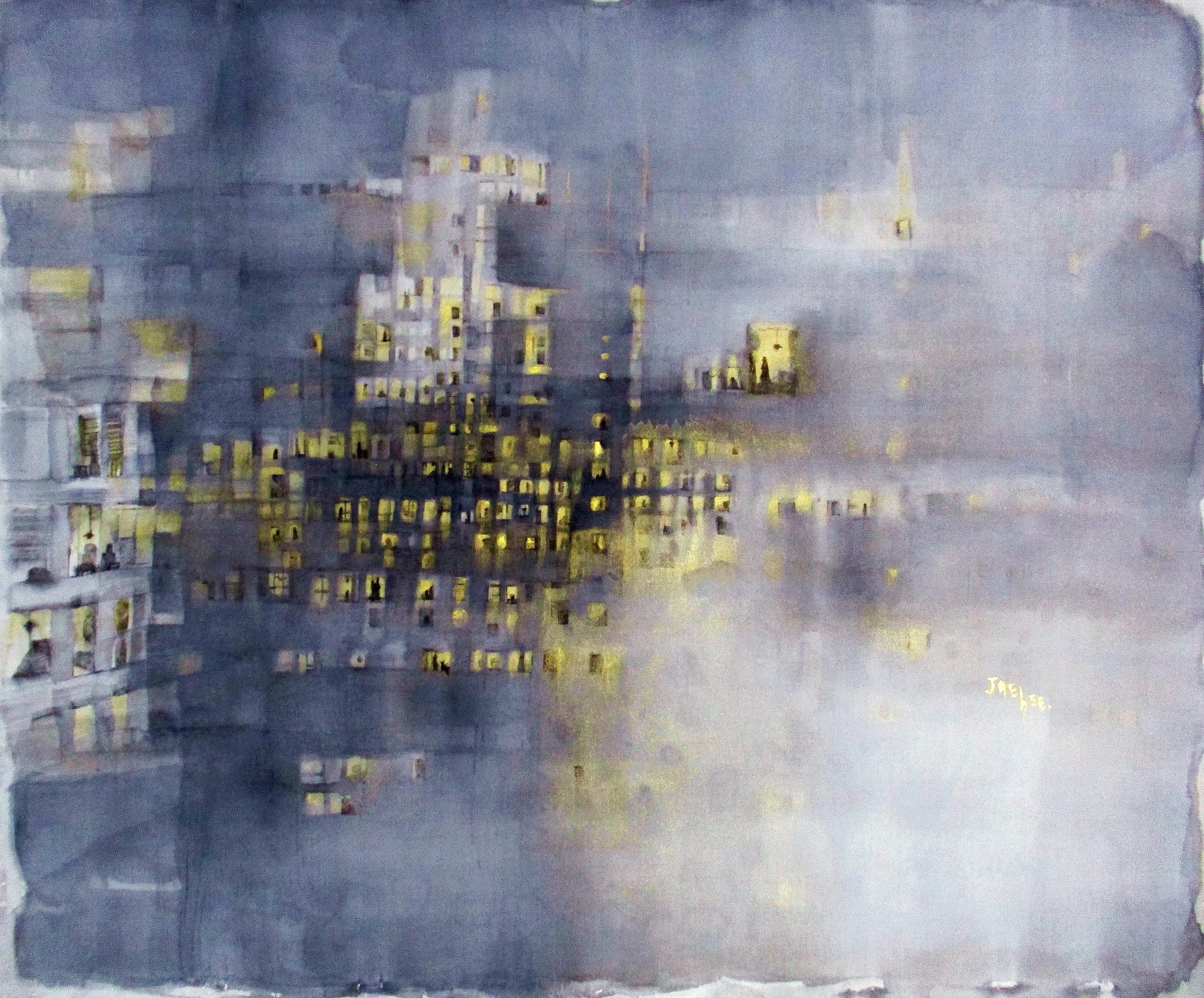
Nocturne, 2023. Indian ink, gold on silk, 61 X73cm

Cat and I, 2024. Indian ink, gold on silk, 60x50cm
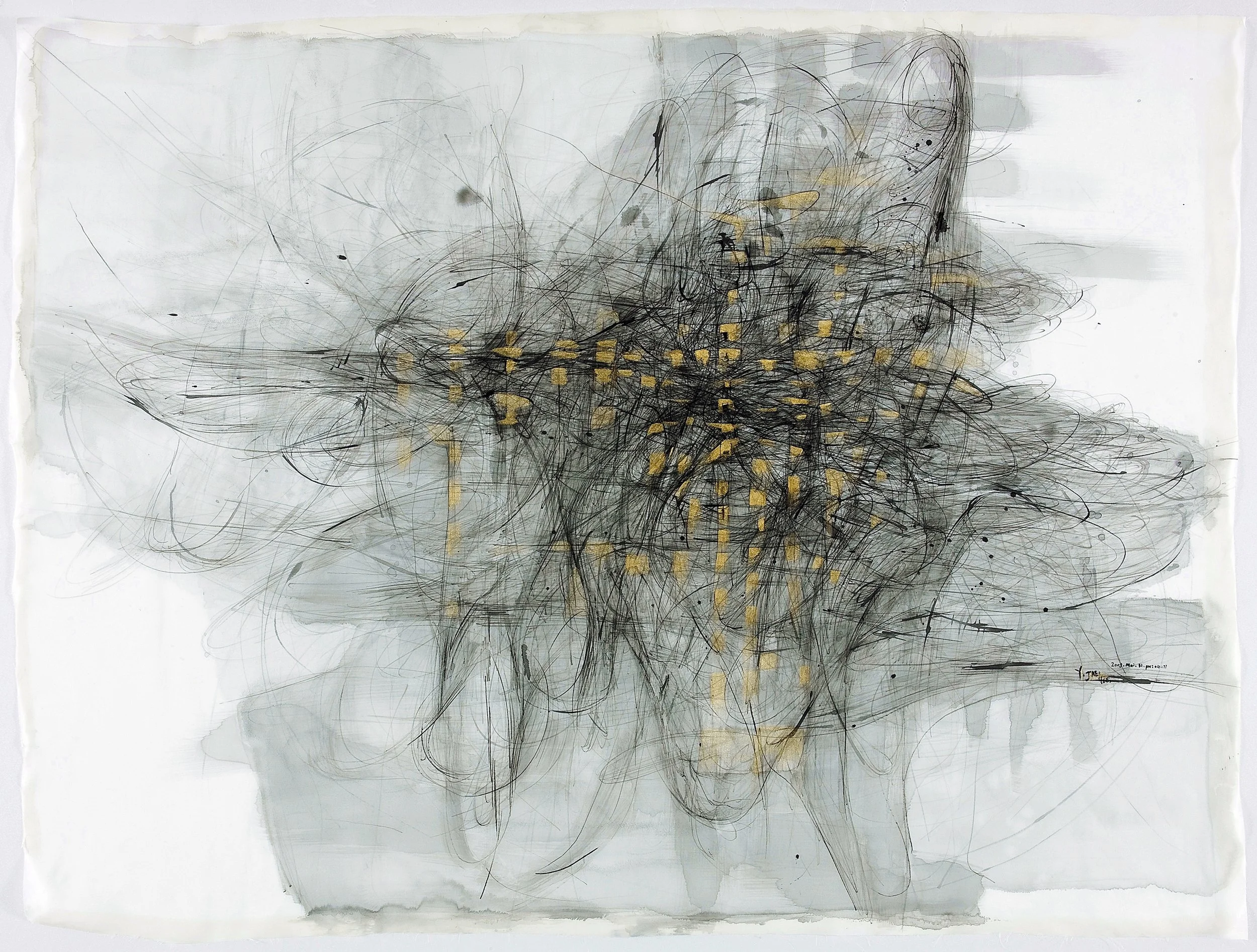
Misty, 2009. Indian ink, gold on silk, 80x100cm