
Krystyna Vinogorodska
Biography
Krystyna Vinogorodska is a multidisciplinary visual artist, researcher, and author whose practice brings together painting, psychology, philosophy, and the study of human perception. Working at the intersection of metaphysical realism and contemporary surrealism, she has developed a distinctive symbolic language in which human figures, animals, celestial bodies, plants, architectural fragments, and archetypal objects coexist within densely structured visual worlds.
Vinogorodska holds Master’s degrees in Arts, Psychology, and Law and is an Honorary Doctor of Arts in Visual Arts and an Honorary Professional Member of the International Art Academy. Her multidisciplinary education has profoundly shaped an artistic practice concerned not only with representation, but with the deeper structures through which people perceive, remember, anticipate, and emotionally interpret reality.
At the centre of her work is "Architectonics of Emotions", an original authorial method developed through years of artistic experimentation and interdisciplinary research. The method approaches painting as a structured visual environment in which composition, rhythm, proportion, colour, symbolic density, spatial tension, and unexpected relationships between familiar forms can influence the movement of attention and invite new emotional associations. Vinogorodska describes her paintings as "visual matrices": spaces to be navigated rather than decoded at a single glance.
Her theoretical ideas are developed in her monograph "Architectonics of Emotions: Invariant Topology of Affective Structures and Mechanisms of Resonant Modification", which establishes a dialogue between visual art, psychology, aesthetics, philosophy of mind, neuroscience, and dynamical-systems thinking. Rather than separating artistic intuition from intellectual inquiry, Vinogorodska treats them as complementary dimensions of the same search: an exploration of how form can become a language for consciousness.
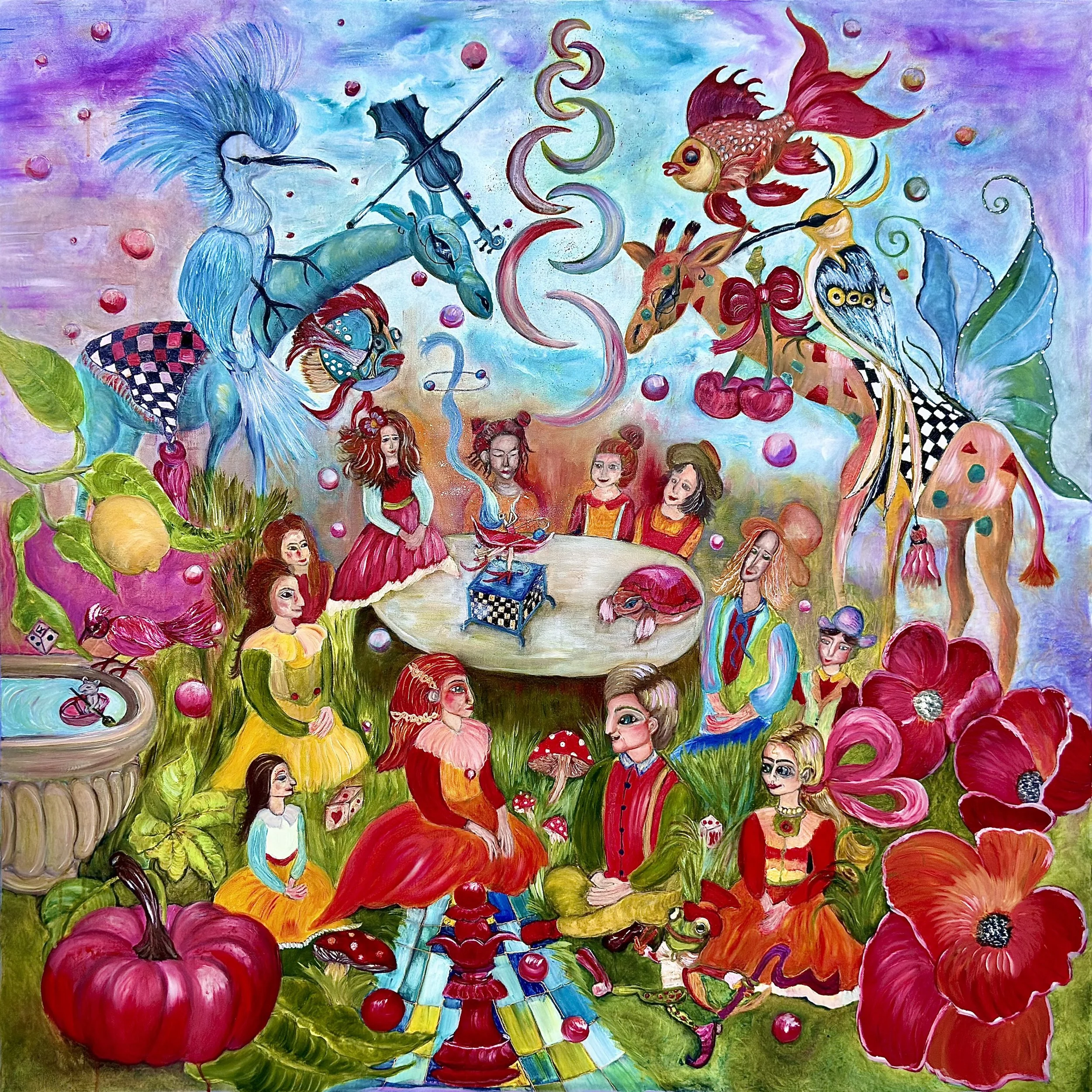
This approach reaches a particularly developed expression in her ongoing series "The Giraffe Year". Within its dreamlike universe, the giraffe becomes an archetype of expanded perspective - a being grounded in earthly reality yet able to see beyond the immediate horizon. Ballerinas, planets, vessels, dice, roads, birds, celestial signs, and fantastical creatures form changing constellations around this recurring observer. Through them, the series explores memory, uncertainty, choice, time, transformation, balance, and the human capacity to move beyond habitual ways of seeing.
Vinogorodska’s artistic achievements have received growing international recognition. In 2025, Contemporary Art Station in Barcelona included her among the 50 Most Influential Figures in Contemporary Art. Her distinctions also include the "Caravaggio Prize", "Leonardo da Vinci - The Universal Genius Award", "Persona Art Honors", and an "Award of Achievement in Chania, Greece." Her work has been presented internationally, including in Times Square, New York, and through exhibitions, art initiatives, and professional platforms across Europe, the Middle East, and North America. Her paintings are held in private collections internationally.
Beyond her artistic and academic distinctions, Vinogorodska is a Lady of the Constantinian Order of Saint George, an affiliation that resonates with her broader interest in continuity, cultural memory, ethical responsibility, and the transmission of values across generations.
For Vinogorodska, artistic heritage is not something preserved only in museums or inherited from the past. It is continuously created whenever an artist introduces a new language through which future generations may understand human experience.
Her practice therefore moves between the intimate and the universal: between an individual emotion and a larger architecture of meaning. Through "Architectonics of Emotions", she proposes painting as more than an object of contemplation but rather as a territory of encounter in which the viewer may discover unfamiliar connections, question established patterns of perception, and experience the possibility of a wider inner horizon.
At the heart of her work lies a simple but enduring proposition: "art can change not only what we see, but the way in which we see."
Artist Statement
For the award submission, the Artist Statement should sound more personal and philosophical than the biography, while clearly presenting "Architectonics of Emotions" as the conceptual core of Krystyna’s practice.
My work begins with a conviction that emotion has architecture.
We do not encounter the world as neutral observers. Memory, expectation, fear, desire and intuition continuously shape what we notice, what we overlook and how we interpret what surrounds us. I became interested in whether painting could engage not only with what a person sees, but with the very structure through which seeing takes place.
From this inquiry emerged my authorial method, "Architectonics of Emotions".
I create paintings as visual matrices - structured environments in which colour, proportion, rhythm, spatial tension, symbolic density and unexpected relationships between familiar forms guide the movement of attention. Human figures coexist with animals, celestial bodies, vessels, roads, dice, plants and architectural fragments. Their relationships are deliberately non-linear. A familiar object enters an unfamiliar context, scale shifts, gravity seems suspended, several realities occupy the same space.
For me, this moment of surprise is essential.
When what we see no longer corresponds completely to what we expect, habitual interpretation slows down. The viewer begins to search rather than merely recognise. New relationships become visible. The painting becomes not an illustration of an idea, but a territory to be navigated.
This is why I do not consider symbolism in my work to be a fixed code. A giraffe, a sphere, a road or a vessel does not possess one immutable meaning. Its meaning emerges through relationships with other forms, with the composition, and with the inner experience of the person looking at the work.
My paintings therefore exist between order and freedom.
I construct them carefully, yet I want them to remain open. Structure provides orientation, while paradox prevents perception from becoming automatic. The viewer is invited to move between these two states: recognising and questioning, knowing and wondering, remembering and imagining.
In my series "The Giraffe Year", the giraffe becomes an archetype of expanded perspective. It is firmly connected to the earth, yet its vision reaches beyond the immediate horizon. Around it unfold worlds of ballerinas, planets, clocks, vessels, birds, dice, moons and roads. These images explore choice, memory, uncertainty, time, transformation and balance.
The giraffe is not a narrator and not a judge. It is an observer capable of seeing several emotional territories at once without becoming trapped within any single one of them. For me, this capacity to widen perspective is closely connected with inner freedom.
Through "Architectonics of Emotions", I am interested in the movement from fragmentation toward coherence, from rigidity toward possibility, from emotional noise toward a more spacious form of attention. I do not seek to prescribe what the viewer should feel. Art cannot and should not dictate an inner experience. Instead, I aim to create conditions in which another perspective may become possible.
My multidisciplinary background in art, psychology, philosophy and the study of perception has shaped this approach, but painting remains at its centre. Intellectual structures may inform the work, yet the final language is visual: colour, gesture, material, rhythm and the physical presence of the painted surface.
I believe that the enduring power of art lies in its ability to cross the boundaries of time without losing its intimacy. A work created in one moment may enter the consciousness of another person decades or centuries later and create a new connection.
For me, this is the essence of artistic heritage.
Heritage is not only the preservation of what has already been created. It is also the creation of forms, symbols and ways of seeing that may continue to generate meaning beyond the artist’s own lifetime.
My aspiration is therefore not simply to create images, but to build structures of possibility - visual spaces in which perception can become more attentive, imagination more active, and the inner horizon wider.
Art can change not only what we see, but the way in which we see.
Website: http://www.vinogorodskaya.com
Instagram: https://www.instagram.com/vinogorodska_krystyna
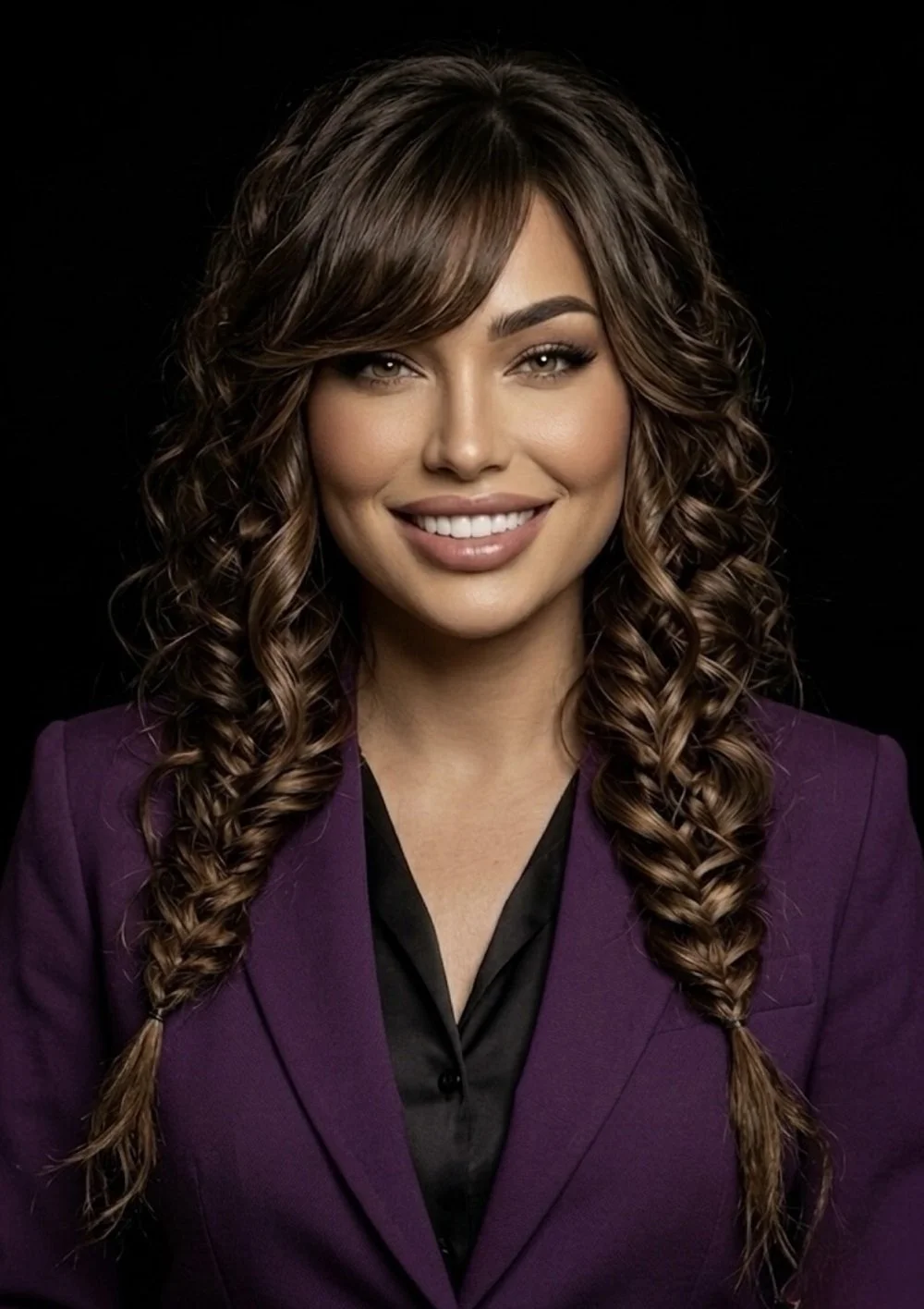
Dr. Lady Krystyna Vinogorodska
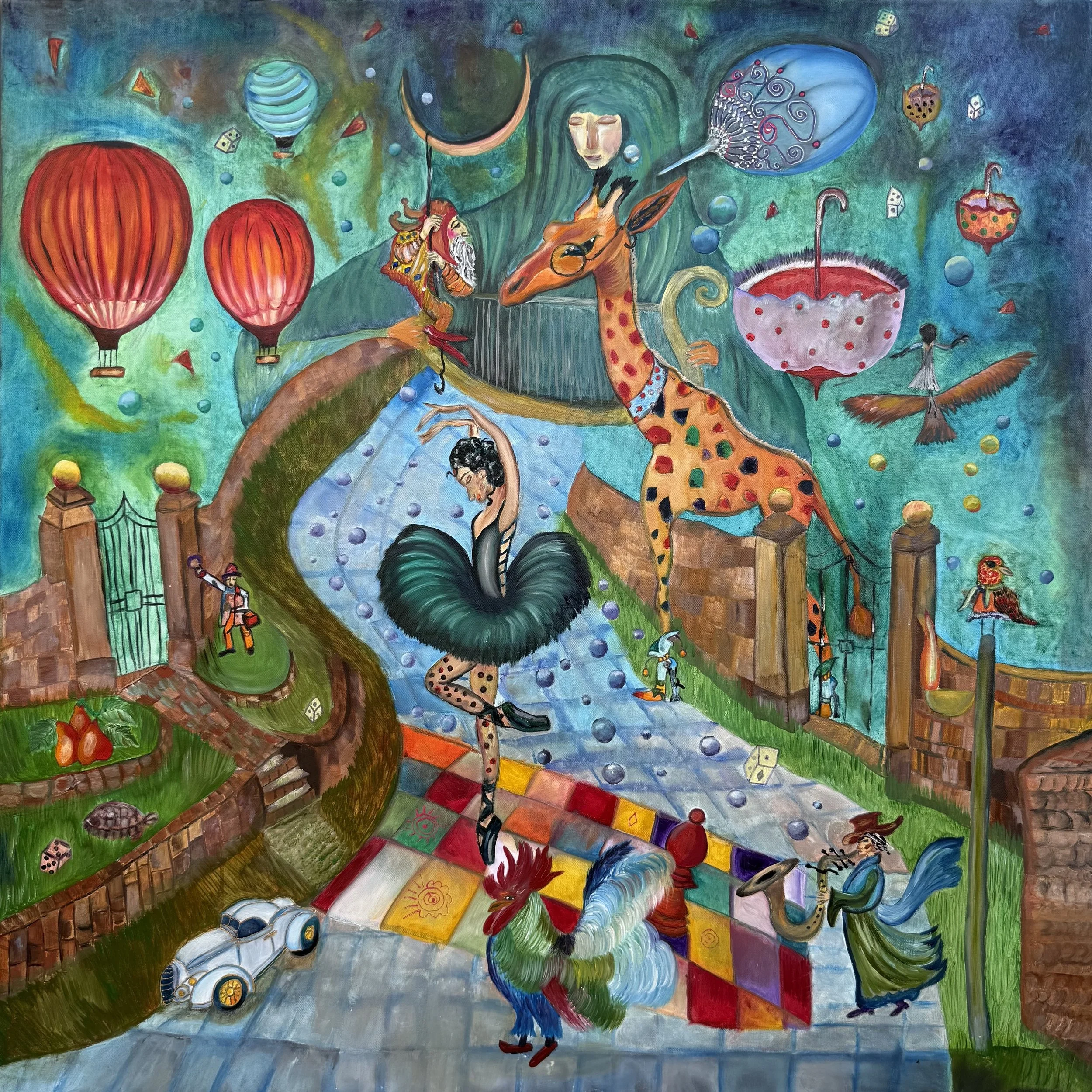
The Giraffe Year, 2026. Oil on canvas, 100 x 100 cm.
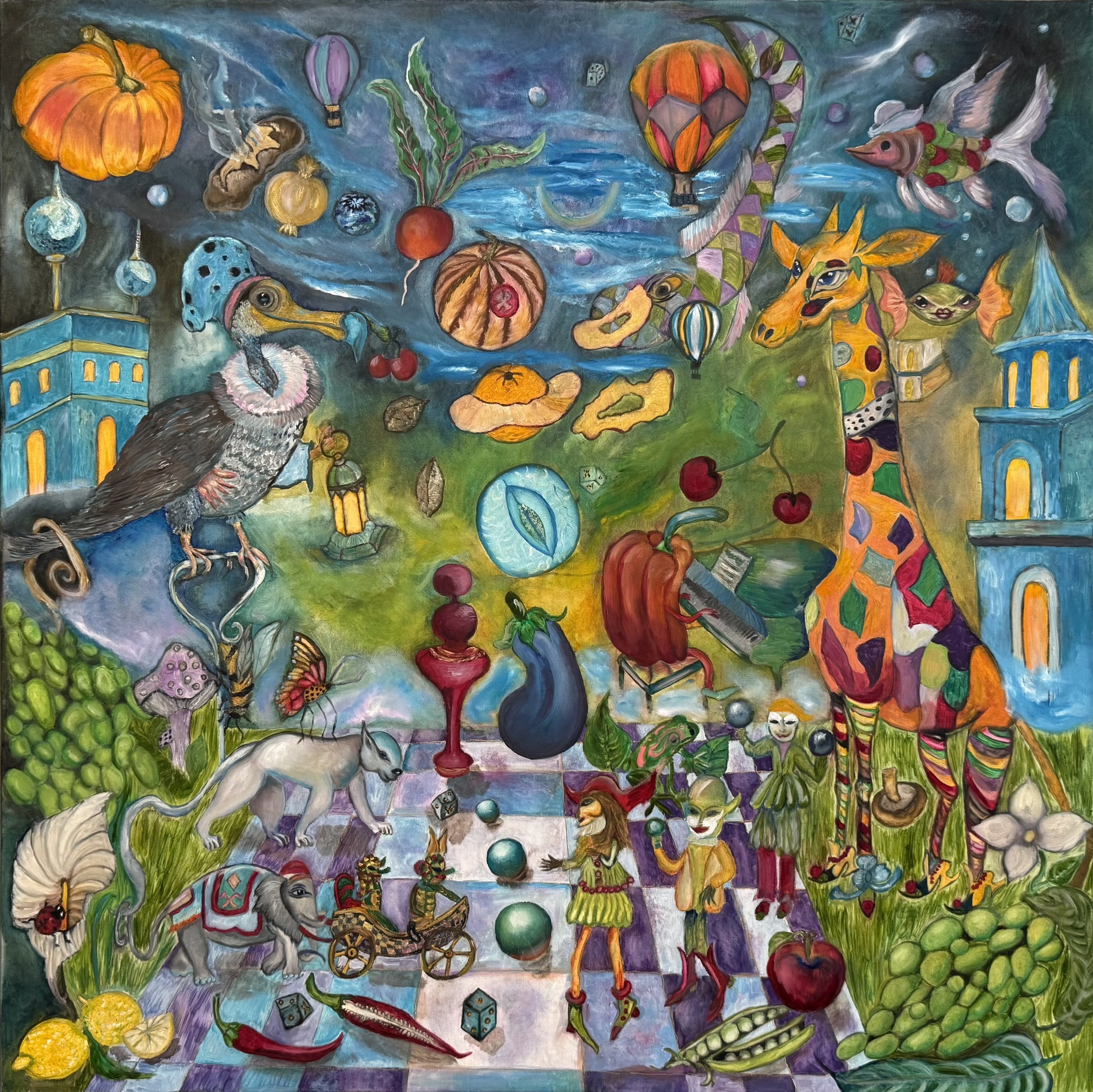
Planet Parade in the Year of Giraffe, 2026. Oil on canvas, 100 x 100 cm.
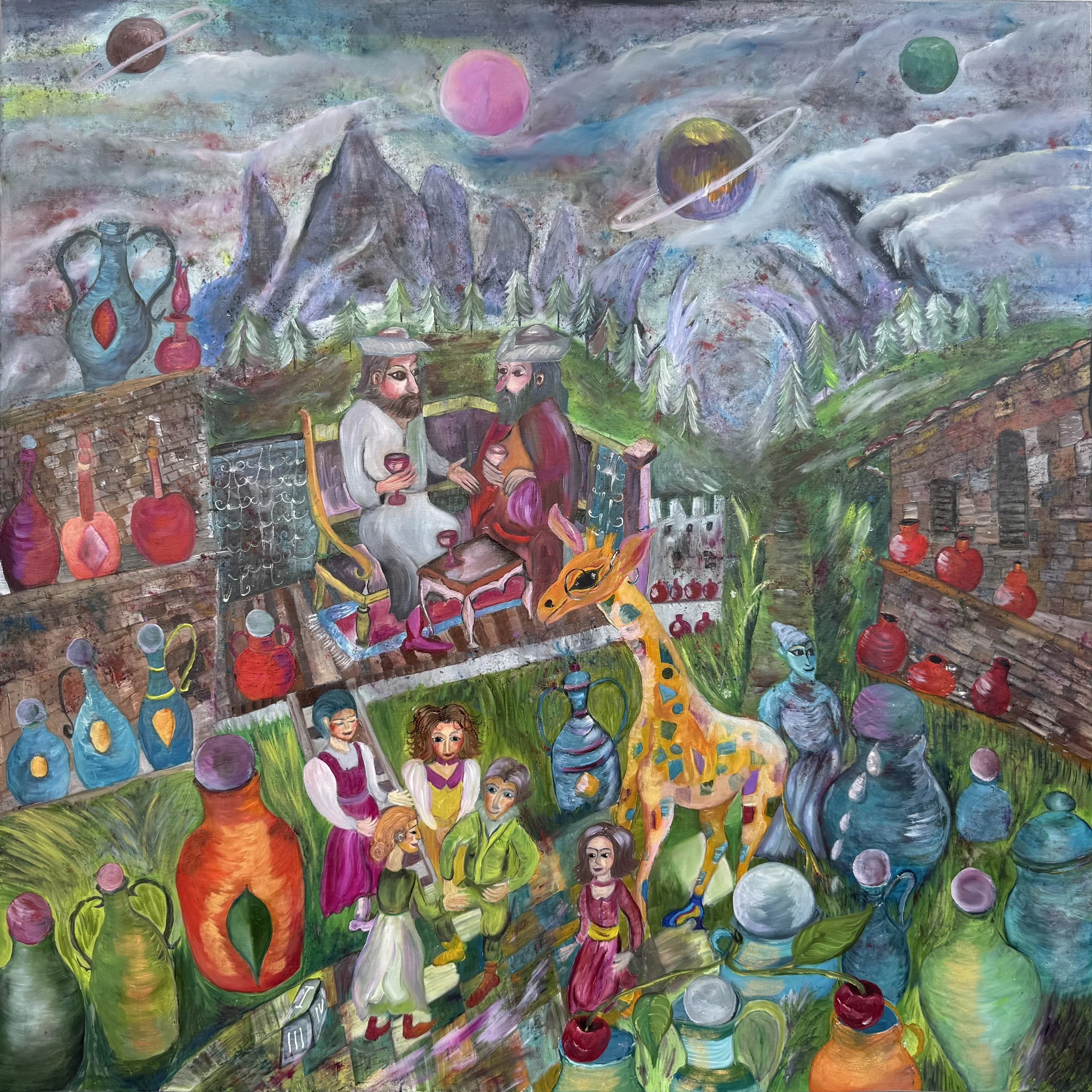
Vessels of Life, 2026. Oil on canvas, 100 x 100 cm.
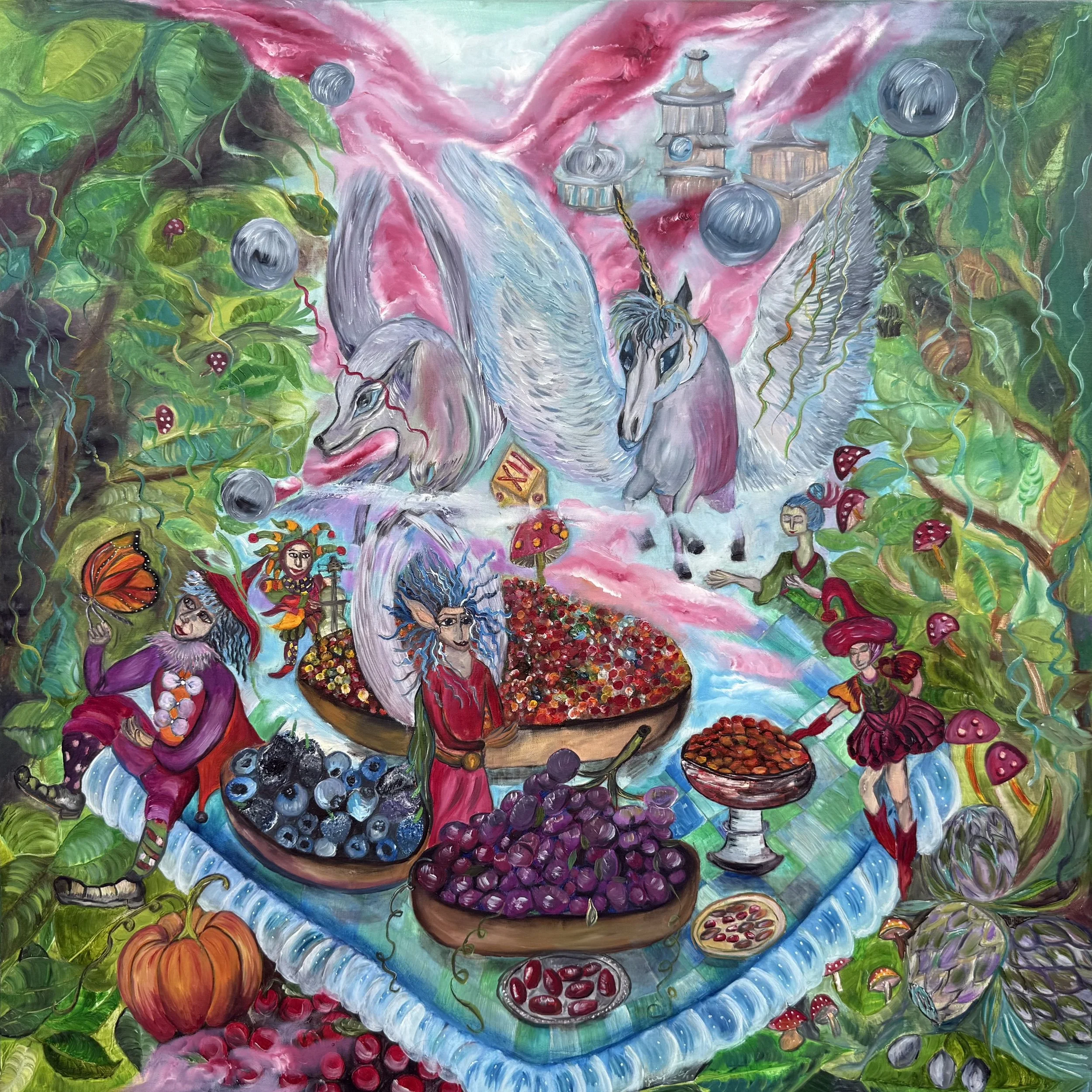
Point XII. Synchronization, 2026. Oil on canvas, 100 x 100 cm.
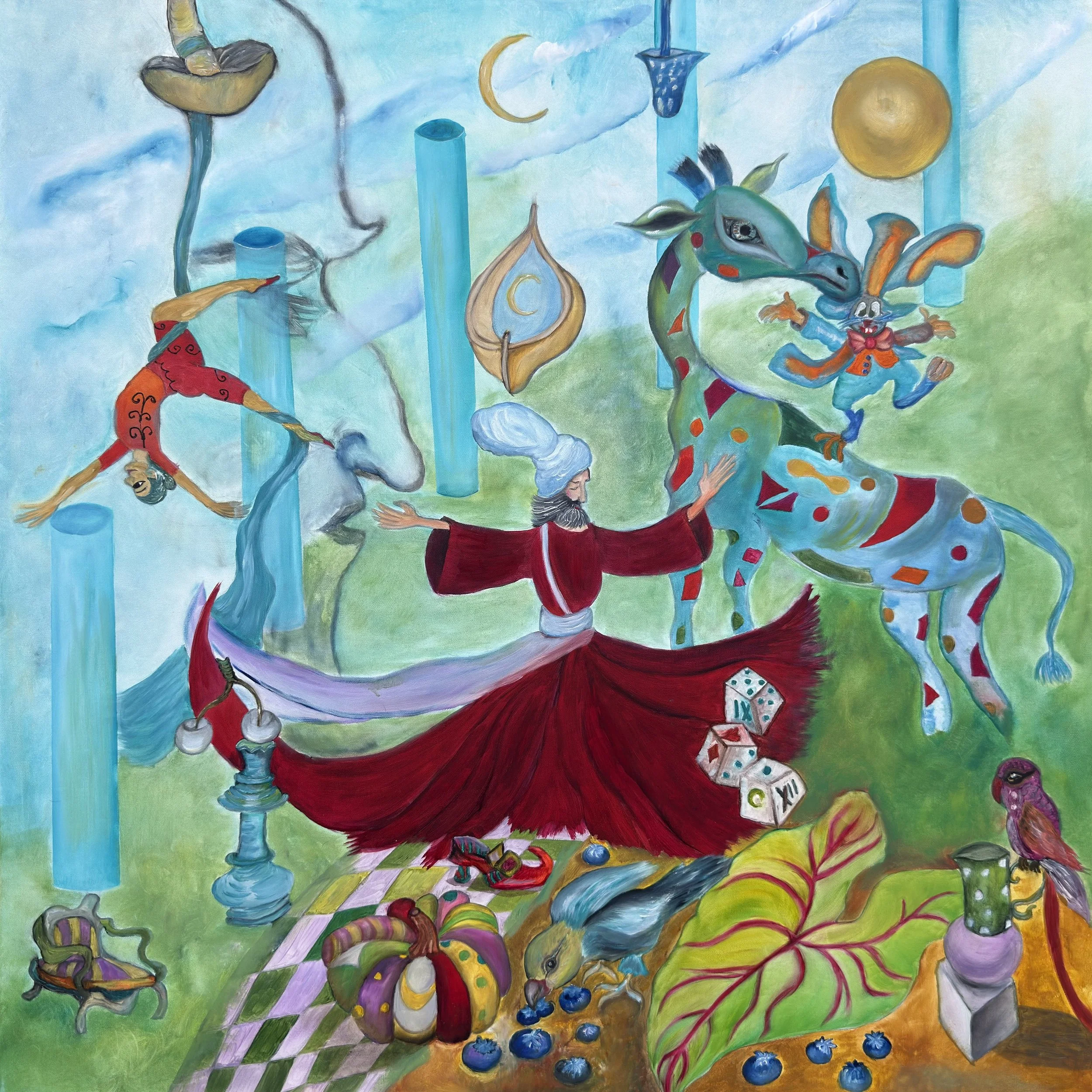
Festival of the Turning Year, 2026. Oil on canvas, 100 x 100 cm.
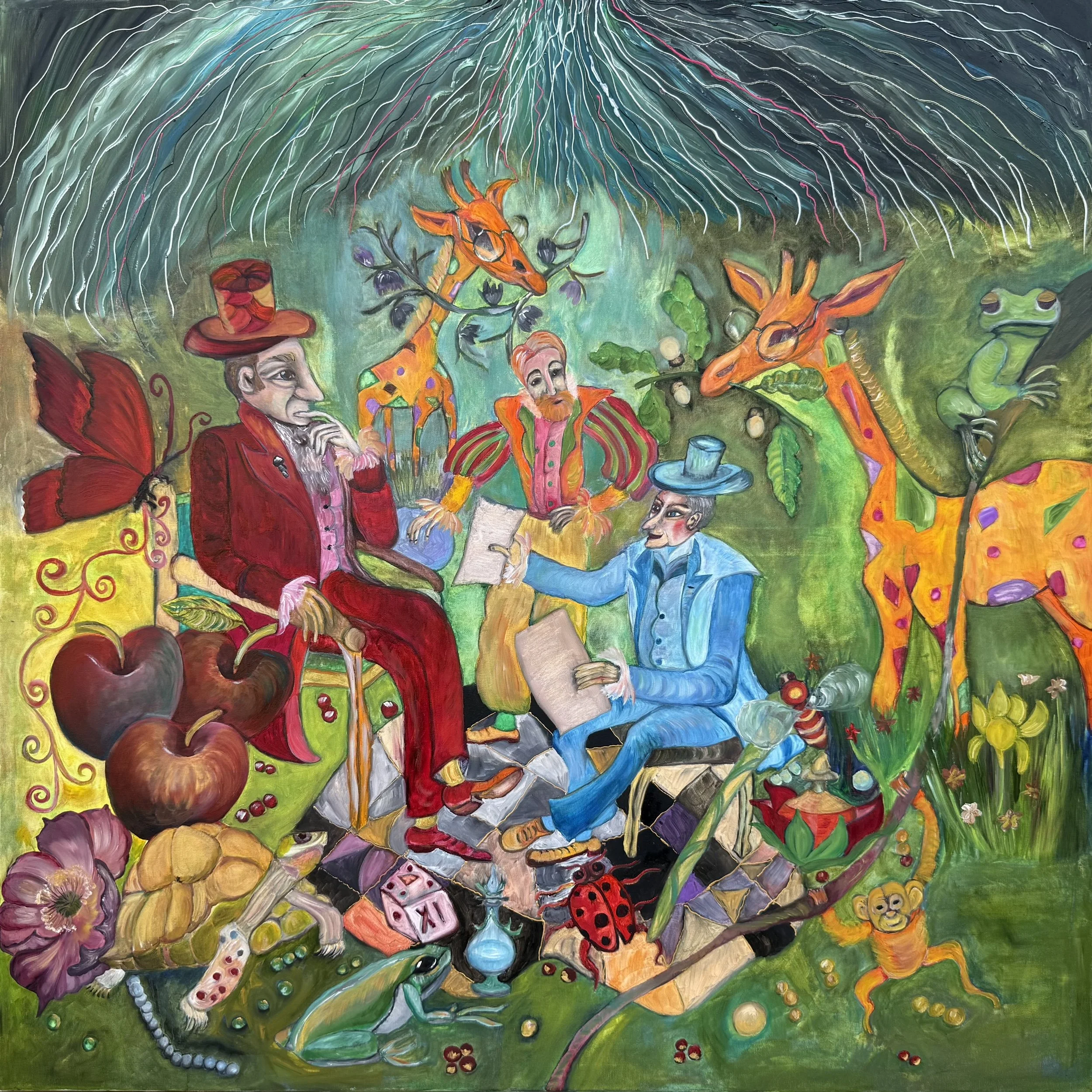
The Council of the Giraffe Constellation, 2026. Oil on canvas, 100 x 100 cm.
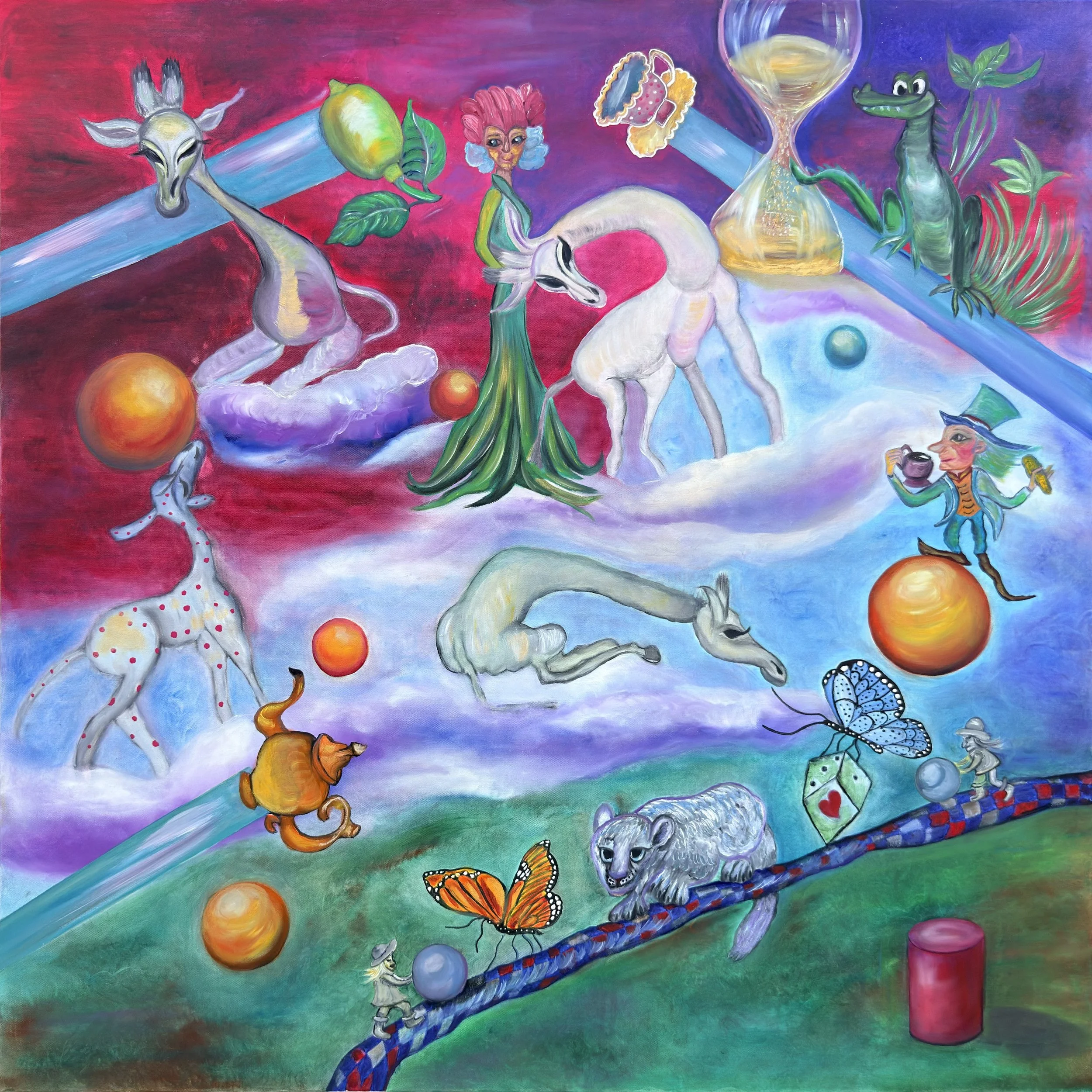
Dreams Beyond Time, 2026. Oil on canvas, 100 x 100 cm.
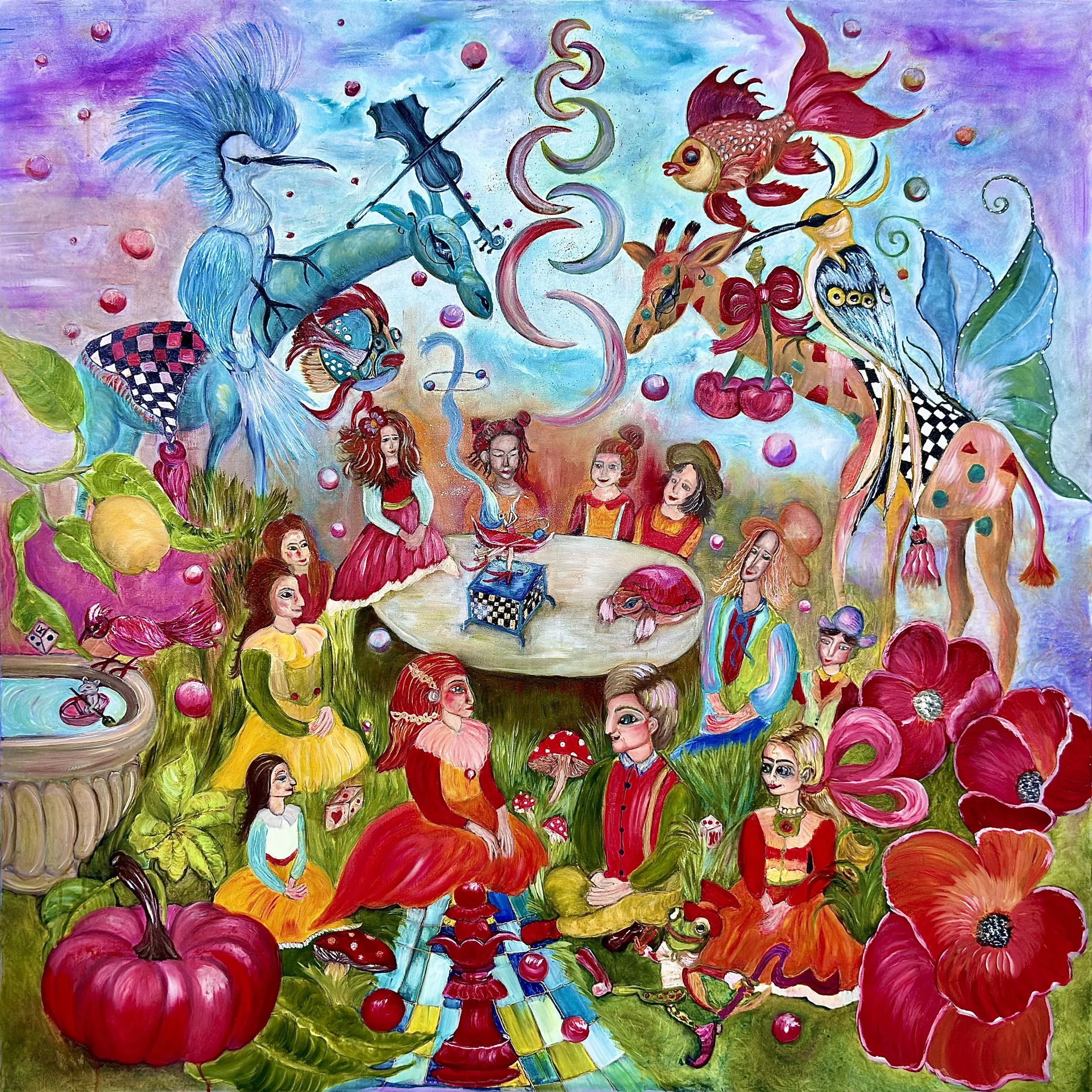
Twelve Moments beneath Eight Moons, 2026. Oil on canvas, 100 x 100 cm.
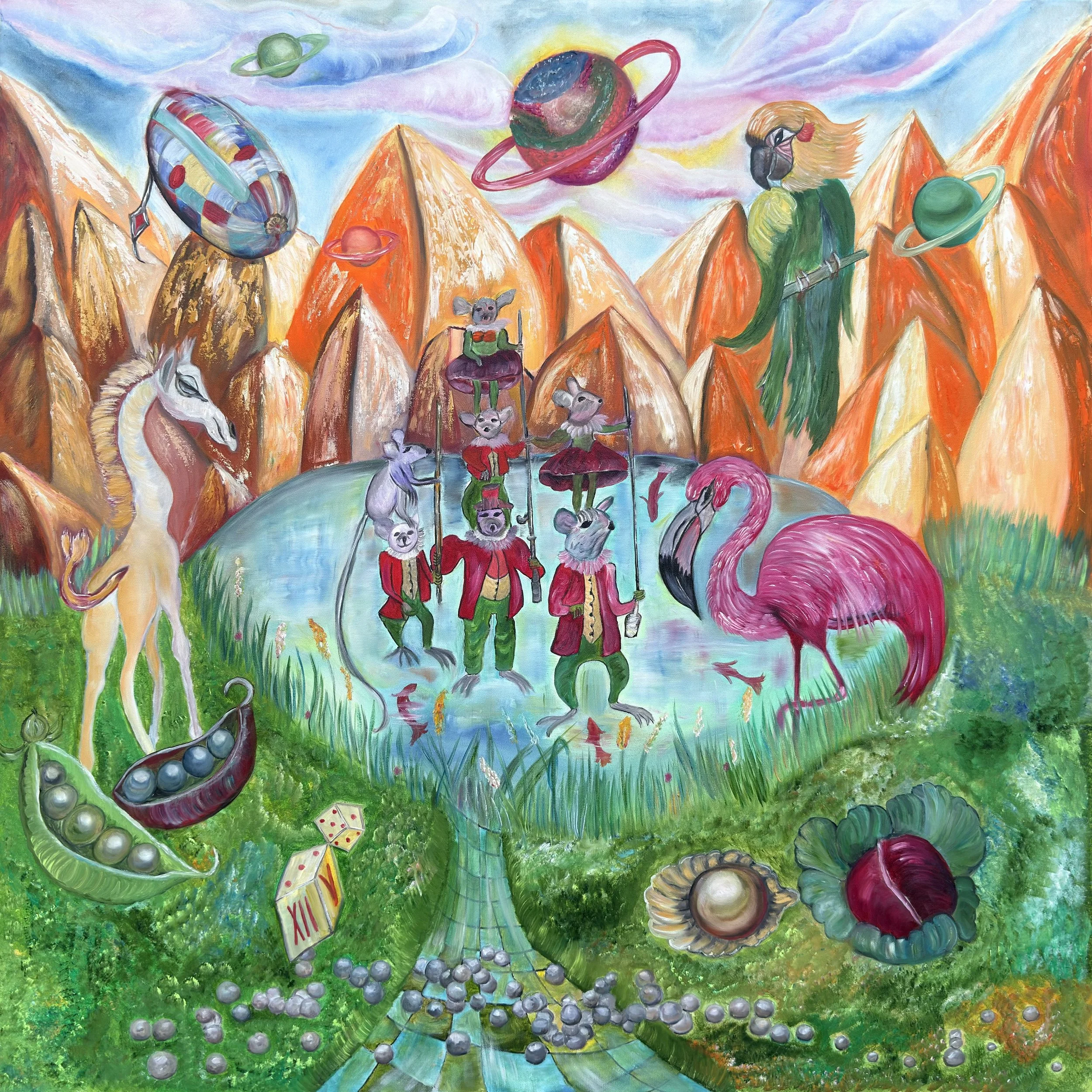
The Geometry of Balance, 2026. Oil on canvas, 100 x 100 cm.
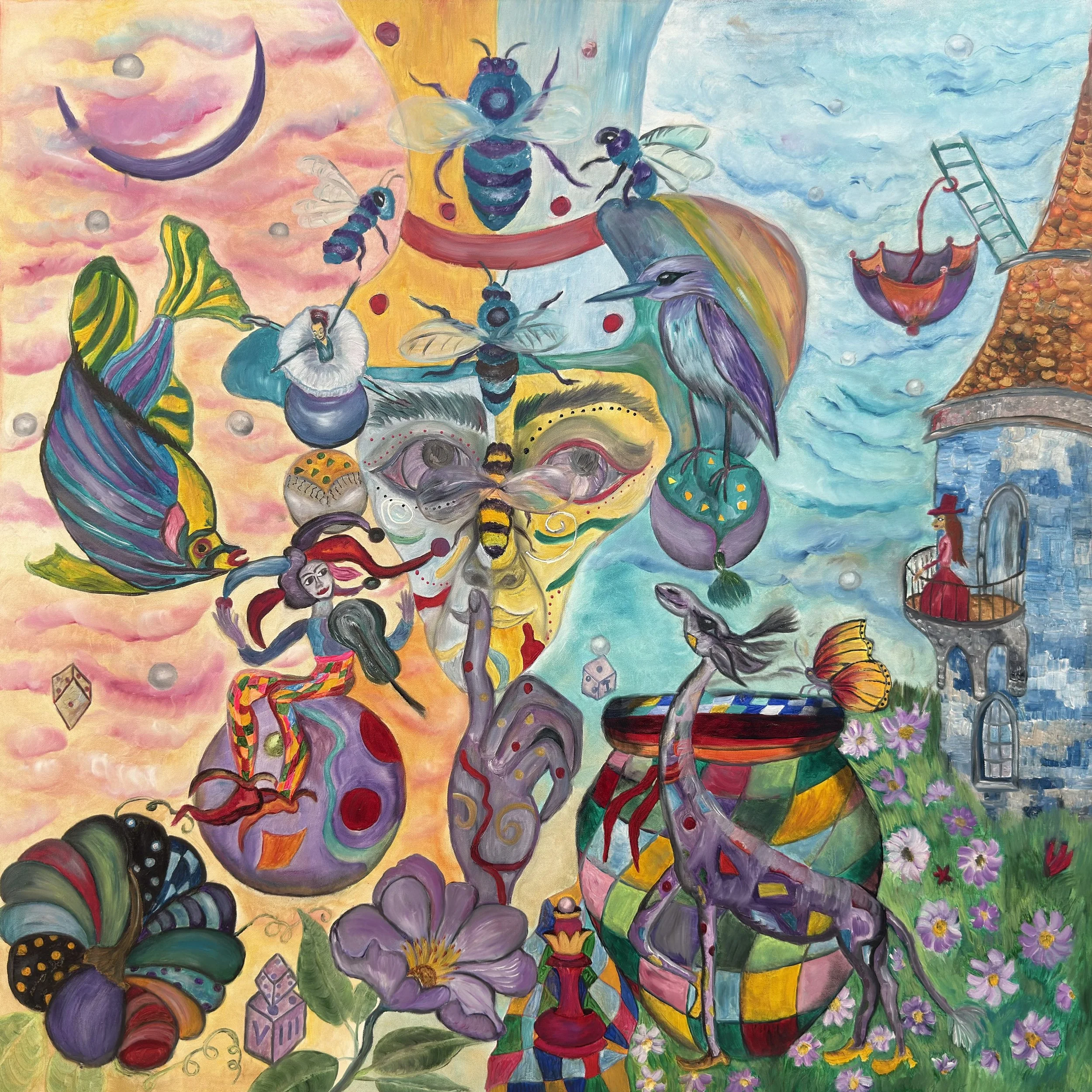
Concentration, 2026. Oil on canvas, 100 x 100 cm.