
Maurizio Diana
Biography
Maurizio Diana was born in Rome on August 4, 1939, and his artistic vocation emerged very early. During the 1950s Diana cultivated drawing and painting in solitude, without attending art schools. His desire to move from drawing to oil painting led him to the Roman figurative painter Giulio Vito Poggiali, who introduced him to oil technique and to the historic art-supply shop Poggi in Rome. This shop became a familiar place for him and marked the beginning of a long relationship with the Roman artistic milieu. In 1959 he painted his first oil canvas, and in 1960 he showed his works at the Via Margutta art fair, an important meeting place for artists in Rome.
Although he studied Geology at the University of Rome “La Sapienza” and graduated in 1964, art remained a central part of his identity. After a period in which family life and scientific studies temporarily absorbed much of his energy, he returned to painting in 1966 with a series of works dedicated to sunsets. Around the same time he began frequenting the galleries of Via del Babuino, especially “I Volsci”, directed by Enzo Galeazzi. Galeazzi organized Diana’s first solo exhibition in 1967 at the gallery “Il Timone” in Chioggia. In 1968, through his father-in-law Giobatta Piccone, he exhibited at the “Sant’Andrea” gallery in Savona, directed by Luigi Pennone, both linked to the Ligurian Futurist environment.
The decisive turning point came in 1969, when Diana spent five months in Paris as a scientific researcher at the University of Orsay. After an initial period of loneliness and difficulty, he stayed at the Hôtel Istria in rue Campagne-Première, a place associated with major avant-garde figures such as Picabia, Duchamp, Man Ray, Tzara, Mayakovsky and Aragon. Paris reawakened his desire to be an artist. He later moved to the Maison de l’Italie at the Cité Universitaire, where the atmosphere after May 1968 was marked by political debate, collective life and experimentation. There, through the Roman artist Dégo, he joined the CAP, Comité d’Action Plasticien, a collective that produced eleven political silkscreen posters. Diana in the year 1989 donated these posters to the Musée de la Publicité in Paris.
Back in Rome, he set up his studio in a basement in Via Annibal Caro. In 1970 he presented the “Manifesti francesi” at the Bottega dell’Immagine, directed by Vladimiro Settimelli and Piero Berengo Gardin, hoping to revive in Rome something of the Parisian spirit. Throughout the 1970s his work focused strongly on graphic art: etchings, silkscreens and linocuts. He exhibited in Rome, Gubbio, Parma, Aosta, Spoleto, Arezzo and Angera, and became involved with the gallery “Il Babuino”, where he met many Roman artists. His work during this decade often reflected civil and political concerns, including exhibitions connected to the abortion referendum and to the memory of Pier Paolo Pasolini.
Between 1978 and 1981 he formed the “Gruppo Roma” with the Parisian painter Michel Mathieu and took part in important exhibitions in Paris and Milan, including the Salon de la Jeune Peinture and Figuration Critique. With Dégo and Angelo Di Bartolo he also founded the “Non Gruppo”, an artistic collaboration that emphasized shared experience without rigid group identity.
The 1980s marked a new transformation. Diana produced Quell’io, a narrative cycle of twenty-one canvases, and later began to explore the relationship between painting, photography, place and light. In 1987 he developed the concept of Figuration illuminée: paintings conceived in relation to specific places, activated by projected images and by changing light. The work suggested ancient frescoes marked by time and human neglect. Giulio Carlo Argan visited his studio and encouraged him to continue this innovative direction. That same year Diana presented I Luoghi della Cultura at Palazzo Venezia in Rome, accompanied by music by Mauro Bortolotti.
In 1989 Stefano De Luca published La queue de l’utopie, dedicated to the twentieth anniversary of the CAP posters, and organized Diana’s installation Il luogo… i luoghi at the Centro Ausoni in Rome. During the 1990s the theme of memory, light and place became increasingly central. In 1992 he exhibited La magìa dei luoghi in Matera, and in 1997 De Luca published the monograph Maurizio Diana pittore, presented at the Istituto Centrale per il Catalogo e la Documentazione in Rome.
From the late 1990s onward, Diana’s work increasingly integrated music, light and installation. His collaboration with the musician Massimo Bartoletti led to performances and exhibitions such as Stimoli percettivi. The filmmaker Luciano Emmer later produced a short film on the creation of Diana’s work L’ultima cena?.
In the 2000s Diana consolidated his international presence, exhibiting in Paris, Malta, Lille, Alexandria in Egypt, and Rome. He developed the cycle Le Chevalier et la Dame, inspired by Malta, combining places and human figures through layered collage and oil painting. In 2013 the monograph Maurizio Diana, une figuration illuminée, written by Gérard Xuriguera, was presented at the Capitoline Museums in Rome. That same year Diana developed the Televisioni Monotone, small installations painted in oil on plexiglass, where internal and external light altered the perception of the image.
From 2015 he began working with ceramics at Ceramiche San Giorgio in Albissola Marina, a historic workshop associated with major twentieth-century artists such as Lucio Fontana, Wifredo Lam, Asger Jorn and Aligi Sassu. In later years he continued to exhibit widely in Italy and abroad, including Paris, Montréal, Venice, Spoleto, Florence, Frankfurt, New York and other international venues.
Across more than six decades, Maurizio Diana’s artistic path moved from drawing to oil painting, from political graphics to illuminated installations, from memory of place to ceramic matter. His work has always sought to transform experience, history and perception into images shaped by light, time and human memory.
Artist Statement
My work is rooted in the relationship between image, memory, light and place. Since the beginning, painting has been for me a way to transform experience into visible form: not only to represent reality, but to reveal the traces that time, history and human presence leave upon it.
Over the years my research has moved through drawing, oil painting, graphic work, silkscreen, installation, projected light, music, plexiglass and ceramics. Each medium has allowed me to explore a different aspect of perception. I am interested in images that are not fixed, but mutable; images that change with light, space and the viewer’s gaze.
The idea of place is central to my work. A place is never just a background: it is a deposit of memory, a living surface where history, architecture, matter and emotion coexist. Through painting and light, I try to make these hidden layers emerge.
My artistic path has often developed in dialogue with science, especially with the study of matter and non-destructive investigation. This has strengthened my attention to surfaces, structures, traces and transformations. In my work, art becomes a way of listening to what matter silently preserves.
As Gérard Xuriguera, the renowned parisian art critic, wrote in describing my work: “The result is that fluctuating reality which constructs and destroys itself beyond any temporal limit. It is as if one wished to throw a ball into the past and make it bounce into the future.”
www.mdiana.net
https://en.wikipedia.org/wiki/Maurizio_Diana
https://www.facebook.com/mauriziodianapittore
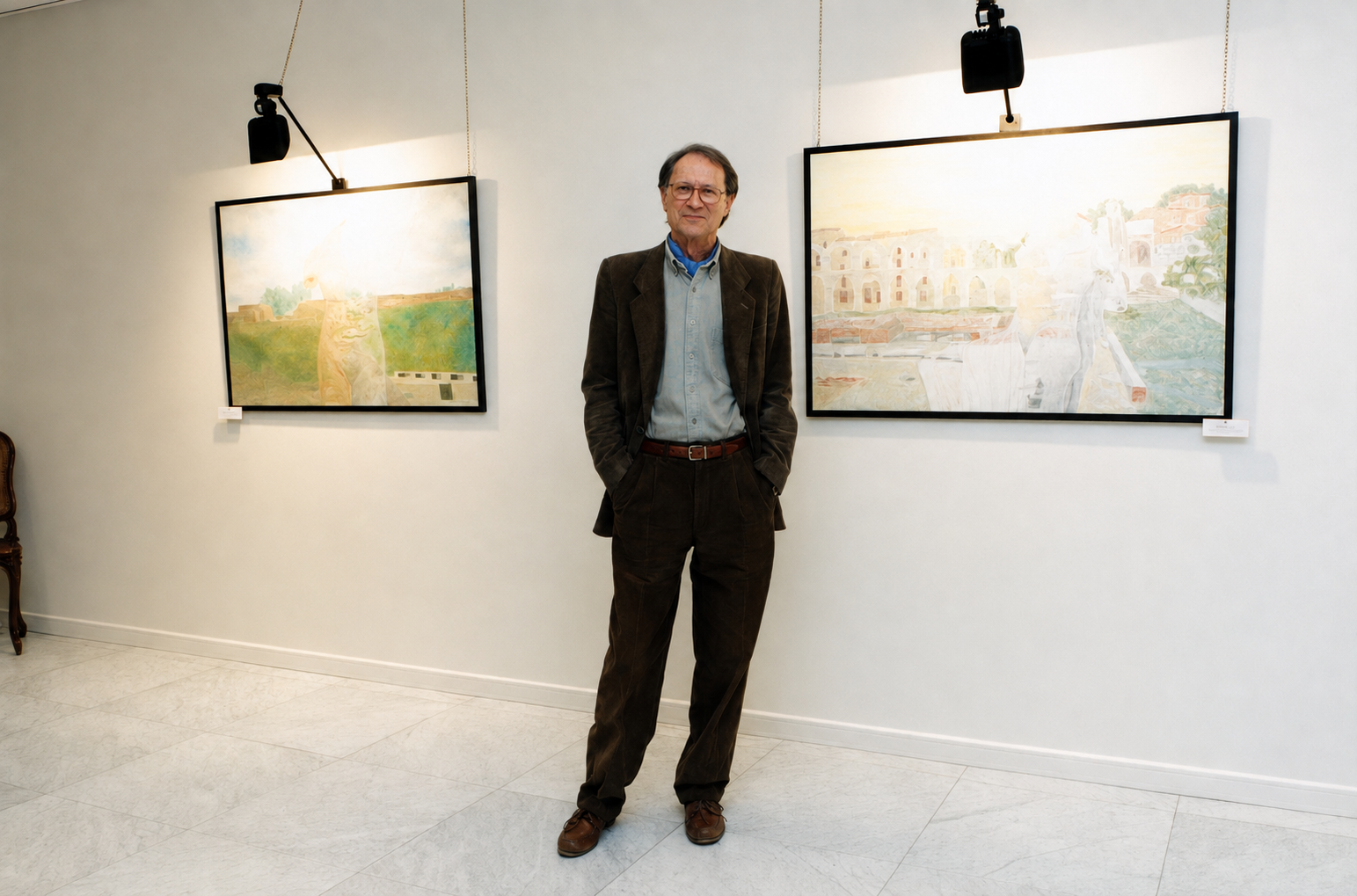
Maurizio Diana in Paris
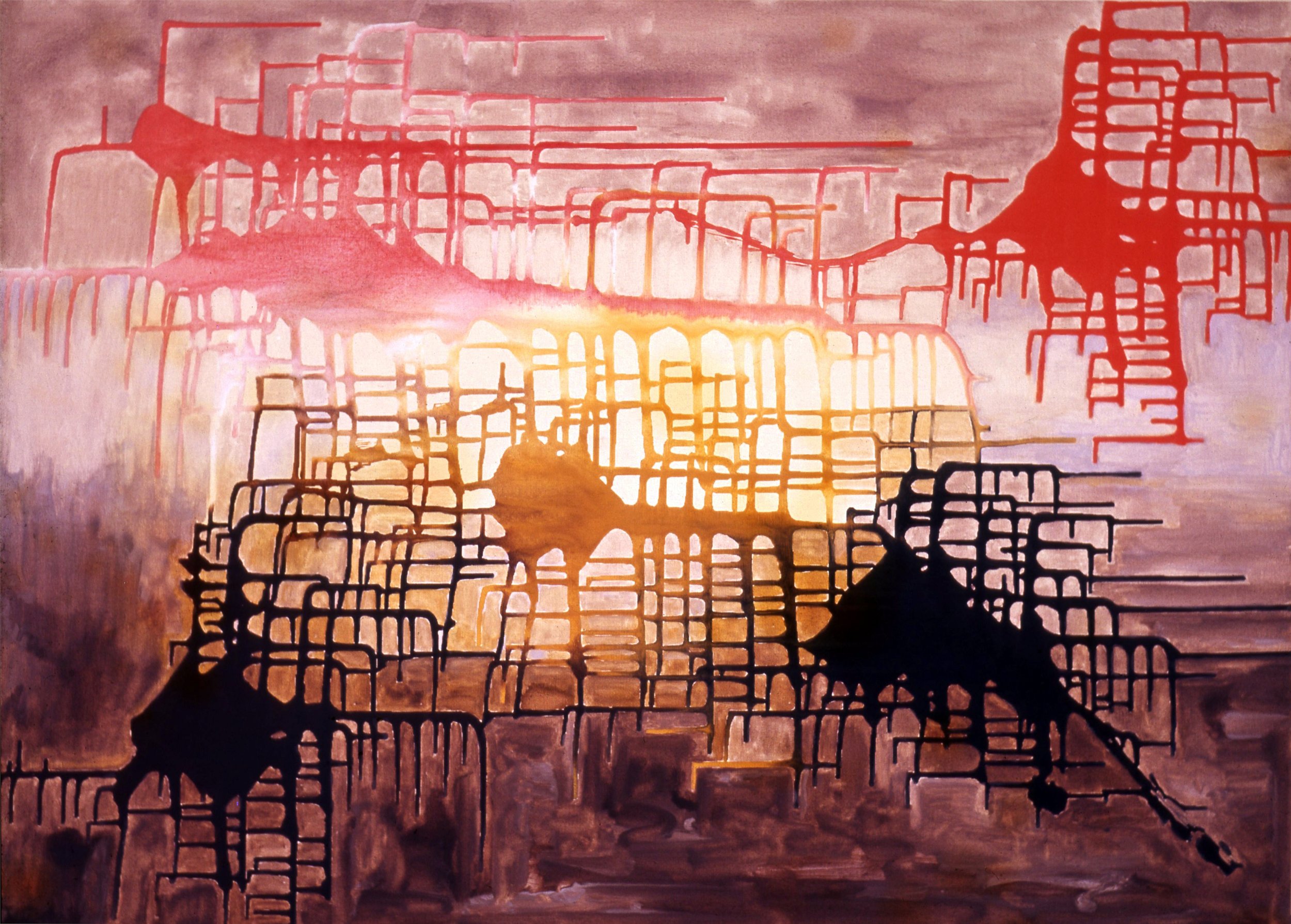
Sinfonia di un Raggio di Luce (Symphony of a Ray of Light), oil on canvas, 75 × 105 cm, 1970
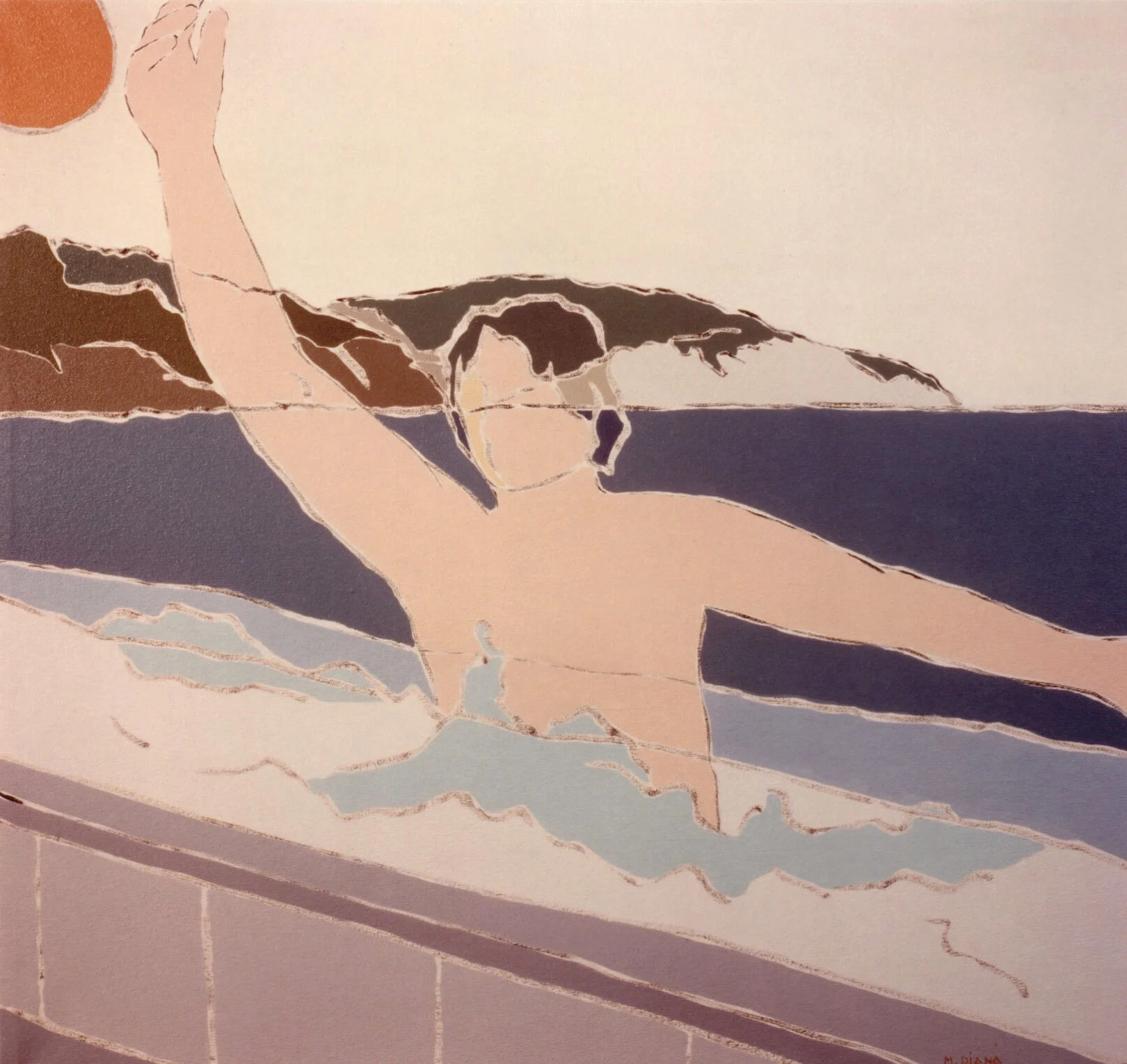
Capo Bianco, oil on canvas, 80 × 80 cm, 1983
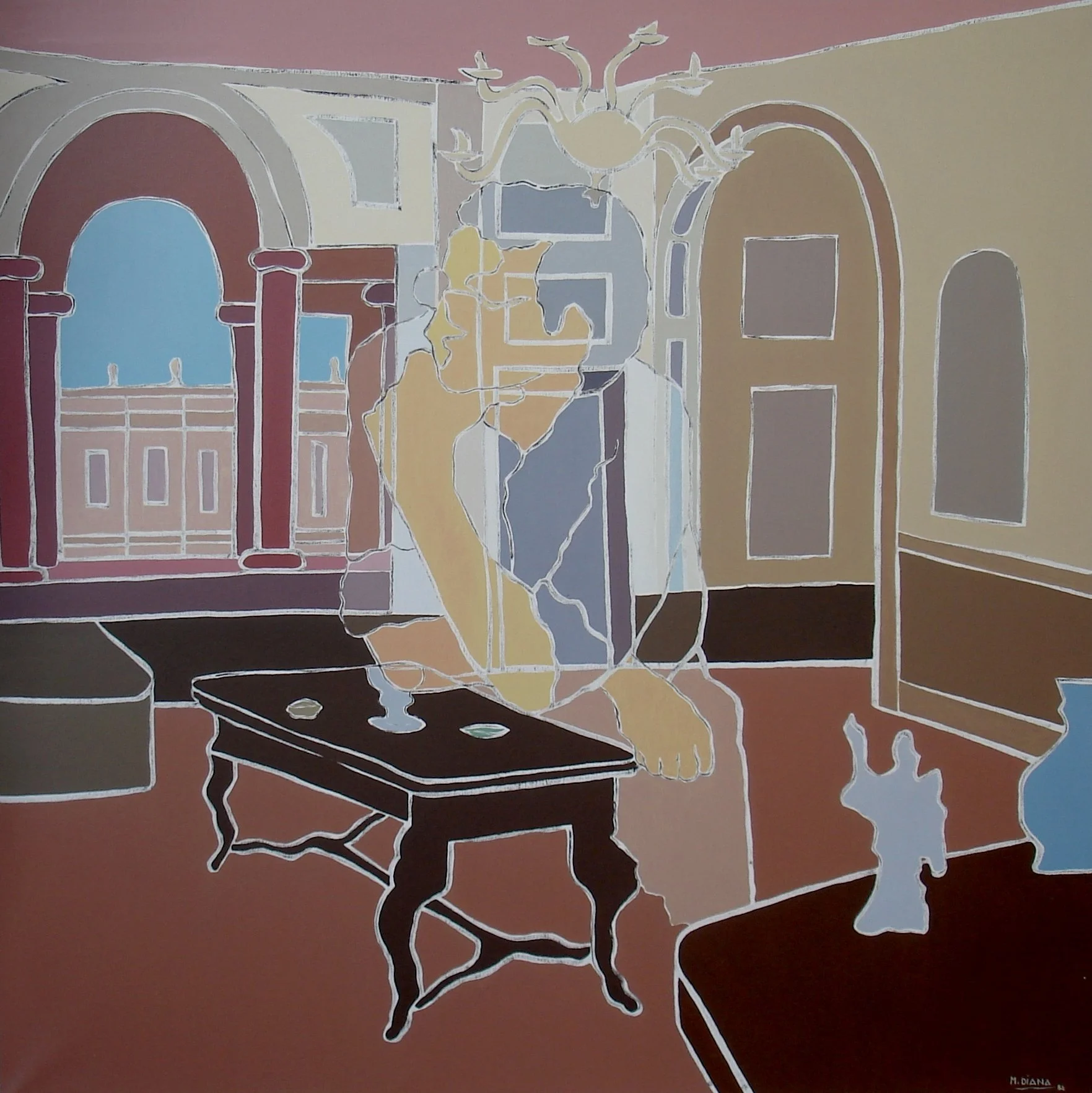
Interno (Interior), oil on canvas, 120 × 120 cm, 1984
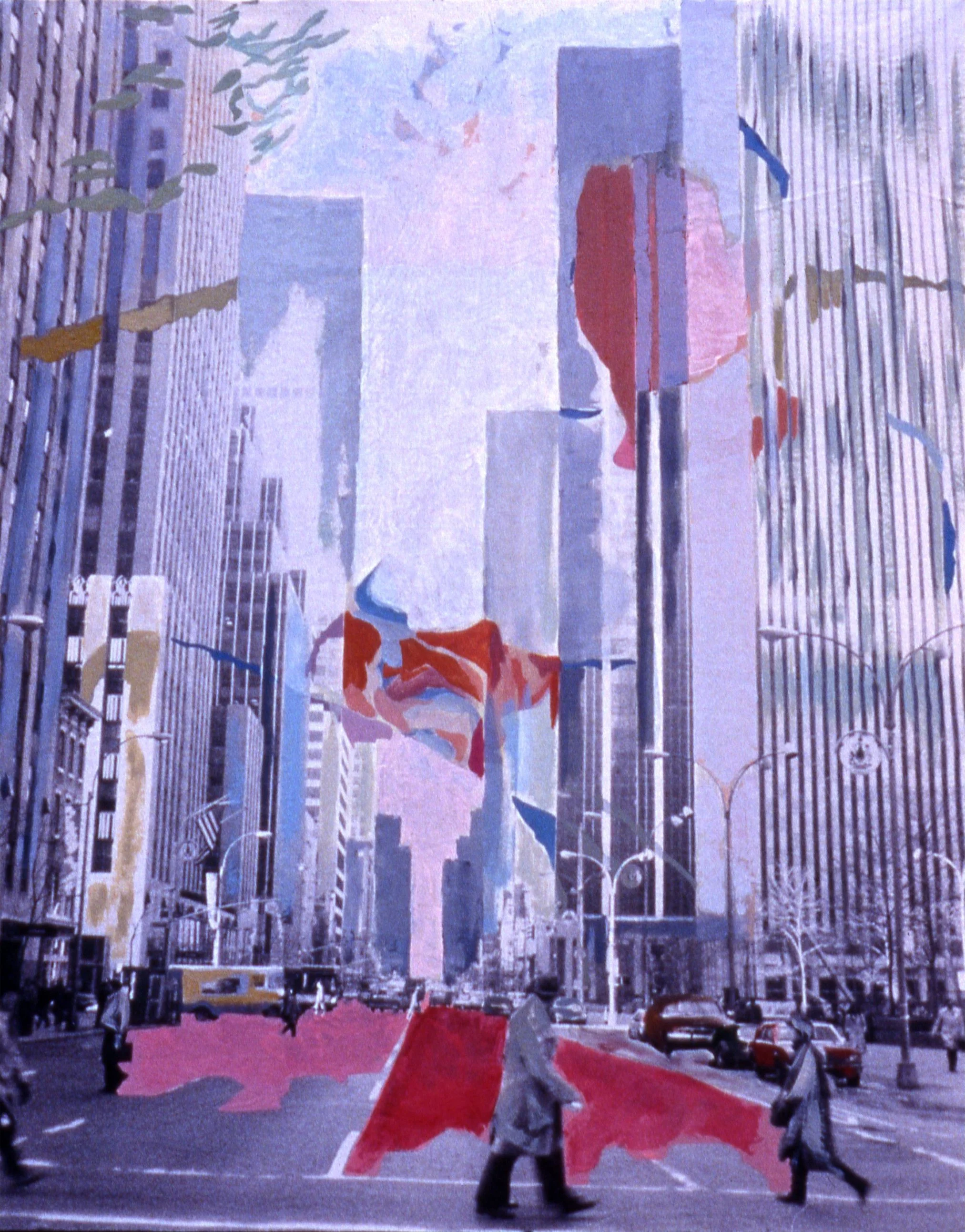
La Strada (The Street), oil on photo-printed canvas, 70 × 50 cm, 1986.
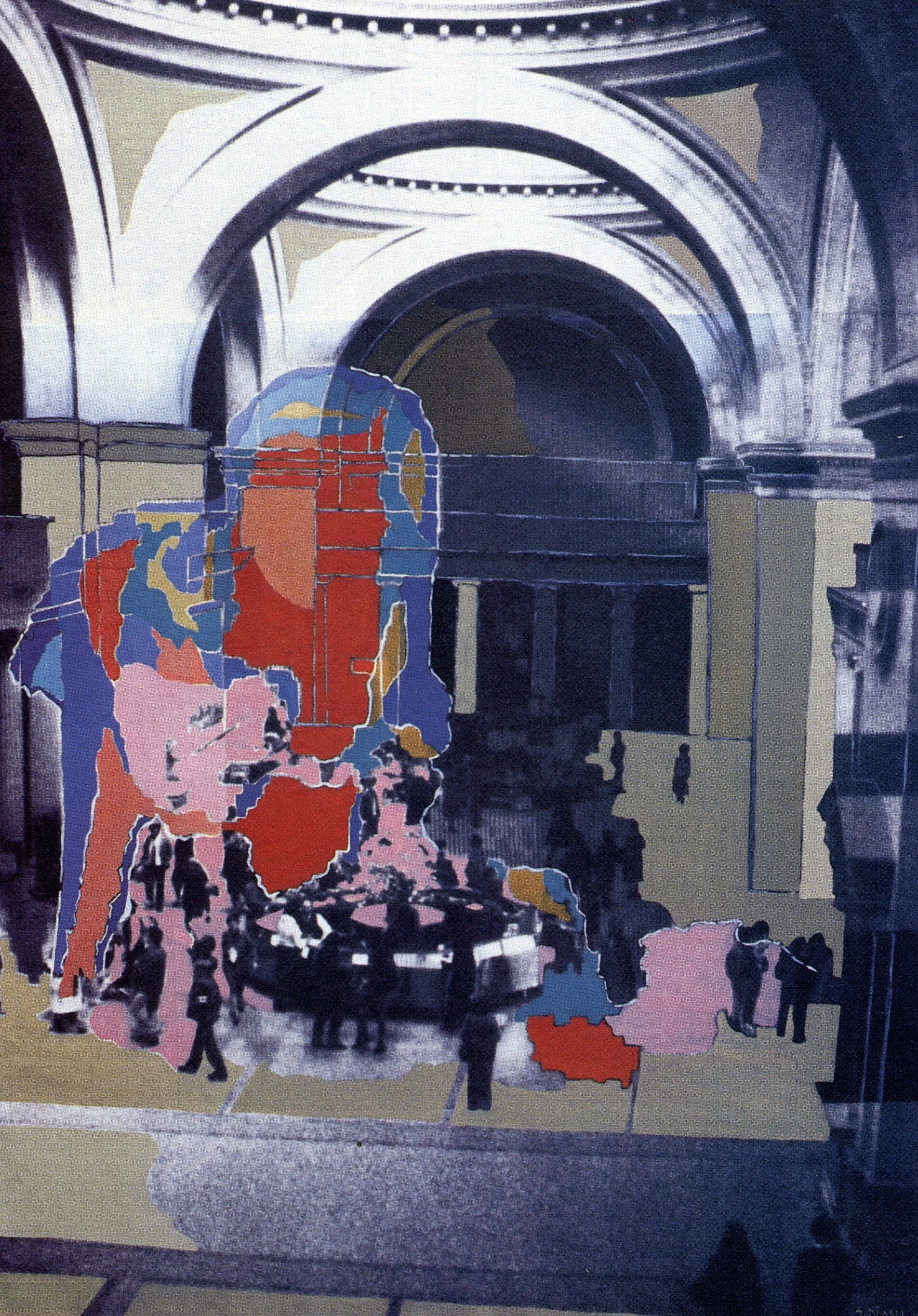
Il Museo (The Museum), oil on photo-printed canvas, 70 × 50 cm, 1985
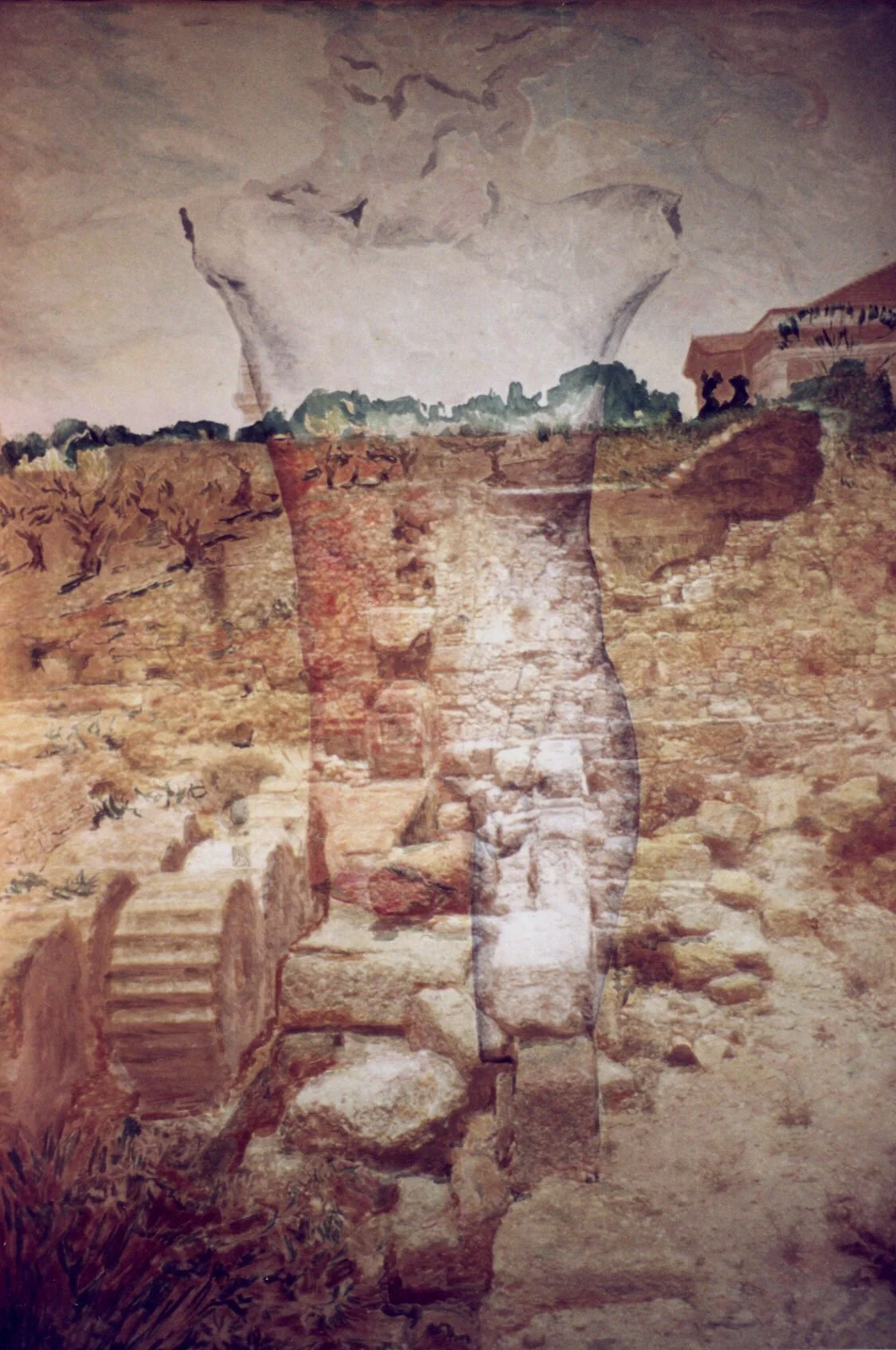
L'Uomo (The Man), oil on canvas + slide projection, 255 × 166 cm, 1996
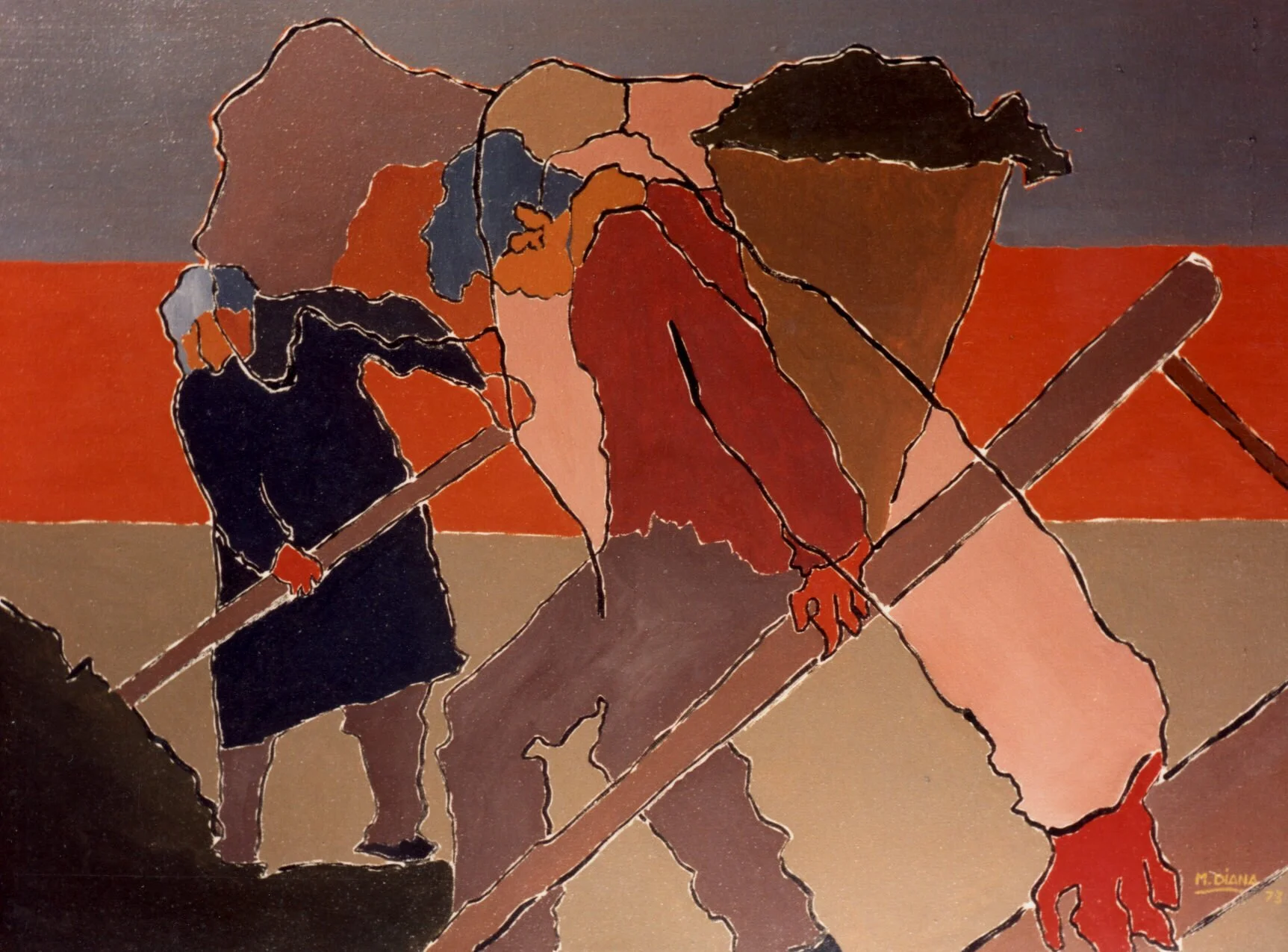
La Gerla (The Pannier), oil on canvas, 60 × 80 cm, 1973

Le Chevalier et la Dame 12, oil on collage on canvas-mounted paper, 45 × 55 cm, 2007
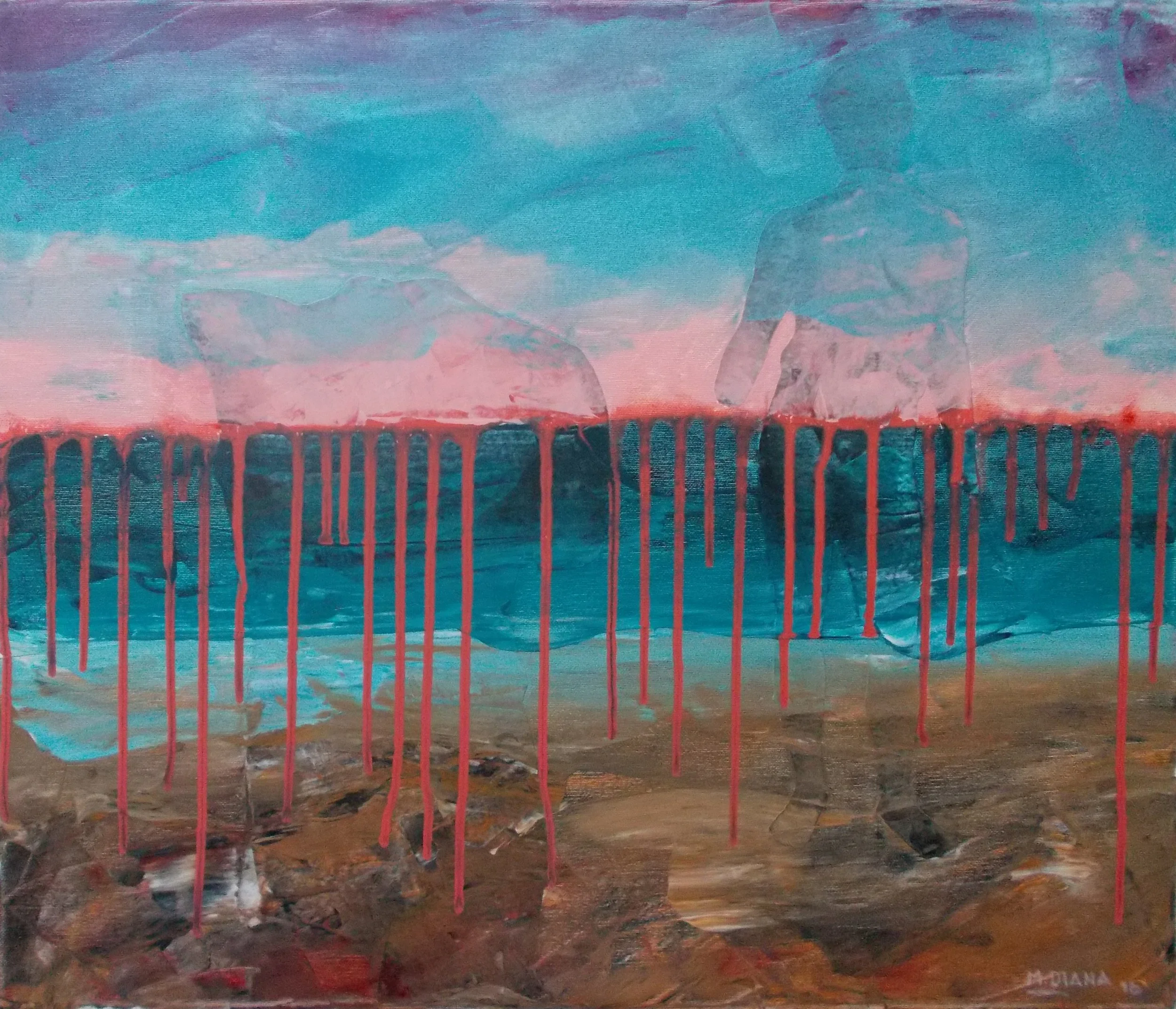
Orizzonti n. 97 (Horizons No. 97), acrylic on collage on canvas, 50 × 60 cm, 2016.
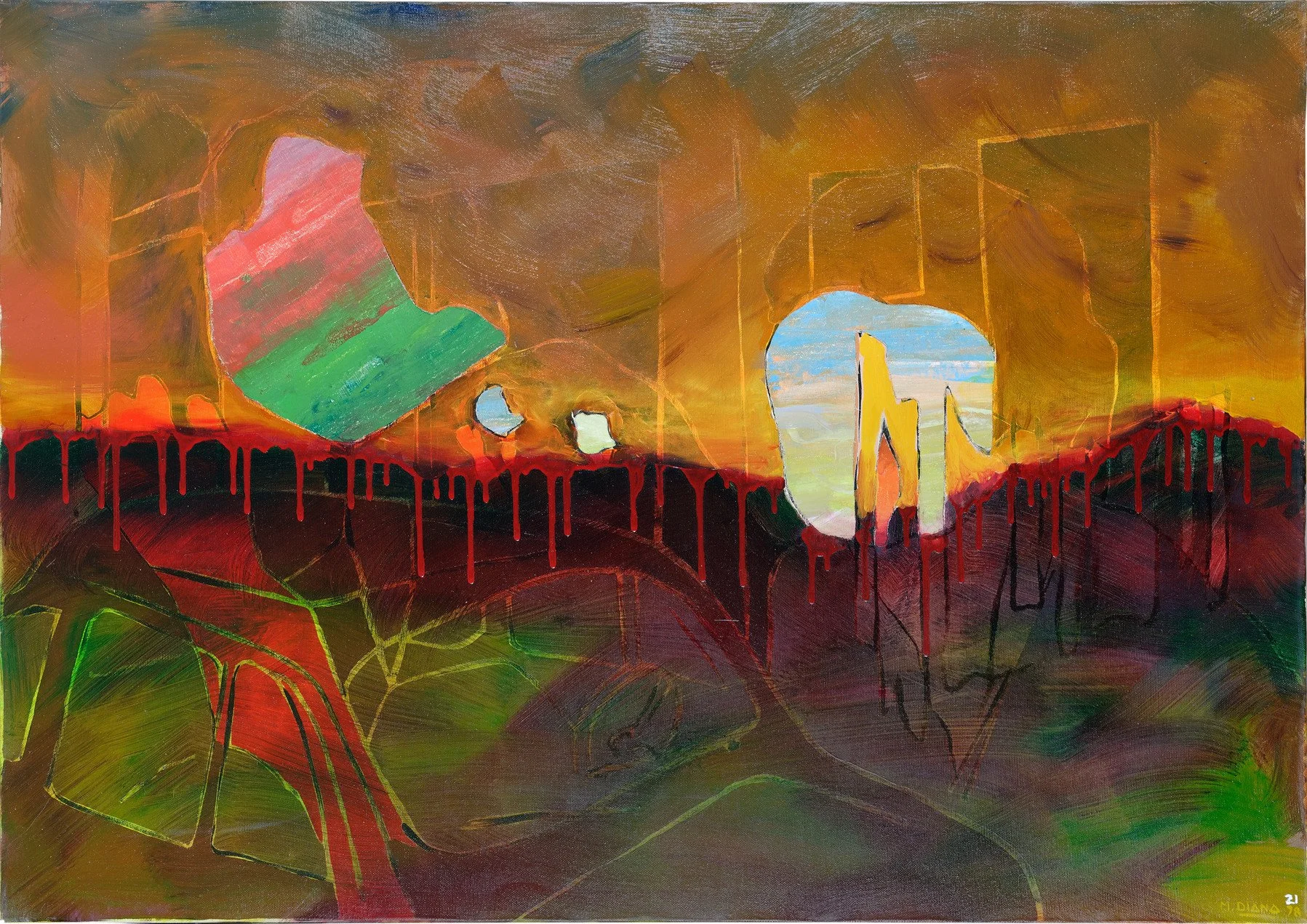
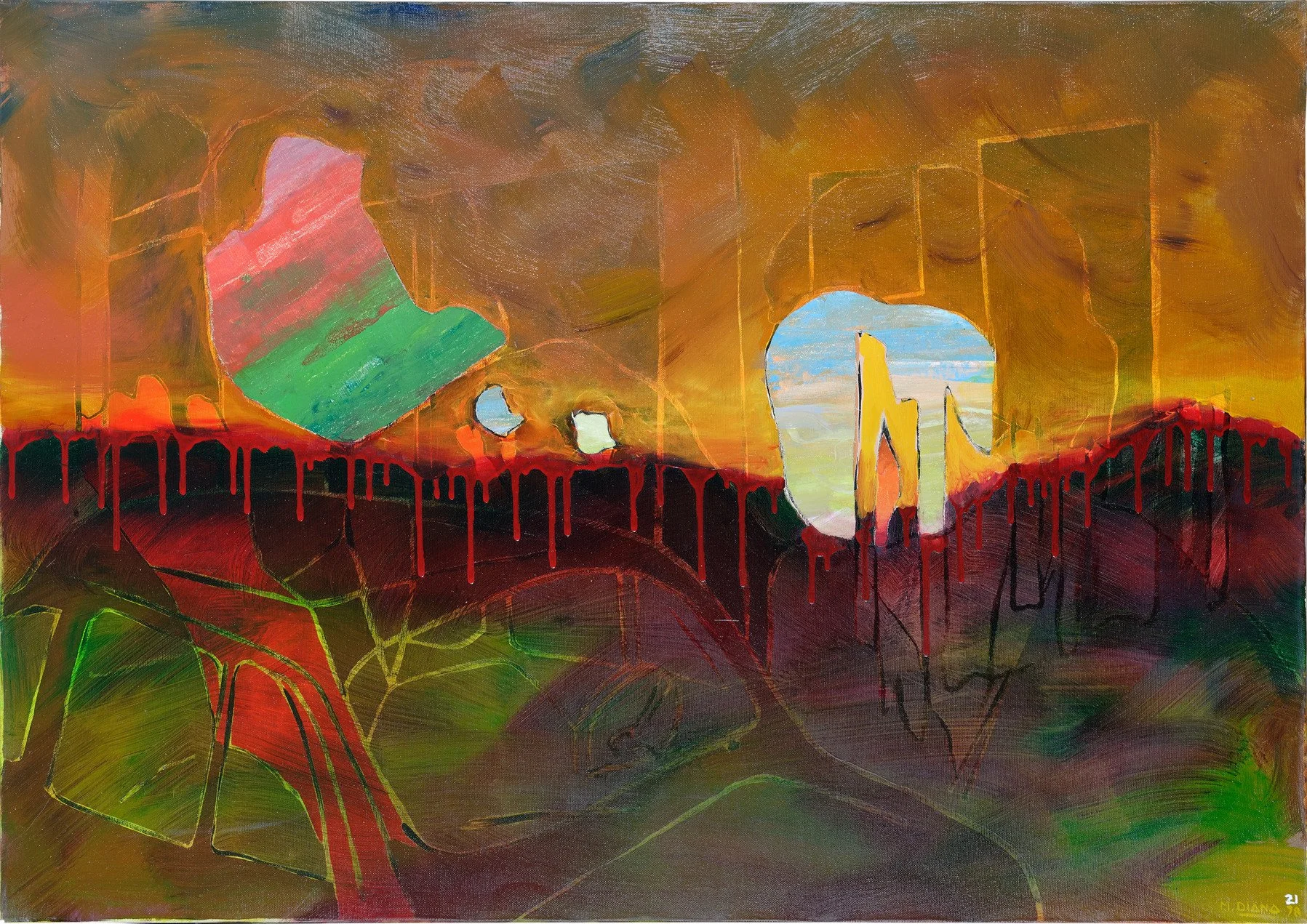
New Horizons 185 (Window on the Street), oil on collage on canvas, 70 × 100 cm, 1978–2021