
Riitta Hellén-Vuoti

Biography
Riitta Hellén-Vuoti (b. 1959) is a Finnish painter and poet who lives and works in Kuopio, Finland.
Her practice centers on the human being and what she describes as the never-ending complexities of life. Working primarily with painting, poetry, and mixed media, she approaches art as an intuitive form of inquiry through which emotional, psychological, philosophical, and existential questions may be encountered without being confined to fixed explanations. Her paintings and poems emerge as inner images, sometimes articulating the same experience through different forms. She refers to these interconnected expressions as “poem-paintings,” a term that reflects the close relationship between visual and linguistic meaning throughout her work.
Hellén-Vuoti has been creatively active since her youth. She began writing poetry at an early age, when she developed the conviction that she would eventually both paint and write. During high school, an art teacher encouraged her to work with oil paint, establishing an early material foundation for her visual practice. She continued to make oil paintings while studying medicine at the University of Oulu, maintaining her artistic activity alongside the considerable demands of her education. Her professional training ultimately led to qualifications as a licensed medical specialist in psychiatry and psychotherapy.
Her work as a physician was, in her account, a calling rather than a profession disconnected from her artistic life. Psychiatry, psychotherapy, painting, and poetry all required sustained attention to the human condition, although they approached it through different structures and languages. Clinical work depended on responsibility, precision, professional frameworks, interpersonal understanding, and ethical care. Art offered another way of being with human experience, one in which intuition, ambiguity, metaphor, and the unconscious could remain active without being reduced to diagnosis or explanation.
After completing her specialist qualifications in medicine, psychiatry, and psychotherapy at the end of the 1990s, Hellén-Vuoti began devoting more time to painting and writing. Her exhibition history reaches back to a solo presentation at Kallan Galleria in Kuopio in 1998, followed by an exhibition at Galleria Art Halvare in Oulu in 2000. Around this period, art assumed an increasingly substantial place in her life. Her subsequent development unfolded gradually alongside her medical career, allowing painting and poetry to become sustained forms of practice rather than occasional activities. This dual professional commitment eventually became difficult to maintain.
Hellén-Vuoti recognized that her mental resources were no longer sufficient for the simultaneous demands of psychiatry and art. The transition away from patient care brought significant changes, but also relief from the responsibilities and institutional structures of clinical work. She is now a full-time artist. This change has allowed her to pursue what she had imagined in youth: a life centered on painting and writing. At the same time, she acknowledges the practical realities of artistic work, including the spatial and financial challenges of maintaining a studio and the time required to organize the conditions under which art can be made.
Hellén-Vuoti’s education continues to inform her understanding of creativity and human experience, but she does not treat art as an extension of clinical interpretation. She regards the deepest dimensions of human knowledge as irreducible to explanation. For her, the inner world is not something to be simplified or cured. It is a foundation of life and a source from which relationships, creativity, and meaning arise. Painting and writing provide states of freedom in which the functions of the ego can recede, making room for forms of experience that cannot be fully understood through scientific analysis.
Intuition was important to Hellén-Vuoti during her medical career, and it remains fundamental to her work in the studio. She does not begin paintings with predetermined compositions, extensive plans, or fixed outcomes. Planning can interfere with what she considers genuine expression. Instead, each work develops from an inner need, with colors and materials emerging through the act of painting. The work is allowed to create itself, while its meaning is considered more fully after its completion. This process does not eliminate resistance or uncertainty. Resistance may arise when she looks at a painting, but it becomes part of her engagement with the work rather than a reason to impose an externally conceived solution.
Although her earliest paintings were made primarily with oil on canvas, Hellén-Vuoti has expanded her practice to include mixed media. Layers, textures, colors, and metaphors interact across her surfaces, producing varying degrees of abstraction. Material decisions are inseparable from the interior movement that guides the work. Rather than serving only as technical choices, paint and mixed materials become part of an evolving visual language through which emotional and conceptual meanings can take form.
Her paintings frequently occupy a space between gesture, atmosphere, symbolic association, and abstraction. Works and series such as “Black Rose,” “Black Roses,” the “Violet Series,” “Nocturne, Violet Series 2:12,” “Love Is Peace,” “Peace Is a Human Right,” “When the War Ends, Love Is Everything,” “The End of the War,” “Japanese Landscape of My Mind,” “Poems without Words,” and “Love Is in the Air” indicate the breadth of her recurring concerns. Love, peace, conflict, loss, healing, connection, and the interior experience of existence appear repeatedly in the titles and conceptual orientation of her work. Her “By the Sea” series includes a poem and painting titled “Love Is Freedom,” bringing together two principles that have become central to her philosophy: art as freedom and love as freedom.
The relationship between painting and poetry is one of the defining elements of Hellén-Vuoti’s practice. She does not position one medium as an illustration of the other, nor does she perceive a strict threshold between visual perception and linguistic meaning. A painting and a poem may arise from the same inner image, although years can pass between their respective moments of expression. She does not consciously decide whether an experience should become a text, a painting, or both. The form appears spontaneously, according to the needs of the work.
This fluidity enables Hellén-Vuoti to consider painting and poetry as parallel manifestations of an interior source. Images, words, colors, textures, rhythms, and metaphors offer distinct but connected ways of approaching life. Their movement across art forms does not diminish an idea. Instead, it extends and enriches its possibilities. For Hellén-Vuoti, the same underlying experience can also be encountered through music, literature, cinema, dance, figure skating, and the arts of different cultures. Creative expression has appeared throughout her life in these varied forms, reinforcing her belief that art enables multiple approaches to knowledge, experience, and growth.
The human being remains the central source of Hellén-Vuoti’s artistic attention. Her work is directed toward an understanding of life, but it does not attempt to resolve life’s complexities into definitive statements. She considers art capable of supporting genuine contact with oneself, other people, nature, and existence more broadly. Through this contact, individuals may become more aware of their inner lives and their position within the cosmos. Art can also create a space in which generational trauma, collective conflict, and the consequences of humanity’s estrangement from itself and nature may be faced.
Hellén-Vuoti’s reflections on rationalism arise in part from her background in scientific medicine. She recognizes the importance of clinical expertise, necessary structures, meaningful interaction, and intuition in providing care. At the same time, she questions the dominant position assigned to rationalism within Western thought, particularly when rational systems coexist with increasingly destructive global conditions. Her work asks what kind of relationship human beings maintain with themselves, with one another, and with nature. Rather than rejecting reason, her practice affirms that intuition, creativity, and the unconscious are also necessary ways of approaching reality.
Art, in Hellén-Vuoti’s understanding, has the capacity to make people more conscious of their lives and relationships. It may deepen appreciation for existence and support movement toward peace. It can also preserve questions that should not be closed prematurely. Within her paintings, abstraction allows emotions and inner realities to remain mobile, layered, and open to individual encounters. The viewer’s experience is therefore essential. Hellén-Vuoti does not seek to control interpretation or dictate a single reading. She has described a work of art at its best as being like a diamond, suggesting an object whose value lies partly in the multiple aspects revealed through changing perspectives.
This openness is closely connected to her understanding of subjectivity and universality. A reflection written in her youth asked, “What is objectivity when it is perceived subjectively?” The question continues to resonate within her practice. Her paintings and poems originate in a personal inner world, yet she understands individuals as part of the universe and believes that each person contains the potential for connection with the whole. Art can therefore operate across cultural and linguistic boundaries, creating conscious and unconscious forms of recognition that may exist beyond words.
Hellén-Vuoti’s exhibition record documents the gradual expansion of her practice from Finland into an international context. In Finland, she has maintained a sustained relationship with Galleria Tila33 in Kuopio, where she presented solo exhibitions in 2009, 2011, 2012, 2013, 2022, and 2023. She also participated in group exhibitions at the gallery in 2010, 2012, 2013, and 2014. Her other solo exhibitions include Pohjolan Sanomat in Kemi in 2001 and 2011, Galleria Kapriisi in Kuopio in 2003, and Galleria Dix in Helsinki in 2013 and 2016. Her work was presented with Galleria Dix at Art Helsinki in 2013, while Galleria Fogga in Helsinki included her in a group exhibition in 2020. Since 2020, her work has circulated with increasing frequency beyond Finland. She participated in exhibitions at M.A.D.S Art Gallery in Milan in 2020 and 2021 and at Brick Lane Gallery in London during the same years. In 2021, her work appeared at Monat Gallery in Madrid and in Margin Alexander’s Music Exhibition in New York. That year also included Share Identity at Focus Art Fair in Paris, the International Contemporary Art Fair Paris with Monat Gallery, and the International Contemporary Art Fair Brussels with Van Gogh Gallery Madrid.
Further presentations followed at Rossocinabro Gallery in Rome in 2022 and through the Virtual Art Exhibition organized by Contemporary Art Collectors in Barcelona from 2022 to 2023. She participated in the International Contemporary Art Fair Luxembourg with Monat Gallery Madrid in 2022. In 2023, her work was shown at Monat Gallery in Madrid, in an online exhibition organized by Contemporary Art Curator, through Florence Contemporary Gallery online, and in “Beyond Utopia: Visions of a Perfect World,” organized online by Contemporary Art Collectors. “Contemporary Firenze, 2nd Edition” connected Florence with Rossocinabro Gallery in Rome. Her 2023 art fair participation also included the FIABCN Art Fair at the Museu Marítim de Barcelona, presented by Contemporary Art Collectors, the International Contemporary Tokyo Tower Art Fair, and the International Contemporary Art Fair Parma through the Artastasia project in Lugano, Switzerland. In 2024, she participated in “Onboard,” an in-flight and online presentation organized by Contemporary Art Collectors and Contemporary Art Station.
During 2025, Hellén-Vuoti’s international activity continued through “On Tour Milano” at Galleria Tolomeo in Milan, “On Tour Cannes” at Galerie Irene Hamilton, the “Festival” exhibition at Galerie Artexpertise in Cannes, and the Madrid Station Poster of Paintings Exhibition organized by Contemporary Art Station. She also participated in two biennials in Italy: the Florence Biennale 2025 and the Biennale Internazionale d’Arte Contemporanea della Versilia at Galleria Europa in Lido di Camaiore. That year, she worked as an artist in residence in Grassina, Florence, through the Finnish Artists’ Studio Foundation. Her international program extends into 2026 with “Finland in Tokyo” at Eva International Art Gallery.
Hellén-Vuoti has observed that international circulation has brought her work broader visibility and engagement than she had previously experienced in Finland. She has been particularly moved by critical responses that have understood her art within a wider artistic context. For her, such writing does more than interpret an artwork. A sensitive critical text can itself become a creative work, generating another form of resonance across cultures, audiences, and languages.
Her work and ideas have appeared in numerous publications. These include the Contemporary Art Curator book “Power of Creativity” in 2022, an interview in Contemporary Art Curator Magazine in 2023, and the Contemporary Art Collectors Book in 2023. Her work was included in the printed issue “Top Contemporary Artists to Watch in 2024,” while 2024 also brought an interview with Contemporary Art Collectors, “Art Insights - Art Critique,” a review connected with the Future of Art Global Masterpiece Award, the “Future of Art Masterpiece Award Catalogue,” and an art review by Marta Puig.
Publications from 2025 include “Art Investment & Collectors Guide,” “The Investable Artists Directory 2025,” “Collectors Art Prize/Art Legends of Our Time” in Contemporary Art Curator Magazine, and “Light and Darkness: Concepts of Dualism and Unity in Contemporary Art and Design,” associated with the Florence Biennale. Her published profile continued in 2026 through interviews by Contemporary Art Collectors and inclusion in “Top Investable Artists 2026” by Art Market Experts.
Her recognitions include the Dante Alighieri International Prize in 2021, curated by Salvatore Russo and Francesco Saverio Russo, and the Collectors Art Prize, “The Harmony for Humanity: The Global Consciousness Art Prize,” in 2023. In 2024, she received the Future of Art Global Masterpiece Award from Contemporary Art Curator, Persona Art Honours from Contemporary Art Station, and Global Art Virtuosa from Contemporary Art Collectors. She was also included among Contemporary Artists to Watch in 2024. In 2025, she received the Art Legends of Our Time recognition from Contemporary Art Curator.
Across these exhibitions, publications, awards, and periods of professional change, Hellén-Vuoti’s practice remains grounded in the necessity of making art. Early mornings are especially meaningful to her as painting time, although she may also work at night. Music, literature, cinema, other art forms, human relationships, and ordinary life all contribute to the environment in which her work develops. Yet no external stimulus functions as a predetermined subject. What finally reaches the canvas must pass through the inner world and emerge without imposed requirements.
Hellén-Vuoti understands artistic time as fundamentally different from chronological progress. Although her vocation was imagined in youth and realized gradually across decades, she regards art born from creativity as timeless, perhaps forming a dialogue of the soul or a dialogue between souls. Her development has strengthened her trust that events unfold when their time arrives. Within this perspective, art becomes both a mirror and a lifelong means of bringing aspects of the subconscious into consciousness, allowing internal conflicts to be encountered and enabling a more authentic relationship with the self.
The movement from medicine to full-time artistic practice is therefore not simply a change of profession. It is the continuation of an inquiry that has taken different forms throughout Hellén- Vuoti’s life. Psychiatry and psychotherapy provided one framework for attending to human complexity. Painting and poetry now allow her to remain with that complexity through freedom, intuition, materiality, metaphor, and silence. As her work continues to circulate internationally, its foundation remains the inner necessity from which each painting and poem begins. For Hellén- Vuoti, the meaning of existence has deepened year by year toward a condition at once simple and demanding: the possibility of allowing oneself simply to be.
Artist Statement
For me, Art is unconditional love. It flows from the source when time is right. Stillness is sacred to me - eternity. Be
www.riittahellenvuoti.fi
www.instagram.com/hvriitta
www.facebook.com/hvriitta
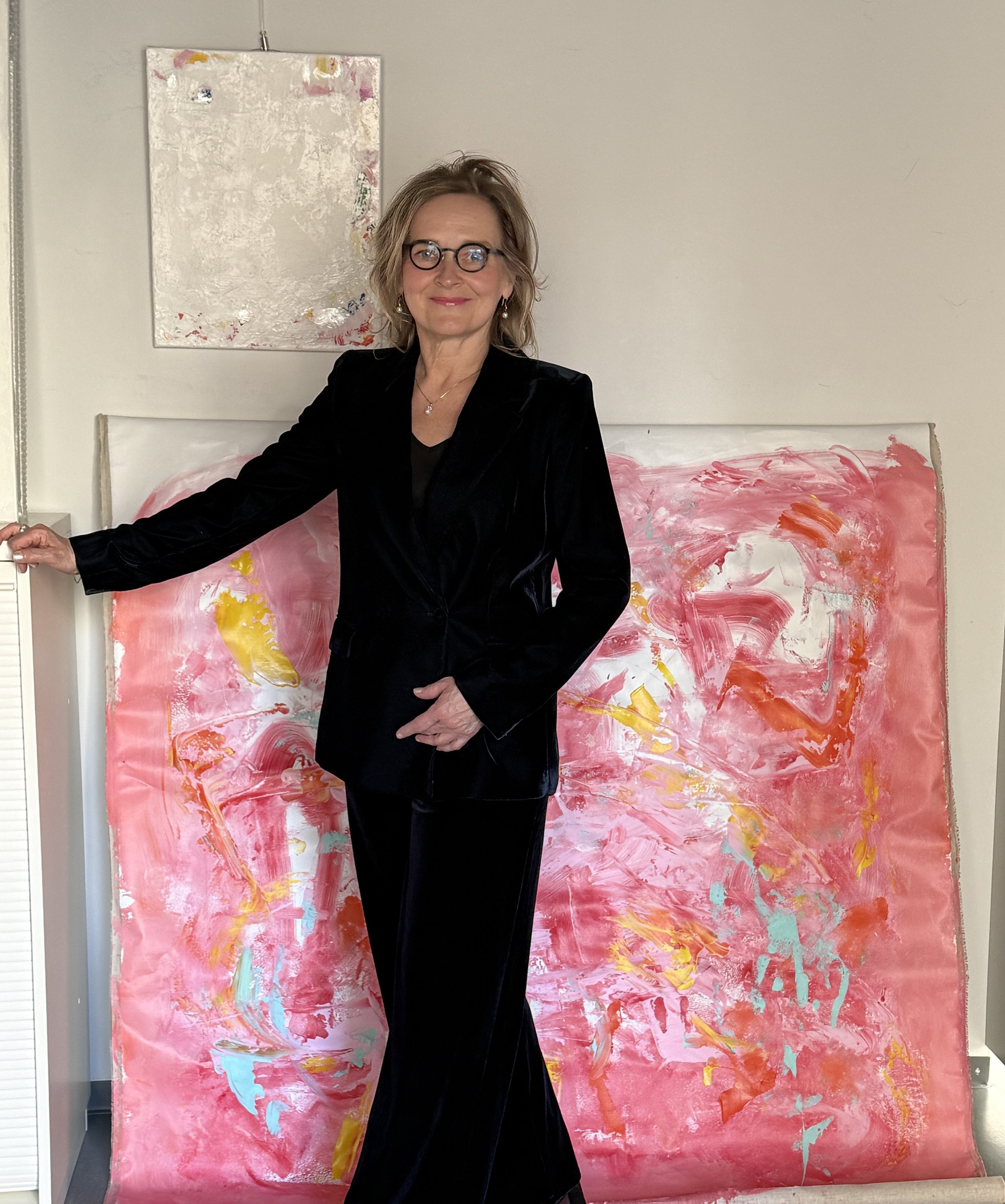
Self image, 2026
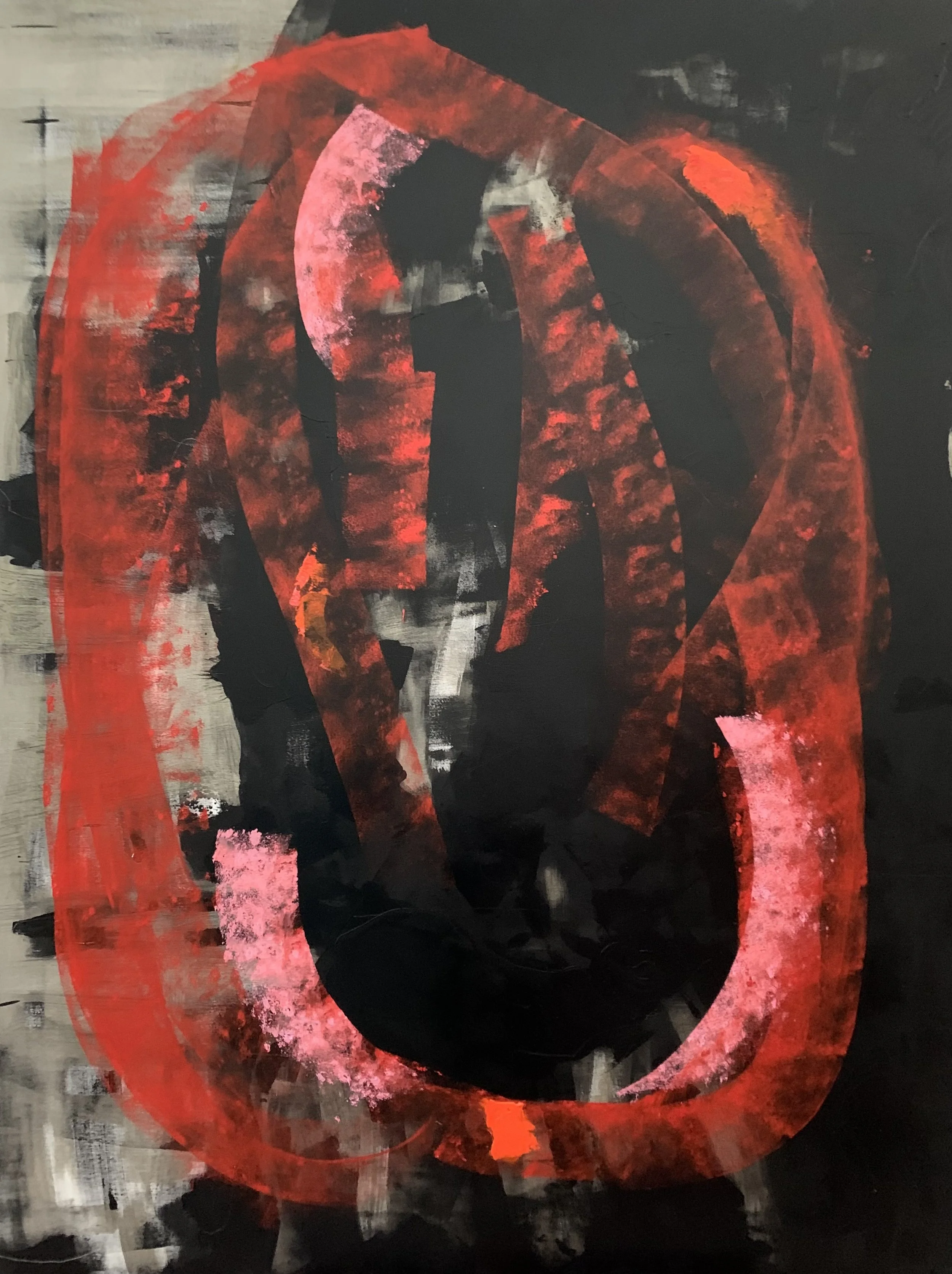
Black Rose, 2023, Acrylic and oil on canvas, 160 x 120cm

Love is in The Air, 2023, Oil and spray on canvas, 120 x 90cm

Dimension, 2001, Oil and pigment on canvas, 140 x 220cm
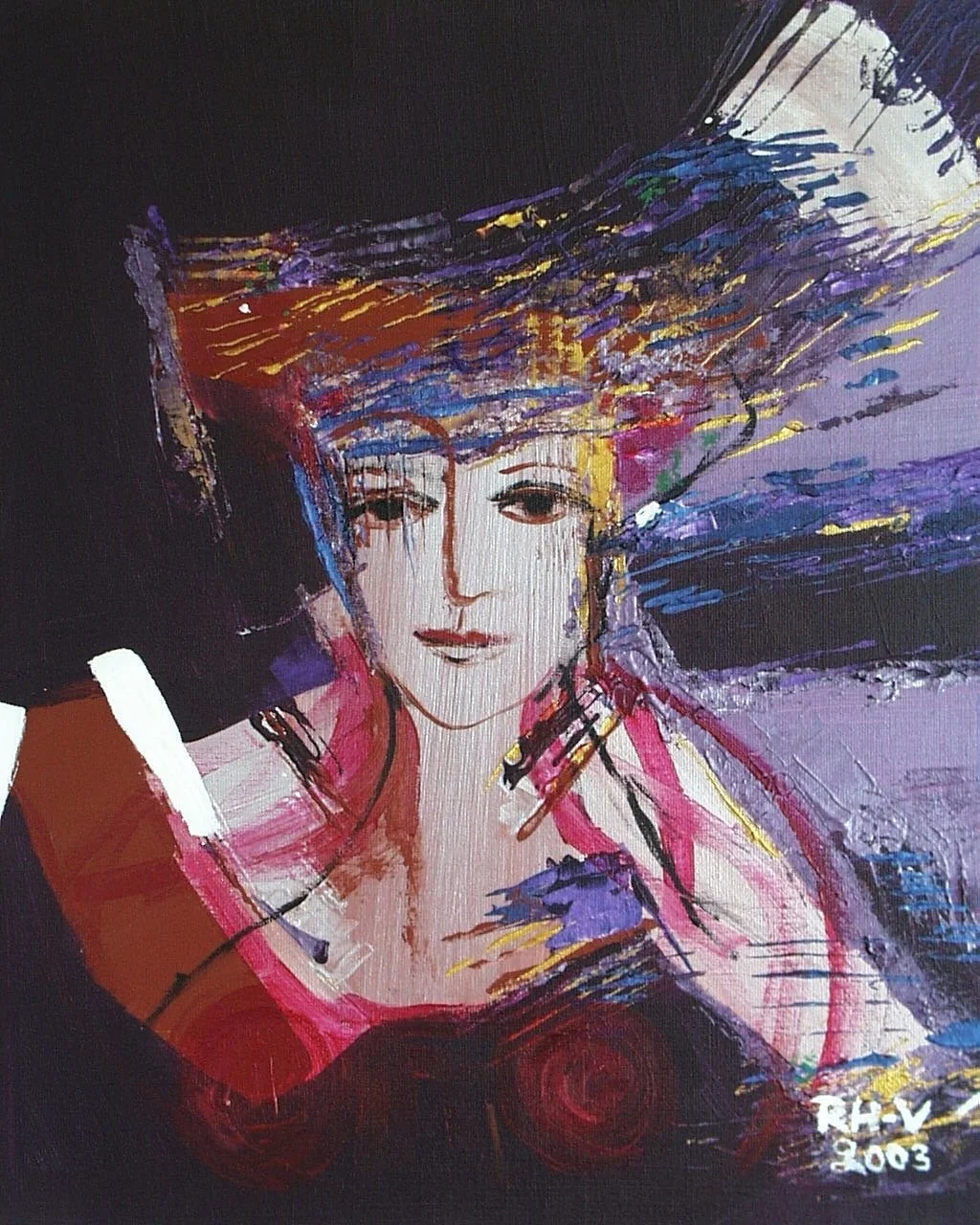
Red Rose, Poet, 2003, Acrylic on canvas, 100 x 80cm
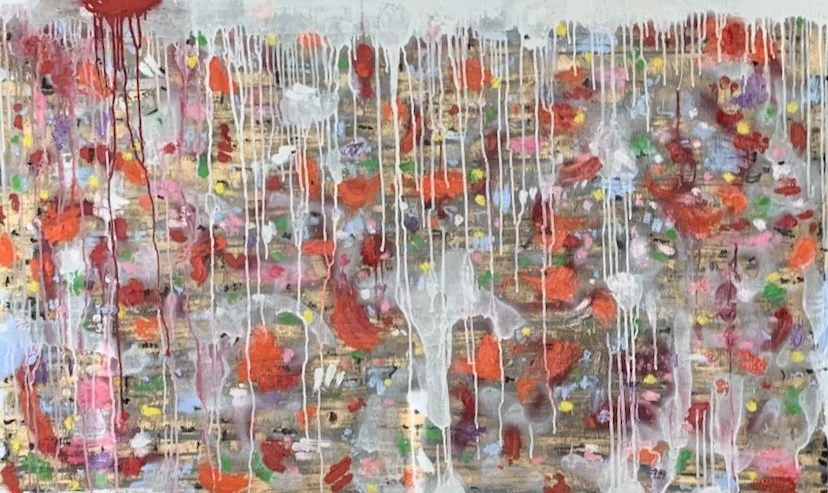
Love is Peace, 2023,Oil and acrylic on canvas, 85 x 140cm

Nocturne, 2023, Acrylic and spray on canvas, 170 x 130cm
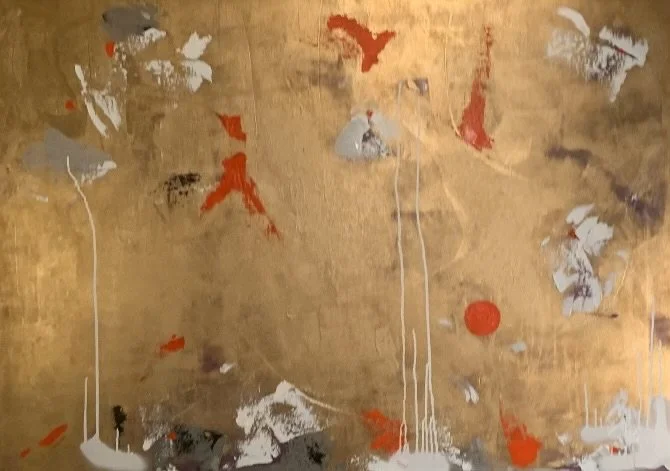
Japanese Landscape, 2024, Mixed media on canvas, 130 x 95cm
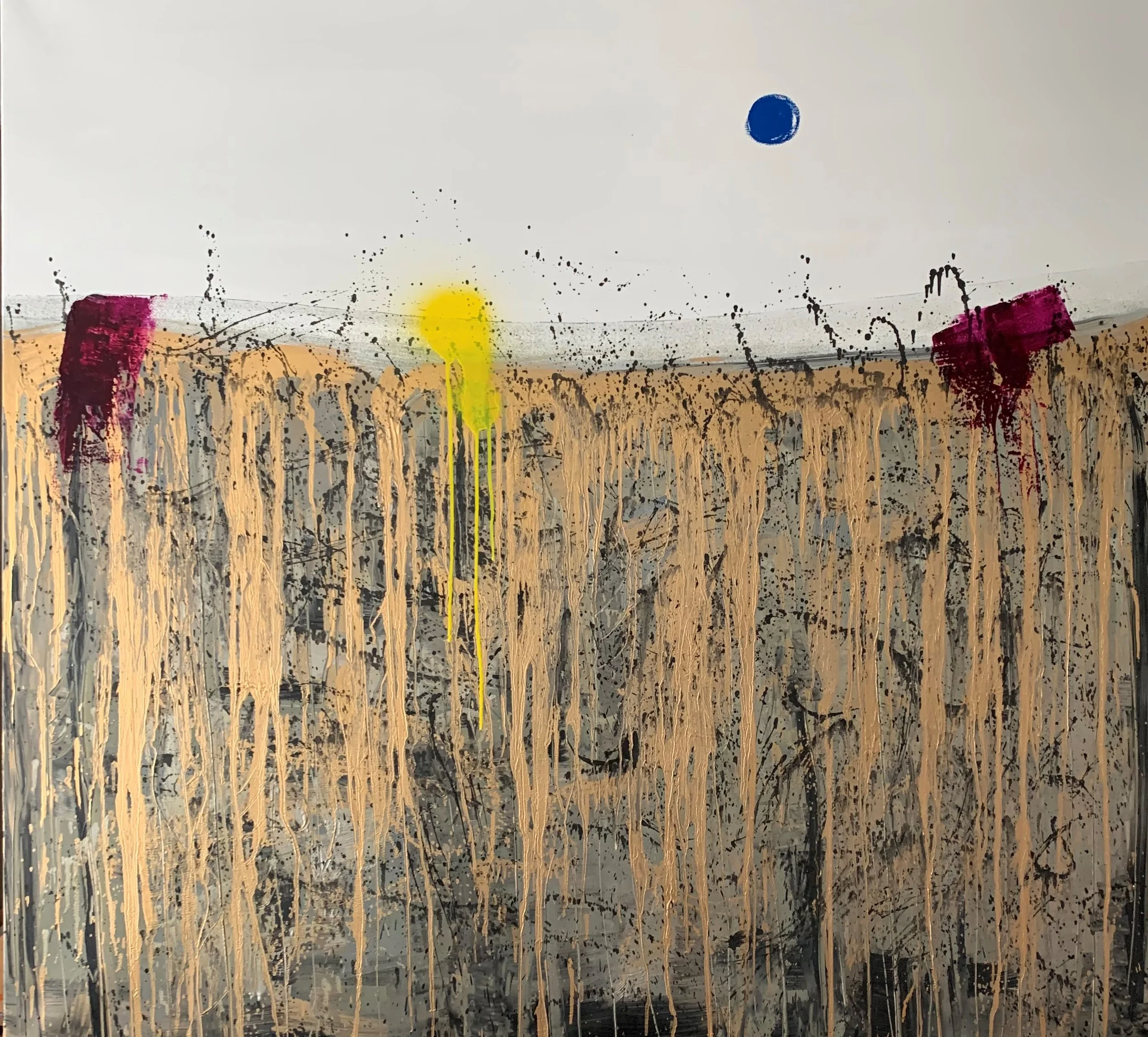
The End of The War, 2023, Oil and spray on canvas, 150 x 140cm

When the War Ends, Love is Everything, 2023, Oil on canvas, 120 x 160cm
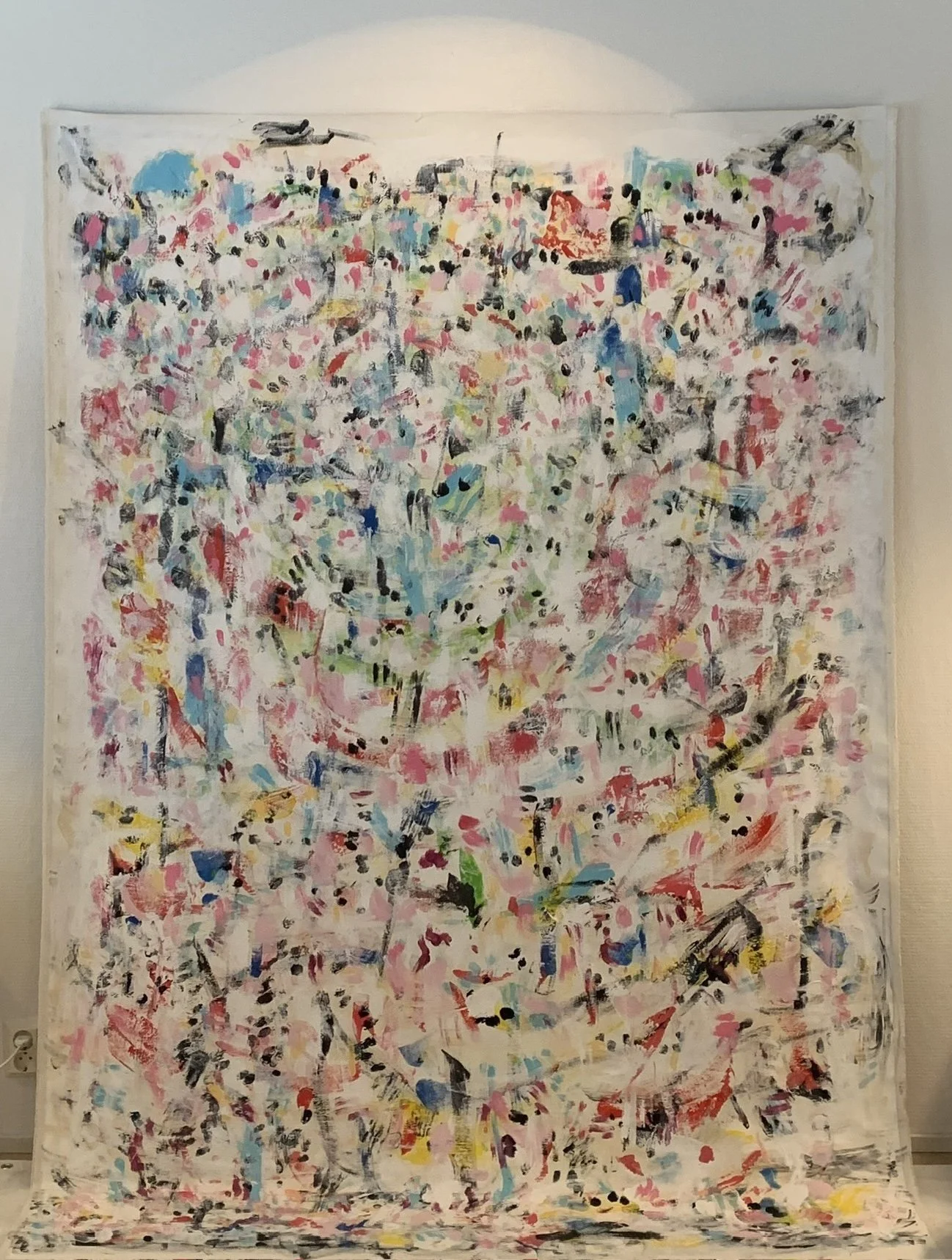
Love is Power and Light for Consciousness and Understanding, 2024, 120 x 160cm