
Francesco Casolari

Francesco Casolari was born in Bologna (Italy) in 1982. He started to engrave when he was 6 and his first creation lasted until the age of 12. Right from the outset of his activity, he has focused on urban settings, engraving medieval and Parisian scenes or opera houses. He resumed his activity at 19 and, during his university studies in architecture and fashion design, began to develop his own style: futuristic metropolitan scenes in which he imagines buildings with European architectural features of the past centuries, fast spaceships flying over them and clowns, dames and fictitious characters as inhabitants. He tries to create utopian cities according to steam punk science-fiction theories. He aims at hyper-figurative representations, where fantasy and precision go hand in hand. His latest handmade etchings are 1x1.5 m and it took him 1300 hours of work, covered in several months, to make them.
His works have been exhibited among many renowned collections both in Italy and America, and even at institutional level. He has collaborated with fashion companies and architects and, as textile designer, he has labelled accessories, t-shirts and objects. He took part in several exhibitions (museums and art galleries) and international fairs and is mentioned in various art catalogues. His works are shown in a great number of cities all around the world: Paris, Brussels, Berlin, Cologne, Vienna, London, Zurich, Monte Carlo, Balearic Islands, Azores Islands, Thessaloniki, New York, Toronto, Los Angeles, Indianapolis, San Francisco, Miami, Caribbean, Toronto, Bogotà, Santiago del Chile, Buenos Aires, Sao Paulo, Boa Vista, Kathmandu, Tehran, Dubai, Oslo, Shenzen, Singapore, Hong Kong, Tokyo and Osaka. He have done 350 exhibitions around the world.
Francesco, in your return to engraving after an early initiation in childhood, how might this temporal rupture be understood not simply as biographical interruption but as a reconfiguration of medium specificity itself, wherein the etched line becomes both a mnemonic trace and an index of discontinuous time, oscillating between artisanal discipline and speculative projection?
As a child, I certainly took my work as an engraver very seriously. My grandmother, a painter, placed great importance on art, and so did my mother and my paternal aunt. I was certainly a very lively child, but also already very disciplined, with a well-defined classical culture. I hung out with other children, but my true source of inspiration was my grandparents, highly cultured people who often told me about the Second World War and had me participate in many activities in the afternoons after school. With my grandmother, I painted, engraved, and played the piano, and with my grandfather, an electronics and chemical engineer, I soldered integrated circuits and conducted chemistry experiments. During my holidays and free time, I was taken to museums around Italy and Europe, I read adult books, I spoke, and I already had ideas like a little adult.
This preparation and personality translated into engravings that were already structured as an idea in an adult work. Obviously, there was a bit of imperfection in the line, but the scenic preparation of the composition of the drypoints and etchings of my childhood was already incredibly mature. During middle school, I drew little; in high school, I drew a lot on my desks, in notebooks, in diaries, and in books. It was more comics, skits, and funny sketches; at that time, there was no idea of becoming an artist. Immediately after high school, out of curiosity, at 18 or 19, I took up etching again. My line had certainly changed; it was lighter, more poetic, more lyrical. During those years, I had been nourished by underground comics by artists like Moebius, Hugo Pratt, Enki Bilal, Jodorowsky, Tanino Liberatore, Ranxerox, Andrea Pazienza, Frigidaire, and Métal Hurlant.
I had resumed my work as an engraver, always with a very conscious artisanal attention to detail and a sense of duty, but alongside the classical culture of my grandparents, school, and the great literary classics, during my adolescence I had accumulated a pop and underground culture typical of my generation, and this fact stood out in my etchings as a nineteen-year-old with new content.
Your practice appears to stage a paradoxical negotiation between the historical weight of European architectural language and the speculative futurity of science fiction; how do you theorize this collision within the post-medium condition, where engraving no longer functions as a fixed category but as a site through which heterogeneous temporalities and spatial logics are sutured?
It seems to me a very interesting question that opens up multiple perspectives. I think a comprehensive answer can be interpreted on multiple semantic levels. Certainly, when I was twenty and read Enki Bilal's Nikopol Trilogy, I realized one thing: he was a genius. He was a genius because he was finally telling a European science fiction story, no longer American, Chinese, Japanese, or Korean; he was telling a dystopian science fiction future of the old Europe.
Enki Bilal, born in Belgrade, experienced the great forces of dissolution of the former Yugoslavia, and then moved to Paris, the European cultural city par excellence. He had realized in his life that Europe was not frozen in history books and the paintings of nobles hanging in living rooms; a new Europe was emerging, with new states, with terrorism, with pain, with political instability. Living in Central Europe, everything seems to stand still, and in the afternoons we go out for ice cream with friends. But at the borders of the European continent, history is still being written by force, as seen, for example, in the Ukrainian question.
Europe seems locked in its own money and traditions, but it is still an extremely vibrant and torn continent. I remember summers spent as a child at the Adriatic Sea, watching the jets fly toward Bosnia. We were happy on vacation, but a few hundred kilometers away there was war. In Europe, distances are so close; it seems like what's 400 kilometers away doesn't concern us, but we Europeans are all involved in these geopolitical and social upheavals. So why not talk about a changing Europe, the Europe of the future?
Fashions and circulating ideas change, as do the ethnic groups of the population, urban problems, political ideologies, and youth cultures. We always want to convey the idea of a stable, wise, and just Europe, but there's a lot of excitement in the streets and squares. Those who have the antennae to pick up these signals, like me, capture them in their works. The medium of engraving brings everything to a museum-like, classical, institutional level, a product for galleries and collectors, but it actually speaks to a contemporary upheaval on a continent, which an astute observer like me captures and meticulously captures in his engravings. It's a way of making figurative chronicles.
In constructing hyper-detailed utopian cityscapes populated by anachronistic and theatrical figures, to what extent might these environments be read as critiques of urban rationalism, and how does the meticulous labor of engraving operate as both an affirmation and destabilization of the Enlightenment’s investment in precision, order, and legibility?
Having studied for almost five years at the University of Ferrara's Faculty of Architecture, my imprint, as can be seen from the theme of my works, is undoubtedly architectural. As I often joke with my architect friends, mine is fan art for architects. My artistic production is certainly both a praise and a critique of contemporary urban rationalism, a constant exercise in fantasy about contemporary metropolises and megalopolises.
All contemporary media always push the same aesthetic of those ten metropolises of the world, the classic story of the young man who leaves a small town to move to a big city and finally realize his dreams. But if we are to be scrupulous and intellectually honest with ourselves, this media narrative is dated and obsolete. It dates back to the writers and painters of London and Paris in the late 19th century, who saw these two cities changing under the pressure of modernization and industrialization.
Let's face it, life in big cities these days is difficult; they're anxiety-inducing. Skyrocketing prices, often tiny apartments, insecurity, a frenetic pace of life, job opportunities abound, but competition is fierce. Big cities are beautiful to look at on Instagram and YouTube, because they are indeed very scenic and architecturally spectacular, but they are overly stimulating environments, and humanly and psychologically challenging. The truly interesting places have become small towns.
Let me explain: until the 1980s, big cities offered unique opportunities: specialized services, unobtainable goods, and high-value people. These things were unattainable in a small town or isolated location, but now, with the internet, location no longer matters. We can now connect with anyone, obtain any product or service, simply through our home computer. At this point, the metropolis becomes a burden in economic and human costs.
My artistic production is meticulous and very precise, perhaps a daily exercise in hyper-rationality. I care deeply about the precision of my graphic design, which I study down to the last third of a millimeter. I want both order in the composition of the work and order in the studio where I produce it. It is my daily exercise in calm and perseverance, as if I were retreating from the urban chaos and din into an ivory tower and producing culture, a personal retreat from this neo-Middle Ages, to use the words of the Latin poet Lucretius
The sheer duration of your production process, often extending to over a thousand hours per work, foregrounds temporality not merely as a subject but as an embedded condition of material practice; how does this durational commitment inscribe itself into the visual field, and can it be understood as a resistance to the accelerated economies of image circulation?
At the beginning of my professional artistic career, I thought of a very simple concept: if I have talent and I engrave precisely but at the same time put 1,300 hours into a work, something admirable will surely emerge. We live in an age where computers or AI can instantly produce an image, so to stand out I wanted to go against the grain, I wanted to return to medieval rhythms and methods. And indeed, the etching technique dates back to the 1400s, I wanted to fully immerse myself in that spirit like the legendary Albrecht Dürer, almost working as a manual monk like the famous novel and film In the Name of the Rose by Umberto Eco.
Honestly, I'm still tied to the idea of the "hand": if someone has to pay for something drawn by me, my hand must draw significantly above average, otherwise it makes no sense. In my opinion, if you're an artist but can't draw something, it doesn't add up. Daily dedication and practice are my strength, as are consistency, discipline, and precision. If anyone can engrave, few people are willing to sacrifice 1,000-1,300 hours for a single work, and that's where the difference is noticeable.
If I engrave 3-4 hours a day for 8 months, something significant will emerge; it's almost mathematically certain. Even the etching, inking, and printing processes, along with the materials, are all part of a highly artisanal process, with the great skill of the "Milano Printmakers" center in Milan, which has been following and producing me for many years. I want to support and spread the idea of true luxury. Nowadays, through marketing, they sell us almost plastic-like products made in China for 10 euros. I want to offer an affordable product that is true "luxury," and collectors and those in the know will immediately notice.
Your cities, while fantastical, remain tethered to recognizable architectural typologies; how do you conceive of indexicality within these constructed environments, where the referent is neither wholly real nor entirely imaginary, and what does this ambiguity suggest about the status of representation in contemporary visual culture?
Indeed, for each city I draw real monuments and imaginary architecture. I want to convey the idea that each city is experienced in a personal way by each inhabitant. Each inhabitant responds to a highly stereotypical and essentially completely invented persona; they are theatrical characters who construct their own scene in a highly personal urban environment. Perhaps my artistic response responds in some way to the geographical topography we create in our dreams, that mapping of places we return to over the years when we dream. They are world-cities like Osamu Tezuka's Metropolis or the Neo-Tokyo in Katsuhiro Ōtomo's Akira. I think the skill of a designer lies in trying to create complete worlds in which an observer can lose themselves.
This way of approaching the theme of metropolises, so real and yet so alienated, reminds me of the Berlin of the painter Otto Dix, a key exponent of the New Objectivity artistic movement, who portrayed the Weimar Republic with stark realism. His Berlin exudes dream and nonsense, but at the same time it is so real. I portray an imaginary Atlas of the metropolises that make up the international network of cities of contemporary art, a constellation of cities that I pass through every year with the exhibitions of my world tours. It is like a process of metacognition at a dreamlike level of the personal experience I have of these places.
Given your background in architecture and fashion design, disciplines deeply implicated in both spatial production and commodification, how does your work engage with or complicate the economies of design, particularly when your imagery migrates across mediums into textiles and objects?
I prefer not to specify my collaborations, but they were truly with great architects and major companies. I was given the opportunity to be myself and felt fully understood, but this was possible because they were truly high-level situations that addressed a highly culturally informed audience. So my forays into the world of architecture, design, and fashion have a wonderful memory in me, because my art was glorified and highly protected at the time, and I met very humane and far-sighted managers and entrepreneurs, sincerely driven by their own humanistic culture.
I'd like to point out that I never graduated from architecture, but I did graduate in fashion design from IUAV in Treviso and in visual arts from the Santa Cristina department of visual arts at the University of Bologna, and then I took a master's degree in teaching. So my love for architecture has always remained platonic; there has never been a real professional career. As for fashion, I worked for a while in the style office of a streetwear company, and my friends and I ran a small fashion accessories and graphics workshop for many years.
The big difference between the worlds of architecture and fashion and that of art is certainly the expectation of financial failure. An architect or a designer is paid to make a company or client do numbers; the project has to bring in money, and this influences 80% of the stylistic and creative decisions, both in architecture and style. In art, however, financial failure is taken for granted or very likely. Taking financial failure for granted or very likely in the art sector makes it very difficult for artists, but it also gives them tremendous freedom in their design.
Perhaps contemporary art is the only creative sector left unconstrained by market forces, and that's why it's so cool and creates a magical aura around it. If you asked me how my work relates to the economic dynamics of design and fashion, I'd say that when official collaborations have occurred, they've been fully respected. When it comes to my purely artistic practice, however, I'd say that what has given me structure and strength to my artistic endeavors has been a production completely free from economic logic, an artistic production 100% controlled by the design logic I learned during my university years in architecture and fashion design. This fact has made the real difference in my artistic production.
The recurring presence of figures such as clowns and elegantly dressed characters introduces a theatrical dimension that disrupts the otherwise rigid spatial order of your compositions; how do these figures function within the pictorial logic of your work, and might they be understood as agents of institutional critique, unsettling the authority of the constructed environment?
Having graduated in fashion design, I have thoroughly assimilated subjects such as the sociology of fashion and the history of fashion costume. I enjoy re-imagining historical costumes, tied to certain social categories present in the historical contexts of various nations. I bring together people from the 18th century, indigenous people, and people of the future in the same city; it's as if I were mixing various eras in the same urban context.
My family has lived in an urban context since the 18th century, first in Venice, then in Cagliari, and finally in Bologna. I feel like a city dweller, and the fashions and trends of the urban scene have always deeply impacted me; it's part of my family history to live in the scenic variety of urban contexts. Indeed, the spatial order of my compositions is very rigid; the characters and group scenes they compose lend color, curiosity, variety, and value to the work. I'm trying to make my cities less schematic, fluctuating, and rounded, but I must admit that the modular architectural repetition is a subconscious instinct of mine.
These theatrical and spontaneous characters are also intended as agents of institutional critique. As an artist, I dress well, but in a colorful and distinctive way, while in Italy it seems as if "guilds" still exist: the ancient medieval corporations. In the sense that here in Italy, each social class dresses according to its role in society. There are many nonverbal cues in clothing that indicate a person's belonging to certain social contexts. Dressing is a nonverbal language that communicates much of one's socioeconomic, psychological, and cultural context to others through one's appearance.
I know the rules of the game of fashion sociology, and I play them a lot in my work. It's also a subtle personal criticism of the new generations, whom I see as very normalized and standardized. It almost seems to me that spontaneity or having one's own personal culture, one's own identity, or personality is seen by young people as a flaw, something too cumbersome to shoulder in everyday life.
In the context of Bologna’s historically rich yet tradition-bound artistic milieu, how do you situate your practice in relation to both local heritage and global circulation, and to what extent does your work negotiate or resist the pressures of regional identity within an increasingly deterritorialized art world?
My art is completely de-territorialized and international, because it circulates in terms of exhibitions and projects only within the networks of major international cities. There is no real connection between my works and the local area other than collecting. After a few years of my artistic career, around 2014, I was given the opportunity to completely export my exhibitions internationally, and I pushed hard to make this happen. I immediately preferred the market, galleries, and international agents.
As I always say, I drink coffee in Bologna, but 85% of my work is not in Italy. Bologna is certainly an enlightened place within the Italian context, politically and administratively. It is the most progressive city in Italy, the most alternative and the most open to youth subcultures. It is the first choice for young people from other parts of Italy to move to. There is a very active underground art scene, but in my opinion it is too tied to political, social, and ideological contexts. There are many talented artists, but they don't think about the international scene; above all, they want to be recognized by their own region and their friends.
I'm certainly a big fan of some artists in Bologna, but there's no real artistic exchange between me and them, and I honestly think I'm not well-known or recognized in Bologna, precisely because I've focused on the international scene from the very beginning. The city center, in terms of creative fervor and cultural events, is certainly very inspiring to me.
Your engagement with steampunk as a speculative framework invokes a retro-futurist aesthetic that collapses distinctions between past and future; how do you critically position this aesthetic in relation to contemporary discourses on nostalgia, technological anxiety, and the politics of imagined progress?
I draw inspiration from steampunk aesthetics, although I've been happily rediscovering cyberpunk in recent years. I definitely have my own vision of retrofuturistic art. Italy, which was largely built in the 13th century, is now in 2026. Medieval settings coexist with the most advanced technologies, LED screens inside frescoed 15th-century buildings. Italy is absolutely retrofuturistic. There's a very strong cultural identity here that must coexist with modernity, but we carry with us 2,000 years of history and culture that struggle to fit into the contemporary world. Italian cities feel like we're living in a timeless, frozen state. The retrofuturistic aesthetic in design is very interesting, especially in the field of automobiles and motorcycles. I've been embracing it for my art for many years.
Technological anxiety is quite pervasive in today's society. Even though we in our 40s are halfway between the virtual and real worlds, young people struggle to distinguish between them. They live in a hyperreality where the virtual and the real merge into a single ontological and semantic framework. For many young people, social occasions are a source of stress, and they prefer to manage their relationships through social media. These aspects of technology scare me greatly, especially for someone like me who grew up without internet or a cell phone. Politically, in Italy, I think they've been farsighted. Over the past 20 years, there's been a strong digitalization process in the public sector and in many industrial sectors. Fortunately, it was decided that personal charisma and human contact were more important than progress and technology, and I agree with that.
The global dispersion of your works across diverse cultural and institutional contexts raises questions about reception and legibility; how does the intricate visual density of your engravings translate across these contexts, and what role does scale play in mediating the viewer’s embodied encounter with these expansive, meticulously constructed worlds?
I'm certainly not a major international artist, nor a very famous one. I'm a bit like those character actors in movies who have a small part or appearance, present at all the major international events, but almost as walk-ons, or certainly secondary roles. I was fortunate to be noticed at a very young age by international galleries, and this allowed my works to spread very rapidly globally—a fragmented and highly targeted diffusion, without media attention, but certainly effective, technically studied. The reception and readability in cultural and institutional contexts of various nations is excellent.
My style of art, despite using a medium like engraving, is very close to comics and illustration; it's an easy art, very readable and understandable. Unlike words, images are a nonverbal language that has universal meaning; they're understandable by everyone, but depending on one's background, each person interprets them and gives them a different meaning. My type of work is understood especially in the United States, Europe, and Japan, which are also the places where I hold most exhibitions. We Italians always try to look at other nations and feel an inferiority complex, but we must also realize that we are a showcase country and many from abroad look up to us, and in the world we are very loved and this helps a lot to convey my art internationally.
Website: www.francescocasolari.com
Instagram: @frengoboy
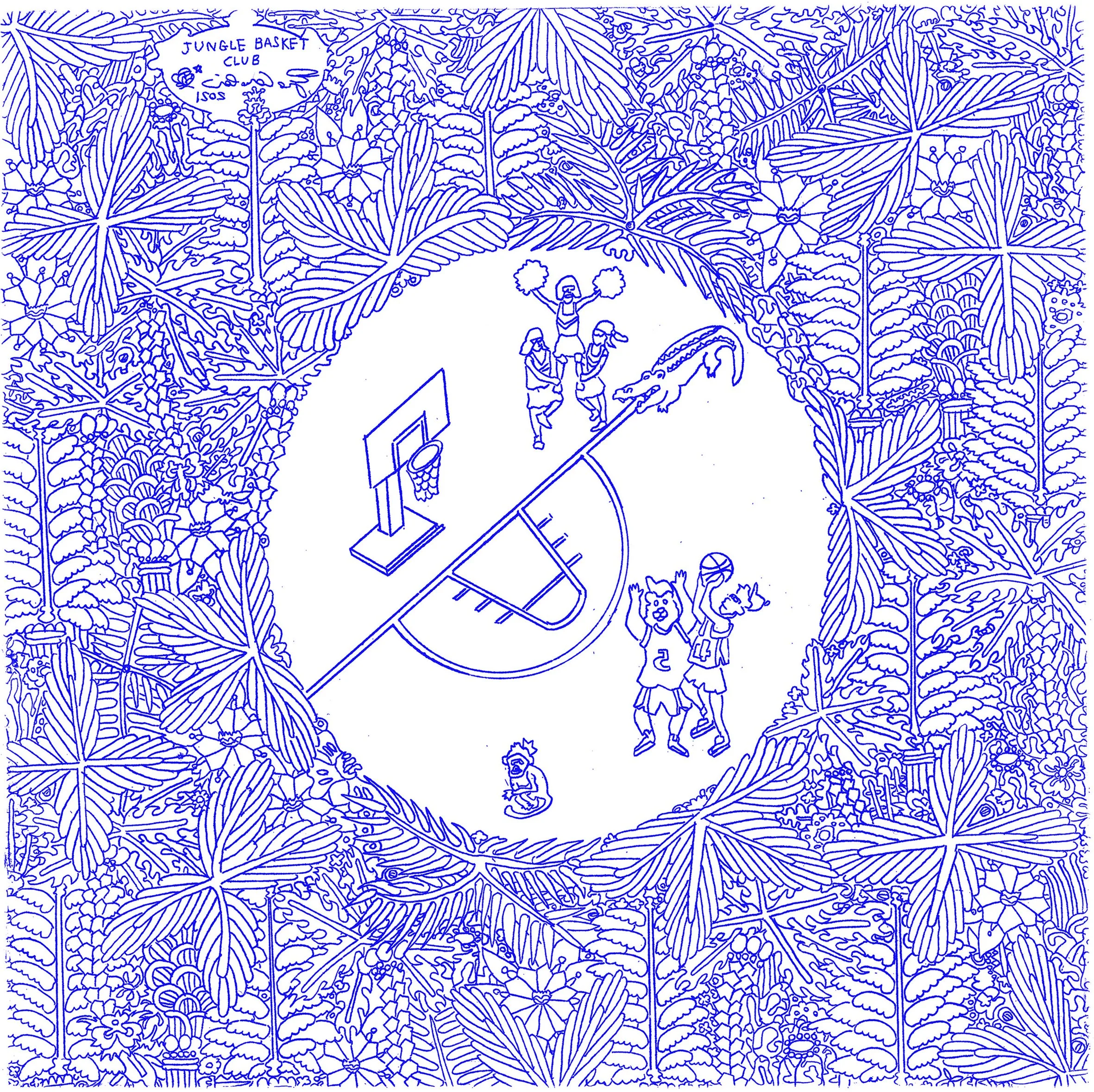
Basket jungle club, 2022. Etching, 40x40cm
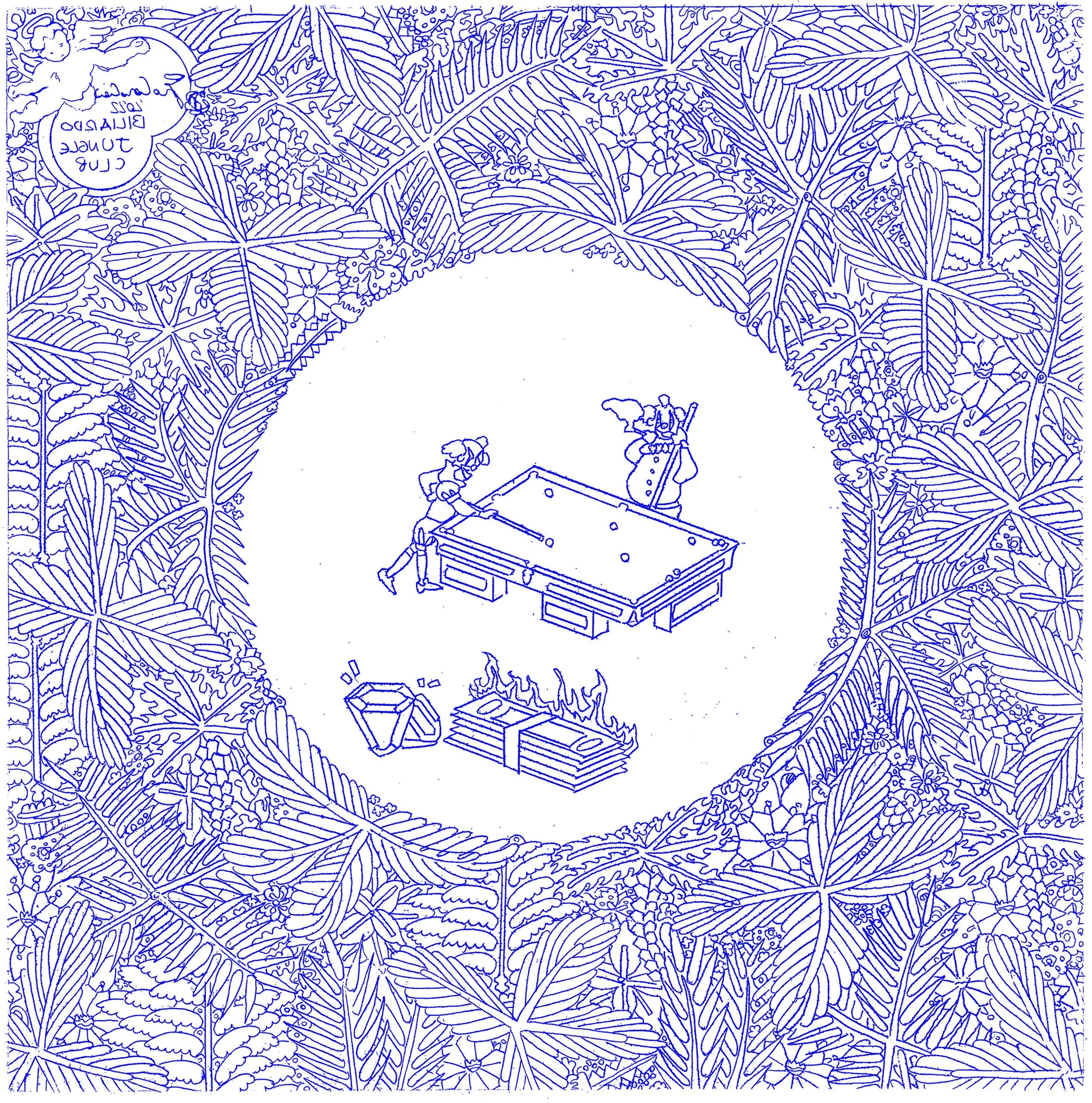
Billiards jungle club, 2022. Etching, 40x40cm
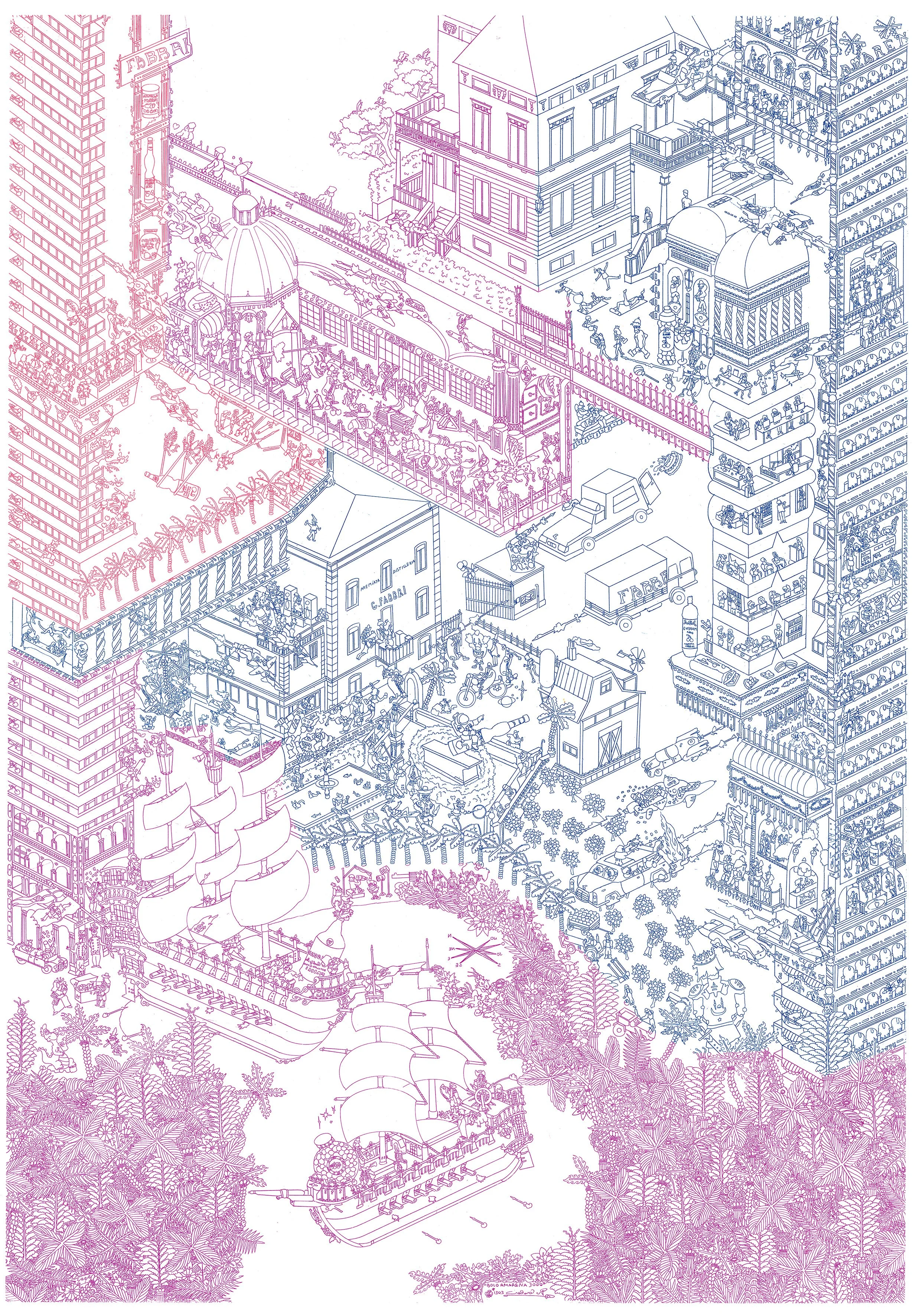
Bolo blackcherry 3000, 2022. Etching, 80x116cm
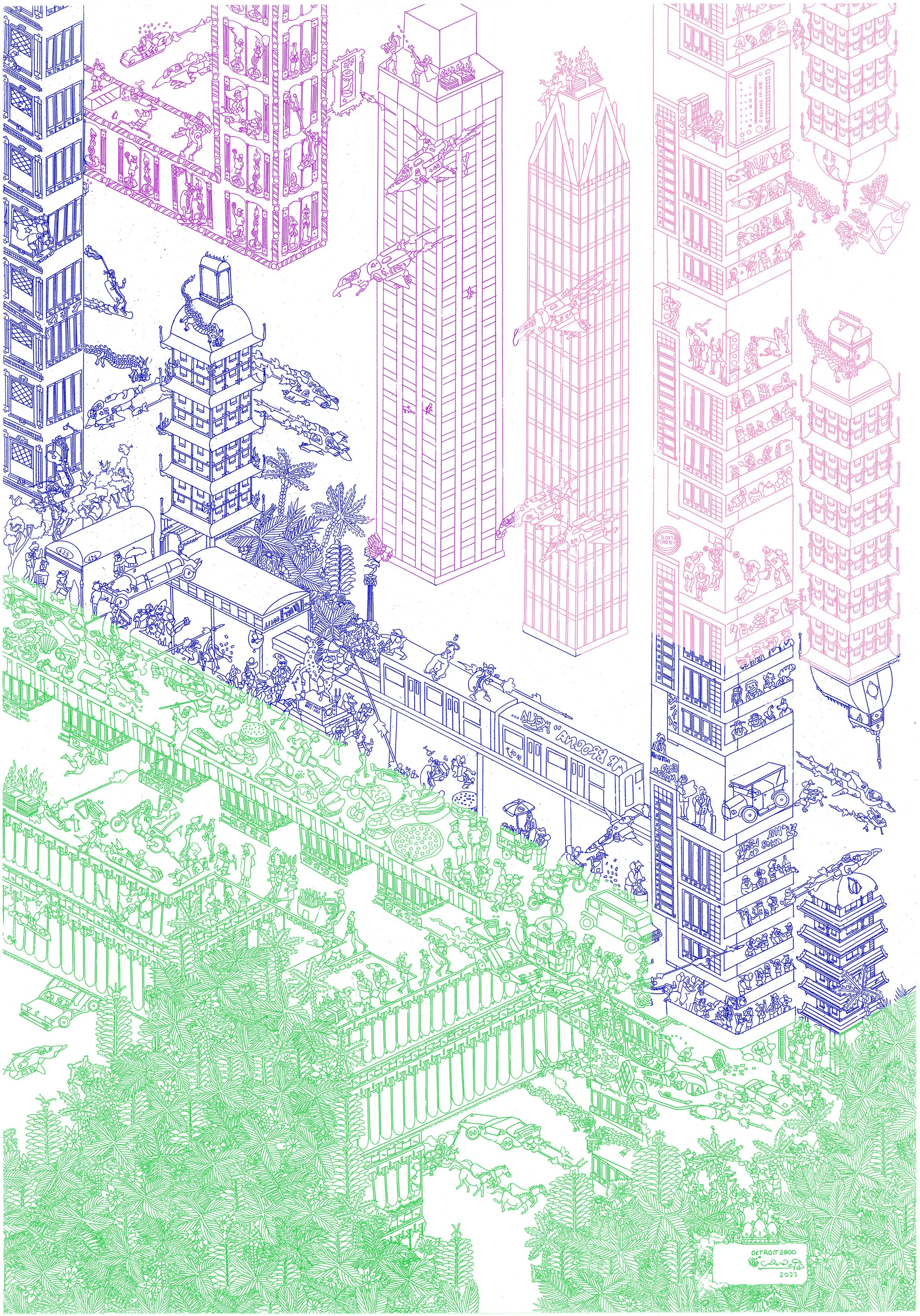
Detroit 2800, 2022. Etching, 80x116cm
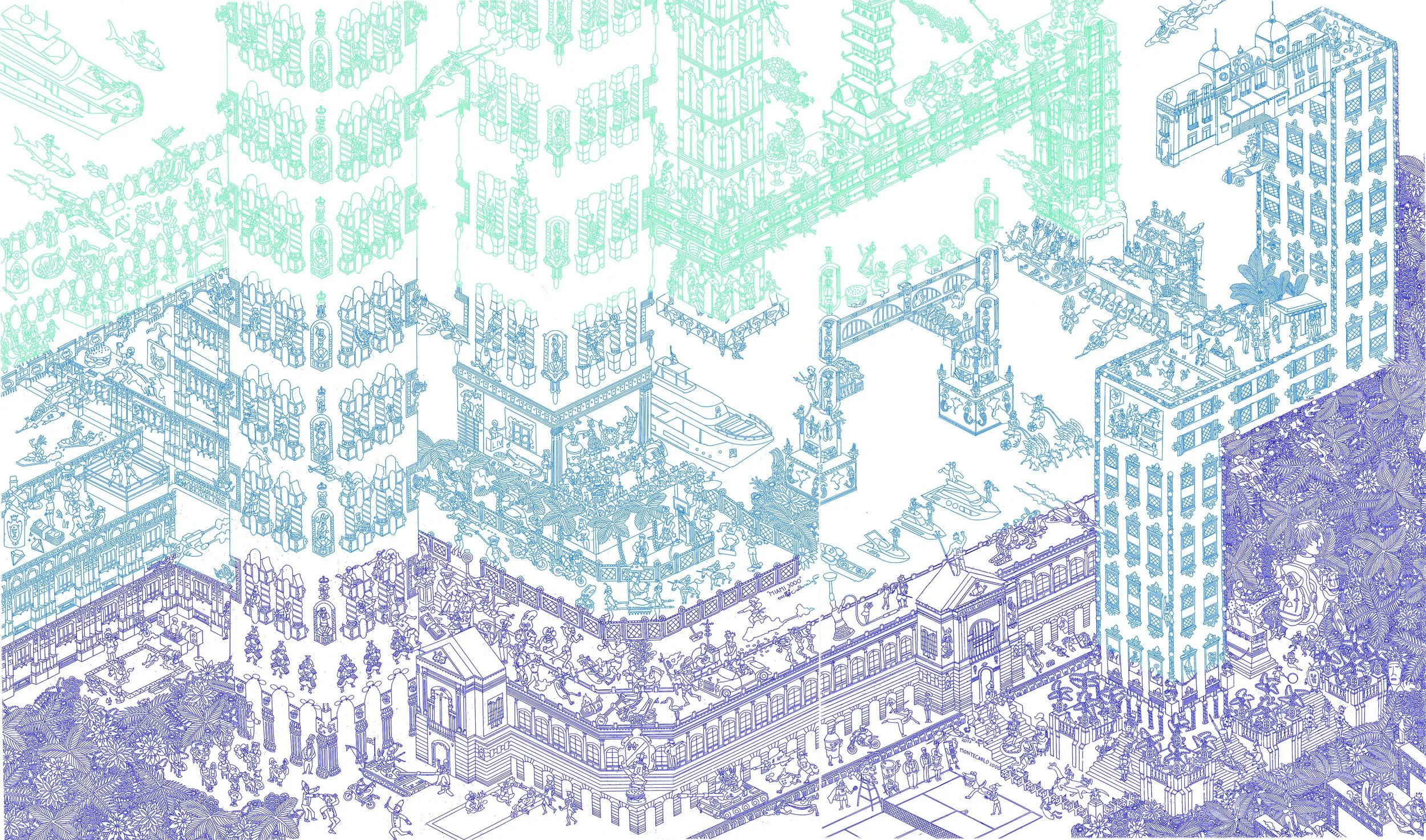
Diptych of the bay, 2020. Etching, 95x140cm
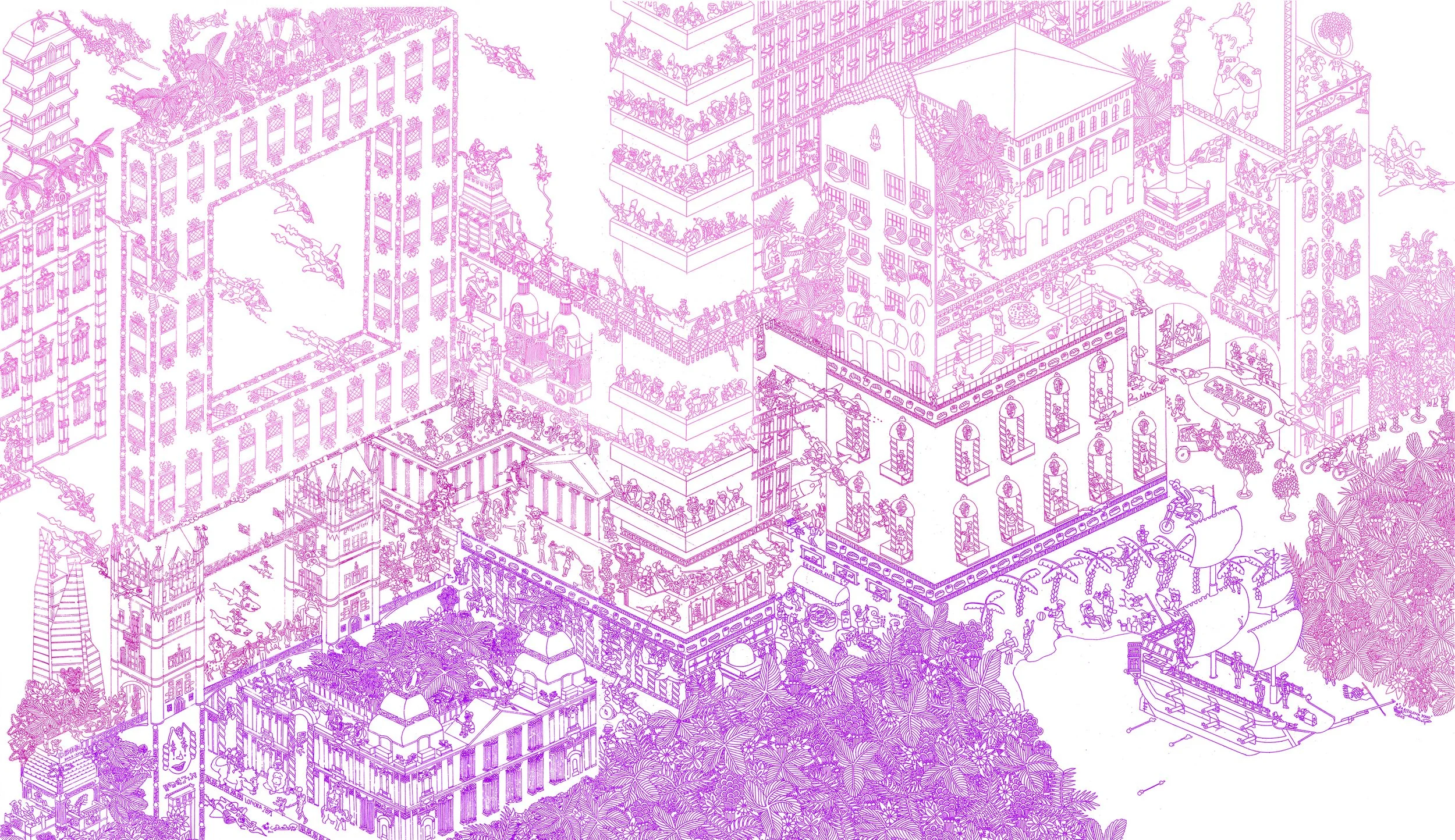
Diptych of the gulf, 2020. Etching, 95x140cm
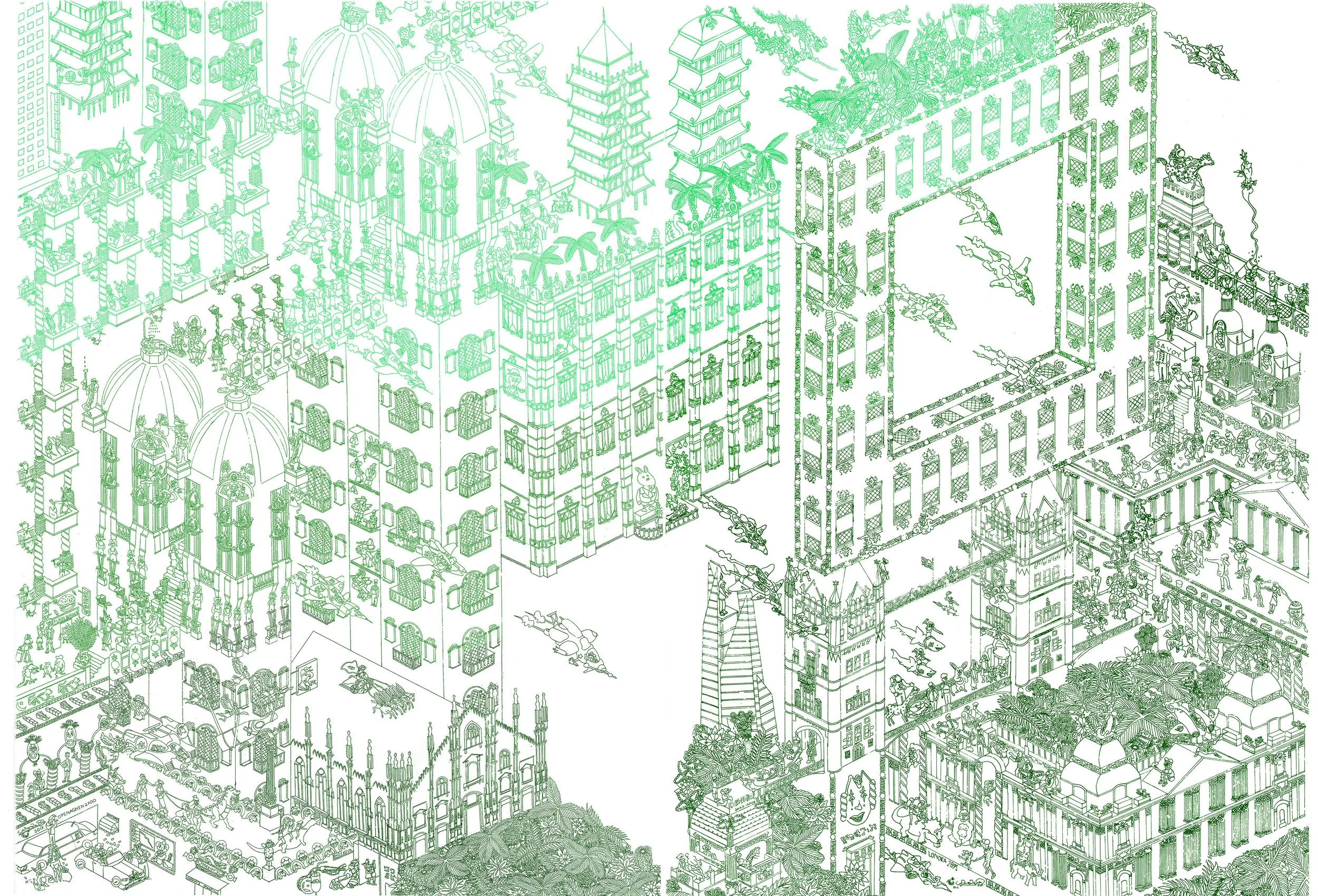
Diptych of the island, 2019. Etching, 95x125cm
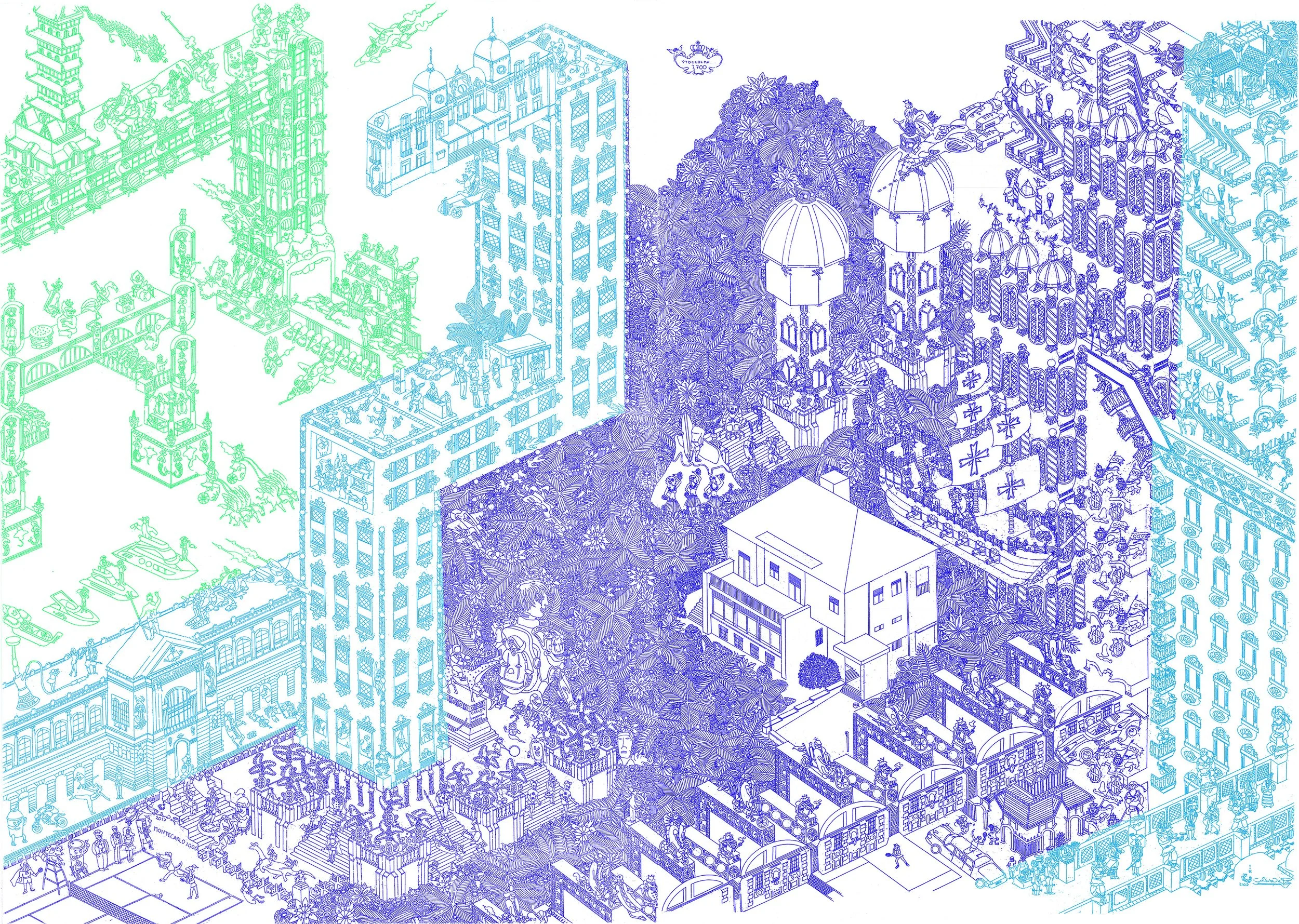
Diptych of the riviera, 2017. Etching, 95x125cm
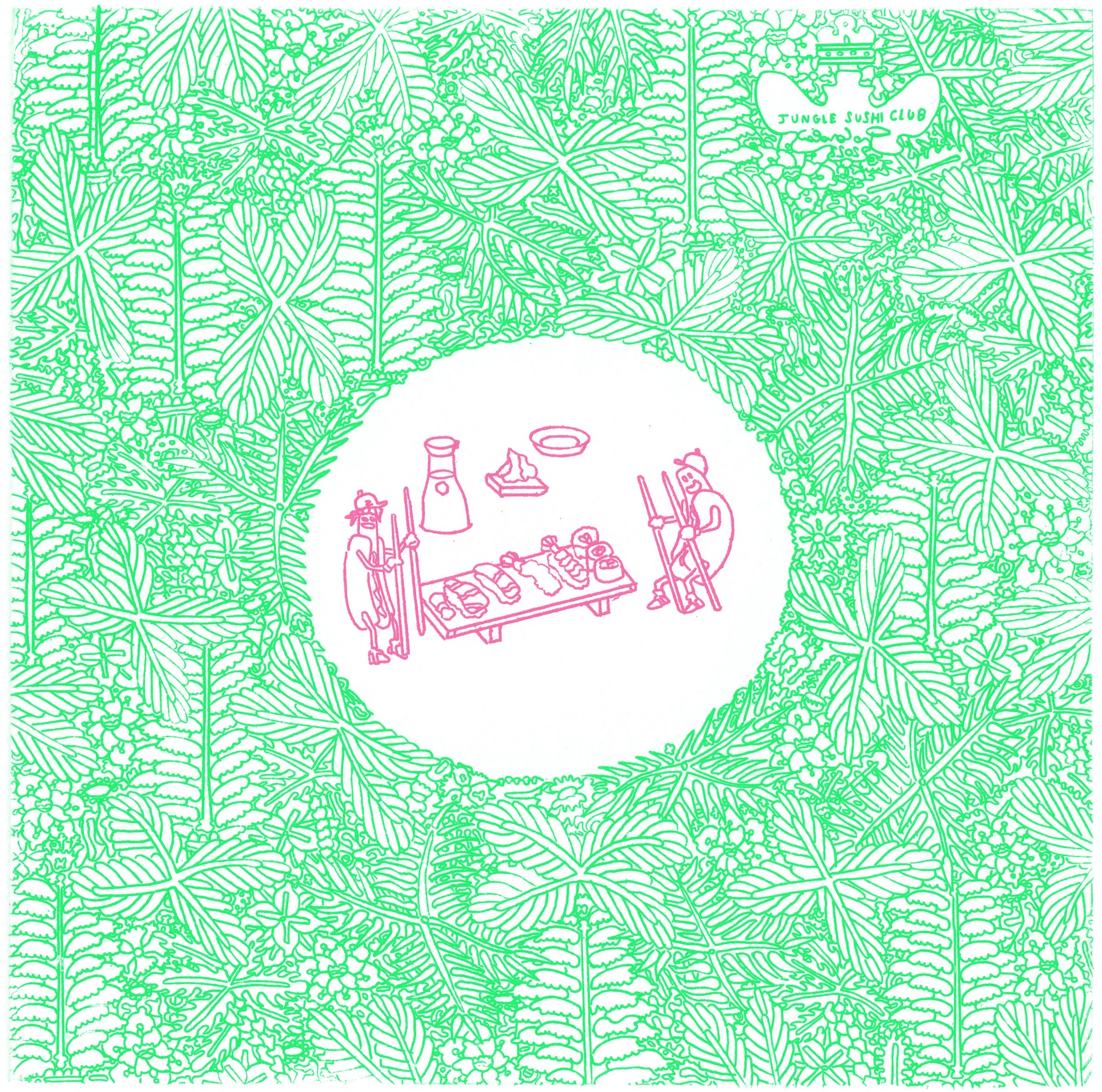
Jungle sushi club, 2022. Etching, 40x40cm
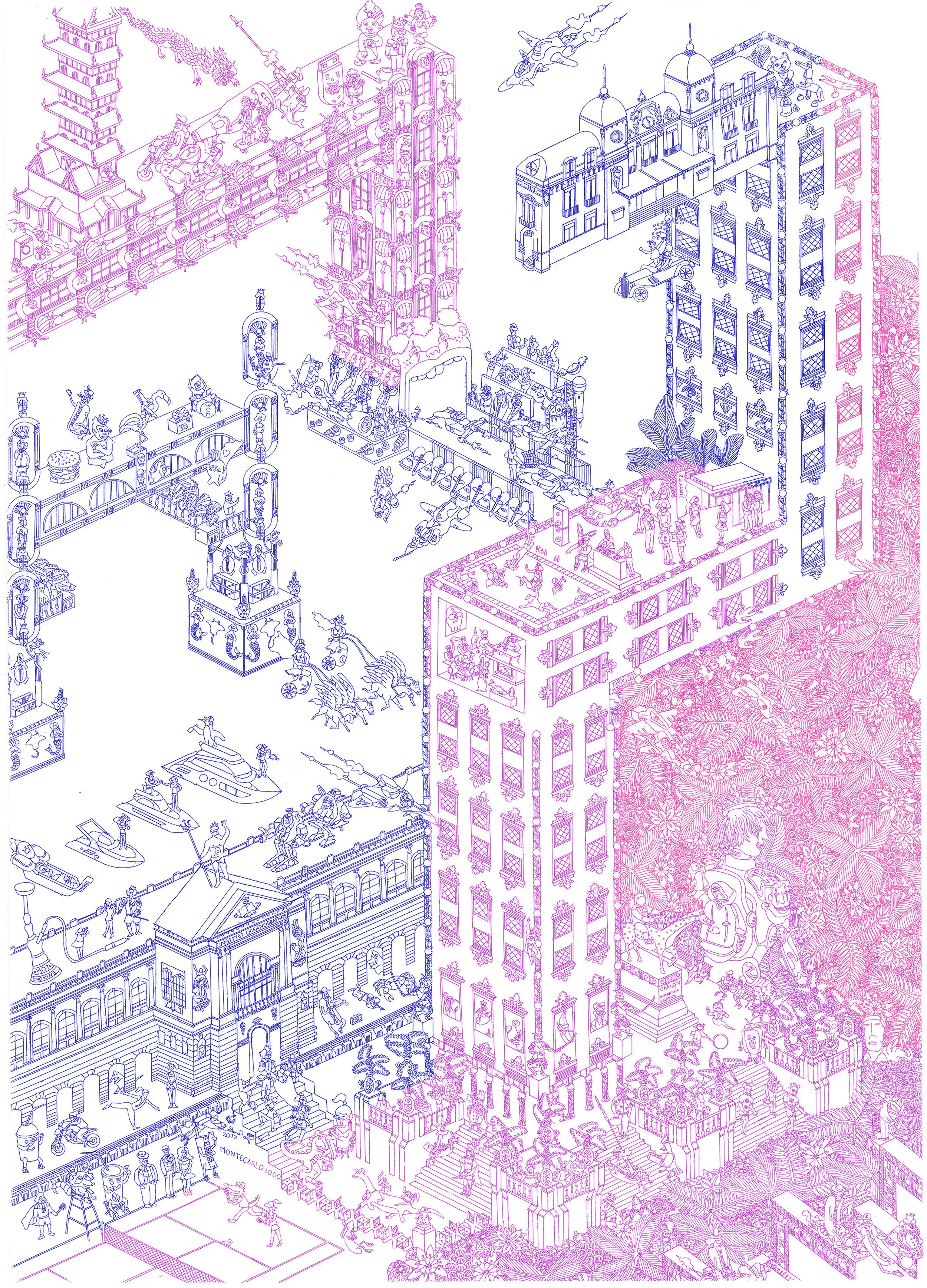
Monaco 3000, 2017. Etching, 60x80cm
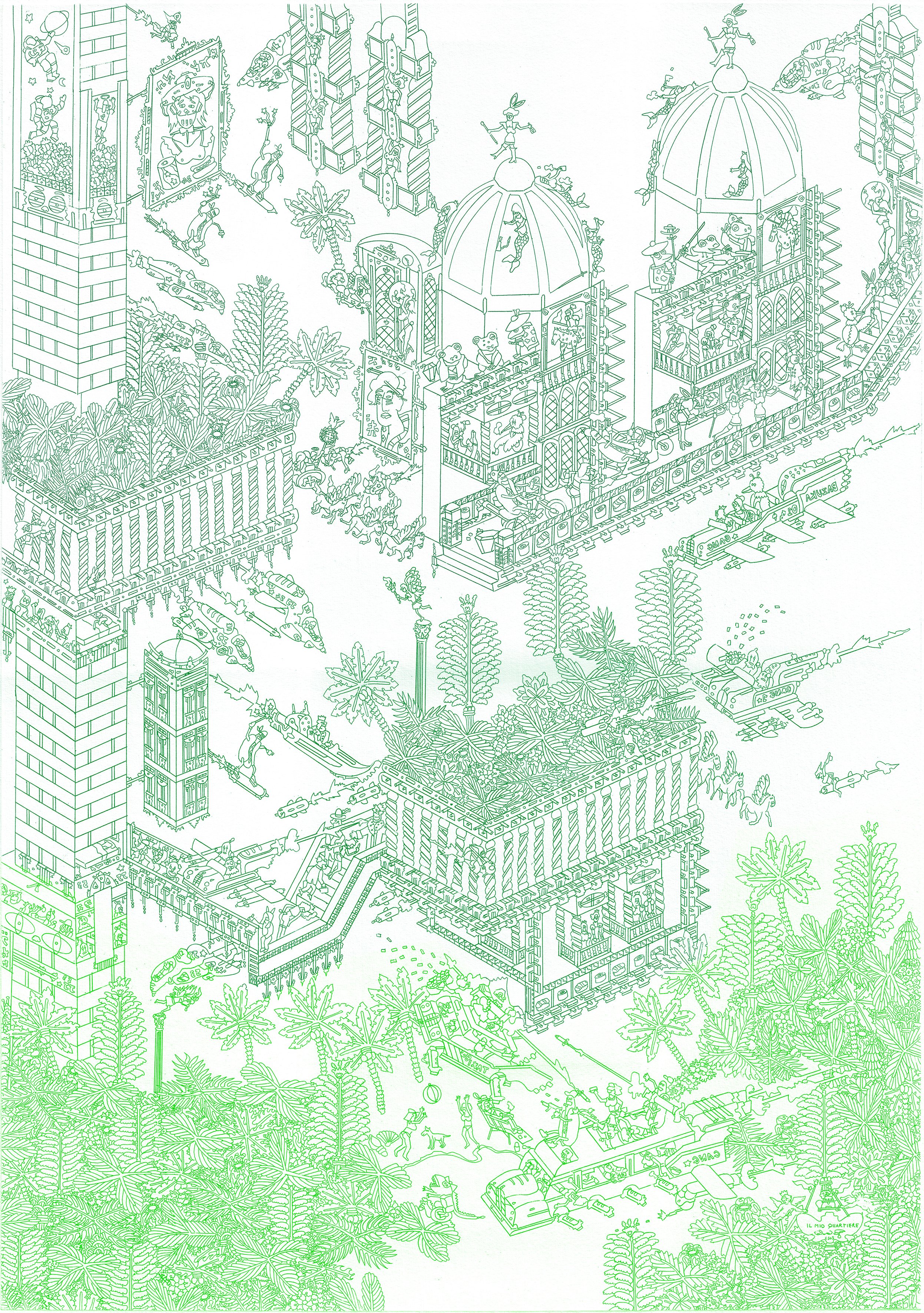
My neighborood, 2023. Etching, 60x80cm
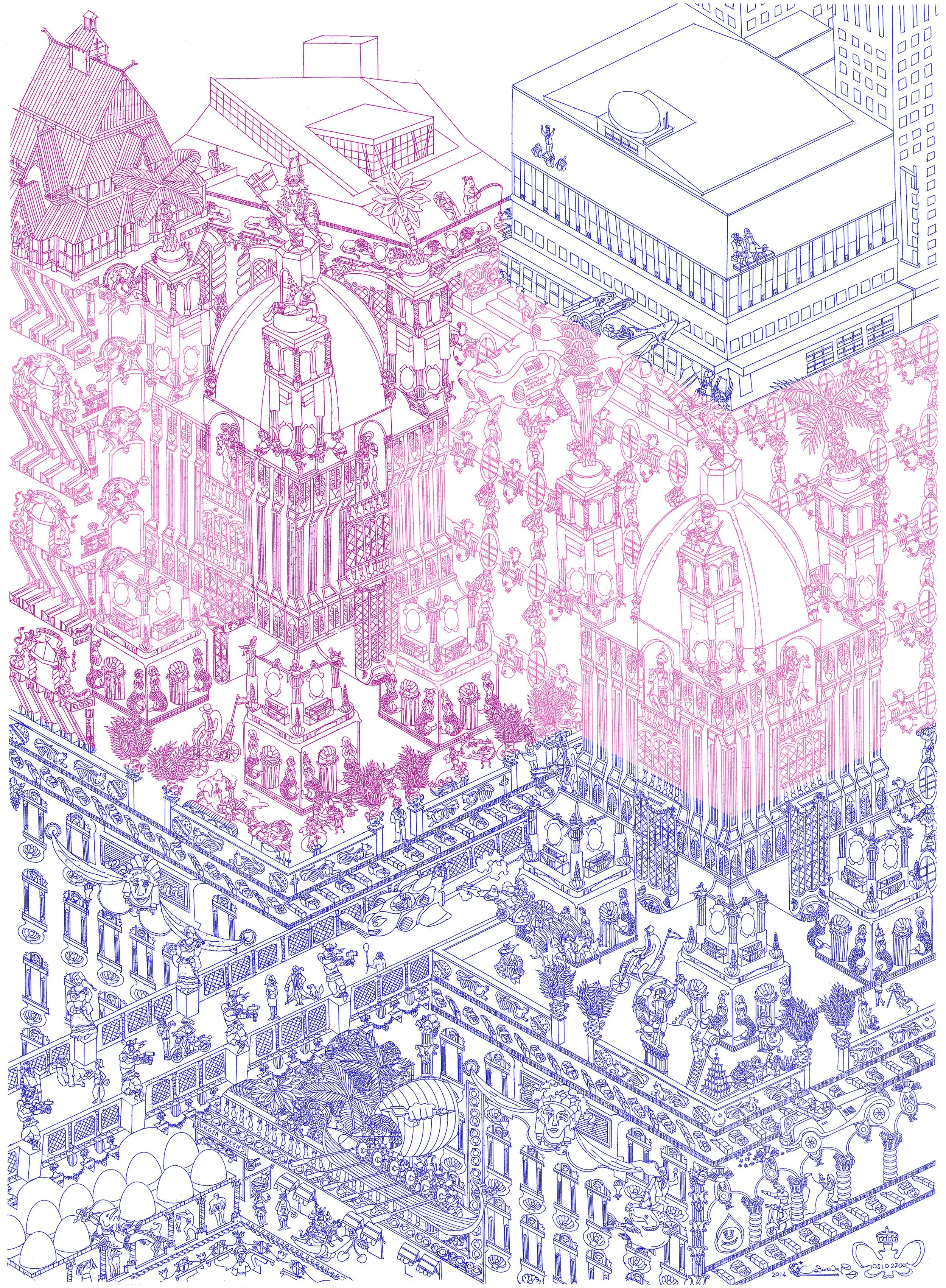
Oslo 2700, 2014. Etching, 60x80cm
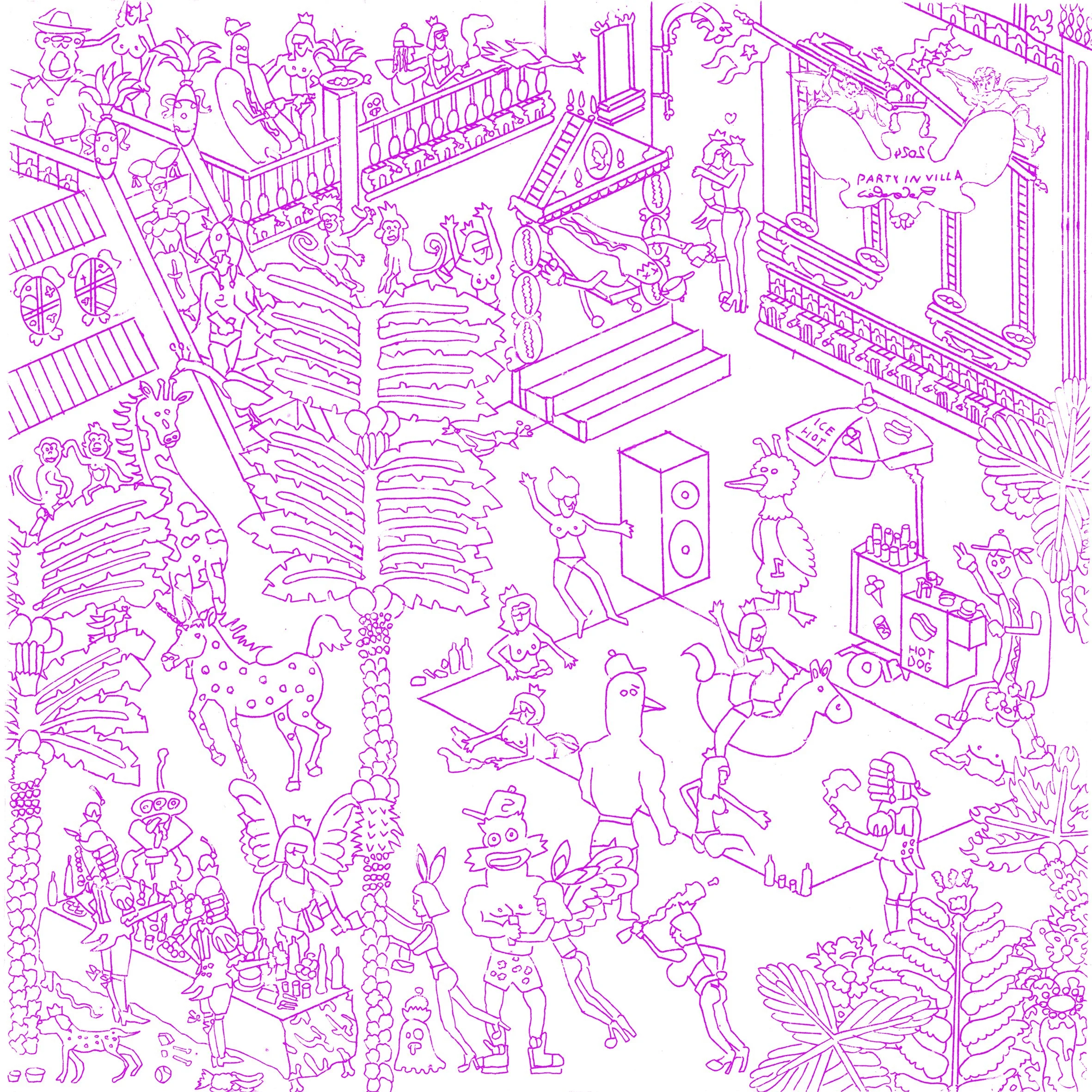
Party in the villa, 2024. Etching, 40x40cm
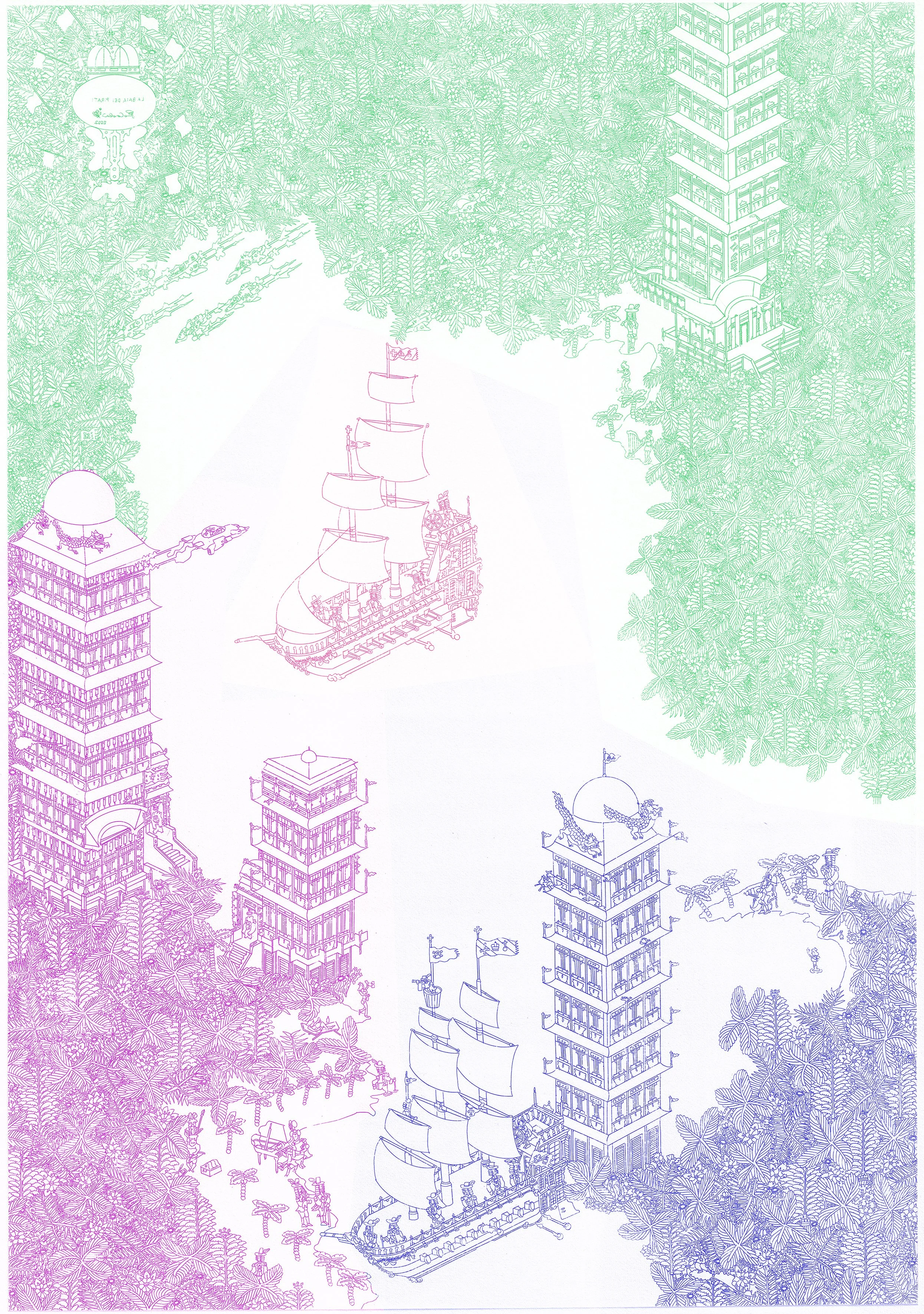
Pirates' bay, 2023. Etching, 80x116cm
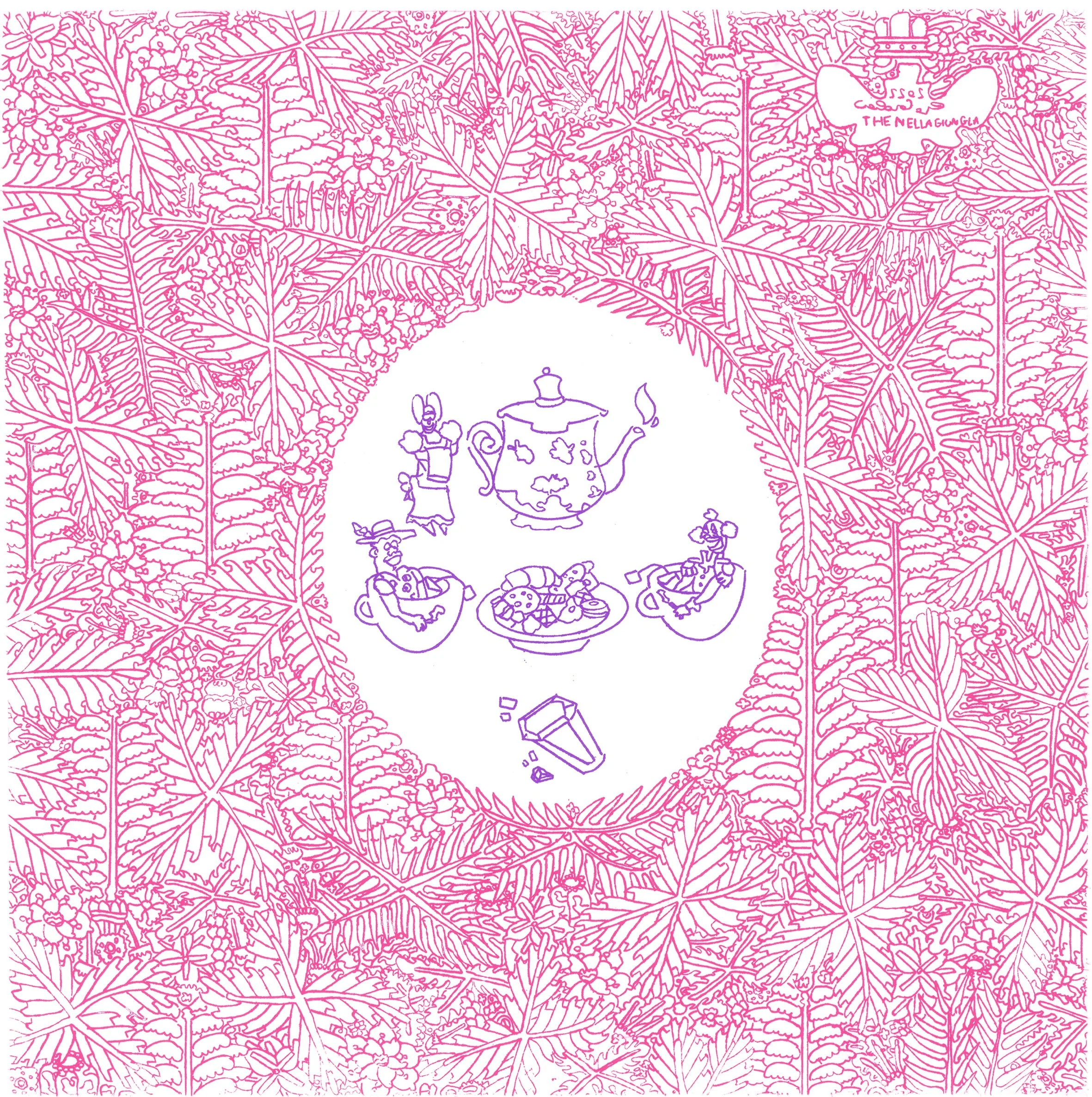
Tea in the jungle, 2022. Etching, 40x40cm
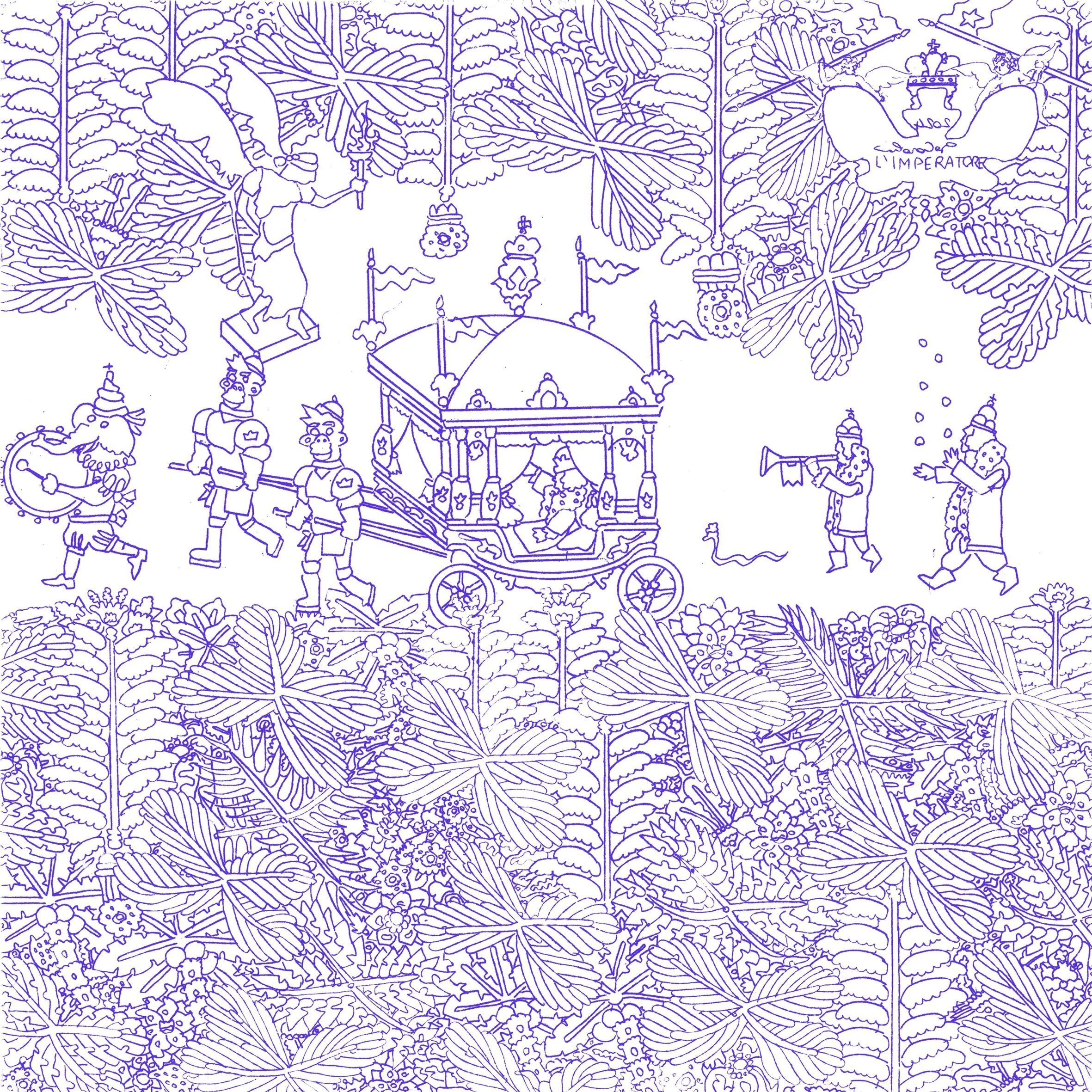
The emperor, 2024. Etching, 40x40cm
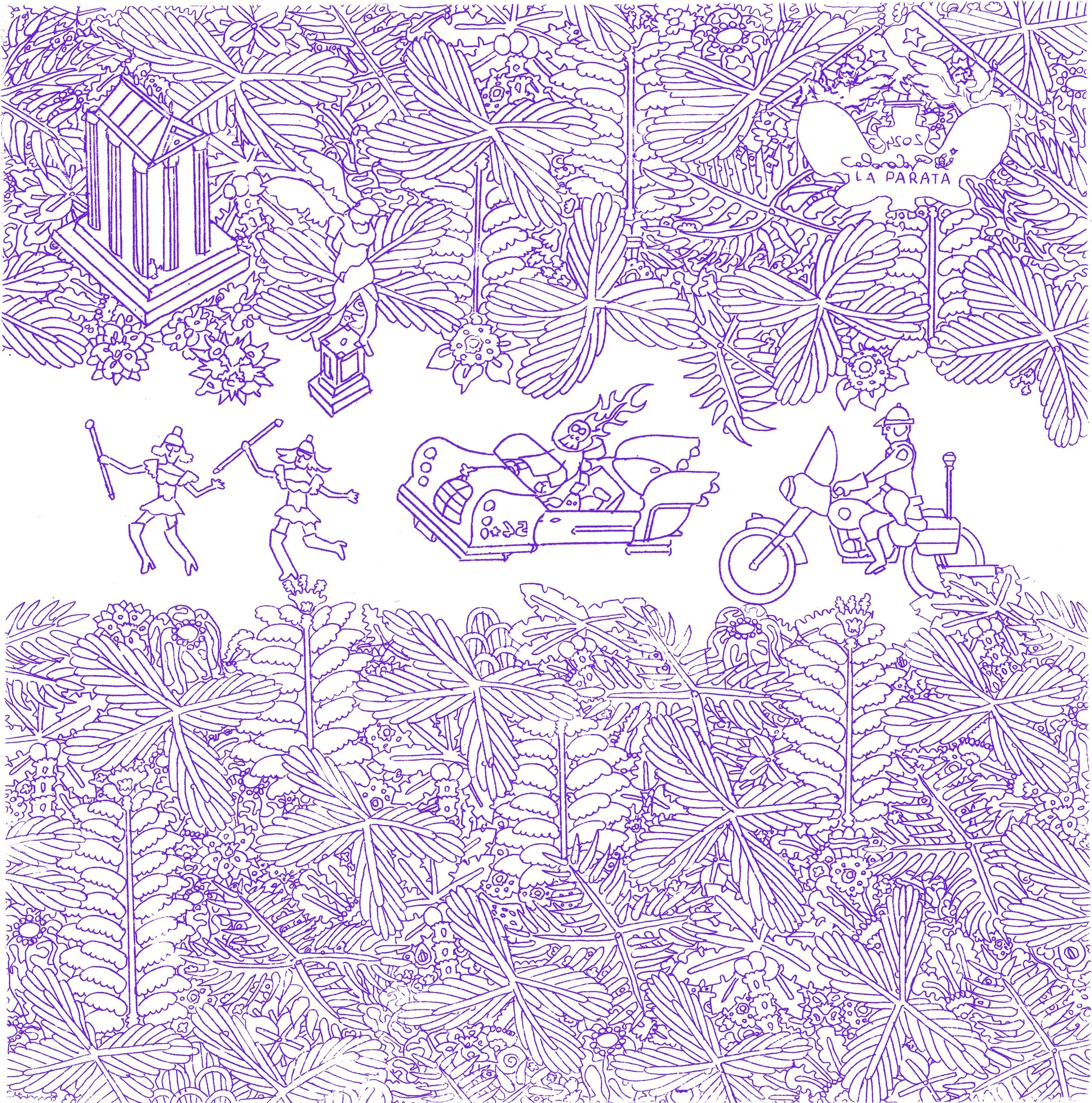
The parade, 2024. Etching, 40x40cm
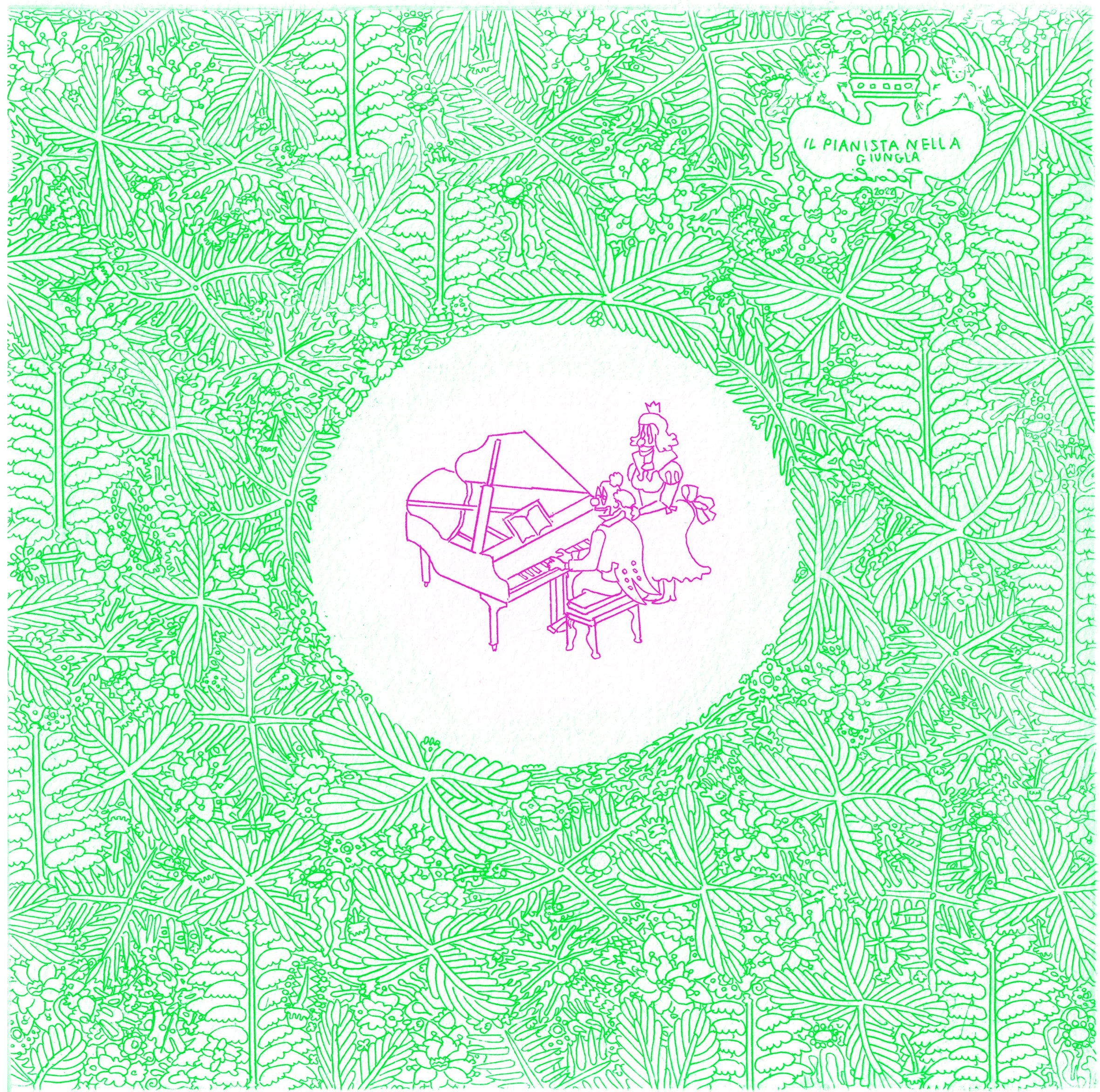
The pianist in the jungle, 2022. Etching, 40x40cm
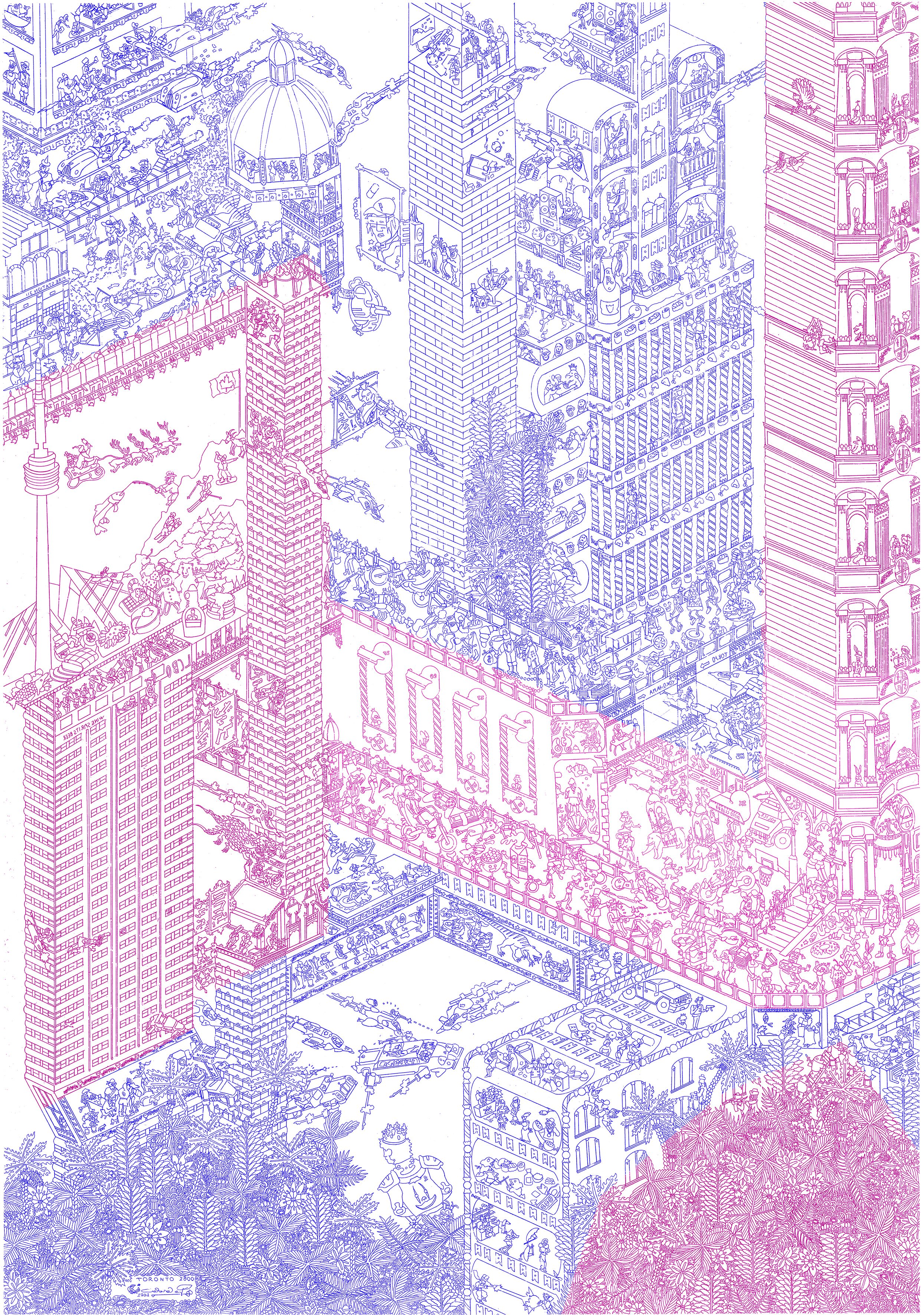
Toronto 2800, 2021. Etching, 97x124cm
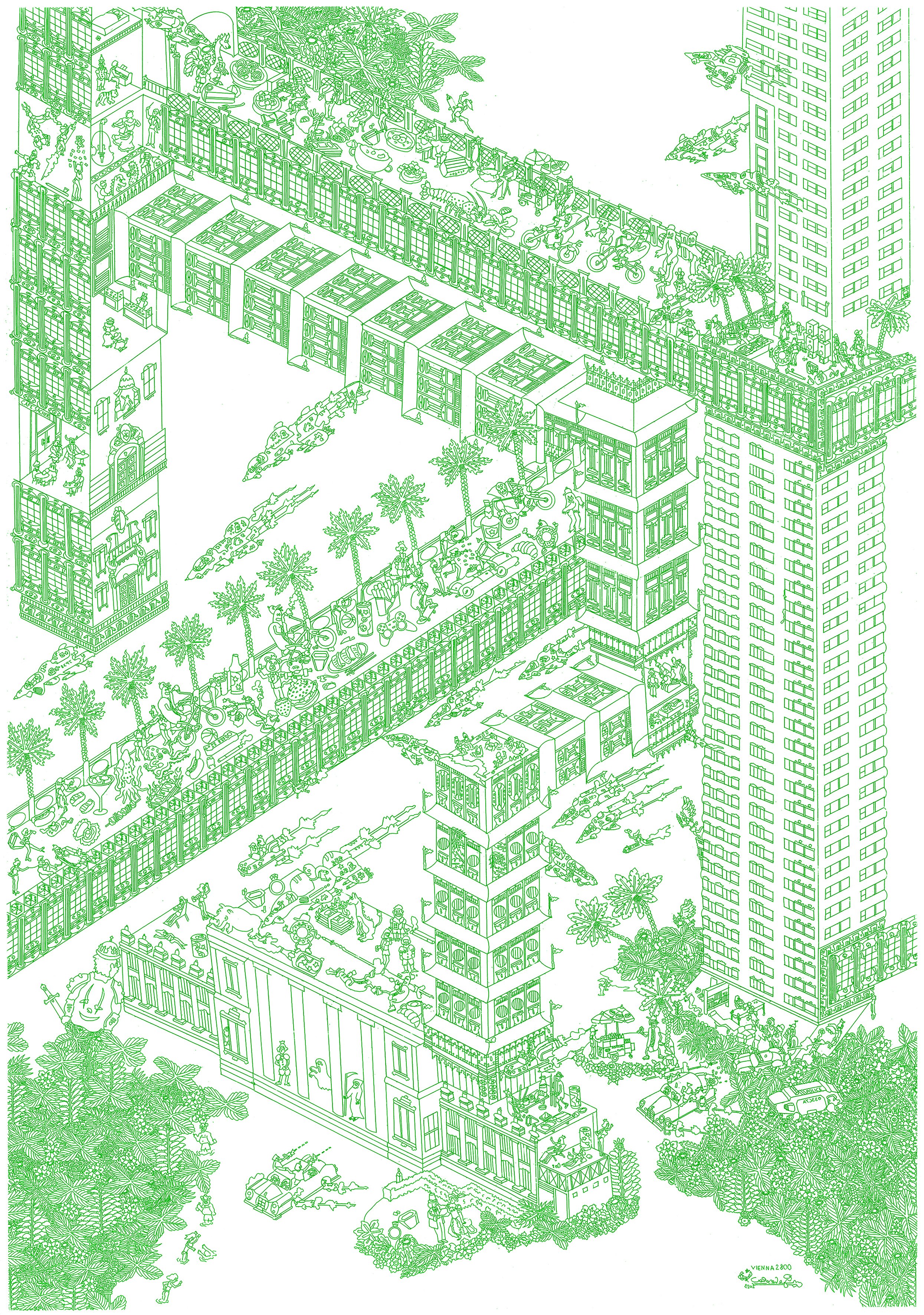
Wien 2800, 2023. Etching, 80x116cm