
Mayada Shibir
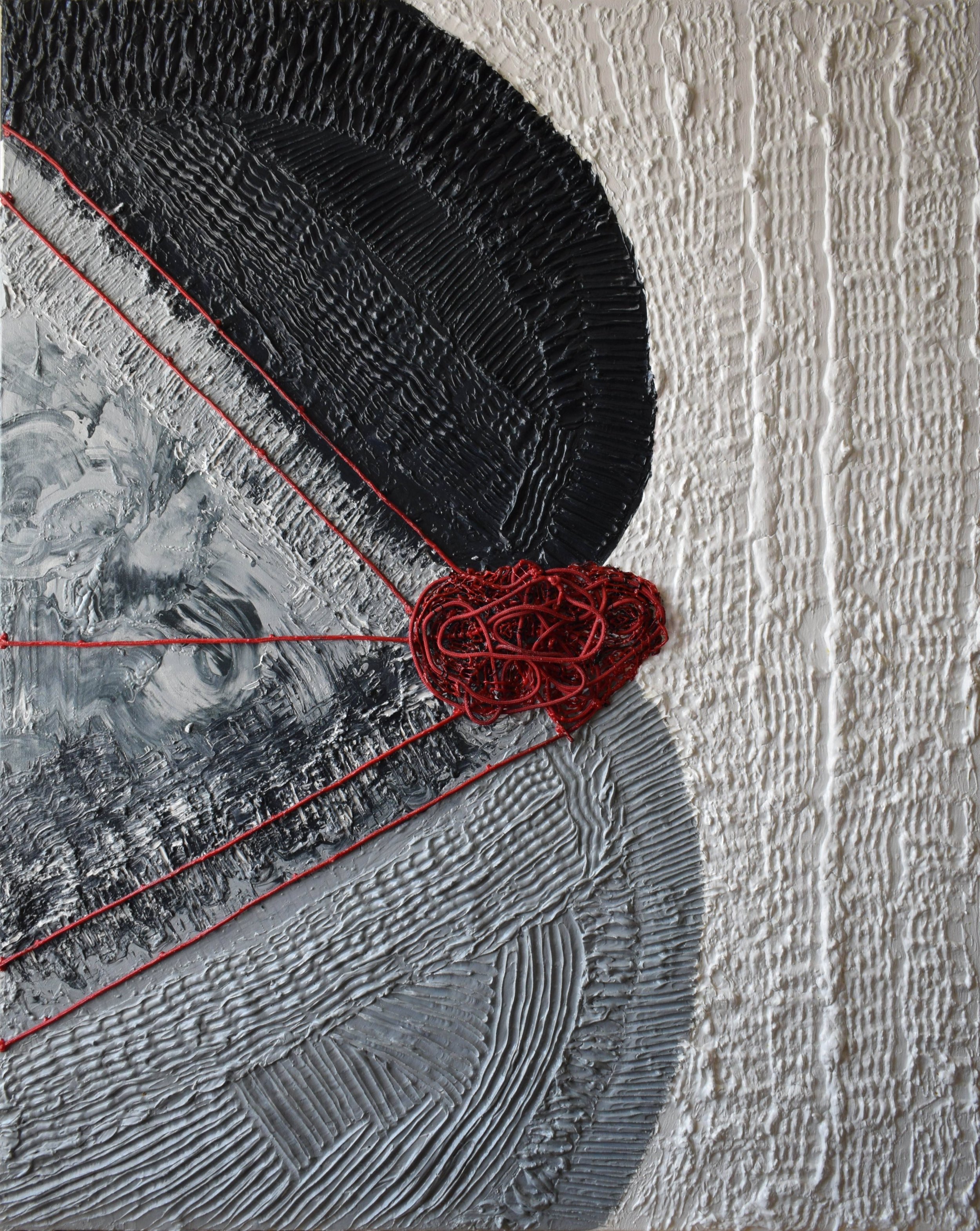

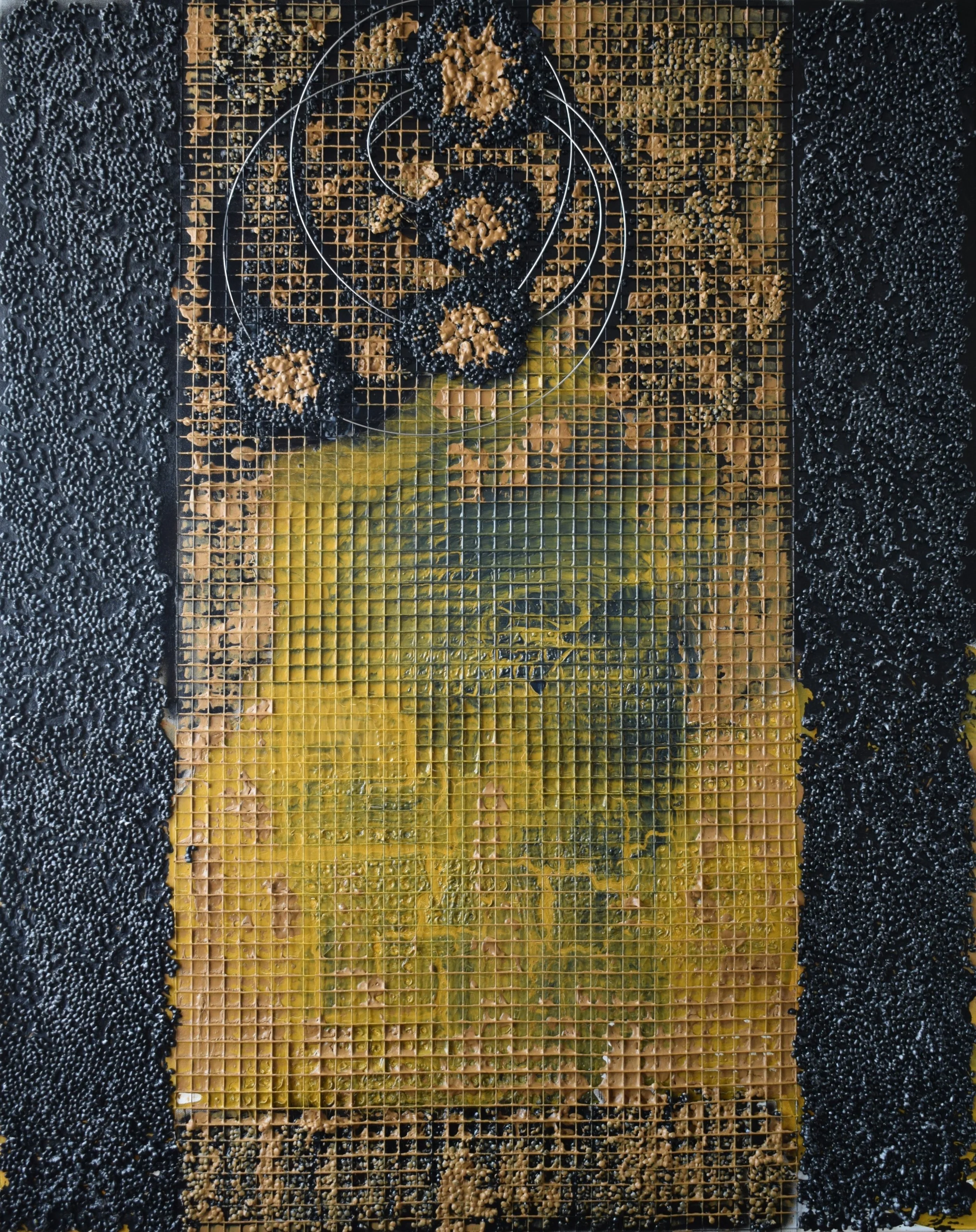
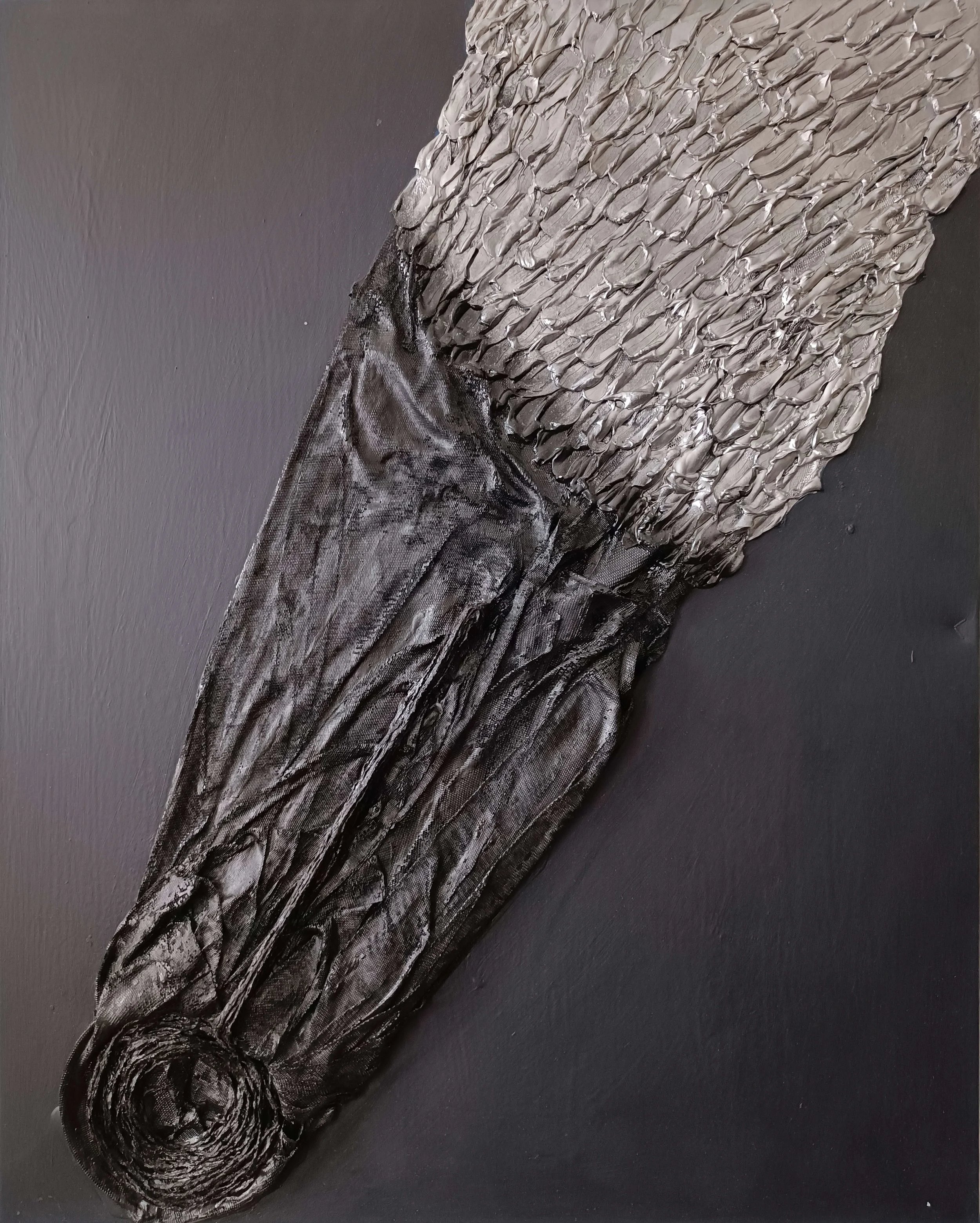
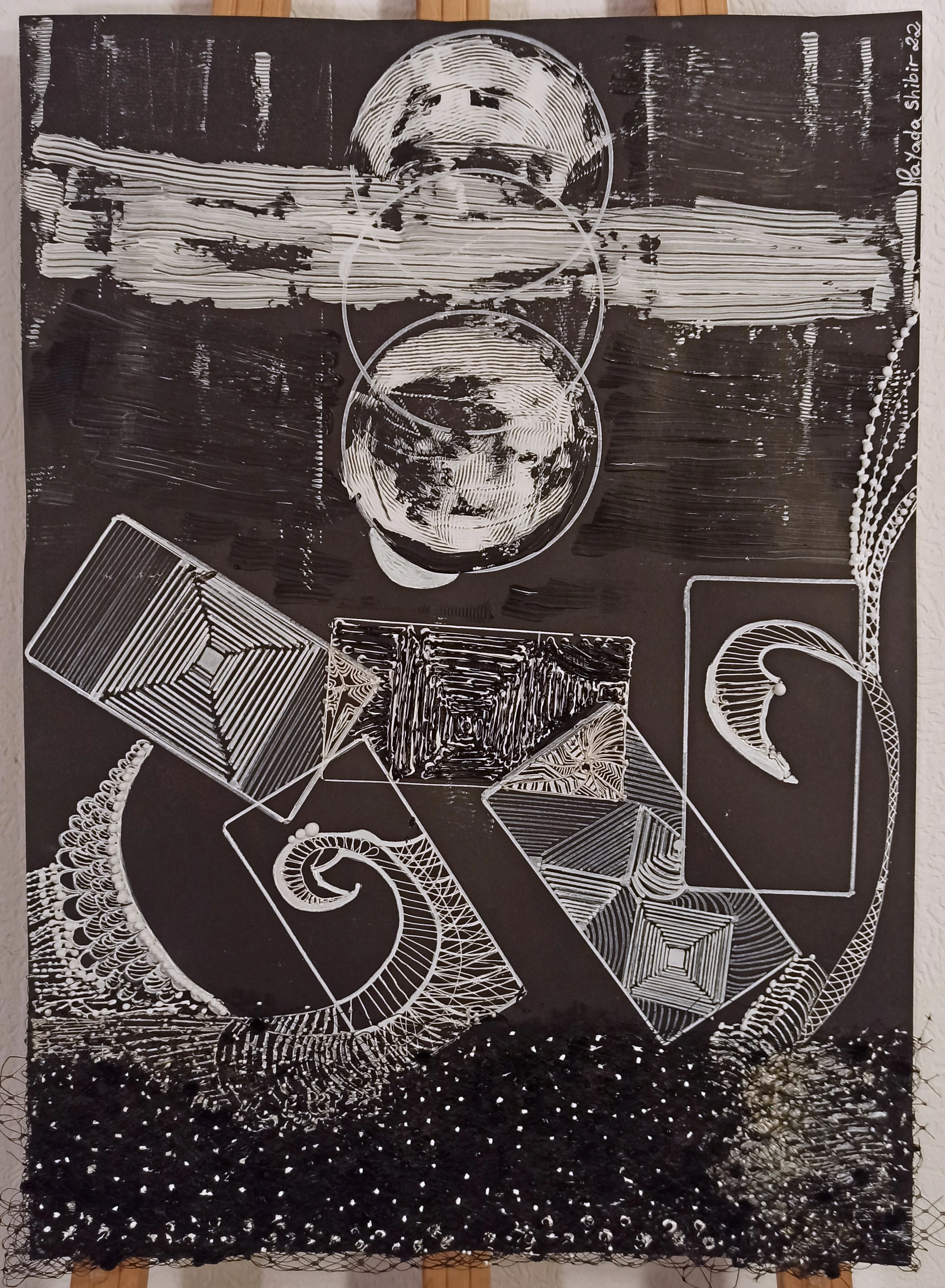
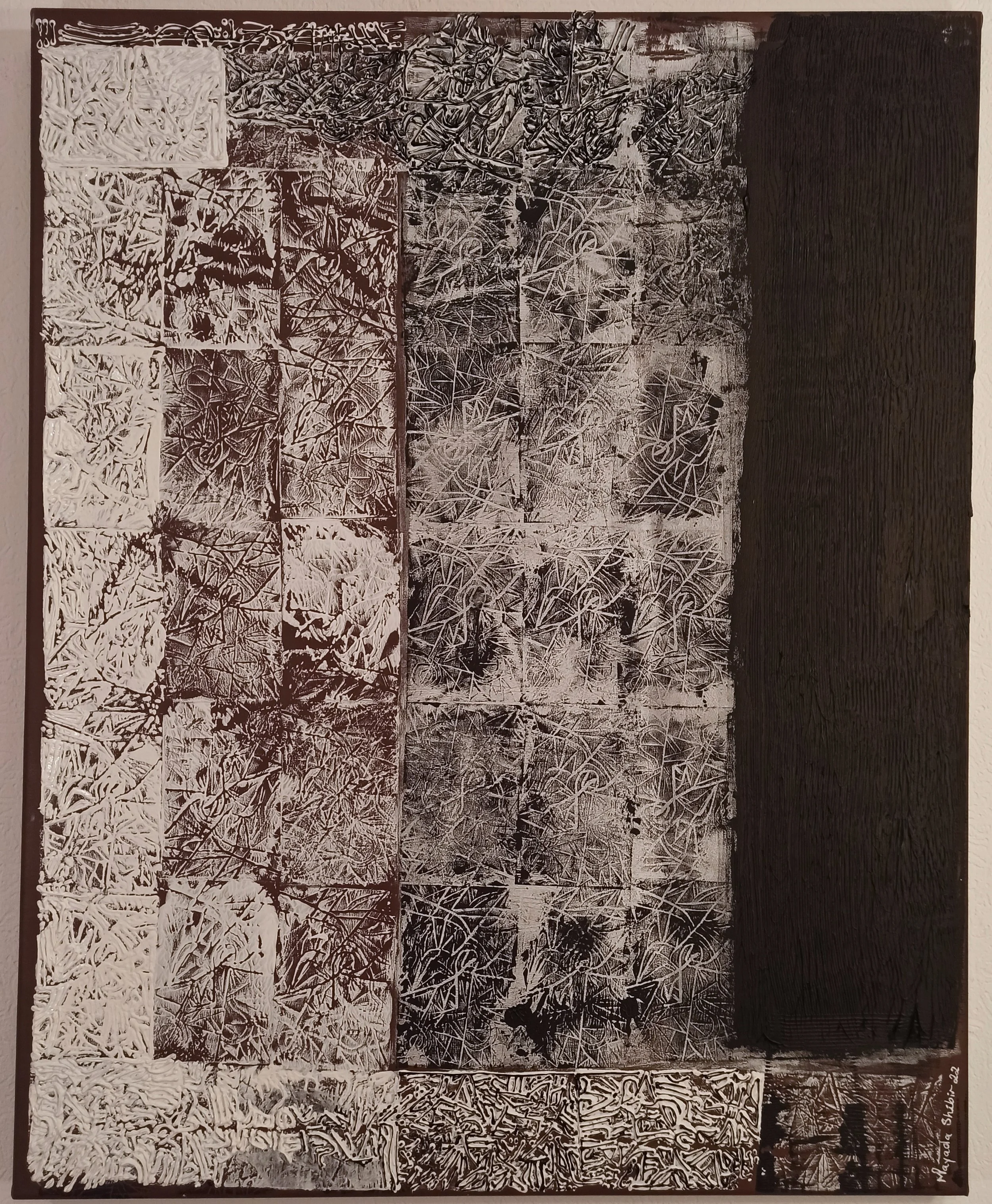
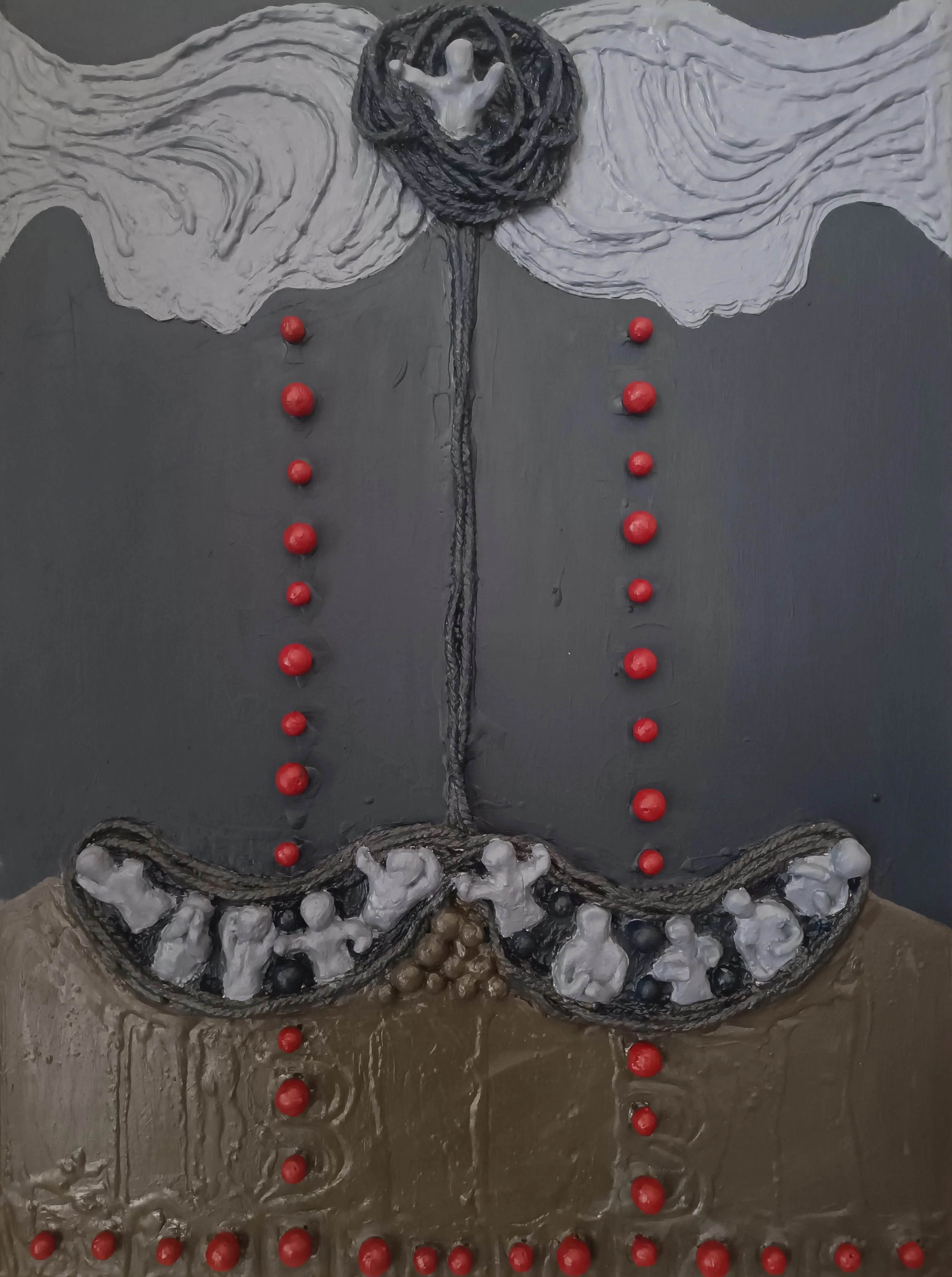
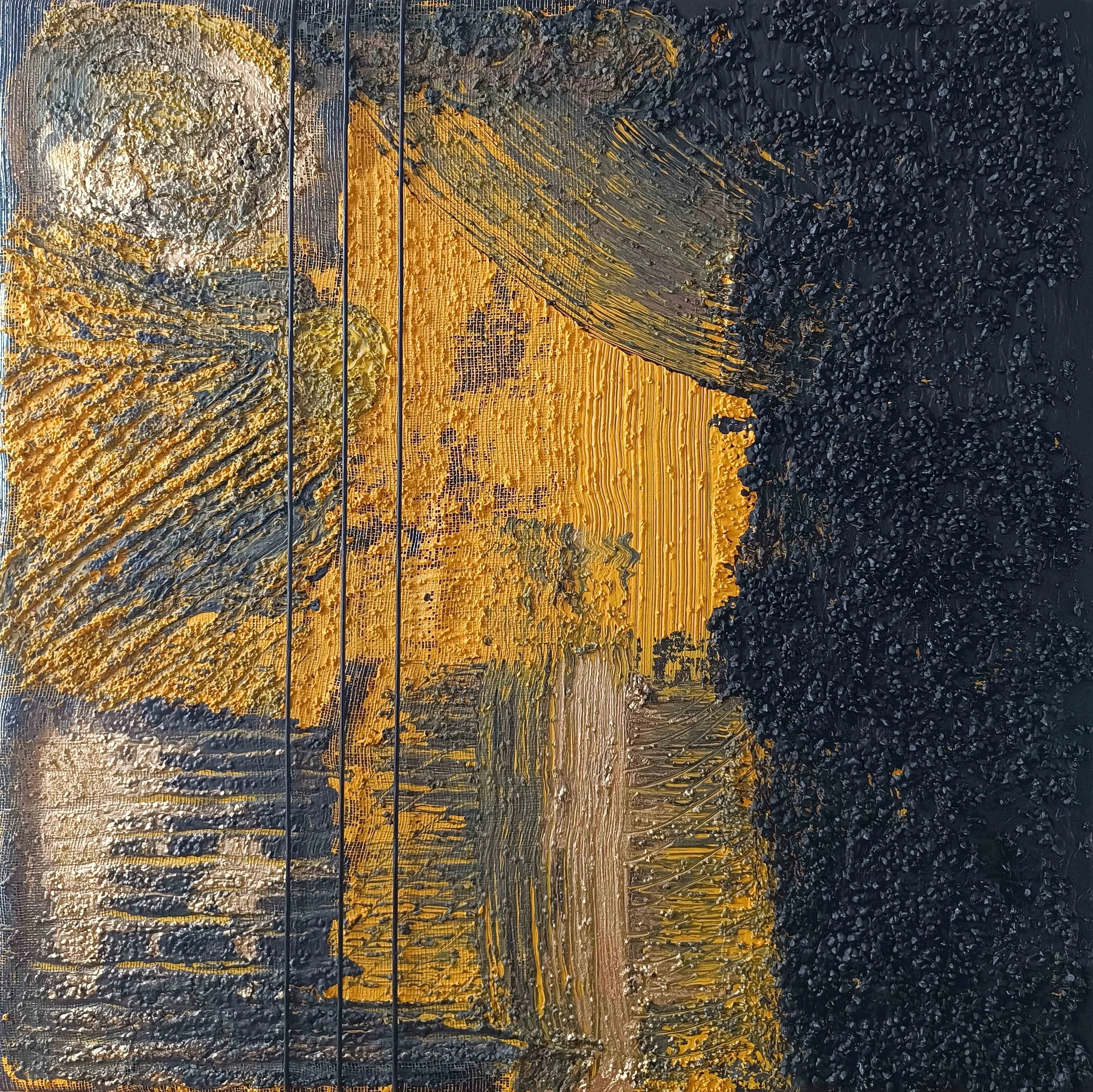
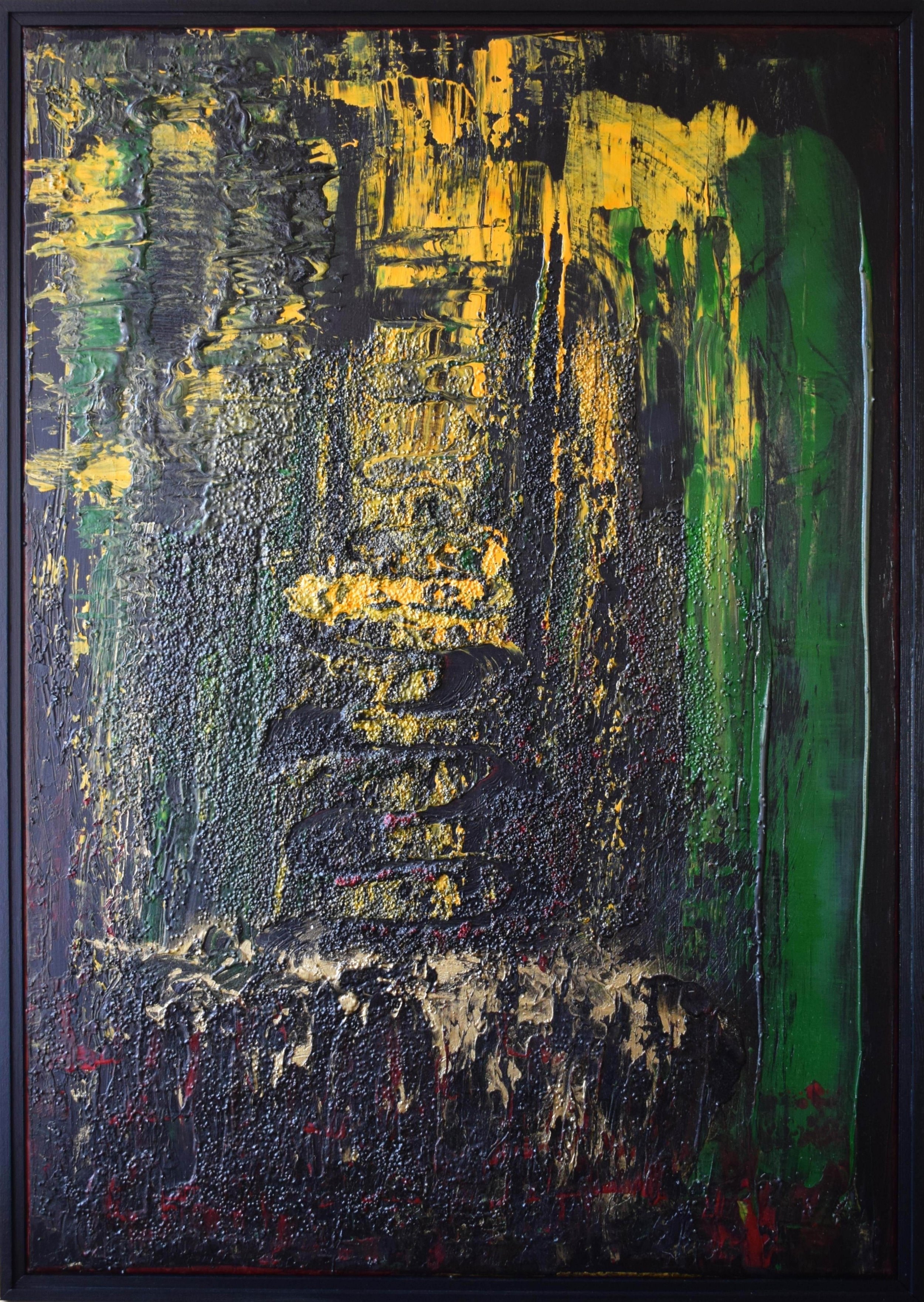
Mayada Shibir is a contemporary artist and Gallery Director. With an Afro-European heritage, she brings a distinctive cultural perspective to both her artistic practice and curatorial work. Before fully immersing herself in the art world, she worked in the healthcare systems of England and Germany—experiences that deepened her understanding of human narratives and cross-cultural connections. Driven by a passion for artistic collaboration, she later founded an exchange project fostering creative dialogue between England and Germany.
Her work is profoundly influenced by her family's creative lineage and the dynamic interplay between African and European cultures. Through her art, she explores themes of identity, heritage, and cultural discourse, drawing inspiration from music, poetry, and visual storytelling while engaging with historical parallels and contemporary complexities.
In 2021, Mayada took over the management of her father’s Shibir Nilotic Gallery for Modern African Art, continuing its legacy while expanding its presence within the contemporary art scene. Her commitment to accessibility in the arts is reflected in her exhibitions, which create an immersive and direct connection between the artwork, the space, and a diverse audience.
Her work has been showcased in solo and group exhibitions, as well as at prestigious international art fairs, galleries, and cultural institutions across major cities, including London, New York, Brussels, Milan, Paris, Madrid, Monaco, Barcelona, Miami, and Berlin.
In December 2023, she was honored with the TOP Artist Award by Monat Art Gallery in Madrid, Spain, in recognition of her outstanding artistic achievements, the 7° International Prize Leonardo da Vinci 2025 as well as International Prize Artists on the Cote d´Azur 2025.
Mayada, your work is situated at the confluence of African and European cultural legacies, and yet it refuses to resolve into a singular aesthetic language. How do you approach the tensions and harmonies between these identities in your mixed media practice, and how has your transnational upbringing shaped your visual lexicon across materials, textures, and forms?
I see my African and European roots as an enrichment and a source of harmony in my life and my art, rather than opposing forces. Beyond the everyday impressions, individual characteristics, parallels, and contradictions of both cultures, I have also benefited greatly from my parents’ openness, their wide-ranging interests, and their artistic skills—things my siblings and I were able to explore playfully from a very young age.
With simple means, they created an environment where curiosity could be freely expressed: through crafts like doll-making, small home theatre productions, watercolour painting, our first pencil sketches, and experiments with all kinds of recycled materials. These early influences and memories remain visible in my work today and form a deeply rooted part of my creative process.
As both an artist and the director of Shibir Nilotic Gallery, you engage in a dual practice that navigates the complexities of authorship, representation, and curatorship. How do you reconcile these roles, particularly when exhibiting work that speaks to colonial legacies, diasporic trauma, or post-memory, and what curatorial ethics guide your decisions when staging work from underrepresented communities?
Since taking over the Shibir Nilotic Gallery from my father in 2021, I have consciously moved within the dual role of artist and director. Balancing these responsibilities means meeting organizational and communicative demands while staying connected to my own artistic focus. At times this is challenging, yet the work within the gallery has broadened my perspective and offered insights that enrich my artistic practice.
The foundation of the gallery lies in a contemporary engagement with the art and cultural expressions of Nilotic communities. In this role, I never work in isolation: I collaborate with curators, artists, and other cultural practitioners who contribute in different ways to themes such as colonial legacies, diasporic experiences, and post-memory. This multiplicity of voices significantly shapes our curatorial approach.
My curatorial ethics are rooted in authenticity and contextual sensitivity. When I present works that originate from or speak to African cultural spaces—especially within a European context—I ensure they retain their local grounding. I let the work itself guide the process: its origins, its intentions, and its content. From this emerges the curatorial framework—not as a standardized system but as a living, situational process.
Equally essential to me is empathy. Visitors bring their own histories, vulnerabilities, and emotional landscapes. When we exhibit works that may evoke painful memories, I intentionally create spaces for dialogue, reflection, and alternative modes of engagement, whether through conversations, literary formats, or participatory elements. Curating carries a responsibility—to the artists, to the narratives being shared, and to the audience.
I see my work as part of a larger network of cultural custodians: artists, writers, musicians, scholars, researchers, photographers, and many others who make social experiences visible. Together, we aim to ensure that the stories presented remain accurate while allowing room for new perspectives, debate, and further cultural production.
For me, the connection between artistic practice and curatorial responsibility is not a contradiction but a mutual enrichment—and ultimately the reason I do what I do. Despite the many positive developments in recent years, the Shibir Nilotic Gallery is still in the process of establishing itself as a platform and cultural interface.
Your past in the healthcare systems of England and Germany suggests an intimate knowledge of human fragility, empathy, and systemic structures. How has this clinical vantage point informed your conceptual approach to art-making, particularly in your exploration of identity and corporeality? Do you view your practice as a form of visual healing or socio-cultural intervention?
My background in the healthcare systems of England and Germany has profoundly shaped my artistic approach, because it confronted me daily with the rawness and finiteness of life. In clinical work, you meet people in their most vulnerable moments—regardless of origin, status, or identity. This experience sharpened my awareness of fragility, sensitivity, and the fundamental equality that underlies human existence.
In my artistic practice, I carry this perspective forward by treating identity and corporeality not as abstract concepts, but as something deeply dignified, vulnerable, and at the same time resilient. The clinical environment teaches a particular kind of closeness, trust—and also the necessity of letting go. This dynamic informs my work: attentive observation, accompaniment, endurance, and transformation.
Working in healthcare always involves sacrifice, responsibility, and a constant striving for improvement and for saving lives—physically or emotionally. These aspects have changed how I understand art: I see it as a form of emotional care, a space that can hold people, where courage and hope can become visible.
In my works, I try to distill these human experiences—the gratitude, the fragility, the courage to move forward. Clinical practice has taught me to look beneath the surface and to see the person in their full complexity. This is precisely what I aim to convey artistically: a deep understanding that we are all vulnerable—and connected through that vulnerability.
For me, my artistic practice is both a form of visual healing and a socio-cultural intervention—depending on the subject I am engaging with and the personal experiences, past or present, that flow into the work.
When I deal with personal memories, emotional processes, or inner fragility, art becomes a healing space: a place where I make resilience visible and transform inner states. In these moments, aesthetic form is inseparable from self-healing and reflection.
At the same time, I clearly situate my work within a sociocultural context. Themes such as identity, diaspora, structural inequalities, or political realities are central to me and inevitably enter my practice. Art allows societal questions to surface, to create sensitivity, and sometimes even to amplify the voices of those whose experiences are too often overlooked.
In this sense, art can raise awareness, open discussions, and challenge audiences to embrace new perspectives. It can strengthen, unsettle, or encourage—and it is within this field of tension between healing and intervention that my work unfolds.
In your recent exhibitions, you construct immersive environments that allow the viewer to become not just a spectator but a participant within the narrative architecture of your work. Could you elaborate on the spatial strategies and sensory devices you employ to collapse the boundaries between artwork, audience, and space, and how do these strategies engage or challenge Western exhibition conventions?
My focus has been on fundamentally challenging long-established assumptions about how art should be viewed and experienced. I do not want the audience to engage with a work solely through visual perception—this one-directional mode of encounter feels far too limited to me. Through light, materiality, spatial composition, and the interplay between open and enclosed zones, environments were created that activate the senses and deliberately shift the viewer’s perception.
As people move through these spaces, they are addressed emotionally on multiple sensory levels. The works open themselves not only visually, but also physically—through textures, proximity, or acoustic elements. This generates a connection that reaches far beyond simple observation. Many visitors discover links to their own memories, bodily experiences, or inner imagery. It is precisely this resonance between the concept of the work and their personal lives that allows for a deeper reception of the content and a different kind of access to the narrative architecture of my installations.
The transition from a two-dimensional artwork to a three-dimensional, walk-in environment makes the audience a part of the work itself. They are no longer standing in front of it—they are within it, moving through it, shaping it through their presence. This creates spaces of dialogue that are more open, immediate, and multilayered.
In doing so, I also question Western exhibition conventions. The “white cube” is characterized by distance, sterility, and a form of respect constructed through separation: art here, audience there. I come from a cultural background in which materials are touched, carried, and understood intuitively. This return to origins—this embodied knowledge of materials—profoundly shapes my practice. My work aims to make that form of engagement possible again: without compromising the integrity of the piece, but also without preserving the distance that many Western museums take for granted.
Through these shifts, a new form of encounter emerges—more sensorial, more alive, more courageous. For me, this is a way to bring art closer to people again—and people closer to themselves.
Music and poetry emerge as recurring undercurrents in your pieces, sometimes overt, sometimes quietly embedded in the layers of media. Could you speak to the role of rhythm, voice, and lyrical structure in your compositions, and how these auditory references serve as mnemonic devices or cultural signifiers within your visual storytelling?
In my point of view music and poetry are not additional elements in my work but fundamental structures that underpin my visual practice. Rhythm, voice, and lyrical order have accompanied me since childhood—growing up in Africa, where Indigenous traditions, dance, music, and language create a direct connection between body, memory, and community. This cultural foundation continues to shape my understanding of composition today: it is less static and far more dynamic, fluid, and performative.
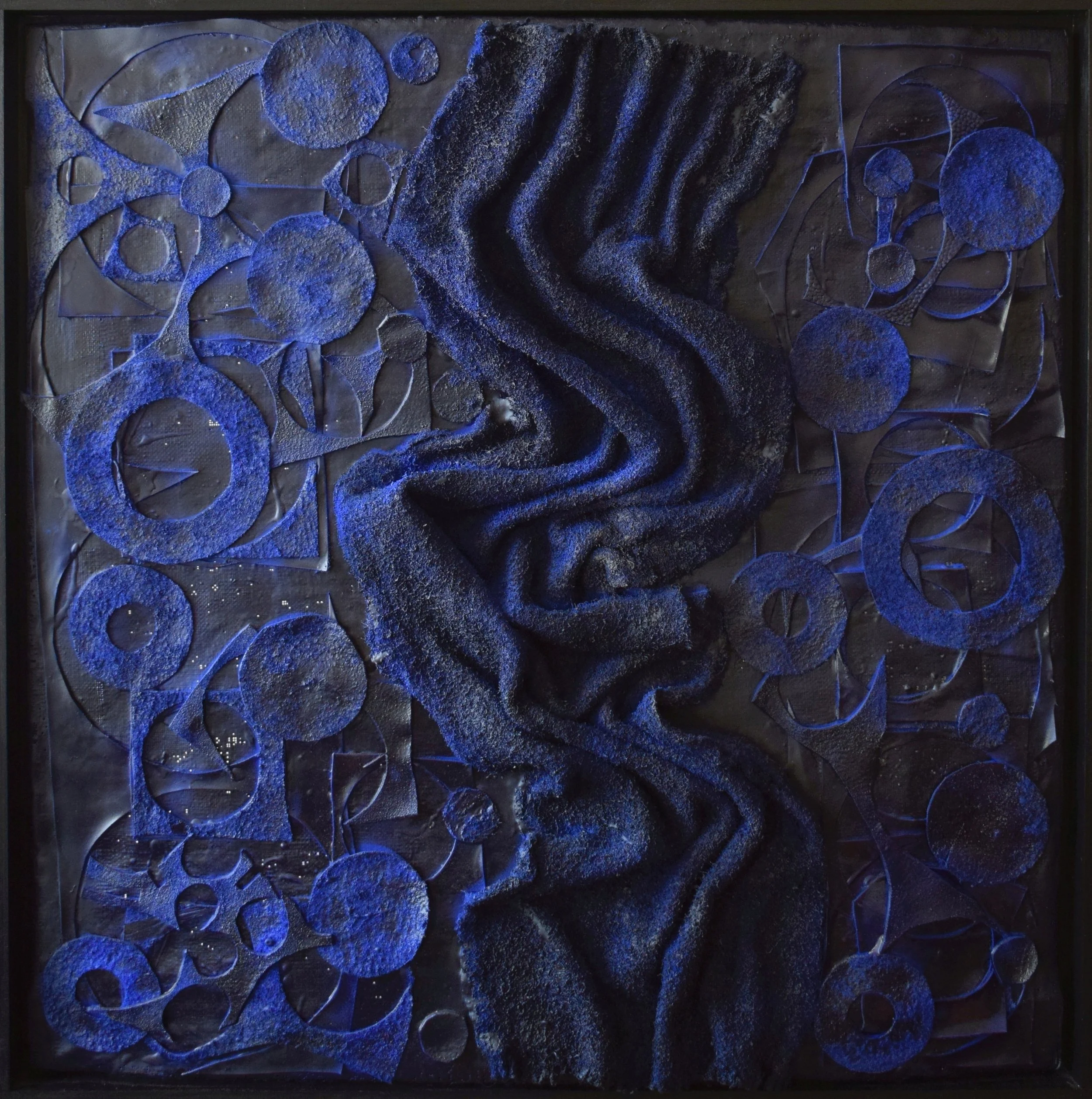
In my works, I often translate acoustic impressions into visual forms. Colours, objects, textures, and even spatial structures function like visual scores. Wave-like lines, repetitive patterns, or rhythmic layers of material create a kind of visual soundscape. The partially monochromatic use of colour or the integration of 3D elements intensifies this perception, slowing the gaze and allowing depth to unfold—much like a musical passage that needs time to reveal itself.
Many of these structures act as mnemonic devices: they evoke memories, both personal and collective. Rhythm can become a bridge, voice an anchor, and a recurring pattern a cultural signifier that carries as much weight in my visual storytelling as a melodic motif does in a song. The symbolism of my materials—fabrics, natural fibres, pigments—often refers to cultural origins or bodily states such as vulnerability, fragility, or healing.
At the same time, musical genres such as blues, soul, punk, gospel, or jazz strongly influence my work, precisely because they emerged from contexts in which pain, resistance, spirituality, and renewal are tightly interwoven. Their energy, ruptures, and improvisation have shaped my sense of visual dynamism.
All these influences—Indigenous traditions, historical and contemporary musical genres, language, movement—enrich my practice and broaden my perspective. They remind me to stay curious and open, to welcome new cultural traces and translate them into my visual language. In doing so, I create a form of storytelling that is not only seen but also felt: rhythmic, sensuous, and deeply rooted in collective and personal memory spaces.
Your work often references historical parallels while engaging with contemporary realities, creating a rich palimpsest of time. How do you negotiate temporal layering in your work, between ancestral memory and current political contexts, and what archival or historical research methodologies do you employ in this process?
I explore what I experience as the different “layers of time” in life. Memories, stories, and cultural experiences build up over time. They remain present even as new impressions arrive. This applies both to individuals and to entire communities. We all carry experiences, traditions, wounds, hopes, and new influences within us—and together, these elements shape who we are today.
In my creative process, I aim to bring these layers into conversation with one another. I connect the knowledge and stories of my ancestors with themes that shape our present—whether political, social, or personal. In this way, my work references the past while also addressing contemporary questions and realities.
To explore these ideas, I engage with materials from the past: old photographs, documents, texts, objects, or oral histories. I am interested not only in their historical meaning but also in the feelings, memories, or images they evoke. I consider how all of this can be translated into an artistic form.
It is important to me that time never passes without leaving traces. Even as new layers are added, what came before remains perceptible.
This principle is reflected in my work: I work with overlays—of materials, colors, symbols, or forms—creating a space where past and present exist side by side.
In this way, I aim to create art that reveals the complexity of our histories and identities. Not as a simple answer, but as an invitation for viewers to feel, reflect, and find their own connections.
The idea of accessibility features strongly in your practice, both in your artistic installations and in your curatorial vision. In an art world that is still largely exclusive and hierarchical, what does accessibility mean to you, not just in terms of physical entry, but in relation to cultural literacy, visual codes, and narrative ownership?
For me, accessibility in art is about much more than simply being able to enter an exhibition. It’s about connecting with the work—its cultural context, its visual language, and the stories it carries. Art is never separate from its roots, its history, or the people who shaped it, and these elements always remain present in my own work.
At the same time, I stay open to visual experiences that speak to me—whether from the cultures I’ve encountered or from my own life. This openness lets me create works that reflect my own perspective while leaving space for other voices and experiences to be felt.
I also think about the audience. Cultural literacy means giving people the tools to notice and understand the symbols, colours, rituals, and histories in a work without flattening or simplifying them. It’s about creating understanding, avoiding stereotypes, and fostering a respectful conversation between the work, its cultural origins, and those who experience it.
In my curatorial approach, I want to carry the same principles. I aim to create exhibitions that are inclusive and thoughtful, that honour cultural meanings, and that question dominant frameworks that have historically controlled how art is seen. For me, accessibility is about making space where people from all backgrounds can engage with art on an equal level—emotionally, intellectually, and culturally. In that way, art becomes a shared experience, a way to connect, reflect, and exchange ideas, rather than something closed off or exclusive.
As a recipient of multiple international honors, including the TOP Artist Award by Monat Art Gallery and features across MoMA, Art Basel Miami, and the Venice Biennale Book Pavilion, how do you navigate the global art market’s appetite for the “Other,” and how do you ensure that your work resists commodification while maintaining cultural integrity?
The global art market often treats diversity as a product to consume. In my practice, I try not to let these expectations shape my work. Instead, I focus on staying true to my own cultural and artistic values, creating art that reflects my heritage, experiences, and vision.
I see my role as revealing complexity and opening space for cultural self-representation, rather than fitting into ready-made narratives. As a director, I approach exhibitions with the same mindset: prioritizing context over consumption, process over product, and understanding over simplification. I aim to create spaces where art from Africa or the diaspora can define itself and engage in dialogue on equal terms.
I know there is often an expectation for something “exotic” or easily marketable, but I refuse to simplify my identity or history. My work remains grounded in memory, culture, and lived experience. As long as I stay faithful to that, no market pressure can turn it into a commodity. For me, integrity comes from putting inner conviction above external expectations.
You founded an exchange project fostering creative dialogue between England and Germany. How do you envision such transnational collaborations functioning beyond the surface-level diplomacy of cultural exchange? Can you discuss a moment from this initiative where artistic language succeeded or failed to bridge political or cultural divides?
It was important to me to create more than a symbolic gesture of cultural diplomacy. I wanted to build an authentic, living network between artists in England and Germany—driven by genuine creative curiosity rather than institutional expectations. To achieve this, I sought direct contact and approached the musicians personally. Many of them I already knew from small events—independent singer-songwriters whose music has a certain rawness, edges, and above all, honesty. I deliberately looked for artists without major contracts, who write their own songs, perform them themselves, and fully stand behind their music.
For me, the foundation of meaningful transnational collaboration lies precisely in this authenticity: in direct human connection, in the willingness to listen, and in music that resonates even when it is not mainstream or immediately familiar. The project gave musicians from both countries the chance to reach a new audience, perform abroad for the first time, and meet bands and venues they would otherwise not have encountered. From these encounters, new collaborations, joint concerts, and long-term artistic relationships emerged.
For me personally—and for the participating musicians and the audience—every event was a success. Many of the artists stayed in touch, continued collaborating, and developed musically. To me, this is the true value of transnational cooperation: not in a polished façade, but in a lived exchange that continues long beyond the concerts.
In a time where identity is increasingly politicized and the boundaries of nationhood, gender, and heritage are being redefined, what does it mean for you to create under the mantle of contemporary African art? Do you see this label as expansive or limiting, and how do you hope your practice will contribute to reshaping the future canon of global contemporary art?
For me, working under the label of “contemporary African art” is not just a category—it’s a way to position myself in a global conversation. I’ve grown up surrounded by many cultures, but my artistic voice comes from the memories, stories, and experiences of my own origins. These roots are always present in my work, shaping the way I see and create. I see the label as both helpful and limiting. It can open doors because it gives people a way to approach my work, but it can also confine it if it becomes a fixed expectation. I use it as a starting point, not a boundary. For me, it’s a space where different perspectives, traditions, and ways of seeing can exist side by side.
My work is rooted in Sudan, in a history rich with symbols and collective memory. At the same time, it speaks to questions that go far beyond that: Where do we belong? How do we define identity? How can we honor what is specific without closing ourselves off? These tensions guide me toward a visual language that respects the local but also resonates in a global context. Collaboration is central to my practice. Working with communities, archives, and cultural keepers helps me engage with stories responsibly and keep them alive. Art is not something outside of the world—we are connected to it through our memories, our relationships, and the changes happening around us. Ultimately, for me, art is a language. It’s how I make visible the connections between past and present, self and community, memory and imagination. And through it, I hope to create space for voices and perspectives that are often overlooked, while exploring new ways of telling stories.