
Paal Anand
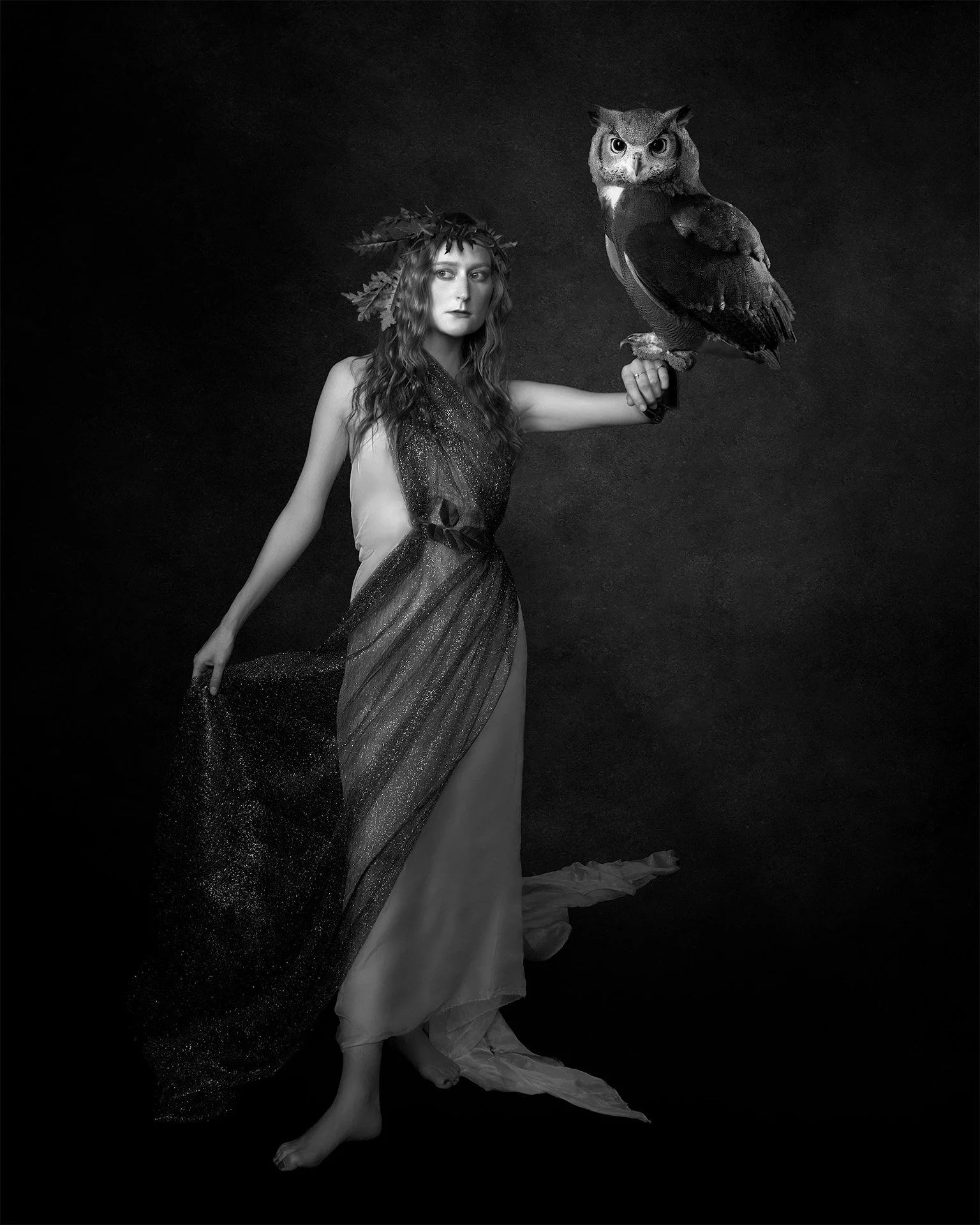
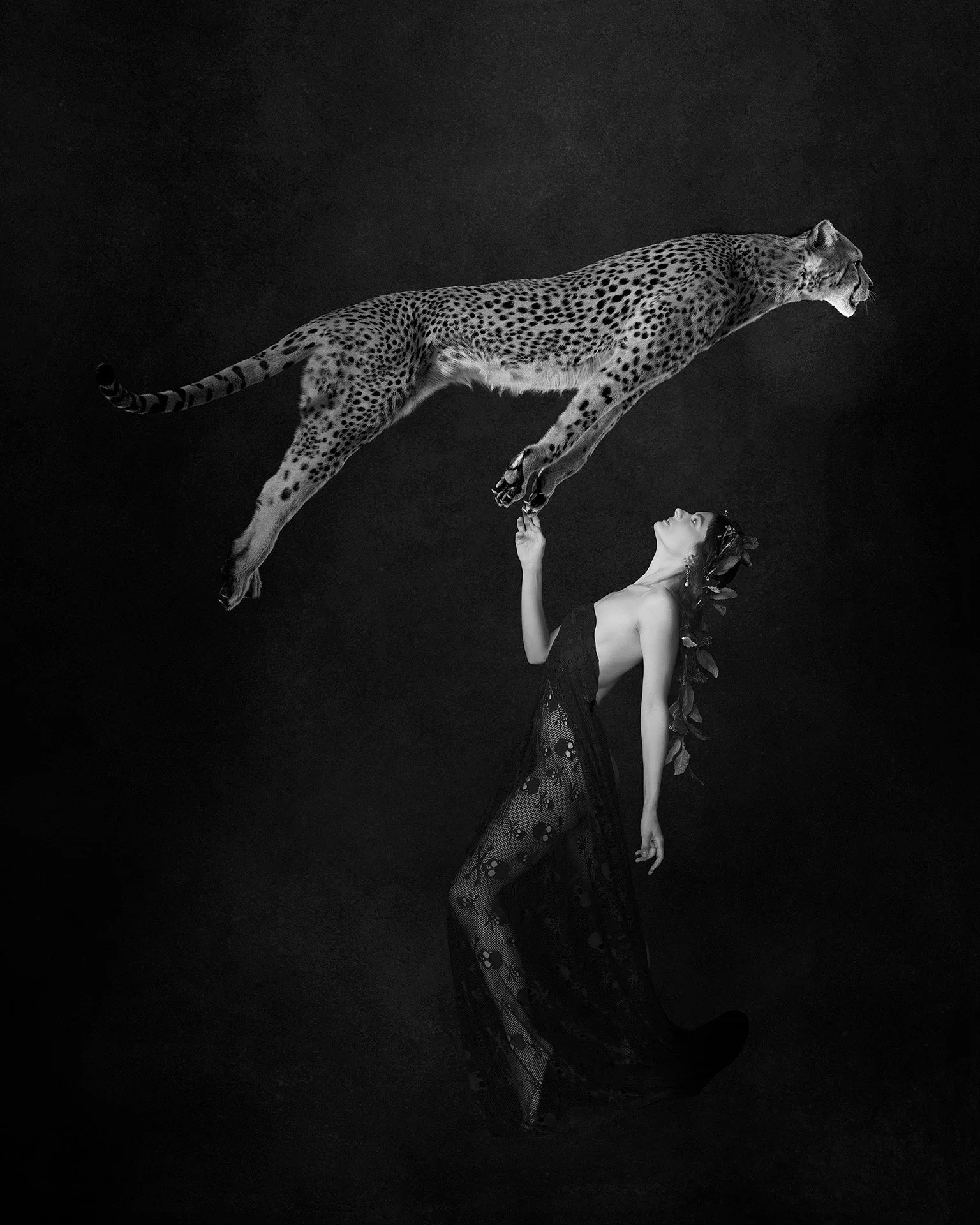
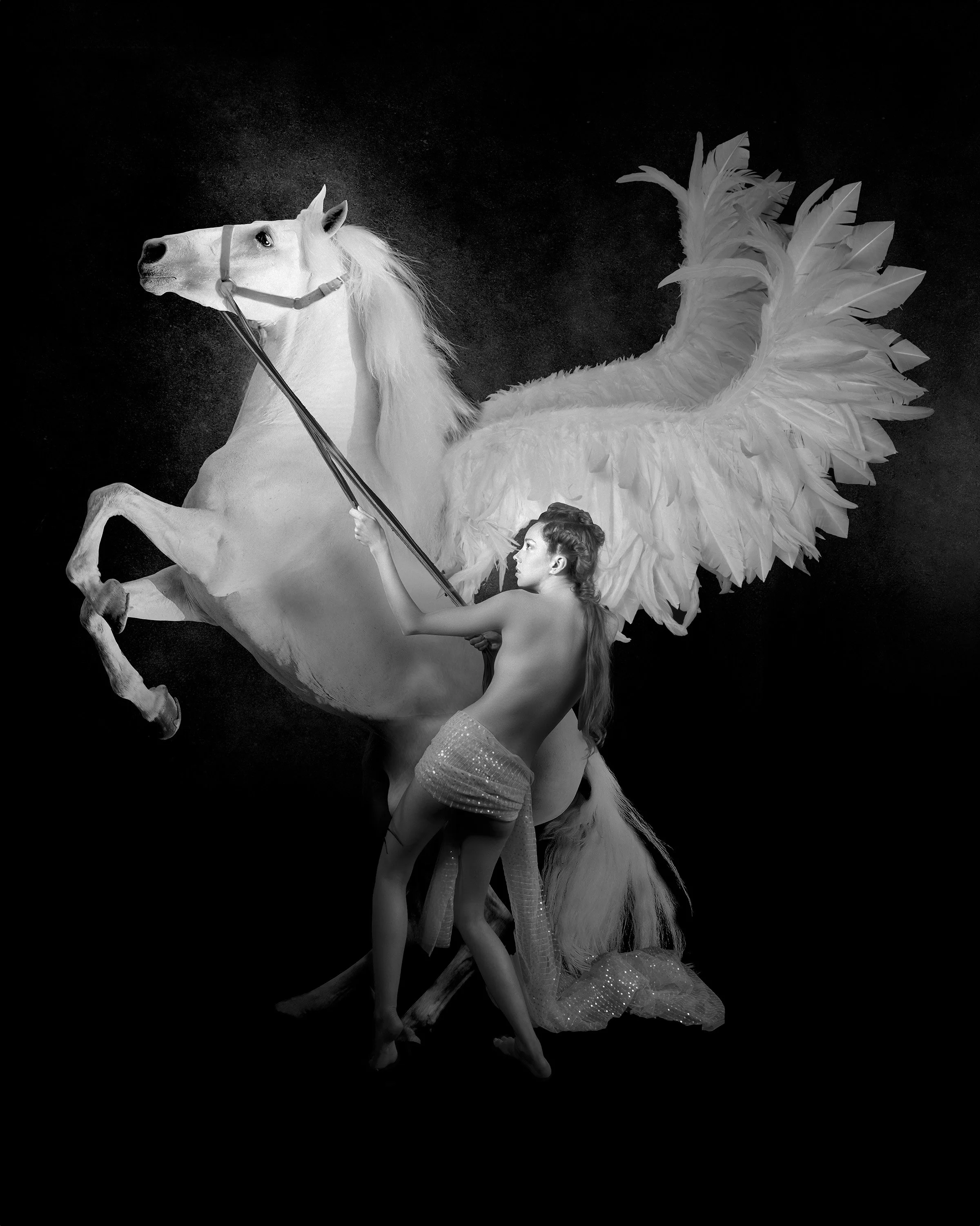

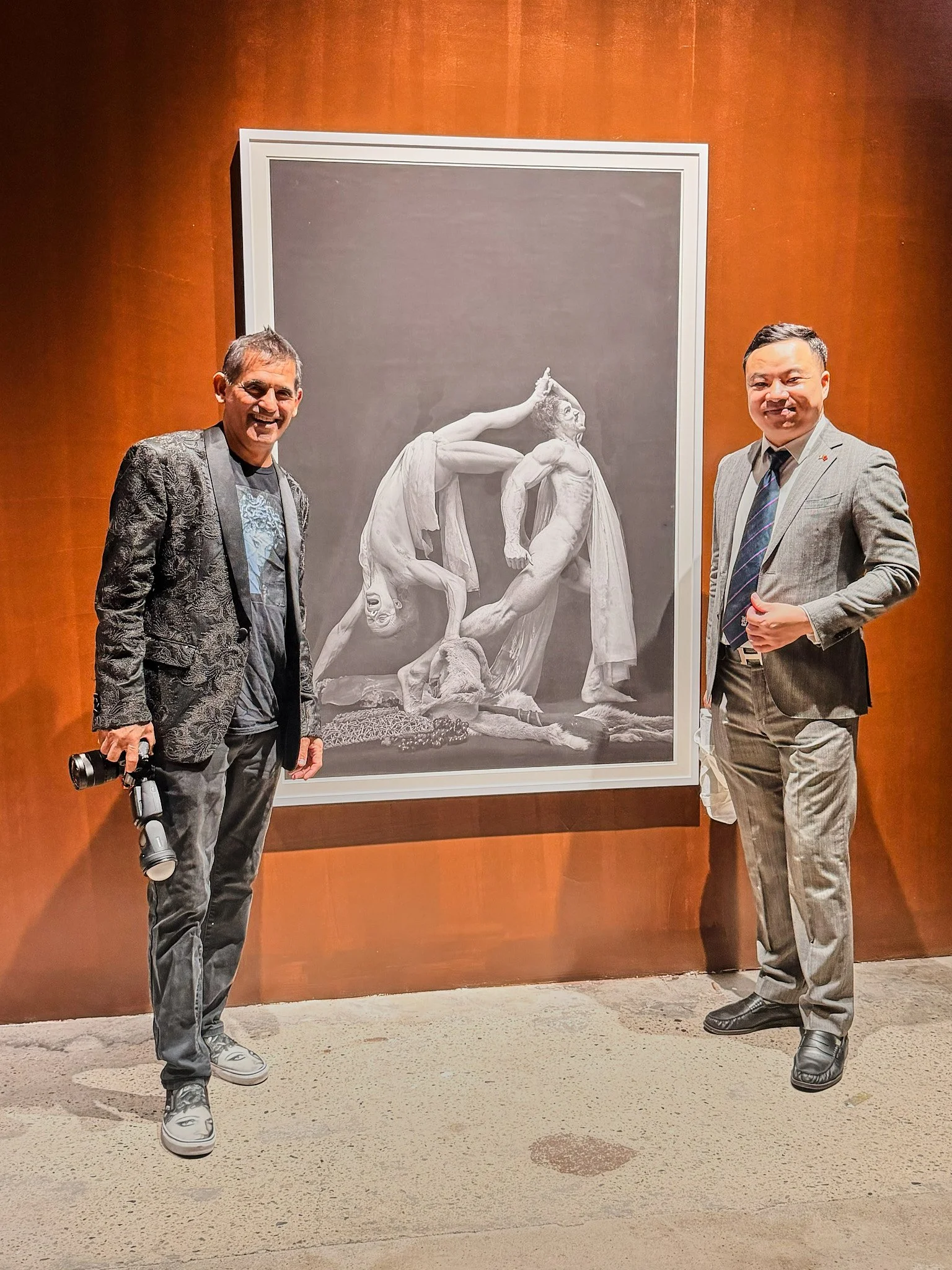

Paal Anand is a visual storyteller who is inspired by the fantastical and the surreal.
For over 20 years, Paal Anand had worked on making digital images in the commercial world for blockbuster motion pictures, broadcast, music videos, and brands. He has been involved in pioneering technical developments for computer generated imaging and digital compositing. His credits include work such as Hellboy, Pirates of the Caribbean, and even the music video for Eminem’s “Without Me.”
His love for photography started while interning as a student at RKS Design and using the large format film cameras to capture product stills.
He was named Artist of the Year 2025 by the Fondazione Effetto Arte, a "Graphis Master" and recently Inducted into the Arte Laguna World Hall of Fame.
Paal, your practice is rooted in the fantastical and the surreal, yet it emerges from a background of extraordinary technical mastery in digital imaging for cinema, broadcast, and commercial work. How do you see the relationship between your past in pioneering CGI and compositing for global blockbusters and your present conceptual investigations in fine art photography? Are they distinct chapters, or does one continually inform the other in subtle ways?
The voyage of discovery from pioneering CGI and compositing to fine art photography has a definitive correlation. Without my past, I would not have the techniques to push forward the vision of my artistic work in new ways. So, it is true that past experiences inform my trajectory. The breakthroughs in technological advancement during distinct periods have shaped my perspective on the work—they formed how I see what's possible at different moments in time. Rather than separate chapters, one continually informs the other. The technical mastery provides the foundation for the conceptual inquiries. As the technology improves, I am certain AI will influence my future developments, just as previous technologies have.
You have spoken of your fascination with storytelling as a universal human necessity, with mythology as a key source for your latest works. In an era where narratives are increasingly fragmented and consumed in seconds through digital platforms, how do you envision your mythological photographs functioning as timeless anchors to shared memory, as reinterpretations for a digital generation, or as portals that resist the brevity of contemporary attention spans?
While an average scroller may only take 1 second studying what is on their screens, an enquiring artwork forces the viewer to spend over 5 minutes studying the intricacies and discerning the visual lexicon.
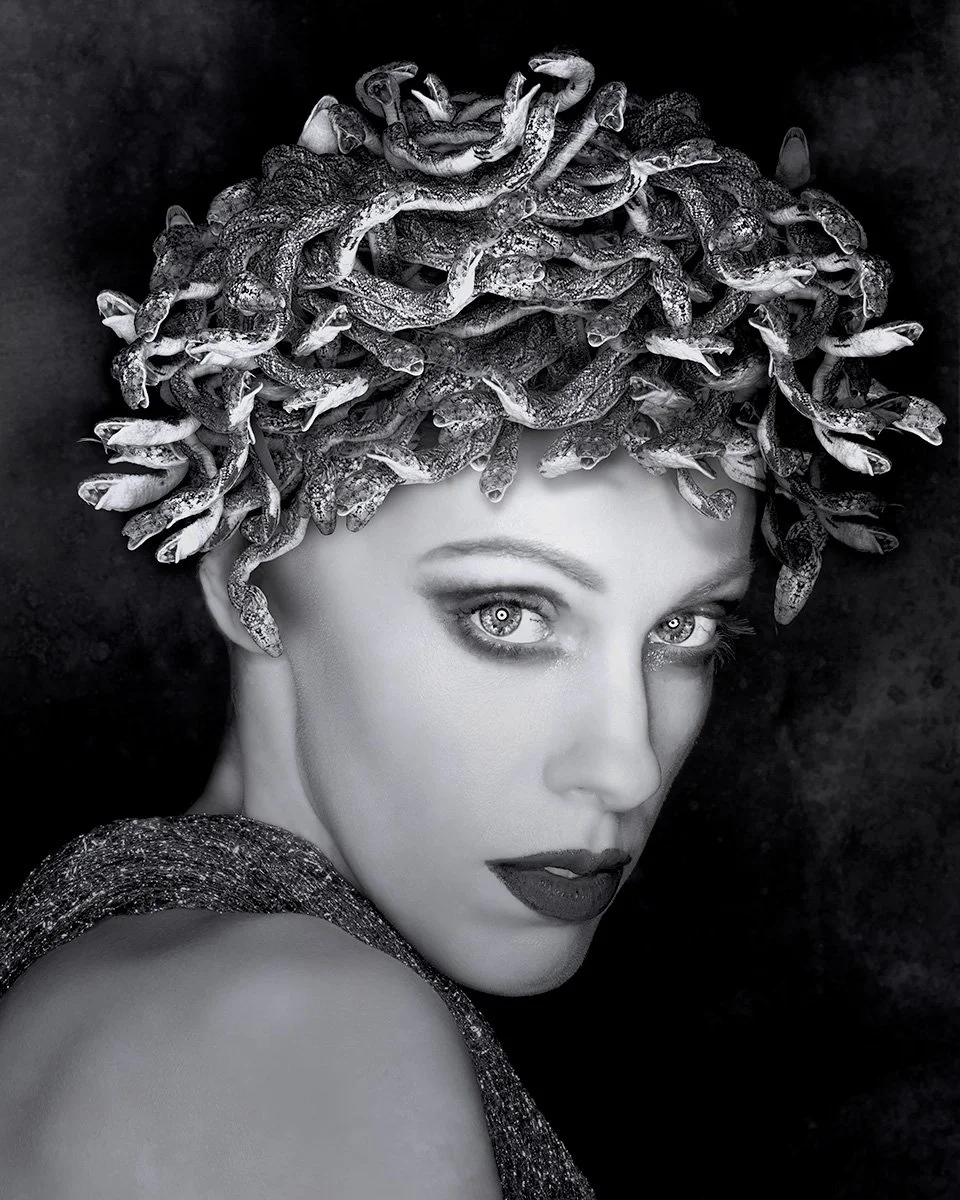
Using the psychology of aesthetics as championed by Ravi Sawhney in his book Psycho-Aesthetics, I use light as a sculptural element in my work. In Portrait of Medusa, the contrast of the rings on the pupil of eyes—being the brightest part of the image—informs the viewer and guides and directs them in such a way that it is psychologically difficult to look away from her gaze, turning the viewer to stone, if only for a short time. These works function as timeless anchors, portals that resist the brevity of contemporary attention spans by compelling sustained engagement rather than passive consumption.
The interplay of light and shadow, absence and presence, seems central to your recent black and white series inspired by Greek mythology. Could you expand on how stripping away color not only enhances drama but also allows for a more philosophical reading of chaos versus order, illusion versus reality, especially in a medium historically celebrated for its richness of hue?
Printing in Acrylic Encapsulated Carbon through the newer process of Piezography forces the use of black and white. However, at the same time it expands the tonal range that can be achieved. By taking advantage of this extended range, it becomes possible to push the viewer through a much more nuanced delivery of the stories I am attempting to convey.
More importantly, hue provides a distraction from the underlying dissertation about the absurdity of belief and the stories we come to believe and erect entire temples in service thereof. Stripping away color allows for a more philosophical reading of chaos versus order, illusion versus reality. The absence of color removes the distraction, directing focus toward the fundamental tensions—the questions about what we accept as truth and why we build entire systems around metaphorical narratives.
Having contributed to projects that collectively amassed billions of views, you embody the paradox of mass exposure and intimate creation. How does working on art intended for global spectacle differ from crafting a singular fine art image meant to provoke a quiet, personal confrontation, and what lessons have you carried from one world into the other?
The skills that come from creating a global spectacle aid in a lack of hubris. Leonard Bernstein observed that "a great new era of eclecticism is at hand, eclecticism in the highest sense, I believe it has been made possible by the rediscovery, the reacceptance, of tonality, the universal earth out of which such diversity can spring."
And as such, the diverse knowledge of creating a spectacle can be refined and imbued into a single intimate moment that utilizes eclecticism so it may be shared in reverence. Creating a singular fine art image meant to provoke a quiet, personal confrontation requires a different vulnerability, it reveals not a client's vision but my own. The technical rigor remains the same, but the intention shifts from mass entertainment to personal engagement.
You were inducted into the Arte Laguna World Hall of Fame and named Artist of the Year 2025 by the Fondazione Effetto Arte, honors that affirm your cultural significance. How do you personally balance the validation of such institutional recognition with the more vulnerable, interior act of creation? Do awards shape your trajectory, or do they simply punctuate a path you were already compelled to follow?
I seek a dialogue with the viewer, and if that dialogue is intriguing, people will be compelled to engage in it. So, I do not have any set path like the orbits of the Moon or the Sun. Instead, I rest on the gravity that pulls me down to Earth, knowing that there are other humans who have pushed farther into the heavens than I ever could.
Institutional recognition—such as induction into the Arte Laguna World Hall of Fame and designation as Artist of the Year 2025 by Fondazione Effetto Arte—affirms that the dialogue resonates, but it does not dictate my trajectory. These awards punctuate a path I was already compelled to follow rather than shaping it. The work itself and the engagement it generates remain the primary drivers, not the accolades that may follow.
The fantastical and the surreal in your practice often dissolve the boundary between dream and memory, imagination and evidence. Do you see your works as offering alternative realities, worlds that suggest what might be, or as allegorical commentaries that sharpen our perception of what already exists, hidden beneath the surface of ordinary life?
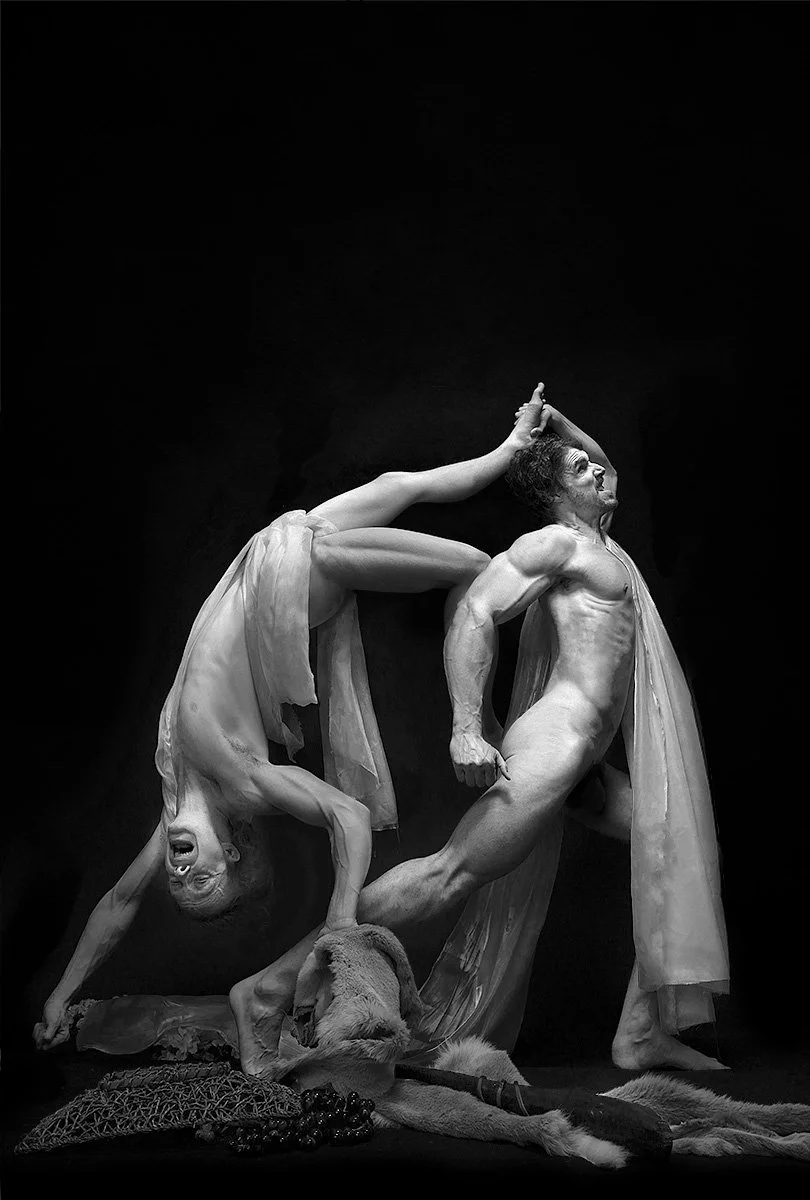
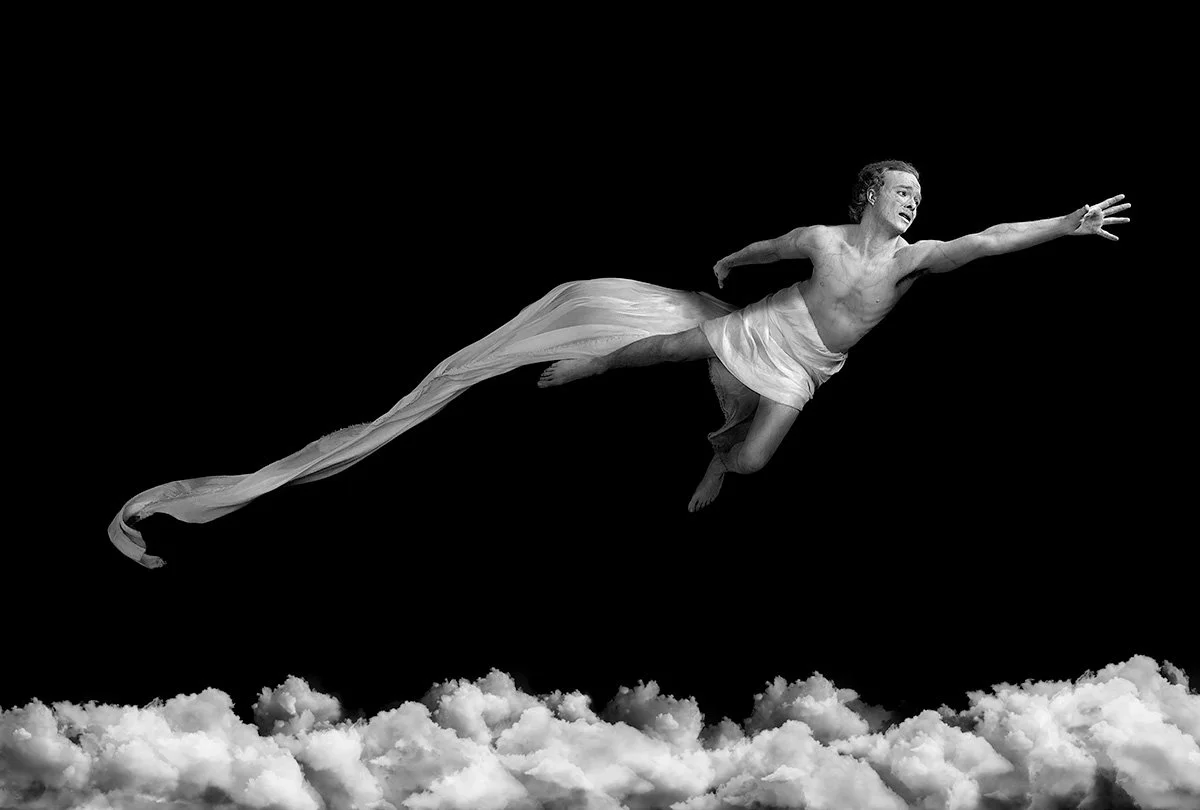
This is an allegorical endeavor. The stories carry similar messages: don't be too vain and beautiful or you will be raped by Poseidon and turned into a monster; don't be too heroic or you will die a useless death; don't be too lustful or you will become a joke. Religion, faith, piety—whatever form of human consideration has focused on belief—has spent too much time developing these alternate realities.
My work does not offer escapist fantasies but sharpens our perception of what already exists, hidden beneath the surface of ordinary life. The fantastical and surreal elements serve to expose the mechanisms by which narrative shapes belief, and belief shapes behavior. I aim to reveal the allegorical nature of stories too often taken literally, excavating the foundations of myth that masquerade as fact.
Many contemporary artists struggle with integrating technology without allowing it to dominate. Given your pioneering role in CGI and digital compositing, how do you ensure that the technological sophistication in your practice serves the conceptual vision rather than overshadowing it, and what responsibilities do you feel artists have when using powerful visual technologies to shape collective imagination?
As a person at the pioneering level of the craft, I discern every pixel and grain of film, from the Blue Channel to the Red Channel to the Green Channel. Being a magician implies that the audience cannot figure out the trick you employed to fool their eyes. As such, I focus on the magical aspects of the technical developments.
The responsibility artists have when using powerful visual technologies to shape collective imagination is to ensure that technical sophistication serves the conceptual vision rather than overshadowing it. Technology should enhance meaning rather than substitute for it. The question is not what technology enables us to do, but what it enables us to understand and communicate. My precision serves the work's meaning, not as a showcase of technical virtuosity for its own sake.
Your trajectory from large-scale commercial projects to deeply personal fine art resonates with the archetypal hero’s journey, leaving the known world of industry to pursue a more vulnerable, individual path. Do you see parallels between your own artistic evolution and the mythological narratives you now explore through photography?
I would suppose, it is hardly heroic to advance one's creative expansion. Whereas before I used my skill to create for others' vision, I am simply free now to develop my own. When I started in the industry, I said that I would work for others and use my free time to develop my own art using their money. The problem is that the free time to work on one's own projects never comes!
If parallels exist between my evolution and the mythological narratives I now explore, they lie in the recognition of patterns: how individuals navigate between obligation and aspiration, between collective demands and personal vision. The myths concern themselves with transformation, consequence, and the often-tragic results of pursuing individual will. In this sense, the parallel holds—not in heroism, but in the perpetual negotiation between convention and conviction.
In your current works, you frame mythology not as static history but as a living, breathing force. How do you select which myths to translate visually, and what role does contemporary cultural context, such as political tensions, ecological crises, or the search for identity, play in shaping the resonance of these ancient tales in your art?
This is a very cerebral question. Certainly, I look at the tension and dramatic aspects of the stories and the cultural relevance in relation to our current conundrum of political events. I hope the pieces I choose to highlight expose the cognitive dissonance that exists in the understanding of our history, beliefs, religion, heroic figures, and even property.
By exposing the duality that exists within the public narrative and original intent, I hope to have a negotiation on the thesis of faith and the use of beliefs as a weapon of the few to control the many. Contemporary cultural context—political tensions, ecological crises, the search for identity—all find their archetypes in ancient stories, revealing the cyclical nature of human struggle. The myths were never neutral entertainment but encoded instruction, warnings wrapped in wonder.
Your upcoming exhibition at the Arte Laguna Prize Best Of 20th Anniversary in Shanghai situates your work within a global dialogue of contemporary art. How do you hope audiences in different cultural contexts, such as China, Europe, and the United States, will receive your mythological narratives, and do you believe the universality of these stories will bridge cultural distances, or do you hope for diverse, localized interpretations to emerge?
Having now been to China and many other surrounding countries, I can firmly state that the intellectual capabilities and rational analysis of the East far exceed the West's own abilities. However, they also are curiously wedged in the same cognitive dissonance that allows them to have the same crisis of mysticism and adherence to a system of rules without disputation.
It is the unquestioning of the iPhone death scroll or the chat groups and the echoes of their own ideological beliefs. One could visit Los Angeles, and with their own eyes envelop themselves in Skid Row. Then, the narrative about all of Los Angeles becomes pervasive rather than the true merit or integrity of the conversation around the greater whole.
I anticipate the universality of mythological narratives will bridge cultural distances—not because audiences will interpret them identically, but because the underlying mechanisms of belief, the human need for explanatory stories, remains constant across contexts. I welcome diverse, localized interpretations while hoping the fundamental questions prove equally urgent worldwide: How do we distinguish inherited narrative from examined truth? What stories serve our flourishing, and which constrain it?