
IRIS Fluidism
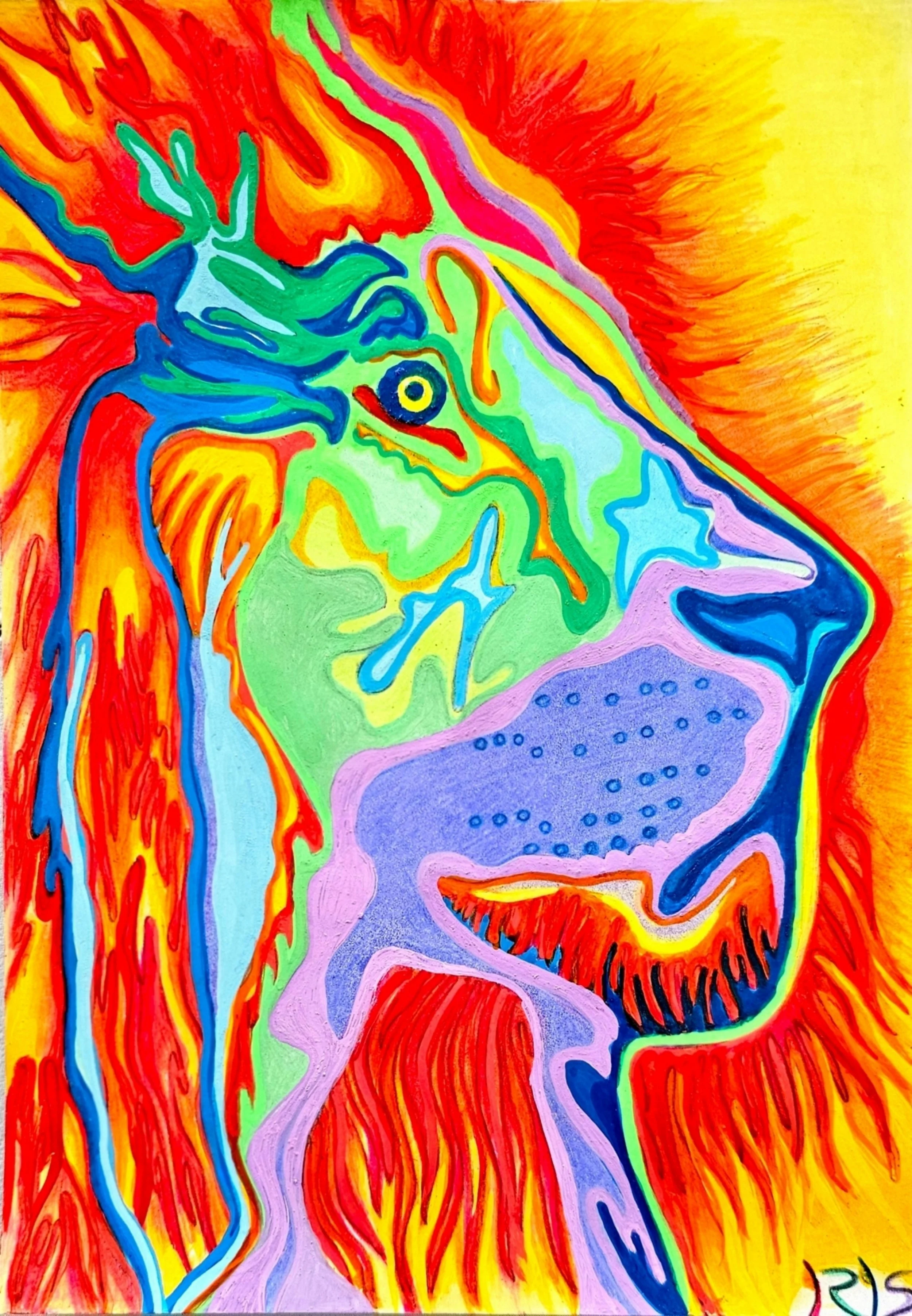
Biography
CARMEN RIEGER (IRIS) was born in Romania and has been living in Austria for many years. A graduate of the Faculty of Industrial Design, she worked for many years as a furniture designer before discovering, in 2018, a completely new artistic language inspired by the organic forms created by fluids in movement. She named this distinctive visual approach IRIS Fluidism.
At the heart of IRIS Fluidism lies the artist’s profound fascination with water — the most fascinating, essential, and complex fluid on Earth, without which life cannot exist. For IRIS, water is far more than a physical substance: it is a symbol of life, connection, transformation, spirituality, and the profound interdependence of all living beings. Water flows through every form of life, connecting humanity, animals, plants, and the natural world in an invisible continuum. It becomes, in her artistic vision, both a witness to existence and a metaphor for the unity of creation.
This connection with water led IRIS to develop an unconventional way of representing the human figure, animals, and other forms of life. Her artistic research explores the possibility of drawing only the liquid dimension of a body while preserving its original identity and character. A human figure remains recognizably human, yet its inner presence appears to dissolve and reform through flowing organic structures. An elephant remains an elephant; a bird remains a bird, while their forms are transformed through intricate networks of colour and fluid shapes. The familiar is therefore not erased, but reimagined.
Her compositions are built from continuously flowing organic forms that echo the movement, rhythm, and interconnectedness of fluids. Through this process, IRIS seeks to reveal something beyond the visible surface: the invisible vitality that connects every living form.
Colour is an essential element of this visual language. From the beginning of her artistic journey, IRIS chose to work exclusively with the seven colours of the rainbow and the shades created through their combination. For her, colour is not merely aesthetic; it carries symbolic meaning, expressing harmony, hope, love, diversity, and the possibility of unity within difference.
Over the years, her artistic investigation has continued to evolve. In 2026, IRIS Fluidism entered a new phase with the emergence of Fluid Neo-Cubism, in which the structural principles and visual fragmentation associated with Cubism encounter the organic movement, fluidity, and chromatic freedom of her Fluidism. Rather than abandoning her original language, IRIS transforms and expands it, allowing fluid organic forms to interact with greater geometric structure, rhythm, and spatial complexity.
Through her art, IRIS seeks to create a visual experience that transcends representation. Her work is an invitation to contemplate the beauty of existence, the fragility and interconnectedness of life, and the continuous process of becoming that lies within all things. At its core, her artistic philosophy is grounded in a simple yet profound belief: art, like water and like life itself, is never static — it is always flowing, transforming, and connecting.
Artist Statement
IRIS Fluidism is the most important milestone in my artistic career—it is the very essence of who I am. It is an artistic language rooted in fluidity, transformation, and the ever-changing nature of human existence.
Everything flows.
Fluidity belongs to the human being, is in our biological composition and in the composition of our society in which we all are immersed. It is about a strong communication system with its own language and infinite ways of expression. It is about a reality that finds and elaborates its nature in the liquid state of things. We are immersed in it and we are carried away by the flow of eternal becoming.
FLUIDISM is a concept through which I express my artistic creed in works of art, inspired by the existence of a complex substance of outstanding properties and qualities – WATER.
WATER is a unique and indestructible substance.
WATER is the basis of life, growth and change.
WATER has the ability to regenerate continually.
WATER soothes and heals.
WATER shows understanding and sensitivity.
WATER is an accomplished artist.
WATER is the most important element on the planet, can be found in 70% of our earth and in the same proportion in the bodies of humans, animals and plants – sometimes even in a larger quantity.
Working exclusively with acrylic paints, I have chosen to use the seven colors of the rainbow and the shades obtained by combining them in all of my artworks.
Abstract figures flow between recognisable form and dissolution, revealing a continuous state of becoming and inviting the viewer to look beyond the visible toward the inner essence of things.
In 2026, this artistic research evolved into a new chapter: Fluid Neo-Cubism. Here, the analytical structure of Cubism meets the freedom of fluid forms. Geometric fragmentation is softened into flowing lines, while multiple perspectives become a visual exploration of emotional complexity, identity, and inner dialogue.
Through this precise yet liberating use of colour, movement, symbolic elements, and carefully integrated numerical sequences, each canvas becomes a living field of energy. IRIS Fluidism is ultimately a celebration of change—the belief that identity is never fixed, but continuously unfolding into what it may become.
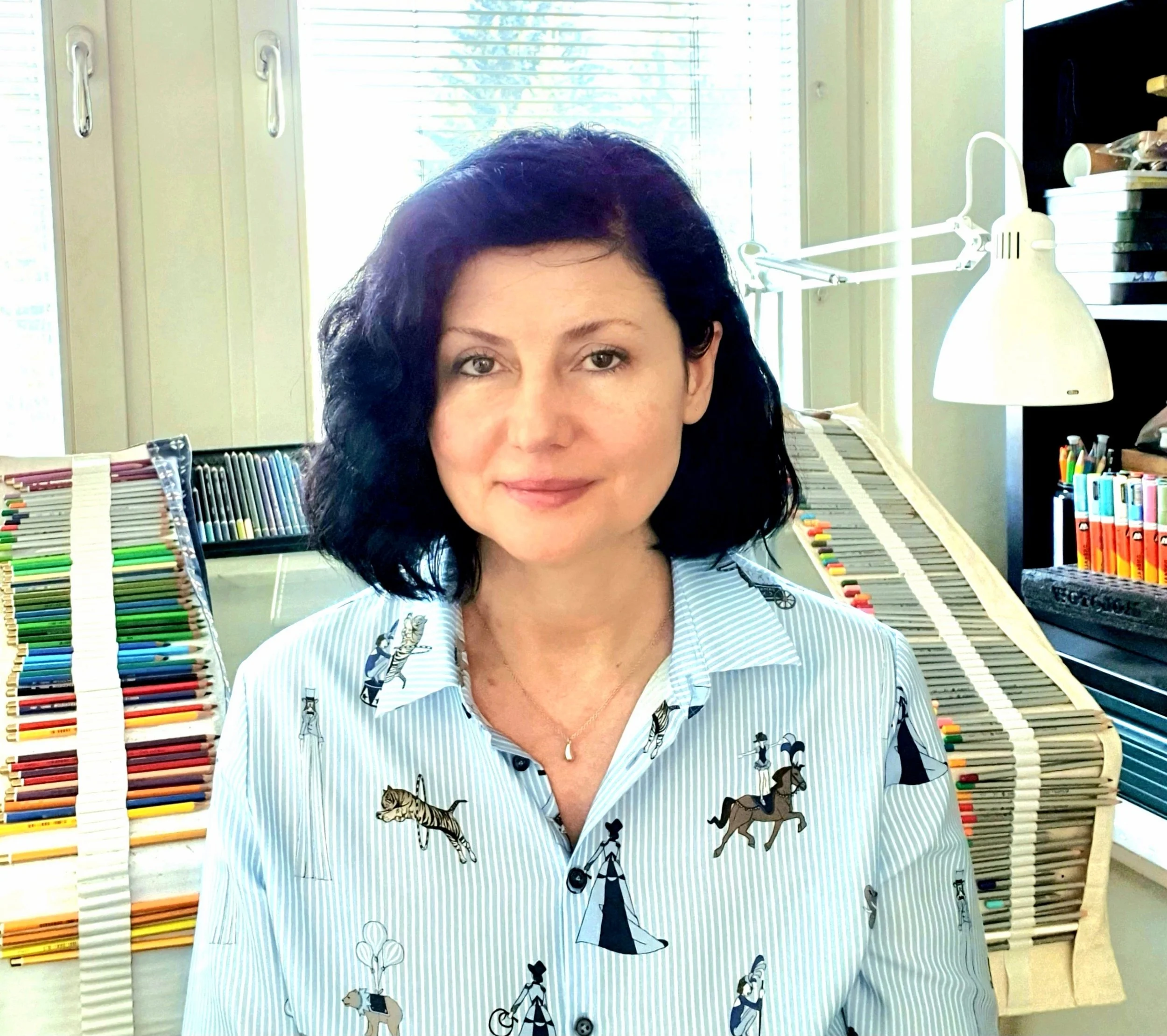
IRIS Fluidism in Her Studio
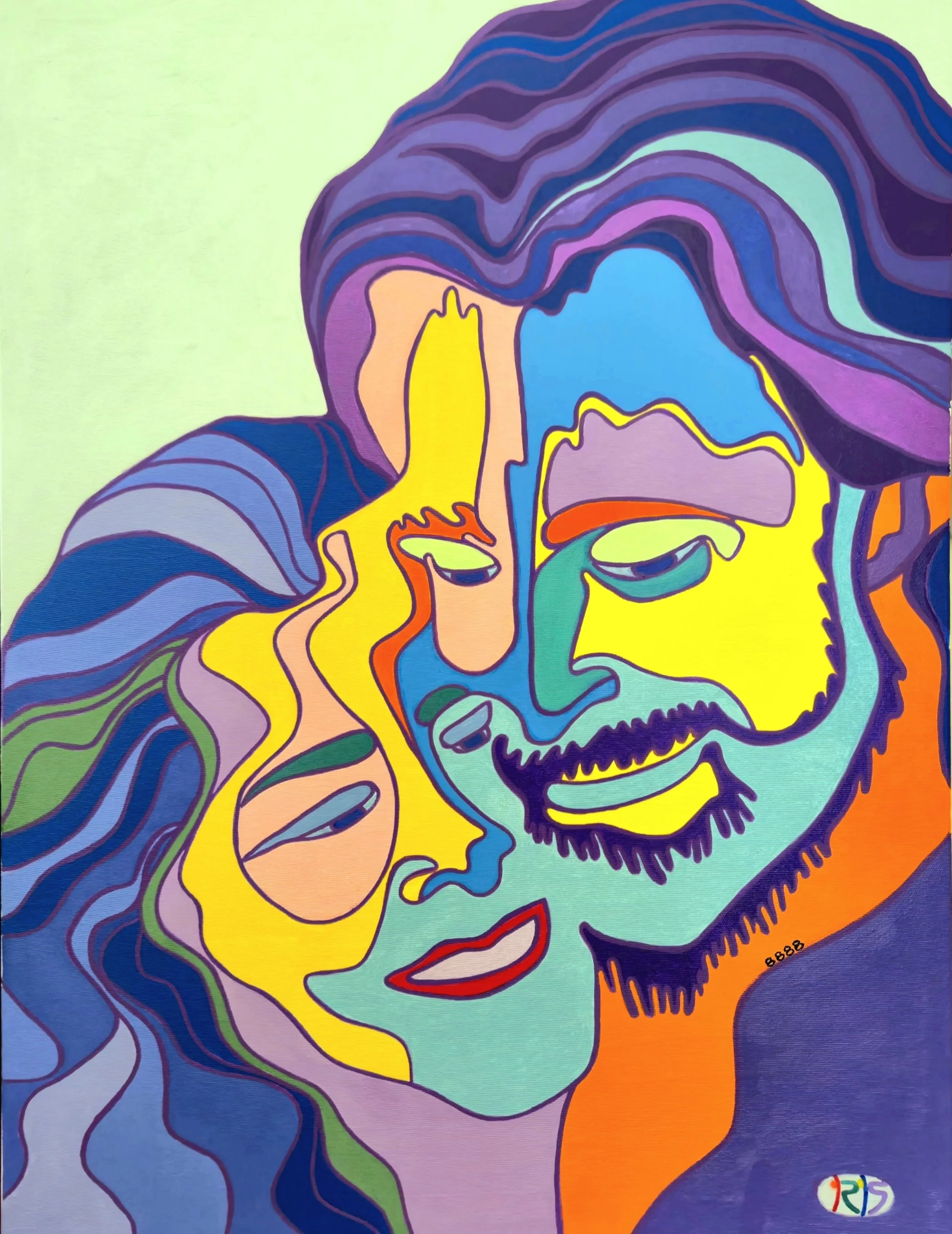
LOVERS, 2026. Acrylic on canvas, 80x60 cm.
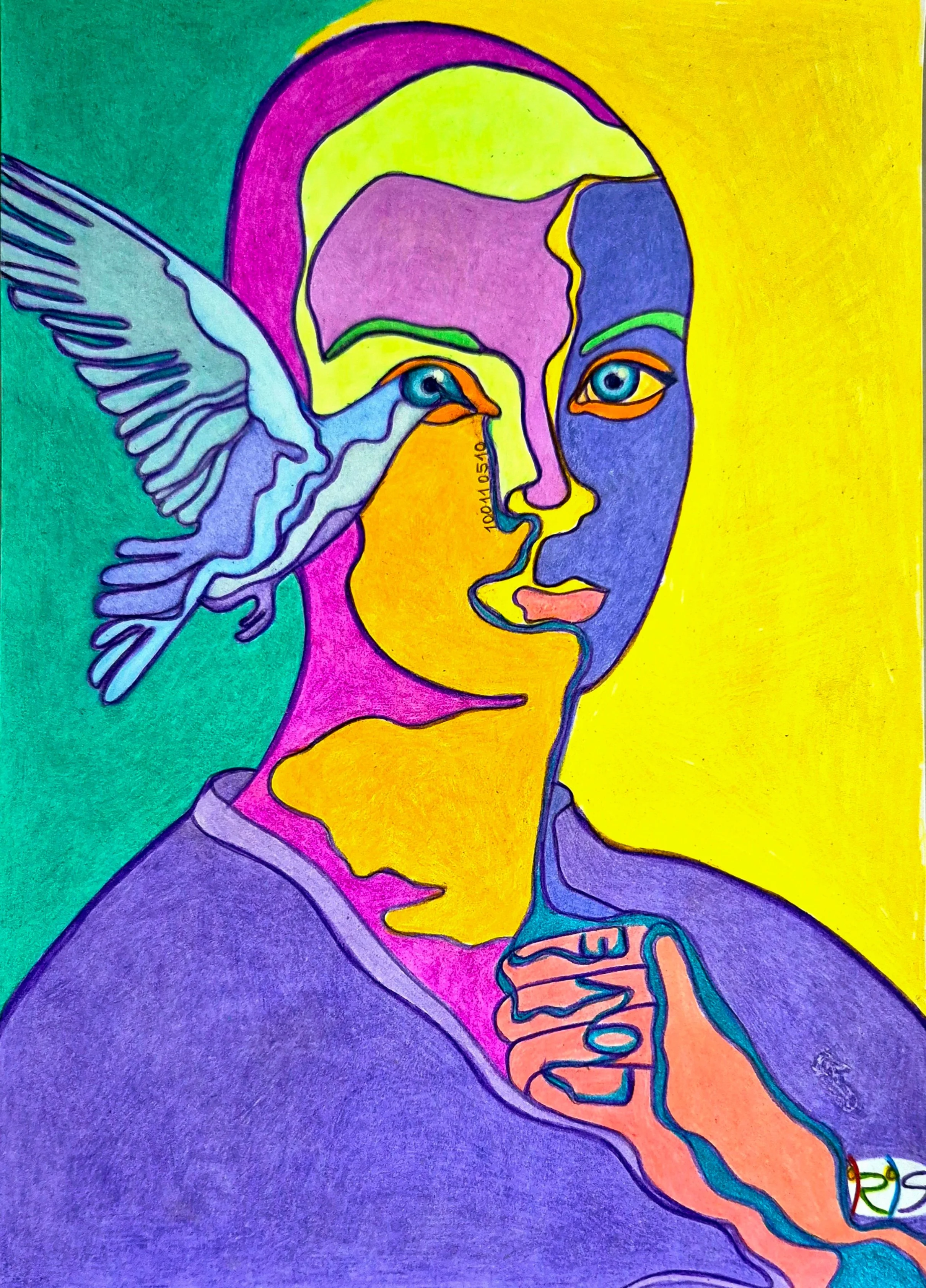
RAW GRACE, 2026. Color pencils on paper, 29.7x21 cm.
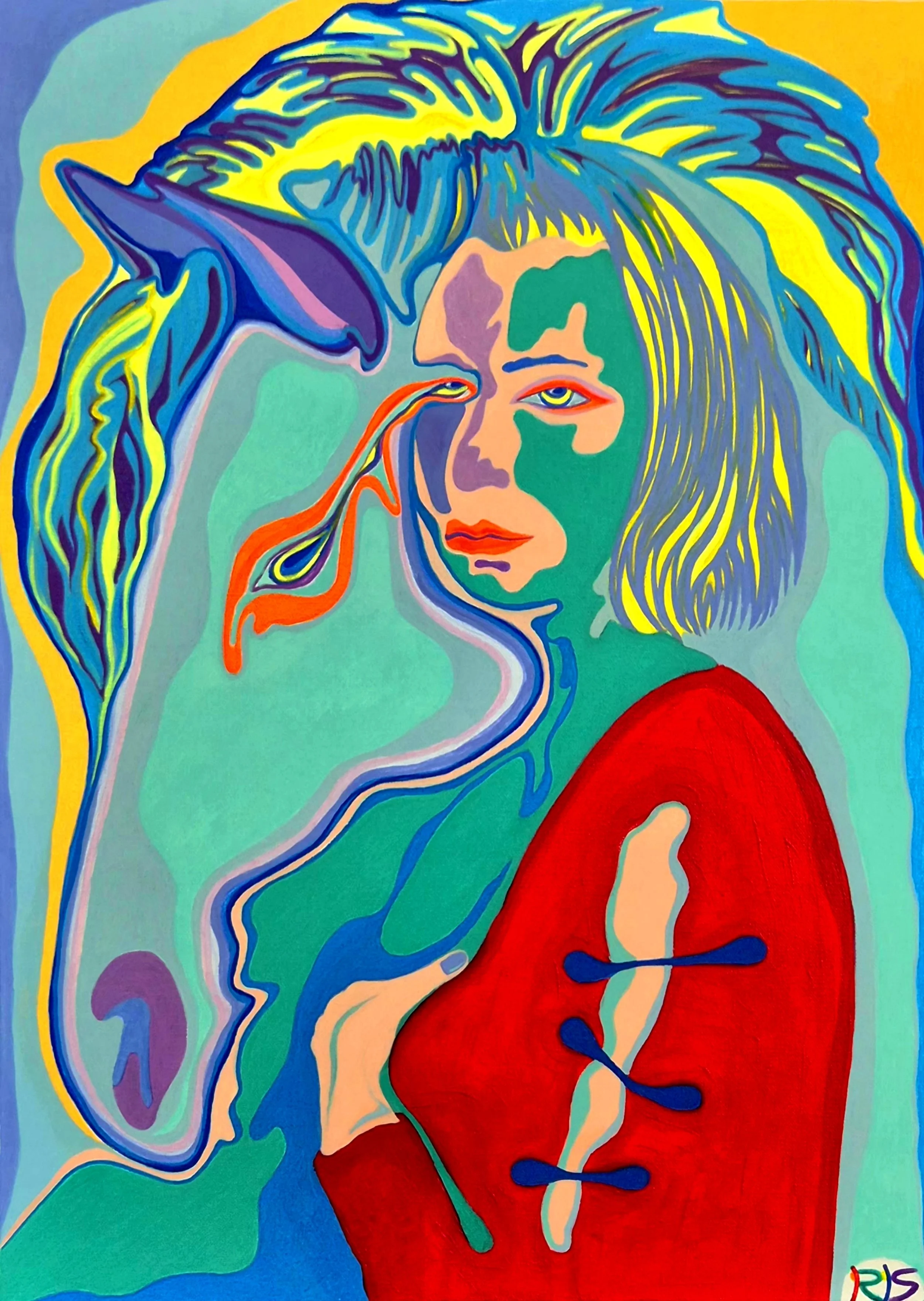
BEST FRIENDS, 2026. Acrylic on canvas, 70x50 cm.
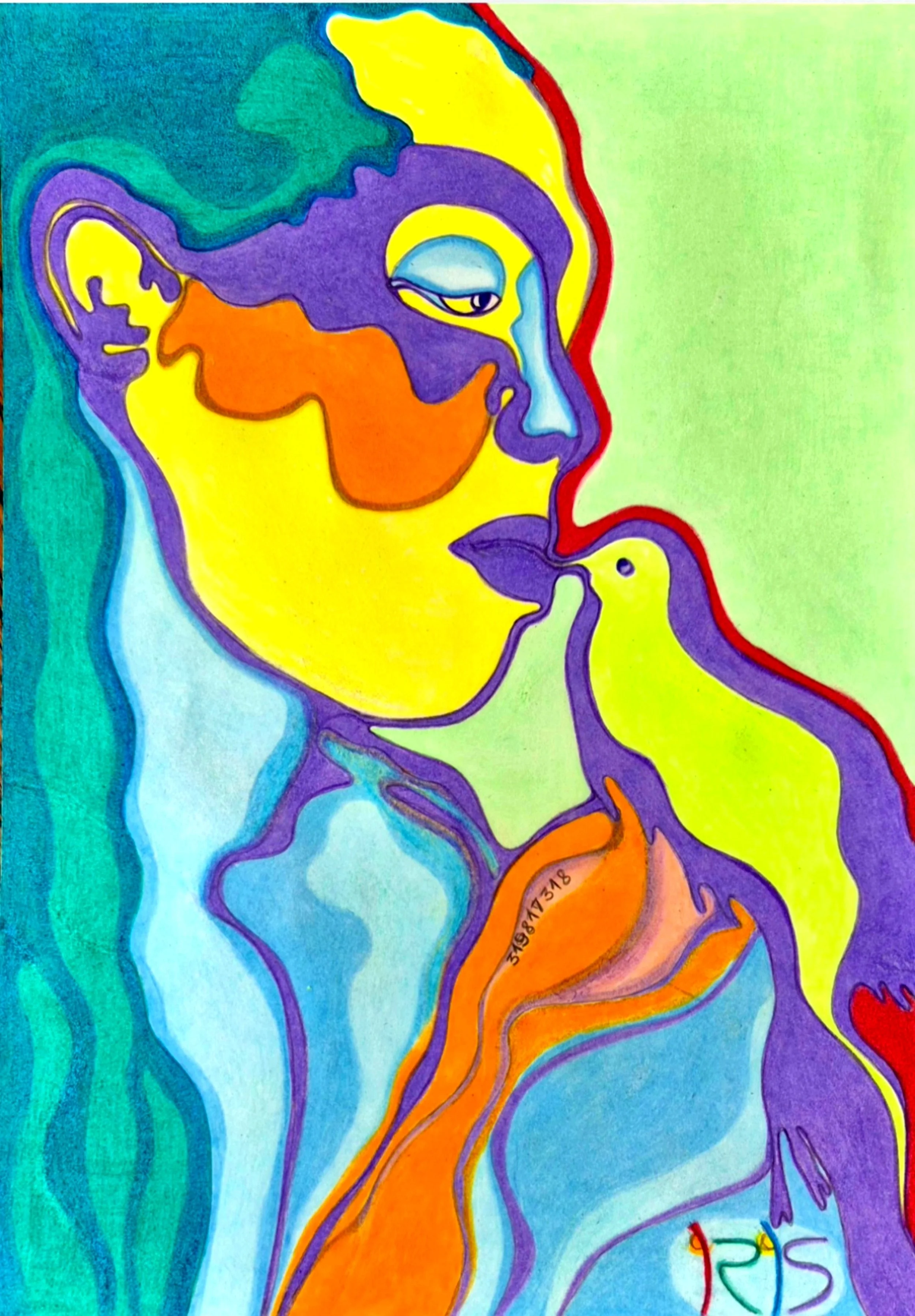
The Healing Power of a Kiss, 2026. Color pencils on paper, 29.7x21 cm.
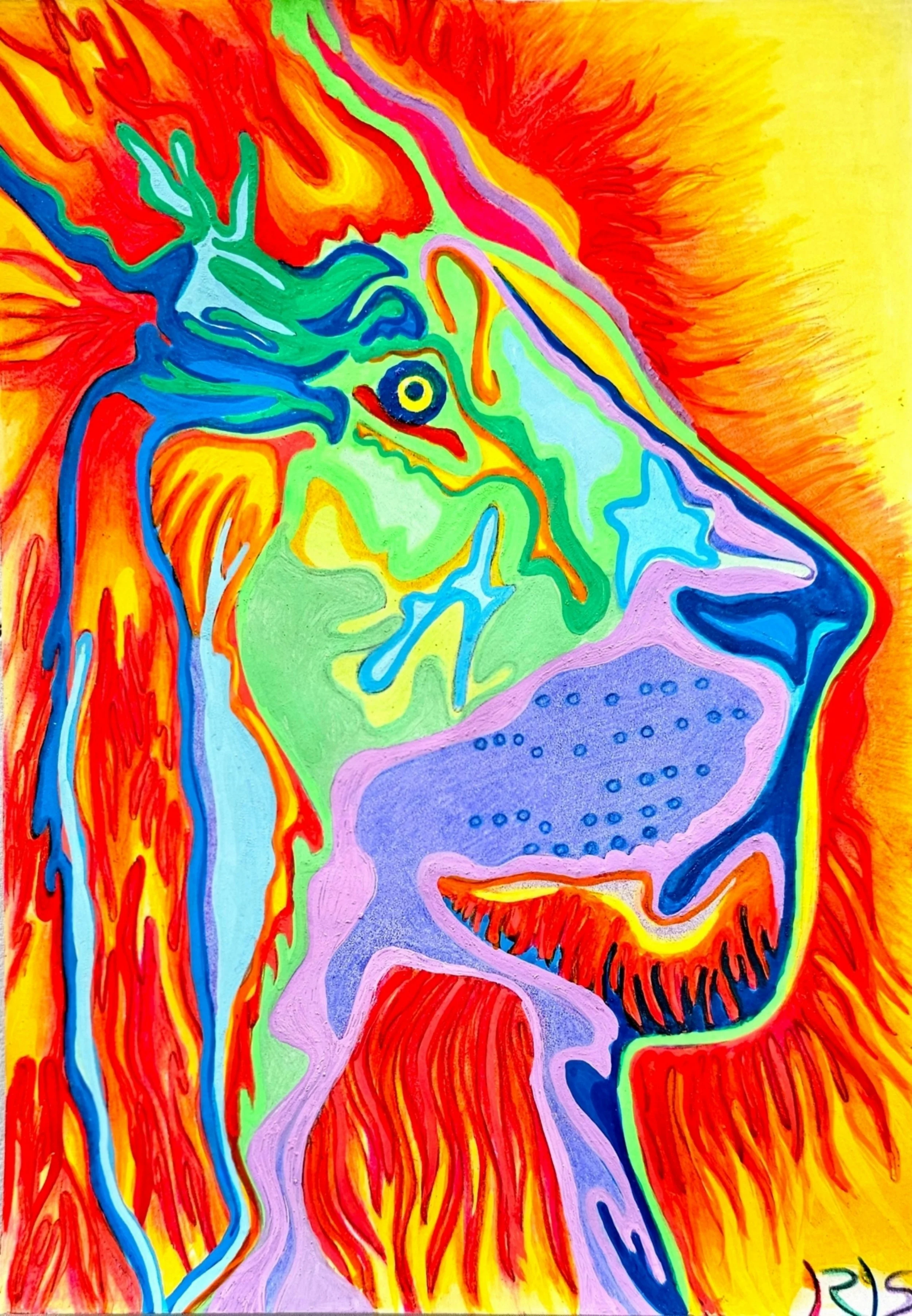
The Lion King is back: Noble and Powerful, 2025. Color pencils and acrylic on paper, 29.7x21 cm.
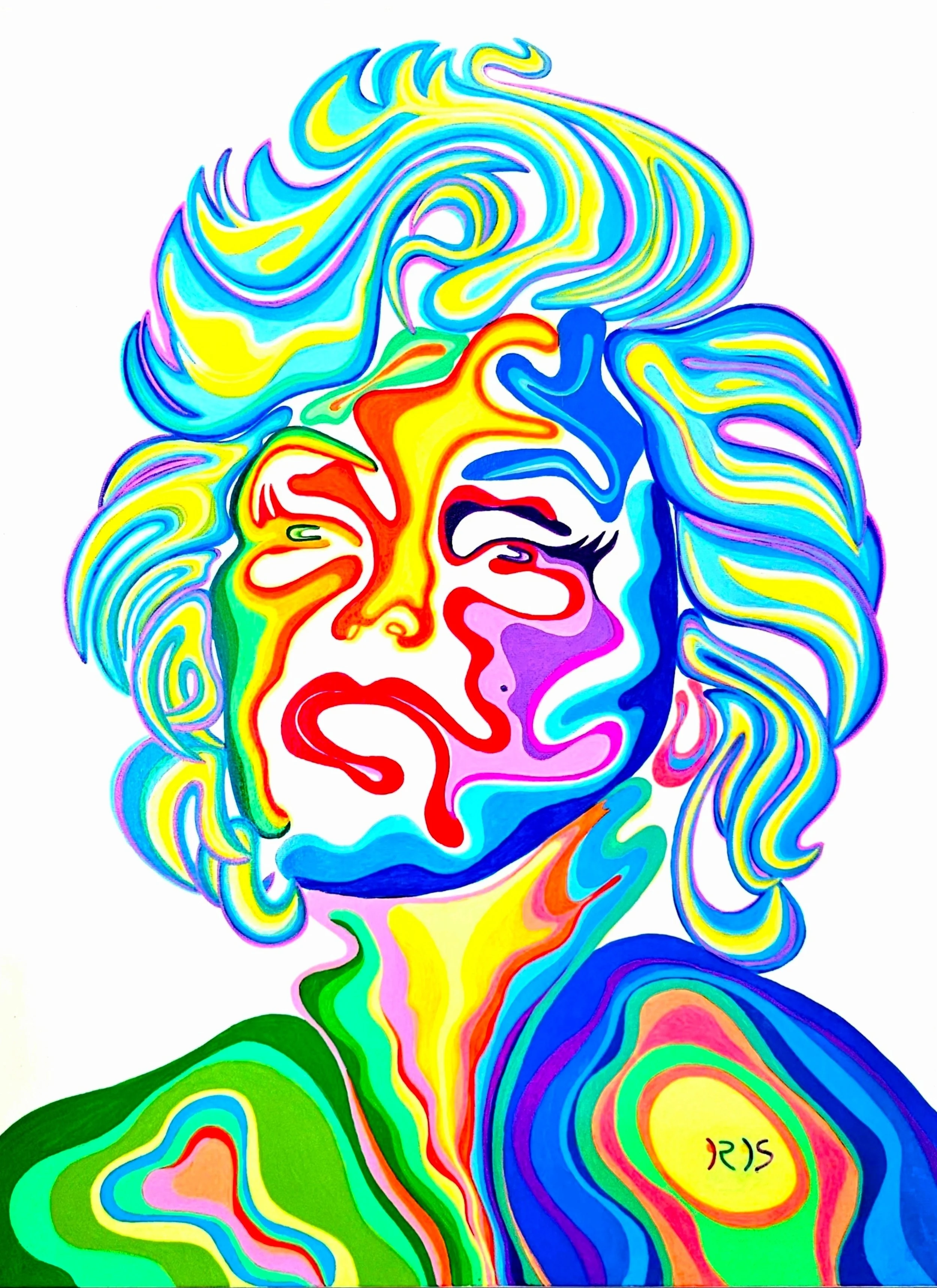
MARILYN MONROE, 2021. Acrylic on canvas, 80x60 cm.
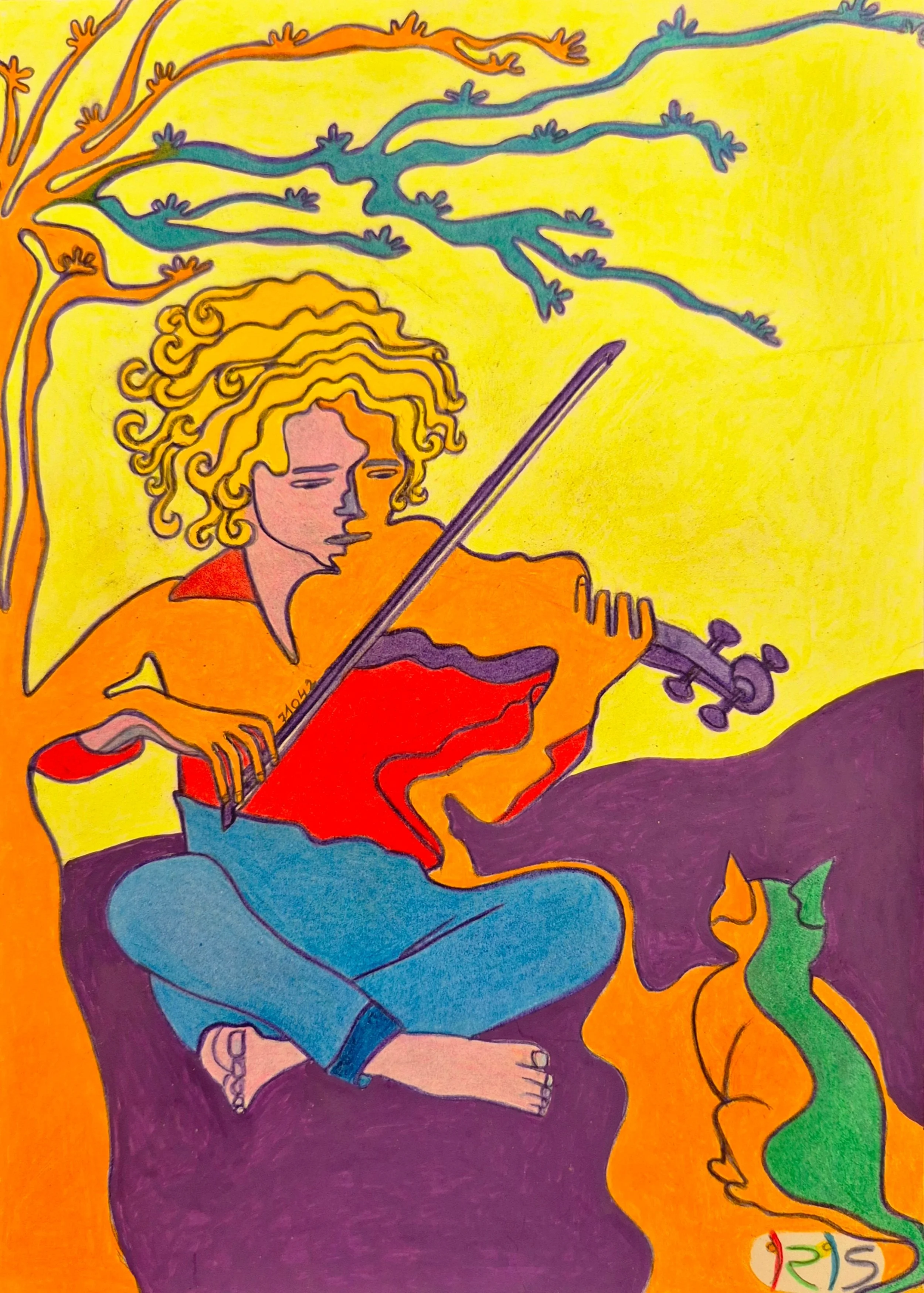
THE FIRST AUDITION, 2026. Color pencils on paper, 29.7x21 cm.
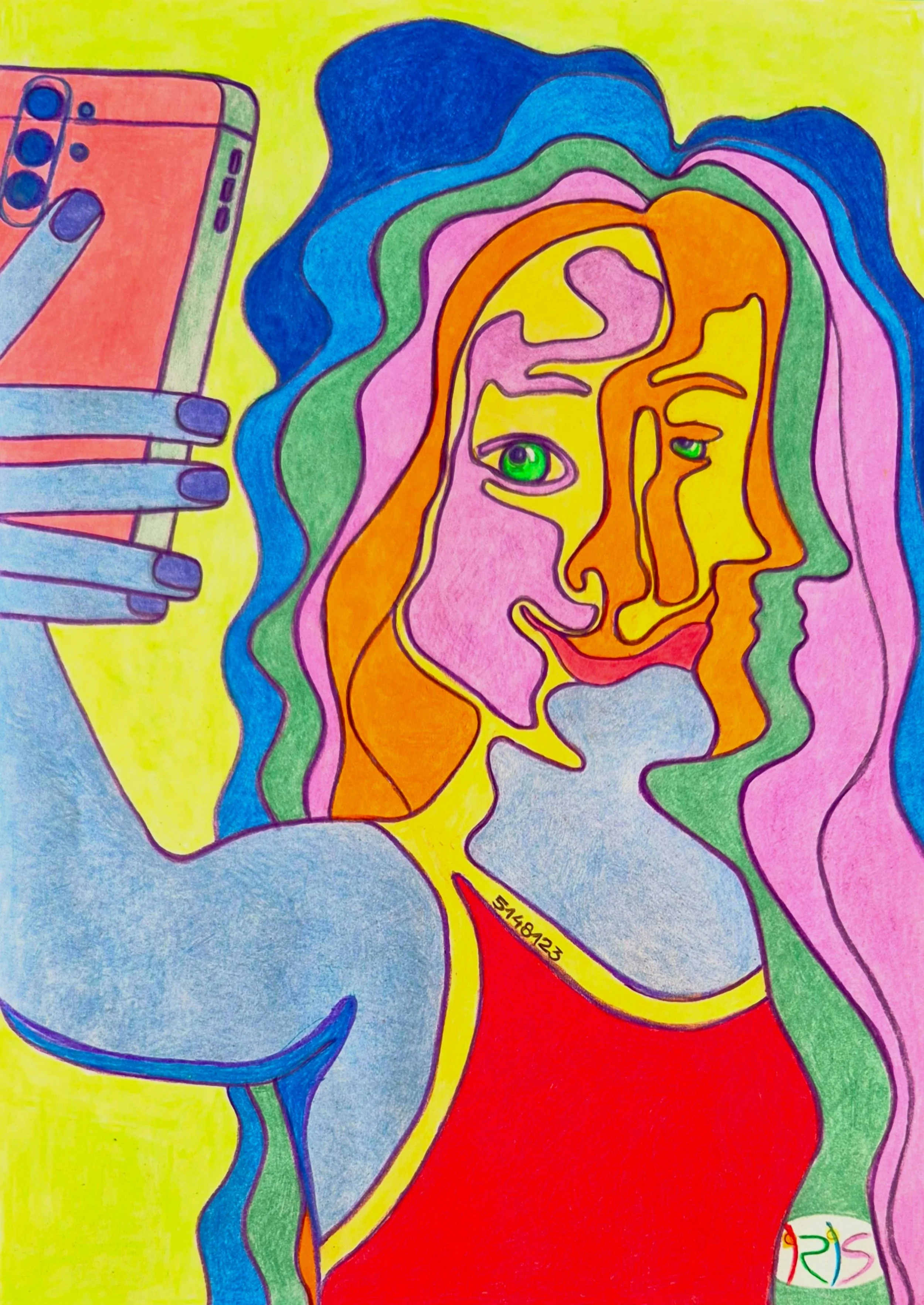
SHE LIKES SELFIES, 2026. Color pencils on paper, 29.7x21 cm.
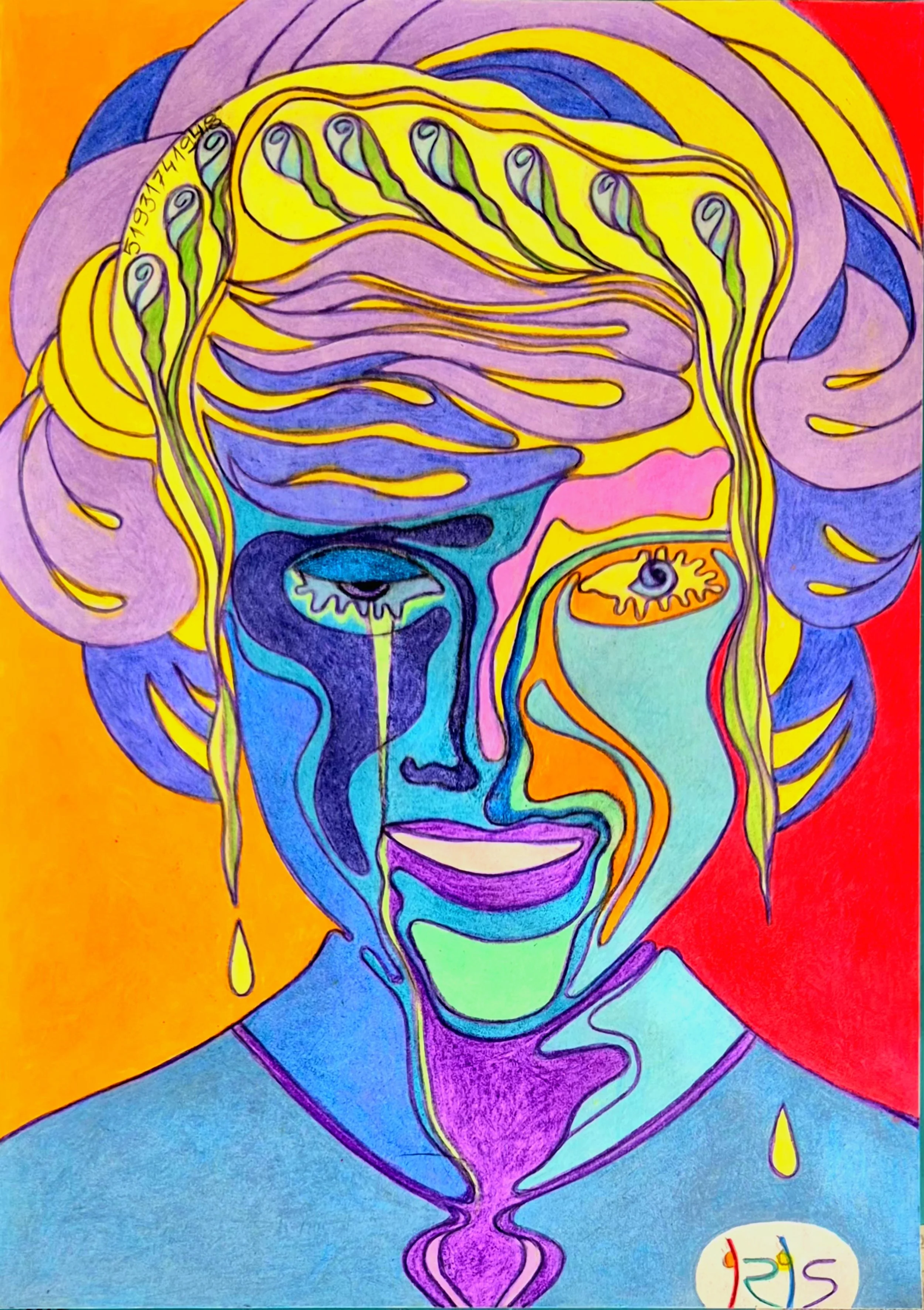
THE QUEEN OF HEARTS, 2026. Color pencils on paper, 29.7x21 cm.
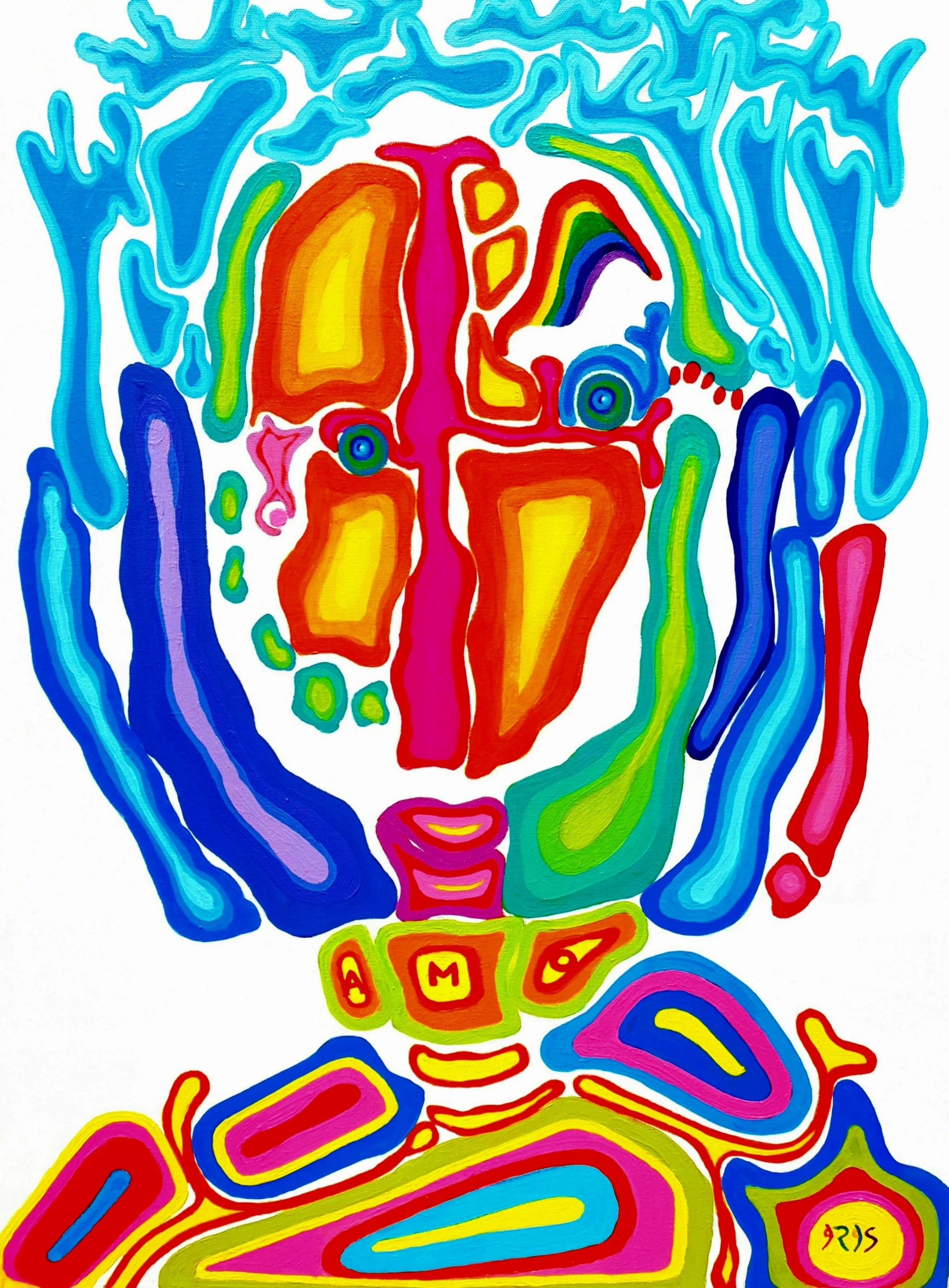
MODERN WOMAN, 2020. Acrylic on canvas, 100x80 cm.