
Tinamaria Marongiu
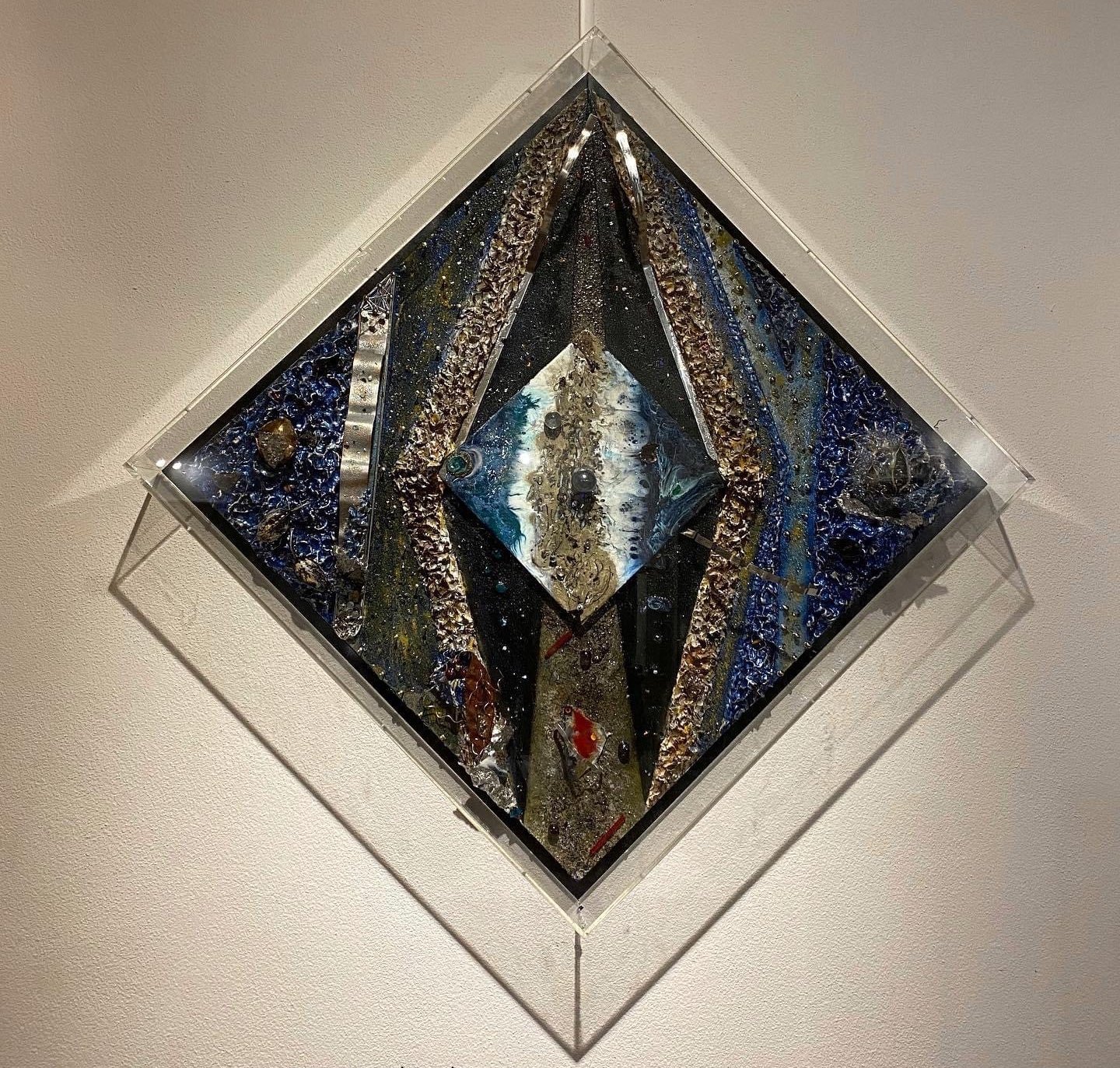
Biography
Tinamaria Marongiu
Pioneer of the Artistic Movement “Compact Art”
Born in Cagliari on October 21, 1961, Tinamaria Marongiu, baptized Maria Cristina, entered the world of art at a very young age as a pop music performer.
In 1977, she moved to Rome, where for several years she attended “Il Cenacolo,” the only workshop for emerging artists at the time, created by RCA Italiana. It was a place of experimentation and interaction between young talents and established artists, where research and cultural and human exchange played a fundamental role in her artistic development.
In 1979, under the pseudonym “Babi,” her first 45 rpm single, “Maschere,” was released. The record was produced by Paolo Dossena and distributed by PolyGram.
In the early 1980s, under her baptismal name, “Cristina,” she performed “La Lettera,” the opening theme of one of the first and most famous telenovelas broadcast in Italy, Gli Emigranti. Presented at the MIDEM music fair in Cannes and reviewed by Billboard, one of the world’s most important music magazines at the time, the LP Contremano was released throughout Europe and distributed by Virgin, achieving considerable success.
The single “Soli,” written by Riccardo Cocciante and performed by Cristina, remained among the top positions on the German radio charts for more than eight months.
Tinamaria also represented Italy at an edition of the Malta International Festival. During the same period, she acted and sang in a comedy produced by ETI—the Italian Theatrical Organization—in a leading role alongside actors Emi Eco and Valerio Isidori.
At the end of the 1980s, she moved to California, United States, where she attended a singing course. She later graduated as a pop music performer from CET, the music school founded and directed by Giulio Rapetti, known as “Mogol.”
In the early 1980s, Tinamaria began writing songs and registered with SIAE, the Italian Society of Authors and Publishers. However, her artistic and songwriting talent emerged more decisively in the early 1990s.
In 2004, she participated with two of her compositions in the competition L’Altra Musica, organized by IMAIE, and ranked among the winners.
In 2005, during the Gli Italiani nel Mondo competition, held between Paris and Sanremo alongside the Sanremo Festival, she won the Critics’ Prize with her song “Madreterra.”
In 2007, Tinamaria travelled to Havana, Cuba, where, with the assistance of the extraordinary Cuban flutist José Luis Cortés, she produced her first singer-songwriter CD, Dal Poetto al Malecón. The album was released by the Interbeat label and distributed by CNI—Compagnia Nuove Indie.
In July 2008, she was a guest at the Premio Lunezia. With her latest musical project, Passepartout, Tinamaria became a semifinalist in the 2010 Premio Musicultura.
In 2023, her song “Attimi” was included in the CD Sanremo Famosi, featuring various artists.
Her great curiosity and constant search for new expressive languages have driven her continuous research and experimentation. In addition to writing songs and poetry, and creating photographs, she eventually turned to the visual arts.
In 2009, she obtained a three-year Master’s degree in Art Counseling in Rome. During the program, she experimented with various artistic techniques, an experience that ultimately projected her into the world of visual art.
In 2010, she created her first Box-Es works: material creations conceived without predetermined planning and born from the desire to express herself freely within a standardized and conformist society, and in 2010 she made her first Solo Art Exhibition. These three-dimensional works combine organic and inorganic materials, recycled elements, colors, and resins, and are enclosed in plexiglass cases. Among the materials she frequently incorporates is medicine, which symbolizes the ease and unease of human beings and the world in which they live.
In 2011, she participated in the Chianciano Biennale and won the third Leonardo Prize in the Applied Arts section. That same year, some of her Box-Es works were displayed at a collateral event of the Venice Biennale. She also held her first solo exhibition in Miami, Florida.
In 2013, responding to the need to define and frame a precise creative paradigm, Tinamaria Marongiu coined the term Arte Compatta, or “Compact Art.” She incorporated into it a strong social concept summarized by the following principles: Uniqueness, Universality, Union, Humanity, and Equality. In doing so, she established herself as the conceptual creator of this artistic movement.
This artistic approach is distinguished by the assembly of heterogeneous materials—organic, inorganic, and recovered fragments—integrated into unified three-dimensional compositions and subsequently enclosed in plexiglass cases. Her works represent a synthesis of material experimentation and formal coherence, challenging the conventional boundaries between art, artifact, and ecological awareness.
Arte Compatta, also known as Compattismo—Compact Art or Compactism— is therefore both an artistic method and a conceptual movement. In October 2020, at the 43rd International Medusa Aurea Prize, organized by AIAM, she won first place and a gold medal in the sculpture category.
In June 2021, she participated in the London Art Biennale, where she won the Gagliardi Gallery Award, receiving fourth prize ex aequo. She was also among the 25 artists selected for an exhibition in London held from November 3 to 12, 2022.
In 2022, she participated in the Chianciano Biennale and won first prize in the Applied Arts section.
In 2025, she obtained certification as a ceramist.
That same year, the theoretical framework underlying her artistic practice was officially codified through the publication of the Manifesto of Arte Compatta in issue no. 366 of the Bologna-based quarterly magazine I Martedì. This publication marked the official launch of a new international artistic movement, presenting Arte Compatta as an aesthetic and sociocultural response to contemporary materiality.
In 2025, the Bologna cultural quarterly I Martedì, published by I Persiani, opened its first issue of the year with the official publication of the Manifesto of Compact Art, under the supervision of journalist and writer Domenico Segna and the magazine’s director, Father Giovanni Bertuzzi.
Since 2018, Tinamaria Marongiu has been included in the Catalogo dell’Arte Moderna (CAM Catalog of Modern Art), published by Giorgio Mondadori, formerly Bolaffi. Her work has also been featured in Arte magazine, published by Mondadori, as well as in numerous other publications.
The notoriety and originality of her Box-Es works, created within the framework of Compact Art, have led her to exhibit successfully throughout Europe, the United Kingdom, the United States, and other parts of the world.
Artist Statement
COMPACT ART
Manifesto
COMPACT ART is a contemporary artistic practice and a sensitive form of research based on a methodology free from any predetermined planning.
Through creative freedom, perceptive ability and sensitivity toward materials, the artist welcomes, manipulates, integrates and transforms different elements into a single expressive reality.
The assembly of organic and inorganic matter, recycled materials, fragments, colours, forms and memories gives rise to works in which each component maintains its own identity while entering into a relationship with the others.
The artwork thus becomes a metaphor for society: a combination of differences that, without being erased or homogenised, can coexist, communicate and contribute to the construction of a common good.
Compact Art is not merely an aesthetic language, but also a tool for awareness, participation and social change.
The Principles of Compact Art
1. It is free from all preconceptions
Compact Art rejects rigid patterns, preconceived judgements and classifications that limit creative freedom and individual perception.
It promotes a society capable of overcoming stereotypes, prejudices and forms of exclusion, encouraging listening, dialogue and openness toward what is different or still unknown.
2. It promotes freedom of thought and choice
Every person has the right to express their identity, ideas and life choices while respecting others.
Compact Art defends individual freedom, pluralism and the right to self-determination, opposing every form of imposition, censorship or control exercised over the individual.
3. It promotes universal brotherly love
Compact Art recognises the value of every human being and calls for respect toward animals, objects and the planet, of which we are guests.
It supports a culture of care, responsibility and solidarity, encouraging respectful relationships between people and greater attention to the environment and all living beings.
4. It rejects every form of homogenisation
Each element of the artwork preserves its individuality while entering into a relationship with the others. Difference is not an obstacle, but a resource.
Compact Art values personal, cultural and social identities, opposing homogenisation and creating favourable conditions in which everyone can recognise and express their own qualities.
5. It opposes every form of discrimination
Compact Art rejects all discrimination based on origin, gender, sexual orientation, age, social condition, religion, ability, culture or physical appearance.
It promotes inclusion, equal dignity and equal opportunities, so that every person can participate in cultural and social life without barriers or marginalisation.
6. It rejects violence
Compact Art rejects every form of violence: physical, psychological, verbal, cultural, economic and environmental.
It supports conflict prevention, mutual respect and the search for non-violent ways of addressing differences and tensions within society.
7. It promotes peace, trust and generosity
The artwork emerges from the acceptance of and relationship between different elements, inviting us to recognise the value of collaboration.
Compact Art fosters a culture of peace, trust and solidarity, promoting dialogue, mutual assistance and the creation of more cohesive communities.
8. It transforms waste into value
Recycled materials, fragments and discarded objects are welcomed and integrated into the artistic composition.
This practice draws attention to the effects of consumerism, the problem of waste and the need to develop more responsible and sustainable behaviours that respect the planet’s resources.
9. It recognises the value of every fragment
Within the artwork, no element is isolated or superfluous. Each part contributes to the construction of the overall meaning.
This principle becomes a metaphor for a community in which every person—even when fragile, marginalised or invisible—possesses value and can contribute to the construction of society.
10. It promotes participation
Compact Art does not impose a single interpretation; instead, it invites the viewer to enter into a relationship with the artwork and create their own experience.
It encourages active participation, critical thinking and a sense of individual and collective responsibility, transforming the public from passive spectators into engaged participants.
The Five words of Compact Art
The five key words — Uniqueness, Universality, Union, Humanity and Equality — define the relationship between artistic research and the social dimension.
Uniqueness
Uniqueness represents the unrepeatable identity of the artist, the artwork and each individual element that composes it.
Recognising uniqueness means recognising the value of every person, their story and their voice, opposing anonymity and homogenisation.
Universality
Universality concerns the ability of art to express emotions, experiences and questions that can be understood beyond cultural and geographical boundaries.
Art can create bridges between peoples, generations and different cultures, encouraging dialogue and mutual understanding.
Union
Union arises from the encounter between different materials, thoughts, experiences and sensibilities, which together are transformed into a new compact form.
It represents the possibility of building communities founded on collaboration, cooperation and the ability to transform differences into a shared richness.
Humanity
Humanity is at the centre of the artistic experience. The artwork gathers emotions, fragilities, conflicts, hopes and individual and collective experiences.
Art becomes a space for listening and recognition, capable of giving visibility to experiences that are often ignored and of stimulating greater empathy toward others.
Equality
Equality recognises that every element, every person and every voice possesses dignity and value.
It promotes equal access to culture and creativity, supporting a society in which no one is excluded or considered less important.
The Artwork as a Metaphor for Society:
In Compact Art, every component contributes to the construction of the artwork and its overall meaning. Forms, colours, materials and concepts are not separate, but interconnected.
This structure becomes a metaphor for society: a reality composed of different individuals, each carrying their own identity, but also capable of entering into a relationship with others.
Just as no fragment within the artwork is without value, every person in society should be recognised, heard and given the opportunity to contribute.
The balance of the whole does not arise from the elimination of differences, but from their integration.
Compactness does not mean uniformity: it means relationship, responsibility and interdependence.
Social Purpose:
Compact Art aims to:
• promote freedom of expression and thought;
• oppose every form of discrimination and violence;
• value individual and cultural diversity;
• encourage inclusion and participation;
• raise awareness of environmental protection;
• transform waste materials into opportunities for reflection;
• support collaboration and dialogue;
• give visibility to vulnerabilities and marginalised communities;
• stimulate greater social awareness;
• contribute to the creation of more supportive, respectful and responsible communities.
Compact Art affirms that every fragment, when welcomed and placed in relation to others, can contribute to the construction of a new meaning.
As in the artwork, so too in society: unity does not arise from homogenisation, but from the conscious encounter between differences.
http://www.compactart.it
https://www.facebook.com/BoxEsCompactArtArteCompatta/
https://www.facebook.com/people/Tinamaria-Marongiu/61556651474692/
https://www.instagram.com/tinamariamarongiu/
https://www.linkedin.com/in/tinamaria-marongiu-67390025/
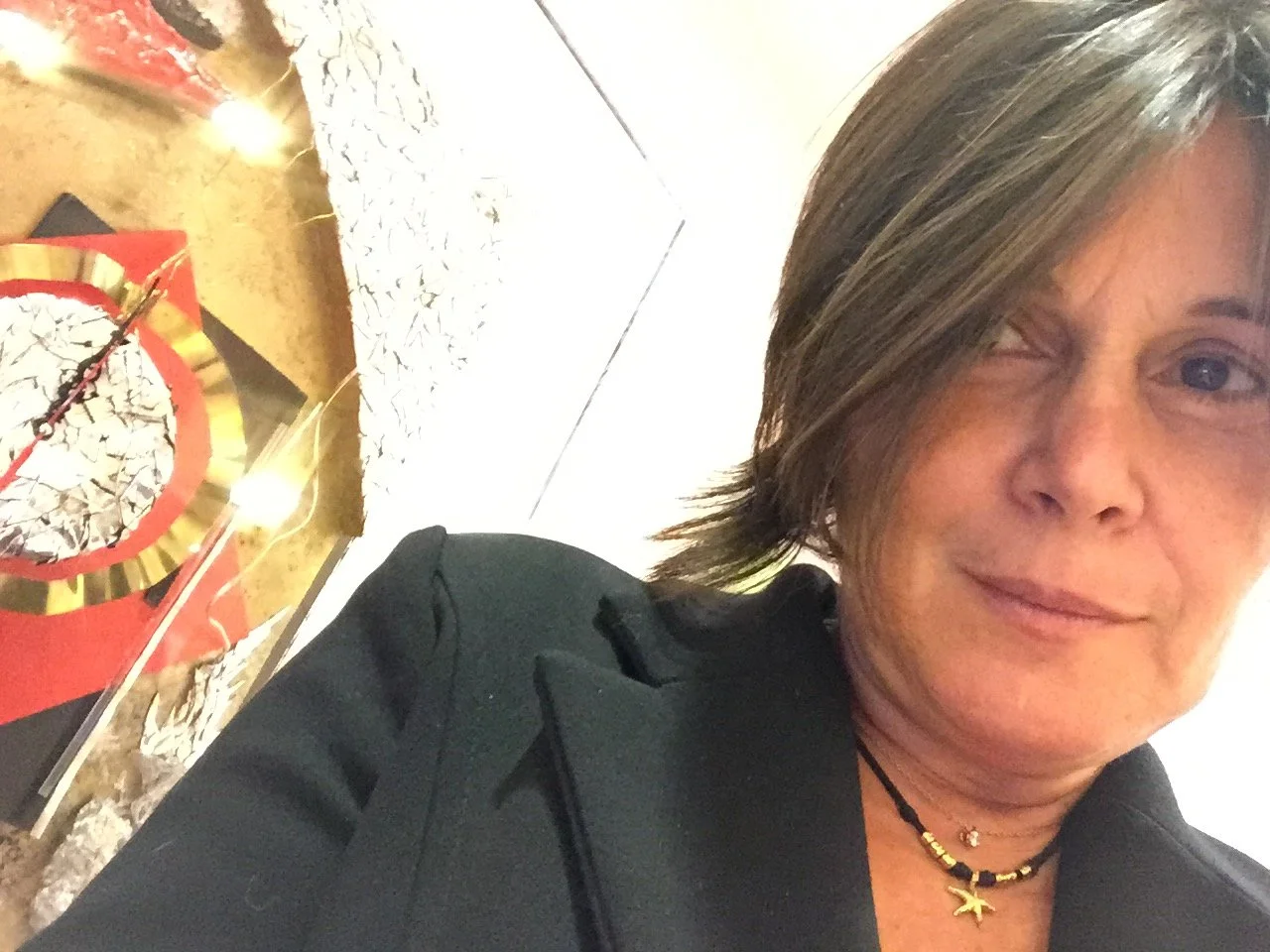
Tinamaria Marongiu
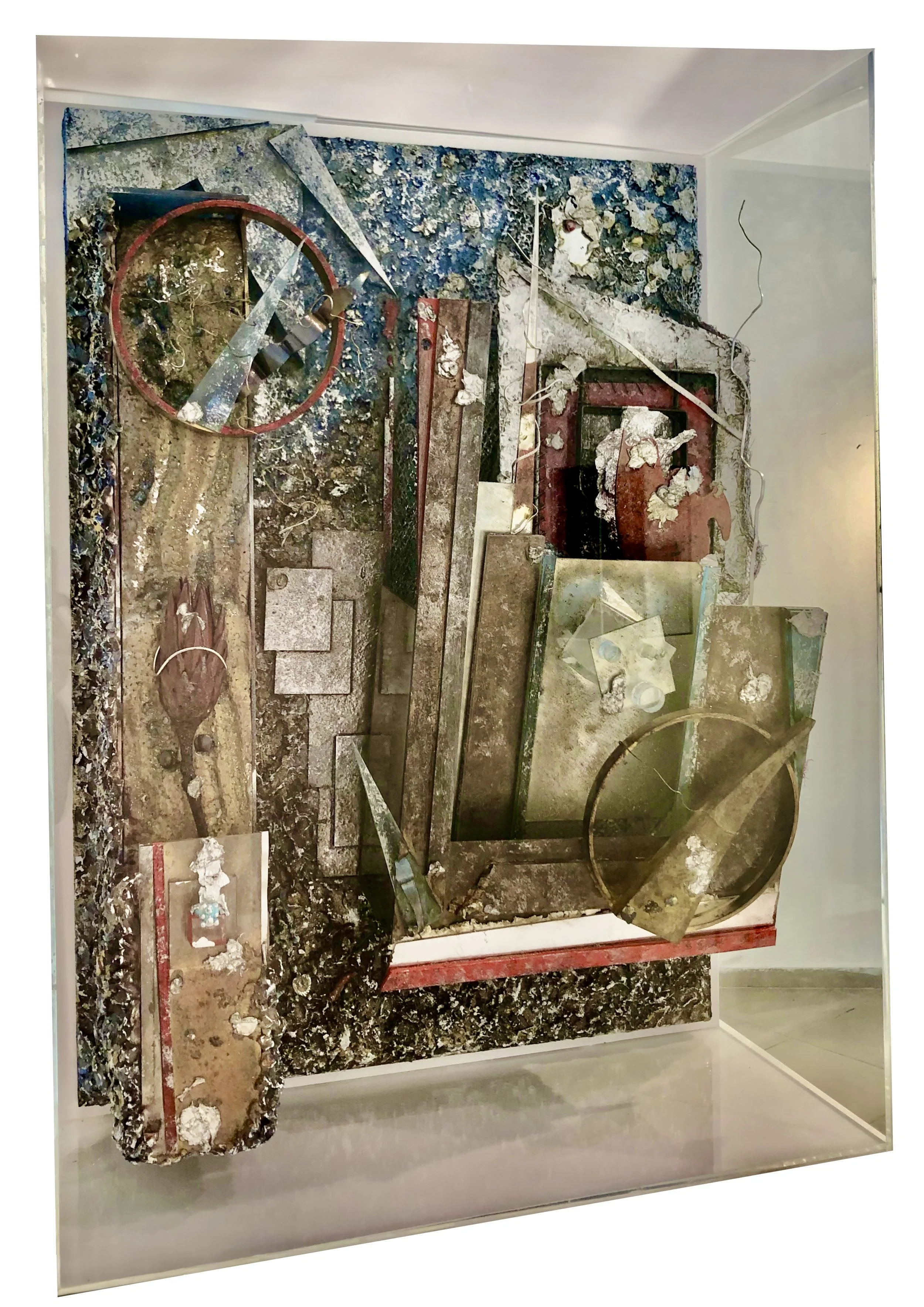
Tinamaria Marongiu, 2016 - 3D Mixed Media closed in a plexiglass box - COMPACT ART Box-Es n.1106 sovrastructure - cm.90x66x30

Tinamaria Marongiu, 2025 - 3D Mixed Media closed in a plexiglass box - COMPACT ART Box-Es n.1155 the circles - cm44x42x17
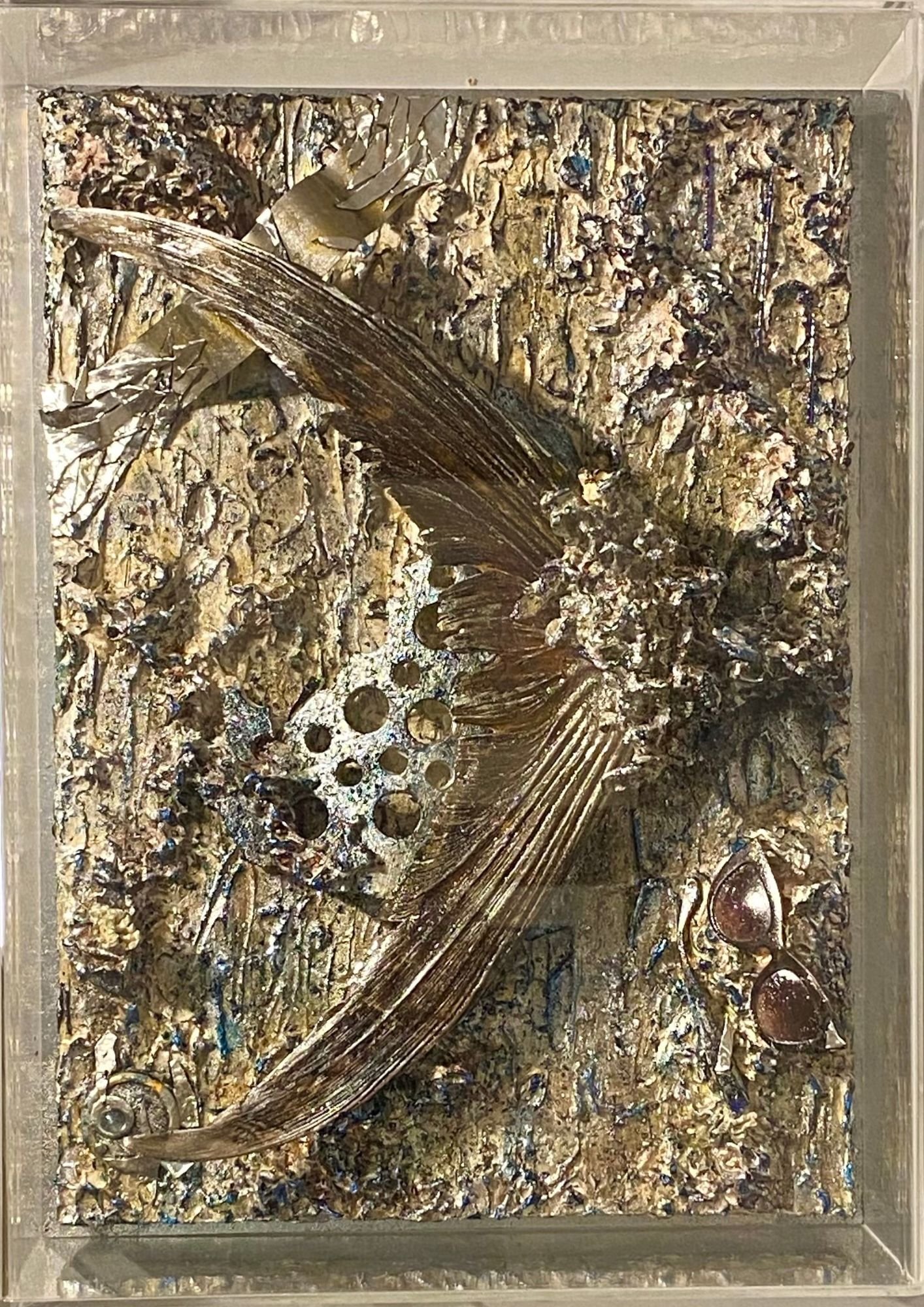
Tinamaria Marongiu, 2022 - 3D Mixed Media closed in a plexiglass box - COMPACT ART Box-Es n.1139 once upon a time - cm.74x54x22

Tinamaria Marongiu, 2025 - 3D Mixed Media closed in a plexiglass box - COMPACT ART Box-Es n.1152 the eye - cm. 102X82x24

Tinamaria Marongiu, 2018 - 3D Mixed Media closed in a plexiglass box - COMPACT ART Box-Es n.1115 the world - diam.71

Tinamaria Marongiu, 2024 - 3D Mixed Media closed in a plexiglass box - COMPACT ART Box-Es n.1144 two overlapping worlds - cm.42x42x32
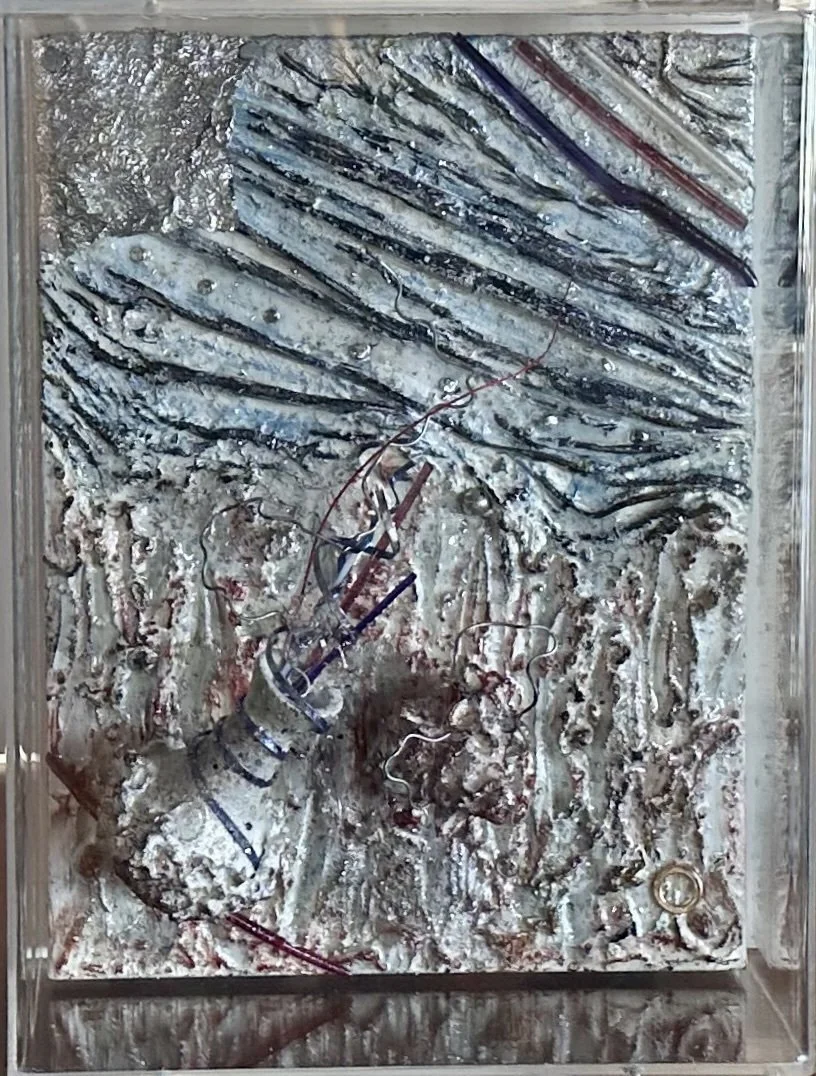
Tinamaria Marongiu, 2025 - 3D Mixed Media closed in a plexiglass box - COMPACT ART Box-Es n.1154 Split Blood - cm.41X31x15
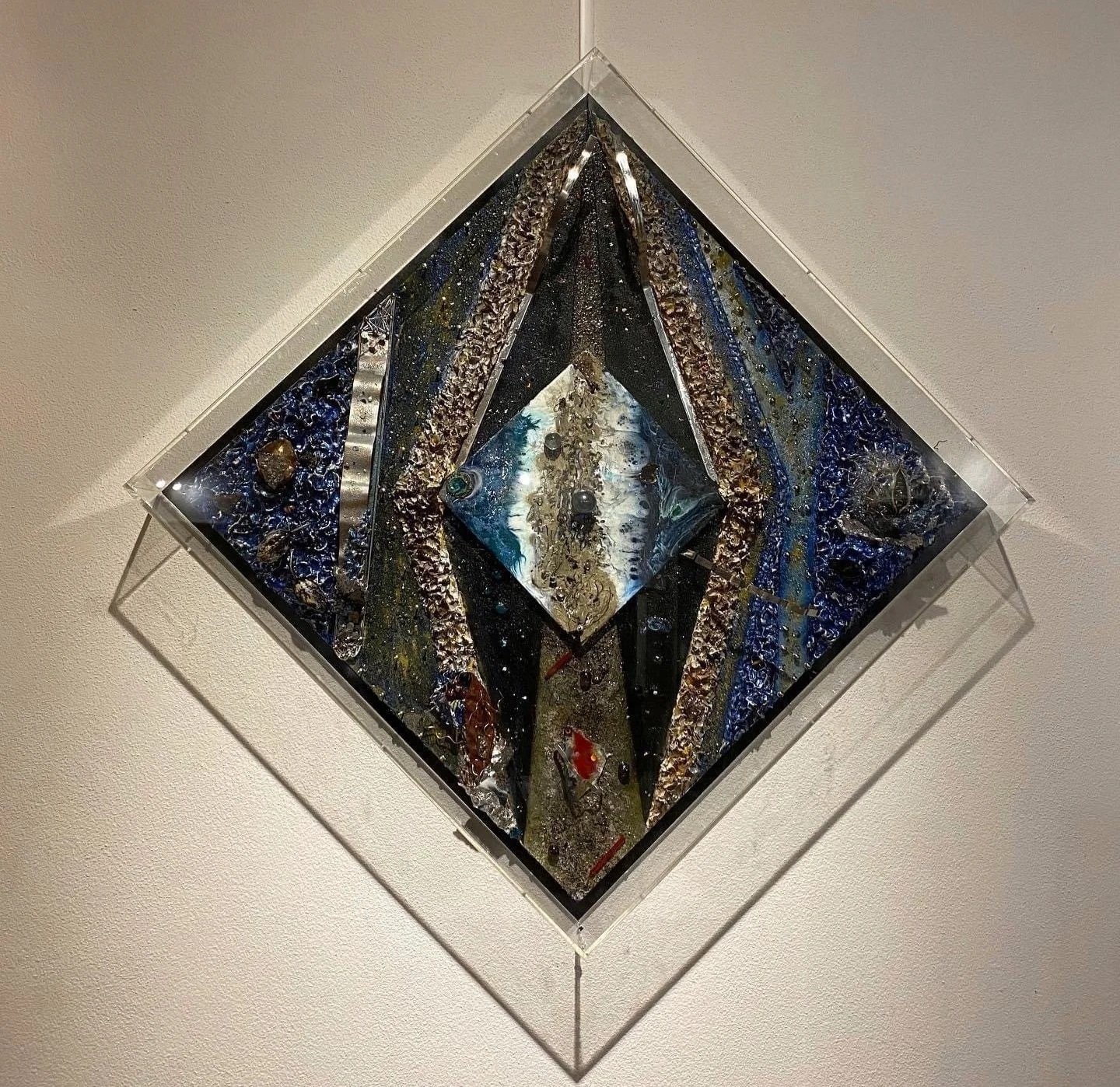
Tinamaria Marongiu, 2020 - 3D Mixed Media closed in a plexiglass box - COMPACT ART Box-Es n.1121 galaxy - cm.120x120x15
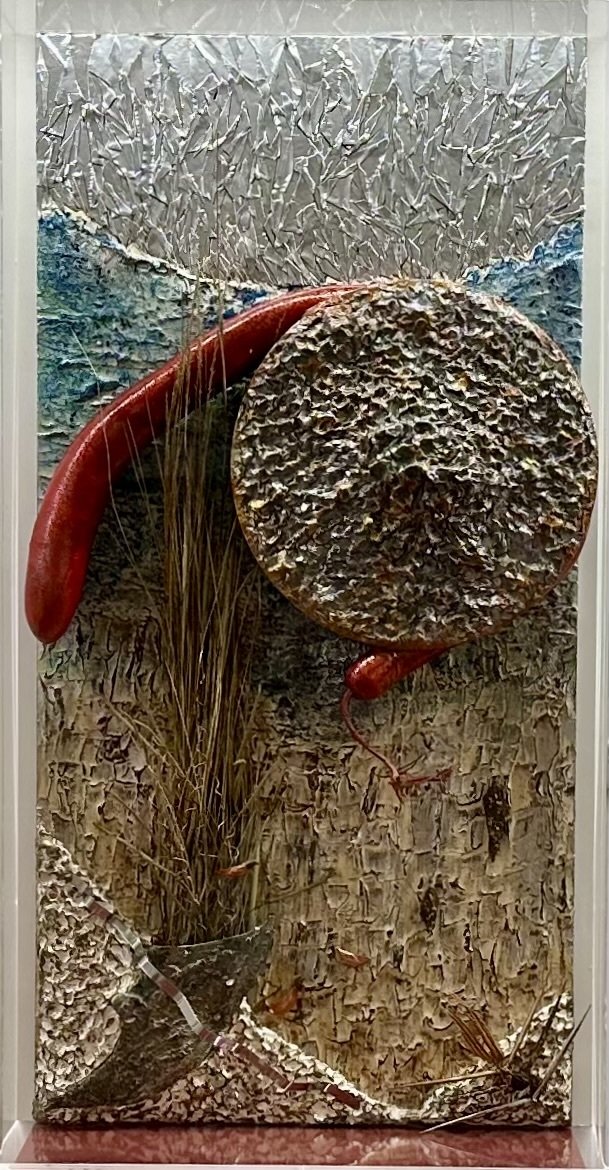
Tinamaria Marongiu, 2023 - 3D Mixed Media closed in a plexiglass box - COMPACT ART Box-Es n.1142 the farmhand "the invisible" - cm.65x120x21