
Ambro Louwe
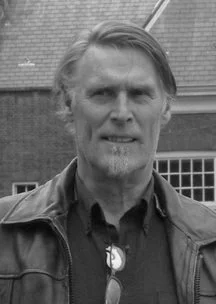
Ambro’s work develops through a sustained engagement with perception, process, and transformation. Rather than fixing form, his practice allows images to emerge as provisional configurations—moments in which gesture, material, and attention converge.
His visual language moves between figuration and abstraction without hierarchy. Forms appear, dissolve, and reconfigure; compositions remain open, carrying the traces of their making. The work resists representation in a conventional sense, instead operating as a field in which relationships—between elements, between tensions—become perceptible.
Material plays a generative role. Surfaces are approached as active sites, responsive to intervention and duration. The resulting images are not imposed but negotiated, shaped through a continuous process of adjustment and attunement.
An underlying sensitivity to structure informs the work. Not as fixed order, but as a dynamic network of relations that subtly organizes the image. This structural awareness is balanced by an equally present openness—allowing instability, ambiguity, and transformation to remain visible.
The artist’s broader engagement with performative, pedagogical, and embodied practices informs this approach. The act of making shifts from control toward responsiveness; from intention toward alignment with what emerges in the process itself.
Across the oeuvre, variation is not stylistic but methodological. Each work operates as a distinct inquiry, while remaining connected to a continuous investigation into perception and form.
Presented in both national and international contexts, the work resists singular interpretation. It invites a slower mode of viewing—one that allows the image to unfold over time.
Painting and sculpture? Did this geographic and institutional shift allow for a different form of artistic self-definition?
Before leaving for Dubai, my life was already marked by a wide range of activities. I was teaching, building carnival structures, playing trumpet in bands, directing theatre, creating sculptural work [fig 1], and developing role-playing formats to make political and social systems more tangible. I also began to sell my first paintings during this period.
When the opportunity arose to go abroad, I resigned from my position as founding director of a training institute for politicians and left for Dubai without a clear expectation of what would follow. I became head of the Dutch school in Jebel Ali, a small community in the desert, originally established for workers involved in the construction of the port.
The school functioned not only as an educational institution, but as a social and cultural center. I was given a remarkable degree of autonomy. Neither Dutch nor local regulations imposed strict limitations on how the school should operate. This allowed me to shape an environment in which learning was closely connected to experience, participation, and shared activity.
We organized performances, wrote musicals, created visual work, and developed collective projects. Even a choir of dredging workers emerged, singing polyphonic Christmas songs. These activities were not separate from education; they were its extension.
At the same time, the environment itself had a profound impact. The desert introduced a different sense of space — open, expansive, and constantly shifting. Light was sharper, colors more direct. This gradually influenced my own visual language.
During periods of national mourning, when all institutions were temporarily closed, there was time to work more intensively. In one of these periods, my daughter was born. For the doctor who assisted us, I created a sculpture of mother and child. Later, during my first exhibition in the Sheraton hotel, this piece was placed low on a table, so that viewers had to bend slightly in order to see it [Fig. 2]. That gesture of physical involvement felt appropriate.
The work I produced and presented during this time was closely connected to the life we were living there. It was not “l’art pour l’art,” but a way of engaging with a new reality — materially, socially, and visually.
The relative autonomy of this period did not lead to isolation, but to a broader integration. Artistic practice became less separated from other domains and more embedded in lived experience. This shift continues to inform my work.
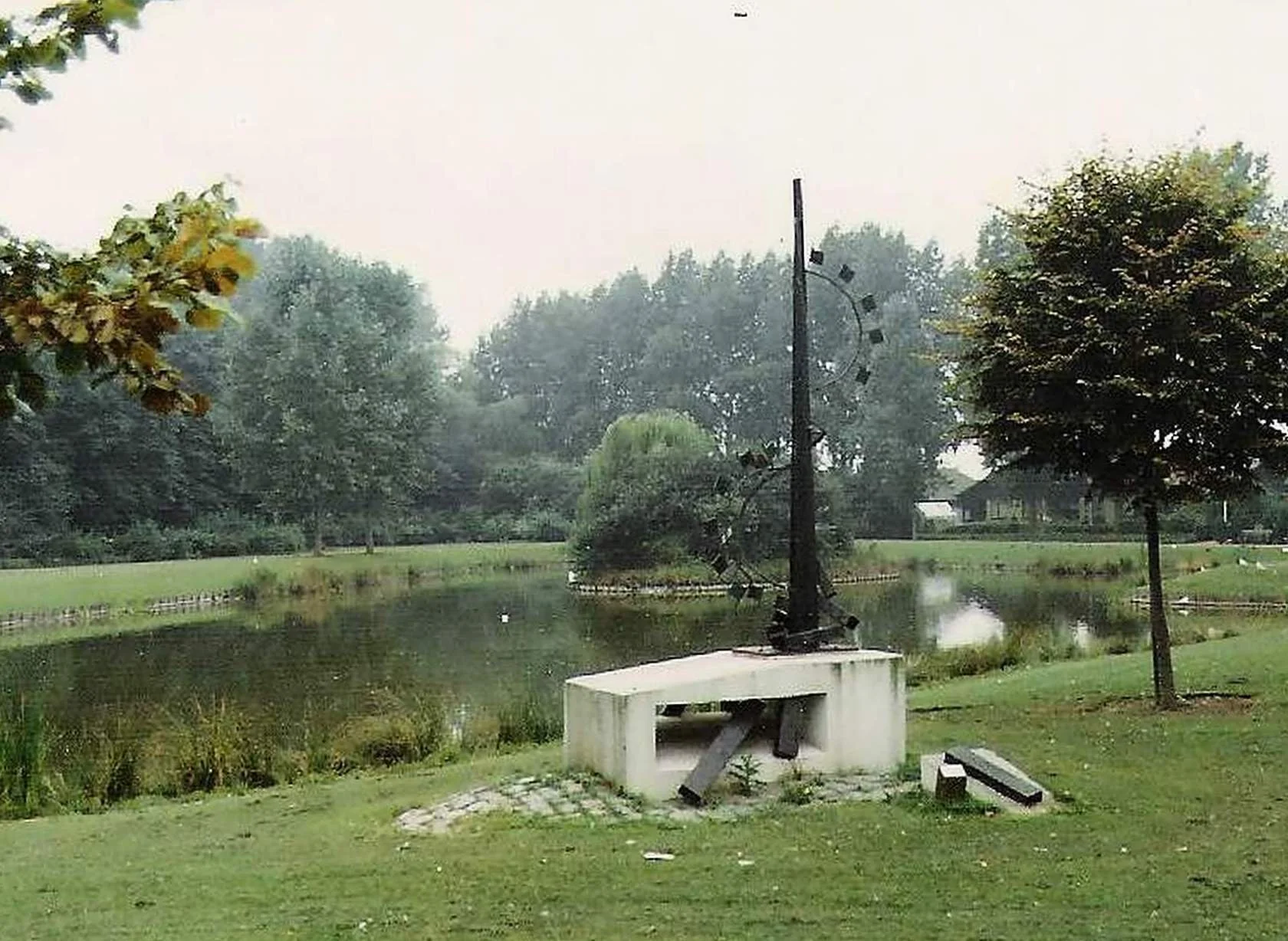
Fi. 1 “Speel” . steel, concrete; 4m x4m x 350cm, 1975 ; Oudenbosch.
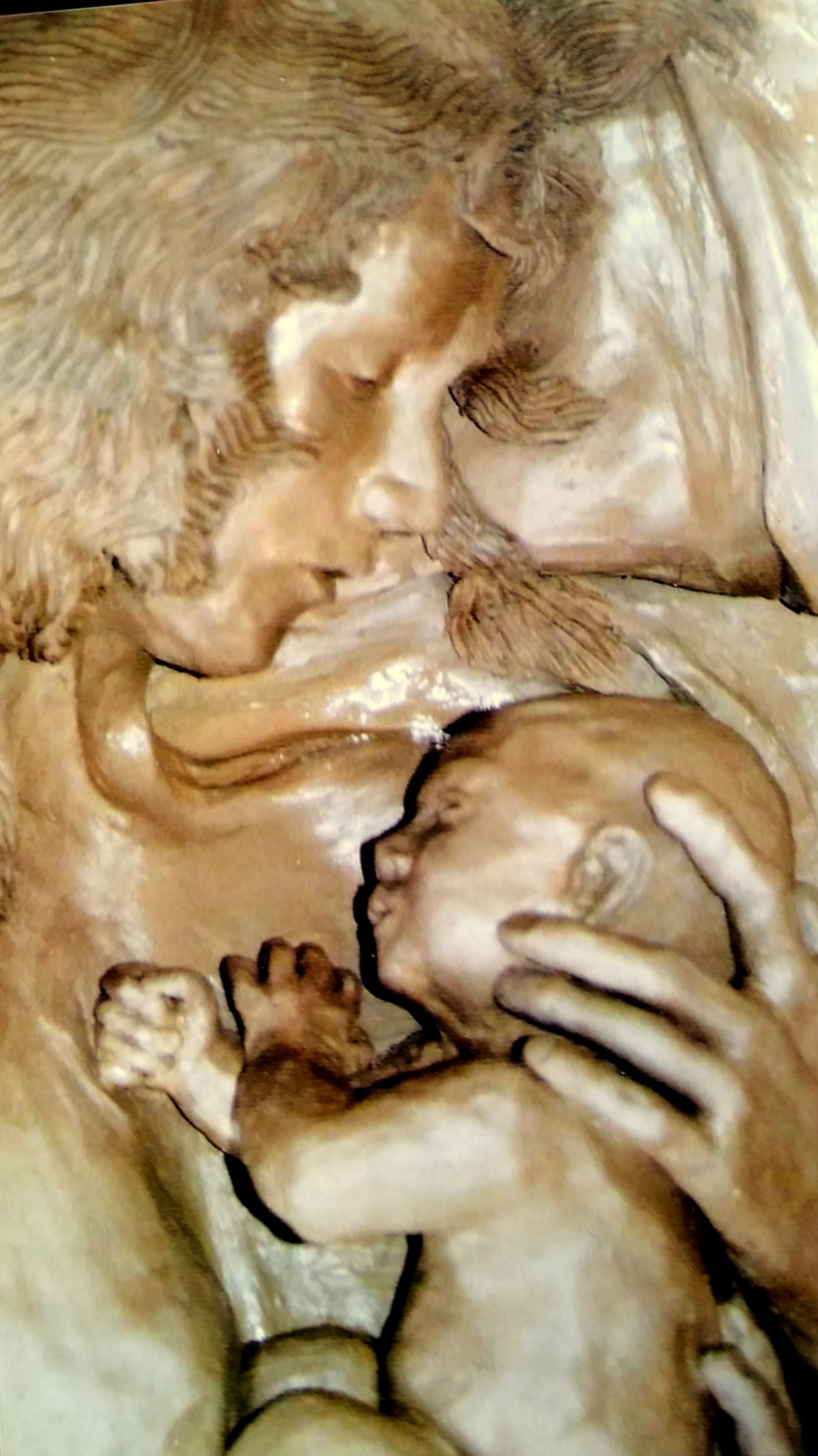
Fig. 2 — Mother and Child, Relief sculpture, clay model, polyester finish, 1981
Throughout your biography one encounters a proliferation of roles: educator, constitutional law student, director of stage plays, builder of carnival structures, sculptor, painter. Rather than reading this as eclecticism, might this be understood as a structural condition of your practice? Does your work operate within an expanded field of sculpture, where pedagogy, theatre, and civic engagement become extensions of the sculptural impulse?
I do not experience these different roles as separate activities, nor as a form of eclecticism. For me, they are interconnected expressions of the same underlying impulse. The distinctions between disciplines — between education, theatre, music, or visual art — have always felt relatively artificial. In practice, they constantly overlap and inform one another. When these fields intersect, they do not weaken each other; they reinforce and deepen the work.
Whether I am directing a play, building a structure, teaching a group, or creating a painting or sculpture, I am essentially shaping situations. These situations involve people, materials, space, and time. They are dynamic and develop through interaction.
For that reason, even the notion of “expanded sculpture” feels too limited. It still suggests that sculpture is the central category, to which other practices are added. I would rather speak of fields of expression.
Within these fields, different forms of making, thinking, and acting coexist without hierarchy. Pedagogy, theatre, and civic engagement are not extensions of the work; they are part of the same structure. In this sense, the work is not confined to objects. It includes processes, encounters, and shared experiences. A performance, a lesson, or a collective project can carry the same weight as a material work.
My work resonates with traditions such as social sculpture, postwar expressionism, and relational practices, yet it does not fully align with any of them. It emerges from lived experience, from an ongoing negotiation with material, and from the creation of situations rather than from a fixed artistic framework.
This becomes visible in works that move between painting and sculpture, where form develops as if it were growing rather than being constructed [Fig. 3]. At the same time, color, gesture, and material interact in a more fluid, almost organism-like way.
If there is a structure, it lies in this continuous movement — not in choosing one form over another, but in allowing connections to emerge. The work exists in those connections.
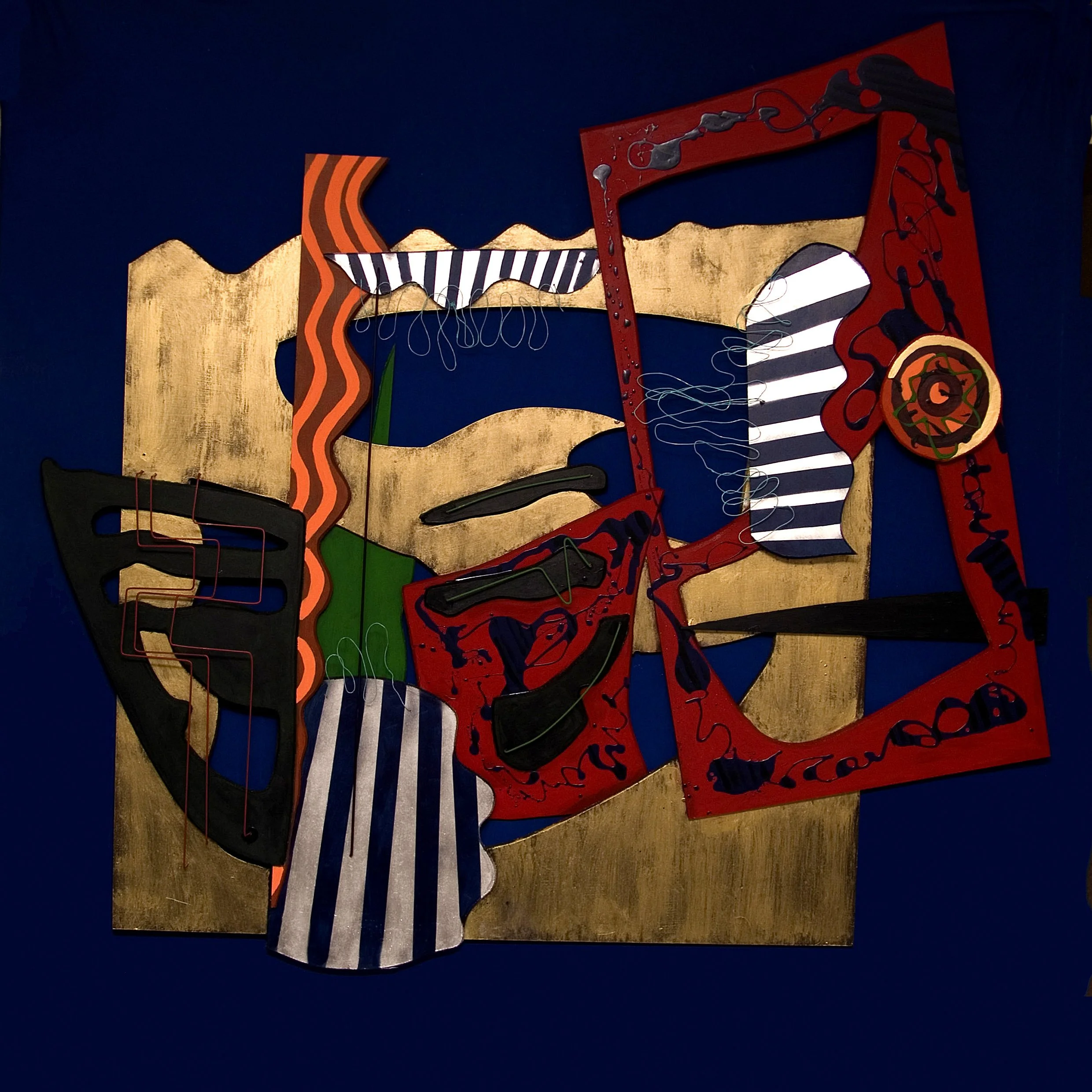
Fig. 3 — Wallscape Mixed media on wood, paint and structural elements, 2013
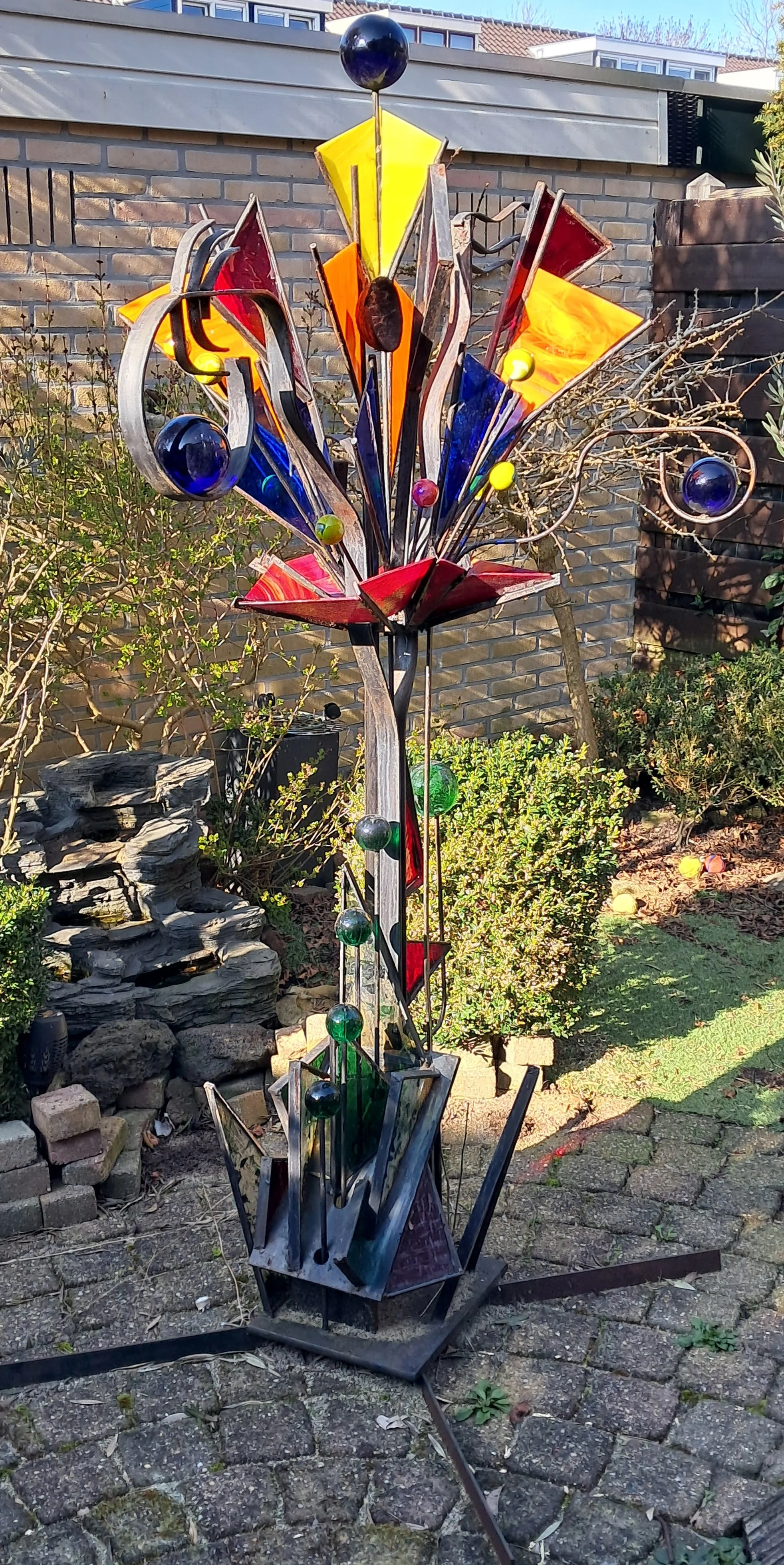
Fig. 4 — “Flower 1” steel glass; 220cm x 80 cm x 80 cm, 2024
The interplay between reality and fantasy that you describe seems less a binary than a porous membrane, one through which colour and form migrate. When you construct a wallscape or a glass sculpture, is the aim to destabilise the viewer’s perceptual certainties, or to offer an alternative order that reconciles the empirical world with an inner visionary landscape? How consciously do you position your abstraction within the broader lineage of twentieth-century Dutch art?
For me, the relationship between reality and imagination is not a clear opposition. It is something that remains in movement — more like a permeable boundary than a fixed division. My work does not begin with the intention to destabilize perception, but to open it.
I start from what is present: material, light, space, and the specific situation in which the work emerges. From there, the work can move beyond direct representation, but it does not lose its connection to reality. It remains grounded, even when it becomes more abstract.
In works such as wallscapes, this becomes quite tangible. These works are not compositions in the traditional sense, but constructions that develop in relation to their environment. They are not meant to impose a new order, but to create another way of experiencing space.[Fig 5]
Color plays a crucial role in this. It is not only visual, but experiential. In my work, color can shift between intensity and stillness, between play and concentration. It does not describe something; it generates atmosphere.
Form follows a similar logic. A work may begin from something recognizable, but gradually opens up into a more fluid structure, where multiple readings can coexist. In that sense, the work does not replace reality with an inner world, but allows both to be present at the same time.
As for my position within a broader artistic lineage, this is not something I consciously determine while working. I am aware of developments in twentieth-century Dutch art and recognize certain affinities, particularly where abstraction remains connected to movement, structure, and clarity.
However, these connections often become visible only afterwards. They are not a starting point, but a form of recognition.
The work develops from within its own process.
If there is an order, it is not imposed, but discovered — something that emerges between perception and experience.
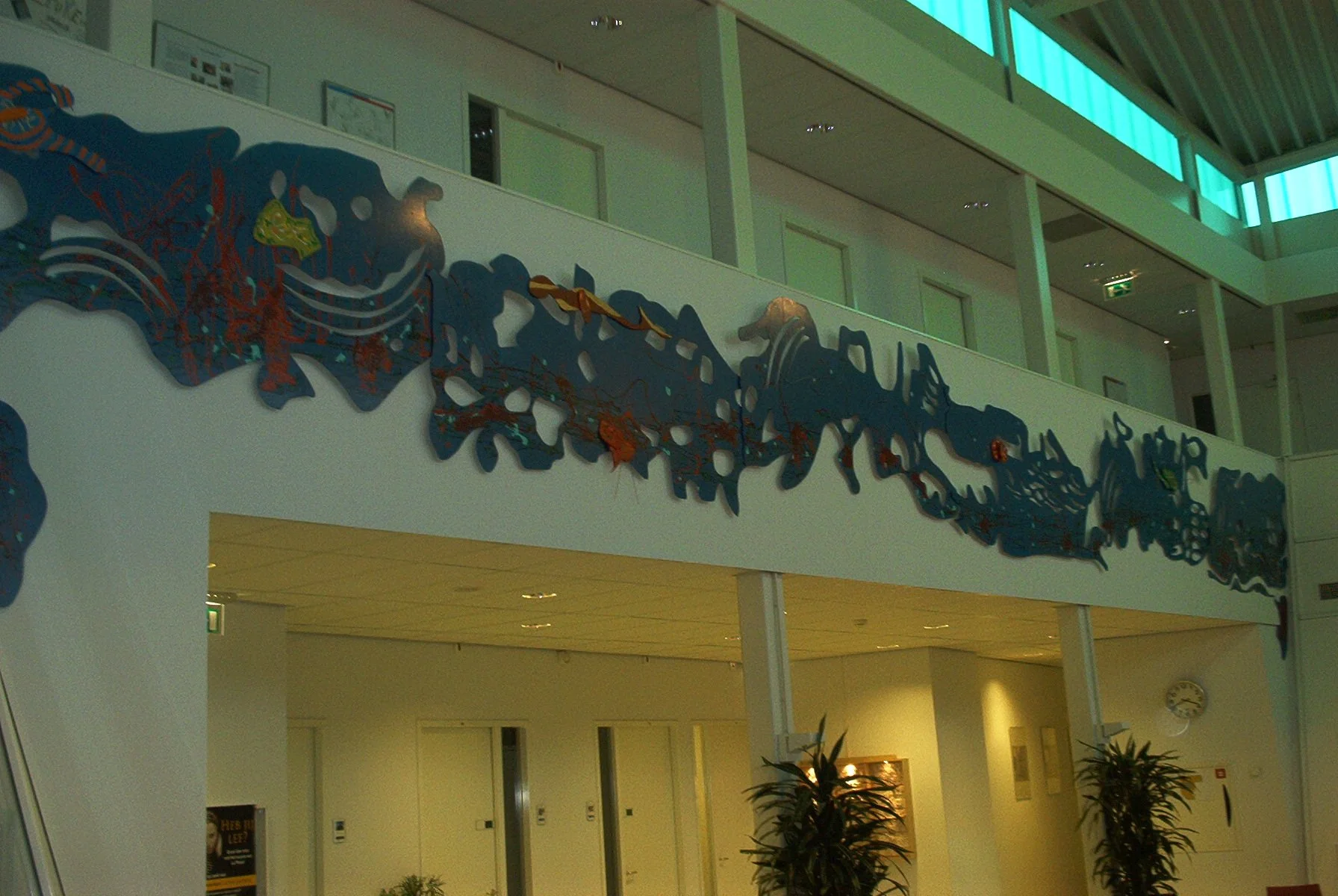
Fig. 5 — Wallscape Mixed media on wood 110m2, paint and structural elements, 2009
Your works reside not only in galleries but in museums, medical clinics, churches, and civic institutions across the Netherlands, Dubai, and China. How does this dispersion across contexts inform your thinking about the social agency of art? Are these objects conceived as autonomous aesthetic propositions, or as relational presences that modulate the emotional and psychological atmosphere of the spaces they inhabit?
My work exists across a wide range of contexts — from schools and hospitals to public and international environments. These contexts are not simply a background; they actively shape how the work emerges and functions.
Each work carries its own history, connected to a specific place and to the people who engage with it.
For example, I was once asked to intervene in a school building whose central space felt sterile and impersonal. I worked with large MDF panels, inviting students to draw their own routes — daily movements, memories, personal trajectories. These lines were cut into the material and developed further with color, sometimes applied in a direct, almost explosive manner. At the same time, I created areas where students could add their own work.
The result was not an autonomous artwork, but a shared environment — a space in which people could recognize themselves, even years later. [fig 5]
In Dubai, this relational aspect became even more explicit. The school functioned as a social center, and collective making played an important role. A large textile work, developed together with members of the community, became both a process and a result [Fig. 6].
In other contexts, such as hospitals or large educational institutions, the work encounters a different kind of environment. These spaces are often shaped by efficiency, control, and functionality. They can feel rigid, sometimes even impersonal — more like systems than lived spaces.
I do not approach this rigidity as something to oppose directly, but as a condition to work within.
This also includes the presence of what might not immediately be considered “beautiful.” A space can carry tension, discomfort, or a certain harshness. Rather than eliminating these qualities, I try to engage with them — to introduce movement, lightness, or a shift in perception.
In that sense, the work does not overwrite the existing character of a space, but enters into dialogue with it.
It can soften what is rigid, open what feels closed, or simply create a moment of attention within a structured environment.
I do not see my work as autonomous objects. It functions in relation to space and to the people who inhabit it.
It is a presence that can alter perception — sometimes subtly, sometimes more directly.
My own trajectory, from a relatively small world in my youth to working in places such as Dubai, China, and Germany, has reinforced this understanding. The work becomes part of a larger, shared field, where cultural differences do not disappear, but can be experienced in relation to one another.
In that sense, my practice is relational: not focused on isolated objects, but on creating situations in which encounter becomes possible.
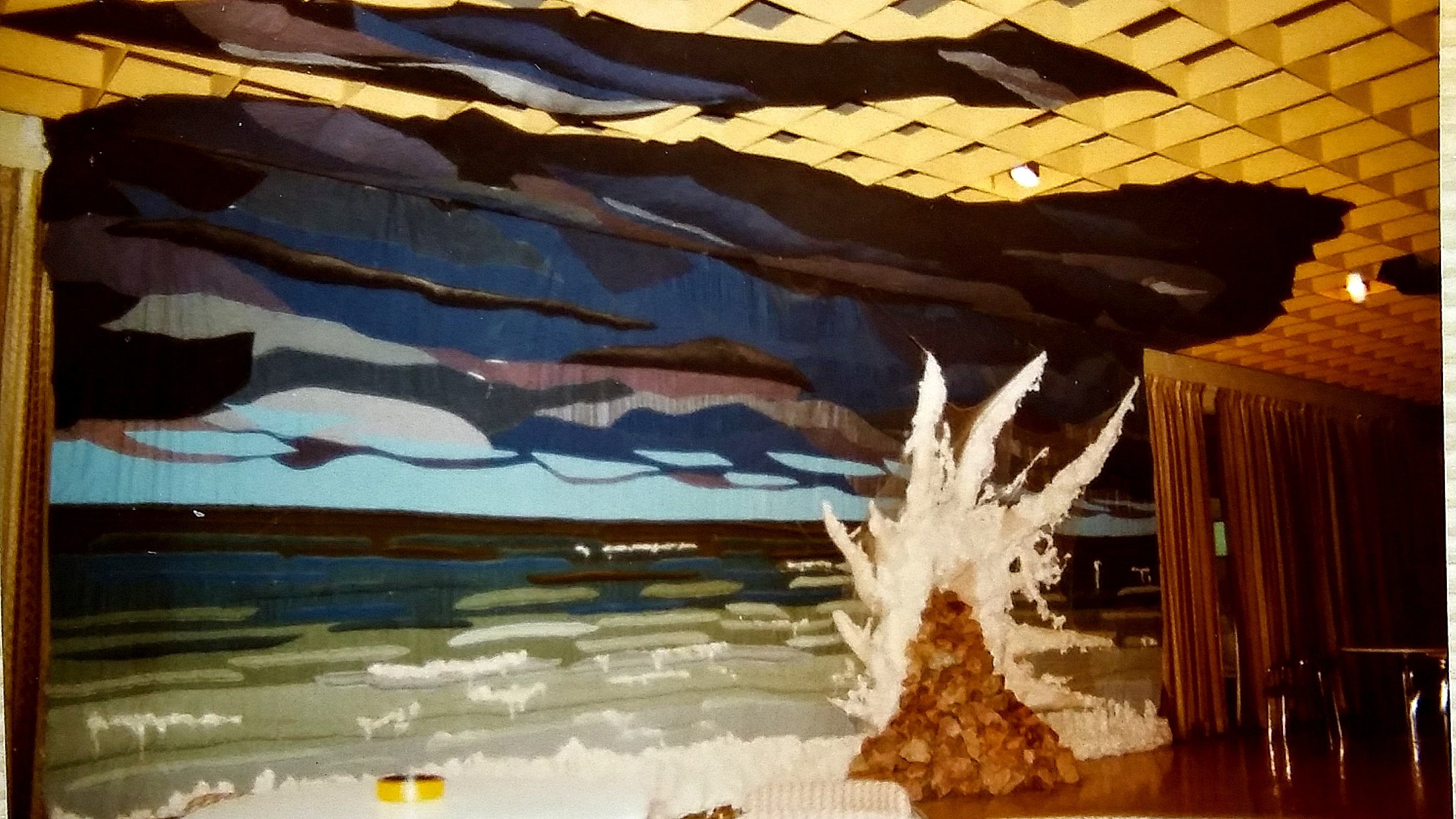
Fig. 6 —Desert tapestry (Dubai period) 7m x5 m mixed media (textile, rocks )
Your sustained commitment to teaching appears not merely as a profession but as a philosophical stance, encompassing Tai Chi, systemic work, psychology, and citizenship. To what extent does the studio function as an extension of this pedagogical ethos? Might painting be understood as analogous to directing a choir or staging a musical — a choreography of energies in which color becomes breath and gesture becomes a mode of orientation toward the world?
My involvement with teaching has never been separate from my artistic practice. It is not simply a profession, but a way of engaging with the world — one that is based on attention, openness, and a sensitivity to processes of development.
That same attitude is present in the studio.
However, I would not describe painting as directing in the sense of controlling or orchestrating outcomes. It feels closer to composing.
The act of creating images brings me a sense of calm. At the same time, there is a continuous tension — a search for balance between form, color, and movement. This tension is not something to resolve too quickly; it is what drives the work forward.
Within that process, unexpected events play an essential role. A splash, a gesture, or even what might appear as a mistake can open new directions. I have developed a strong trust that such moments are not interruptions, but possibilities.
Sometimes I begin deliberately with an unconsidered action — a cut in the canvas, a mark, or an intervention in the material. From that point, the work becomes a process of responding: bringing these elements into a new coherence.
This way of working is closely related to my pedagogical approach. It is not about imposing form, but about allowing something to emerge and engaging with it attentively.
There is also a physical dimension that connects to practices such as Tai Chi. Movement, balance, and breathing are not separate from the act of painting. Gesture is not only visual, but bodily.
In that sense, painting can be understood as a choreography — not in a literal sense, but as a continuous adjustment of energies, rhythms, and relationships.
The studio is therefore not an isolated space, but a place where the same principles apply as in teaching: openness, responsiveness, and trust in development.
Painting is not about fixing an image, but about moving towards a balance that remains alive [Fig. 7].
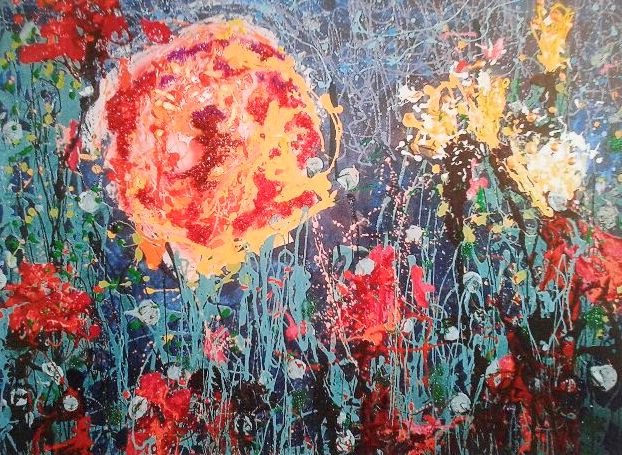
Fig. 7 — Abstract drip painting Acrylic on canvas, 300 cm x 300cm year 2013
The six-year period in Dubai appears as a crucible in your narrative, a moment when institutional constraints loosened and creative production intensified. How did geographic displacement and cultural difference shape your chromatic decisions and formal vocabulary? Did working within an international environment influence the scale, material choices, or thematic orientation of your work?
The period in Dubai intensified my work in a very direct way, although its foundations had already been laid earlier, particularly in my experiences in the Netherlands.
Before leaving, I was already exploring ways of creating space within environments that could feel closed or heavy. In places such as Oudenbosch, I felt a need to open up perception — not only physically, but also mentally.
Dubai brought this into a completely different condition.
Jebel Ali, at that time, was still a relatively isolated settlement in the desert. The openness of the landscape, the uninterrupted horizon, and the intensity of the light had a profound effect on my perception. Color became more direct, less filtered. It no longer required the same restraint as in the Dutch climate.
Space also changed fundamentally. It was no longer something enclosed, but something continuous and expansive. This shifted my approach to composition. Space became an active element, not a background.
At the same time, I was working within a highly diverse, international environment. Different cultures coexisted without necessarily merging. This made me aware that perception is always contextual — shaped by position, experience, and environment.
My work during this period remained partly figurative, often reflecting the life we were living there. There was a need to stay connected to immediate reality. At the same time, I increasingly experienced the limitations of a purely figurative approach. Color, material, and spatial relationships began to demand more autonomy.
Material conditions also played a role. I worked with what was available, sometimes under improvised circumstances. This included casting bronze myself, where the material could behave unpredictably, even violently. These experiences reinforced my understanding that material is active and cannot be fully controlled.
At the same time, this environment opened a desire to work on a larger scale. The vastness of the desert landscape made it almost inevitable to think beyond the limits of the studio.
I began to develop ideas and sketches for more monumental works — for example, a large glass structure conceived as a wave, functioning as a viewing point along the sea dike in Friesland. In such projects, material, movement, and landscape would come together.
Although many of these works were not realized, they remain an essential part of my thinking — as an extension of the relationship between work, space, and human movement.
When I returned to the Netherlands, this shift became fully visible. After the openness of the desert, the spatial conditions felt more confined. This contrast created a tension that pushed my work further.
Dubai did not change my direction — it made it unavoidable [Fig. 8].
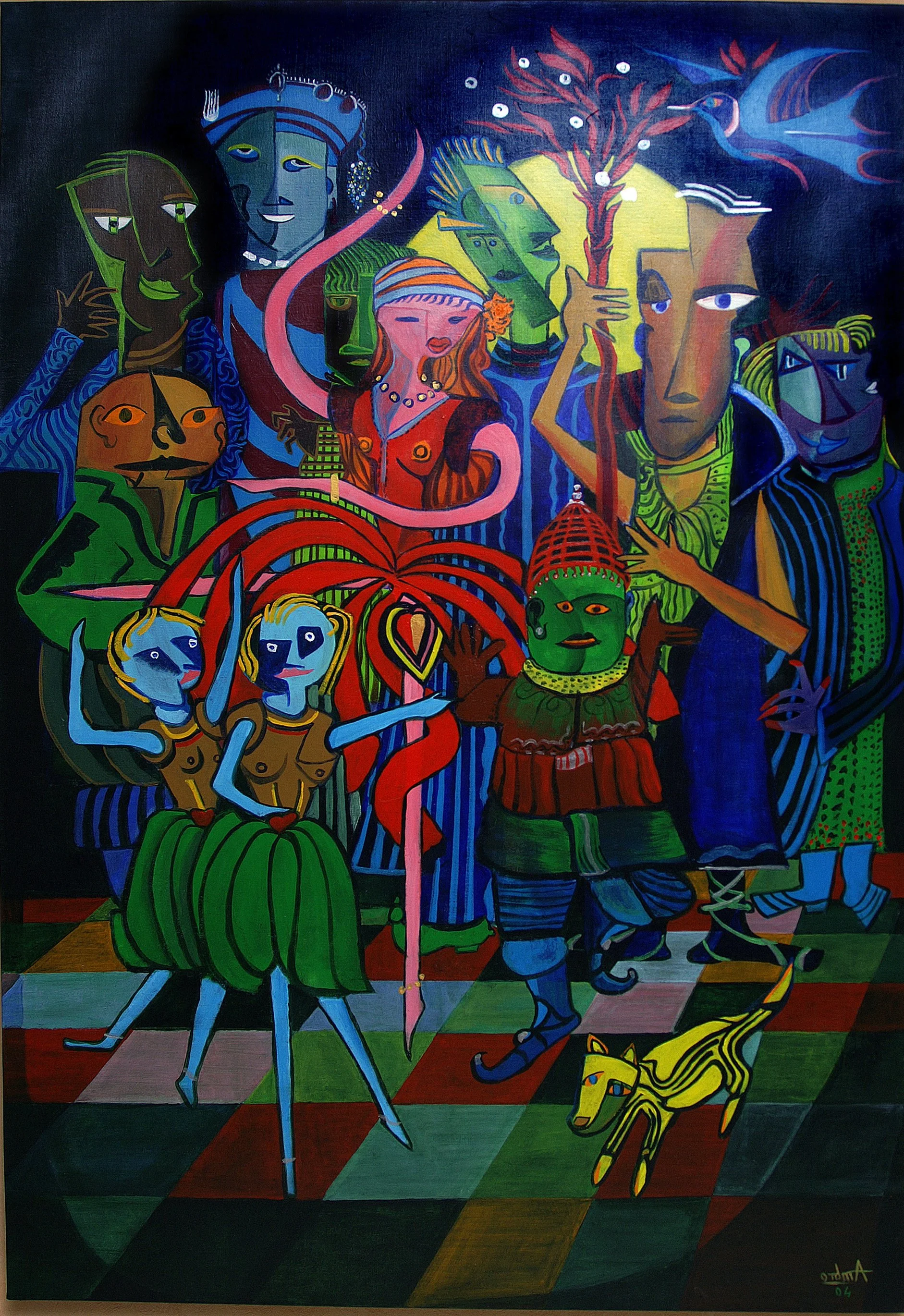
Fig. 8—figurative composition with multiple figures “ Carnaval” 180cmx 120 cm acrylic on canvas
Your artist statement emphasizes beauty as freedom, a formulation that risks sentimentality in lesser hands. Yet your biography is marked by economic limitation, postwar austerity, and professional responsibility. How is beauty reconciled with these histories of constraint? Is beauty understood as a formal quality, a psychological state, or a political gesture that insists upon vitality and play in the face of structural limitation?
For me, beauty is not a superficial or decorative quality, but an existential experience.
Its foundation lies in my early life. I grew up in a small world, shaped by postwar conditions, where material resources were limited but sensory experience was intense. I would lie on the floor reading while my father studied music by Bach, Mozart, and Beethoven. We drew together. The rituals of the church, within their spatial and acoustic richness, created moments of silence and presence — experiences that were difficult to describe, but deeply felt.
In those moments, beauty was not something added to life, but something that opened it.
Music has remained central in this. It can evoke deep emotion, but also lightness and play. I experienced both — from performing Handels music on the trumpet with my father accompanying me on the organ, to playing carnival music in a brass band. These are different registers, but neither excludes the other.
For that reason, I do not associate beauty with perfection. Perfection follows rules and often closes itself. It can become rigid, even lifeless. Work that operates purely on a sentimental level tends to repeat patterns that confine rather than liberate.
Beauty, as I understand it, emerges when skill is practiced with attention and care. In that moment, something opens — a space of freedom.
Limitations do not negate this. On the contrary, they form the conditions in which such experiences become more acute. Scarcity, responsibility, and constraint do not eliminate beauty, but sharpen the awareness of it.
Beauty is therefore not only a formal quality or a psychological state. It is also relational. It can connect people, moments, and experiences across differences.
Sometimes this appears in very simple ways. I remember a student who once brought me, on my birthday, half a carrot he had already eaten because he had forgotten a gift. In that gesture, there was a form of beauty that had nothing to do with refinement or perfection, but everything to do with attention and presence.
In that sense, beauty is not an escape from reality, but a way of experiencing freedom within it — not as an ideal, but as something that can occur, even in the smallest moment.
In your glass sculptures exhibited during the Kunst10daagse in Bergen, and in your bronze works shown in the Netherlands and abroad, materiality itself oscillates between transparency and density, fragility and monumentality. How do you approach this apparent dialectic between permanence and ephemerality? Does the choice of medium emerge conceptually, or from a more intuitive negotiation with the physical properties of matter?
I do not begin from a conceptual opposition between permanence and ephemerality. That distinction is not central to how I work.
What guides me is the material itself.
The process starts with a sensory encounter — a physical awareness of weight, resistance, transparency, and structure. I do not impose an idea onto the material; I follow what it allows, what it suggests, and sometimes what it resists.
Circumstances also play a role. I often work with what is available, and this can lead to unexpected situations. In Dubai, for example, I cast bronze myself under relatively uncontrolled conditions. The molten metal behaved unpredictably — at one point even splashing high into the air. While potentially dangerous, such moments also produced unexpected effects in the work.
These experiences made clear to me that material is not passive. It acts, reacts, and occasionally takes its own direction.
Glass and bronze represent very different conditions.
Glass works through light and transparency. Its colors have an intensity that calls for an intuitive approach to composition. Rather than constructing an image, I try to create atmospheres — situations in which color is experienced rather than simply seen. These atmospheres can be light and celebratory, but also quiet and almost sacred. Glass allows the everyday and the transcendent to coexist without separation.
In many of these works, form develops in a way that could be described as biomorphic — not as a representation of nature, but as something that grows, bends, and transforms.
Bronze, on the other hand, begins for me in modelling with wax — a direct and physical process. In its final form, it carries weight, density, and a strong sense of presence. It has a physical authority that you feel in the body.
At the same time, the work relates to a form of expressionist abstraction, where gesture, material, and intensity are more important than fixed representation.
I do not choose between these qualities; I move with them.
The choice of medium does not arise from a predefined concept, but from an ongoing interaction between material, situation, and process.
What matters is not whether a work is permanent or ephemeral, but the intensity of the moment in which it comes into being and is experienced [Fig. 9].
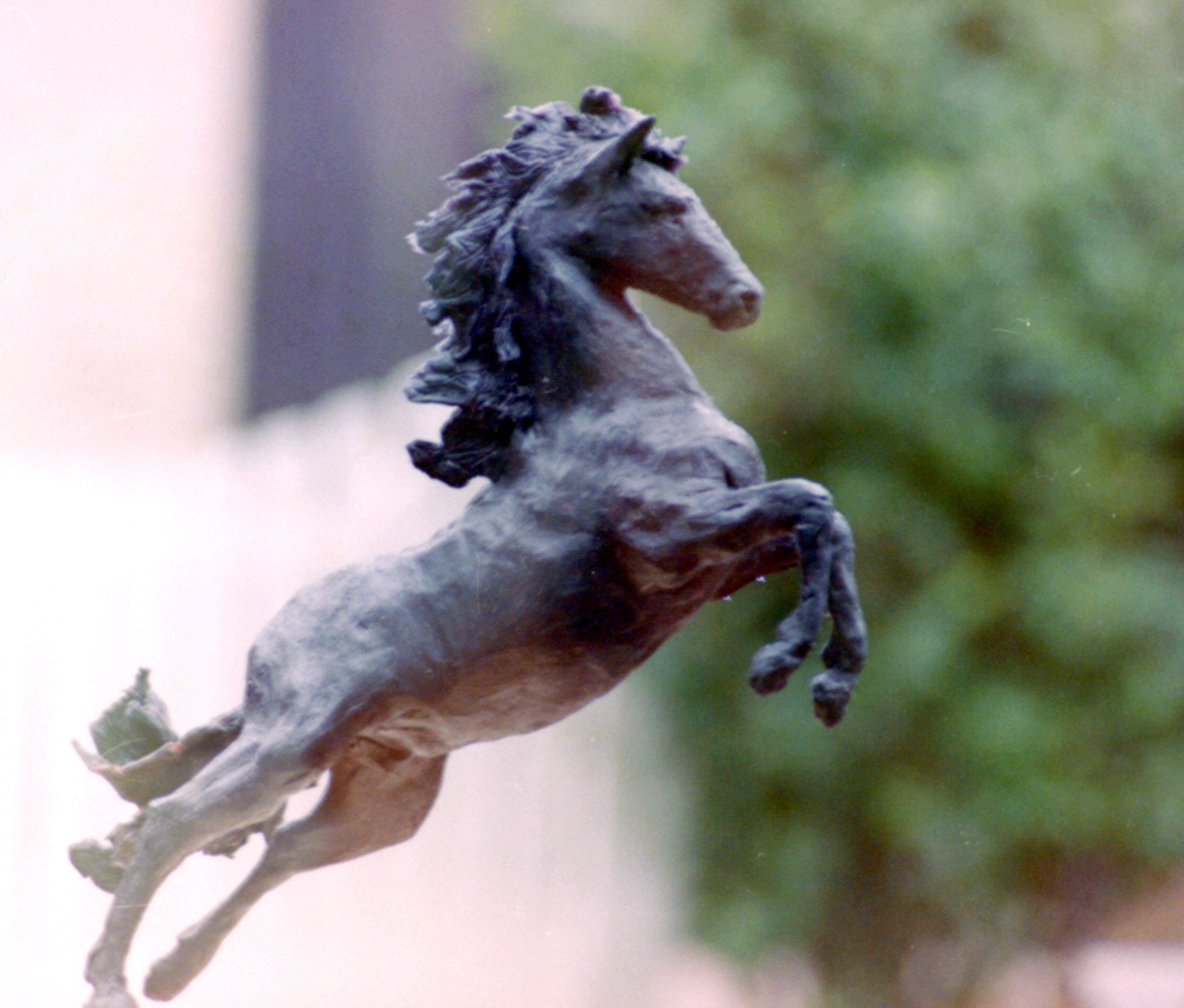
Fig. 9 — Horse Bronze sculpture, 1990
Your life suggests an insistence on curiosity as a lifelong methodology, an openness that traverses law, engineering, music, pedagogy, and visual art. In an era that often demands specialization, might this multidisciplinary path be understood as a form of quiet resistance? What would it mean for contemporary art to reclaim a model of the artist not as an isolated genius, but as a civic participant, educator, and orchestrator of communal imagination?
My life may appear as a trajectory of curiosity, but for me this curiosity is not a method or a strategy. It arises from a necessity to understand.
That search has led me through different fields — education, art, music, engineering, but also medicine, psychology, and forms of alternative practice such as those I encountered in Tai Chi. These are not separate interests, but connected ways of engaging with the complexity of life.
This is not only driven by intellectual curiosity, but also by personal experience. The long-term illness of my daughter, without a clear diagnosis, has deepened this search. It made the need to understand more immediate and more urgent.
For that reason, I do not experience my path as a form of resistance against specialization, but as a necessary openness. Life itself does not divide into disciplines.
At the same time, I am aware of the context in which I work. I observe developments, recognize artistic movements, and sometimes move alongside them. But this is never the goal. What drives me is the act of making — and within that, an increasing sense of direction emerges.
There is always more to create. What becomes visible, however, depends on conditions such as time, space, and financial possibilities. These do not determine the necessity of the work, but they do shape its realization.
I have never separated art from pedagogy or from social life. What interests me is the creation of situations in which people can experience, learn, and relate to one another.
In that sense, the artist is not an isolated figure, but a participant — someone who connects, organizes, and opens space for shared imagination.
This can take place in a classroom, in a community, or through a work that alters the atmosphere of a space.
This sense of ongoing development is not new to me. I have seen it in my parents.
My father, at the age of seventy-five, founded a choir in which he shaped not only the music, but also the performances and the way of working. He travelled with them across the country, exploring close harmony singing with the same intensity he had always carried.
My mother, well into her nineties, began learning computer skills and remained actively engaged, even becoming a local bridge champion.
These examples have shown me that development does not end. It changes form, but it continues.
I recognize that same movement in my own work. There is a growing sense of direction, but also the feeling of standing at the beginning of something new — not as a break, but as a continuation. [fig 10 ]
Curiosity, in that sense, is not a phase. It is a condition for remaining open — to the work, to others, and to what life presents.
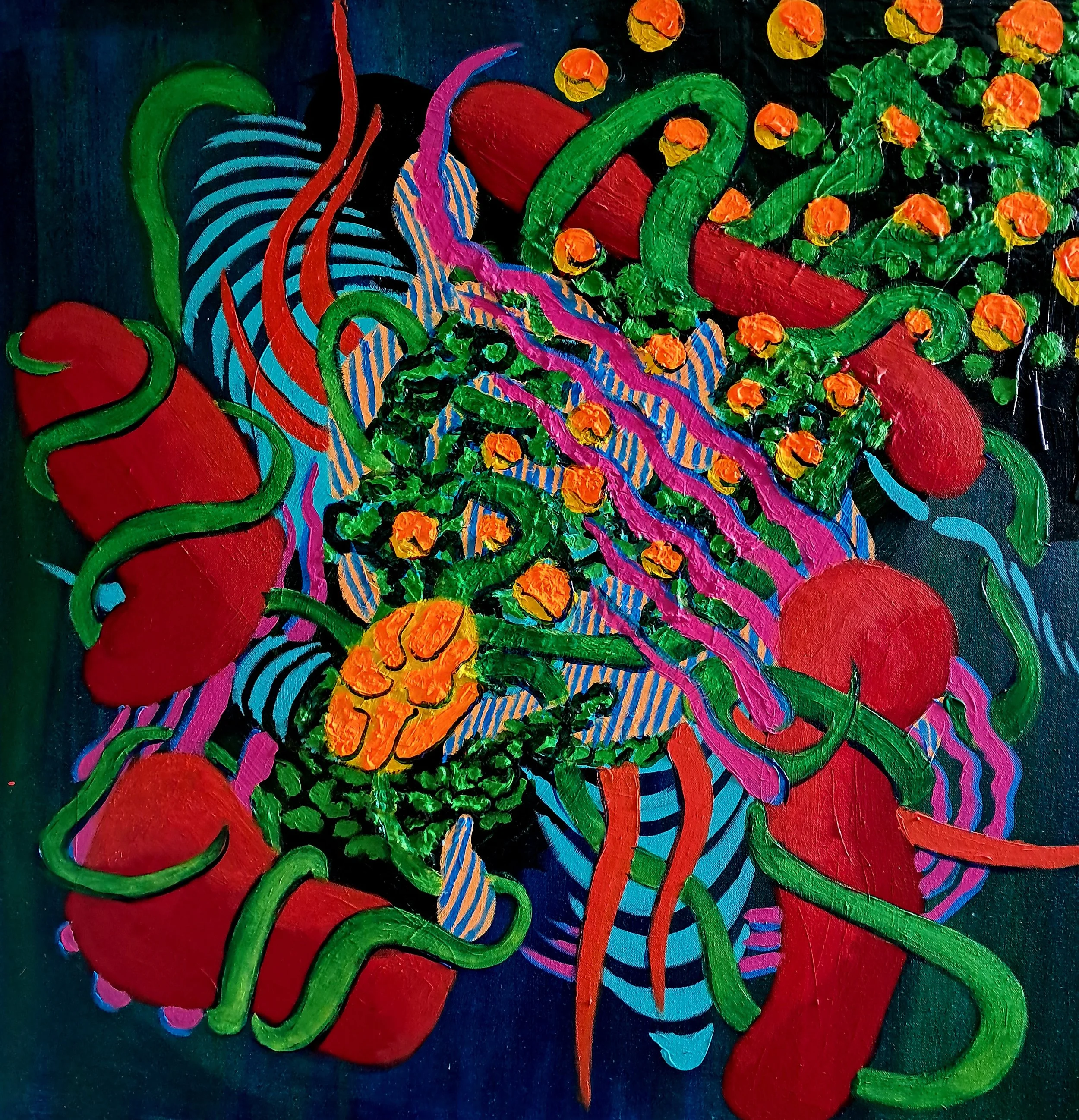
biomorphic painting; acrylic on canvas; 100cm x100cm ; 2026
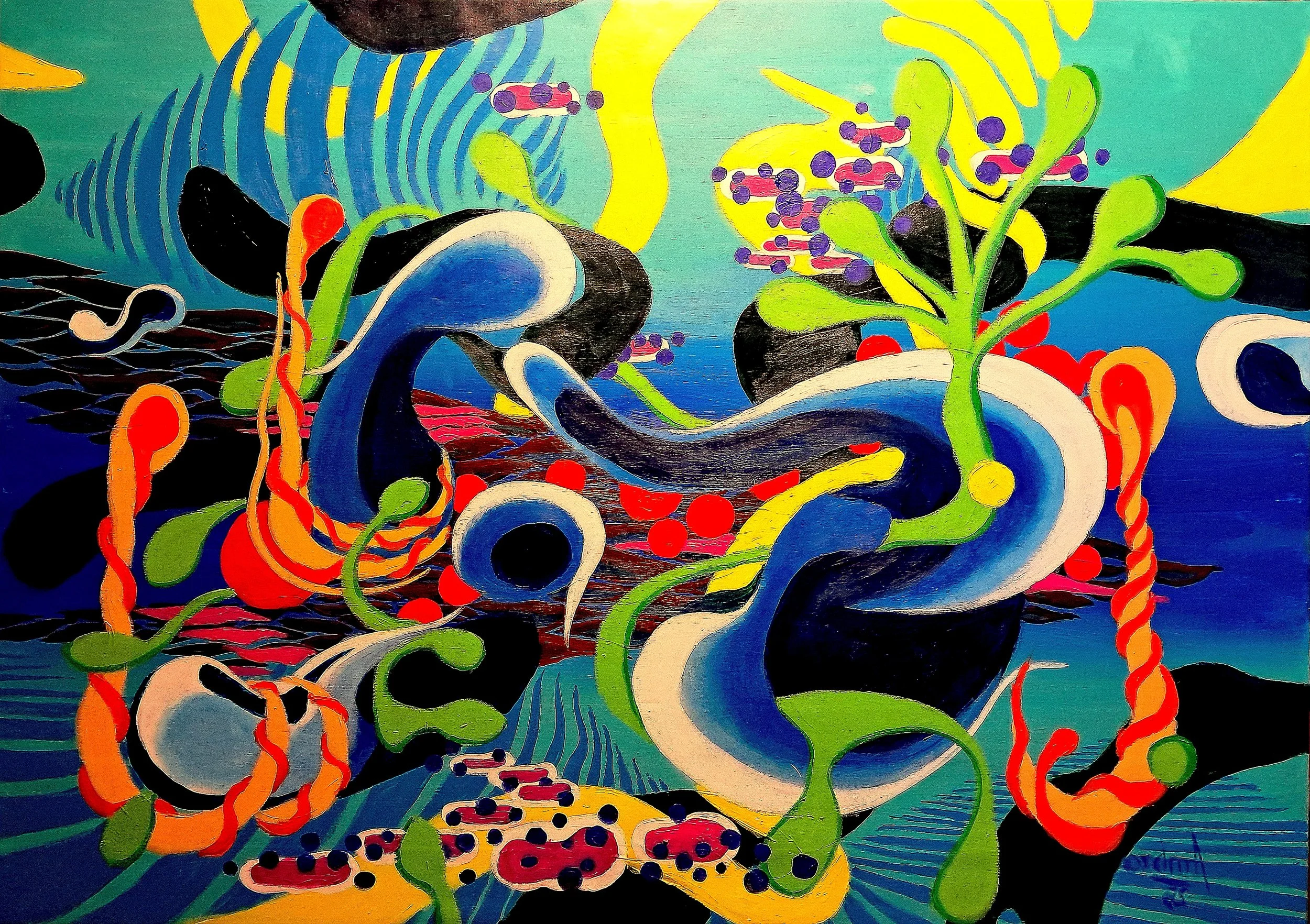
sonata 1 ; 135x cm x 120cm ; acrylic on canvas ; 2026
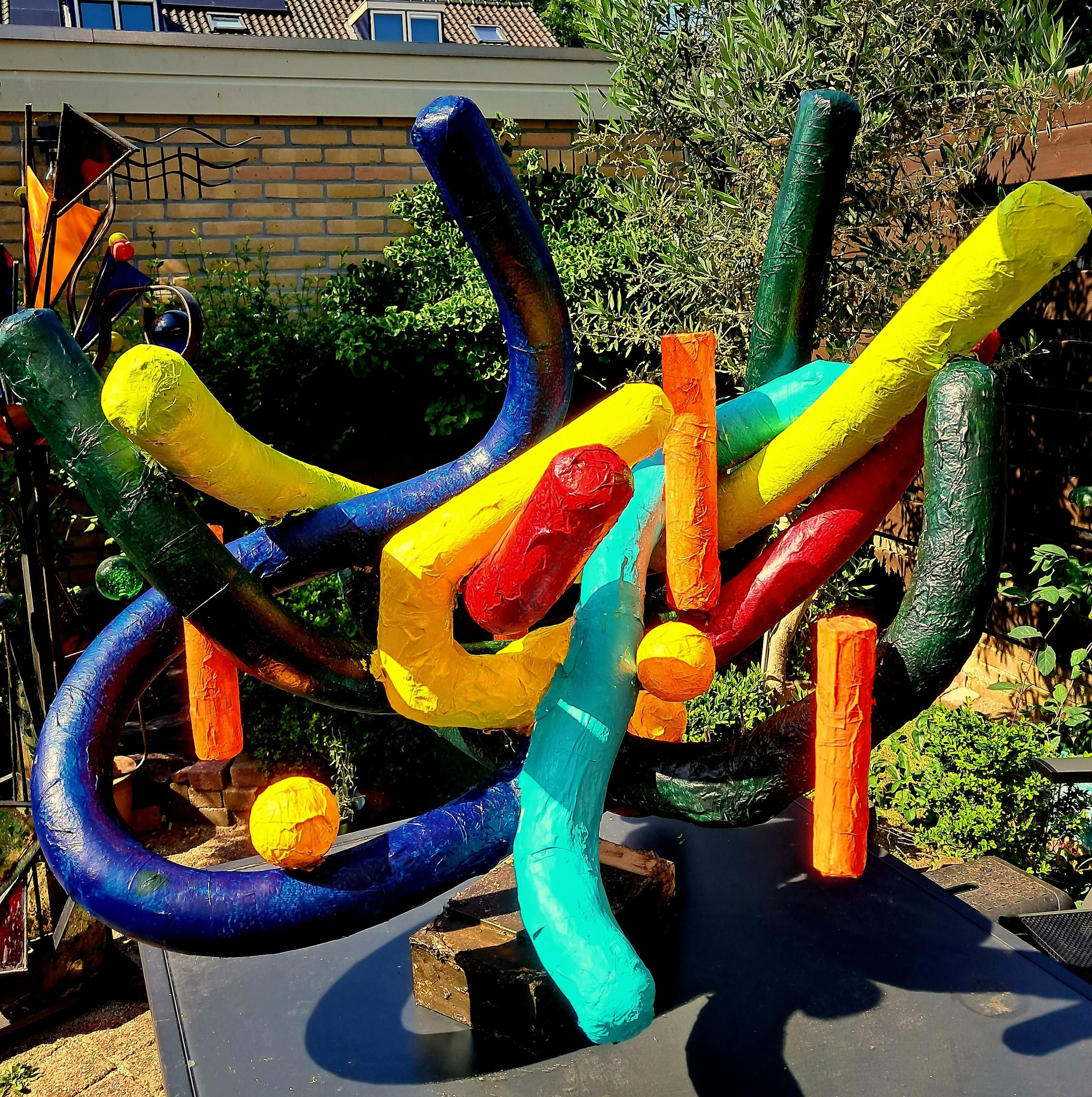
not for publication ; just a model
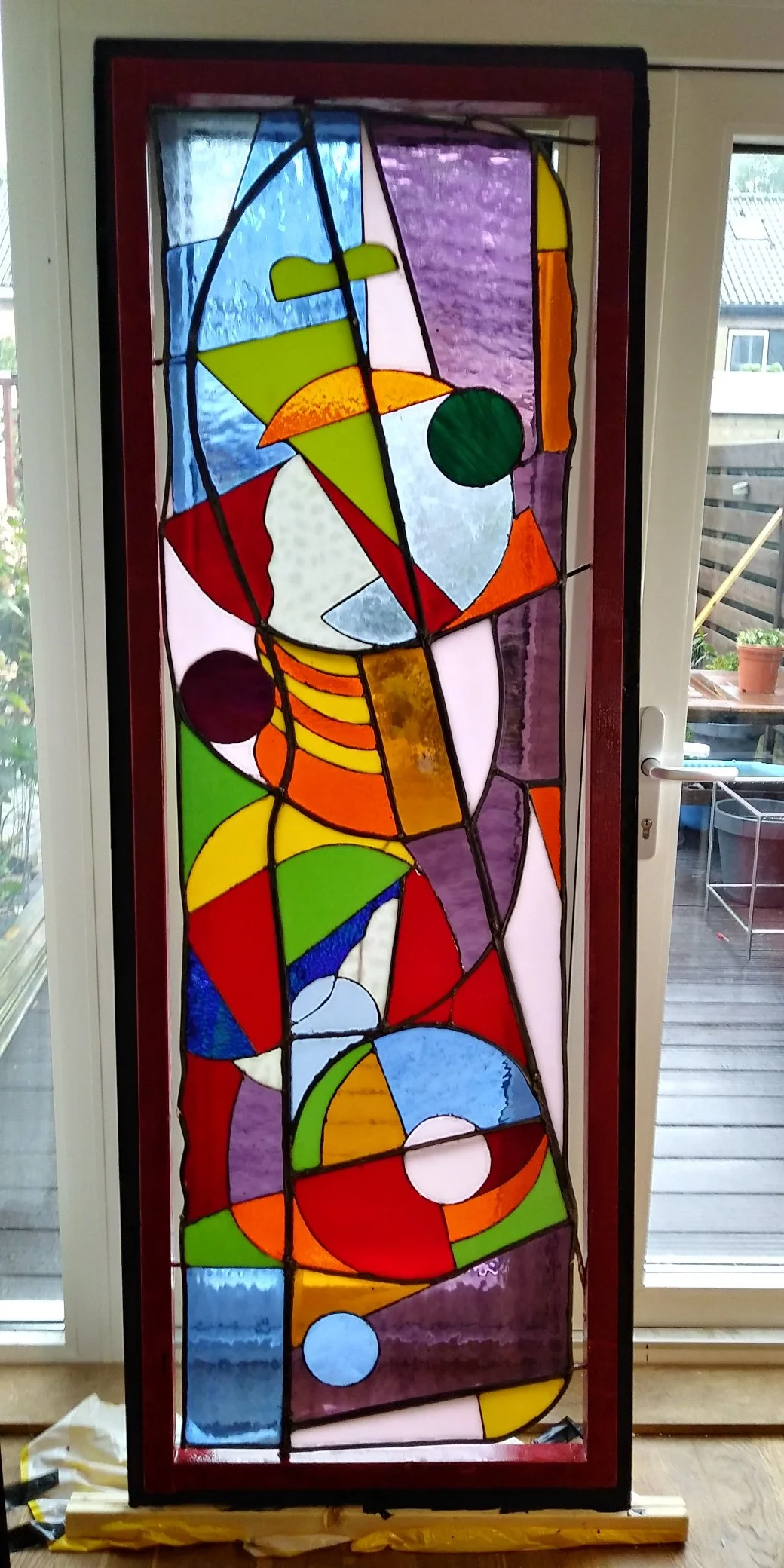
composition; stained glass; 200cm x 60cm; 2022
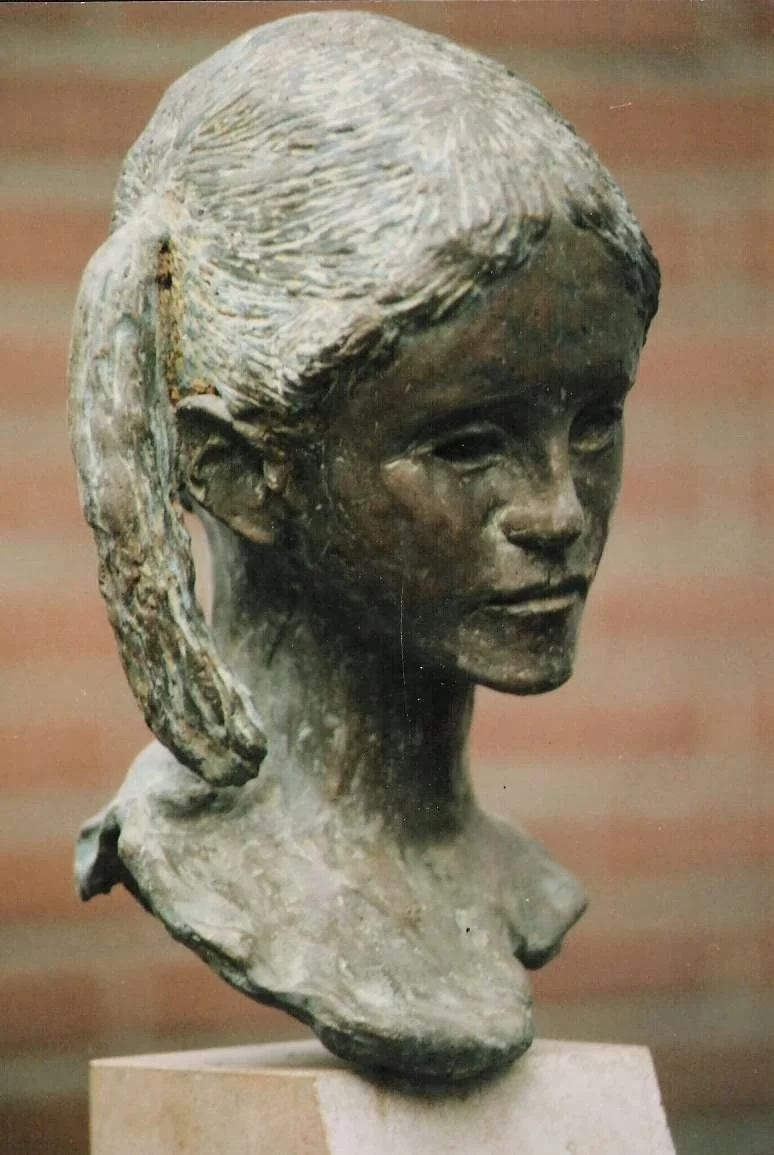
Buste; bronzepowder; 50cm x 30 cm x 40cm
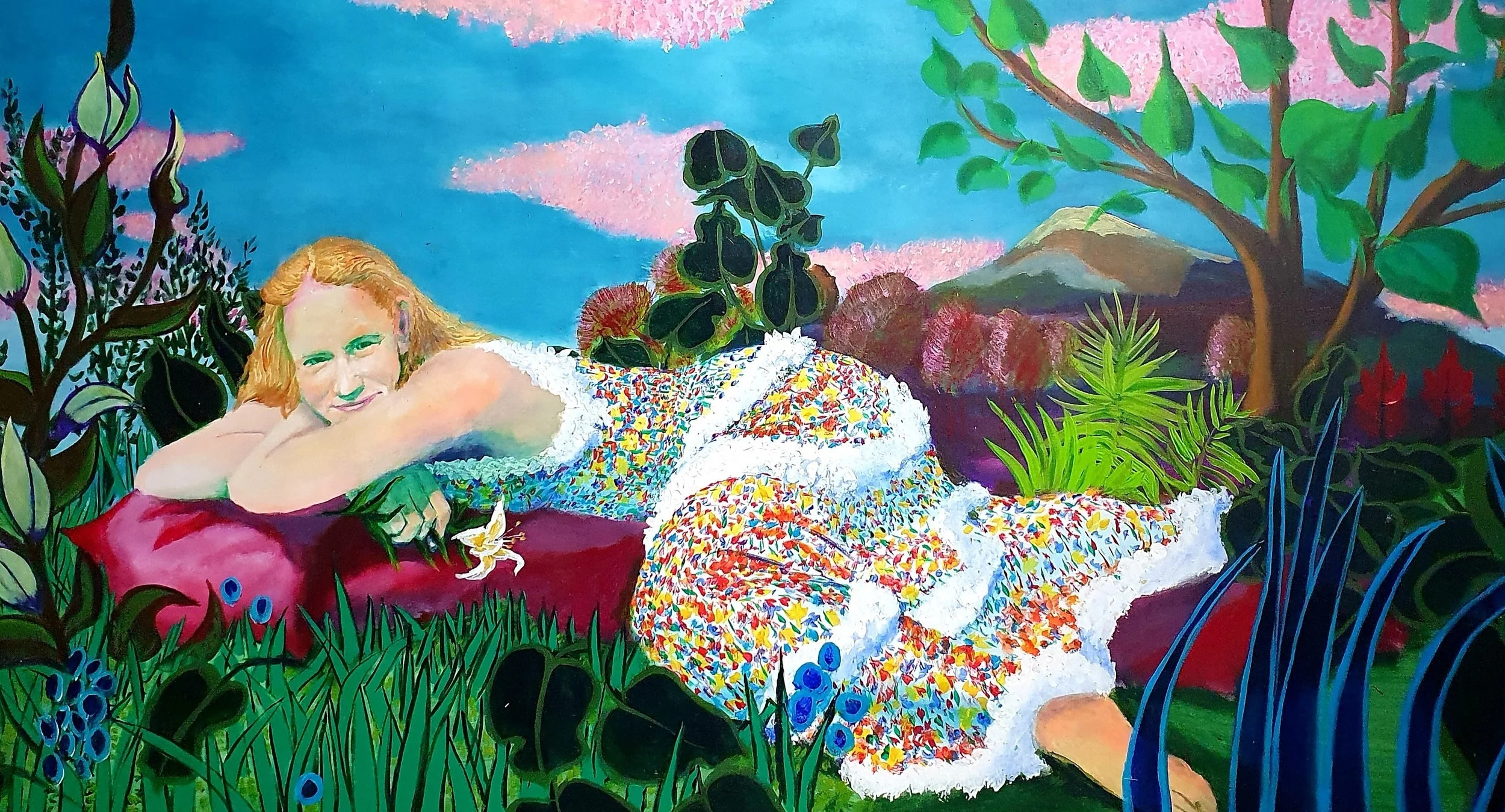
Kate; acrylic on canvas; 180cm x 120cm
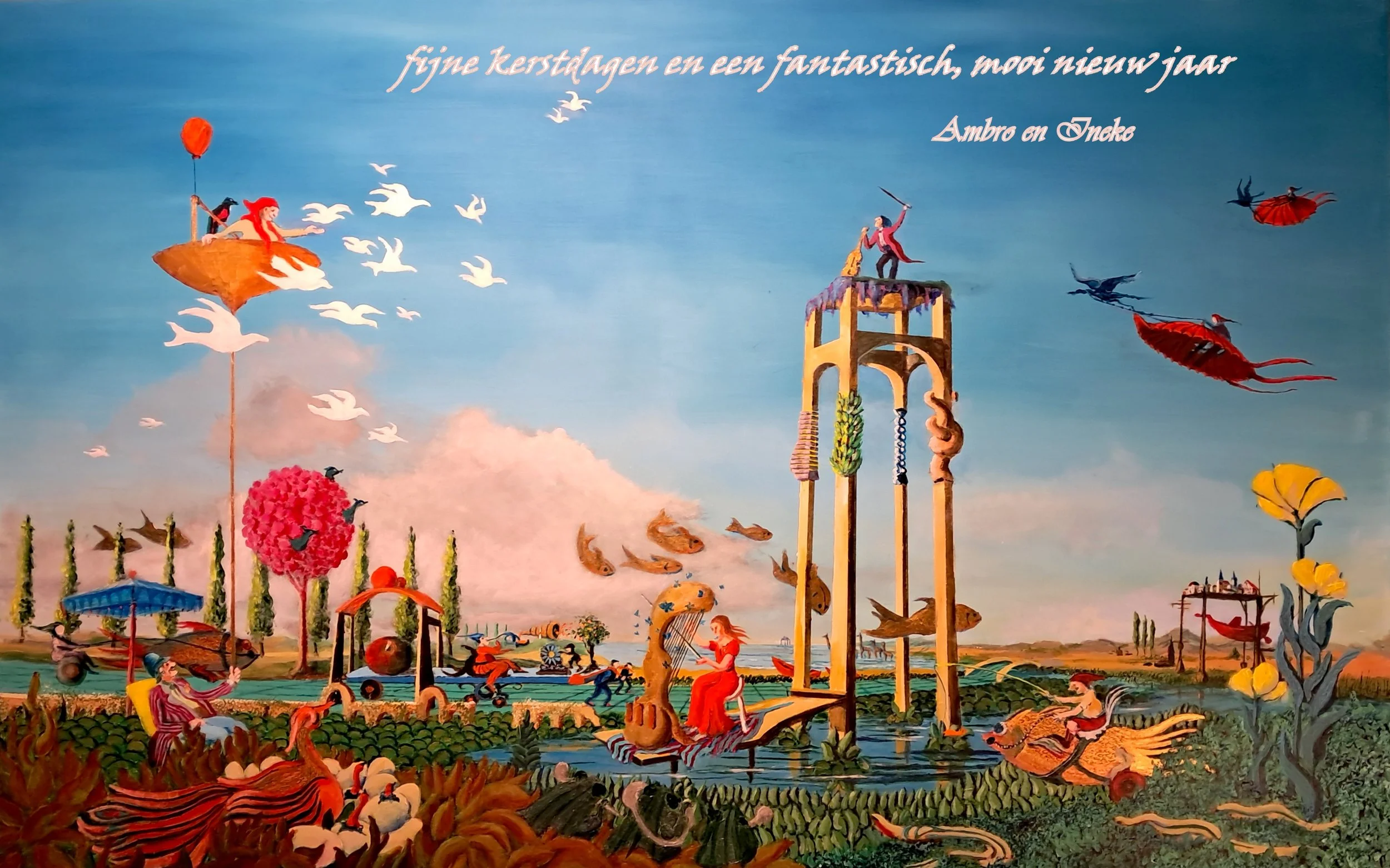
Harplayer; acrylic on canvas; 180cm x120 cm ; 2026
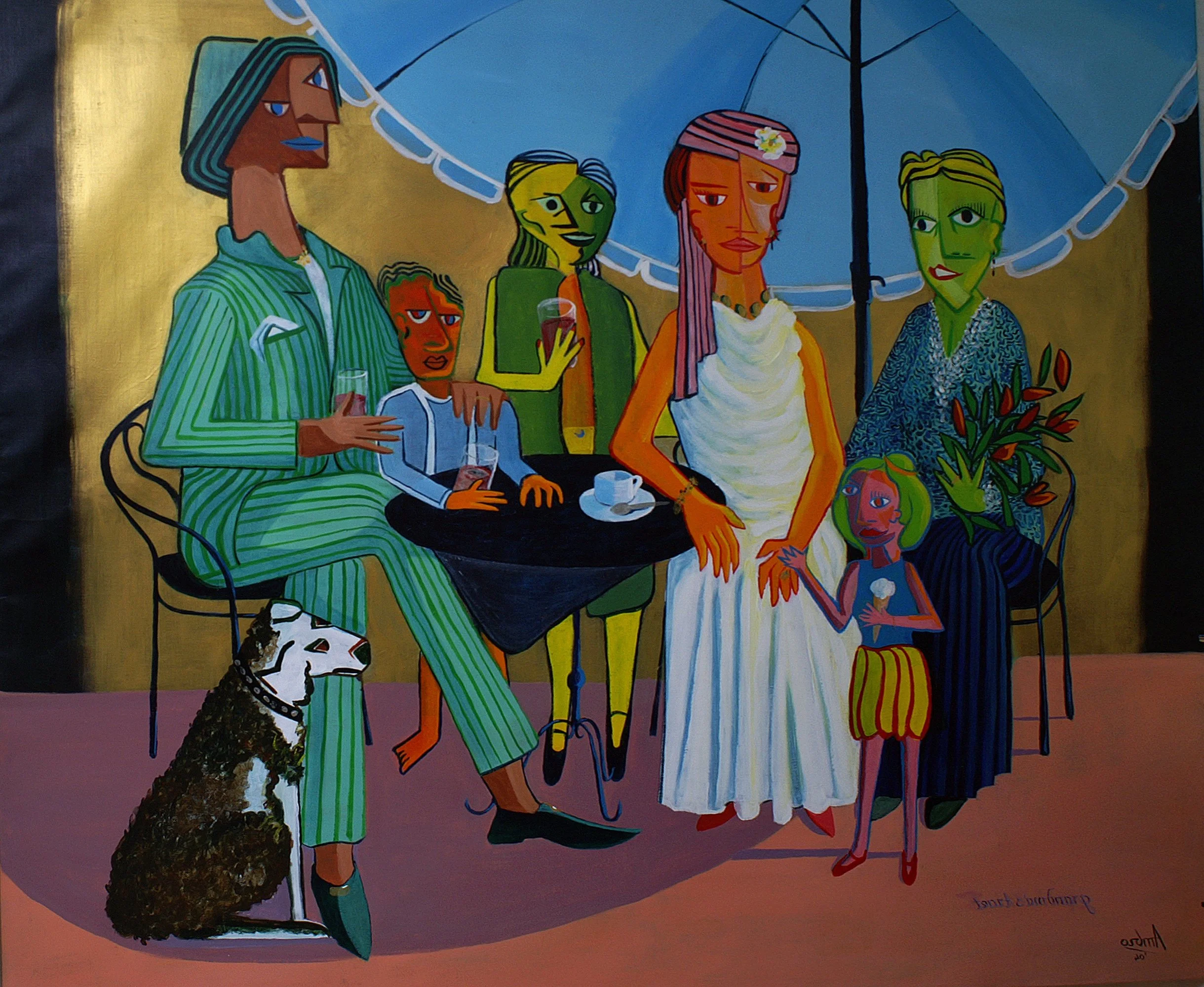
Grandma's treat; acrylic on cancas; 1992
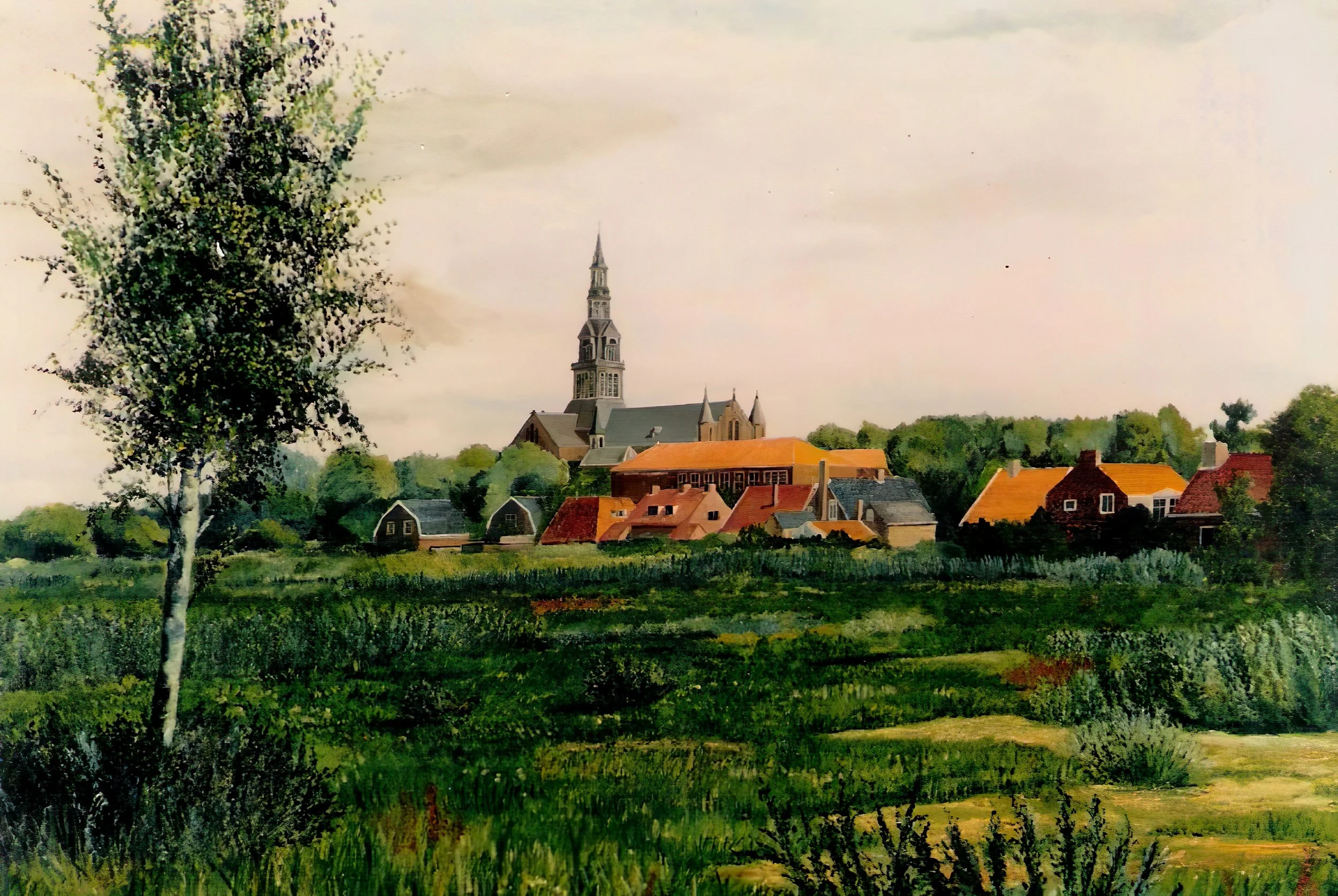
Heemskerk; oil on canvas; 180cm x 200cm ; 1985
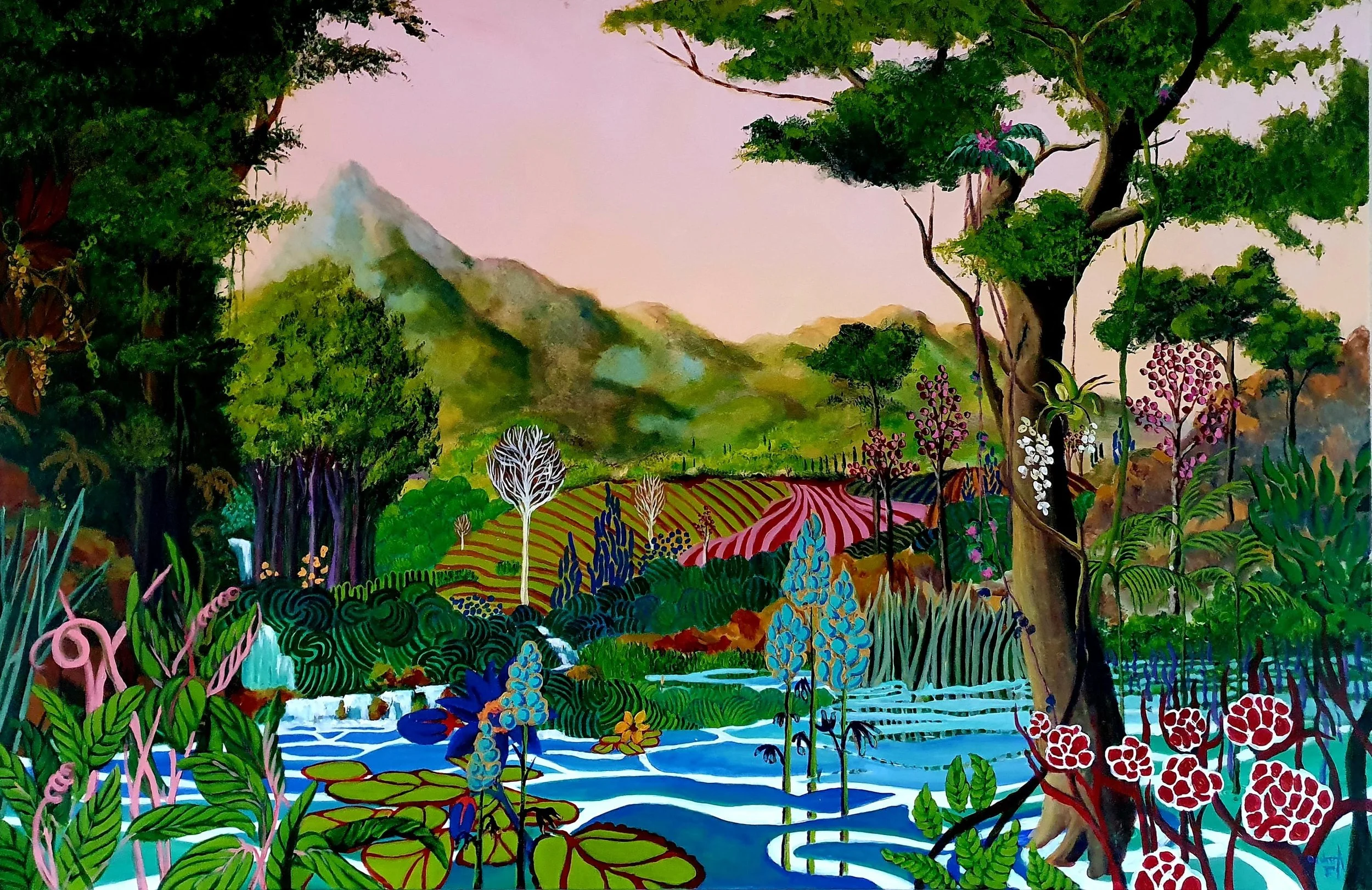
river; acrilic on canvas; 180 cm x 120cm
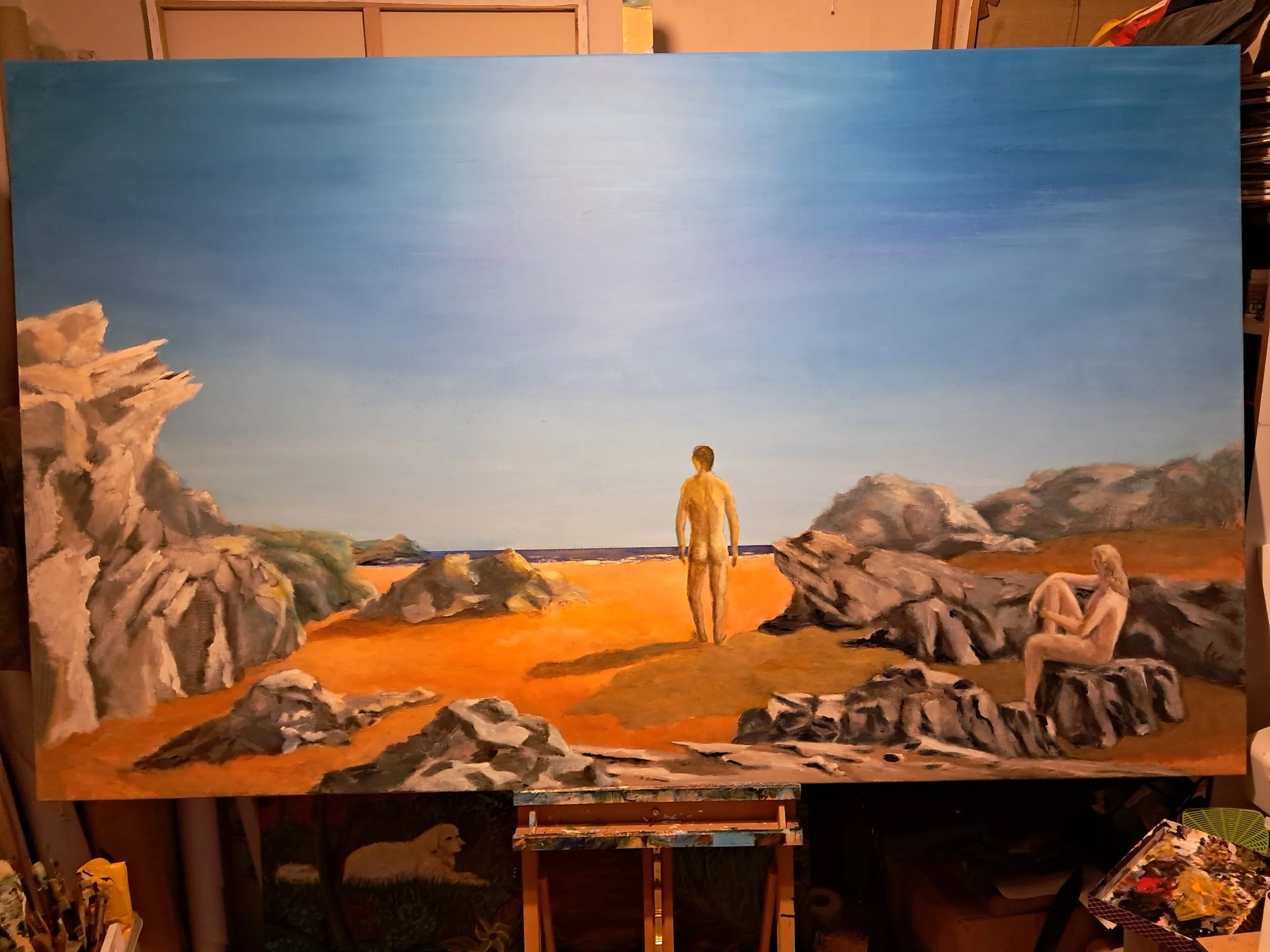
no 2; acrilyc on canvas ; 180cm x 120 cm ; 2025