
MiJung Yun
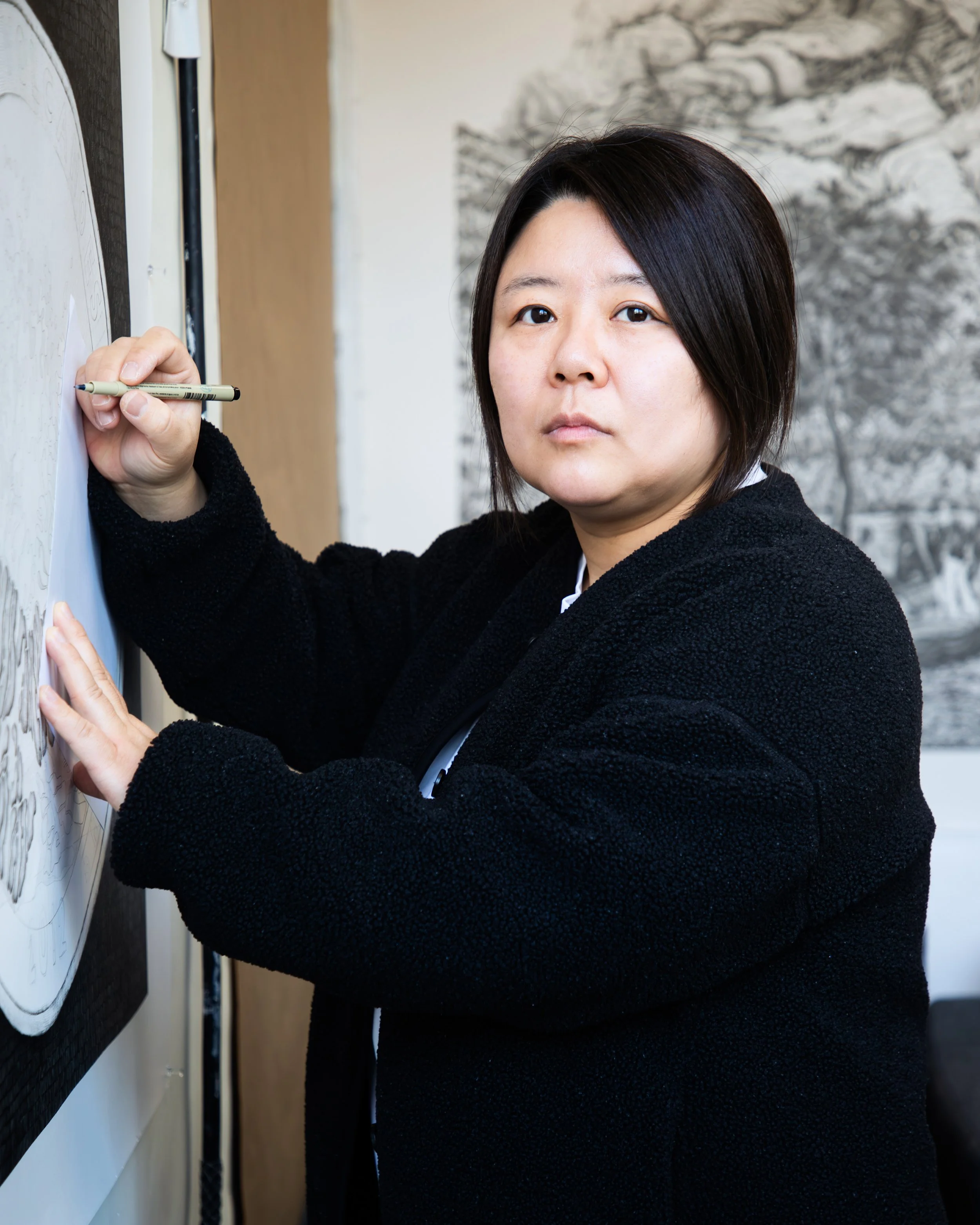
Born in South Korea and currently working in Boston, MiJung Yun is a visual artist best known for drawings of natural phenomena and abstract paintings. She is a 2025-2026 Post Graduate Teaching Fellow at the School of the Museum of Fine Arts at Tufts University (SMFA at Tufts). Throughout her career, she has favored charcoal, graphite, pen, and ink on paper, and acrylic and oil paint on canvas. These materials are used to depict the structures of natural imagery and human figures from life, memory, and imagination. MiJung received her B.A. in Education and M.A. in Curriculum and Instruction Education from Arizona State University. Later, she decided to pursue art as a profession and achieved an A.A. in Fine Arts from Mesa Community College. She received her MFA (2025) in Studio Art at the School of the Museum of Fine Arts at Tufts University. She is a recipient of Tufts University’s Domestic Travel Grant, SMFA at Tufts 2025 Traveling Fellowships, and 2025 Nichols Drawing Breath Award.
MiJung Yun, your drawings appear to construct time not as a linear progression but as a density of marks, a field of accumulated gestures. Could you speak about how your artistic journey led you toward this temporal conception of image-making, and how the act of drawing itself became a way of thinking rather than merely representing?
I often lost track of time when I am drawing. When a particular visual image first appears, I feel compelled to stay with it until I fully move and accumulate across the surface over time. The density of marks I build is not immediately visible from a distance; it asks viewers to come closer, to slow down, and to spend time with the work. Through this, I hope viewers can sense the duration, the movement, and complex idea embedded within that space.
I approach time in my work as both linear and cyclical, exploring the tension between steady progress and recurring patterns. While we move forward in a chronological sense, our memories and reflections often loop back or unfold in spiral-like ways. The accumulation of marks functions as a visual record of this experience, allowing movement between moments rather than a fixed point. Each time a viewer revisits my drawing, there is the potential to encounter something new or previously unnoticed.
My drawings extend beyond representation. They become a way of archiving how I perceive a subject at a particular moment and how that perception continues to shift. These layered gestures are closely tied to my personal experience – specifically my struggle to move forward after the loss of a loved one.
I begin with reference imagery, but it serves only as a point of departure. From there, I allow the work to evolve through a range of possibilities. Despite the meticulous and labor-intensive nature of the process, I experience moments of clarity, transcendence, and pure joy. I enter a collaborative dialogue with my material, pushing the boundaries of how far we can extend within a given space.
The structures in your work often evoke natural phenomena that hover between observation and abstraction. How do you negotiate this threshold, where the image resists both pure depiction and pure formalism, and instead occupies a space of perceptual tension?
I think of it in this way: it is as if we have both encountered a similar scene before, and the work becomes an invitation to reflect on and share how we each experienced it. Through my drawings, I extend my hand first, offering my perspective and asking, “This is how I see the world – does any of it resonate with you?”
In my volcano project, for example, the forms of volcanic plumes and ash are intentionally ambiguous. My intention is not to describe what I saw in a literal sense, but rather to convey how I felt. Each viewer brings different cultural, social, political, and historical experiences, and interpretation should remain open – shifting depending on when and how one returns to the work.
While I begin each drawing with a clear vision of the imagery and ideas I wish to convey, I prefer to let these intentions remain beneath the surface rather than stating them explicitly. This is also why I tend to use minimal or neutral titles, such as Water I, Volcano No.1, or Grief. I want viewers to first encounter a sense of uncertainty. Over time, as they revisit the work, they may begin to notice different visual languages – shapes, forms, and movements – and gradually arrive at their own understanding.
While pure depiction of formalism may exist, they are never entirely separate from the artist’s ideas. For a work to function as art, the artist’s perspective is inevitably embedded within it. In this sense, I often think of Brillo Boxes by Andy Warhol. We are not simply looking at a box; rather, we are prompted to questions issues such as consumerism and originality, and to engage with meanings beyond the object itself.
In the studio, I sometimes find myself thinking, almost playfully, “Voilà! This is what I want you to see. Now, can you discover what I’ve hidden?”
Pen and ink carry with them a long history of linear authority, from calligraphy to scientific illustration. What drew you specifically to this medium, and how do you situate your own line within or against these historical precedents?
Pen and ink carry a long history of authority, having been used in official legal documents and contracts to create records that are permanent, finalized, and resistant to change. They embody both a sense of trust and a commitment to permanence. However, the moment I realized that what I believed to be permanent could in fact become temporary, I found myself unexpectedly situated within a state of chaos, unpredictability, and instability.
I began with charcoal and graphite drawing, where erasure plays a crucial role. In that medium, the eraser becomes an essential tool, capable of making forms emerge with clarity and conviction. At a certain point, however, I decided that I no longer wanted to erase. Instead, I chose to leave all marks visible. Through this approach, I hope viewers can better understand who I truly am – my deep love for drawing, the struggles I endure in life, and the sense of freedom I ultimately find in art making.
My earliest ink drawings were made with a ballpoint pen – one of those you could collect for free at conferences or school orientations. Although I was deeply attached to that medium, I later transitioned to archival ink for its longevity. Depending on how it is used and by whom, ink can carry a sense of authority in its record. I chose this medium not only because it is light enough to carry with me everywhere, but also because it is capable of holding the deeper, heavier meanings I wish to convey.
Much like its historical use, the marks I create with pen and ink are highly intentional, yet at the same time, they retain an element of spontaneity.
Your surfaces are composed of innumerable small, repeated gestures that seem to oscillate between control and entropy. Could you describe how these lines emerge in the studio, and whether you think of them as descriptive marks, temporal records, or something closer to an index of bodily movement?
These are certainly descriptive marks, yet I view them as permanent, indelible records – an archival of time, existence, and my own creative process. While the work inherently involves physical labor, such as navigating a ladder, my primary focus remains on the shift in my perspective and the evolution of the subject matter as it develops and reaches a state of temporal finalization.
I use this term because these shifting perspectives are never truly static; they inevitably inform and evolve into the next piece. I appreciate your observation of the tension between control and entropy in my work. Those countless, repeated gestures reflect the complexities of daily life – moments that may feel fragmented but ultimately coalesce into unified rhythm.
There is a certain intimacy in the scale of your marks that resists photographic reproduction, insisting on the physical presence of the viewer. How conscious are you of this relationship between the work and its mode of viewing, and do you consider this resistance to reproduction a conceptual component of the work itself?
The relationship I have developed between my work and the viewer’s perspective originates from my fundamental understanding of personhood, situation, and context. Without a deliberate effort to engage with and share ideas with a subject, one rarely uncovers its true characteristics.
It is often the case that a narrative appears straightforward from a distance; however, once you immerse yourself in the specific circumstances, a more intricate reality emerges. This mirrors the natural world: the subtle growth of a plant, the blooming of a flower, or the way soil absorb rain are phenomena difficult to perceive from a far. To grasp these nuances, one must be present, experiencing the subject firsthand to truly comprehend its depth.
Many of your subjects involve geological or oceanic forces, events that unfold over immense spans of time. What attracts you to these phenomena, and how do you translate such vast temporal and spatial scales into the immediacy of hand-drawn lines?
My father is a volcanologist, and his research serves as the primary foundational reference for my Volcano and Water projects. Our daily conversations regarding natural phenomena – specifically volcanic activity – initiate my creative process. As you noted, geological events unfold over immense durations; I believe capturing these vast spans of time and the inevitability of these shifts requires a corresponding investment of studio time.
I aim to translate these expansive temporal and spatial scales through meticulous, hand-drawn marks. At times, I employ repeated vertical lines that do not overlap, mirroring how volcanic layers accumulate without ever being erased. Conversely, I use scribbled gestures to evoke the constant movement and circulation of oceanic forces. This aesthetic approach developed organically, as I was raised immersed in both the scientific knowledge and the specific geological landscape of my youth.
In your paintings and drawings, chaos often appears not as disorder but as a kind of hidden structure waiting to be revealed. How do you approach this transformation from turbulence into clarity, and what does this process mean to you on a personal or philosophical level?
I appreciate you highlighting that transition. Throughout my first year of graduate study, I experimented with developing hidden structures within chaos and disorder, utilizing both painting and drawing.
Having navigated unexpected turbulence in my own life, I found that my practice became a way of to survive and reorganize those chaotic events, ideas, and interactions into a path toward acceptance. Through this experience, I realized that everyone carries their own degrees of loss and grief. I wanted to archive these studio hours as a personal record – much like a diary – of that endurance.
Chaos and disorder only exist in relation to order; often, it is our own definition of a situation that classifies it as one or the other. This mirrors how a viewer engages with my work. It may appear as an abstract environment from an intimate distance, yet reveals a structured representation from a far. While turbulence is a struggle, it eventually passes, and within that process, my work becomes a mean of finding comfort and moving forward.
Your practice spans both drawing and painting, yet the logic of the line seems to persist across media. Do you see painting as an extension of drawing, or does each medium open up fundamentally different conceptual problems?
My line work originally developed from my painting project, Project Grief. Through that process, I was able to explore fundamental aspects of line – its expressive potential and the conceptual meanings it can carry – which naturally led me to a drawing series. During this time, I was also working with wood, welding, lithography, and ceramics, which helped me fully understand the possibilities of each medium. This approach allows me to move freely between them without being constrained by medium-specific methods, while maintaining a consistent conceptual framework. Currently, I view the selection of medium as a deliberate choice; whether an idea is realized through painting or drawing depends entirely on the specific conceptual requirements of the moment.
You have spoken about the meditative aspects of your process. How does repetition function for you: is it a discipline, a form of endurance, a ritual, or perhaps a strategy for dissolving the boundary between intention and accident?
Repetition provides me with a sense of comfort because it carries evidence of stability and shows that the process is working. When I create endless layers of repeated short marks, I am constantly observing the imagery as a whole as well, considering whether it is moving toward the visual concept in my mind.
In the studio, I often experience a pure, transcendent joy in drawing – similar to the moments of unselfconscious delight we feel as children, when we are fully absorbed in what we love and grateful simply to be doing it. At the same time, approaching the final image requires endurance. While my initial pen work moved with a degree of unpredictability, my current practice has evolved toward a purposeful approach, driven more by conscious intention than by chance.
Could you discuss a specific work that feels particularly pivotal in your development, and explain what conditions, decisions, or discoveries allowed that piece to become a turning point?
Volcano No.1 was a pivotal work in my development as an artist. At that time, I was grappling with personal struggles, and I did not want to bring those complicated ideas directly into my drawings. I aimed to use simplified forms to explore complex structures, and disorder to reveal order. These approaches are fully rendered in Volcano No.1.
Like my other large-scale drawings, this work must be seen in person to fully experience the intensity of its process and the deep meaning embedded within. Each piece conveys distinct struggles and the process of resolution, which I subtly conceal, allowing viewers to perceive them to varying degrees. Those who have faced similar experiences may recognize it, while others might remain unaware.
For Volcano No.1, I used very inexpensive 99-cent ballpoint pens. As the inks came from different brands, the colors shift gradually toward various bluish tone, which I find adds a unique character to the work. I love this drawing deeply, and the next series could not have developed without it. Volcano No. 1 marked the beginning of my fascination with large-scale drawings and prompted me to consider the longevity of my work, eventually leading me to switch to archival pen and ink.
Your imagery often appears to oscillate between microscopic and cosmic scales. Is this ambiguity intentional, and what role does scale play in shaping the viewer’s psychological or bodily response to the work?
Those ambiguities are deeply intentional. We are often expected to introduce ourselves in just a word or two, which frequently leads me to reflect on my own name. In Korean, the name/word MiJung also carries the meaning of a state of being undecided.
In the same way, I intend for the interpretation of my drawings to remain fluid, shifting according to the viewer’s personal history, current circumstances, passage of time, and physical standpoint. Working on a large scale is essential to this. It provides the expansive physical and mental space for the viewers to truly inhabit and experience these psychological shifts.
Your background in education and curriculum design suggests a structured approach to knowledge. Do you find that this earlier training continues to shape your studio practice, perhaps in the way you build systems of marks or conceptual frameworks?
This is a fascinating question, as my background in education and curriculum design – coupled with the analytical perspectives inherited from my parents in geology and music – is deeply rooted in my studio practice. There is clearly a system of marks governed by a highly intentional approach; the development of my initial imagery and the overall progression of a piece follow specific routines.
At the same time, I am constantly exploring how to maintain, disrupt, and reshape these routines to invite new perspectives. In many ways, this mirrors the pedagogical process: the way we design, adjust, and ultimately redesign curriculum and instruction to meet evolving needs.
The physical labor of layering thousands of lines over a surface suggests a deep commitment to process. How do you sustain this intensity over long periods, and what kinds of mental or emotional states accompany such extended durations of making?
When I am fully committed to the work, it transcends any consideration of physical labor. It becomes a matter of where you choose to place your focus. I am driven by a deep curiosity regarding my own capacity as an artist – probing the limits of how far I can push my practice forward.
For me, the challenge lies in how I can best visualize the concepts on the surface. I view my current series – Volcano, Water, and Grief – as lifelong projects. I am fascinated by how they will evolve over time and how my perspectives will shift. I look forward to seeing how these ideas might eventually simplify or find new ways to communicate within a given space.
Are there current projects that mark a departure from your earlier concerns, perhaps in scale, material, or conceptual ambition, and what questions are you hoping these new works might open?
I recently received a SMFA at Tufts 2025 Traveling Fellowship for my Volcano project and have just returned from my field research. This experience was truly transformative; it has significantly expanded my perspective and informed the direction of my upcoming work. I am currently in the process of scaling up these new pieces, and I look forward to sharing how the series evolves.
Your work seems to insist on patience, both in its making and its viewing. In a culture increasingly oriented toward speed and instant images, what do you hope the slow, immersive experience of your drawings might offer to contemporary audiences?
In a contemporary landscape defined by rapid consumption and instantaneous imagery, the sheer velocity of information often feels both disorienting and dizzying. I have found myself instinctively attempting to categorize and simplify data to better comprehend how these fleeting images manipulate our cognitive processes.
While my drawings employ a seemingly maximal density of marks, they are not strictly maximal in the traditional sense; rather, they adhere to a rigorous internal order and structural logic. This approach would invite the viewer to engage in a physical dialogue with the work, moving back and forth to navigate the transition between intimate abstraction and distant representation.
I intend for this immersive experience to prompt a conscious decision-making process in the audience regarding how they engage with both art and information. I hope to encourage a reflection on the nature of perception itself. Whether the audience will merely consume the immediate visual surface or explore deeper conceptual framework beneath it.
Website: mijungyun.com
Instagram: @mjy_mijungyun
Linkedin: https://www.linkedin.com/in/mijungyundrawings/
Email: mijungyundrawings@yahoo.com
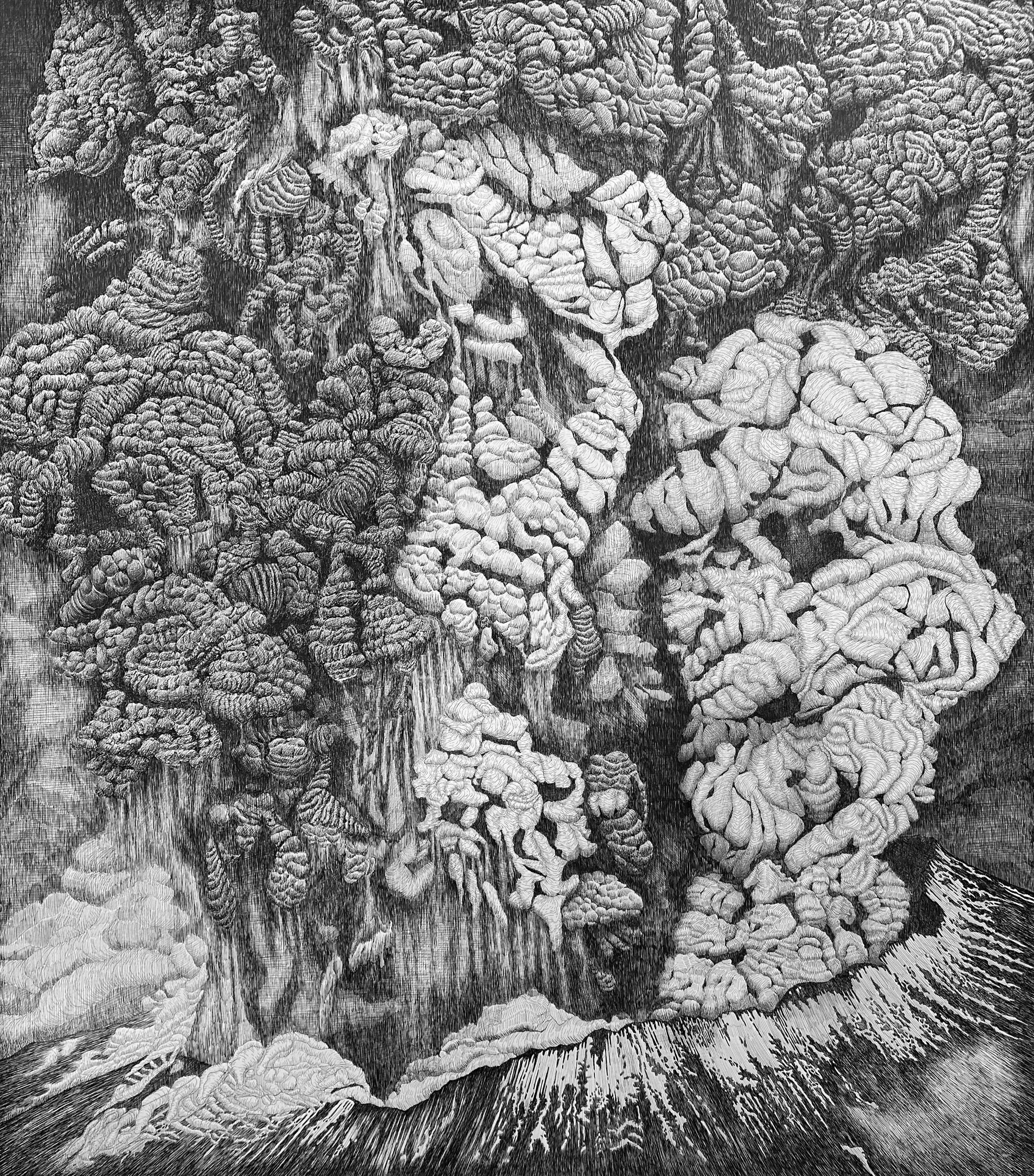
MiJung Yun, 2024, Volcano No. 1, Ballpoint pen on paper, 119.38 x 106.68cm
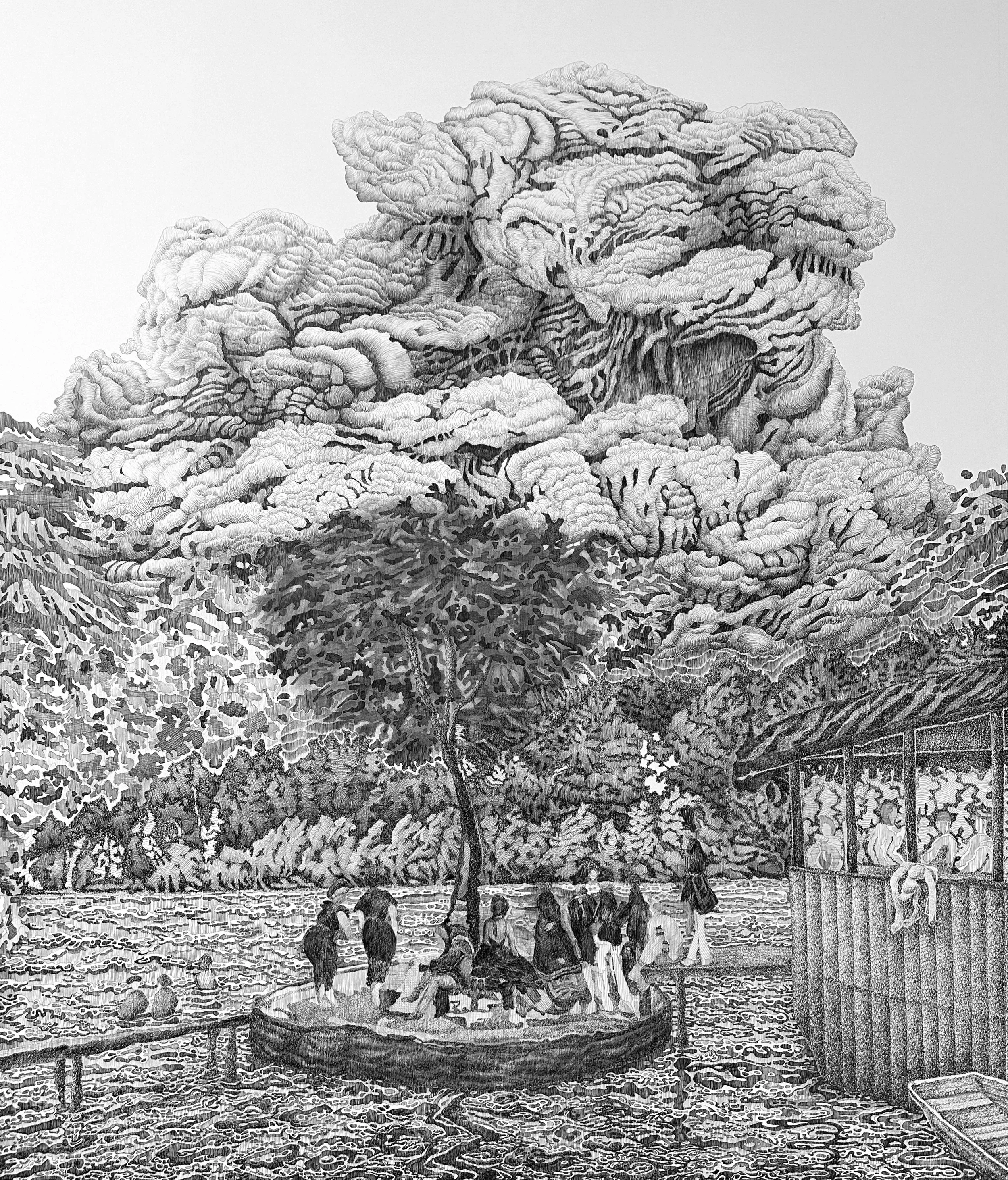
MiJung Yun, 2024, Volcano No. 3, Pen, Ink, and Charcoal on paper, 119.38 x 106.68cm
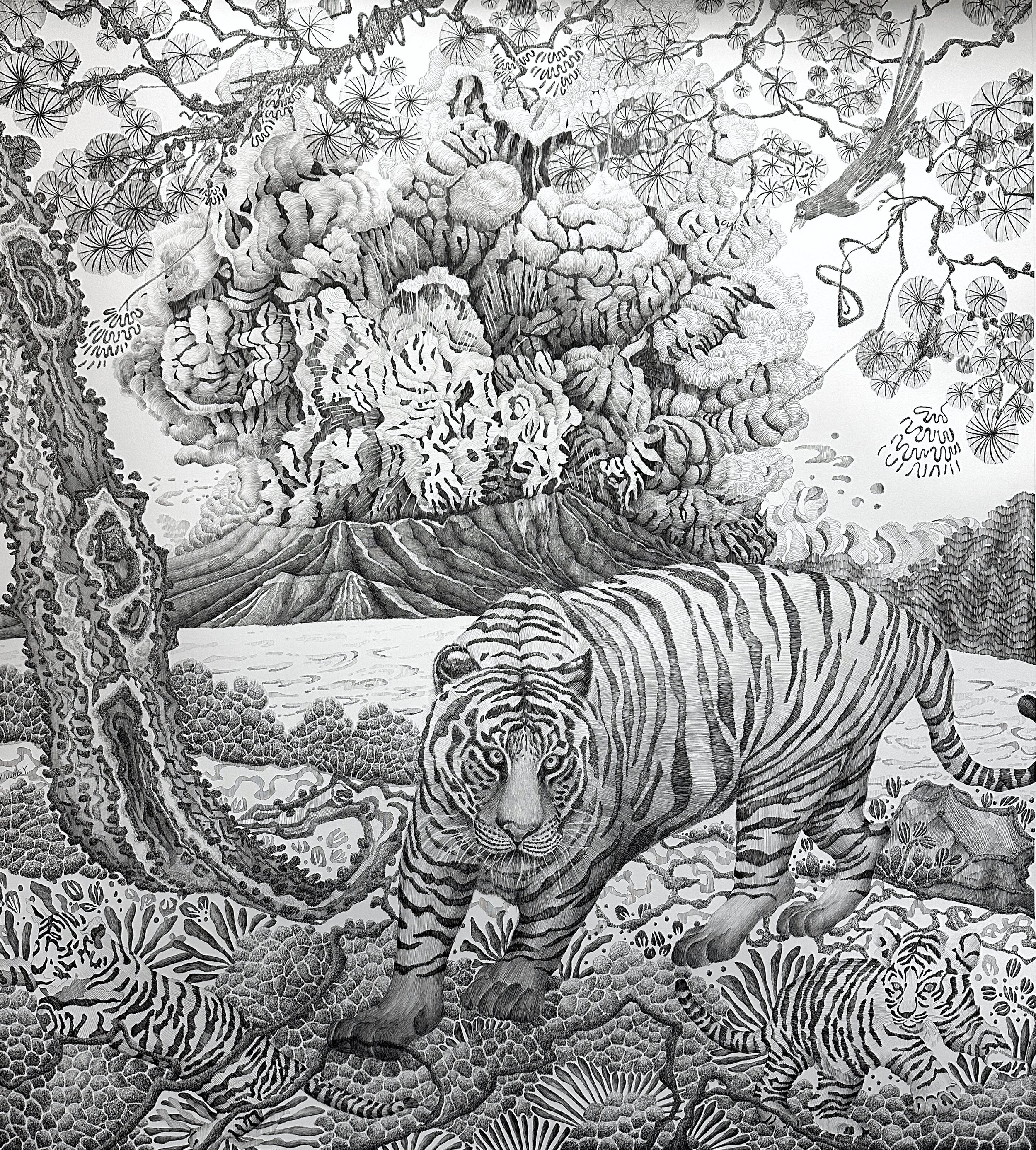
MiJung Yun, 2025, Volcano No. 4, Pen and Ink on paper, 119.38 x 106.68cm
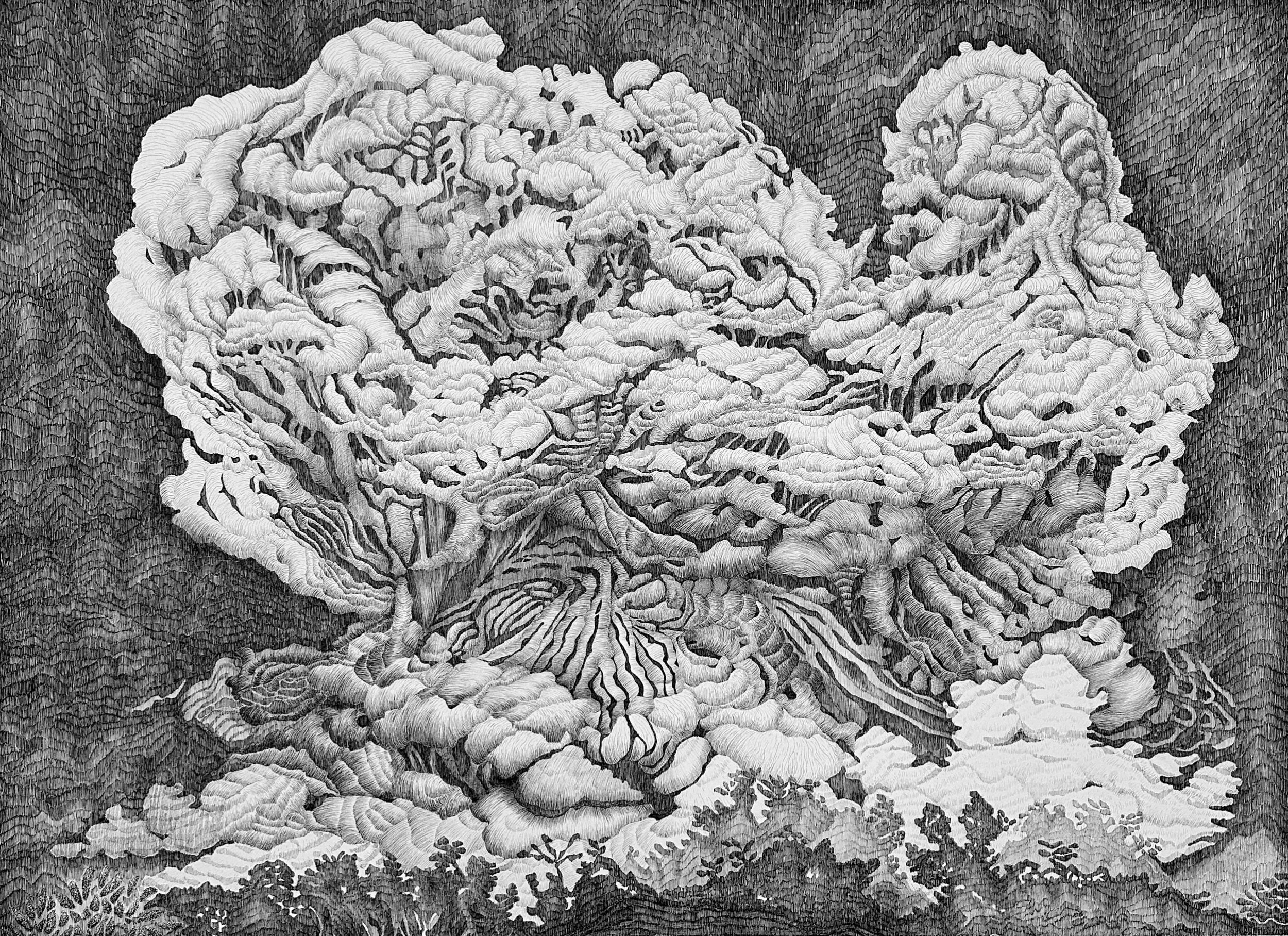
MiJung Yun, 2024, Volcano No.5, Pen and Ink on paper, 78.74 x 106.68 cm
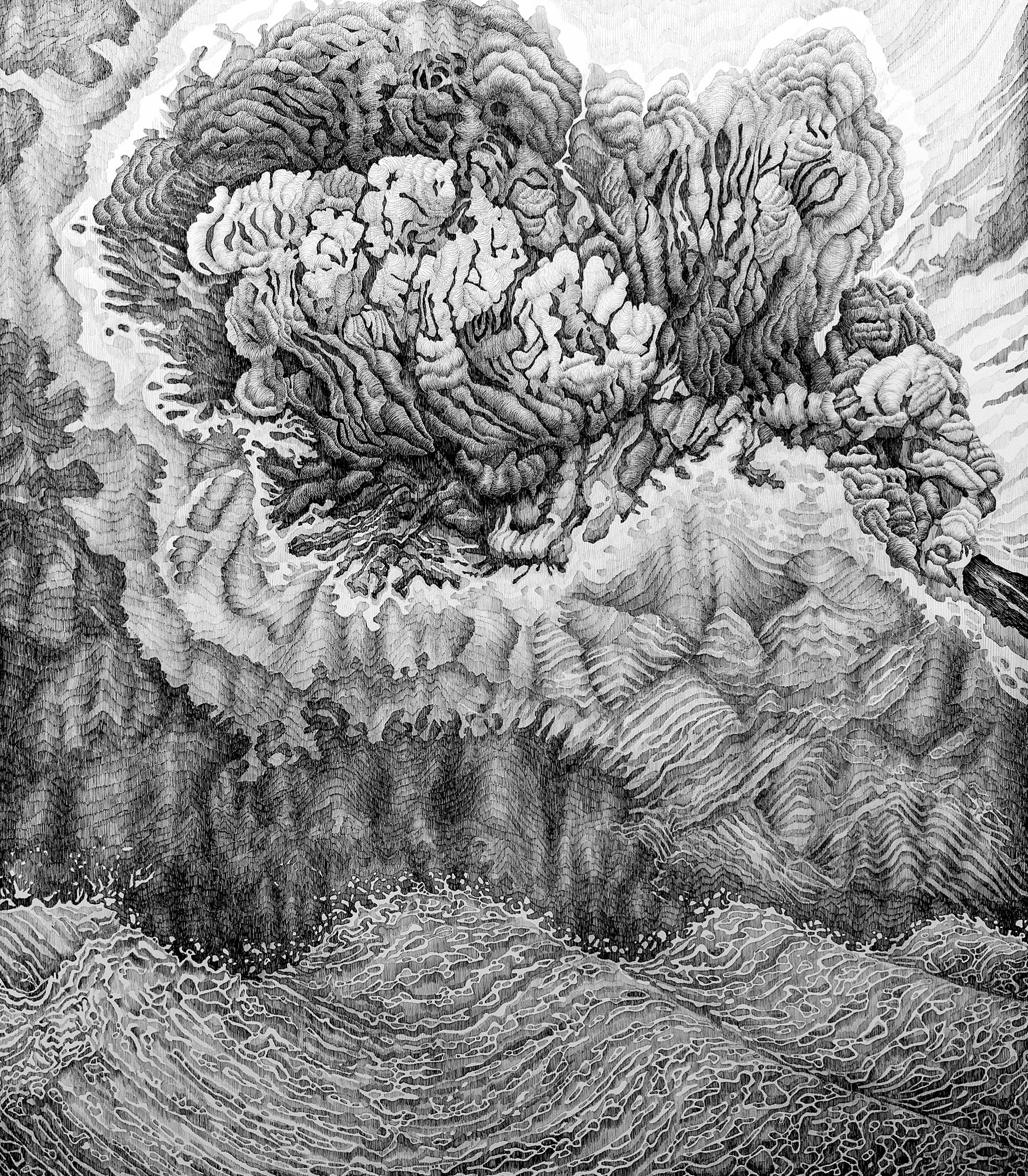
MiJung Yun, 2024, Volcano No. 6, Pen and Ink on paper, 119.38 x 104.14 cm
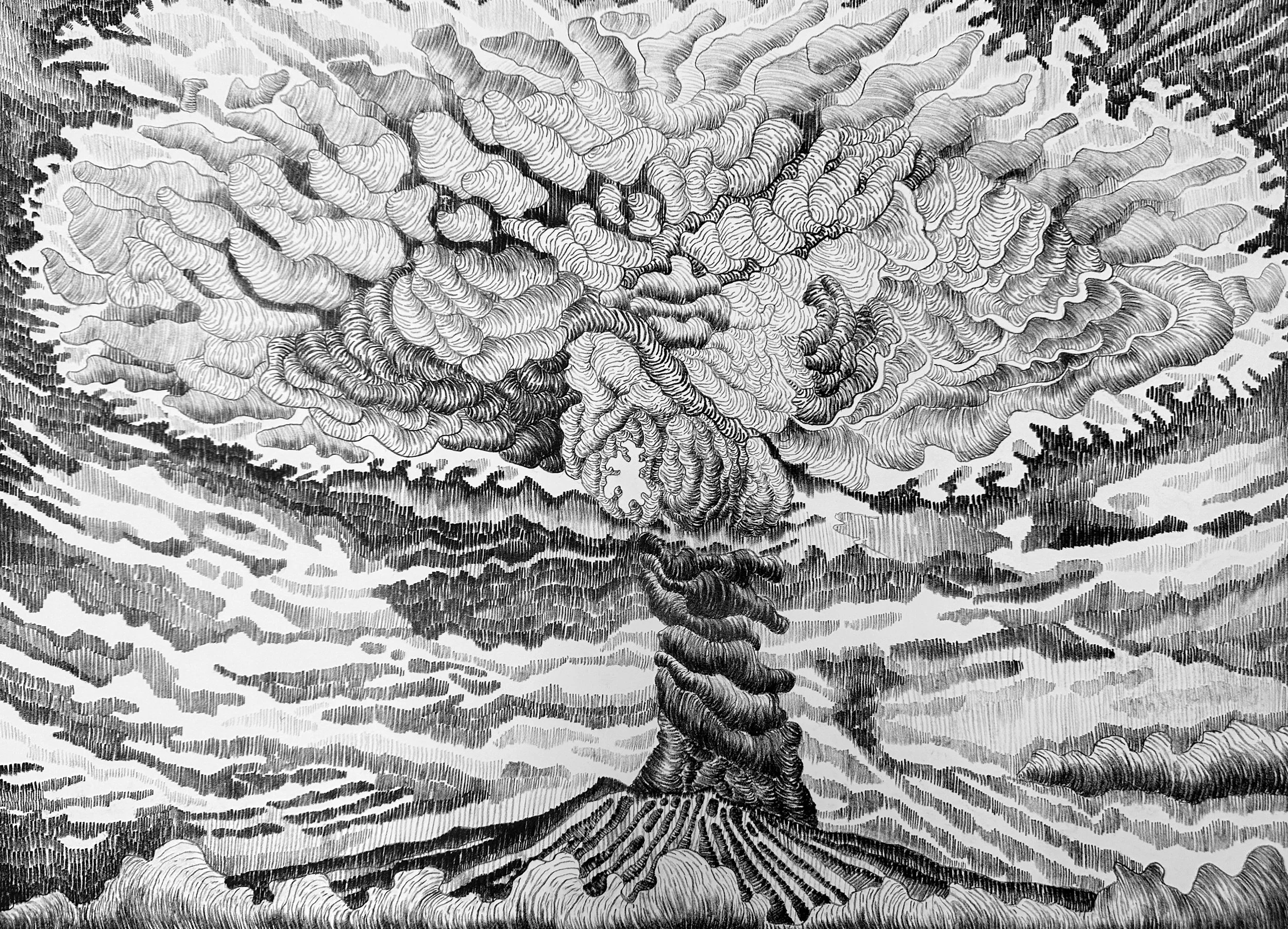
MiJung Yun, 2024, Volcano No. 7, Lithography print on paper, 47.75 x 67.31 cm
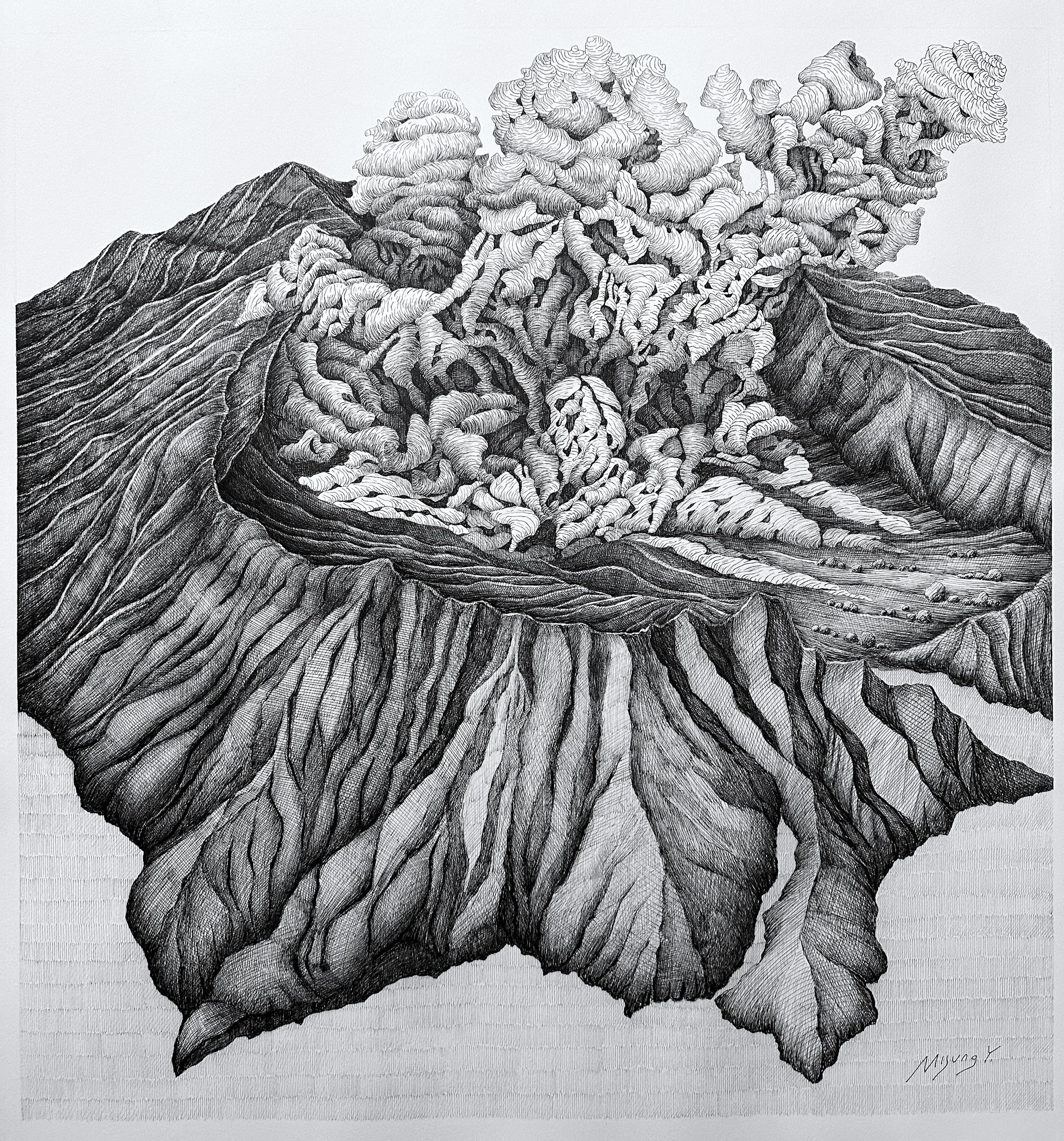
MiJung Yun, 2024, Volcano, Pen and Ink on paper, 57.15 x 53.34 cm
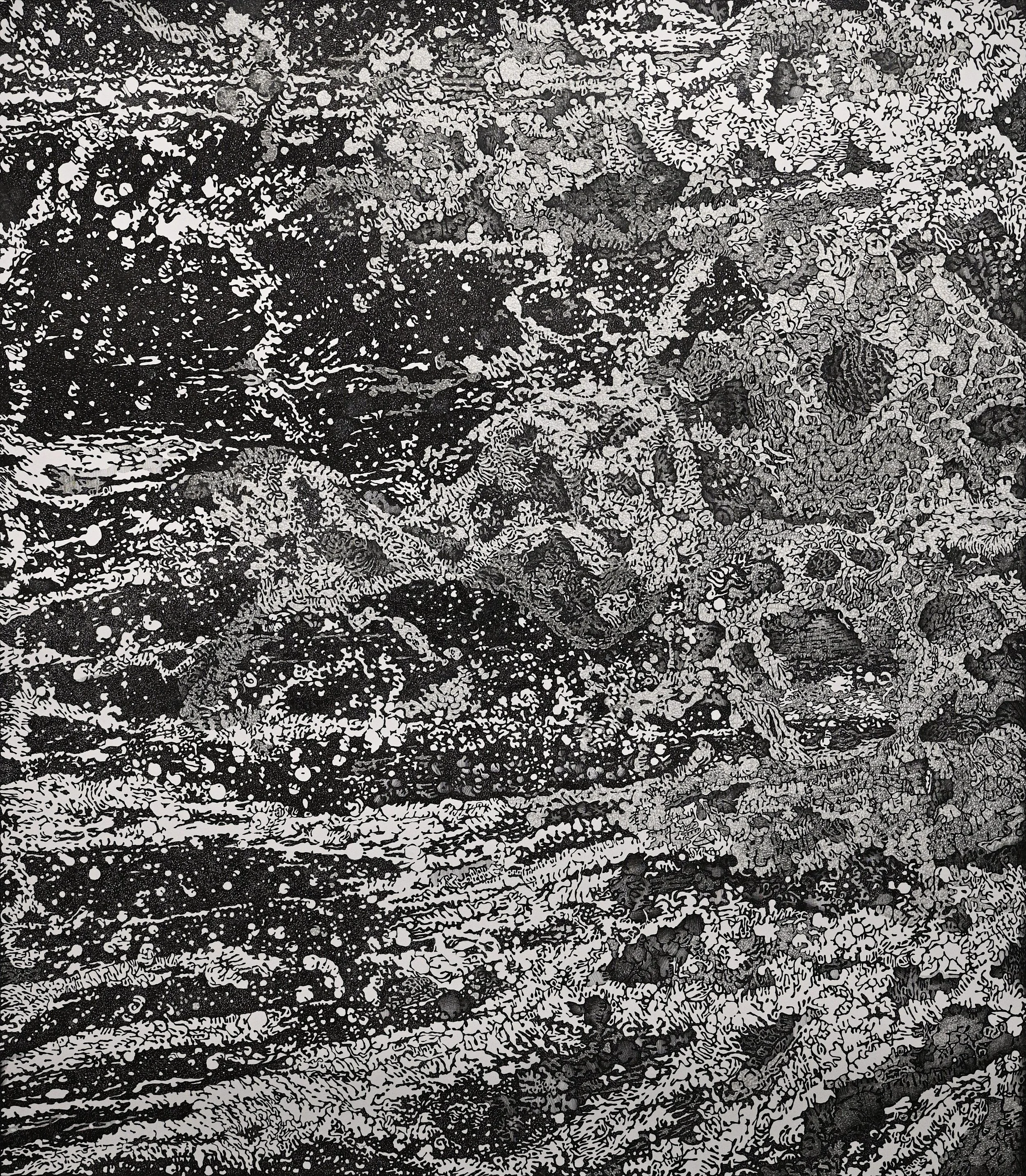
MiJung Yun, 2025, Water I, Pen and Ink on paper, 127 x 111.76 cm
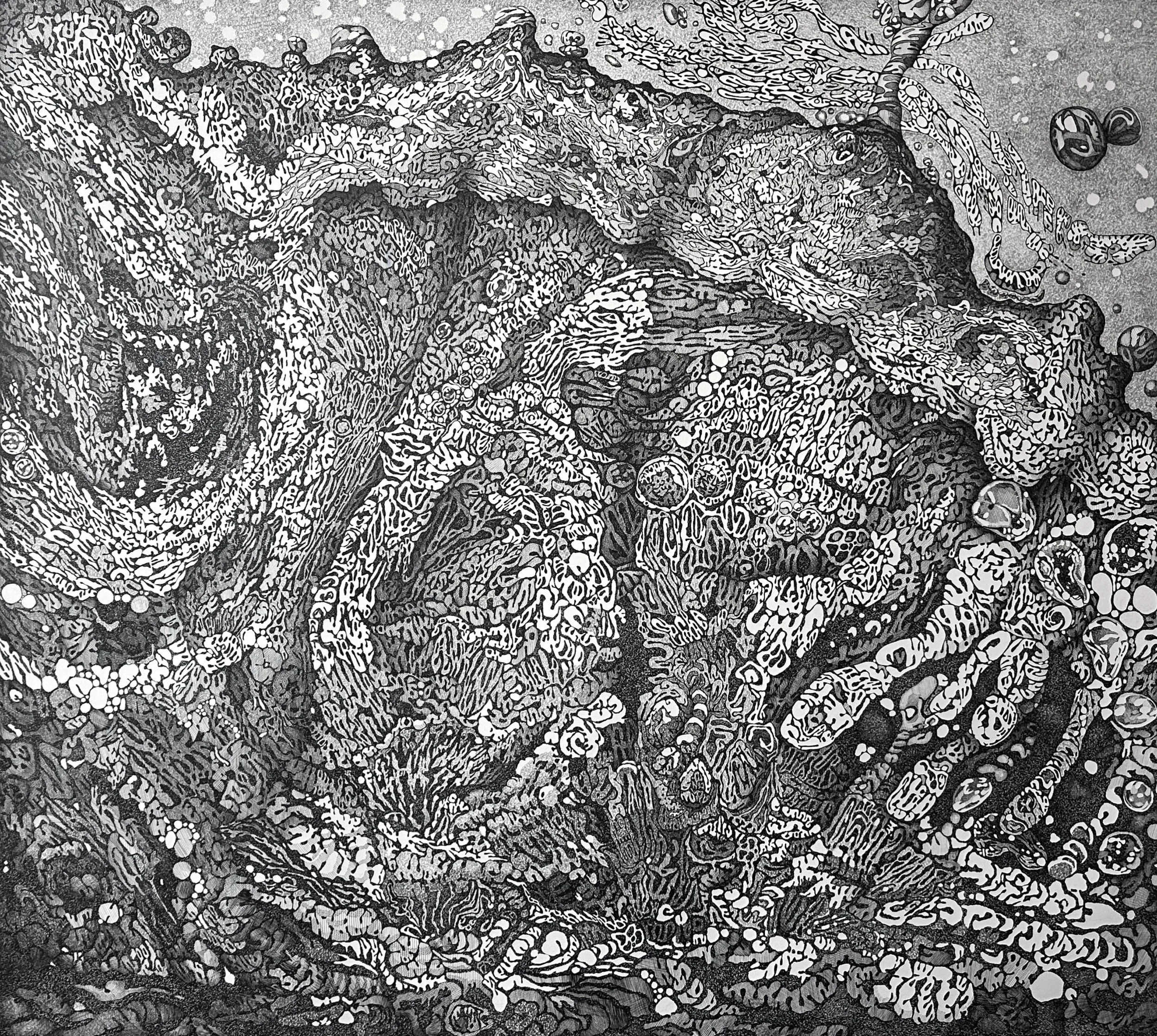
MiJung Yun, 2025, Water II, Pen and Ink on paper, 106.68 x 119.38 cm
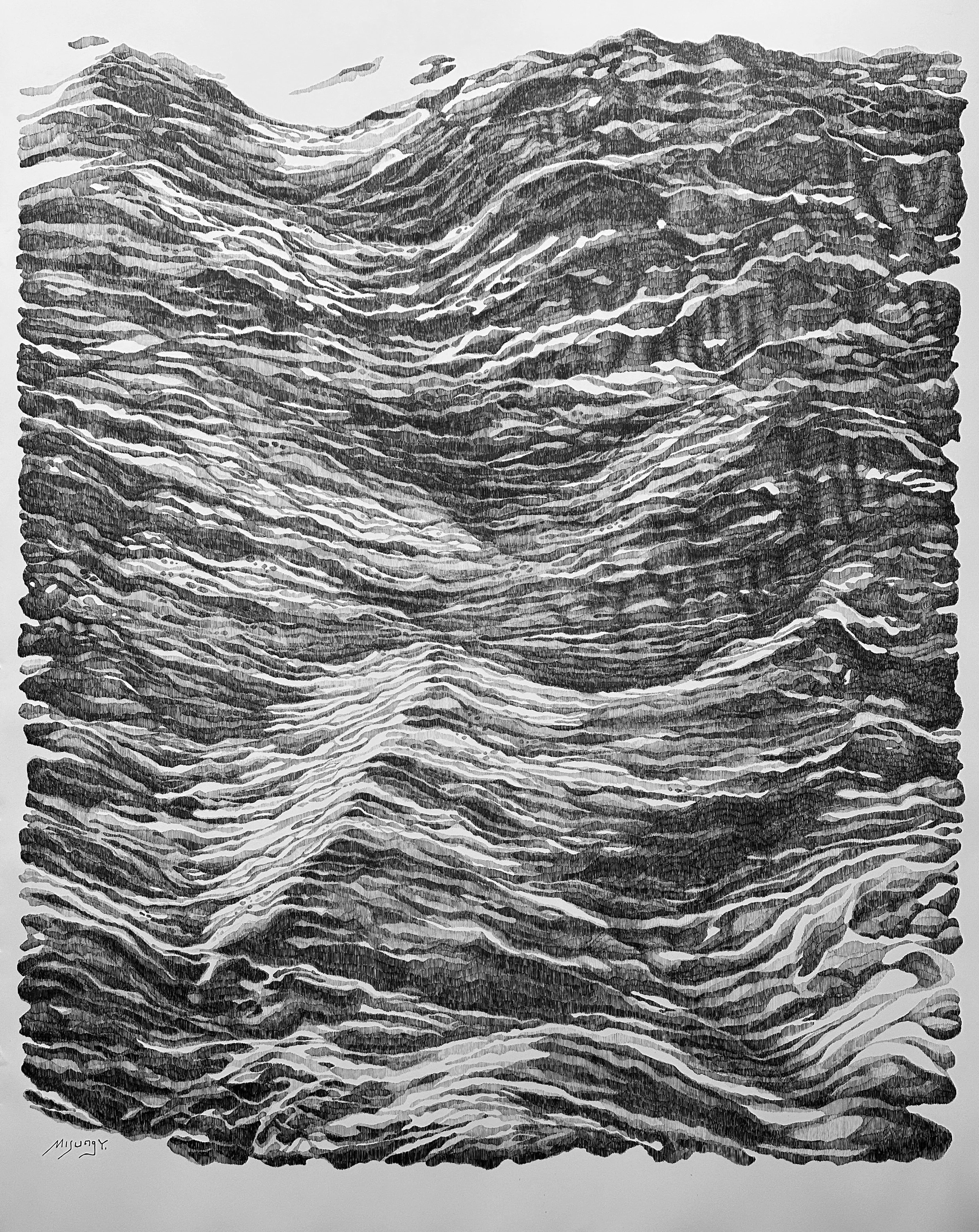
MiJung Yun, 2025, Water No. 3, Pen and Ink on paper, 147.32 x 124.46 cm
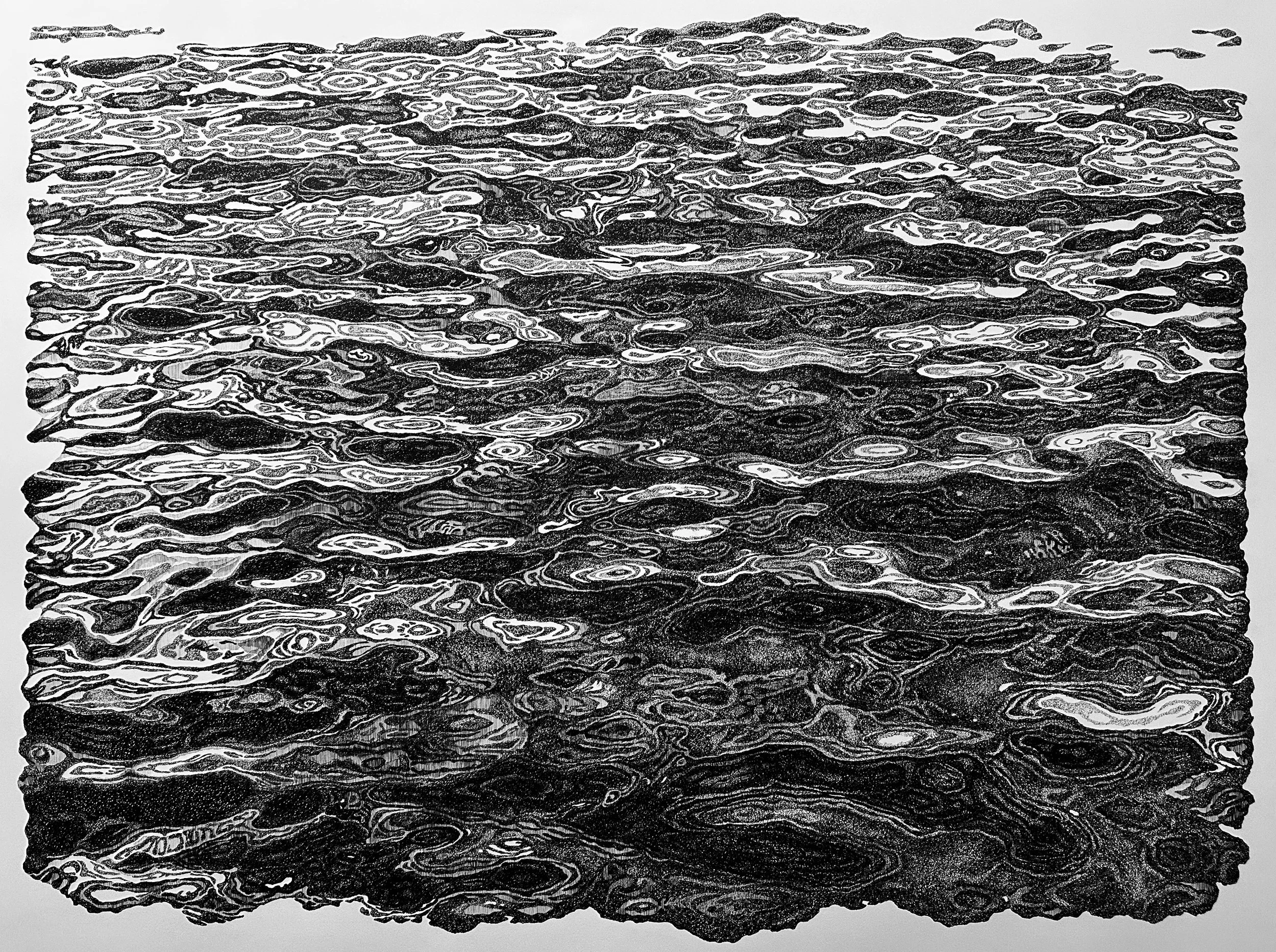
MiJung Yun, 2026, Water No. 4, Pen and Ink on paper, 81.28 x 109.22 cm