
Sofia Bianchini
My work is built through layering. I construct images as visual stratifications where photography, architectural fragments, maps, plants and symbolic traces overlap like emotional geology. I do not conceive digital art as a flat surface, but as a space of excavation. Each composition is a constructed landscape — a threshold between memory and transformation. Elements are never decorative; they function as fragments of time, suspended between presence and absence.
Through juxtaposition and accumulation, I explore fragility, displacement and the tension between permanence and erosion. My images are not linear narratives but crossings — psychological territories where matter becomes voice and silence becomes structure.
I was born in Rome in 1970 and live in Todi, Umbria. After graduating in Foreign Languages, I moved to London where I earned a Master in Graphic Design & Communication. There I developed projects for institutions such as the British Museum and collaborated on international creative work.
For over thirty years I worked closely with artists including Bruno Ceccobelli and Beverly Pepper, gaining a deep understanding of material presence, scale and the spiritual dimension of form. I also collaborated with collector Joseph Helman, expanding my insight into the dynamics of the contemporary art system.
Since 2015 I have focused on digital art, developing a personal visual language centered on stratification and symbolic composition. My works have been exhibited internationally and featured in publications such as Flora Photographica (Thames & Hudson).
Exhibitions and achievements (2018–2026)
• 2018 – LensCulture Art Photography Awards
Selected with the series Marmo, she receives a mention from International jury panel
• 2020 – Festival delle Arti – TODI OUT OF TIME
Section curated by Francesca Valente (Beverly Pepper Foundation): video projection of Idioma 19|20 on the walls of an Ancient Roman Temple.
• 2022 – Flora Photographica (Thames & Hudson) Publication on photography curated by William Ewing and Danaé Panchaud.
Includes Marmo#58 Exhibitions at: Flowers Gallery (Londra) and Centre de la Photographie (Ginevra)
• 2023 – Imago Mundi – Art Theorema 3, Gallerie delle Prigioni (Treviso) with Marmo#20 collection Fondazione Luciano Benetton
• 2025
o Venice International Art Fair, IT’S LIQUID Group → Cut Loose Project
o Tranquillum (online), Gallerium → Cut Loose – Select an Option
o Extinction 2025 (online), Gallerium → Like a Woodworm
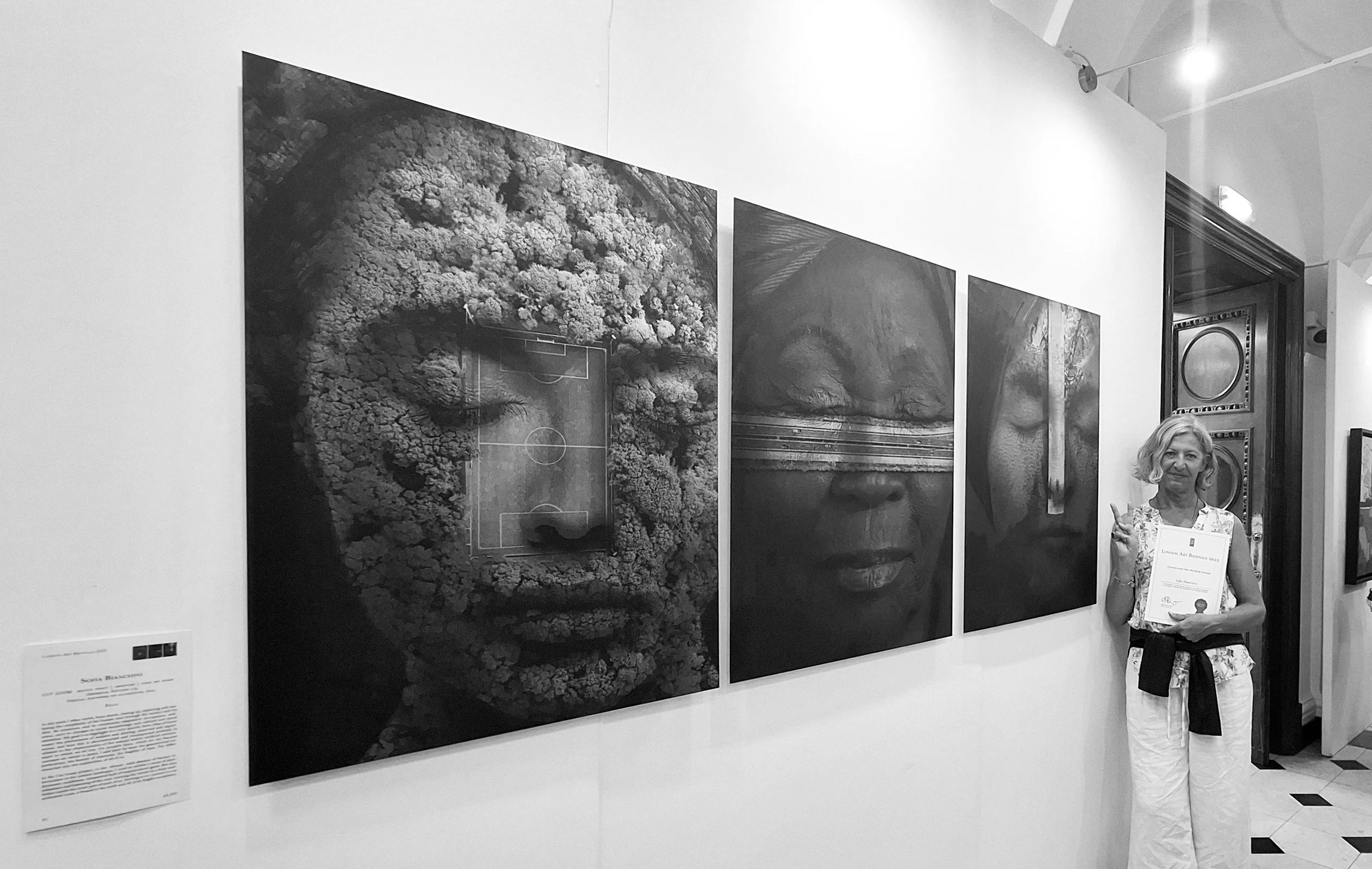
o London Art Biennale → Selected with Cut Loose (trittico)
o Premio Chianciano Art Museum → Partecipazione alla Chianciano Art Biennale 2026
o GAP – Gallerium Art Prize → with Madonna with Lost Child – Leonardo da Vinci
o Luxembourg Art Prize – awarded of a certificate of artistic merit
• 2025- 2026 LOST: Human Fragments SOLO smart exhibition online Exhibizone Vancouver
Sofia, in your practice, digital imagery appears to operate less as a neutral technological tool and more as a conceptual field in which history, geography, and emotional memory converge. Considering your recurring interest in maps, labyrinths, and cultural traces, could you elaborate on how the digital surface becomes a kind of epistemological space, one in which visual fragments of nature, marble, and historical reference are reorganized into a new visual language that both reflects and questions the structures through which we navigate identity, territory, and collective memory?
Working with digital imagery has been part of my life for more than thirty years, first as a student, then as a graphic designer and later as an artist. For me, the digital medium has never been merely a technological tool; it is closer to a space of stratification, a living archive where fragments of experience, memory, and research can coexist and take form.
This way of building the image is connected to something that has been with me since childhood. I remember constantly placing the world in my mind, as if I needed to hold it within an invisible frame. It was not about imposing order, but about finding balance and re-reading reality through my own perception. That impulse is still present in my practice.
My formation did not develop only through technical practice, but through a long and close proximity to artists and their processes, which deeply shaped my way of seeing, expanding and enriching my artistic language. Over time, the graphic and artistic methods began to influence and transform one another, creating a continuous exchange between structure and intuition. This gradual migration naturally led me from a logical approach to a more fully artistic practice, where the image became a space of convergence between thought, material, and vision.
From this perspective, the digital surface becomes not only a space of composition, but a space of understanding—where fragments are reorganized and questioned, allowing new connections between identity, place, and collective memory to emerge.
My process usually begins with an idea or an emotional intuition that slowly develops through gathering and experimentation. Each work—often part of a series—emerges from a constellation of images and references that I collect and test over time, where elements accumulate in layers, as sediments of memory: personal, historical, geographical, and cultural.
In this sense, the work often unfolds through systems of mapping and reconstruction. I move through visual and mental maps, where layers are assembled, much like pieces of a puzzle, until an image begins to reveal its internal coherence.
What I try to bring to the surface through these stratifications is a sense of belonging, as parts of a larger whole that reflects our shared human experience.
The series Marmo seems to propose a fascinating inversion of expectations. Marble, historically associated with permanence, monumentality, and classical sculpture, is here reanimated through digital manipulation, colorization, and photographic interpretation. In your view, does this process function as a form of temporal dislocation, allowing the ancient material to migrate into a contemporary visual syntax, and how do you conceptualize the relationship between the weight of classical heritage and the fluid, immaterial nature of digital image making?
The Marmo series emerged from a fascination with the silent presence of classical white sculpture and from a personal desire to encounter it through a contemporary visual language. I worked primarily with archival images of marble statues—figures that embody permanence, monumentality, and suspended time.
What interested me was the possibility of gently displacing that stillness.
Through digital manipulation and photographic layering, the marble surface became a field of transformation. I began to imagine the white stone as a kind of skin, onto which new layers of meaning could be placed. Botanical elements, textures, and fragments gradually began to inhabit the sculpture—not as decoration, but as a form of awakening.
The process was driven by a sense of urgency, discovery, and a certain joy in experimentation. I was never interested in the specific identity of each statue, nor in the historical or cultural context in which it had originally been created. What mattered was the possibility of releasing them from their frozen posture and allowing them to move again within a new visual dimension.
In this sense, the process can be understood as a form of temporal dislocation. The digital medium allows these ancient figures to migrate into another visual time, where their presence becomes more fluid, almost breathing again.
What interests me most is the tension between the physical weight of marble and the volatility of the digital image. Marble carries the gravity of history, permanence, and memory, while the digital layer introduces movement, transformation, and fragility. Rather than opposing these conditions, I see them as complementary. The digital image does not replace the stone—it allows it to move, to change, and to re-enter the present.
In this way, the solidity of classical heritage and the fluid nature of digital imagery begin to coexist, creating a space where the past can be reactivated and invited to tell new stories.
Your installation Idioma 19|20, projected onto the walls of an ancient Roman temple during the pandemic period, introduced a striking dialogue between digital temporality and architectural antiquity. How did the spatial and symbolic presence of that historical site inform your thinking about crisis, language, and collective vulnerability, and did the act of projecting a moving digital narrative onto stone architecture reshape your understanding of how contemporary art might activate or even rewrite historical spaces?
The project Idioma 19|20 was conceived in 2019, before the pandemic, almost as an intuition that later found its full resonance during the global crisis of Covid-19. The word “Idioma” refers to the idea of a universal human language—something that exists beyond national borders and connects us through shared emotions and experiences.
The number 19|20 carries multiple layers of meaning. It refers to the transition between 2019 and 2020, when the world suddenly changed, but also echoes the early twentieth century, when the modern understanding of psychological trauma began to emerge. In this sense, the project reflects on trauma not only as a historical concept, but as a contemporary global condition—collective, yet deeply internalized.
During the lockdown, when physical movement was restricted, the project gradually took shape as a form of imaginary travel. Through research and remote exploration, I began to “fly over” cities—some of them places I had never visited—absorbing their geography, history, and urban tensions. Distance became a form of knowledge: a way of learning through absence, constructing a mental and emotional cartography of the world.
I never conceived the sculptures as containers for the cities, but as surfaces—almost like skin—onto which the maps could be slowly stitched, as if sewing with needle and thread. Over time, the cartographic structures begin to penetrate the marble, merging with the form in a process of slow absorption, where geography and body begin to share the same tensions and scars.
In many of the images, rivers play a central role. Historically, cities developed along rivers, as water has always been essential for life, movement, and exchange. In the images, these waterways appear as lines crossing the sculptural faces—like veins, nervous systems, or historical scars—revealing a deep parallel between the life of cities and the life of human beings.
Each city is accompanied by short textual fragments functioning as emotional coordinates. These are not simply geographic markers, but a poetic translation of the inner atmosphere of each place—an attempt to give language to something intangible. In this sense, cities become languages themselves, each carrying its own rhythm, tension, and emotional structure.
The surrounding darkness reflects the atmosphere of that period. The black space isolates the faces, evoking suspension, disorientation, and collective vulnerability, while at the same time intensifying their presence, as if each image were emerging from silence.
The installation onto the niches of the Roman Temple in Todi created a surprising dialogue between digital imagery and ancient architecture, allowing the work to settle into the space with a sense of balance, as if the stone were returning to stone through a subtle and transient transformation. For me, this felt like a natural development, deeply connected to my experience of growing up in a landscape where history is everywhere—Etruscan, medieval, Roman, Renaissance. In this context, the encounter between contemporary art and historical architecture does not feel like a contrast, but like a form of continuity.
What interests me is the possibility of a dialogue—a cross-fertilization between different temporalities. A site-specific work becomes meaningful when the project and the space begin to influence one another, allowing multiple layers of stories to overlap and be reinterpreted over time.
For me, it is essential that contemporary art does not erase what existed before, but creates a new interpretative layer over the historical surface. In this sense, art becomes a way of reactivating space, allowing it to remain alive.
I like to imagine that the stories once held within those Roman niches, the ones carried by the marble faces in my work, and the ones we continue to generate today are able to listen to one another across time. Nothing is ever truly finished—everything remains in a state of transformation.
Many artists working with digital media often emphasize speed, immediacy, or technological innovation, yet your work appears to resist this acceleration, instead constructing images that unfold slowly through layered cultural references and emotional resonances. How do you negotiate the tension between the rapid circulation of digital imagery in contemporary visual culture and your own interest in creating works that seem to invite contemplation, introspection, and a more meditative encounter with form and meaning?
Many digital practices today are associated with speed and fast circulation of elaborated pictures. My work, however, moves in a different direction. I am not interested in acceleration as a creative principle, but in the possibility of slowing the image down so that it can carry memory, materiality, and human experience.
I try to keep my work anchored to elements that belong to a much longer temporal horizon: the human body, the surface of the skin, natural forms, landscapes and the architecture of cities and historical spaces shaped by art and culture. These elements hold traces of time and cultural memory, resisting the purely instantaneous nature of digital imagery.
For me, the digital image should not detach from the human condition, but remain rooted in these ancestral elements. Part of this approach comes from my own experience. I began working in graphics during a moment of transition, when traditional techniques were fast being replaced by digital tools and softwares. Having experienced that passage allows me to understand both worlds. For me, digital technology is not a rupture, but another layer within a longer cultural continuum.
Because of this, I do not reject the speed of contemporary visual culture, but I prefer that it does not dictate the rhythm of my work. My images emerge slowly, through research, intuition, and careful stratification. I construct them as medative-reflective spaces where viewers can pause, contemplate, and move through layers of meaning rather than consume them instantly.
For me, the image is never about reaching a final state of perfection, but about understanding its balance and allowing it to remain open.
The digital process is also a form of learning. I learn while I create. Each project opens new questions and possibilities, and this continuous flow of discovery leads me toward further experimentation, new materials, and new ideas.
Your background in foreign languages and communication studies seems particularly relevant to the conceptual framework of your practice. Do you see your visual works as operating analogously to linguistic structures, where symbols, textures, and forms function like words within a larger grammar of perception, and if so, how does this multilingual sensibility influence the way you construct visual narratives that move between cultures, histories, and symbolic systems?
I am very glad you raise this question.
Yes, my work is deeply influenced by a linguistic way of perceiving the world. My education in languages taught me that meaning is never fixed within a single word, but emerges through relationships, context, and structure. This awareness instinctively increases into my visual practice, where my formation as a graphic designer and image consultant has given me the tools to construct meaning through images—placing elements in relation, balancing form and message, and guiding the viewer’s attention within a defined space. Together, these two dimensions, along with a broader cultural formation form a structural foundation that shape the way I interpret and construct my work everyday.
I see my practice as rooted in a continuous process of stratification, where different histories, geographies, personal experiences and symbolic systems intersect and influence one another.
This perspective naturally extends in all processes of my work. Through layering and composition, elements begin to interact, creating spaces of deepening that can be navigated intuitively, even when they draw from different contexts, and so my work becomes a milieu where different visual “idioms” coexist.
For me, constructing an image is very similar to constructing a sentence: each element must find its place in order to generate meaning. I like to build phrases that can be both translated or interpreted. Rather than conveying a single fixed message, I am interested in proposing multiple readings and emotional resonances, much like language itself.
This background—shaped by language, visual thinking, and cultural experience—allows me to approach the work as a field of dialogue, where different signs can speak one another and meaning can be shared beyond linguistic or geographical boundaries.
In several of your works, natural forms such as flowers, organic patterns, and geological textures appear to merge with digitally constructed structures, producing images that oscillate between the organic and the algorithmic. Do you see this fusion as reflecting a broader cultural condition in which nature and technology are increasingly inseparable, and how does this intersection inform your exploration of beauty, fragility, and transformation within the visual field?
In many of my works, natural forms and digital structures appear together, and this is never accidental. They reflect a tension that is deeply present in our time: the constant dialogue between the technological gesture and the natural one.
I often feel as if these two forces call to one another, negotiating and seeking a balance.
Technology is part of human evolution, yet we remain deeply rooted in the natural world. In my work, I bring these two worlds into the same visual space so that they can mirror and transform one another.
This relationship also carries something more personal for me. Having grown up in a land deeply marked by a sense of presence and attention toward nature—I developed a perception of the environmental world that is almost instinctively sacred. Not necessarily in a religious sense, but as a form of awareness and respect toward what exists around us. In many ways, this sensibility returns in my work, shaping the way I look at matter, at living forms, and at the fragile equilibrium that connects them.
Moreover, organic forms introduce a structural tension and defined patterns that I find essential for my compositions. Elements such as trees, roots, branches, stones, and textures provide lines, volumes, and fractures that allow the image to acquire a more sculptural presence. These tensions of form become a way of generating a new surface—a new “skin.”, shaping the image and letting a narrative to emerge.
This relationship also invites reflection. When natural elements interact with digital constructions, the image becomes a metaphor for the fragile balance of our ecosystems. It reminds us that the separation we often imagine between humanity, technology, and nature is, in many ways, an illusion.
In this sense, the presence of natural elements is not only aesthetic but also reflective. It invites the viewer to slow down and reconsider their relationship with the living world. If the images evoke beauty and harmony, they also carry a quiet warning: the damage we inflict on nature ultimately becomes damage we inflict upon ourselves.
For me, beauty is never a fixed or decorative condition. It emerges from tension—between growth and erosion, control and unpredictability, presence and disappearance. I find beauty in small, everyday details, in the quiet resilience of nature itself that continues to exist despite constant change. I find it in human gestures—in compassion, in vulnerability, and in moments of resistance within a world that can often feel contradictory and, at times, deeply inhuman.
Beauty allows me to bring light into places that seem dark or inaccessible, and to reveal something fragile yet still alive. It is always connected to a sense of hope.
Fragility is not something to hide, but something that exposes itself—through cracks, textures, and transformations. In this continuous state of becoming, the image remains alive, constantly shifting between balance and instability.
The idea of the labyrinth appears implicitly within your artist statement, suggesting a conceptual model for navigating complexity, history, and cultural memory. When constructing your digital compositions, do you approach the image as a kind of labyrinthine structure itself, where viewers must traverse layers of visual information and symbolic resonance, and how conscious are you of guiding the viewer through these perceptual pathways?
Yes, this is correct, the idea of the labyrinth recurrs frequently and in many ways it is an accurate metaphor. Sometimes the labyrinth is physically present in the image, while at other times it exists as a conceptual structure guiding the composition.
When I construct my images through layering, they often develop openings, passages, and possible exits, much like a labyrinth. Different levels of visual information, textures, and symbolic references create paths that the viewer can follow—intentionally or intuitively.
At the same time, I am not interested in fully controlling how these paths are navigated. I can guide the structure through composition, rhythm, and layering, but the experience of the image always remains open.
What interests me most is the moment when the viewer, searching for meaning, encounters something unexpected—something that even I may not have consciously anticipated. In that moment, the work shifts from a constructed image to a space of dialogue.
In this sense, the labyrinth exists not only within the image, but also within the viewer. The artwork offers a direction, but the journey through it can take many different forms.
Your work has been presented both in physical spaces, such as architectural projections and exhibitions, and in publications and digital contexts that circulate globally. How do you perceive the shifting ontology of the artwork when it moves between these environments, and does the transition from site specific installation to printed image or online exhibition alter the conceptual meaning of the work in ways that interest or concern you?
This transition between different environments is something that deeply interests me; in many ways, it is one of the most stimulating aspects of my practice. Although my works are constructed on a computer screen, I often feel that the images themselves are asking to move beyond that surface—as if they need to leave the digital space in order to fully exist.
When a work shifts from a digital composition to a physical installation, a projection or a printed image the experience inevitably changes. Each environment establishes a different relationship between the image, the space, and the viewer. The meaning is not necessarily altered, but it can expand, acquiring new layers of interpretation depending on how and where the work is encountered.
For me, this transformation is not a limitation but an opportunity. My background in graphic design and visual communication naturally leads me to consider which medium or format can best support the image and reinforce its presence.
Rather than thinking of the work as fixed, I see it as something that can migrate across different conditions, adapting without losing its core identity. Each context becomes part of its life, allowing the image to unfold in different ways while preserving the message it carries.
In recent years your projects, including works such as Traces of Human Unnatural History and Cut Loose, appear to engage more explicitly with themes of ecological anxiety and the fragile relationship between humanity and the natural world. Do you see digital art as uniquely positioned to articulate these tensions, perhaps because it simultaneously embodies both the technological systems that contribute to environmental change and the imaginative capacity to visualize alternative futures?
I do not necessarily believe that digital art holds a privileged position compared to other artistic forms. What I believe is that art itself—regardless of the medium—has the capacity to influence perception, raise awareness, and bring urgent issues into the public sphere.
In recent projects such as Traces of Human Unnatural History and Cut Loose, I have become increasingly interested in exploring the fragile relationship between humanity and the natural world. In many of these works, the human body becomes a surface where traces of the environment appear—leaves, minerals, organic textures, fragments of landscape. The skin is no longer a boundary, but a place of inscription.
In this sense, the body becomes a kind of terrain, where the world leaves its marks. What we often perceive as external—nature, environment, ecological systems—reveals itself as something deeply internal and inseparable from us. The separation we tend to construct between human beings and nature begins to dissolve.
This visual language reflects a growing ecological tension that I feel is not only environmental, but also cultural and existential. It is not simply about the condition of nature, but about the condition of being human within a system that we ourselves have altered.
Digital tools allow me to construct these images by bringing together elements that would not normally coexist, making visible relationships that are often hidden.
However, I do not see the digital medium as central in itself, but as a space of transformation—one that allows the image to move beyond representation and become a field of reflection.
In this sense, the work is not only about revealing fragility, but about activating awareness. If the image can shift the way we perceive our position within the world—even slightly—then it has fulfilled its purpose.
Your career trajectory, from Rome to London and eventually to Todi, reflects a movement between urban cultural centers and historically layered landscapes. To what extent has living and working within the Umbrian environment shaped the sensibility of your work, and do you find that the presence of ancient architecture, rural nature, and centuries of cultural memory creates a particular atmosphere that continues to inform the way you conceive digital space, visual rhythm, and artistic vision?
Living and working within environments where centuries of history remain visible in everyday life has made me deeply aware of how time accumulates in layers. This awareness has profoundly influenced the way I construct my images. Visual stratification, for me, is not only a technical process, but a way of understanding space, memory, and presence.
Rome is my birthplace and remains a fundamental reference in my life and cultural imagination. A city where art, history, and beauty coexist in an almost overwhelming way. What Rome offers in terms of cultural depth is difficult to replicate elsewhere. At the same time, it is also a vibrant contemporary metropolis, and this coexistence between past and present has always fascinated me. Rome constantly reminds you that time is not linear—it accumulates.
Umbria, and particularly Todi, represents something more intimate. It is where I feel at home, and where my perception of space has been shaped most deeply. The landscape, the silence, and the presence of centuries-old structures still inhabited today create an atmosphere in which history is not distant but lived. This environment carries a sense of quiet intensity and attention that has influenced the way I perceive matter, form, and presence—almost as something that belongs to the body.
Cities such as London and also New York have offered a different but equally important influence. Rich in contrasts and temporal short circuits, they represent openness, exchange, and exposure to new cultural systems, architectures, and rhythms. These environments introduced a dynamic and global dimension that continues to nourish my work.
My formation developed not only through the places I have lived in, but also through a direct and prolonged closeness to many different artists and their own creative ways. These two dimensions—geographical and human—have always been deeply intertwined. Working closely with figures such as Beverly Pepper, and earlier with artists rooted in this territory, I experienced art as something lived across spaces: studios, landscapes, cities, and journeys. Through these encounters, I did not only acquire a method, but absorbed a global way of perceiving—shaped by history, culture, and a continuous expansion of thought.
In this sense, my experience has been a constant movement between places and people, where each environment and each encounter has contributed equally to a process of migration and stratification that continues to define my work.
A space where landscape and body, memory and perception, begin to overlap—where every place becomes something that can be inhabited, and at the same time, something that inhabits us.
https://www.instagram.com/sofia_bianchini_digital_artist/
https://www.lensculture.com/sofia-bianchini
https://www.facebook.com/sofiabianchinidigitalartist
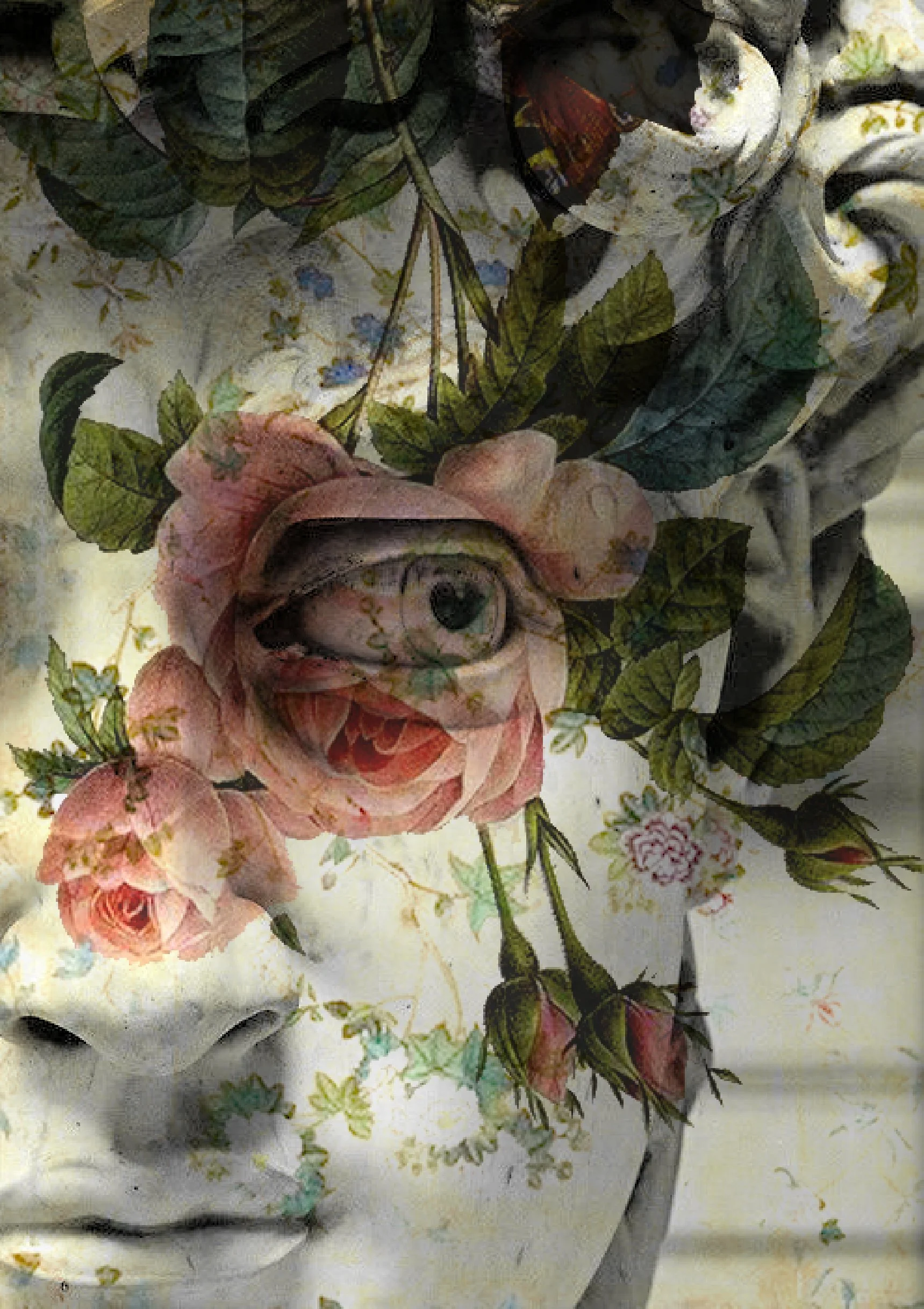
Marmo #105, 2018. Digital work printed on canvas, 42 x 60cm
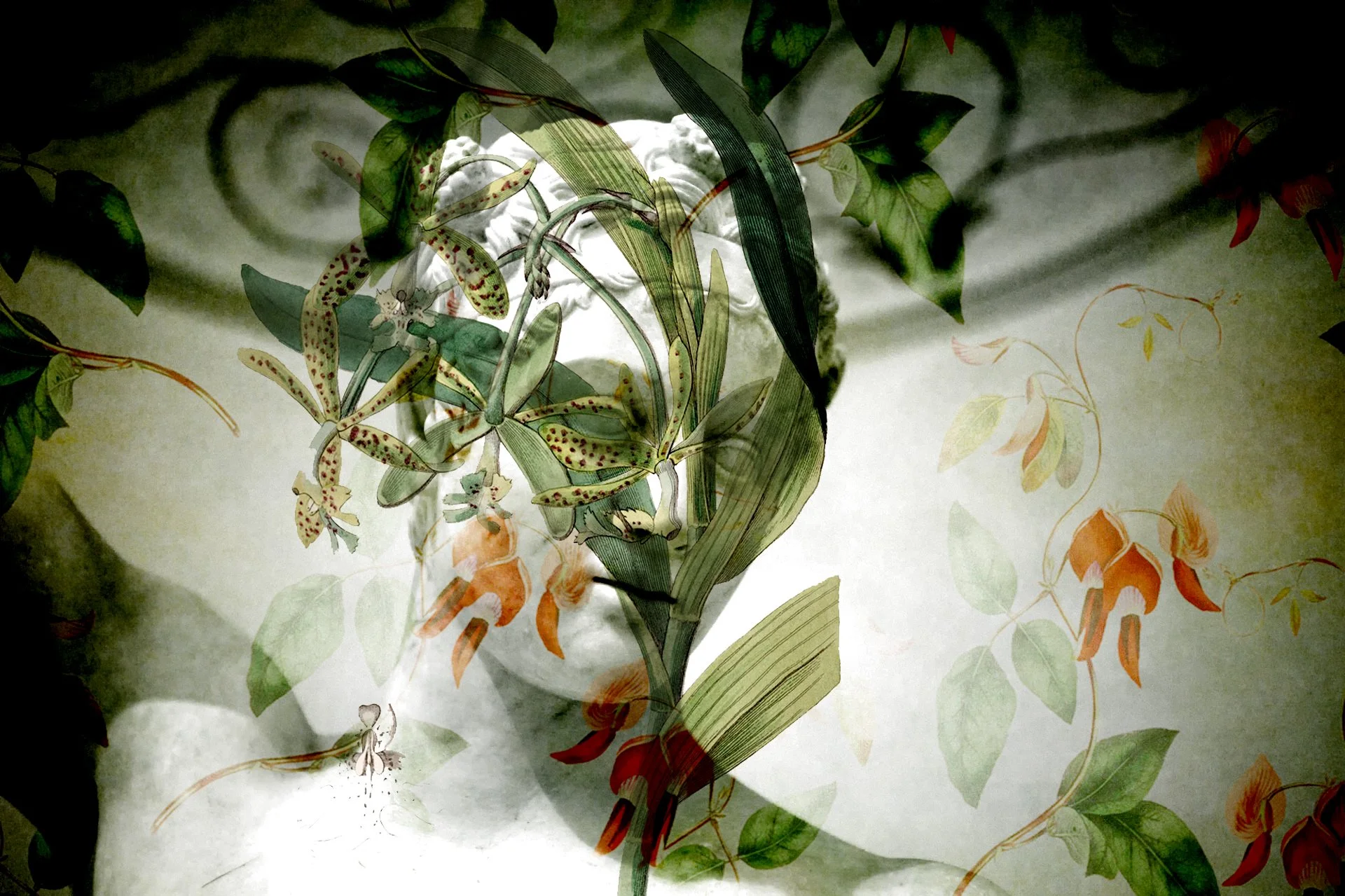
Marmo #58, 2018. Digital work printed on canvas, 60 x 40cm
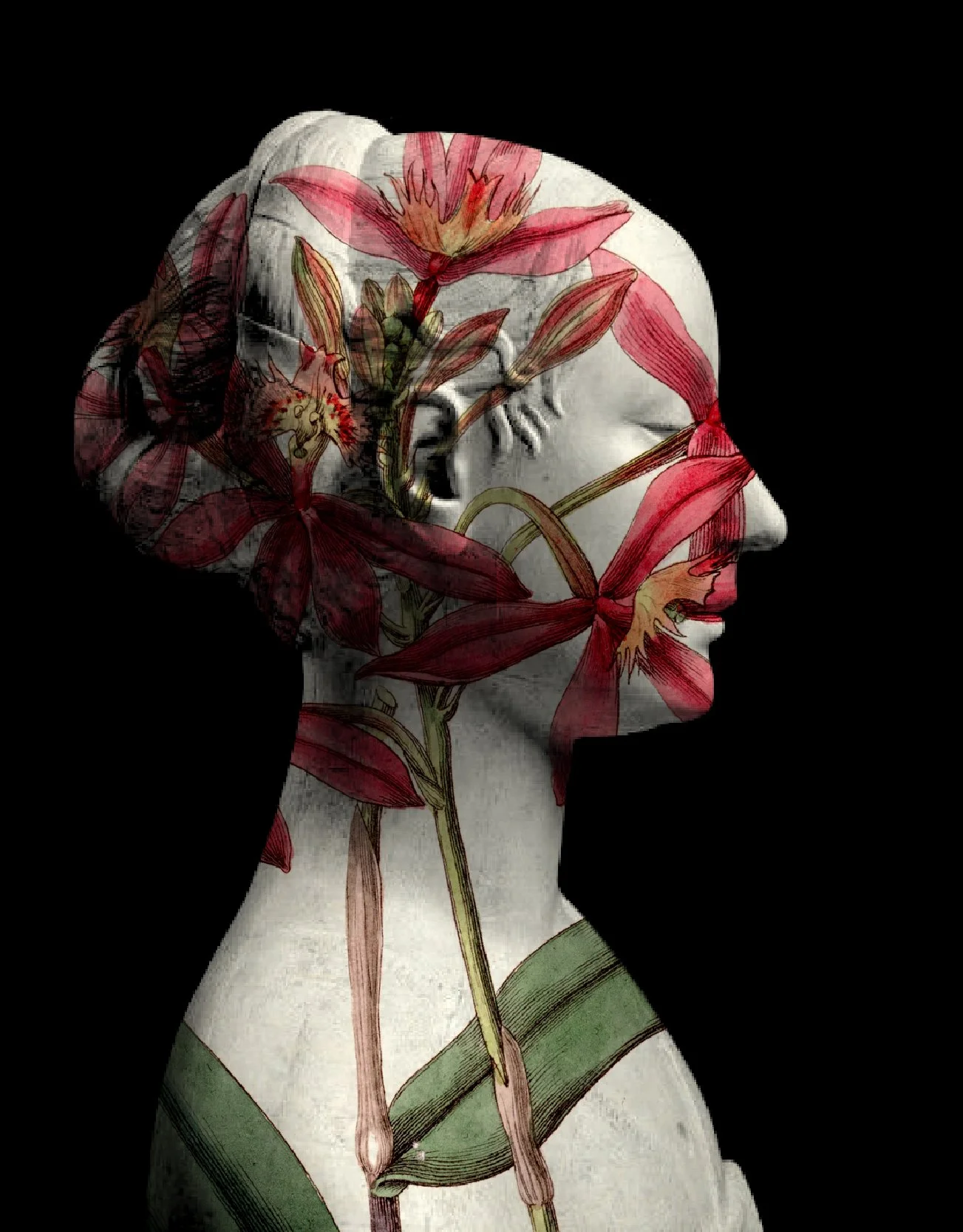
Marmo #20, 2018. Digital work printed on canvas, 27 x 21cm
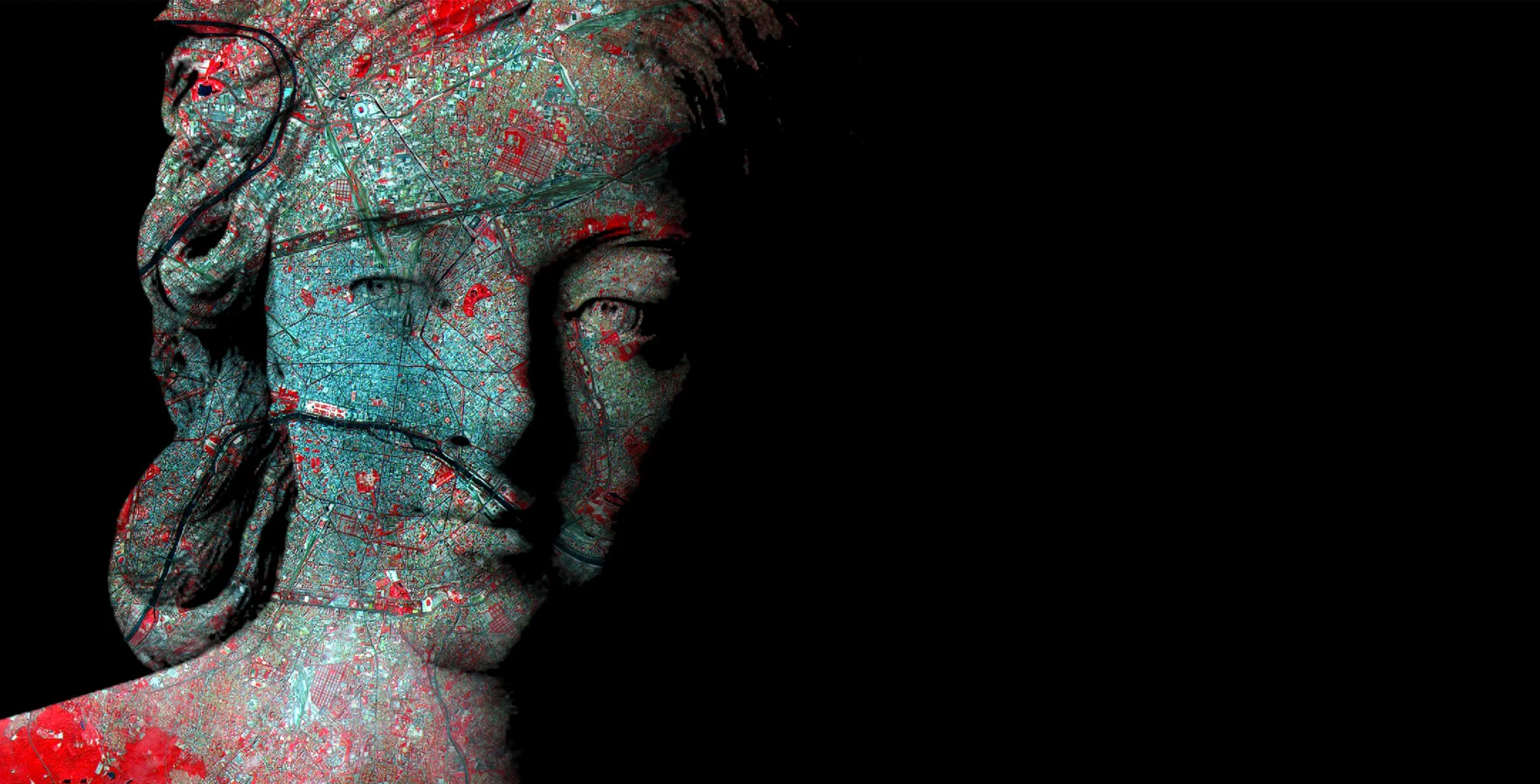
IDIOMA 19|20 Paris, 2019-2020. Digital work, 55 x 28cm

IDIOMA 19|20 New Delhi, 2019-2020. Digital work, 55 x 28cm
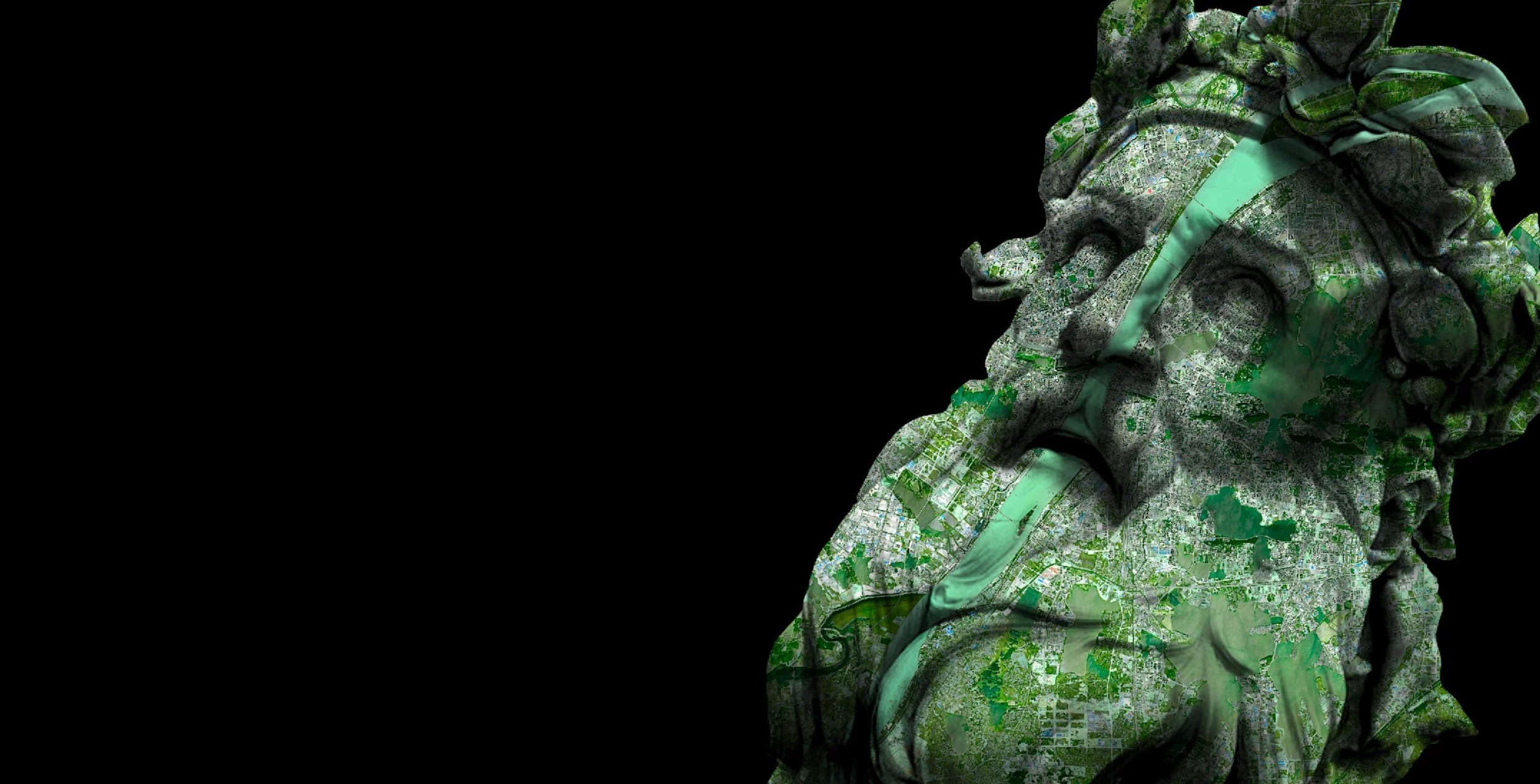
IDIOMA 19|20 Wuhan, 2019-2020. Digital work, 55 x 28cm
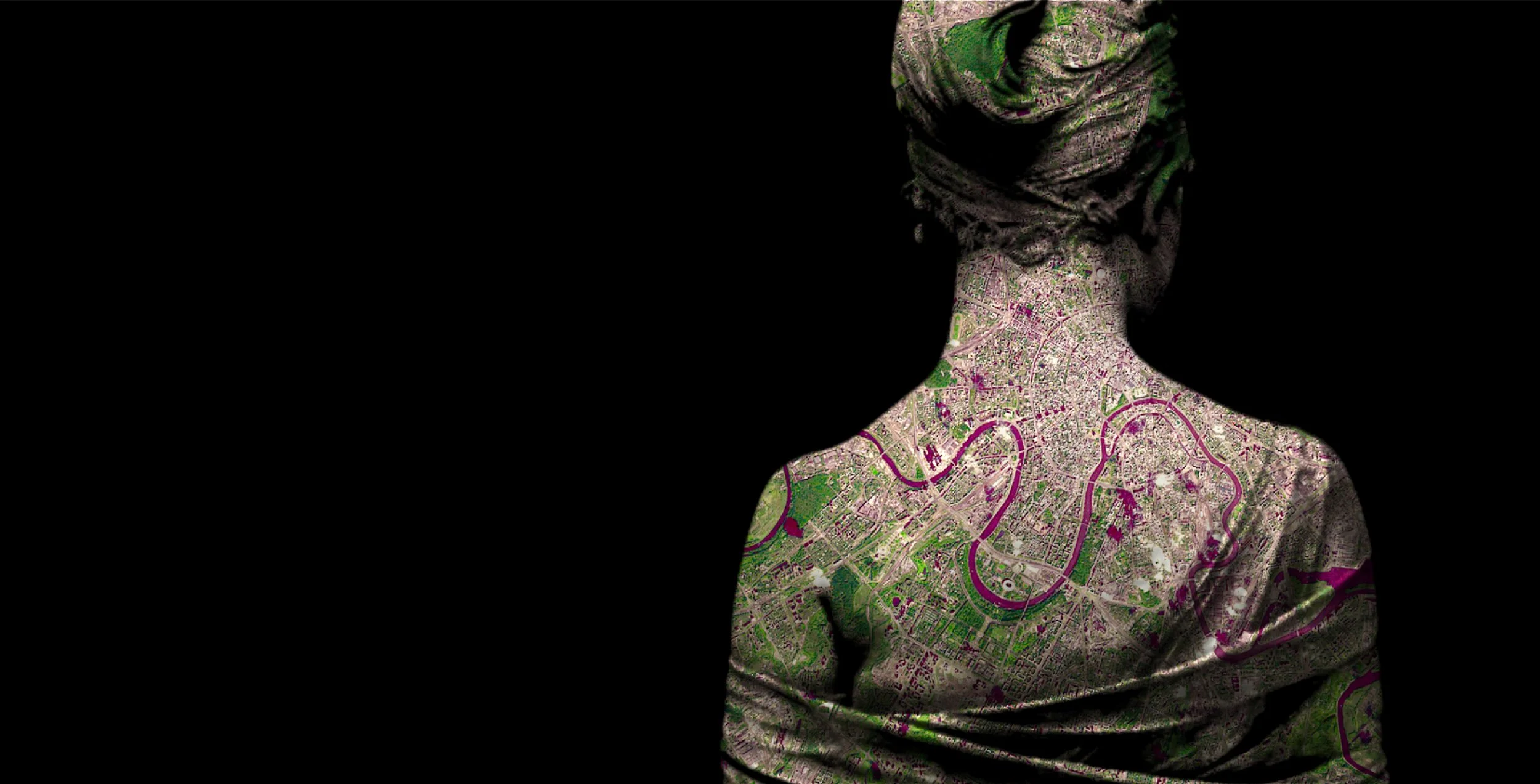
IDIOMA 19|20 Moscow, 2019-2020. Digital work, 55 x 28cm
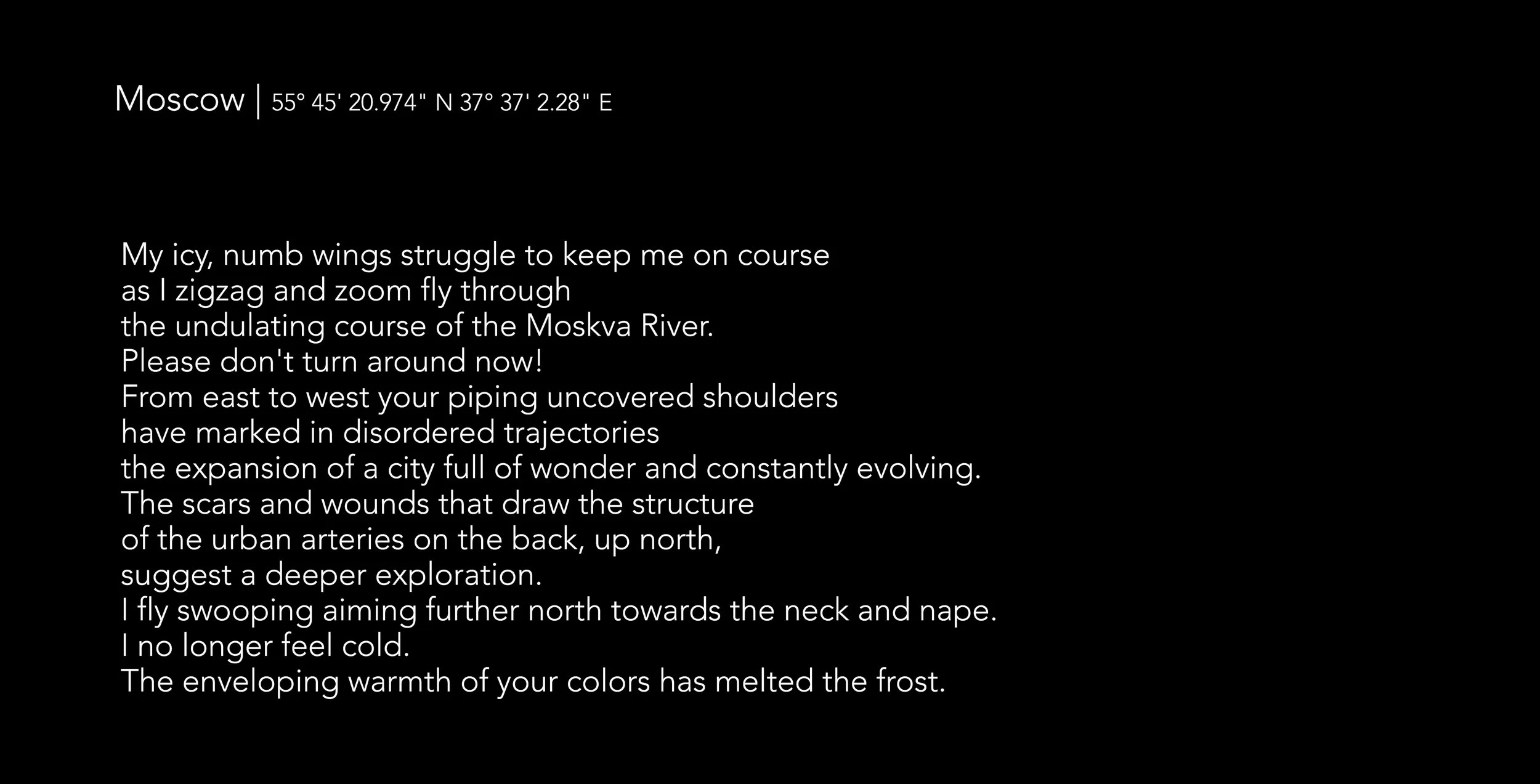
IDIOMA 19|20 Moscow, 2019-2020. Emotional coordinates
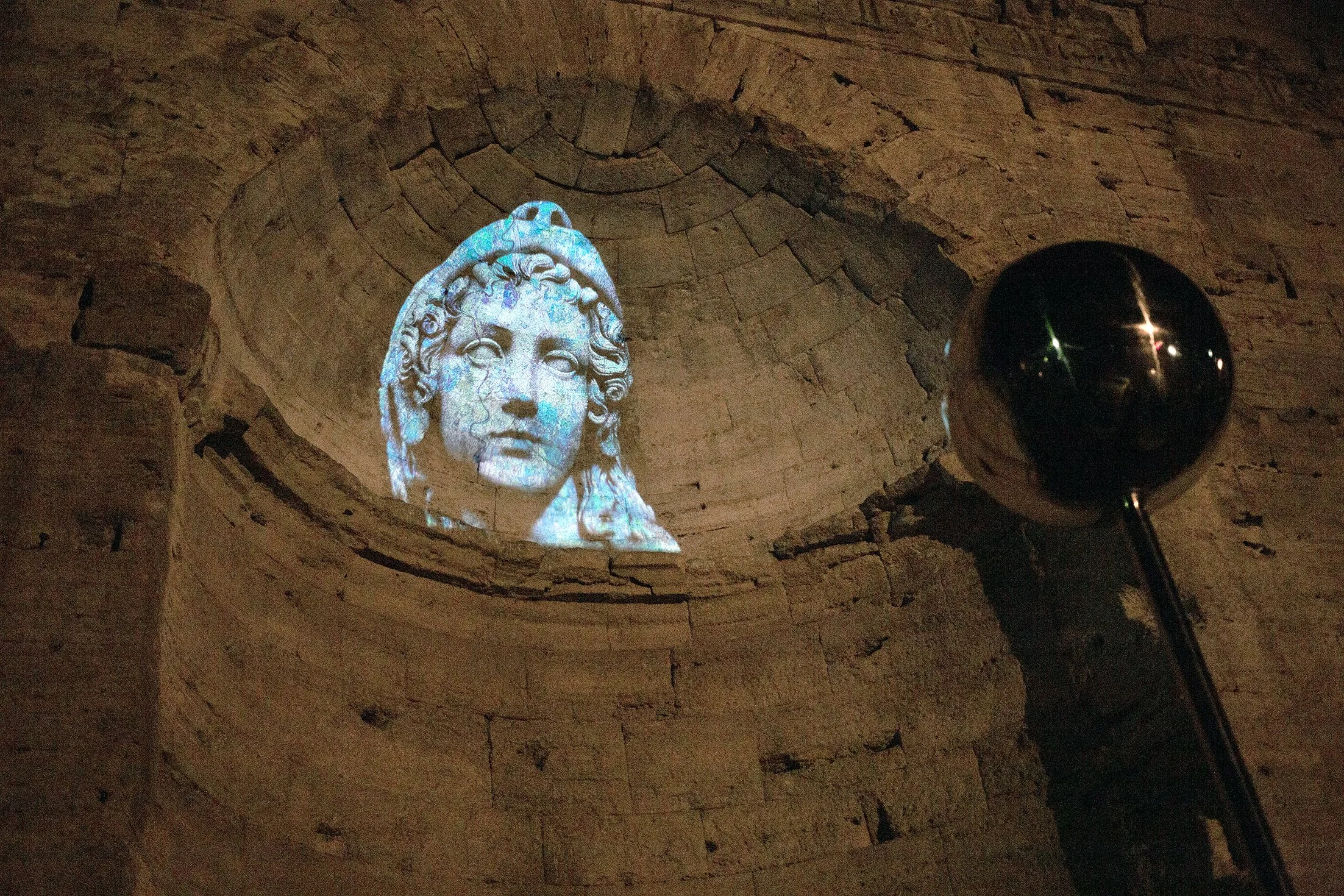
IDIOMA, 2019-2020. Todi OUT OF TIME Video Projection onto Niches of Roman Temple
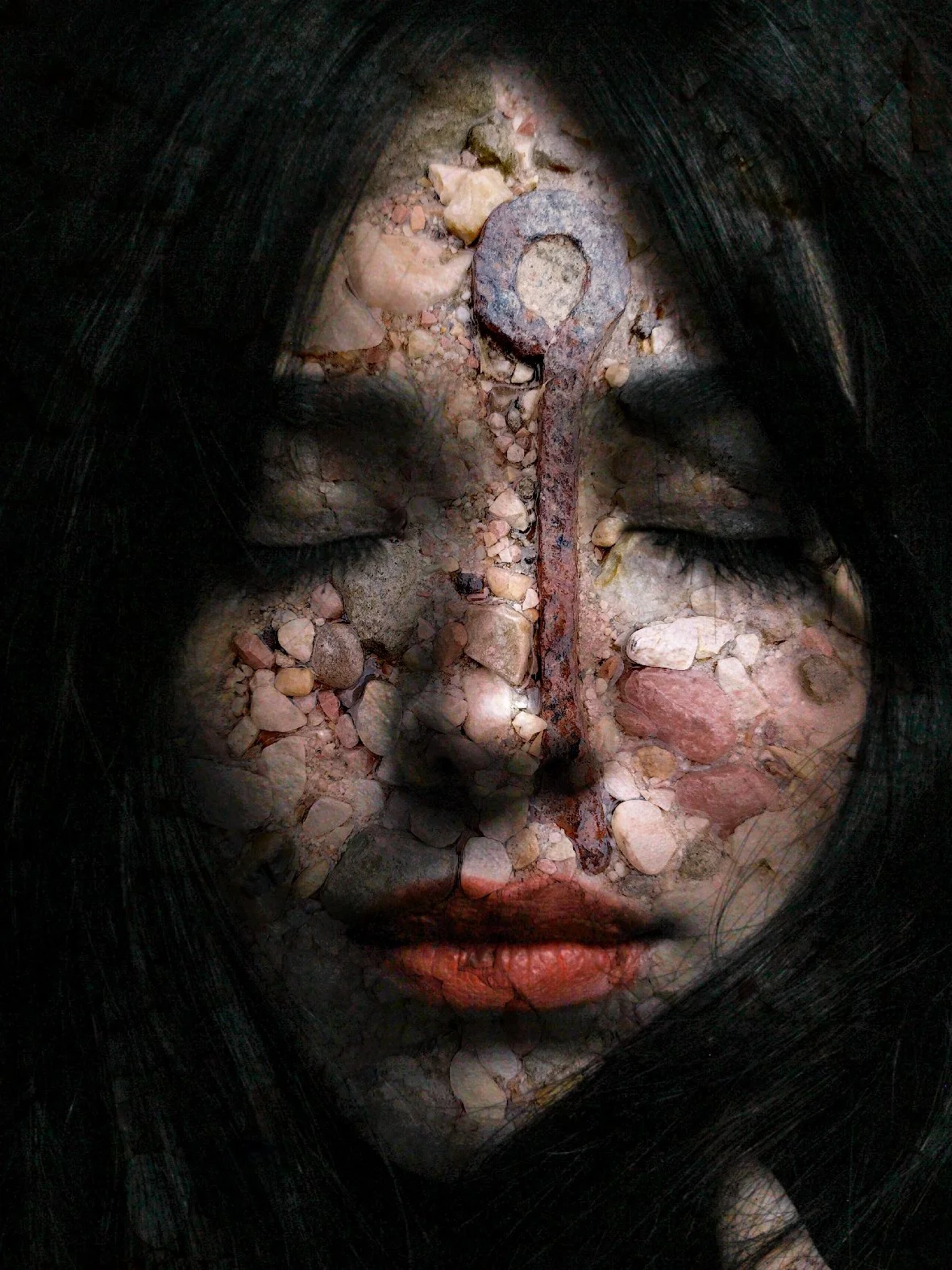
Traces of Human Unnatural History - Boulevard of broken dreams, 2021. Digital work printed on aluminium, 40 x 53cm

Traces of Human Unnatural History - Like a woodworm, 2021. Digital work printed on aluminium, 40 x 53cm

Traces of Human Unnatural History - Prisoner of the odds, 2021. Digital work printed on aluminium, 40 x 53cm

CUT LOOSE - Match point, 2025. Digital work printed on aluminium, 52 x 37cm

CUT LOOSE - Absinthe, 2025. Digital work printed on aluminium, 52 x 37cm

CUT LOOSE - Select an option, 2025. Digital work printed on aluminium, 52 x 37cm

CUT LOOSE - Comfortably numb, 2025. Digital work printed on aluminium, 52 x 37cm
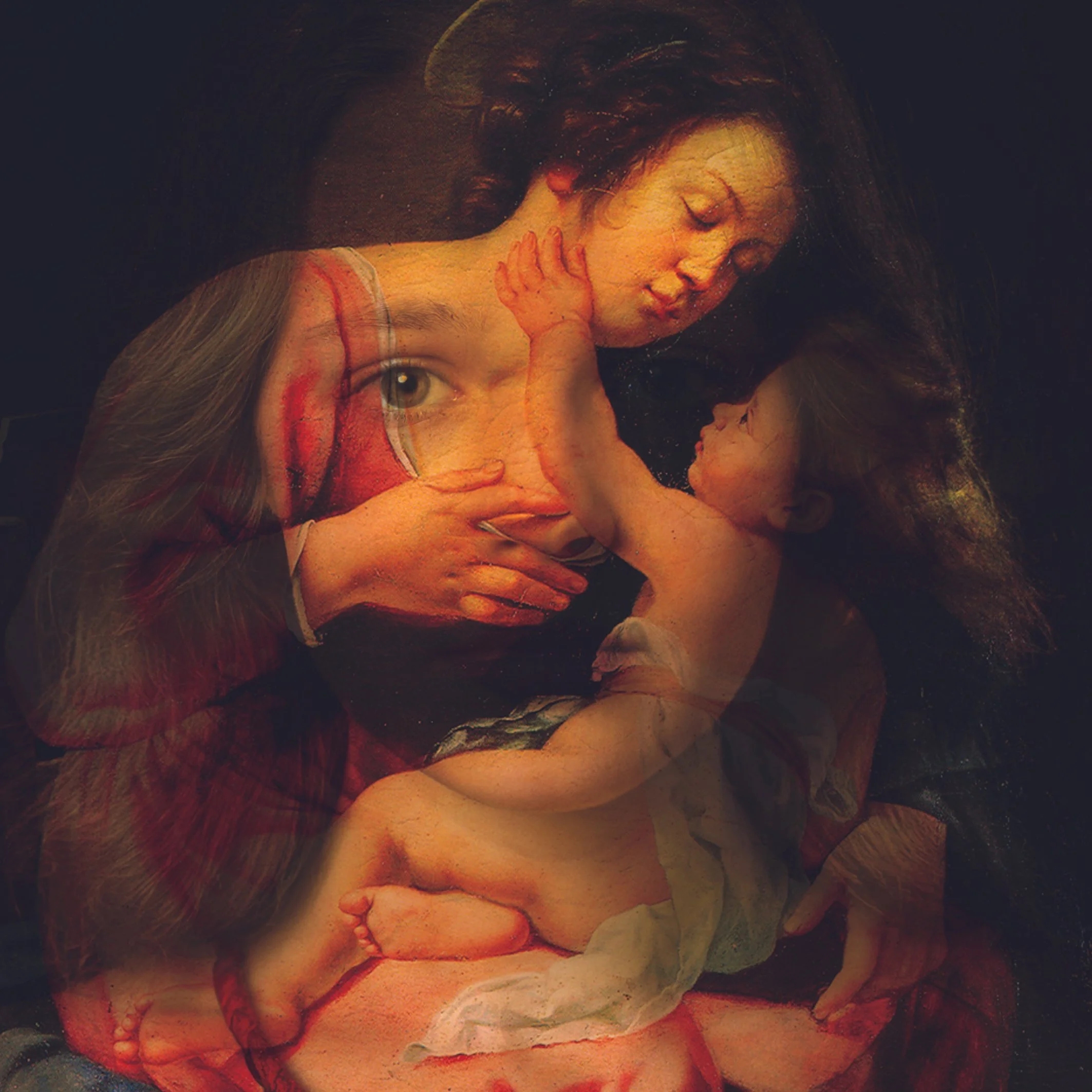
Madonna with Lost Child, 2025 (Artemisia Gentileschi 1610). Digital artwork printed on aluminium 45 x 45cm
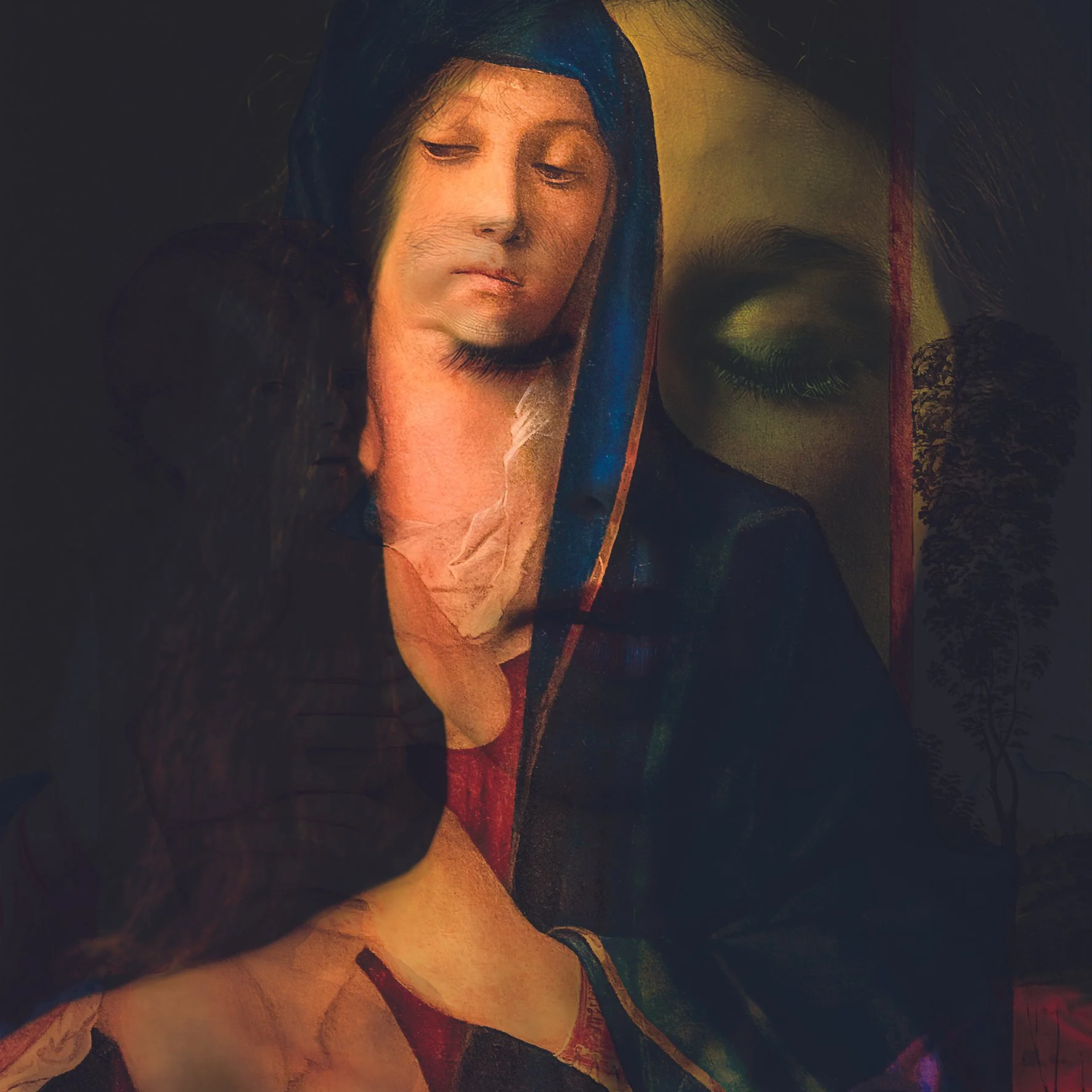
Madonna with Lost Child, 2025 (Giovanni Bellini 1487). Digital artwork printed on aluminium 45 x 45cm

Madonna with Lost Child, 2025 (Leonardo da Vinci 1473). Digital artwork printed on aluminium 45 x 45cm

Madonna with Lost Child, 2025 (Raffaello 1500-1504). Digital artwork printed on aluminium 45 x 45cm