
Gaby Roter
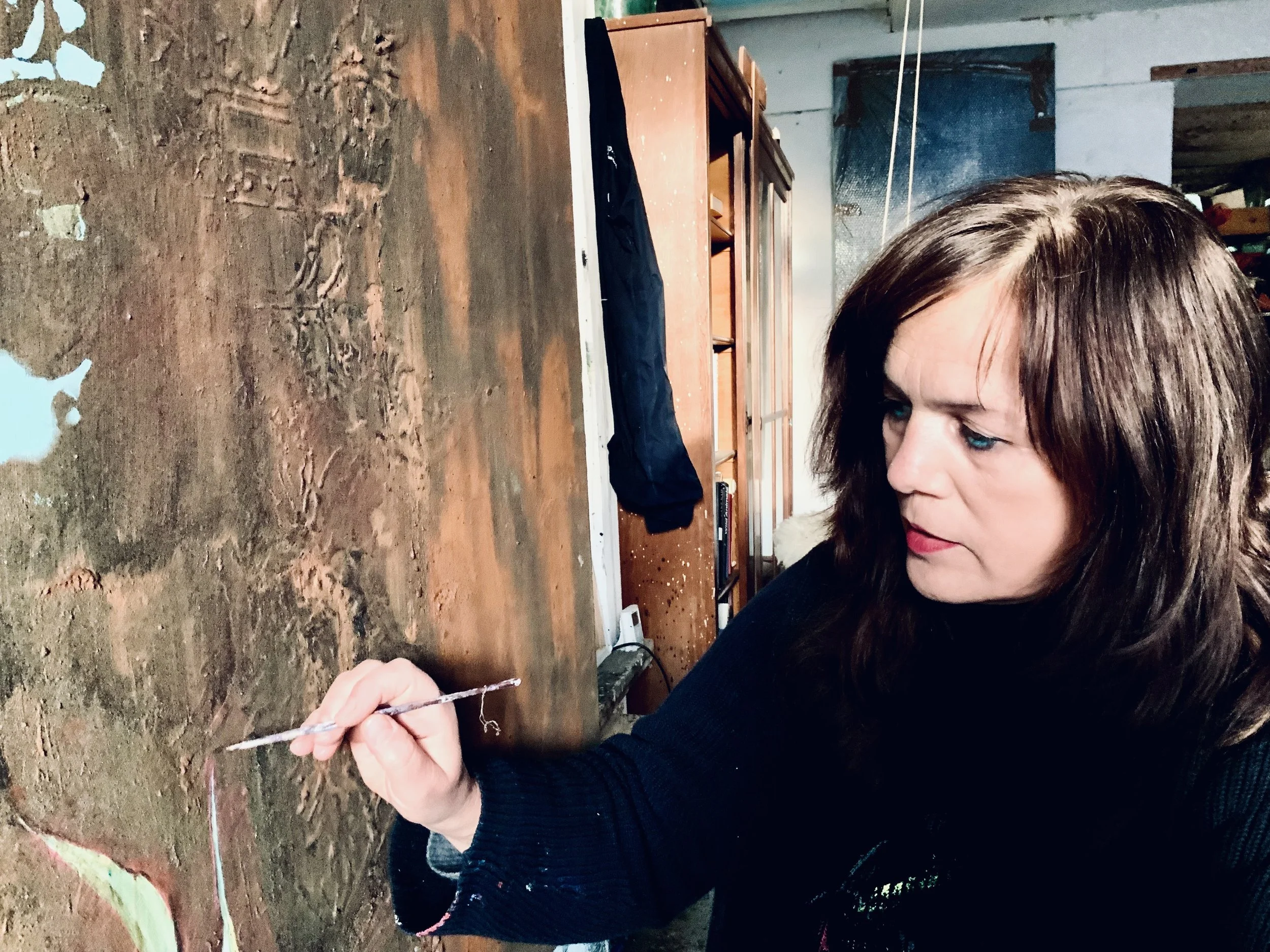
Gaby Roter (*1963 in Pegnitz, Germany) lives and works in Hüsingen near Basel. Her artistic practice is defined by a profound aesthetic that deliberately avoids superficial beauty, inspired by Japanese Edo art—particularly Ogata Kōrin which she discovered during a stay in Los Angeles. Numerous trips and residencies abroad, including stays in Stockholm and central France, have deeply shaped her connection to nature. But still her work emerges from the tension between destruction, transformation, and survival—not as a representation, but as a physical process. The result is an invitation to engage with its ongoing story- the relation between nature and mankind.
Over the past decade, the theme of nature has increasingly moved to the forefront of her work. After studying free painting at the SFG Basel with Franz Fédier and at the Academy of Fine Arts Munich with Helmut Sturm, Roter developed a distinctive style that bridges tradition and modernity. Her works have been exhibited internationally, including at the Palazzo Albrizzi Capello (Venice), Art Fair Stockholm, Museo d’Informazione (Senigallia), and Kunstverein Weil am Rhein. Her art is featured in public collections such as the Technical University of Stockholm, the Emil Wartmann Collection (Zurich), and the Deutsche Bank’s global ARTWORKS program.
Currently, Gaby Roter is working on the series „Animals“ is exploring the relationship between humans and animals. The works combine ink painting with experimental materials, always seeking the invisible connections that bind us to nature.
Roter has been honored with awards such as the Public Prize at Museum Bernd Rosenheim (Offenbach) and a distinction from the Swedish Arts Council and Kunststipendium Lauffenburg. Her art invites viewers to discover beauty in depth—beyond the obvious.
Gaby, how do you understand the transformation of natural phenomena into painterly or material language within your practice, particularly given your stated desire not to represent nature realistically but to transmit its energetic presence? In many of your works, colour, resin, ink, and etched surfaces seem to operate less as descriptive tools than as agents of force or intensity. Could you speak about how this process unfolds in the studio, and how you negotiate the threshold between observation and the more abstract articulation of vitality, fragility, and transformation that appear to animate your work?
The transformation of natural phenomena into painting or material language, for me, is not about replication but about evocation. It’s an attempt to distill the essence of what I experience in nature—the unseen currents, the quiet violence of growth and decay, the way light can feel almost physical—into something that exists beyond the literal. It becomes a space where observation and abstraction are in constant dialogue, where the act of making is as much about listening as it is about creating. In the process I often let chance participate: resin flows uncontrollably, acid eats into metal. These "mistakes" show the transience - this is exactly what makes the works alive - I am not in total control of it and this is what supposed to evoke an echo in the viewer. The studio is where observation meets alchemy. I might start with a sketch or a photograph, but the work evolves through the act of making. There’s a lot of destruction and rebuilding—scraping away layers, sanding down surfaces, letting materials interact in ways I can’t fully control. It’s in those moments of surrender to the process that the work often finds its vitality. The fragility you mention is inherent in this approach; the pieces feel alive because they’re not fixed, not finalized, but caught in a state of becoming.
Your artistic formation includes the rather unusual combination of academic painting, theatrical painting, and participation in Kunst am Bau projects under Franz Fédier. Each of these contexts implies a different relationship between image, space, and audience. How did these early experiences shape your understanding of painting as something that can extend beyond the canvas into spatial, architectural, or even environmental dialogue, and do you see your current large scale works as continuing that expanded conception of painting?
My background taught me that painting doesn’t have to be confined to a canvas. Theater showed me painting as something temporal and immersive, shaped by light, movement, and the viewer’s experience. Kunst am Bau pushed me to see it as part of architecture—something that defines space, not just decorates it.
Today, my large-scale works extend this idea. They’re not just “big paintings” but environments: materials like resin or metal, gold or silver interact with light and space, and the viewer’s movement becomes part of the piece. The goal is to dissolve the line between artwork and surroundings, making painting a spatial dialogue rather than a static object. The canvas wasn’t a rectangle on a wall -it was a wall, a ceiling, a floor—something you moved through as much as something you looked at. This expanded my understanding of scale: paintings are environments. Whether it’s a multi-panel piece that wraps around a viewer or a work that uses reflective surfaces to merge with its surroundings, or a thematic Serie of Images, the goal is to dissolve the boundary between the artwork and the space it occupies. The painting becomes a field—something you enter, something that changes as you move.
A recurring concern in your practice seems to be the unstable boundary between what we might call the human domain and the domain of nature. Rather than treating these as separate spheres, your work often appears to stage a kind of negotiation between them. Do you see your paintings and material experiments as visualizing this tension, or perhaps as attempting to dissolve the binary altogether, proposing instead a more entangled vision of human existence within ecological processes?
Oh yes, this tension between the human and the natural isn’t just a theme in my art work; it’s the core of the conversation. I don’t see my paintings or material experiments as simply visualizing the divide, but as active sites of negotiation, where that boundary is tested, blurred, and sometimes even erased.
The goal isn’t to dissolve the binary in some idealized harmony, but to expose how entangled we already are. Human existence isn’t outside ecological processes; it’s woven into them, often in ways that are messy, contradictory, and full of friction. My work tries to reflect that—through materials that decay, surfaces that shift with light, or forms that feel both deliberate and wild.
For example, when I use resin, it’s not just for its glossy finish but for how it behaves: it pools, cracks, and yellows over time, mimicking natural processes like erosion or sedimentation. The human hand is there in the gesture, but the material itself has its own agency. That interplay—between control and surrender—feels like a metaphor for our relationship with nature.
So yes, the work proposes an entangled vision, but one that embraces the instability of that relationship. It’s not about resolving the tension; it’s about sitting with it, letting it unfold in the materials and the space. They remind me that we are part of something bigger than our plans. Maybe it's just about putting up with it—and making it visible.
I don't think art or me can “dissolve” this duality. But perhaps there is a kind of countermovement in looking closely—in allowing contradictions, in showing the cracks. Not as a solution, but as a slowdown. If we look at things, endure them in their complexity, instead of simplifying them, then this could, quite practically, sometimes even stop something: the reflexive grip, the quick decision, the looking away.
You frequently move between mediums depending on the conceptual demands of a given project. In an art historical moment that has often valued the consistency of a signature style, your approach suggests a more fluid relationship between idea and material. How do you decide which medium, whether ink, resin, large scale painting, or etching, becomes the appropriate vehicle for a particular inquiry, and does this shifting material language alter the way you think about authorship or artistic identity?
For me, the medium isn’t a signature—it’s a response. Each material carries its own logic, its own way of thinking, and its own relationship to time, space, and the body. The decision isn’t about style; it’s about which material can embody the inquiry most honestly.I start with a question or an observation—something I can’t quite articulate in words. The choice of medium emerges from what the idea demands. For example:
Ink feels like a conversation with fluidity, with what’s ephemeral or uncontrollable. It’s immediate, almost like drawing with water. If I’m exploring something about movement, erosion, or the passage of time, ink’s unpredictability becomes part of the dialogue.
Resin is about suspension—literally trapping moments, but also revealing their instability. It’s both preservative and fragile, which makes it perfect for questions about memory, decay, or the tension between permanence and change.
Large-scale painting is about the body. It’s not just something you look at; it’s something you move through. If the inquiry is about space, immersion, or the physical experience of being in a landscape (or a city, or a crowd), then scale becomes the medium.
Etching is a process of resistance and reveal. The acid bites into the metal, and what’s left is both a trace and an absence. It’s ideal for ideas about erosion, history, or the layers of time. The material isn’t just a tool; it’s a collaborator. It pushes back, suggests new directions, and sometimes even contradicts my intentions. Authorship and Identity for me is a fluent thing. This shifting material language does alter how I think about authorship. If I were tied to a single medium or style, my identity as an artist might feel more fixed, more like a brand . But because the work is driven by inquiry rather than consistency, my role feels closer to that of a facilitator—someone who sets up conditions for a conversation between materials, ideas, and the viewer.This fluidity can be unsettling. It means my “signature” isn’t a look but a way of thinking. But it also feels more honest. The world isn’t static; why should art be? The challenge is to stay open to what each project requires, even if it means letting go of what’s familiar.
The scale of many of your works, especially those installed in public institutions such as the Technical University in Stockholm or the Swedish Embassy, invites a different mode of viewing than that of the traditional gallery painting. When working within architectural or civic spaces, how do you consider the viewer’s bodily movement and temporal experience of the work, and do you approach these commissions as opportunities to construct a dialogue between art, public consciousness, and the everyday environment?
For me public works are about dialogue—with the site’s history, its people, and its daily rhythms. The art must be porous, inviting viewers to project their own stories onto it. I use materials and forms that respond to the place—light, architecture, social dynamics—so the work feels like it belongs, yet still asks questions: “How do we move here? What connects us to this space?“
Gallery works, by contrast, are intimate. They explore personal themes—our relationship with nature, the fragility of being, the unseen threads between us. Here, the materials become more metaphors for inner tensions: control vs. surrender, human vs. natural processes. The goal isn’t answers but visible questions. Both approaches feed each other: public work keeps me grounded in shared experience; gallery work lets me dig deeper. But the core is the same: How do we create spaces—inside or out—that invite connection, thought, and feeling?
In your artist statement, you describe art as a means of communicating the beauty, vulnerability, and unique power present in every small element of the natural world. This emphasis on energy and process recalls certain strands of postwar abstraction while also resonating with contemporary ecological thought. Do you see your work as part of a broader discourse about environmental awareness in art, or is your engagement with these themes primarily driven by personal reflection and experiential observation?
I often reflect on this question. Is my work part of a larger conversation, or is it a deeply personal exploration - I often doubt. The truth is, I think it lies in the interplay between the two. On one hand, my engagement with nature’s energy, fragility, and transformative power is rooted in personal experience—in moments of quiet observation, in the tactile process of working with materials, and in my own emotional response to the world. When I speak of the "unique power in every small element," I’m often thinking of the way light fractures through leaves, or how a crack in dried earth can feel like a metaphor for resilience. These are intimate, almost private reflections that drive the work from within. Yet, I’d be dishonest if I didn’t acknowledge that this perspective also resonates with broader discourses—both in art history and contemporary thought.
The postwar abstraction you mention, particularly the work of artists who sought to capture energy, process, and the sublime in nature (thinking of Rothko’s luminous fields or Tobey’s intricate webs, which deeply influenced me) feels like a spiritual ancestor to my own explorations. I feel the same looking at Giottos paintings or japanese Masters from the Edo Period. And yes, in today’s context, where ecological awareness is more urgent than ever, the work inevitably becomes part of that conversation. It’s not that I set out to make “environmental art,” but if the work invites viewers to see the natural world with fresh eyes—to notice its vulnerability, its dynamism, its quiet insistence—then it’s participating in that discourse whether I intend it to or not. So it’s both: a personal meditation that, by virtue of its themes, becomes part of something larger. The work doesn’t preach or propose solutions; it simply holds space for these questions, in the hope that others might pause and feel something of what I’ve felt.
Your works often seem to contain traces of destruction, transformation, and survival mechanisms, suggesting that nature in your practice is not a passive or idyllic subject but rather a dynamic field of struggle and regeneration. Could you discuss how these ideas influence the physical construction of your works, particularly the layering, erosion, or chemical interactions that occur through materials such as resins and inks?
The aggression and destruction in the images are both metaphor and method. On the one hand, all processes in nature are characterized by becoming and passing away; on the other hand, they also reflect deeper personal processes. It is a ait’s a force, a system of constant negotiation between creation and decay, resilience and vulnerability. These ideas don’t just inspire the work; they dictate how it’s made.
The physical construction of each piece is a collaboration with materials that already embody these tensions—resin, ink, metal, acid—because they live through transformation. I build surfaces in layers—sometimes dozens—because nature isn’t a single moment, but an accumulation. A crack in resin might mirror the stratification of rock; a buried layer of ink could bleed through like sediment rising to the surface. The process isn’t about covering up but about revealing the history of the making.
When I sand, scratch, or chemically alter these layers, I’m not just creating texture; I’m exposing the struggle between what’s hidden and what emerges—like erosion uncovering fossils, or a storm stripping away facades. In pieces where I use acid on metal, the corrosion isn’t a mistake—it’s a dialogue. The metal resists, then surrenders, leaving traces that feel like scars or maps. That push-and-pull is the work’s heartbeat.
I let materials degrade intentionally. Resin yellows over time; ink bleeds when wet; metals oxidize. These aren’t flaws—they’re evidence of life. By inviting these changes, I cede some control to the material’s own "survival mechanisms." A piece isn’t finished when it leaves the studio; it continues to evolve, just like a landscape. Thatś allthough hey I use silver and gold leaves- they change with the light.
This mirrors how nature regenerates through decay: a fallen tree feeds new growth; a forest fire clears space for rebirth. If a work cracks or fades, it’s not failing—it’s doing what it’s supposed to do. It’s a reminder that resilience isn’t about permanence, but about adaptation. The reactions between materials—resin hardening, ink dispersing in alcohol, acid eating into metal—are microcosms of larger struggles. These processes aren’t just visual effects; they’re physical manifestations of the themes I’m exploring.
I can’t fully control how all the materials flow or crack. That tension is the point. Some layers are transparent, others opaque; some elements glow under light, others retreat into shadow. It’s a way to ask: What do we choose to see in nature—and what do we overlook? Even my process reflects these ideas. I often work with what’s at hand, repurposing materials or salvaging "failed" pieces. A crack becomes the starting point for something new; a stain suggests a direction. This isn’t just pragmatism—it’s a philosophy. Nature doesn’t waste; it repurposes. Neither do I.
Given your long engagement with both studio practice and educational workshops for institutions such as the Vitra Design Museum and the Mus e Foundation, how has the act of teaching or facilitating creative processes influenced your own thinking about artistic experimentation? Do these pedagogical encounters reshape the questions you bring back into your own practice?
Teaching or educational instruction has not significantly influenced my artistic work; I see it more from a pragmatic perspective—it’s work that I enjoy, but it lacks the context that is truly important to me as a person.
There is an intriguing tension in your work between narrative suggestion and abstraction. While you resist straightforwardp representation, your pieces often evoke cycles, stories, or processes unfolding within the natural world. How conscious are you of narrative structures when developing a work, and do you see the viewer as completing these stories through their own interpretation and emotional response?
Sometimes the narrative quality is intentional, a way to guide the viewer’s eye or imagination. Other times, it surfaces unexpectedly, revealing itself only in the act of making.These elements become placeholders for the viewer to project their own views and to complete the work in their imagination. It´ s kind of an invitation to participate and to connect with the viewer (I remeber Rothko saying in an Interview that a picture and the viewer should have the same space)
Their experience might overlay with their own stories of change, loss, or renewal onto the abstract forms, or depicted animals or natural elements, is making the experience deeply personal.
Looking across the trajectory of your career, from your early academic training in Basel and Munich to your recognition through awards and international exhibitions, how do you perceive the evolution of your artistic concerns? Are the questions about human intervention in nature that motivate your current practice an extension of ideas present from the beginning, or do you feel that the urgency of these themes has intensified in response to the changing cultural and environmental conditions of our time?
With my academic training in Basel and Munich, where I likely explored the tension between abstract form and deeper meaning - through materiality, process, and the idea of art suggesting narratives without illustrating them. These themes were perhaps unspoken but already present in my early work.
The decisive and changing inspiration came at LACMA, standing before Ogata Kōrin’s Blue Irises on Gold. Here I realized that aesthetics could be radical and profound without being superficially "pretty." Painted in the 17th century, yet so modern and at the same time so moving in its aura—that freed me from the notion that was always circulating at the academy: that beauty is superficial!
In its clarity and beauty, I recognized a purity that had something almost spiritual about it. There I realized that I needed to reframe urgent issues in a kind of aesthetic language rather than expressing them directly and unfiltered through emotion. In my earlier works, the process was often more direct and driven much more by raw energy. It was only through this reframing—and my experience with Japanese calligraphy—that I was able to adopt a more focused approach to conveying my message. And yes, questions about the environment, the use of resources, living beings, and our coexistence feel more relevant than ever; however, my primary concern is to address a fundamental attitude: a mindful awareness, a respect for the whole—not a political or activist one. it is an invitation to perceive differently—to cultivate a sensitized awareness, a reverence for the whole. My focus remains on shifting consciousness rather than dictating solutions. I can ´t give answers, instead I create spaces for contemplation to feel the the fragility of systems, the interdependence of life which is overlooked in our busy dayli life.
https://www.kunst-gabyroter-de
https://www.gabyroter-raumkunst.com
Instagram: @gabyroter
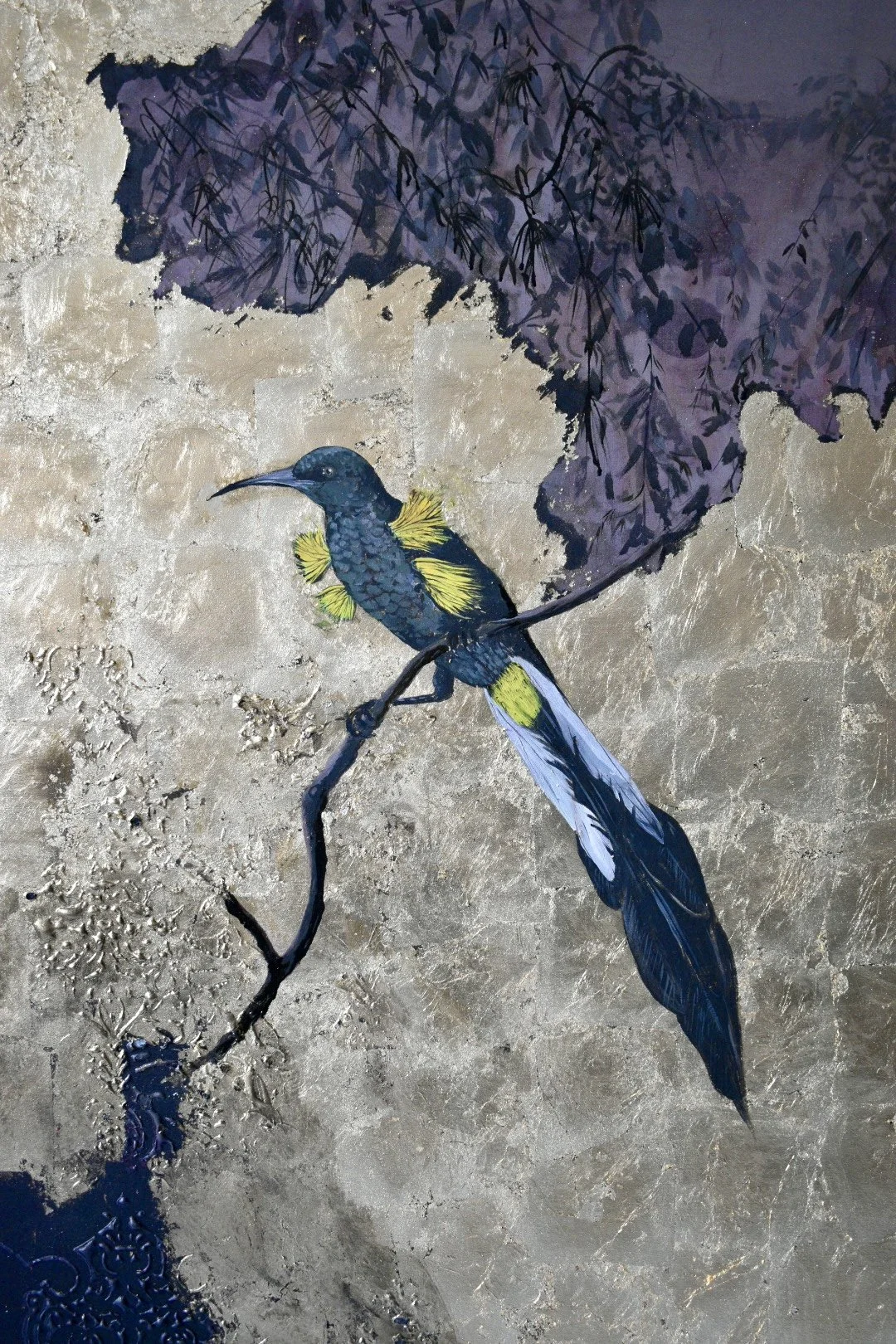
The Last Song,2026,ink and gold leaves on canvas, 140 x 170cm
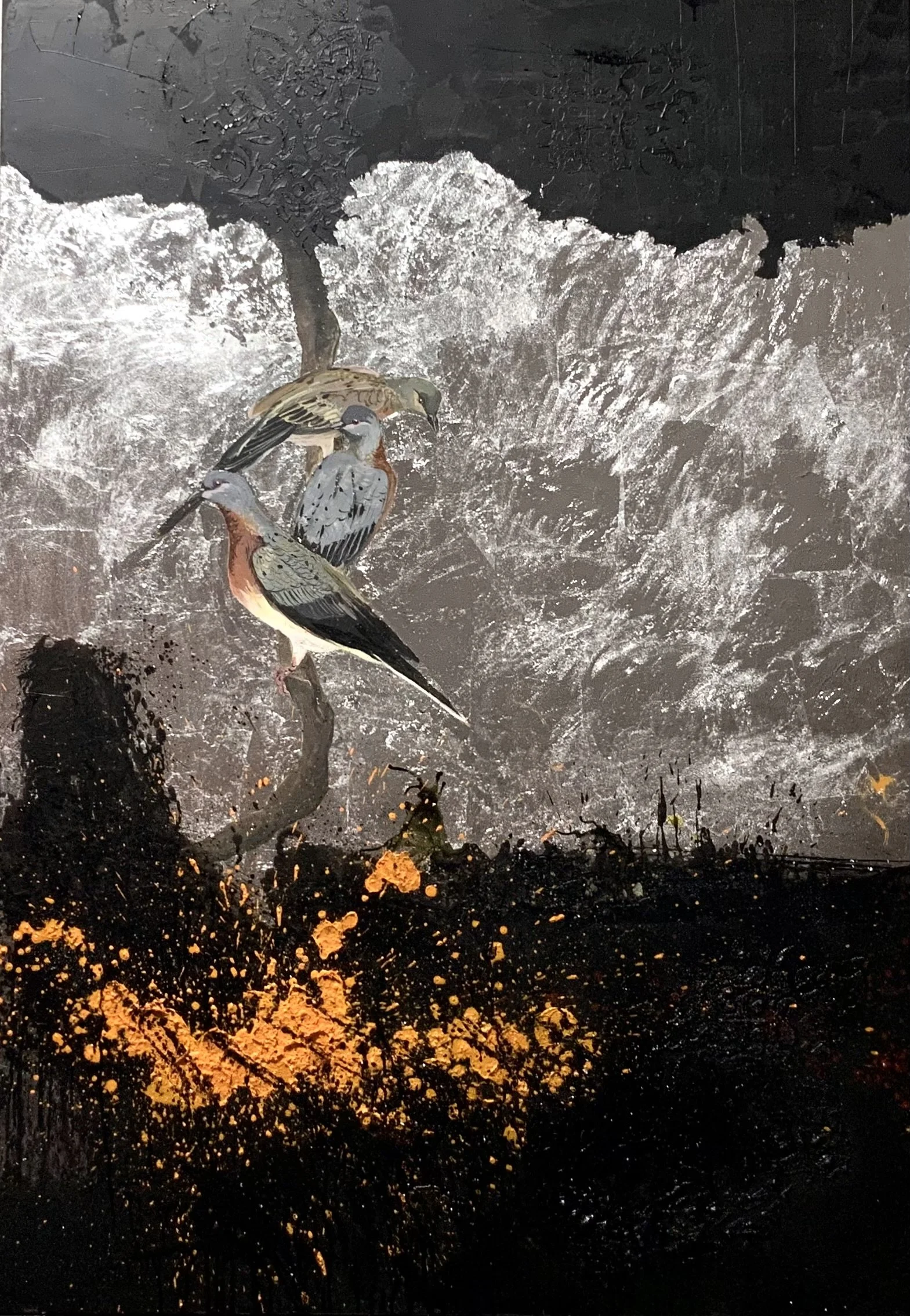
The Mystery of the Pigeons, 2026, ink, pigments and silver leaves on canvas, 140,x 170 cm
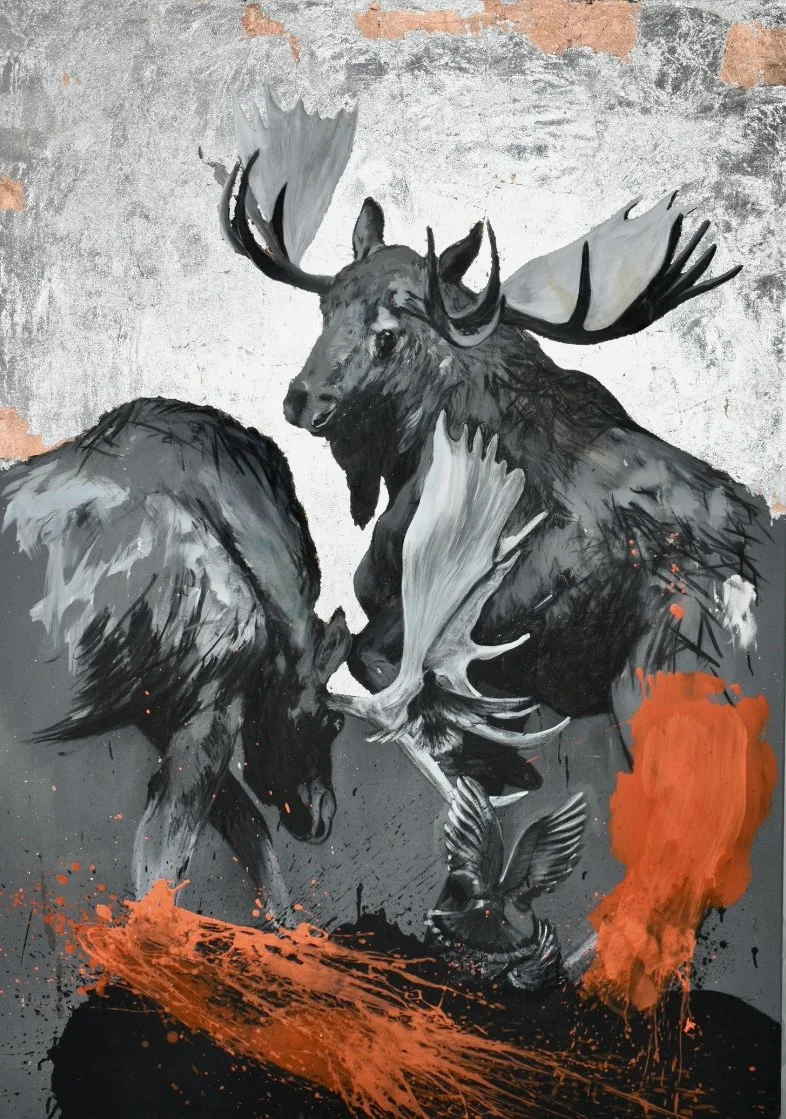
Kings-Guardians,2026, ink,charcoal, pigments and silver leaves on canvas, 140 x 170 cm
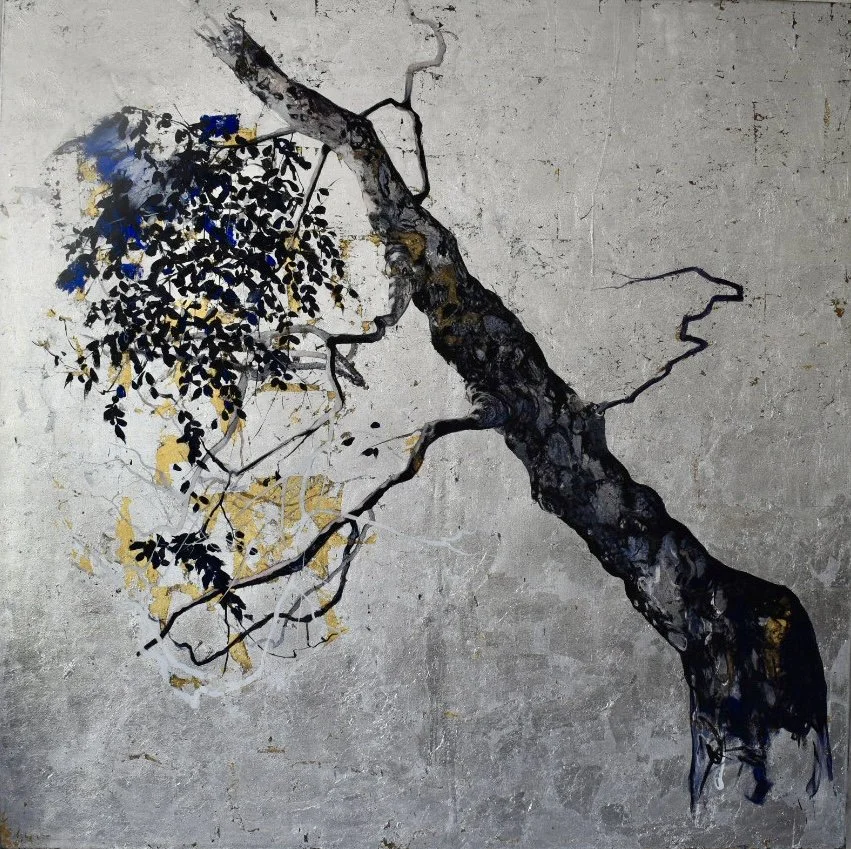
Still alive, 2024,ink and silver leaves on canvas, 160x160cm
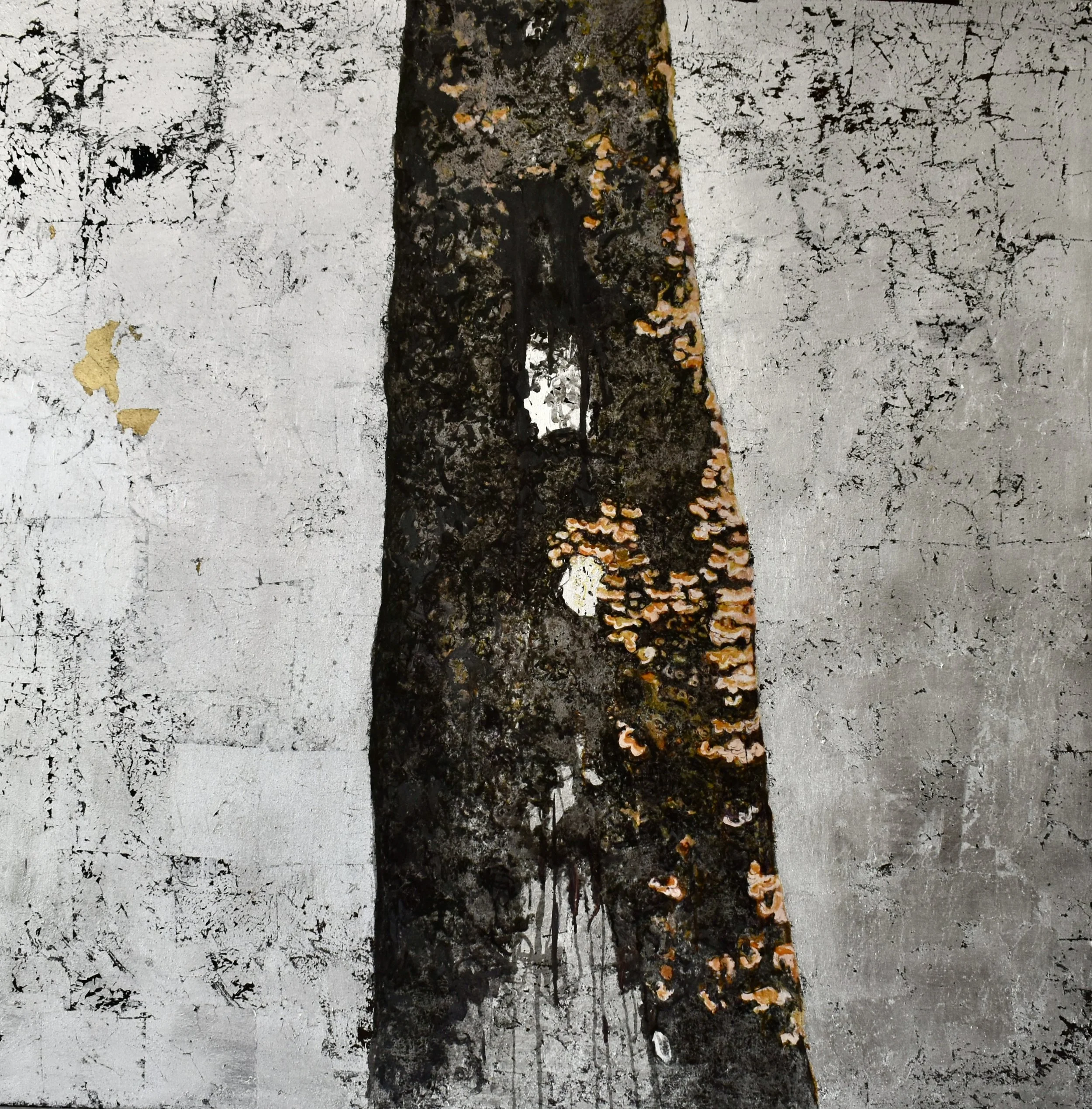
Old oak, 2023,ink and silver leaves on canvas,160x160cm
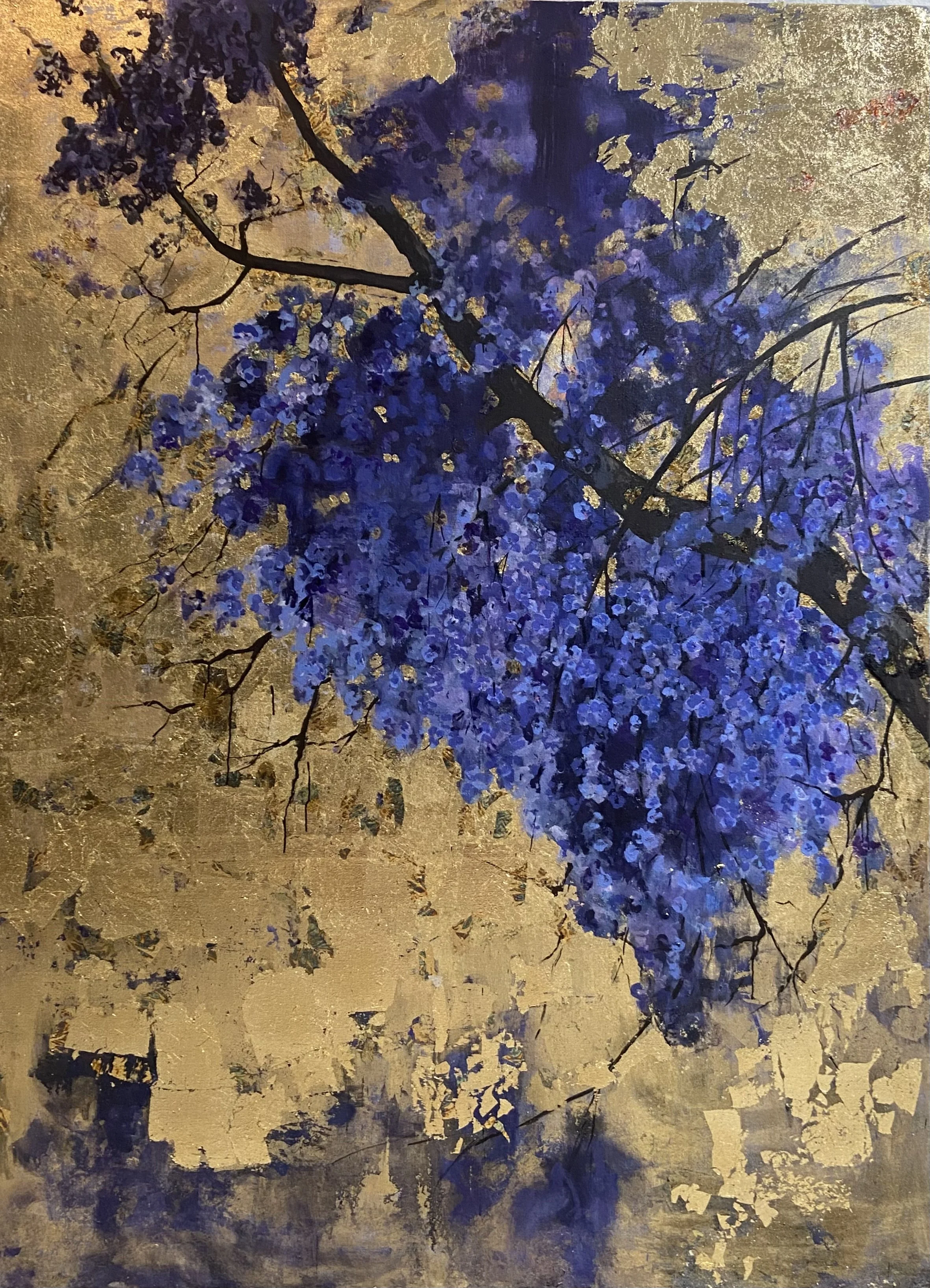
Jacaranda, 2023,ink and gold leaves on linen, 170 x 230 cm
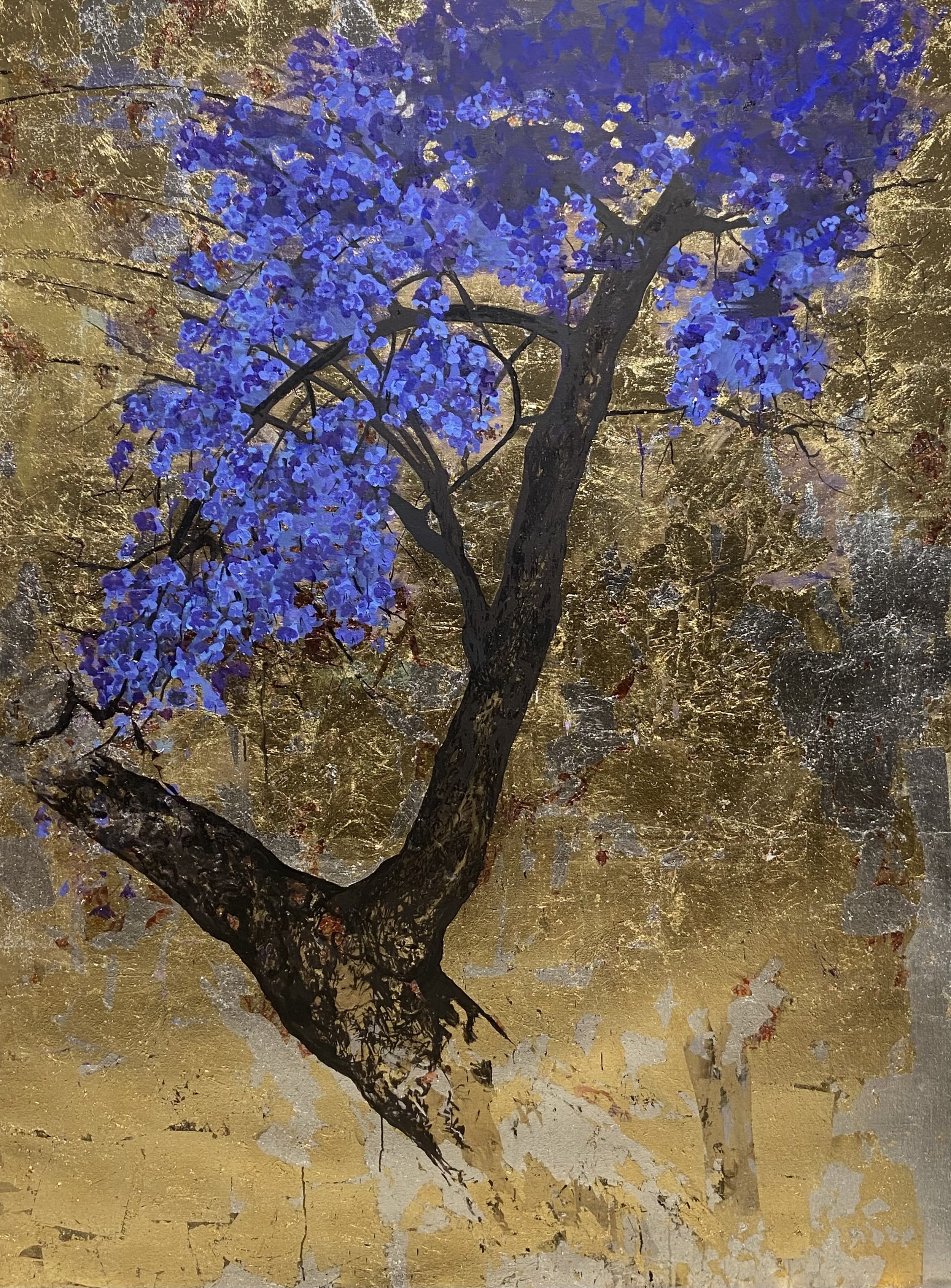
Jacaranda,2023, ink and silver / gold leaves in linen, 170 x 230 cm
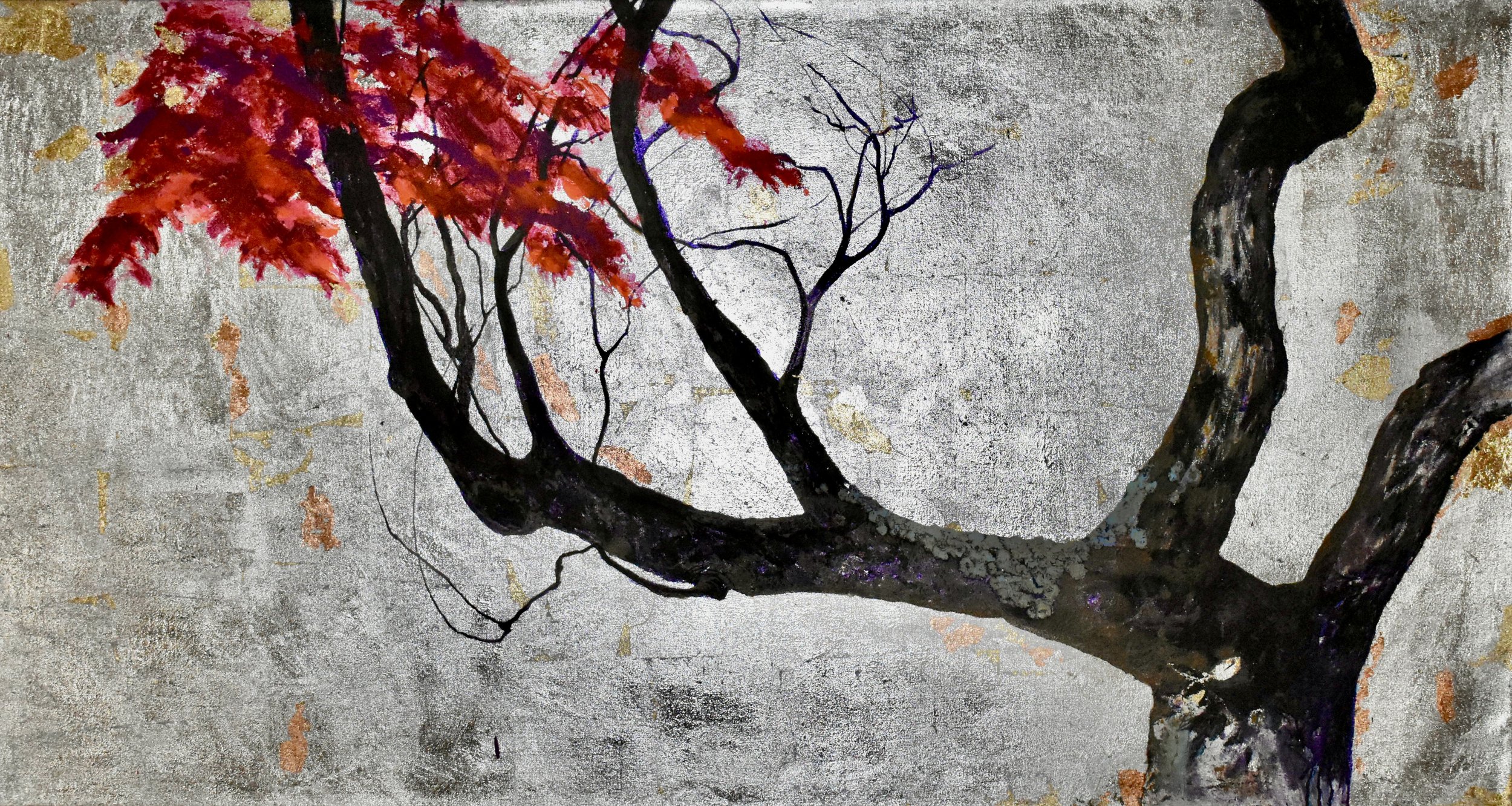
Acer palmatum, 2023, ink, pigments and silver leaves on canvas, 90 x 170 cm
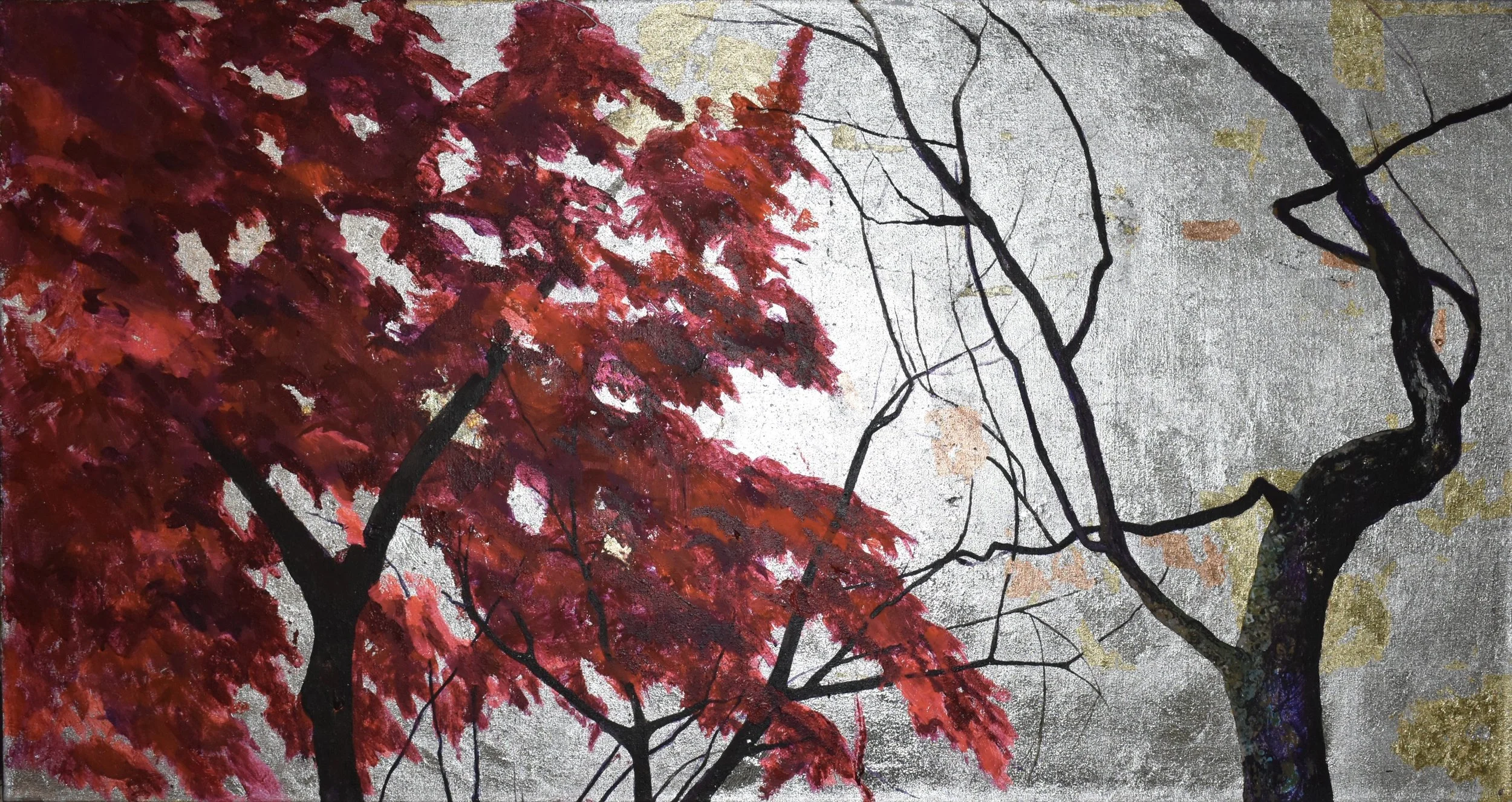
Acer palmatum,2023, ink, pigments and silver leaves on canvas, 90 x 170 cm
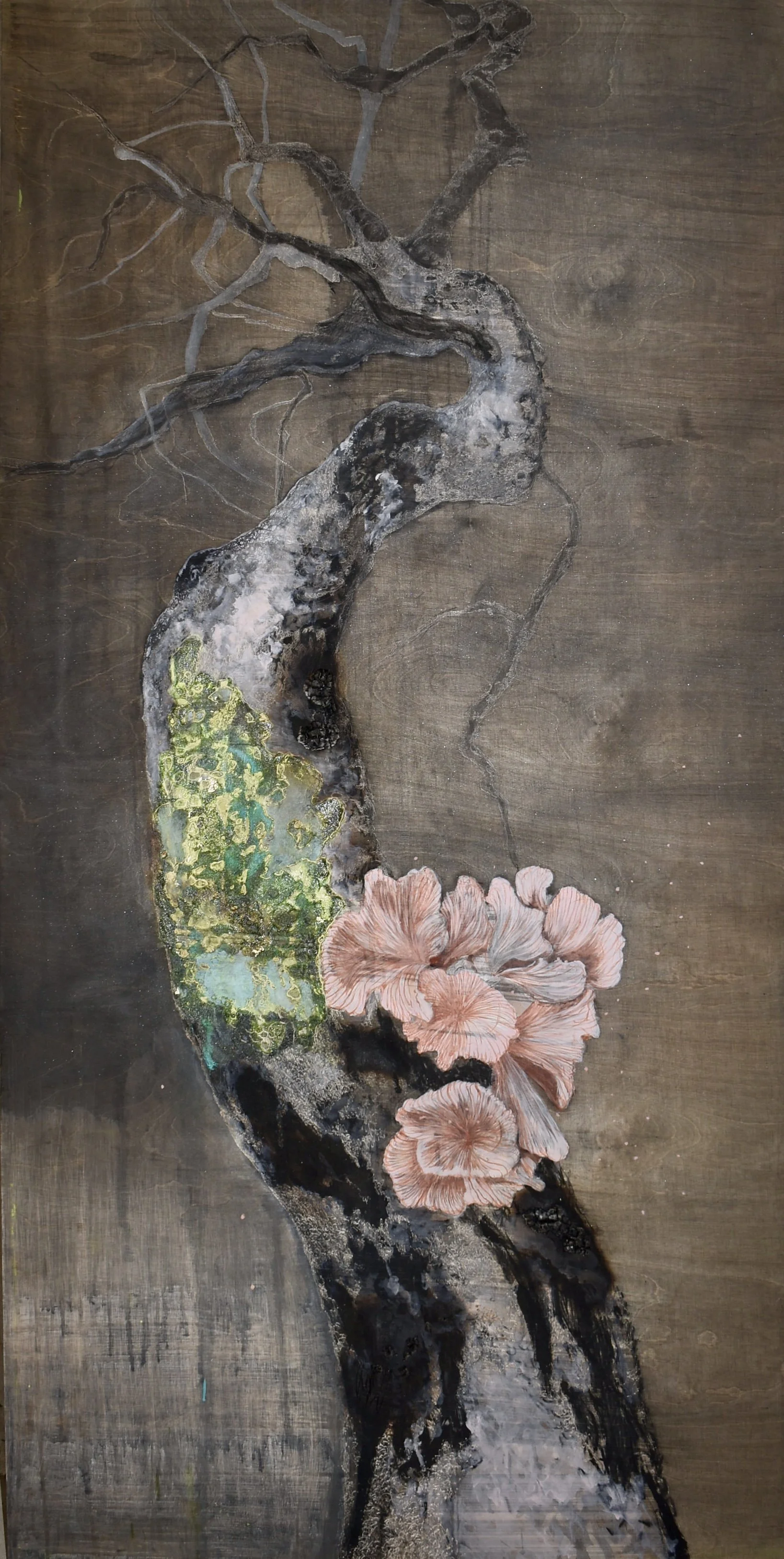
Lichen, 2022, ink and branding on wood, 90 x 180 cm
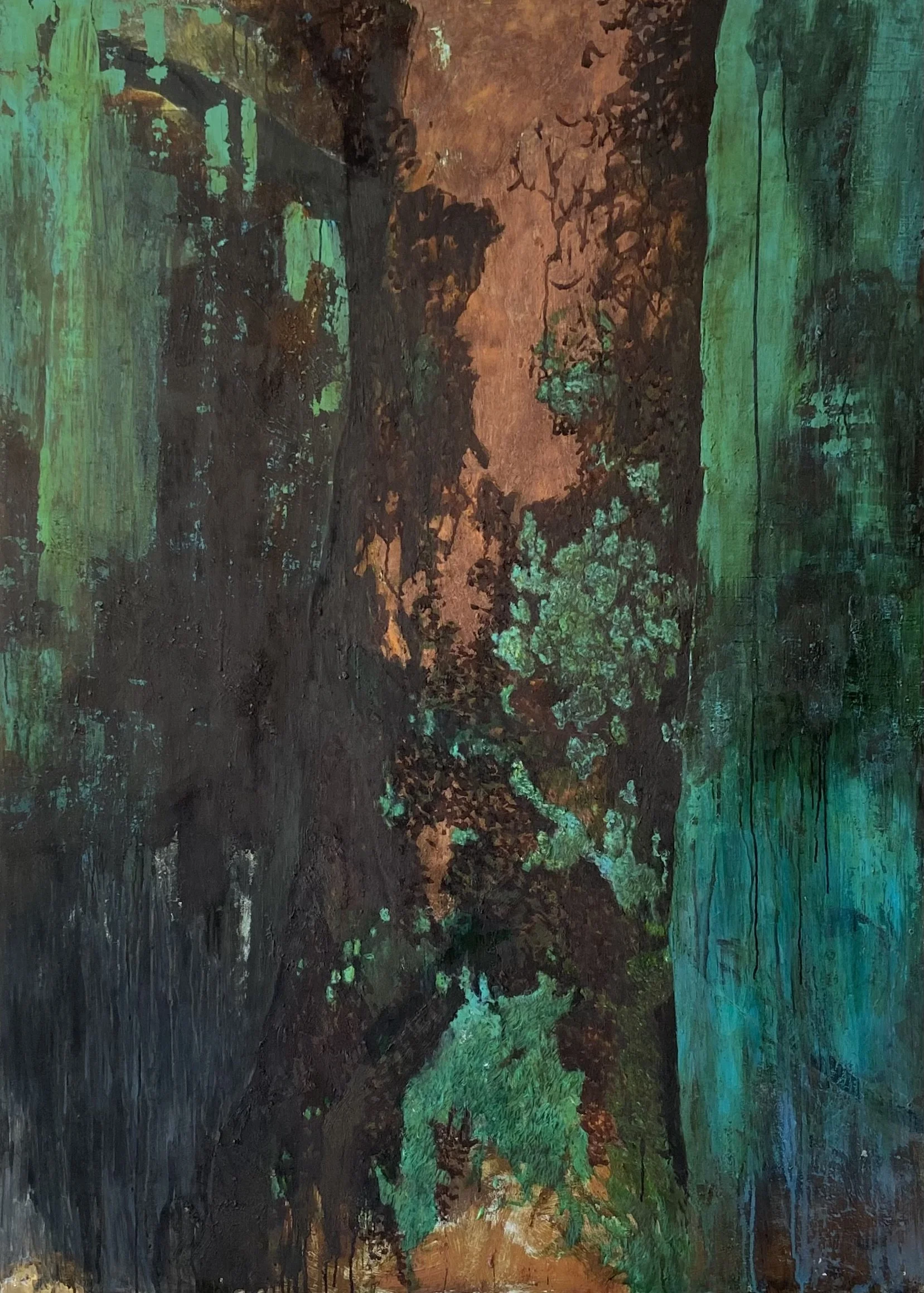
Deep breath, 2024, ink, rust and pigments on wood,120 x 170cm
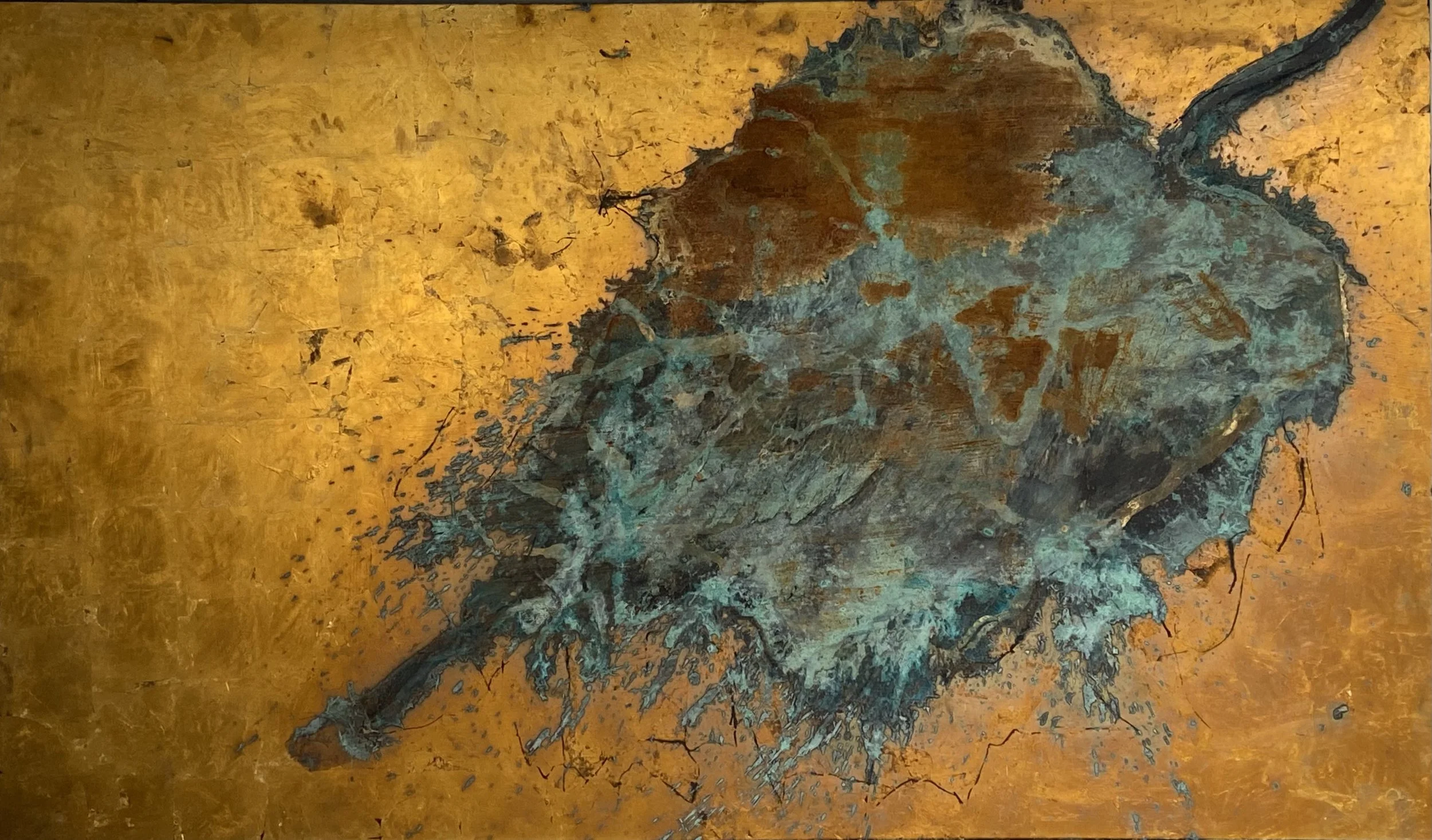
Leaf,2022,gold, Rust and etching on Metal, 120 x 200 cm
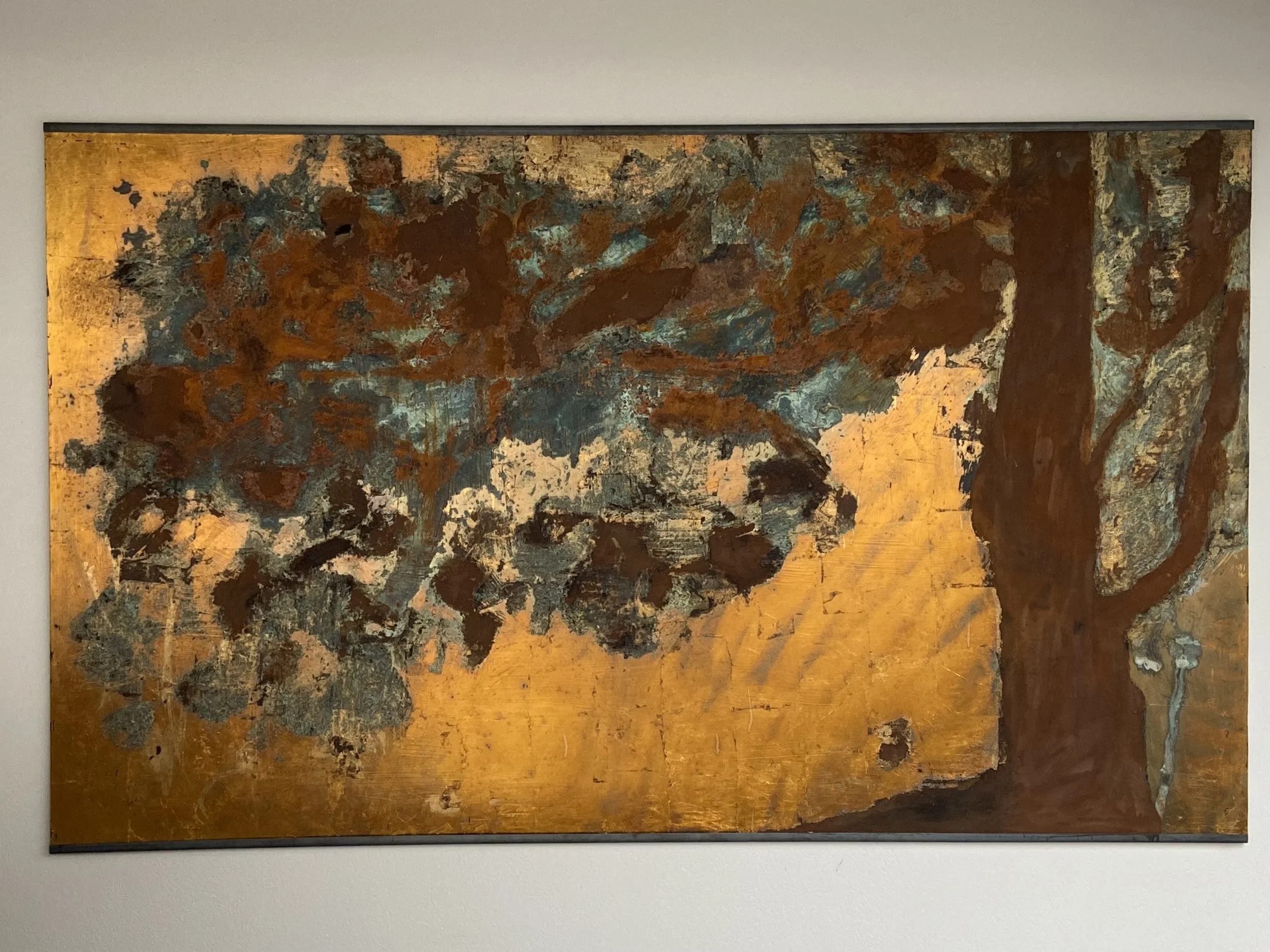
Branch,2022, gold, rust and etching on metal, 120 x 200 cm
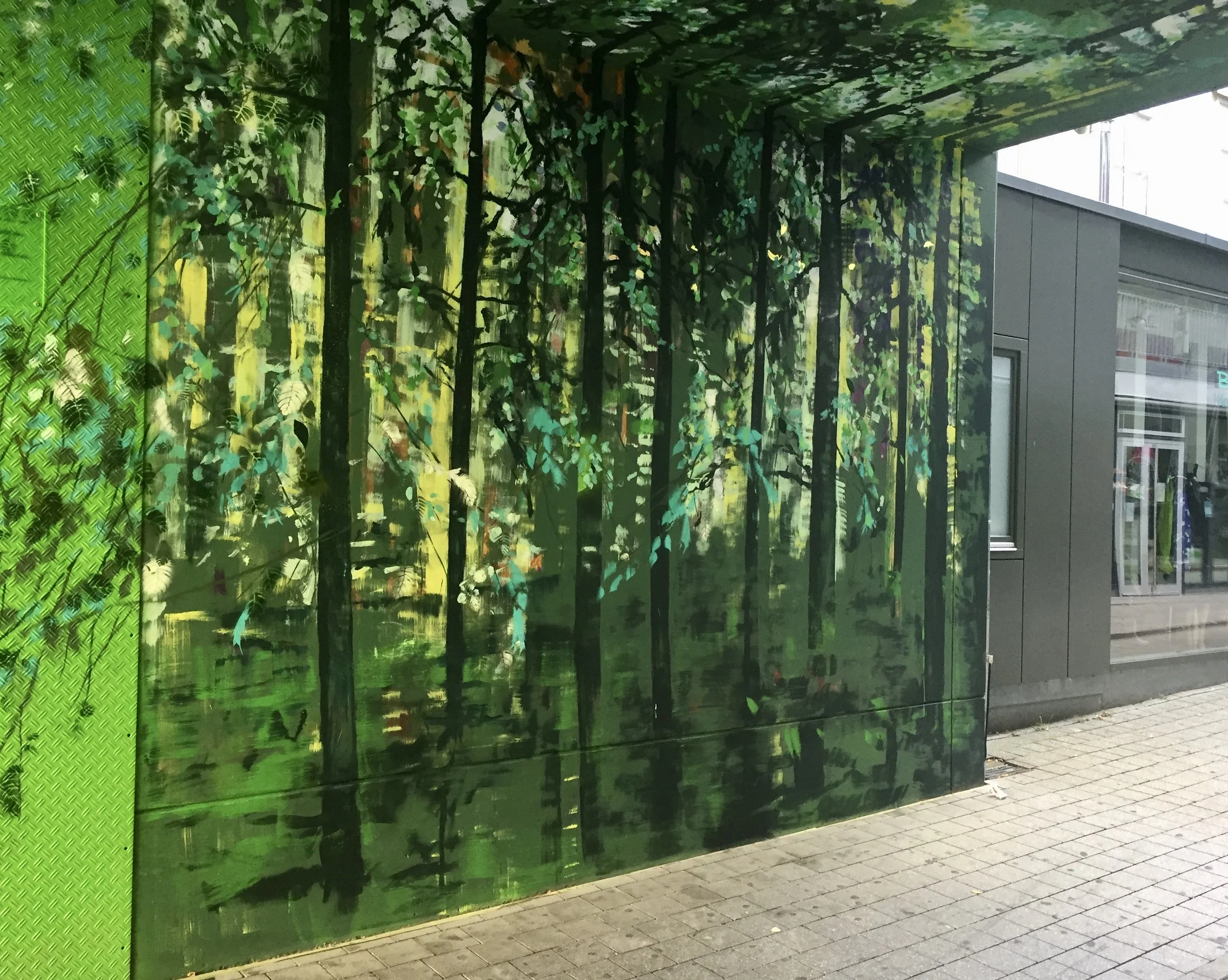
the forest in us,2022 acrylic on wall,300x10000 cm
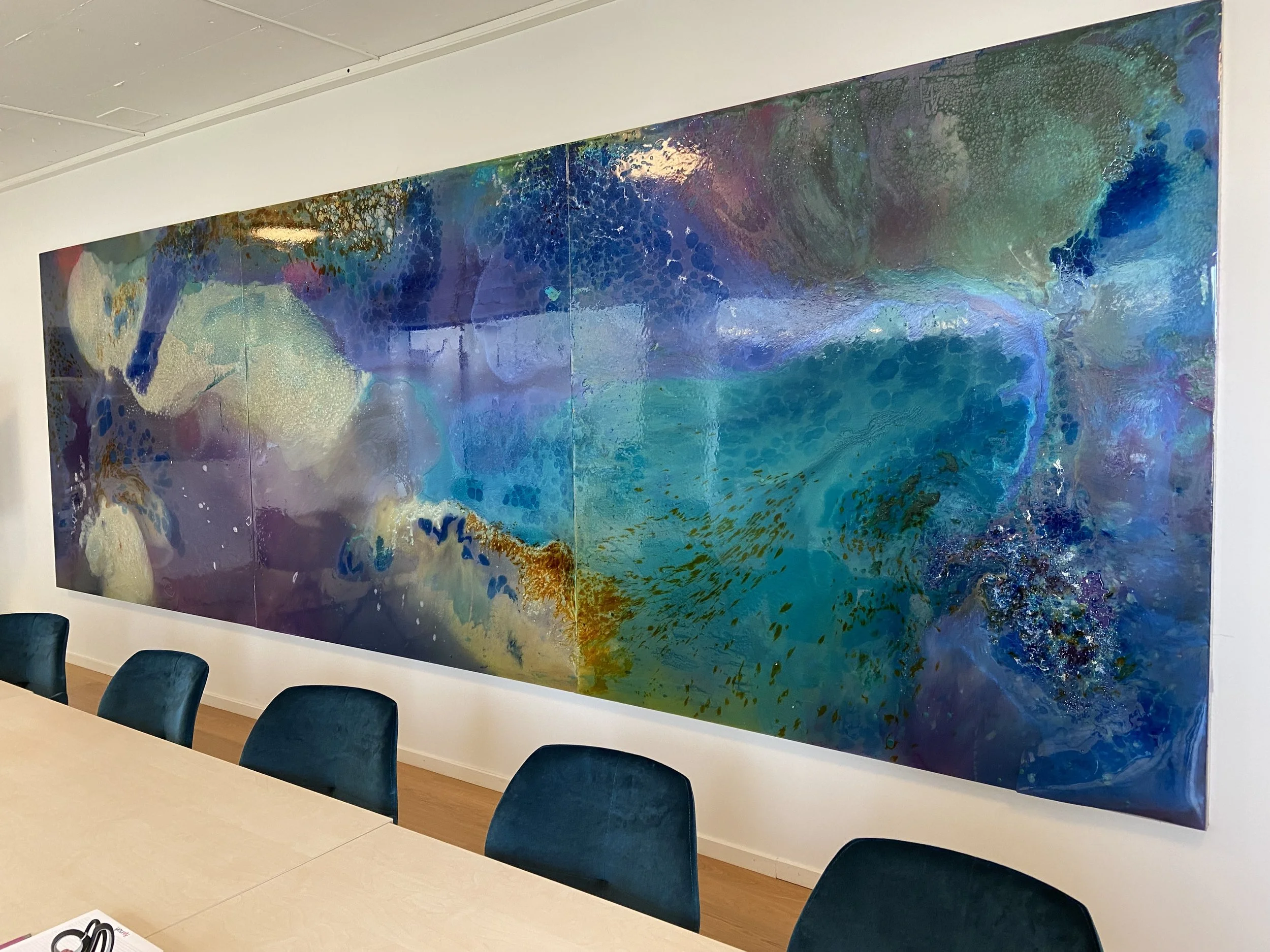
Universe,2020,resin on metal,200x800
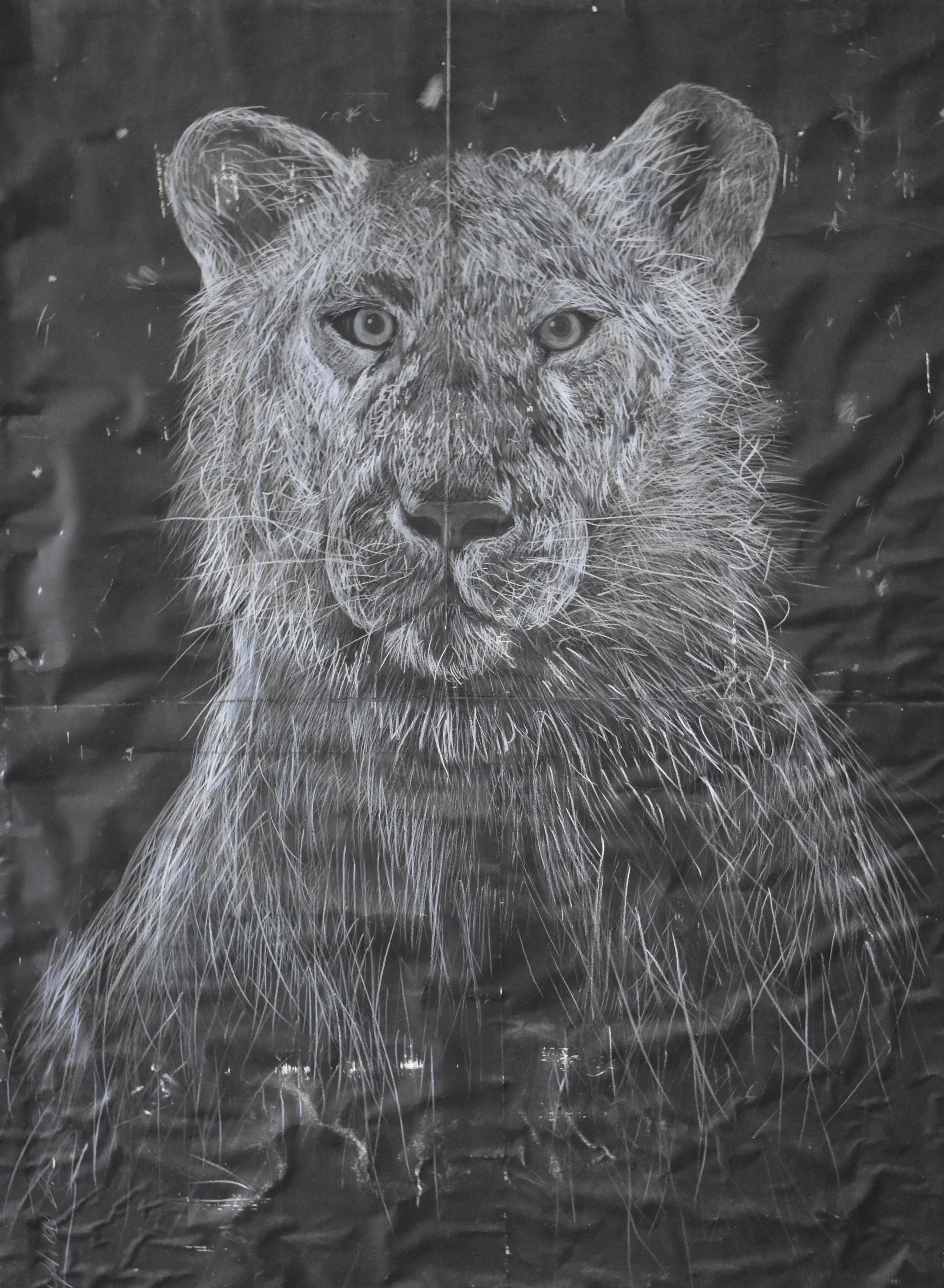
White liger,2020,white charcoal and ink on handmade paper, 140 x200cm
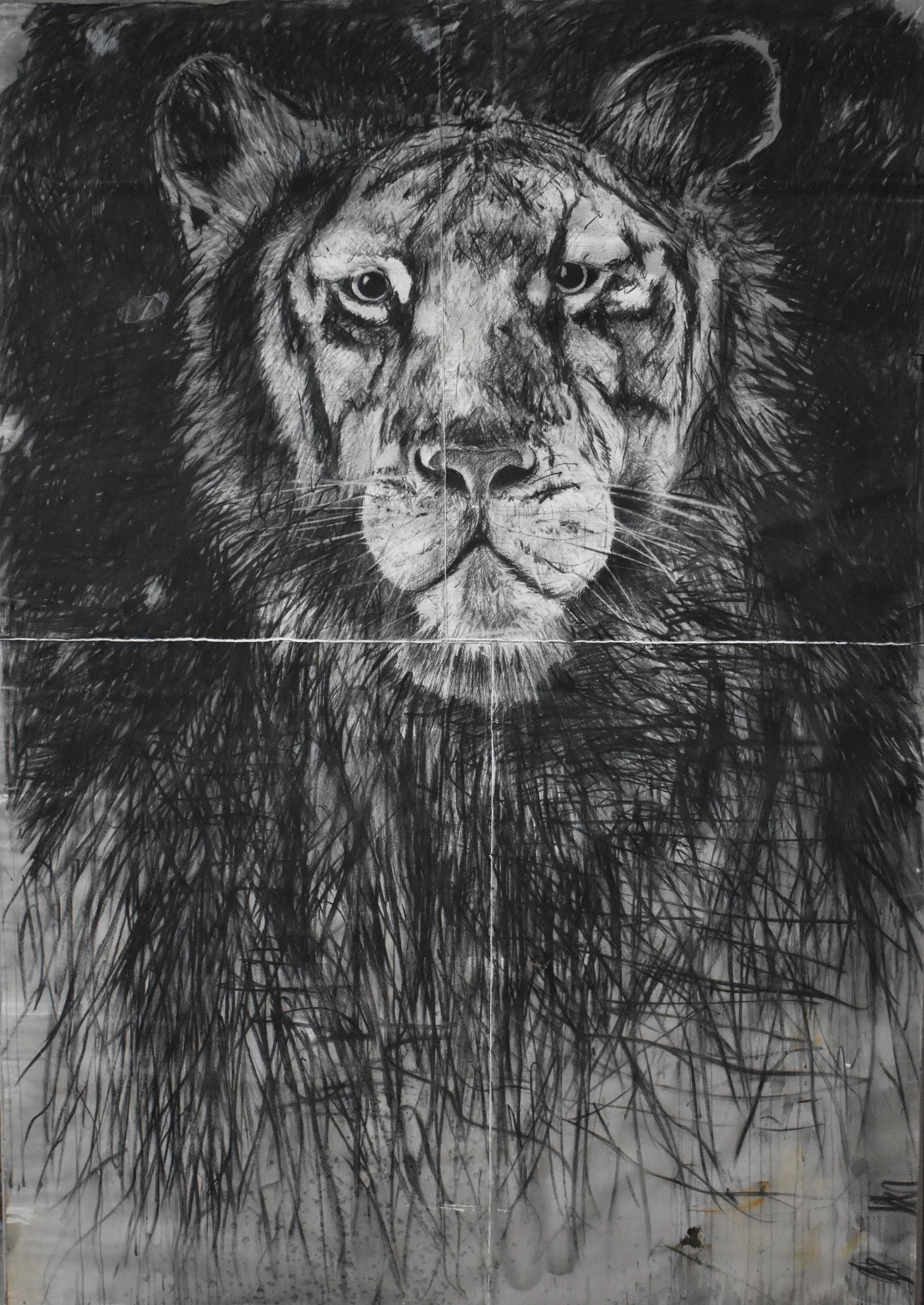
Liger, 2020,charcoal and ink on handmade paper, 140x200cm
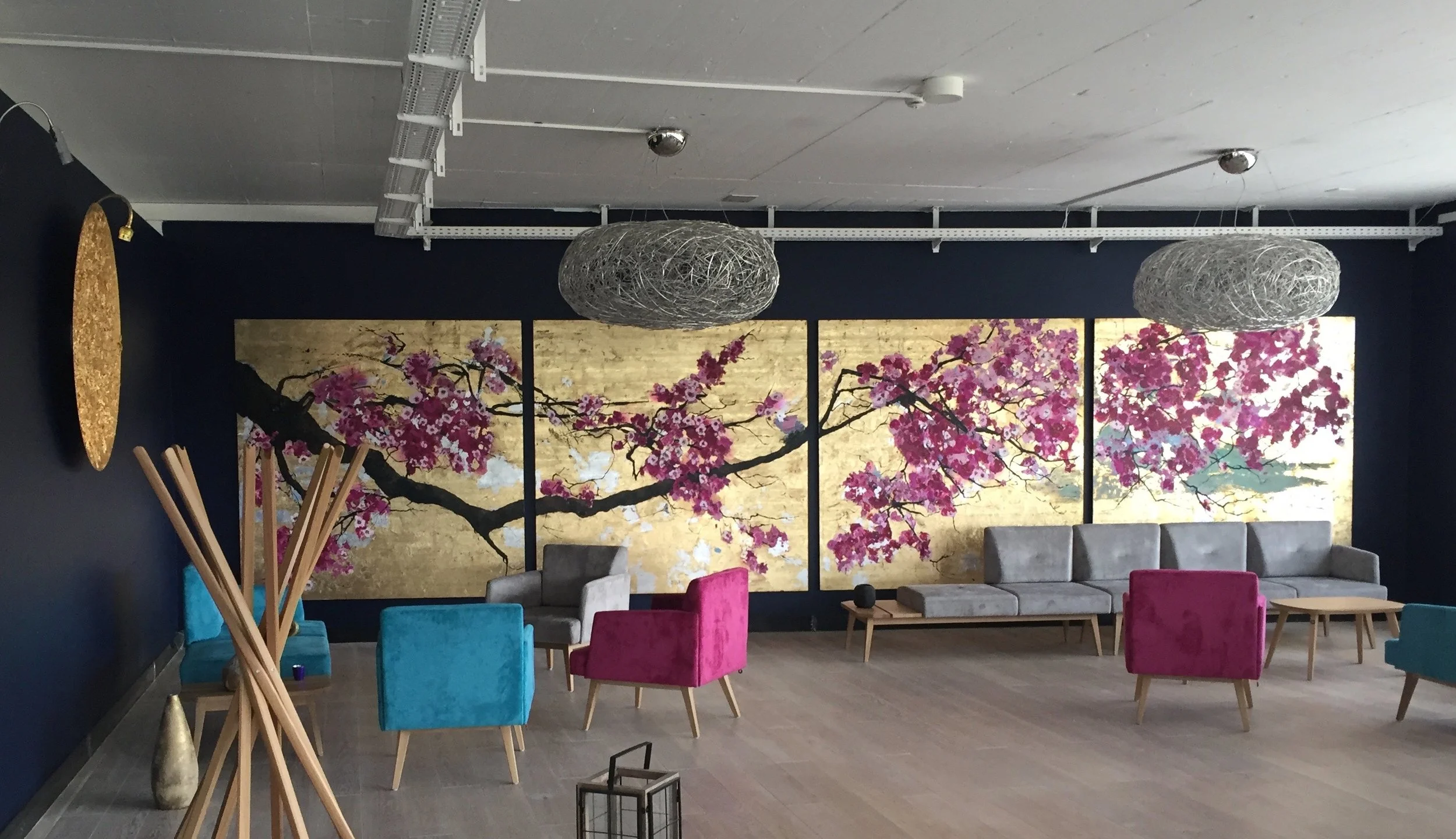
Cherry blossom,2021,ink and etching on gold leaves on wood, 200 x 800cm
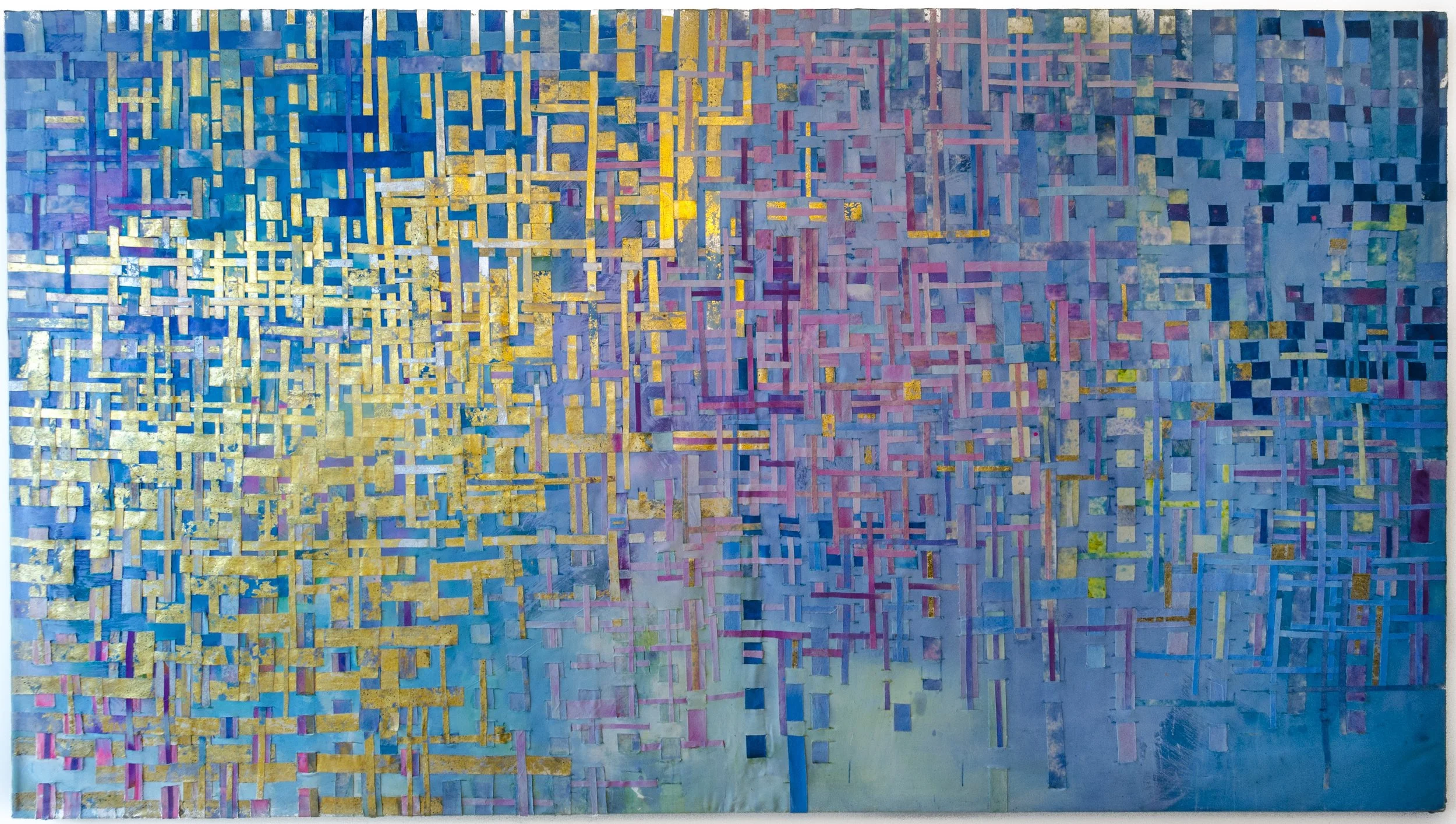
Universe,2021,ink, acrylic, gold wogen canvas,200x800cm
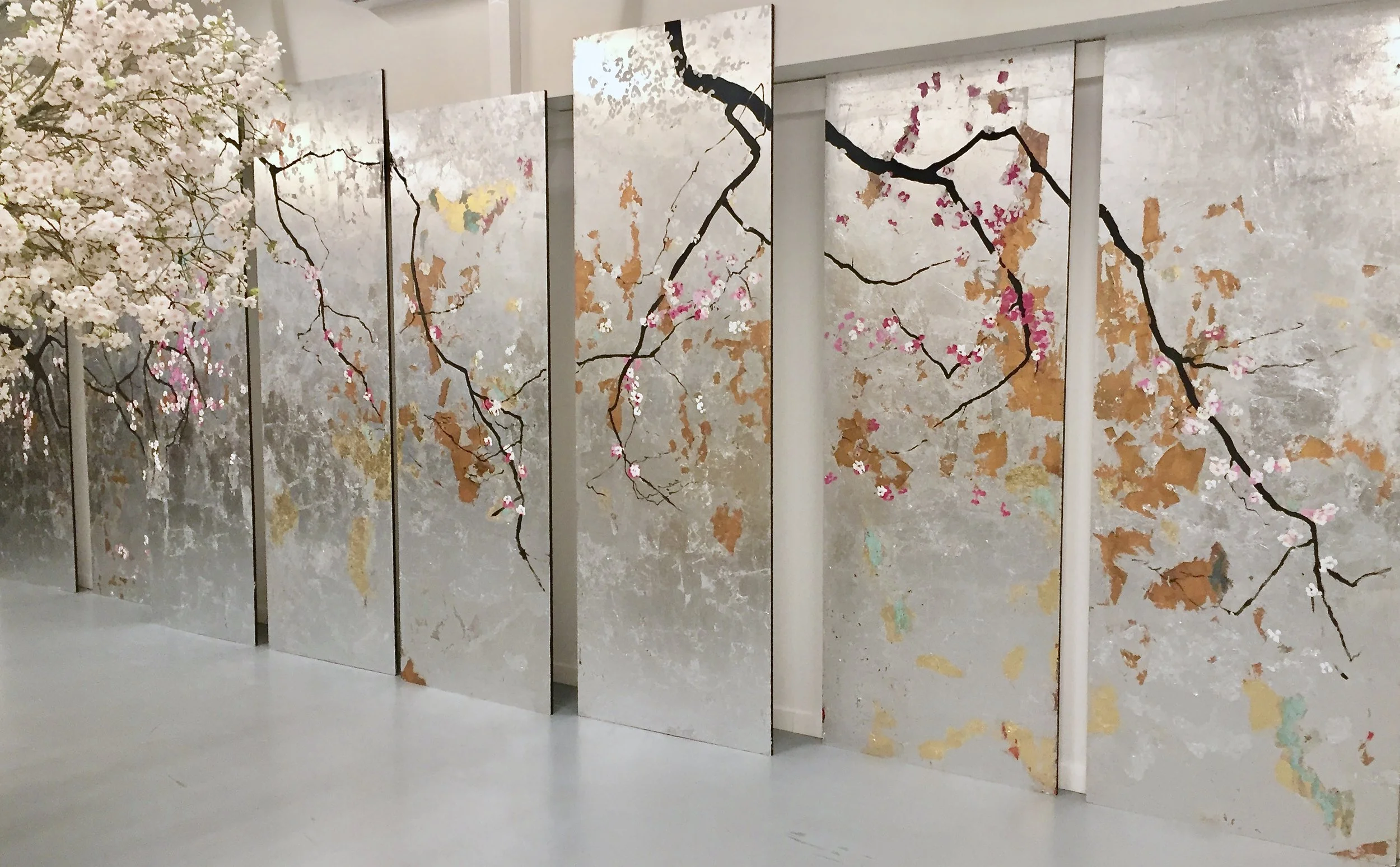
Apple blossom,2020, ink and silver/copper leaves on wood, 230x900cm