
Duke Windsor
Duke Windsor was born in Texarkana, Texas, and served in the U.S. Marine Corps as a radio operator, combat illustrator, and drill instructor. After his military service, he worked as a freelance illustrator and competed as an amateur rodeo cowboy. He later studied classical voice at San Diego State University and performed with the San Diego Opera Chorus. Windsor also holds a 4th Degree Black Belt in Kempo and remains active as a singer-songwriter and performer.
Windsor has over 15 years of experience in museum exhibition design and installation, with roles at the San Diego Museum of Art, the San Diego Museum of Man, the San Diego Natural History Museum, the San Diego History Center, and the Mingei International Museum. He also served as the founding Director of Exhibits for the USS Midway Museum. He is currently the CAD Design Engineering Manager at Full Swing Golf Simulators in Carlsbad, California.
He is an Associate Artist of the California Art Club and has held leadership and advisory roles with organizations including A.R.T.S.—A Reason to Survive, the San Diego Museum of Art Artist Guild, and the San Diego Regional Airport Authority’s Public Arts Selection Committee.
Windsor has taught at institutions such as the San Diego Museum of Art and the Athenaeum and currently teaches drawing and painting at Art on 30th. He also leads professional development workshops for artists throughout San Diego County. His award-winning work has been featured in juried exhibitions, solo shows, festivals, and corporate venues across the U.S., and is held in private and museum collections, including the University of Maryland’s David C. Driskell Center. He is represented in Southern California by Sparks Gallery.
Windsor has maintained his Mt. Helix, California studio since 2015.
Duke, in your Golden Skies series, gold leaf operates less as ornament than as a destabilizing agent within the pictorial field; how do you reconcile its historical function as a transcendental ground, as seen in Byzantine iconography, with your insistence on embedding it within the contingencies of contemporary urban and vernacular space?
“Gold has always carried the weight of transcendence, and I don’t reject that history; I rely on it. In Byzantine iconography, gold functions as an eternal ground, a space outside of time where the divine is made visible. What interests me is what happens when that same material is pulled out of a purely sacred context and reinserted into lived, imperfect, contemporary space. In Golden Skies, I’m not trying to recreate transcendence as something distant or untouchable; I’m trying to test it against the everyday.
When I embed gold leaf into urban landscapes, alleys, storefronts, or vernacular architecture, it stops behaving as a passive backdrop and becomes unstable, responsive to light, movement, and environment. It shifts as the viewer shifts. That instability is intentional. It mirrors the way meaning itself is negotiated in contemporary life, where the sacred and the profane are no longer clearly separated, but constantly overlapping.
Rather than functioning as an ornament, gold becomes a disruptive force in the pictorial field. It refuses illusionistic depth while simultaneously asserting material presence. In that sense, it operates much like it did in icon painting, but instead of pointing exclusively toward the divine, it asks the viewer to reconsider what we assign value to now. A skyline, a street corner, or a modest structure can carry the same visual authority once reserved for saints and heavens.
I’m interested in collapsing hierarchies, between past and present, between reverence and routine. By placing a historically transcendent material into contemporary, often-overlooked spaces, I’m not stripping gold of its meaning; I’m expanding it. I want the viewer to feel that tension: the pull of history alongside the immediacy of the present moment. That friction is where the work lives for me.”
Your trajectory from combat illustrator to painter suggests a sustained negotiation between documentation and interpretation; to what extent does the disciplined observational regime of military image making continue to structure your compositional decisions, even as your work aspires toward symbolic and metaphysical registers?
“My foundation as a U.S. Marine Corps Combat Illustrator instilled a level of discipline and studio rigor that continues to structure my work at its core. In that environment, drawing was not an expressive luxury; it was a professional responsibility. Accuracy, clarity, and efficiency mattered. You were trained to observe quickly, to understand spatial relationships under pressure, and to translate complex environments into legible visual information without hesitation. That discipline still governs how I build a composition.
The Marine Corps emphasized repetition, preparation, and adherence to process, principles that translate directly into my studio practice. I approach painting with the same seriousness: showing up consistently, working methodically, and respecting the fundamentals. Composition, value structure, and spatial organization are never improvised. They are constructed deliberately, much like a mission plan. That structure allows me to work with confidence and restraint, even when the subject matter moves into symbolic or metaphysical territory.
What has shifted since my time in uniform is not the discipline, but the intent. Military illustration demanded fidelity to observable reality, documentation without interpretation. In my studio practice, that observational rigor remains intact, but it now serves a different purpose. I’m still grounded in what I see, but I allow space for reflection, ambiguity, and meaning to enter the work. The discipline provides the framework that makes that expansion possible.
I don’t see structure and symbolism as opposing forces. In fact, the more my work aspires toward the metaphysical, the more important that disciplined foundation becomes. The Marine Corps taught me that clarity is earned through preparation, and I carry that lesson into every painting. The symbolic emerges not from abandoning observation, but from pushing it further, allowing lived experience, memory, and intuition to build upon a solid, practiced visual language.
In that sense, my trajectory hasn’t been a departure from my military training, but an evolution of it. The same discipline that once ensured accuracy now enables depth. My studio practice remains strict, intentional, and grounded, because that is the condition under which meaningful interpretation can occur.”
The gilded hamburger, poised at the threshold of consumption, invokes a temporality of suspended desire; do you see this moment as a critique of late capitalist spectacle, or as an ambivalent participation in its logic of fetishization and aestheticization?
“The gilded hamburger sits very consciously within a long and time-honored tradition of food in art, one that has always operated at the intersection of desire, symbolism, and cultural self-reflection. From ancient Egyptian reliefs of bread and crops to the hyper-realistic grapes of Dutch still life, food has never been a neutral subject. It has functioned as a record of abundance, morality, labor, ritual, and aspiration. My work enters this lineage with full awareness of that history, while addressing the specific conditions of contemporary consumption.
Artists such as Louise Moillon, Cézanne, and later Wayne Thiebaud demonstrated that food could be both formally rigorous and culturally revealing. Cézanne’s fruit is recognizable yet deliberately restructured, allowing the object to exist beyond mere description. Thiebaud’s desserts, meanwhile, hover between celebration and excess, seduction and critique. In a similar way, the gilded hamburger is not simply an indictment of late-capitalist spectacle, nor is it a straightforward embrace of fetishization; it deliberately exists in a state of ambivalence.
Gold halts the object at the threshold of consumption. It suspends the hamburger in time, rendering it unusable, untouchable, and symbolically overdetermined. In doing so, the work exposes the mechanisms of desire that contemporary culture relies on: immediacy, accessibility, and endless consumption. By aestheticizing an everyday, mass-produced food object through a historically loaded material, I am participating in the same visual seduction that capitalism employs, but slowing it down enough for scrutiny.
This strategy mirrors earlier moments in food painting, particularly Dutch market and kitchen scenes, where abundance was rendered with breathtaking realism while simultaneously carrying moral, economic, and social implications. The gleaming fish, slabs of meat, and overflowing tables were as much about excess and mortality as they were about prosperity. Likewise, the gilded hamburger acknowledges the spectacle of contemporary food culture while questioning what we now value: speed, convenience, branding, and desire itself.
Ultimately, the work resists a binary reading. It is neither purely critique nor pure complicity. Instead, it operates in the tension between the two. By invoking the visual language of reverence historically reserved for the sacred or the rare, the hamburger becomes a mirror held up to contemporary taste and appetite. The suspended desire is intentional; it is in that pause that the viewer is invited to reflect on how food, value, and longing are constructed in the present moment.”
In reframing the Black cowboy within a lineage historically dominated by mythologized whiteness, your work appears to intervene in what might be called the visual unconscious of the American West; how do you negotiate the tension between historical recuperation and the risk of reinscribing another form of aesthetic myth?
“In reframing the Black cowboy, I’m not interested in replacing one myth with another, but in unsettling the mythic structure itself. The American West has long been shaped by a visual unconscious dominated by whiteness, one that flattened complexity into heroic archetype and erased the diversity that actually defined frontier life. My goal is historical recuperation, but not nostalgia or idealization. It’s an insistence on presence, specificity, and lived experience.
Because I approach this subject not only as a painter but also as a former rodeo cowboy, I’m acutely aware of how easily Western imagery can slide into romantic abstraction. That awareness acts as a safeguard in my work. Rather than monumentalizing the Black cowboy as a symbolic corrective, I focus on grounding each figure in the material realities of labor, environment, and individuality. These are not generalized icons; they are people shaped by particular histories, landscapes, and pressures.
Historical research is essential, but so is restraint. I’m careful not to aestheticize recovery itself, to avoid turning visibility into spectacle. The paintings resist heroic exaggeration and instead emphasize quiet authority, endurance, and presence. By situating Black cowboys within everyday moments rather than mythic climaxes, the work challenges the inherited visual language of the West rather than merely expanding it.
At the same time, I don’t pretend neutrality is possible. Painting is always an act of interpretation. The risk of reinscribing myth is real, but it’s negotiated through intentionality by acknowledging that the West was never singular, never pure, and never owned by a single narrative. My work doesn’t claim to complete the historical record; it participates in reopening it.
Ultimately, I see this practice as an intervention rather than a correction. It asks viewers to recognize how deeply mythology has shaped what we think we know about the West, and to sit with the discomfort of seeing that mythology destabilized. If there is power in the image, it comes not from replacing old legends with new ones, but from allowing complexity, contradiction, and historical truth to coexist within the frame.”
Your engagement with gold frequently invokes the rhetoric of the divine proportion and the metaphysics of order; yet your subject matter, alleys, fast food, and rodeo scenes, remains resolutely grounded in the quotidian. Is this juxtaposition intended to collapse hierarchies between the sacred and the profane, or to expose their persistent entanglement?
“An Icon, but not a religious icon. Divine inspiration, but not Holy. This juxtaposition is less about collapsing hierarchies outright than about revealing how inseparable the sacred and the profane already are. I’m interested in exposing their persistent entanglement rather than staging a clean opposition between them.
As I’ve stated before, gold carries with it a long history of metaphysical order, divine proportion, transcendence, and permanence. I’m fully aware of that lineage, and I rely on it. But instead of allowing gold to remain a distant, idealized ground, I place it in direct contact with the everyday: alleys, fast food, rodeo scenes, sites of labor, and consumption. When gold enters those spaces, it doesn’t purify them, and they don’t neutralize the gold. What happens instead is friction.
That friction reveals something essential: the sacred has always been embedded in ordinary life, not separate from it. The divine proportion doesn’t disappear when it’s applied to a hamburger or a street corner; it becomes unstable, contingent, responsive to light, movement, and context. In that instability, gold ceases to function as a symbol of fixed order and becomes a material that tests our assumptions about value, reverence, and meaning.
I’m not interested in elevating the quotidian into something falsely heroic, nor in desacralizing gold through irony. The work resists both impulses. A rodeo arena already contains ritual, risk, and choreography. A fast-food object already carries desire, excess, and longing. By introducing gold, I’m not imposing sacredness; I’m making visible what’s already there but often overlooked.
So the work doesn’t argue that everything is sacred, nor that the sacred has lost its power. It suggests instead that hierarchy itself is unstable, and that meaning is produced where materials, histories, and lived experience intersect. The sacred and the profane aren’t opposites in my work; they are co-present, constantly negotiating space within the same visual field. That tension, rather than resolution, is where the paintings live.
Having studied canonical works first hand as a museum preparator, you encountered the material authority of painters like Rembrandt and Francisco Goya at intimate proximity; how has this tactile familiarity with historical surfaces informed your own handling of paint, particularly in relation to texture, luminosity, and the construction of depth?
“Having worked firsthand as a museum preparator, my understanding of painting was shaped not through reproduction or theory alone, but through prolonged, tactile proximity to historical surfaces. Handling Dutch and Flemish works, particularly Rubens's portraits, alongside Russian icons and later modern and contemporary paintings gave me an intimate awareness of how meaning is constructed materially, not just pictorially.
In Dutch and Flemish painting, I learned how the surface carries authority. In those works, paint is never incidental; it is deliberate, layered, and responsive to light. Flesh, fabric, and atmosphere are built through calibrated shifts in texture and viscosity rather than illusion alone. Seeing those surfaces up close revealed how depth is often achieved not by recession, but by accumulation, by allowing paint to assert itself physically while still holding the image together. That balance between material presence and pictorial clarity continues to inform how I construct space in my own work.
Rubens, in particular, demonstrated how energy and structure can coexist. His surfaces are alive, elastic, forceful, and confident, yet never chaotic. That physicality reinforced for me that paint can carry motion, weight, and vitality without sacrificing compositional control. It affirmed my belief that depth is not only optical, but corporeal: something felt as much as seen.
Russian icons offered a different, equally formative lesson. Their luminosity is not illusionistic but metaphysical, built through material restraint and intentional flatness. Gold and pigment operate together to deny conventional depth while producing an intense visual presence. That experience deeply informs my own use of gold, not as a decorative finish, but as an active surface that resists spatial illusion while heightening perceptual awareness. The icon taught me that flatness can be expansive, and that light can be constructed rather than depicted.
Exposure to modern and contemporary works further reinforced the idea that surface is where meaning resides. Seeing how later artists either embraced or rejected historical techniques clarified that material choices are always philosophical ones. Paint handling becomes a form of thinking.
All of this has shaped how I approach texture, luminosity, and depth in my own practice. I’m less interested in seamless illusion than in surfaces that remain legible as surfaces, where paint, gold, and ground assert their physical reality while still carrying image, history, and symbolism. That tactile education taught me that authority in painting doesn’t come from polish, but from intention, how consciously materials are allowed to speak.”
Your practice spans an unusually wide range of media, from plein air painting to linocut and terracotta sculpture; do you conceive of this multiplicity as an expansion of a singular conceptual inquiry, or does each medium produce a distinct epistemological framework through which your subjects are rearticulated?
“I see this multiplicity less as a dispersion of focus than as an expansion of a single, sustained conceptual inquiry. At the core of my practice is an ongoing investigation into material, labor, history, and value, how meaning is constructed through surface, process, and lived experience. Each medium offers a different way of asking the same fundamental questions.
At the same time, each medium does produce its own way of knowing. Plein air painting demands immediacy and responsiveness; it’s rooted in observation, light, and time unfolding in real space. It keeps me honest and grounded in looking. Linocut, by contrast, is reductive and declarative. The act of carving forces decisions to be final, sharpening my sense of structure, rhythm, and graphic clarity. Terracotta sculpture introduces the body, weight, volume, and gravity, and brings my thinking fully into three dimensions, where form is felt as much as seen.
Rather than rearticulating my subjects into entirely separate frameworks, these media allow me to test them under different conditions. What remains consistent is the conceptual spine: an interest in how everyday subjects, food, labor, the West, and the figure carry layered histories and symbolic weight. Each medium slows me down in a different way and reveals different truths, but they all circle the same concerns.
In that sense, the range of media isn’t about versatility for its own sake. It’s about allowing the work to find the form it needs in order to think clearly. The shift from paint to cut line to clay doesn’t fragment the inquiry; it deepens it, offering multiple points of entry into the same conversation about material presence, cultural memory, and lived experience.”
The rodeo, as both lived experience and recurring motif in your work, carries an embedded choreography of risk, masculinity, and spectacle; how do you translate the embodied knowledge of that environment into a visual language that resists mere illustration and instead engages with its deeper cultural semiotics?
“Because rodeo is something I’ve lived inside of, I don’t approach it as an image to be illustrated but as a system of embodied knowledge, risk calculated through muscle memory, masculinity performed and tested, and spectacle structured by ritual and repetition. That lived experience allows me to work from sensation and structure rather than surface description.
Visually, I translate that embodiment by focusing less on narrative climax and more on choreography: the tension before release, the compression of bodies in space, the way weight, balance, and impact move through figure and ground. Composition becomes a way of echoing the rhythms of the arena, circling, containment, sudden rupture, rather than depicting a single heroic moment. This shifts the work away from anecdote and toward meaning.
I’m also attentive to how rodeo functions culturally, not just physically. It’s a site where labor, masculinity, race, and spectacle intersect, often invisibly. By stripping away excess narrative detail and resisting romantic exaggeration, I allow those forces to remain legible. Gesture, posture, and spatial compression carry more weight than literal action.
In that sense, the paintings aren’t about describing rodeo so much as activating its semiotics. The arena becomes a ritual space, the figure a vessel for endurance and risk, and the event itself a lens through which broader questions of identity, tradition, and performance are negotiated. The goal is not realism for its own sake, but a visual language that carries the physical truth of the experience while opening it up to cultural reflection.”
In your food paintings, the invocation of art historical precedents, from Dutch still life to Pop Art, suggests a deliberate collapsing of temporal registers; how do you position your work within this continuum without lapsing into pastiche, and what constitutes contemporaneity for you within such a historically saturated genre?
“I’m very conscious of working within a historically saturated genre, and for me, the key to avoiding pastiche is intent and pressure, what the object is being asked to carry now. I don’t quote Dutch still life or Pop Art as styles to be reenacted, but as visual languages that were themselves deeply responsive to their own cultural conditions. What I take from them is not surface mannerism, but structural thinking about value, desire, and looking.
Dutch still-life painters used food to speak to abundance, labor, morality, and mortality. Pop artists later used food to expose mass production, branding, and spectacle. Those works weren’t nostalgic in their own time; they were contemporary, even disruptive. I try to position my work in that same continuum by asking what food signifies under present conditions, speed, convenience, disposability, excess, and aspiration, and by letting material choices carry that inquiry.
Contemporaneity, for me, isn’t about the novelty of the subject, because food has always been there. It’s about how the object is activated. When I introduce gold, for example, I’m not referencing tradition for its own sake; I’m using a historically charged material to suspend the object at the threshold of consumption. That pause, where desire is heightened, but fulfillment is denied, feels distinctly contemporary. It mirrors a culture driven by endless appetite, visual seduction, and deferred satisfaction.
Rather than collapsing time into a collage of references, I’m interested in creating friction between histories. The hamburger can carry the weight of Dutch abundance, Pop spectacle, and religious reverence simultaneously, but it has to earn that complexity through material presence and compositional restraint. The work succeeds for me when it feels necessary rather than clever, when it slows the viewer down and forces a reconsideration of what we value now.
So my position within the continuum isn’t about stylistic allegiance, but about responsibility. Each generation has used food to articulate its anxieties and desires. My task is to let the genre remain alive by asking it to speak clearly to the conditions of the present, without disguising those questions behind quotation or irony.”
Your studio in Mt. Helix situates you within a landscape that is both geographically elevated and culturally peripheral to dominant art centers; does this spatial remove function as a critical vantage point from which to interrogate mainstream narratives, or does it impose its own constraints on how your work circulates and is received?
“I chose to situate my studio in Mt. Helix very intentionally. Being outside the rush and noise of the city gives me the quiet and distance I need to think, experiment, and take risks. I purchased my home with a detached space specifically so I could have a dedicated studio, what I call my “lab”, where ideas can unfold without the pressure of immediacy or expectation.
Rather than functioning as a constraint, this spatial remove has been a form of freedom. It allows me to work slowly, test materials, follow intuition, and make spontaneous work that might not emerge in a more transactional or visibility-driven environment. That openness is essential to my practice. It’s where the work can remain vulnerable long enough to become honest.
Being geographically peripheral doesn’t feel like isolation to me; it feels like clarity. The distance from dominant art centers creates a critical vantage point, allowing me to interrogate mainstream narratives without being overly shaped by them. The work still circulates, but it originates from a place of focus and intention rather than urgency.
For me, Mt. Helix isn’t a retreat from the world; it’s a place where I can be open to the muse, experiment freely, and let the work develop on its own terms before it enters broader conversations.
https://www.dukewindsorstudio.com/
https://www.instagram.com/windsor.duke/
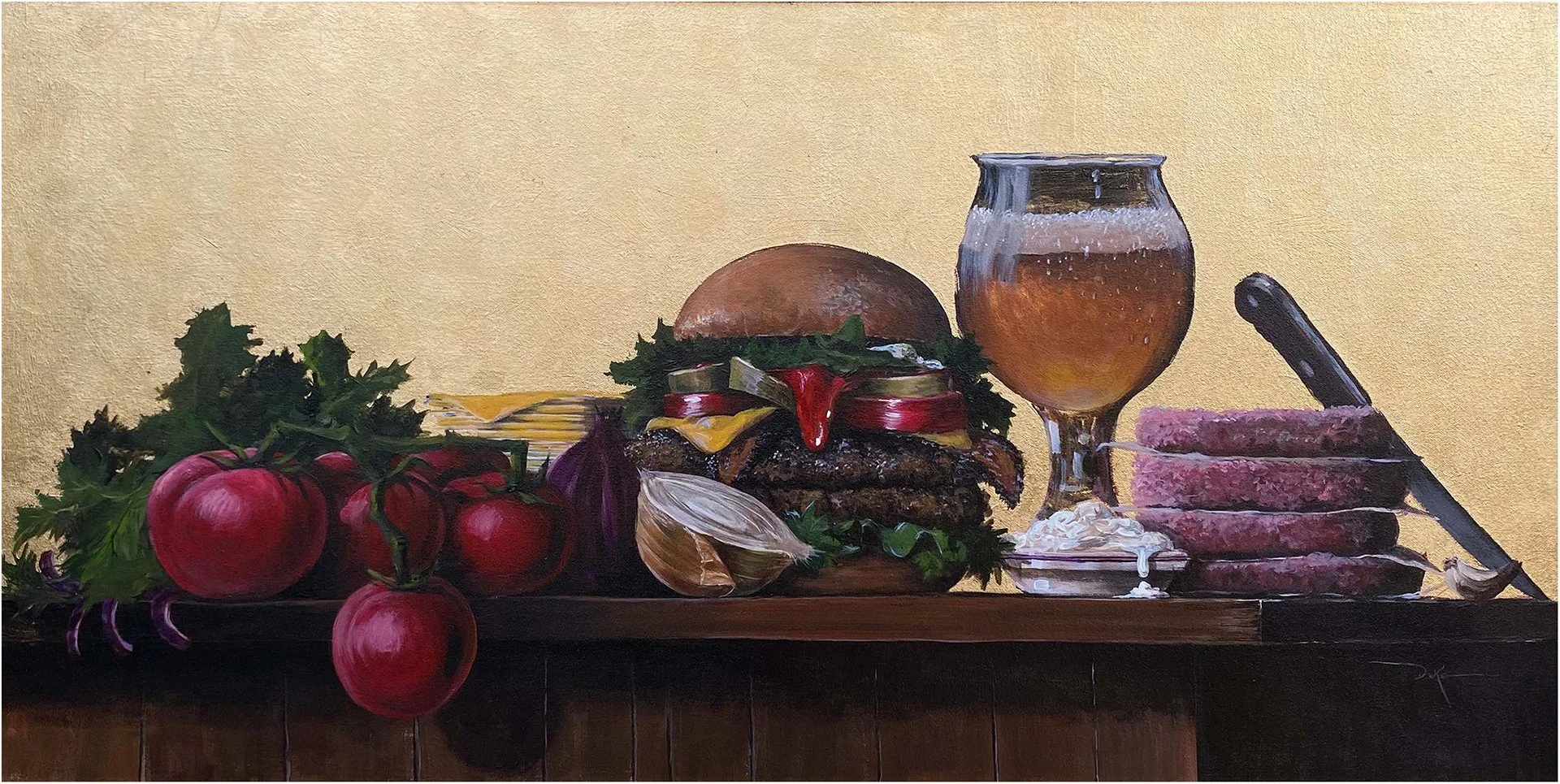
An American Icon, 2021. Acrylics and Imt. Gold Leaf on canvas, 61 x 122 cm
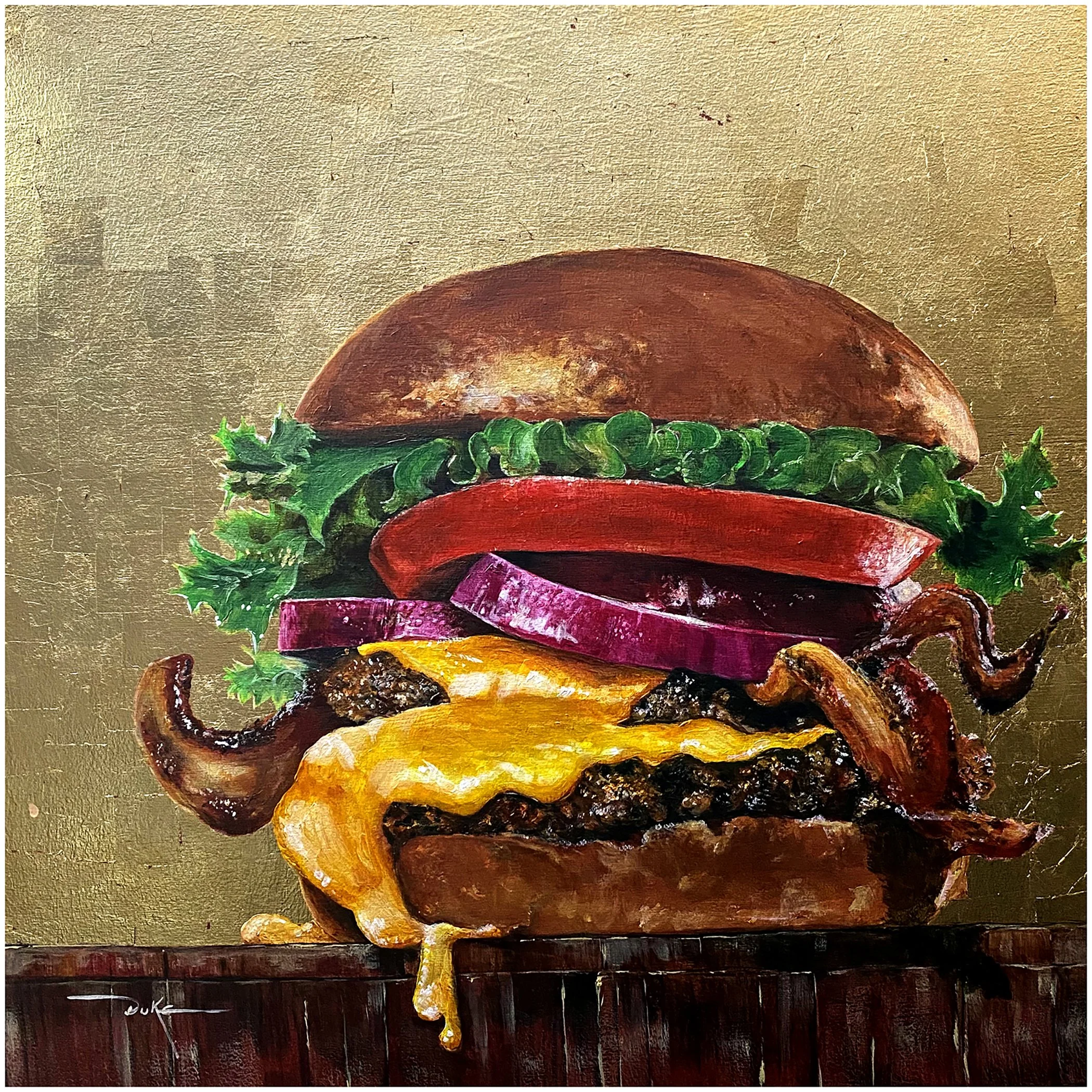
Let's Eat, 2021. Acrylics and Imt. Gold Leaf on panel, 51 x 51 cm. Private Collection
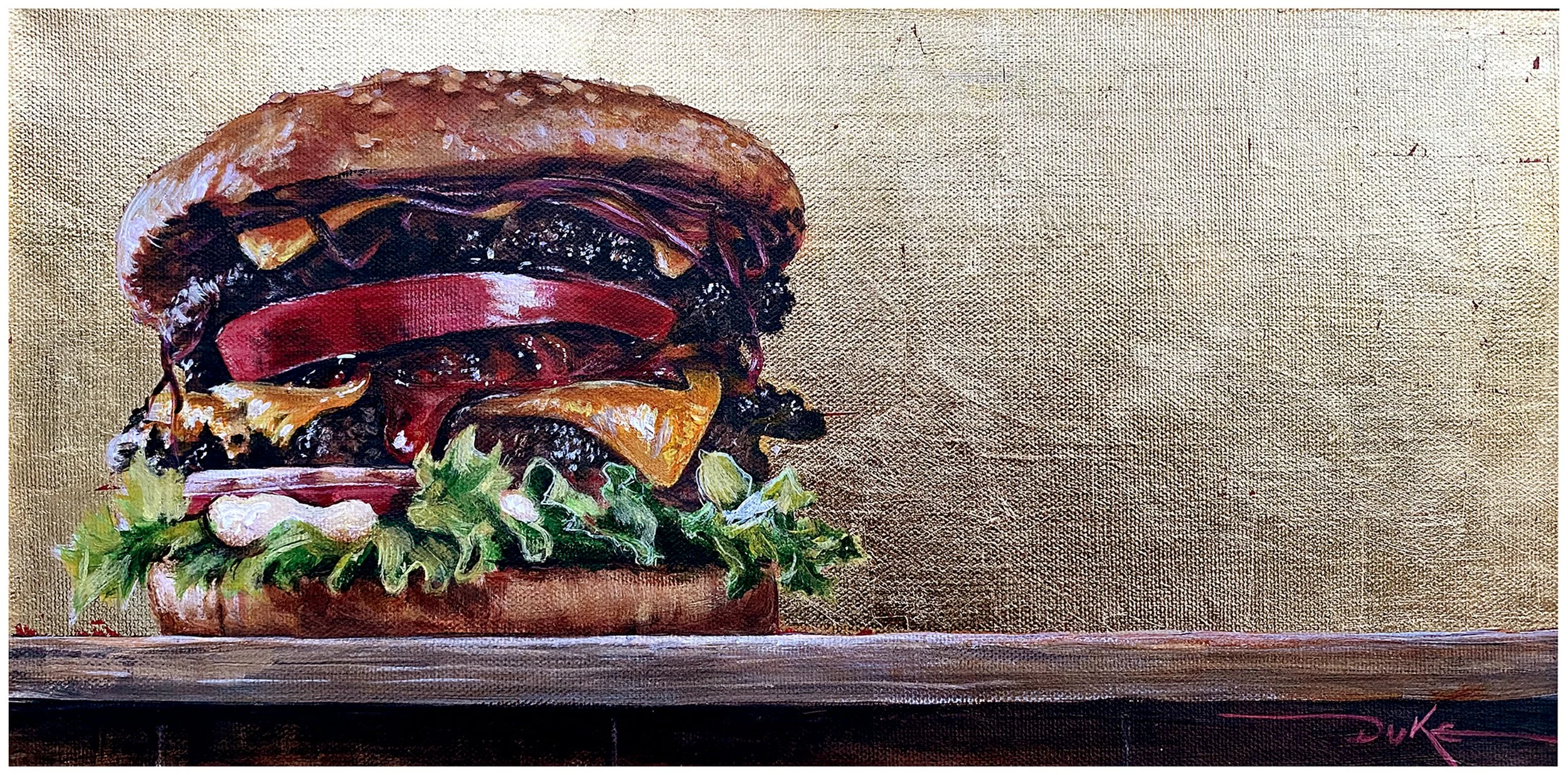
Nothing's Impossible, 2020. Acrylics and Imt. Gold Leaf on canvas, 20.32 x 40.64 cm. Private Collection
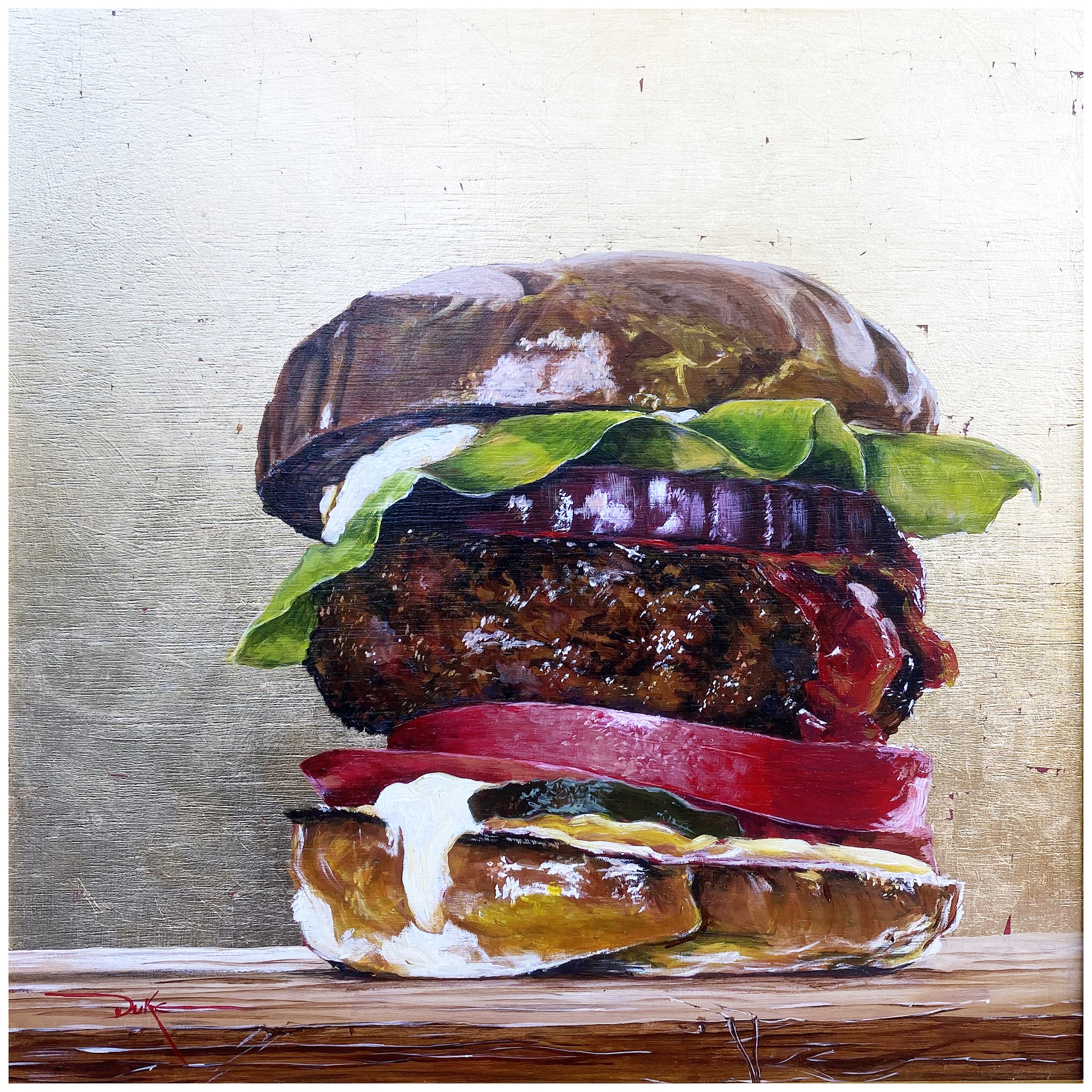
Where's the Beef, 2019. Acrylics and Imt. Gold Leaf on board, 51 x 51 cm
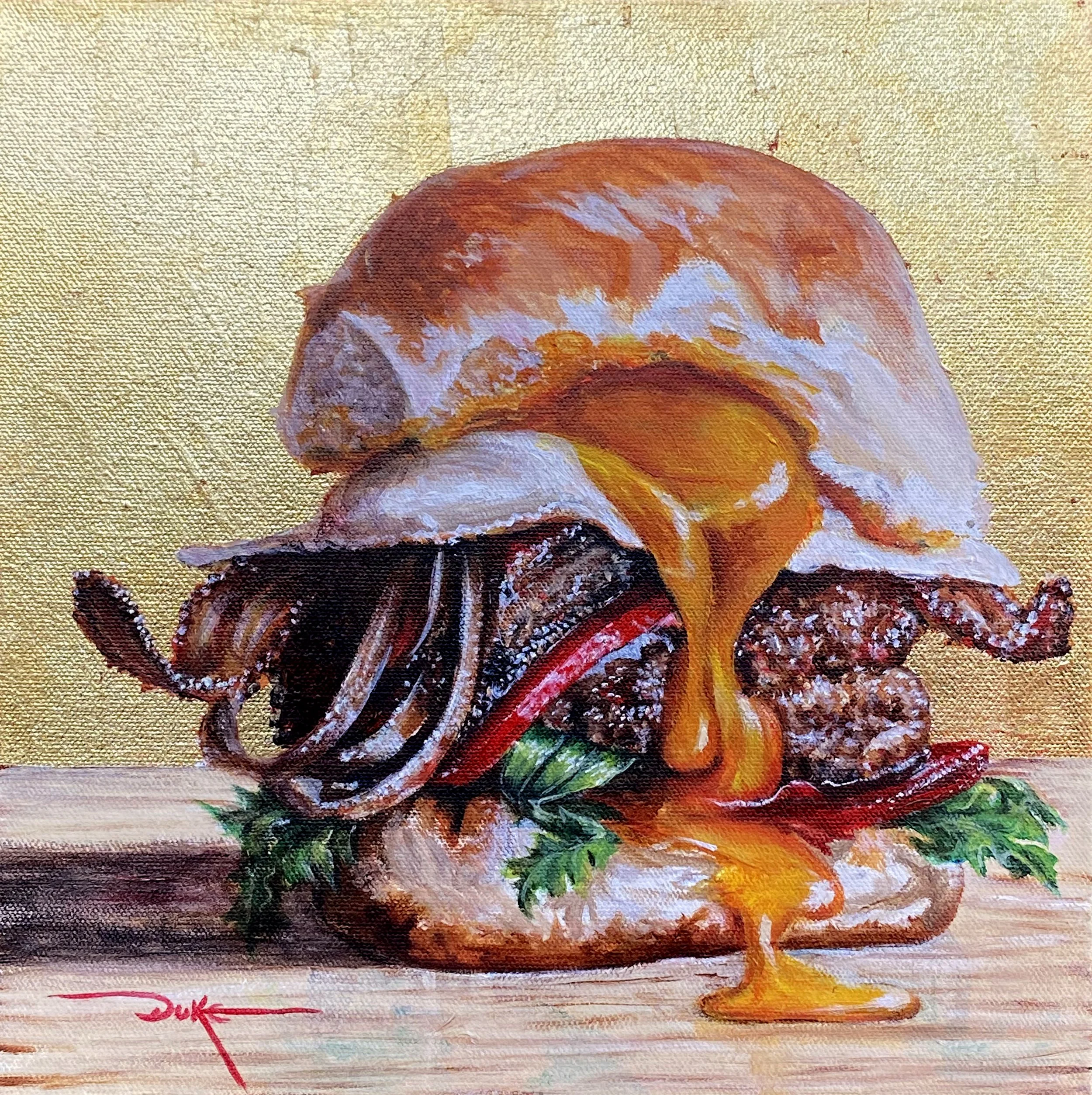
The Broken Yoke, 2022. Acrylics and Imt. Gold Leaf on canvas, 30.5 x 30.5 cm. Private Collection
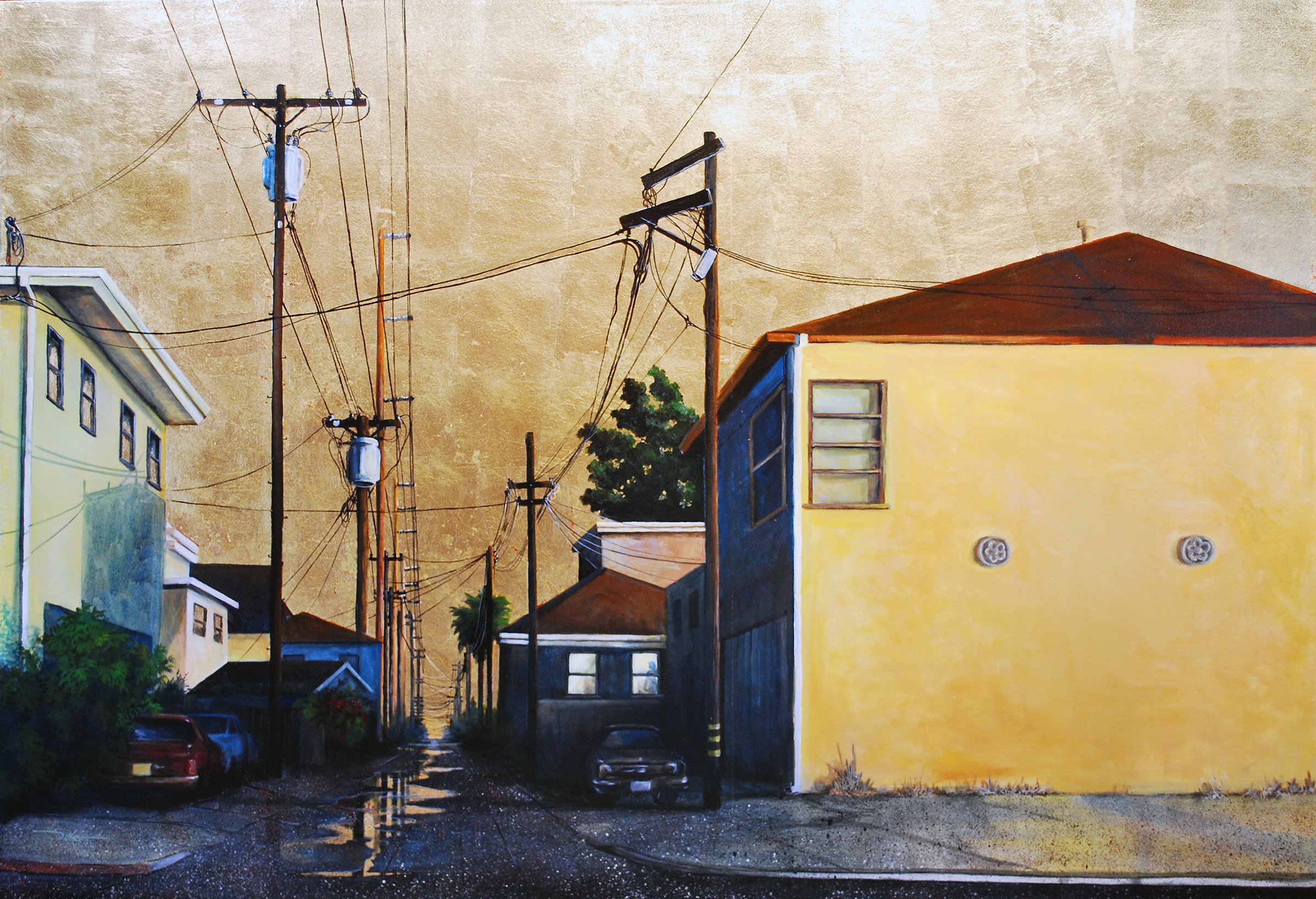
Golden Sunrise Alley, 2016. Acrylics and Imt. Gold Leaf on canvas, 127 x 183 cm
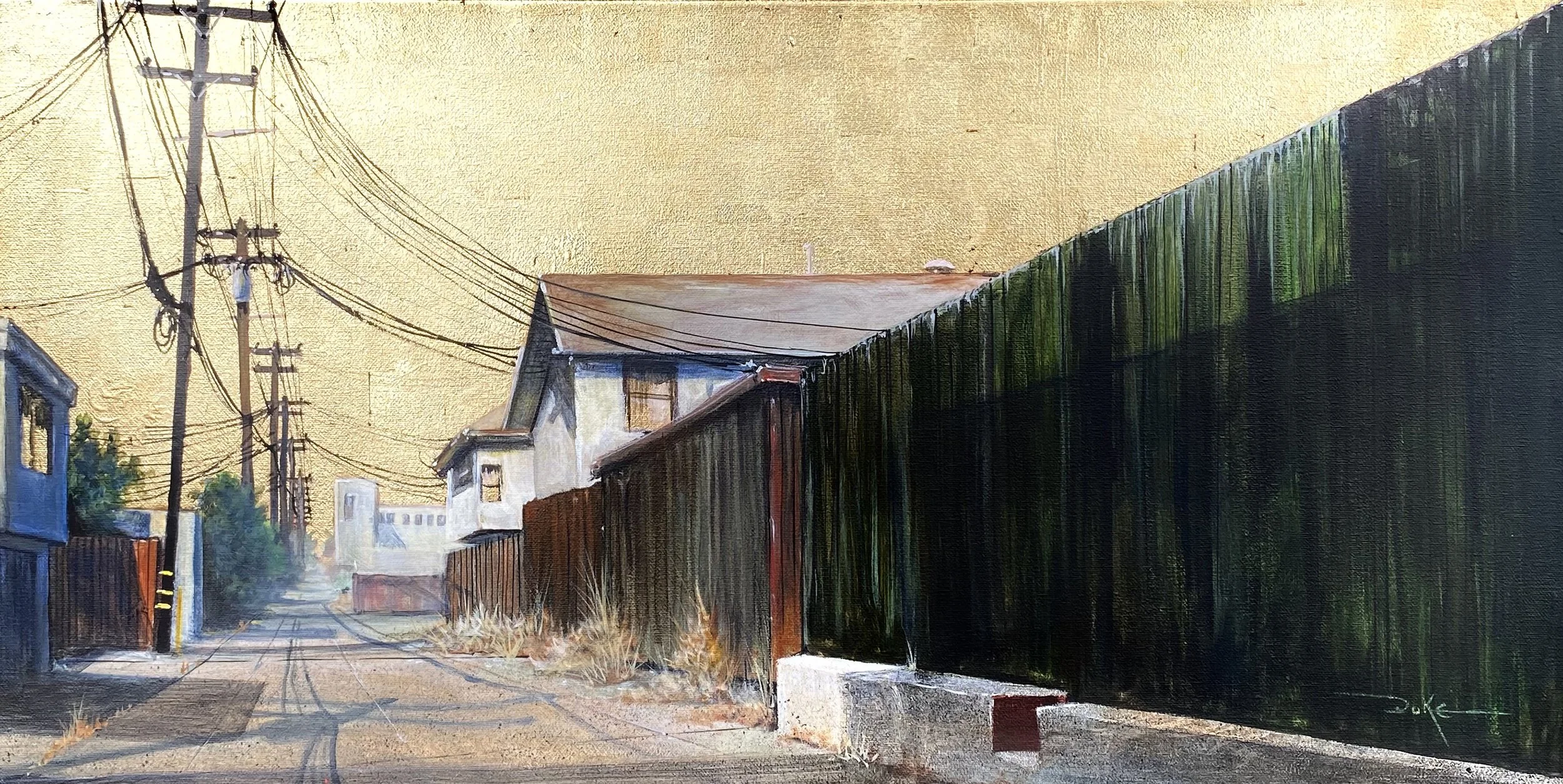
Green Fence, 2021. Acrylics and Imt. Gold Leaf on canvas, 30.5 x 61 cm
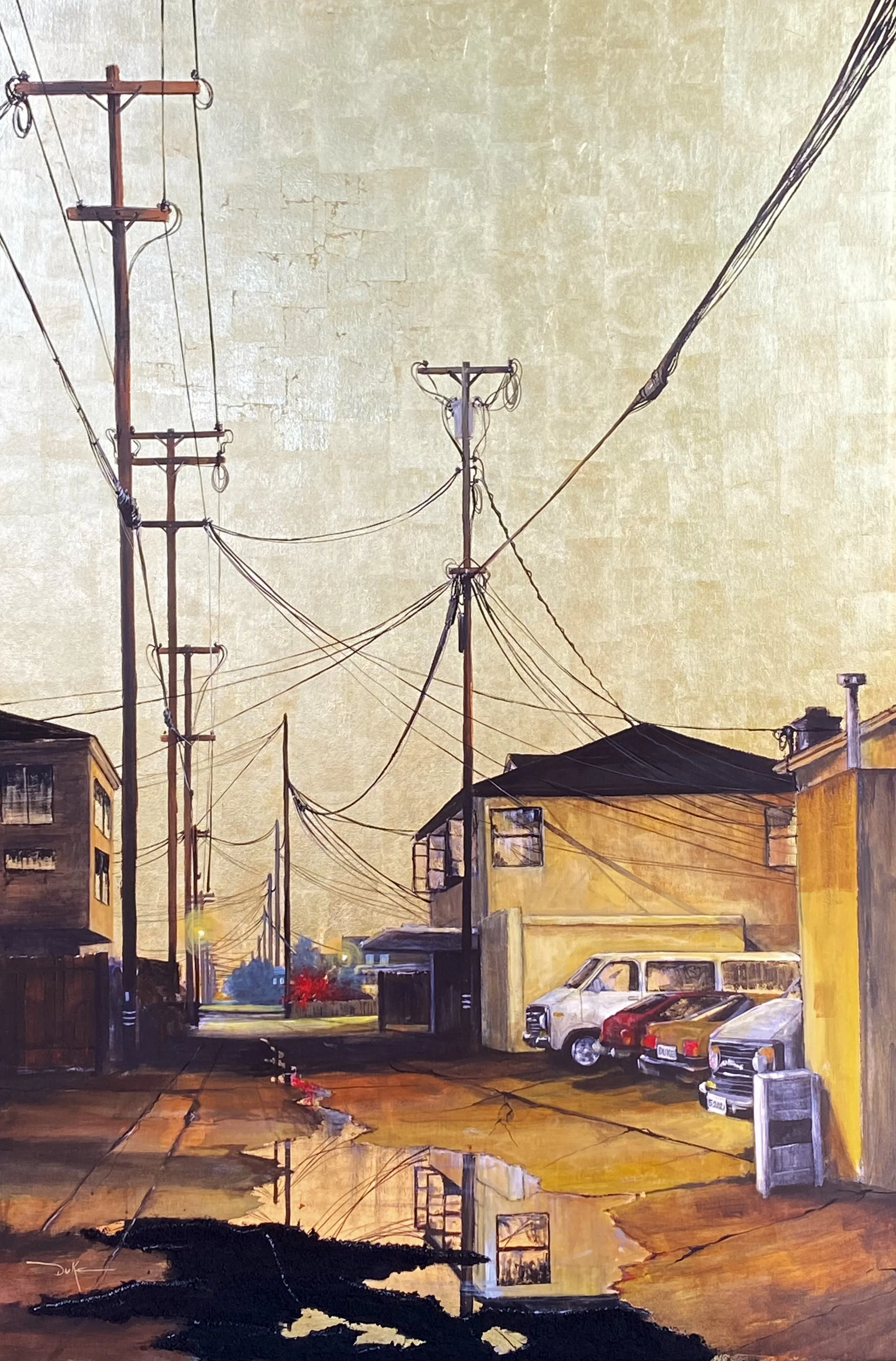
Parked Under a Golden Night's Sky, 2021. Acrylics and Imt. Gold Leaf on canvas, 152.4 x 91.44 cm. Oceanside Museum of Art Collection
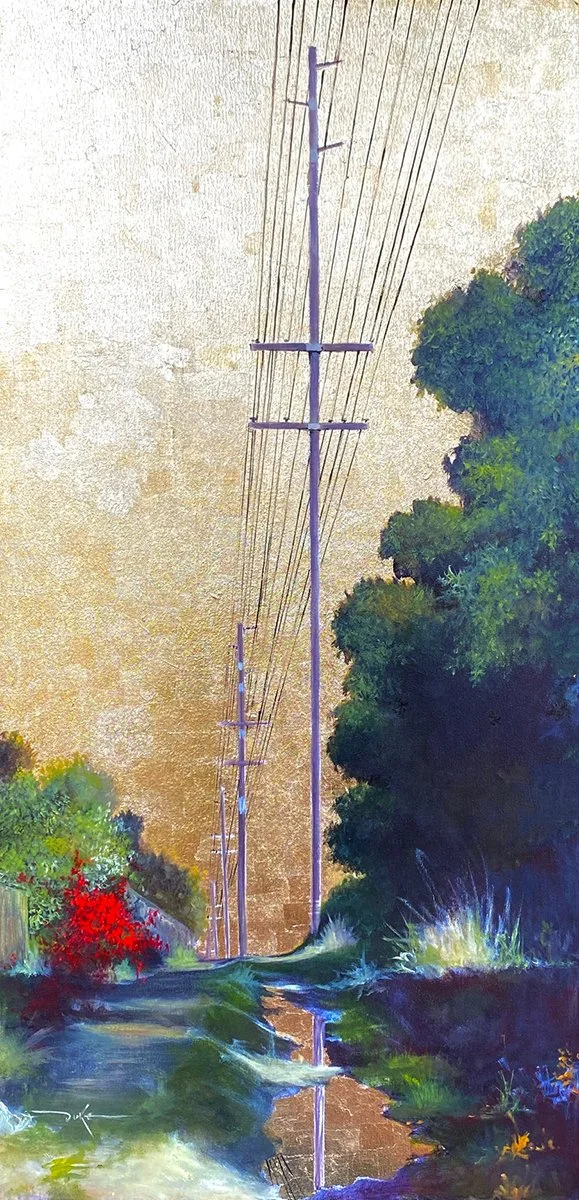
Golden Skies No. 117, 2021. Acrylics and Imt. Gold Leaf on canvas, 122 x 61 cm
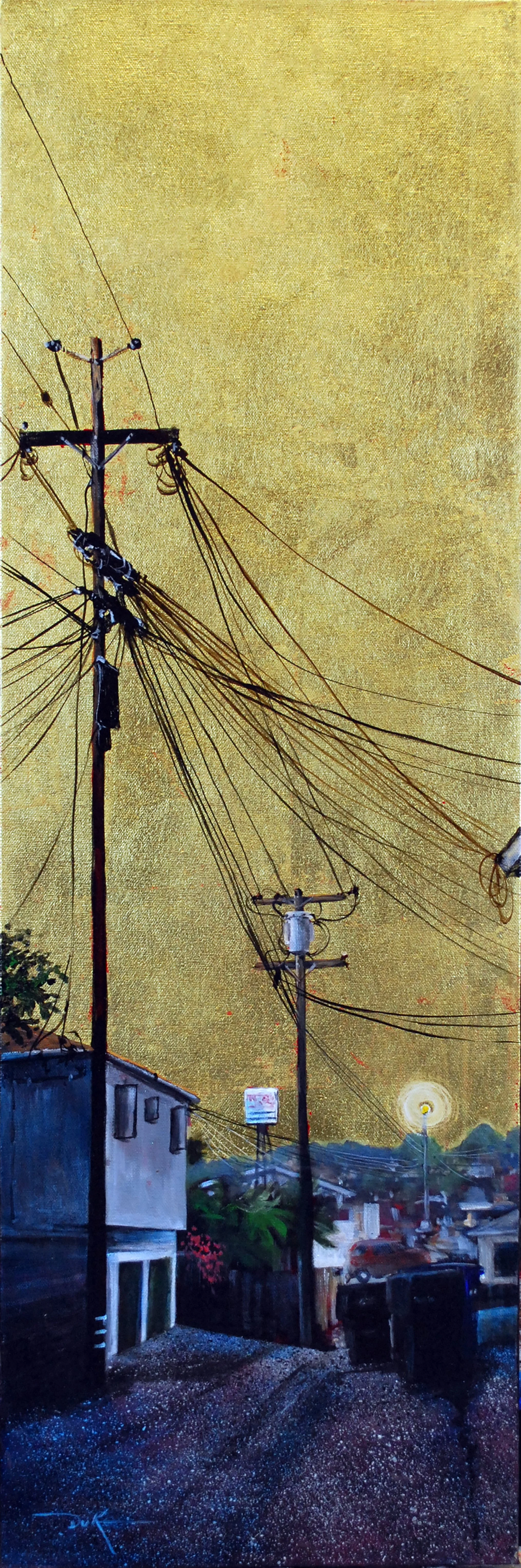
Golden Skies No. 8, 2017. Acrylics and Imt. Gold Leaf on canvas, 91.44 x 30.5 cm. Private Collection
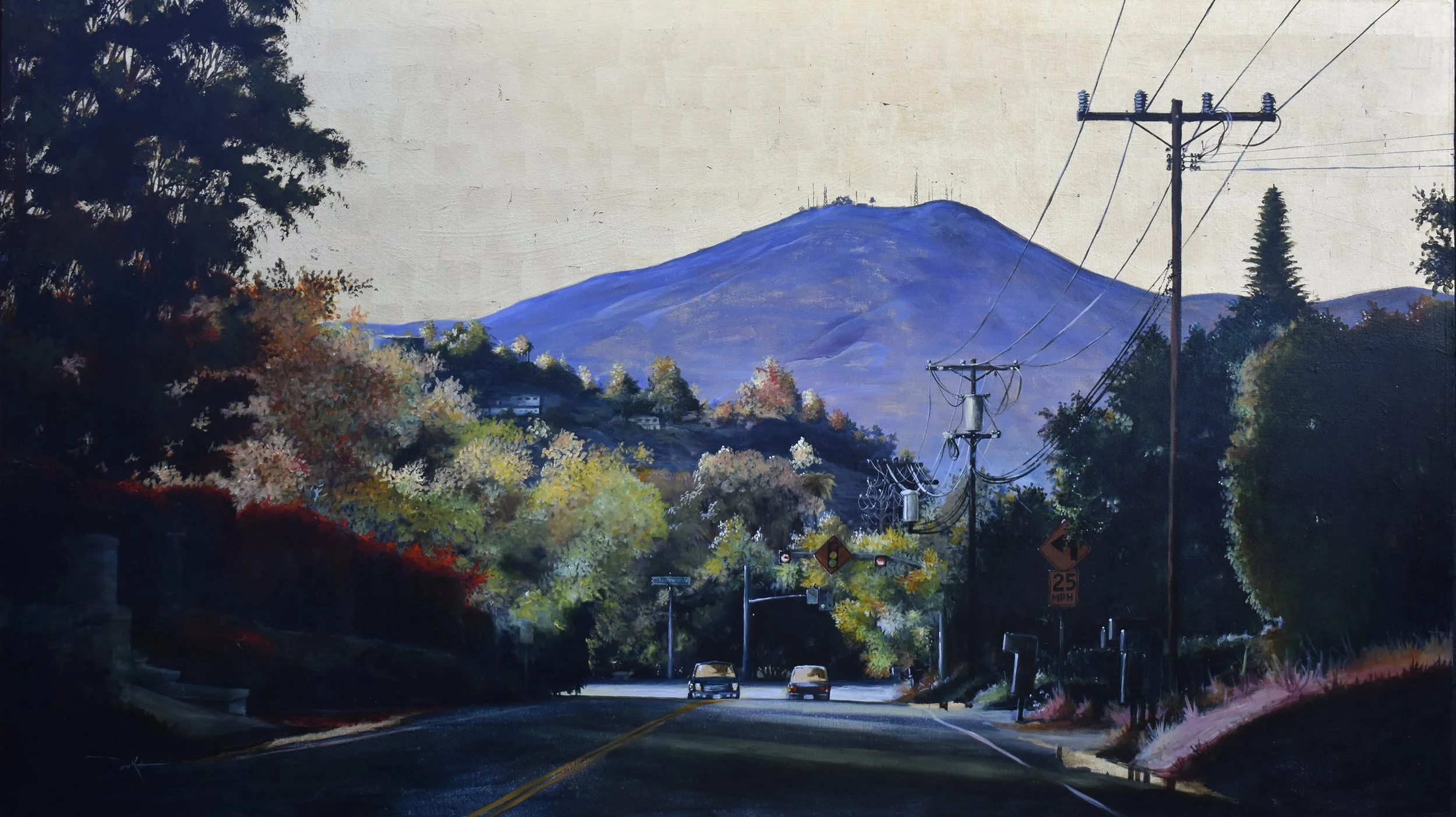
Mt. San Miguel, 2019. Acrylics and Imt. Gold Leaf on canvas, 122 x 218.44 cm
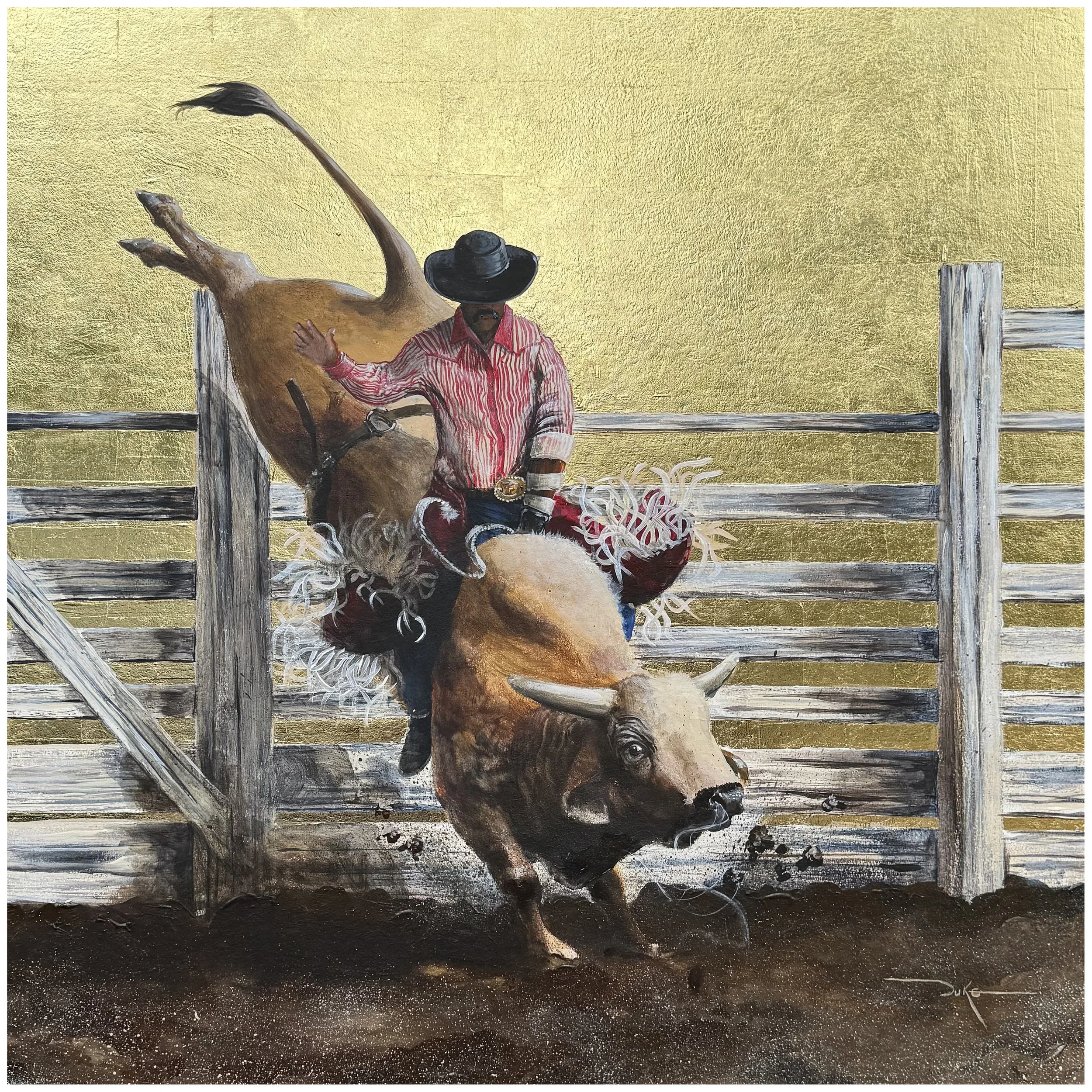
A Rough Commute, 2025. Acrylics and Imt. Gold Leaf on panel, 76.2 x 76.2 cm. Private Collection
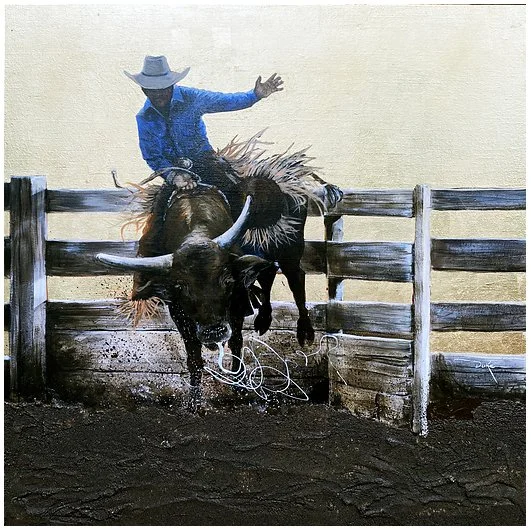
Final 8 Seconds, 2022. Acrylics and Imt. Gold Leaf on panel, 76.2 x 76.2 cm
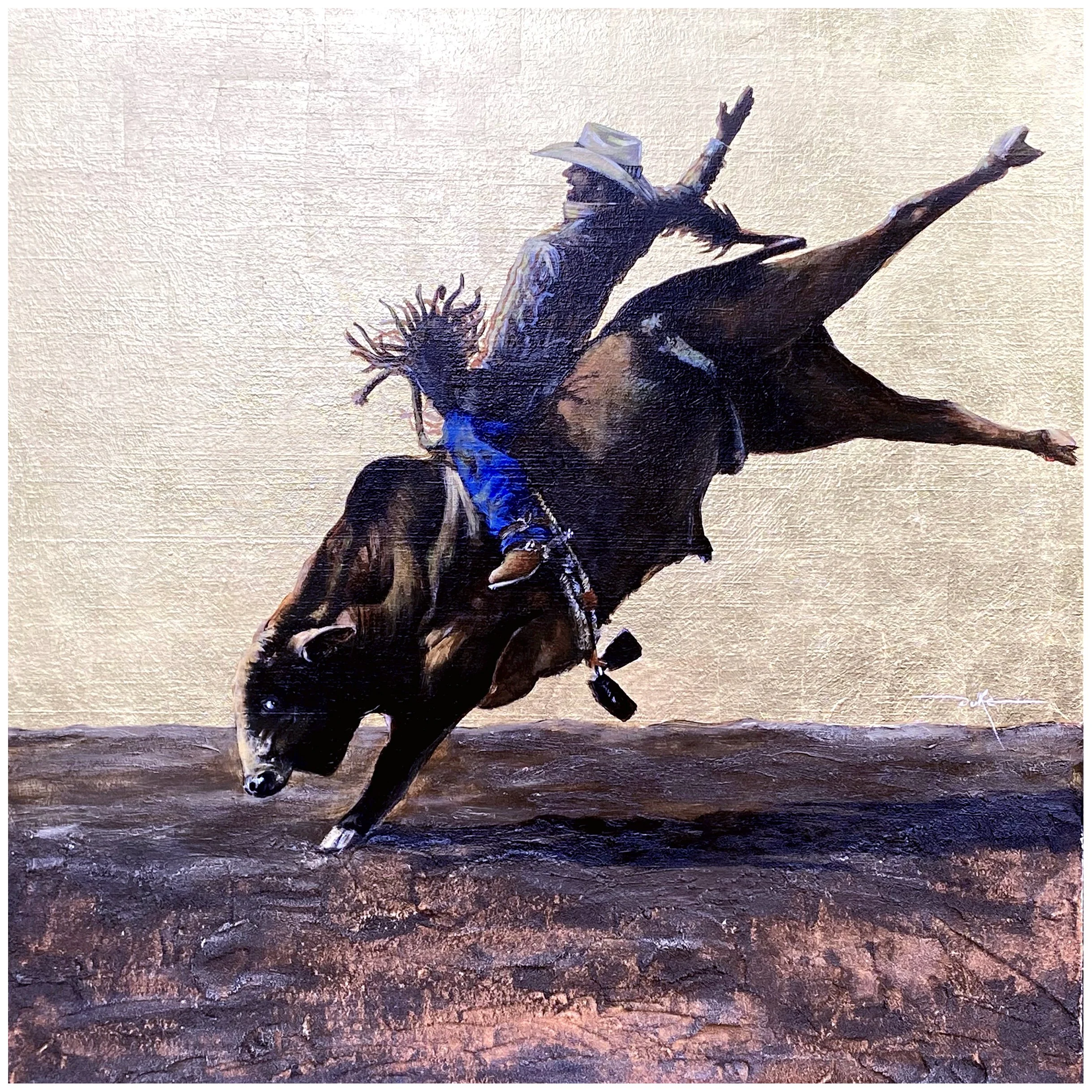
Oscar Dreams, 2022, Acrylics and Imt. Gold Leaf on panel, 76.2 x 76.2 cm. Private Collection
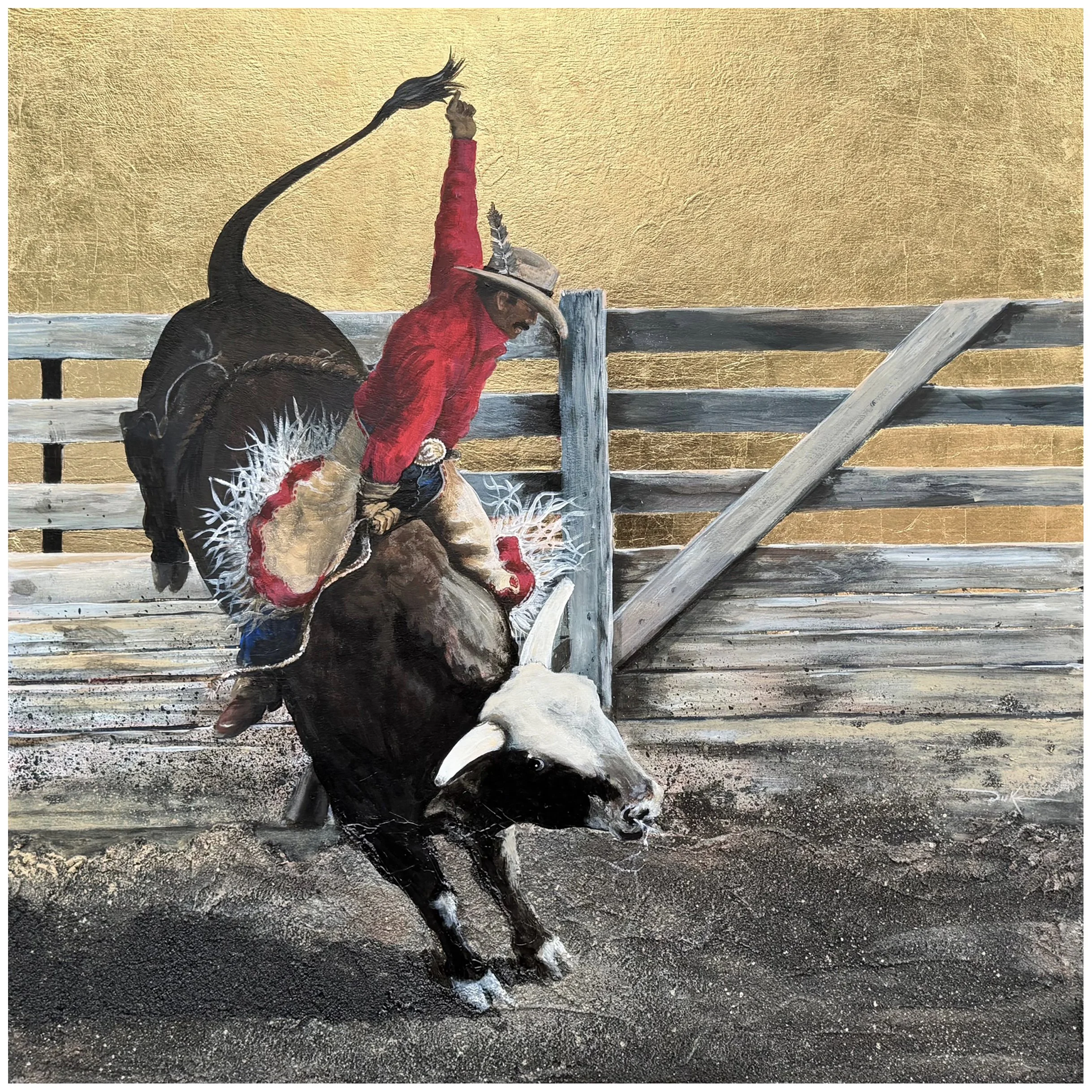
White Feather, 2025. Acrylics and Imt. Gold Leaf on panel, 76.2 x 76.2 cm
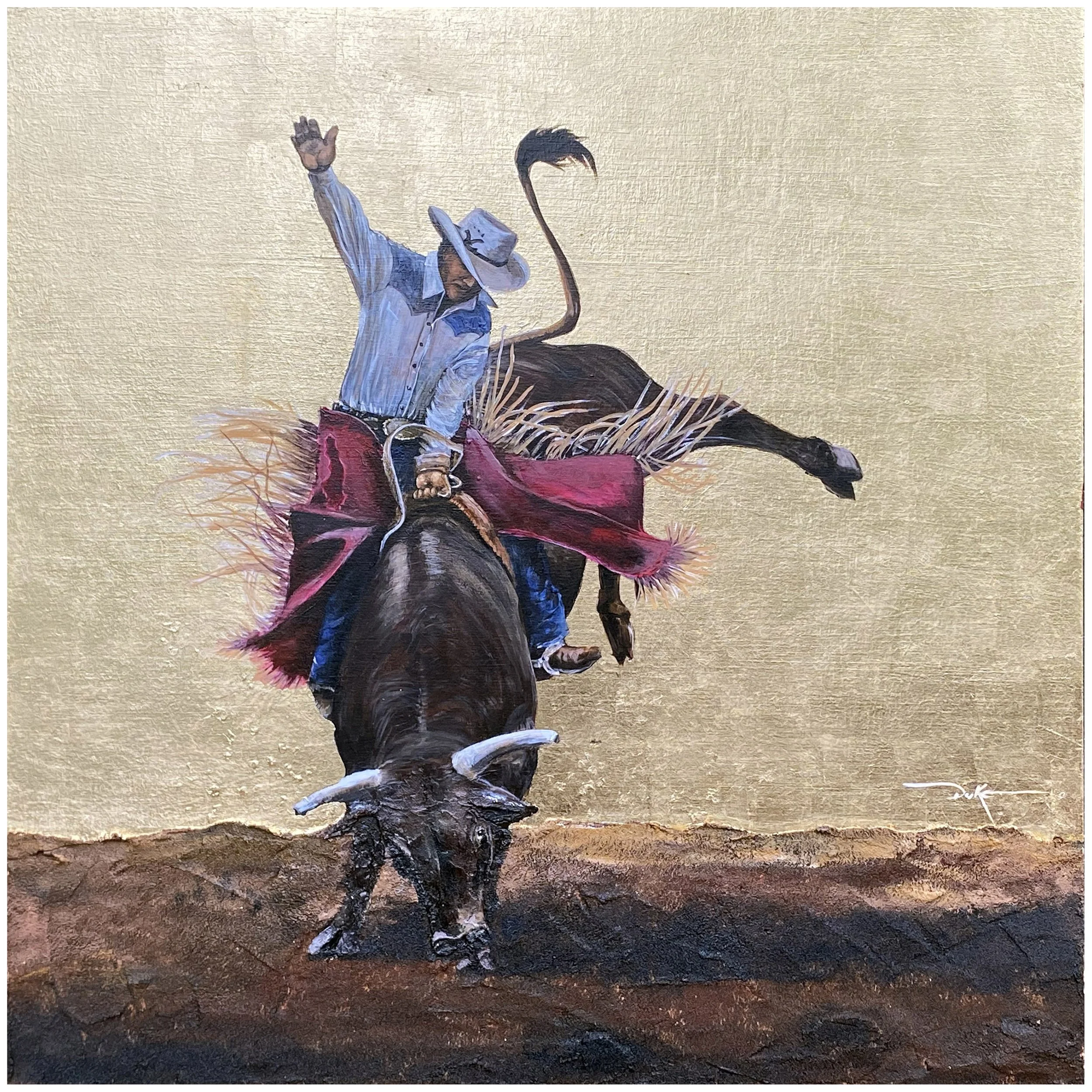
Bull Rider II, 2022. Acrylics and Imt. Gold Leaf on panel, 76.2 x 76.2 cm, Private Collection
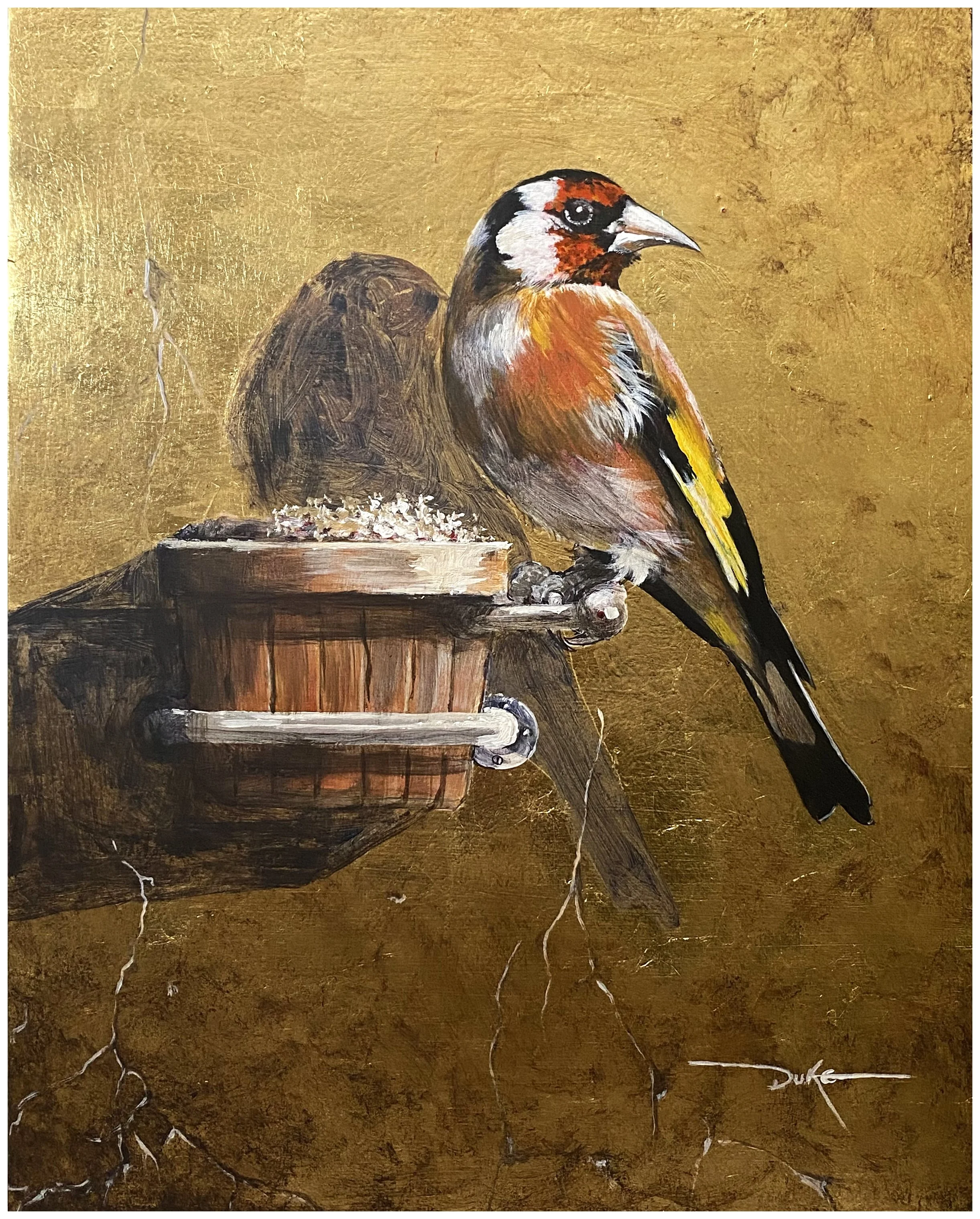
Goldfinch Interrupted (European Goldfinch), 2022. Acrylics and Imt. Gold Leaf on panel, 35.56 x 28 cm, Private Collection
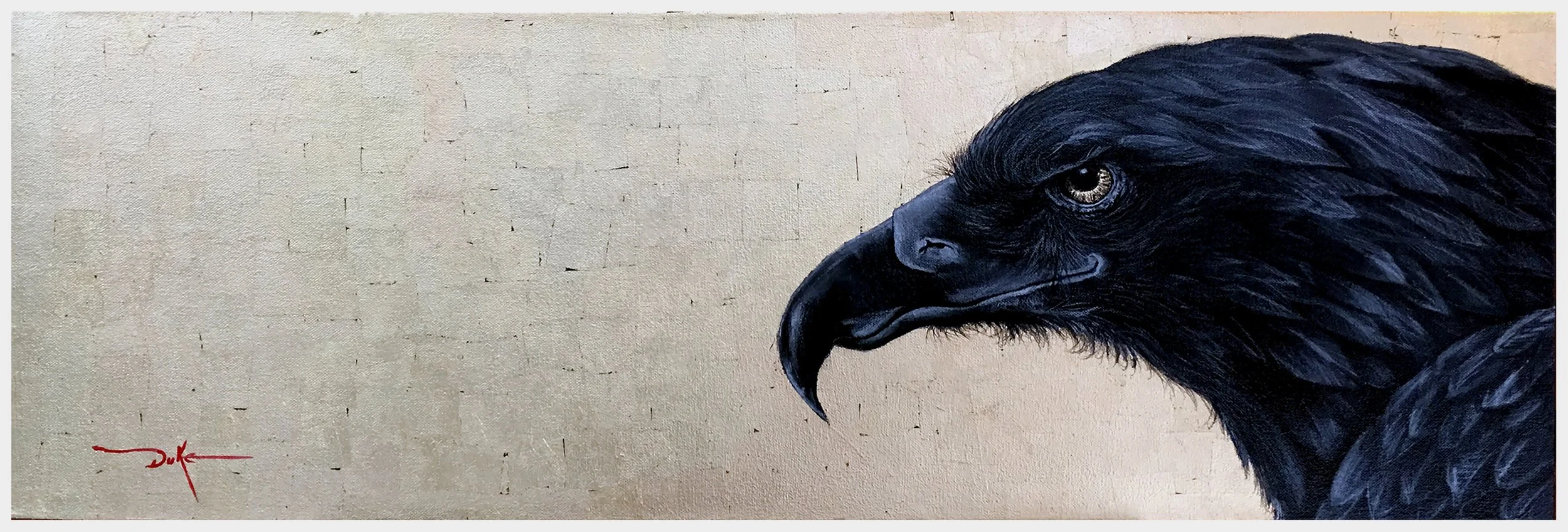
Golden Eagle, 2019. Charcoal and Imt. Gold Leaf on Canvas, 30.5 x 91.44 cm, Private Collection
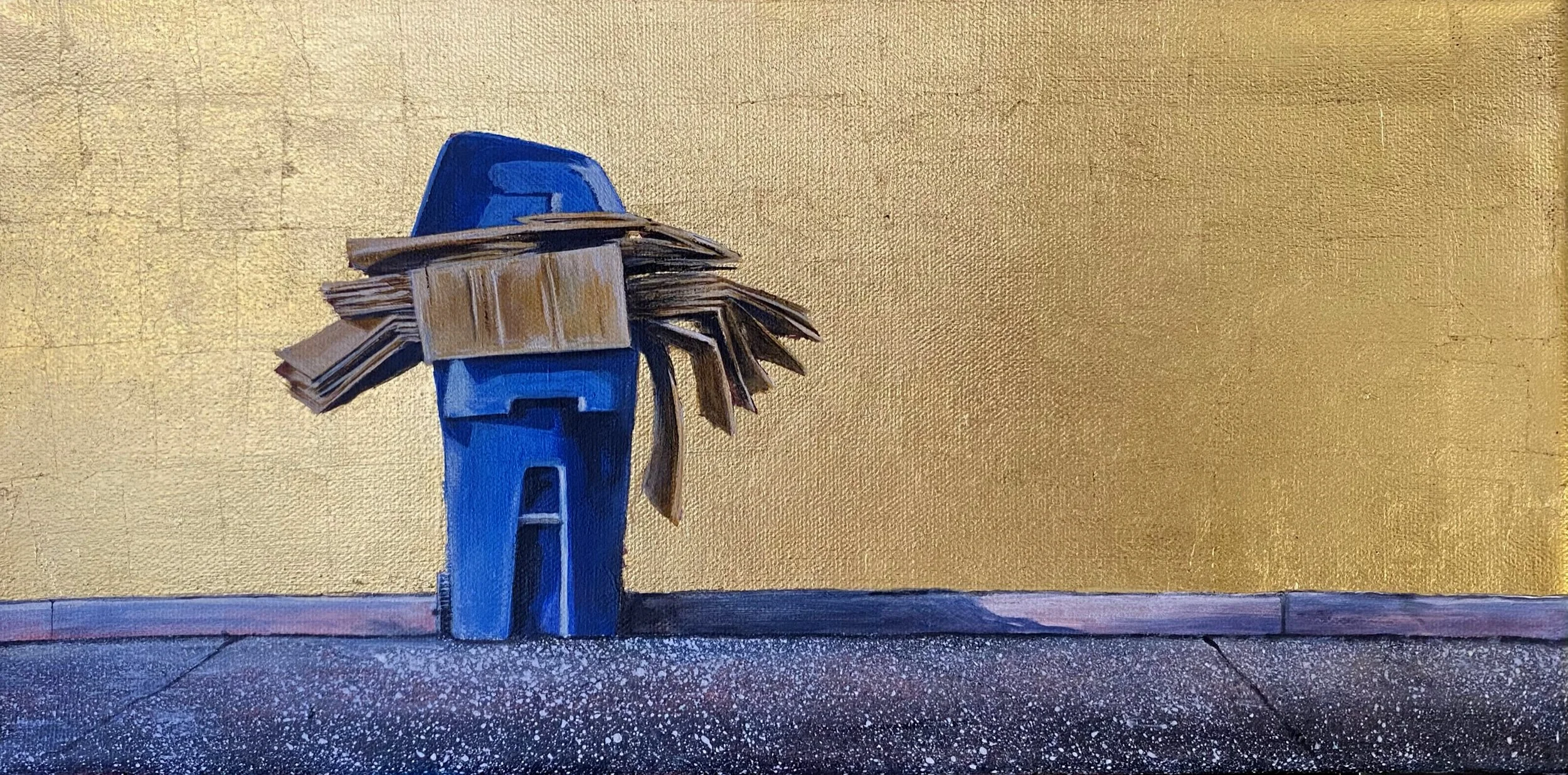
Another Move, Done!, 2020. Acrylics and Imt. Gold Leaf on canvas, 20.32 x 40.64 cm, Private Collection
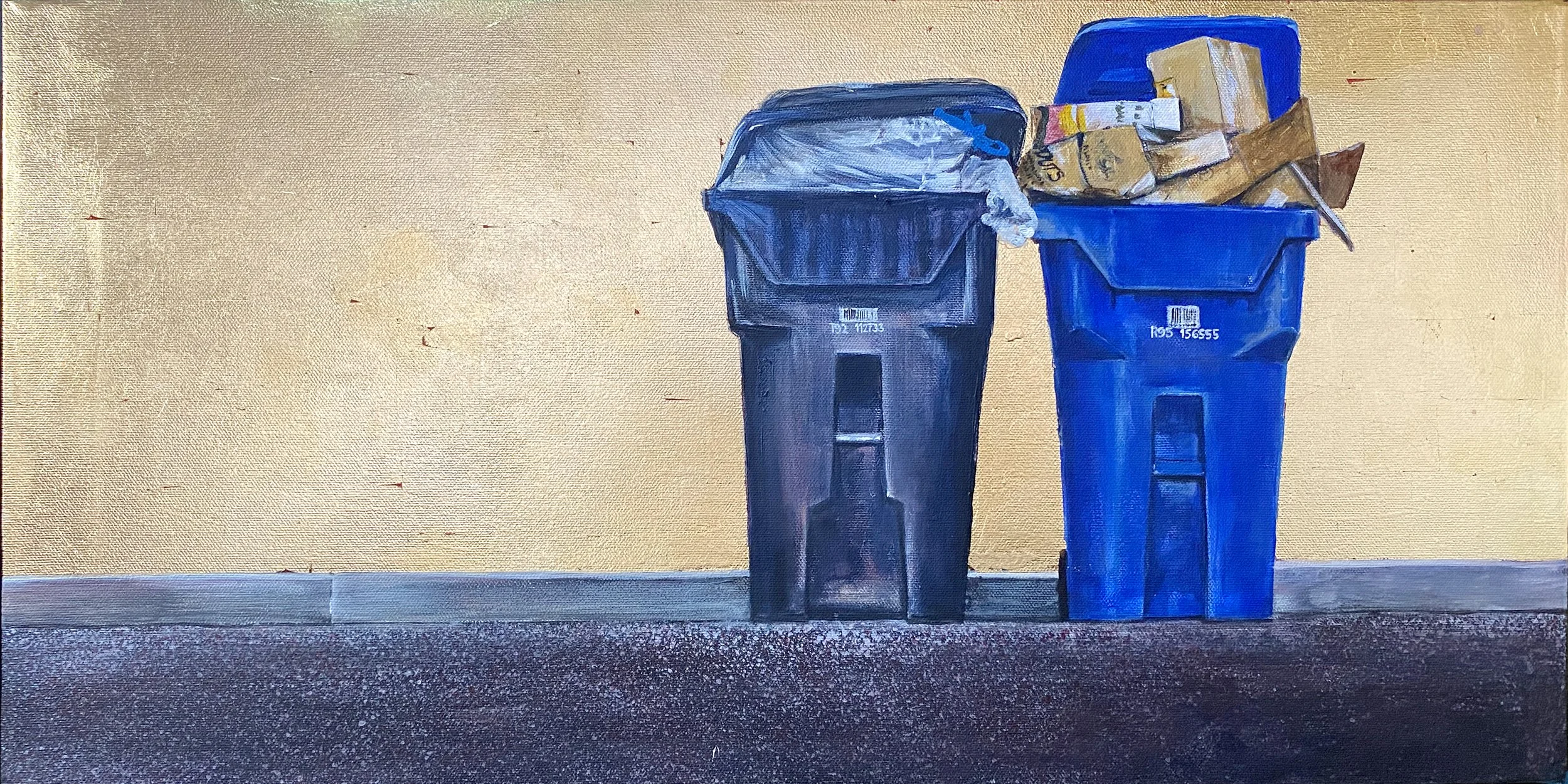
Trash Talk, 2020. Acrylics and Imt. Gold Leaf on canvas, 30.5 x 61 cm, Private Collection