
Jaehee Yoo
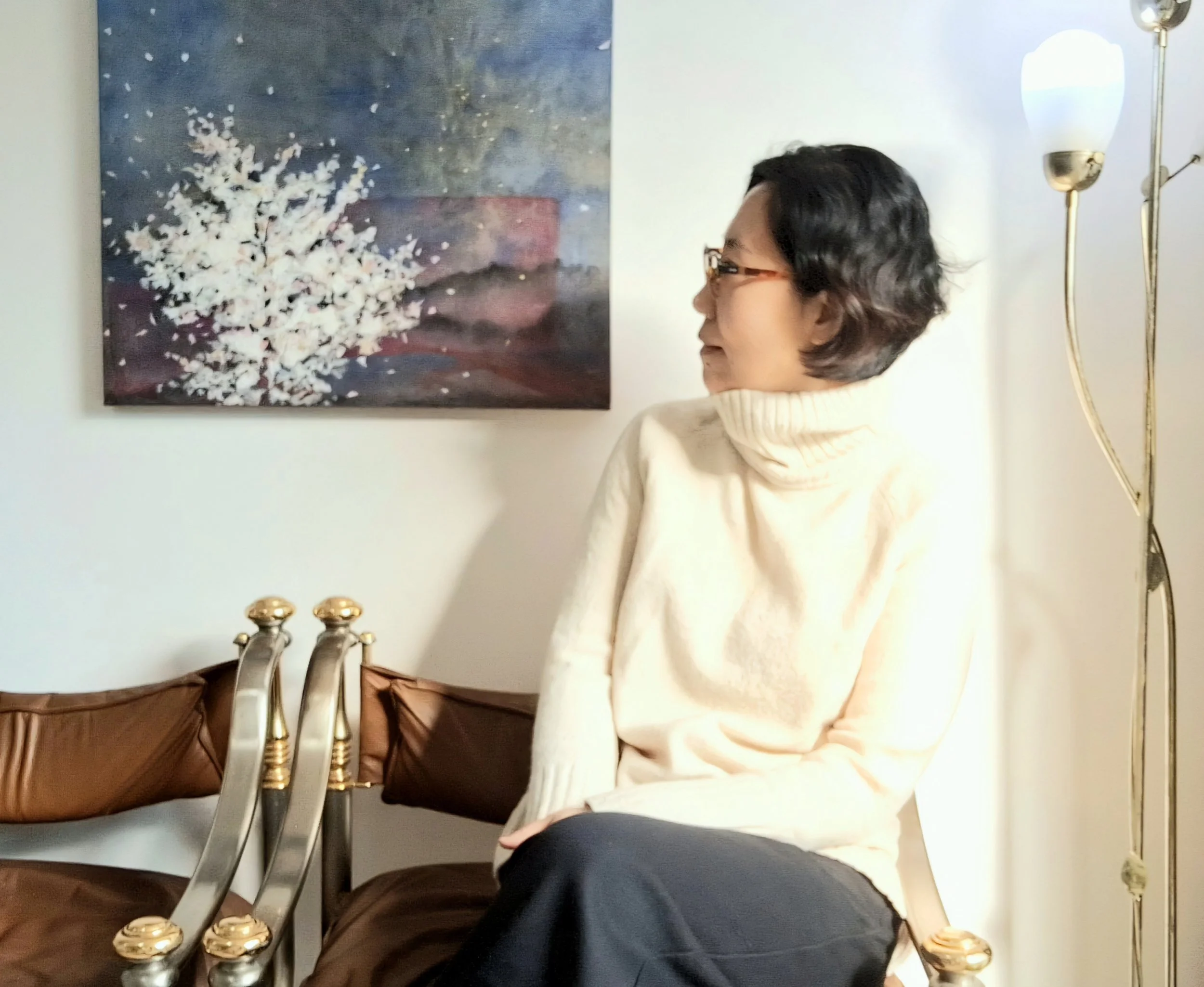
Jaehee Yoo is a Seoul-based painter whose practice explores memory, temporality, and relational perception through the materiality of silk and ink. Drawing from the philosophical underpinnings of East Asian painting, she approaches tradition not as an explicit reference, but as an internalized structure that informs her meditative and process-oriented method.
Her work is characterized by the permeability of silk, where ink diffuses and layers across the surface, creating images that resist fixed form and remain in a state of continuous transformation. Through this material process, Yoo constructs what she describes as “suspended temporality,” in which past and present, presence and absence, unfold simultaneously. Figures in her work often appear in states of proximity without contact, emphasizing distance as a generative space where intimacy is deferred and meaning remains open.
In her Memory Diary series, the city of Seoul emerges not as a geographic site, but as a psychological topology shaped by memory and perception. By rejecting narrative closure and embracing ambiguity, Yoo’s work invites viewers to engage actively, positioning them as co-authors in the construction of meaning.
Yoo holds an MA in Oriental Art History and a BFA in Korean Painting from Ewha Women’s University. Her work has been exhibited internationally, including The Other Art Fair London (presented by Saatchi Art), Art Expo New York, and Spectrum Miami / Red Dot, Art International Zurich and has been featured in publications such as Art Market Magazine and Contemporary Art Curator Magazine.
Your drawings seem to operate within a suspended temporality where memory, gesture, and perception converge without resolution; how might this condition of suspension be understood not merely as an aesthetic choice but as a structural resistance to narrative closure within contemporary image-making?
I approach the idea of “suspended temporality” through the material behavior of ink on silk. When ink touches silk, it does not remain on the surface but permeates the fibers, moving between front and back. A line just drawn may recede behind an earlier trace, while what once seemed erased can re-emerge depending on moisture and density. In this way, time in my work does not accumulate sequentially; it folds, overlaps, and circulates—much like memory itself.
Although time moves forward, within the work it remains in suspended, floating condition. The image exists within an ongoing tension that resists completion. This is not simply an aesthetic choice, but a structural position. By refusing narrative closure, I resist the expectation that an image must resolve into a fixed meaning or a singular temporal point.
Each line is not a step toward completion, but a continuation of the present—an unfolding rather than a conclusion. In this sense, the work does not represent time; it holds time in a state of deferral.
I do not intend for my drawings to be read as narratives, but to be experienced as temporal fields. By withholding resolution, the work opens a space in which the viewer’s perception can enter and participate. Meaning does not arrive as a finished statement but emerges through the viewer’s encounter with the work.
Ultimately, my refusal of narrative closure stems from the nature of memory itself—fragmentary, unstable, and never fully complete. What the viewer encounters is not a structured story, but a layered temporality—where traces of past and present continue to permeate and resonate within the surface of silk.
In your practice, the diary form is continually invoked yet simultaneously dissolved into abstraction and perceptual openness; how does this tension between inscription and erasure complicate the very notion of authorship, particularly in relation to images that appear to exceed intentional control?
The diary form in my work begins as an act of inscription, but it is immediately unsettled by the material behavior of ink on silk. As ink spreads, seeps, and diffuses, each mark simultaneously records and erases itself. What appears as a trace of presence is always accompanied by its own dissolution. Through this process, the image resists stability, and figuration gradually opens into abstraction.
This continuous oscillation between inscription and erasure complicates the notion of authorship. A diary traditionally implies a fixed, personal record—an authored account of experience. In my work, however, the act of recording is never fully controlled. The mark exceeds intention as it is transformed by the material, dispersing into something that can no longer be claimed as entirely “mine.”
My process is grounded in meditative attention to this condition. Rather than imposing form, I remain attuned to the moment in which the image begins to emerge beyond my control. In this sense, authorship shifts away from singular authorship toward a more distributed condition—shared between the artist, the material, and the unfolding process itself.
The image, then, is not the result of a deliberate construction, but something that arrives through a negotiation between intention and contingency. It is precisely in this gap—where control loosens and the image exceeds the artist—that authorship becomes unstable and open.
Ultimately, the diary in my work does not function as a fixed memory record, but as a site of transformation, where traces are continuously formed, undone, and reconfigured. What remains is not a stable inscription, but a living process in which the image is always in the act of becoming.
The use of bamboo pen and Indian ink produces lines that oscillate between fragility and insistence; how might these lines be read as inscriptions of psychic duration rather than marks in space, and in what ways do they register a form of embodied temporality that resists visual stabilization?
When I think about “psychic duration,” I understand it through the way lines emerge in my drawing process. In my work, lines do not accumulate within a linear sequence of time. A single line may carry the intensity of a distant memory, while others register the immediate friction of bamboo against silk in the present. Different temporalities coexist and overlap, allowing past and present, consciousness and the unconscious, to unfold simultaneously.
For this reason, my lines are not simply marks in space, but inscriptions of inner temporality. The bamboo pen produces a line that oscillates between fragility and insistence—sometimes interrupted, sometimes forceful—depending on its encounter with the fibers of silk. This variability is not incidental; it reflects the shifting rhythm of my body and attention.
These lines register a form of embodied temporality. They are shaped by breath, pulse, and subtle changes in concentration. Rather than stabilizing into a fixed visual form, they remain sensitive to fluctuation. A wavering line may reveal a moment of hesitation, while a more forceful stroke corresponds to a state of intensified focus. In this sense, the line functions as an index of lived time rather than a representation of space.
The act of drawing becomes an event in which the body, the material, and time converge. The line does not depict an object but records the duration of its own making. It is through this process that the image resists visual stabilization, remaining open, unstable, and continuously unfolding.
Your engagement with silk as both surface and metaphor introduces a condition of permeability and diffusion; could this material instability be understood as a conceptual framework through which the image refuses containment, instead unfolding as a field of continuous transformation?
What I refer to as material instability originates in the properties of silk itself. Unlike canvas or paper, silk absorbs pigment while maintaining translucency, allowing the image to permeate rather than remain fixed on the surface. In my practice, I also employ huchebeop (reverse-side painting), in which the image is applied to the back of the silk and allowed to emerge through to the front. This process produces a veiled condition in which visibility is never fully stable.
This permeability is not only a material characteristic, but a conceptual framework. As color seeps through the silk and encounters marks on the surface, the boundaries of the image begin to dissolve. Distinctions between front and back, inside and outside, past and present become unstable, preventing the image from consolidating into a fixed form.
In this sense, the image resists containment. It does not exist as a bounded entity within a single plane, but unfolds across layers, continuously shifting through processes of diffusion and overlap. The pictorial field is therefore not a closed composition, but an open, dynamic condition.
Diffusion plays a crucial role in this transformation. As ink spreads along the fibers, forms are softened, dispersed, and reconfigured. What appears is never final, but always in the process of becoming. Through this instability, the image remains unresolved, refusing visual closure and instead sustaining a field of continuous transformation.
Within the Memory Diary series, the city of Seoul emerges less as a geographic entity than as a psychic topology; how does this reconfiguration of urban space challenge conventional distinctions between interiority and exteriority, and what implications does this have for the notion of landscape in contemporary painting?
In the Memory Diary series, Seoul does not function as a geographic entity, but as a psychic topology—an accumulated field of memory, perception, and lived time. The city emerges not as an external view, but as something internalized, where fragments of the urban environment are filtered through my own sensibility and materialized on silk.
This reconfiguration destabilizes the conventional distinction between interiority and exteriority. Rather than representing the city from an observational distance, my work allows the inner and outer to overlap and coexist within a single pictorial field. The landscape is no longer something “out there” to be depicted, but something that unfolds through the interaction between perception, memory, and material.
In this sense, the city becomes a site where multiple temporalities intersect—past and present, conscious and unconscious, personal and collective. What appears is not a stable urban image, but a layered condition in which spatial and psychological dimensions are inseparable.
This has implications for how I understand landscape in contemporary painting. Landscape, in my work, is not a representation of place, but a temporal and perceptual field. It is a space in which boundaries dissolve, and where the image emerges as a process of continuous negotiation between inner experience and the external world.
Figures in your work often appear in states of proximity without contact, suggesting a relational structure defined by distance; how does this interval function as a generative space in which intimacy is continually deferred rather than resolved?
In my work, figures remain in proximity yet never fully touched. This reflects my understanding of relationships as something not defined by possession or union, but by a sustained tension between nearness and distance. In this sense, intimacy is not resolved through contact but continually deferred.
This condition is informed, in part, by a Buddhist understanding of relationships as contingent and impermanent formed through conditions, and always subject to change and dissolution. What interests me is not the moment of union, but the interval that precedes it—the space in which connection remains possible, but never fully realized.
Within work, this interval functions as a generative space. It is not an absence or a rupture, but a site of potential—where perception, memory, and projection begin to unfold. The figures are suspended in a state of mutual gaze, and when the viewer’s gaze enters this field, the interval expands to include them.
In this way, intimacy is not something completed within the image, but something that emerges through the viewer’s engagement. The tension between the figures sustains a condition of longing, preventing closure and allowing the desire for connection to persist.
Ultimately, the interval is not a separation, but a space of encounter—where the boundaries between figures, artists, and viewers remain open, and where meaning is continuously generated rather than resolved.
Your process, rooted in meditation and receptivity to chance occurrences on the surface, seems to displace the artist from a position of control to one of attunement; how might this shift be situated within broader discourses on contingency and the decentering of the author in contemporary art?
In my practice, making a work is not about controlling the image, but about entering a condition of attunement with the material. When ink meets silk, I do not attempt to determine its exact behavior. Instead, I remain attentive to how it spreads, permeates, and transforms through processes that exceed my intention.
This approach is grounded in a meditative mode of working. By suspending the impulse to control, I attempt to empty the ego and become receptive to what emerges. In this sense, the act of drawing is less about producing an image and more about registering a process—one shaped by contingency, material response, and embodied attention.
Within this framework, the artist is no longer positioned as a singular author who determines meaning in advance. Rather, authorship becomes decentered and distributed. The image emerges through an interaction between intention and chance, where the material itself plays an active role in shaping the outcome.
Contingency is therefore not a disruption, but a structural condition of the work. The unpredictable events that occur in the process—diffusion, interruption, variation—allow the image to exceed premeditated form and to remain open.
As a result, the work shifts from a closed composition to an open event. Meaning is not fixed now of production but continues to unfold through the viewer’s engagement. In this expanded field, authorship is no longer singular, but shared—among the artist, the material, and the viewer.
My drawings can thus be understood as records of an unfolding dialogue among multiple presences—silk, ink, the artist, and the viewer—each contributing to the work as it continues to evolve.
The recurrence of gold tones within your compositions introduces a chromatic tension between luminosity and melancholy; how does this duality complicate the affective register of the image, particularly in relation to traditions where gold has historically signified transcendence or the sacred?
In my work, gold does not function as a symbol of transcendence or permanence. Historically, gold has been associated with divine light, eternity, and sacred. I am interested in shifting this meaning toward something more fragile and temporal.
Rather than overwhelming radiance, the gold in my work appears as a subtle and unstable light—closer to a distant window in the dark, the fading glow of dusk, or a brief flicker within obscurity. It does not assert transcendence but exists in proximity to disappearance.
This shift introduces a tension between luminosity and melancholy. The gold does not resolve into pure brilliance; it carries within it a sense of loss, finitude, and impermanence. Even at its most luminous, it is shadowed by the awareness that it will fade.
Materially, this condition is reinforced by the behavior of gold on silk. It is not a fixed metallic surface, but a fluctuating presence that appears and disappears depending on light and angle. This instability prevents the color from stabilizing into a singular symbolic meaning.
As a result, gold complicates the affective register of the image. It does not signify transcendence in a traditional sense but instead holds together two opposing conditions, radiance and sorrow. The viewer encounters not a resolved emotion, but a suspended state in which beauty and melancholy remain inseparable.
In this way, the gold in my work becomes less a symbol and more a condition—one that evokes a quiet sense of reverence grounded not in eternity, but in the fleeting nature of experience.
Your work draws upon the philosophical underpinnings of East Asian painting while remaining firmly situated within a contemporary context; how does this internalized tradition operate as a latent structure rather than an explicit reference, and what forms of knowledge does it allow the work to articulate without representation?
For me, the tradition of East Asian painting is not an external reference to be quoted, but a latent structure—something deeply internalized within my body and sensibility. While my materials and techniques—silk, ink, and their methods of application—derive from tradition, what matters more is the way this tradition operates as a mode of thinking rather than as a visible form.
In this sense, I do not engage tradition through representation or citation. Instead, it informs how I approach the image: as a site of cultivation, attention, and process. The principles underlying East Asian painting—often connected to meditative practice—shape my working method, particularly in the way I prioritize attunement, temporality, and the unfolding of the image over fixed composition.
This internalized framework allows the work to articulate forms of knowledge that are not representational. Rather than depicting the world, the image becomes a field in which perception, memory, and thought are enacted. What is expressed is not an external subject, but a condition of mind.
The notion of “conceptual landscape” is important in this regard. Traditionally, it refers to painting not to what is seen, but what is understood through nature. In my work, this logic is extended into a contemporary context: the city of Seoul is not treated as a geographic entity, but as a psychological topology—an accumulated structure of memory and perception.
If historical landscape painting once articulated a philosophical order of the world, my work attempts to trace a different kind of order—one shaped by memory, temporality, and lived experience. In this way, tradition operates not as an image to be reproduced, but as an underlying epistemological structure through which the work thinks.
In an era increasingly dominated by speed, saturation, and the immediacy of digital imagery, your paintings insist on slowness, ambiguity, and perceptual openness; how might this insistence be understood as an ethical proposition, one that redefines the role of the viewer from passive observer to active participant in the construction of meaning?
In an image culture increasingly defined by speed, saturation, and immediacy, my insistence on slowness and ambiguity can be understood as an ethical position. The rapid circulation of highly resolved images often leaves little space for reflection, reducing the viewer to a passive receiver. Against this condition, I seek to create a different mode of engagement—one that restores time, attention, and agency to the act of viewing.
Slowness in my work is not simply a matter of duration, but a qualitative shift in perception. It asks the viewer to dwell, to hesitate, and to remain uncertain. Rather than offering immediate comprehension or a fixed conclusion, the work requires a temporal investment—an alignment between the viewer’s perceptual rhythm and that of the image.
In this sense, ambiguity is not a lack of clarity, but a structural openness. It prevents the image from closing into a single meaning, allowing multiple interpretations to emerge. The work does not deliver a predetermined message but instead creates a condition in which meaning is continuously formed through the viewer’s engagement.
This redefines the role of the viewer. Rather than consuming an image, the viewer becomes an active participant, someone who brings their own memory, perception, and affect into the work. The completion of the image does not occur now of its production, but within this encounter.
In this expanded field, the viewer is no longer external to the work but implicated in it. The image remains open, and meaning is co-constructed through the interaction between artist, material, and viewer. It is in this sense that my work proposes an ethics of viewing—one grounded in attentiveness, duration, and shared responsibility in the formation of meaning.
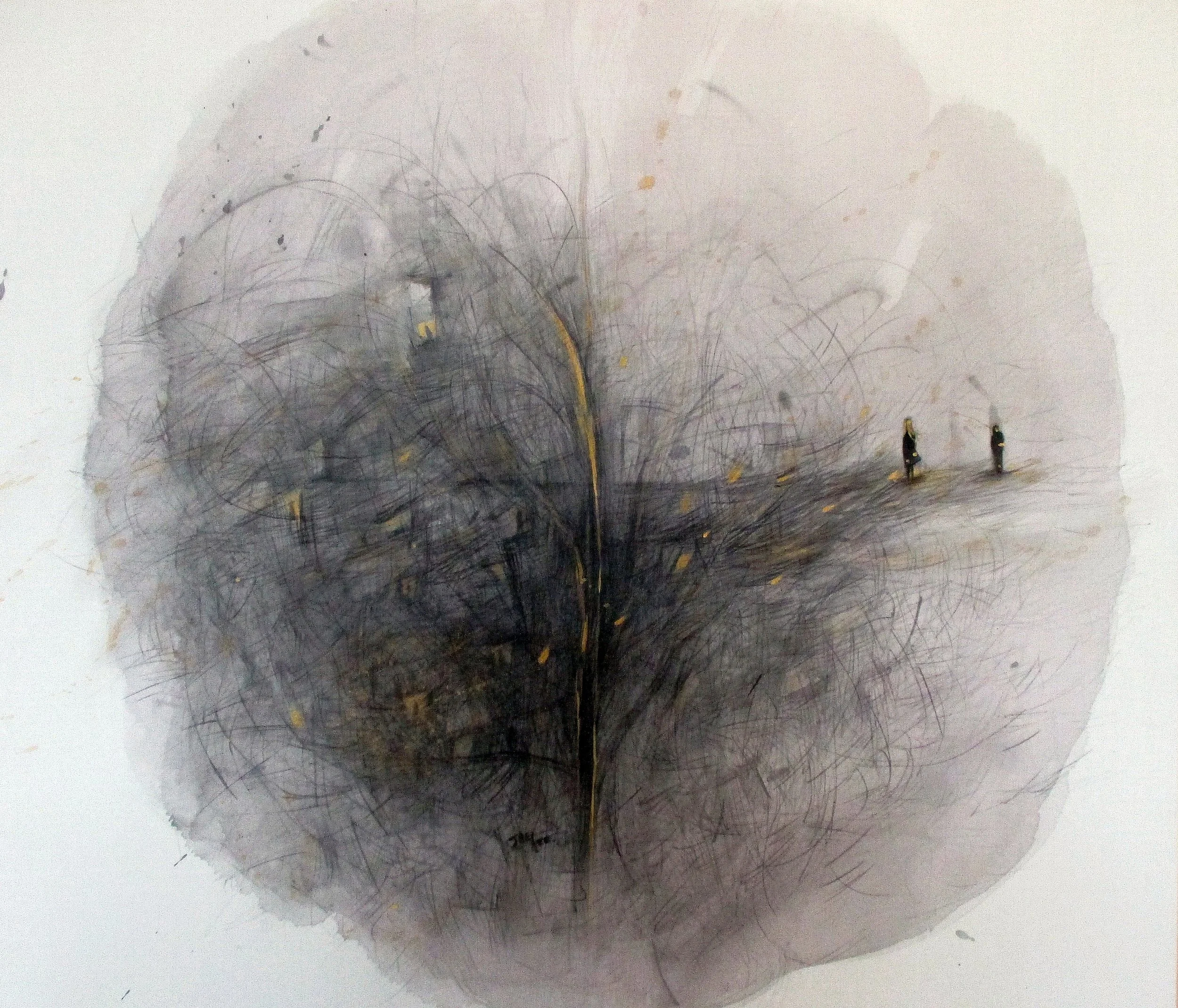
A chance reunion,2026. Indian ink Drawing on silk canvas,63x55cm2026
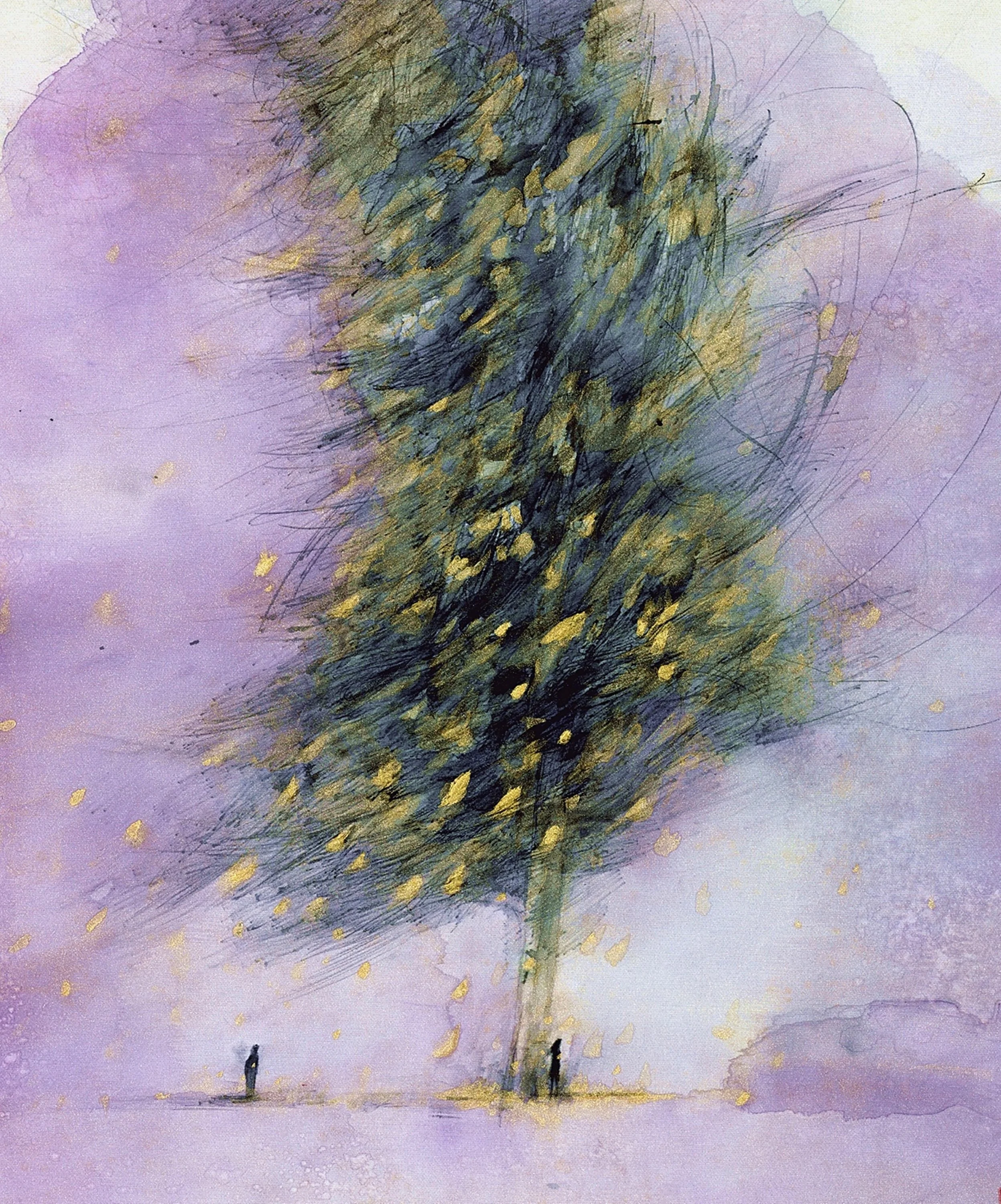
Lover under Jinko tree,2022 Indian ink Drawing on silk canvas,46x53cm
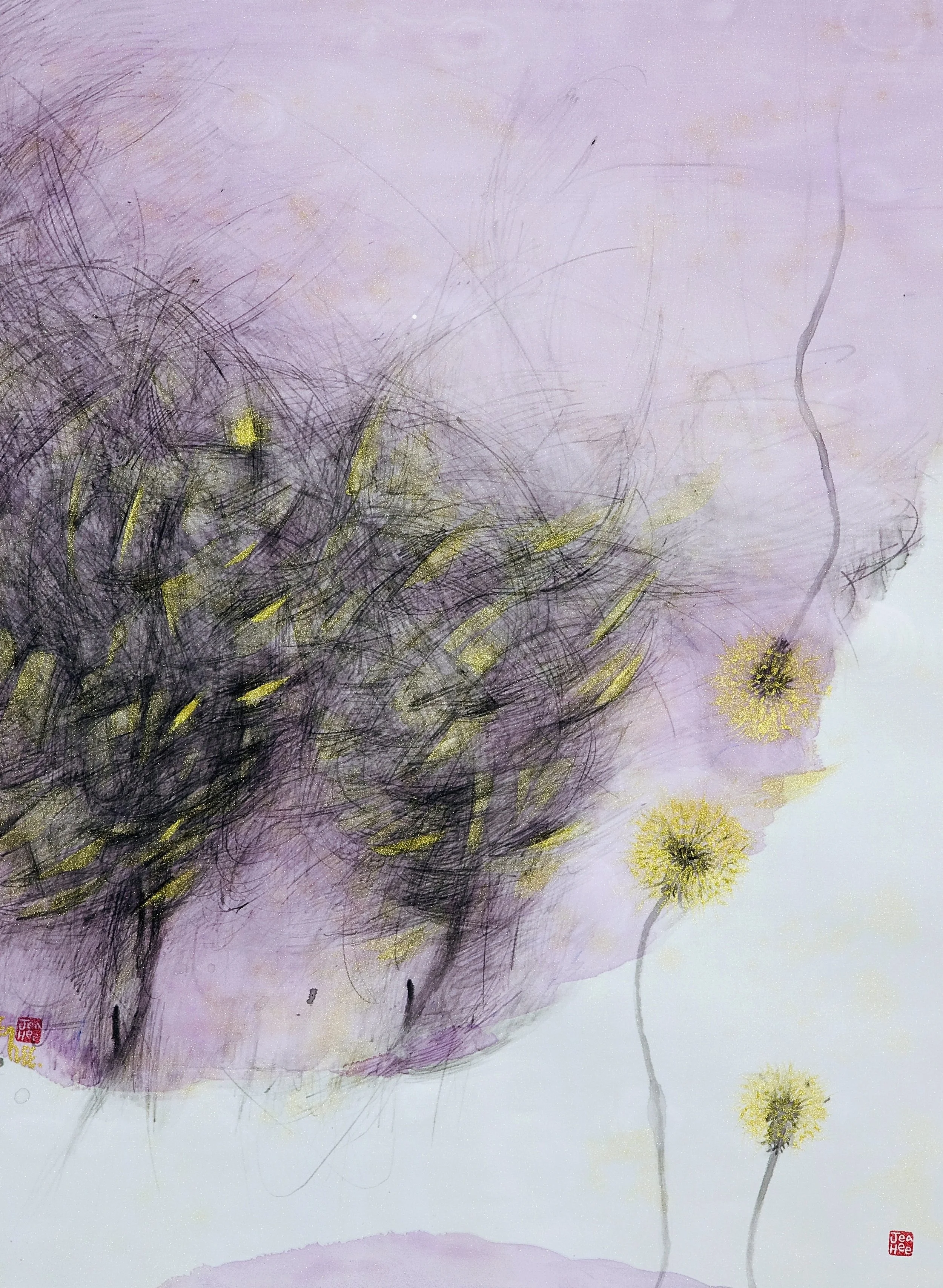
Parting,2024. Indian ink Drawing on silk canvas,55x44cm
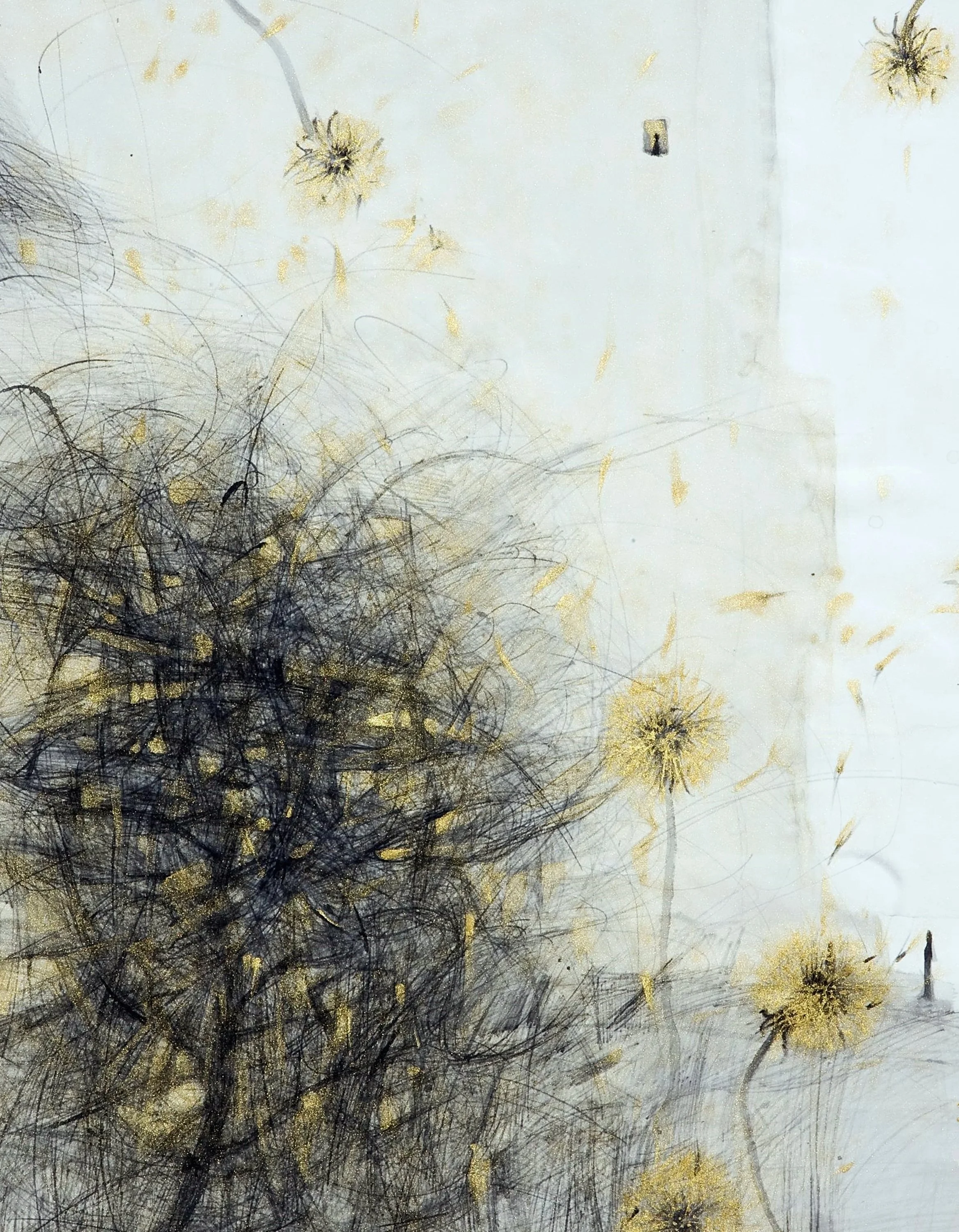
Missing you, 2024. Indian ink Drawing on silk canvas,57x44cm
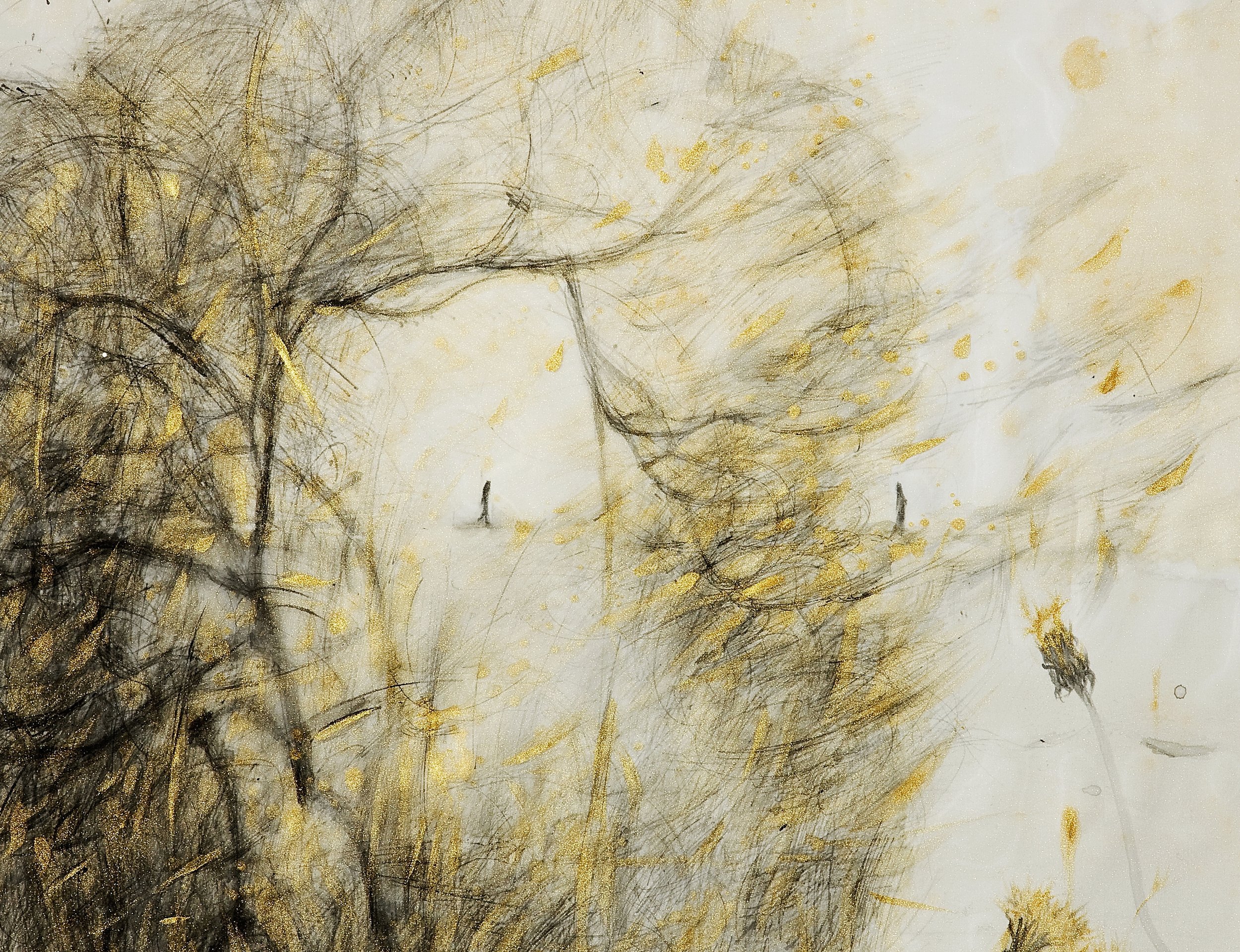
Approaching,2024. Indian ink Drawing on silk canvas,54x44cm
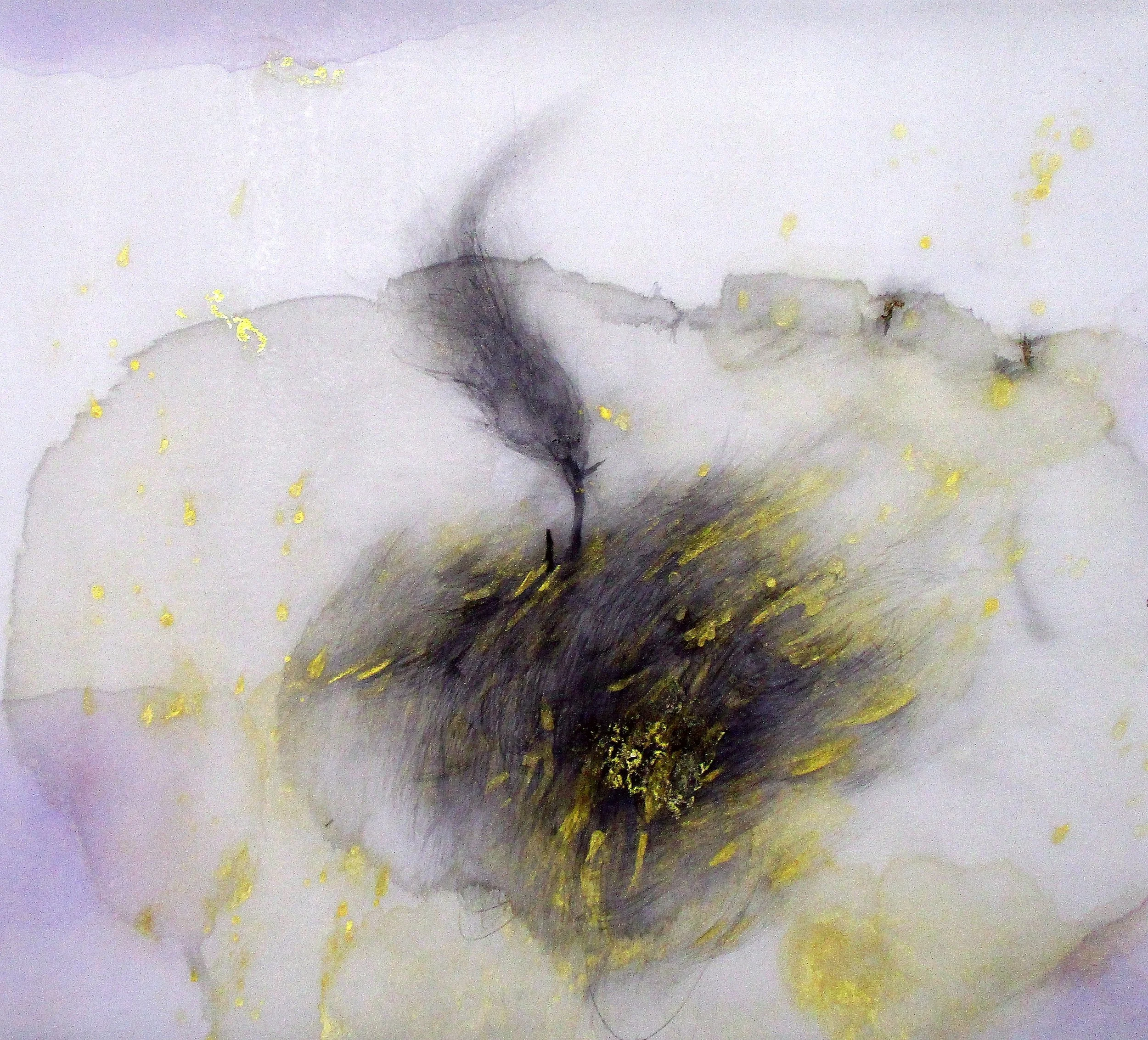
Already been a year,2024. Indian ink Drawing on silk canvas,50x44cm
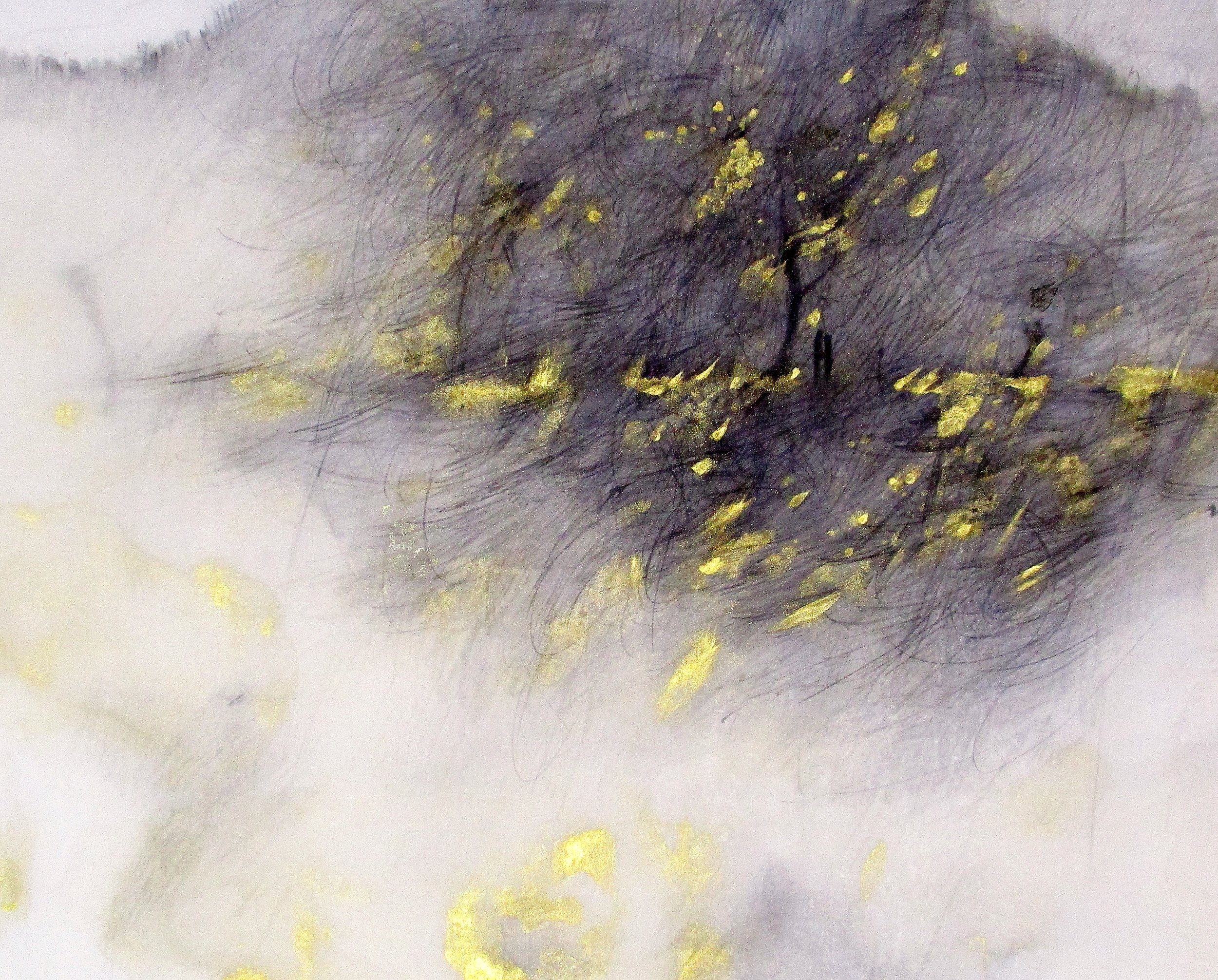
Reunion,2024. Indian ink Drawing on silk canvas,50x44cm
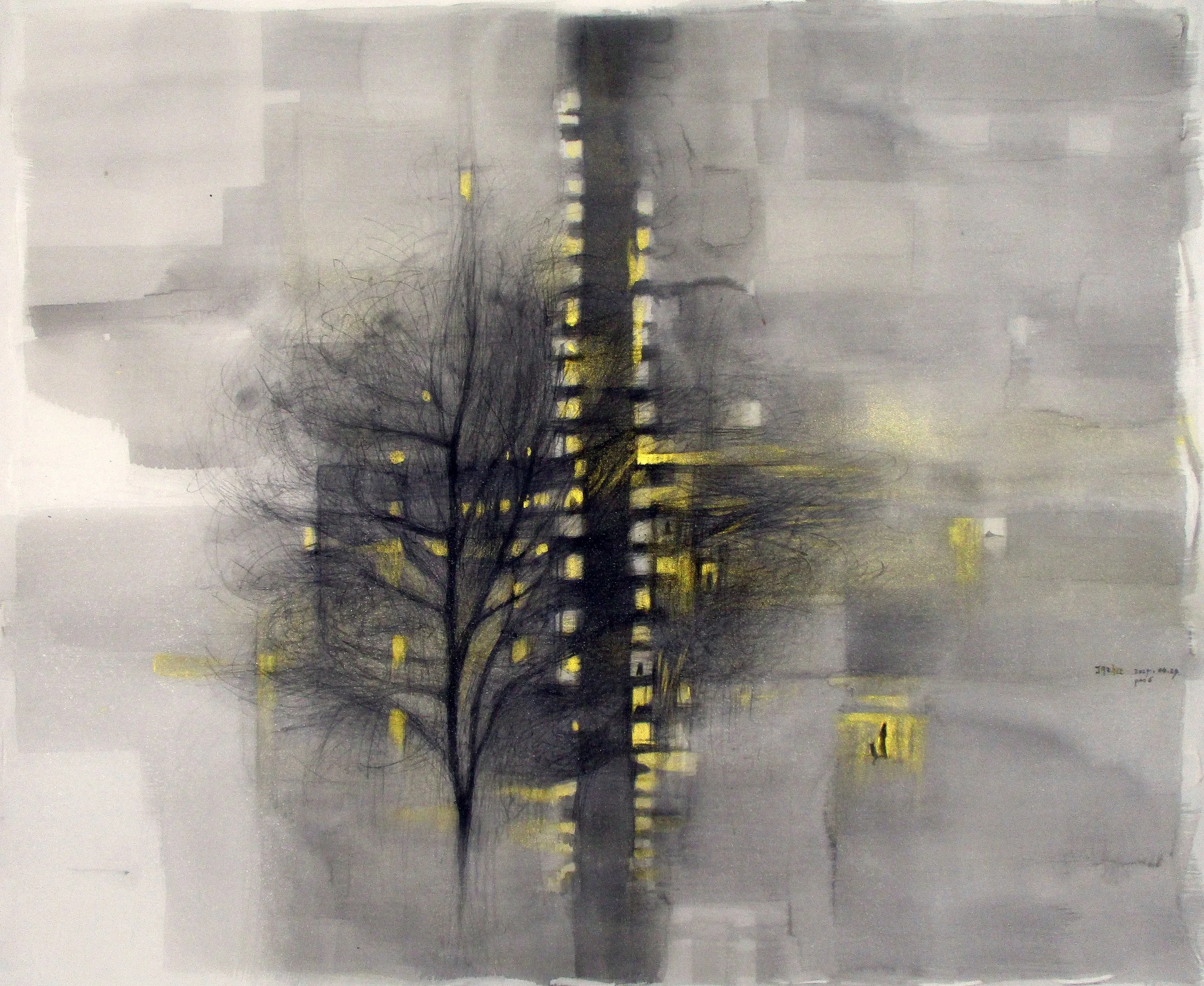
Cat and I, 2024. Indian ink Drawing on silk canvas,68 X58cm

Man, upstairs, 2025. Indian ink painting on silk canvas, 38x46cm
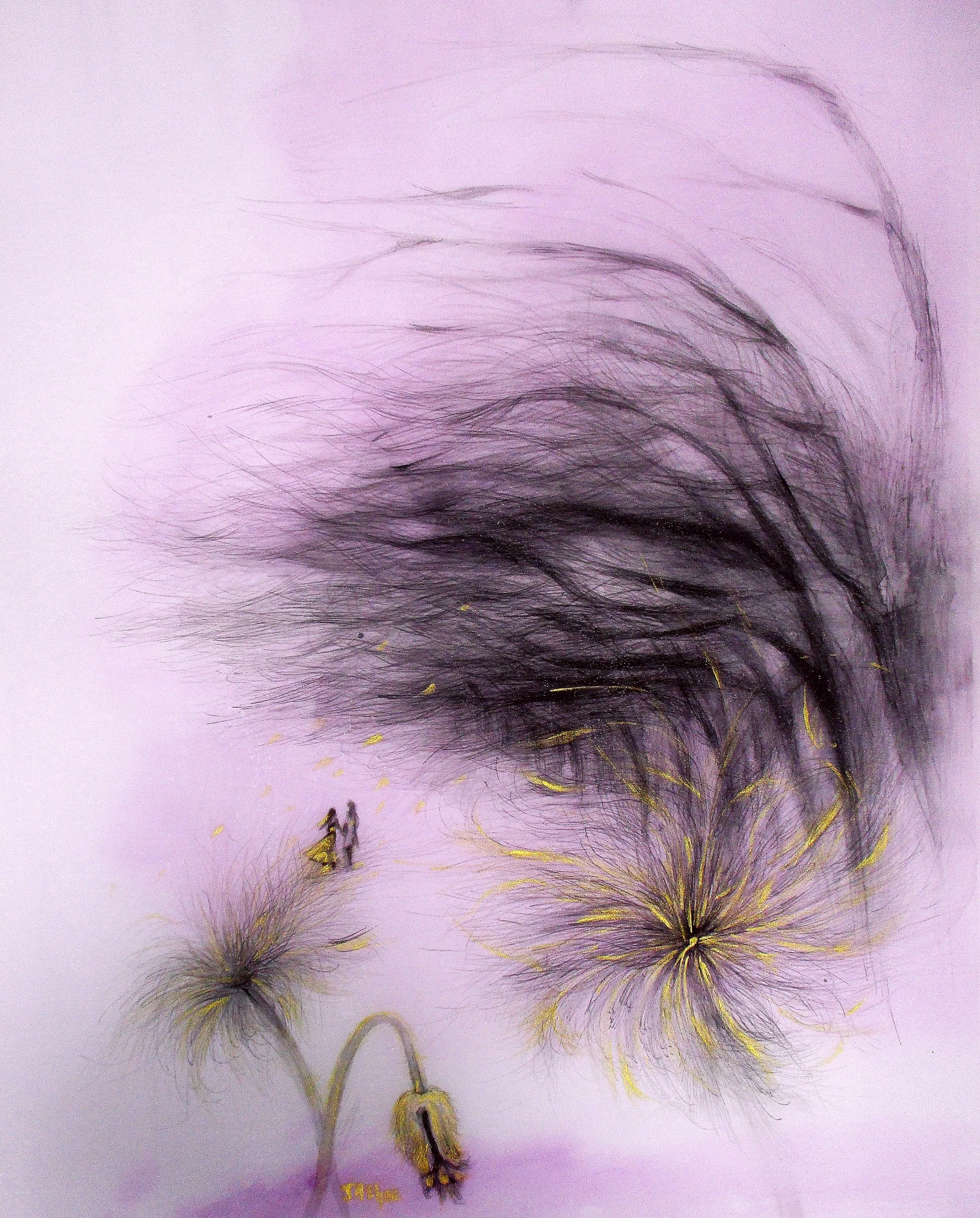
Cherry Blossom Lover, 2025. Indian ink Drawing on silk canvas, 46x53cm
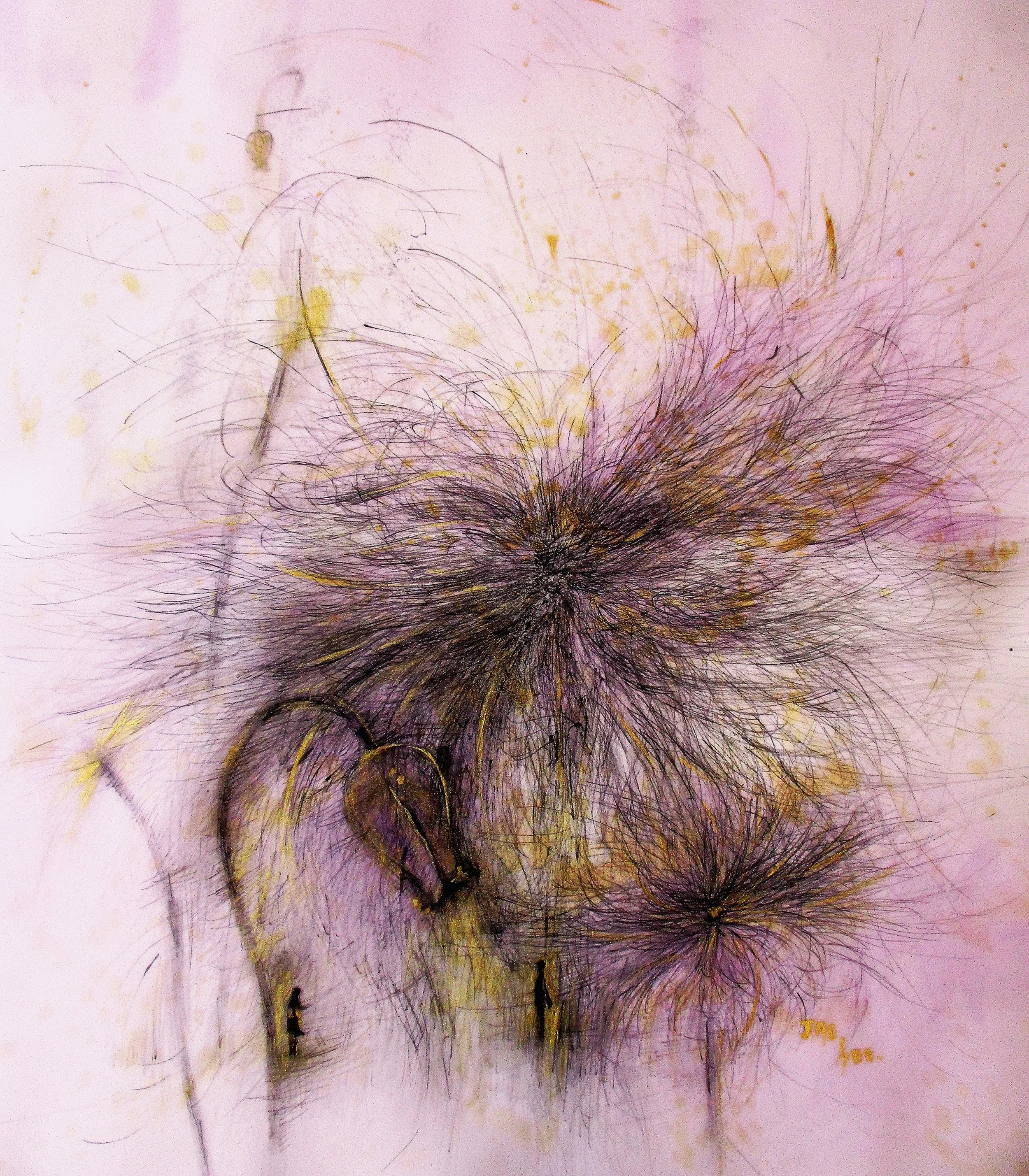
Waiting for you, 2025. Indian ink Drawing on silk canvas,44x60cm
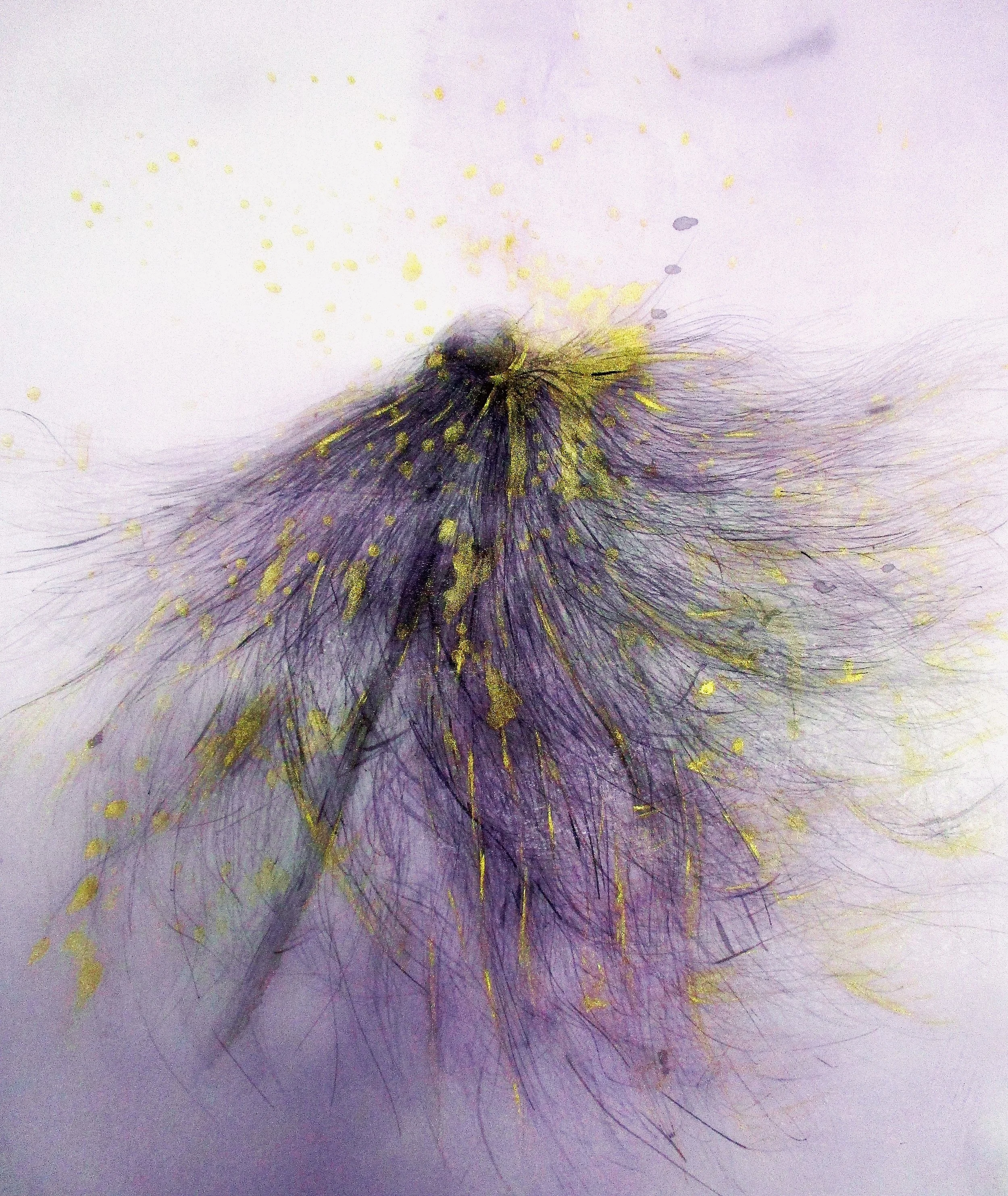
Shall we dance?, 2025. Indian ink Drawing on silk canvas, 44x60cm
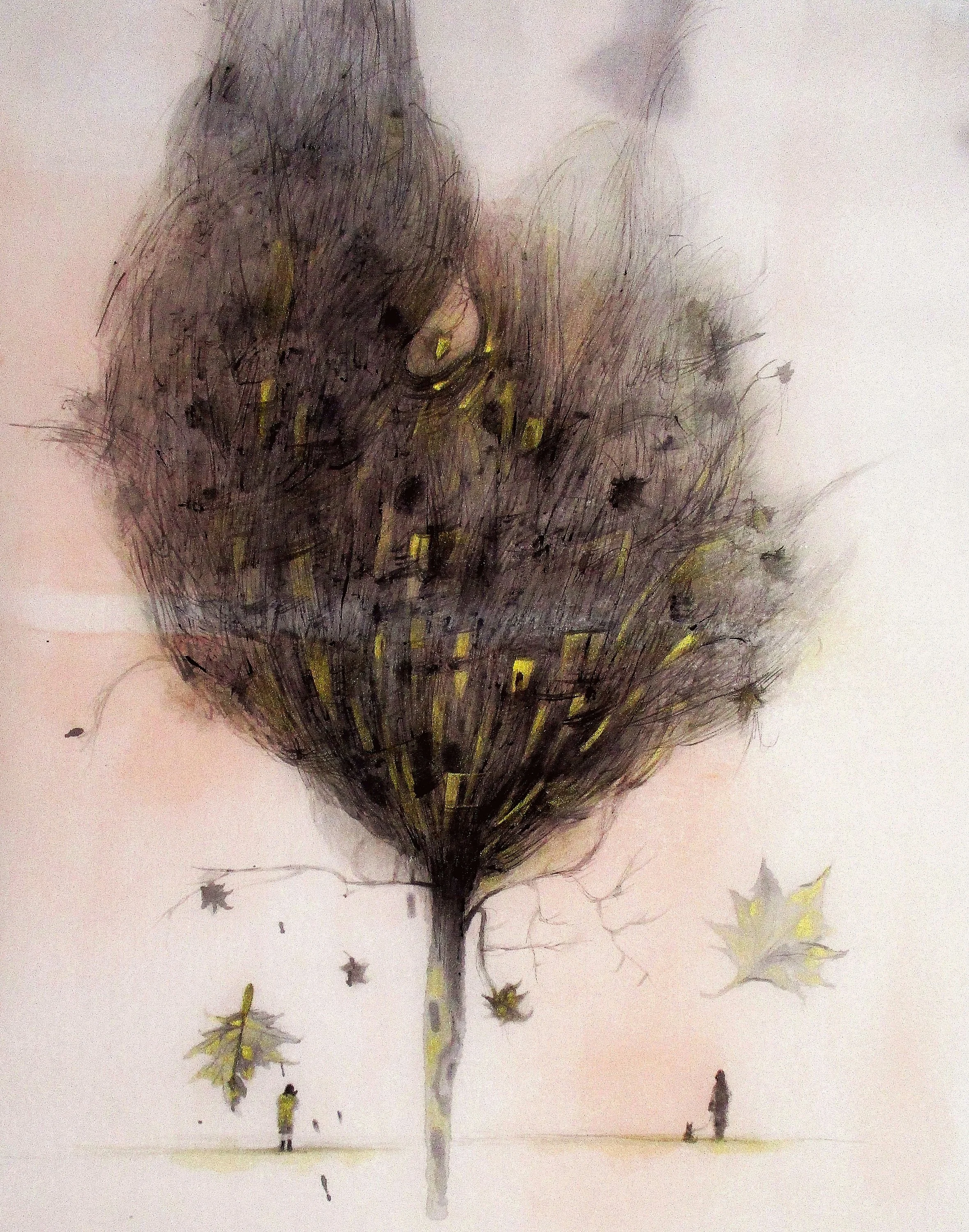
Under the Platanus tree, 2025. Indian ink Drawing on silk canvas, 44x55cm
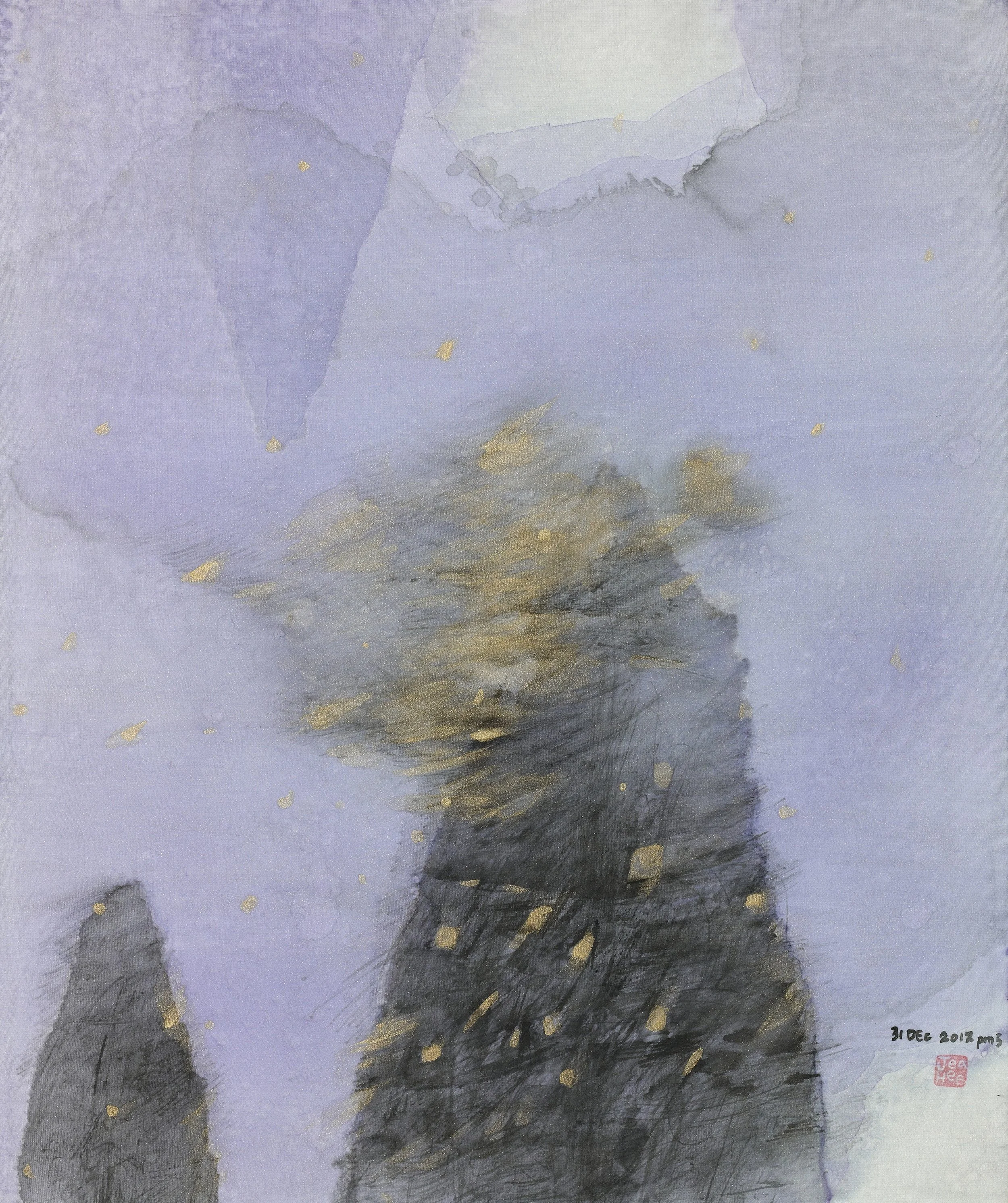
Solitude, 2024. Indian ink Drawing on silk canvas, 36x44cm
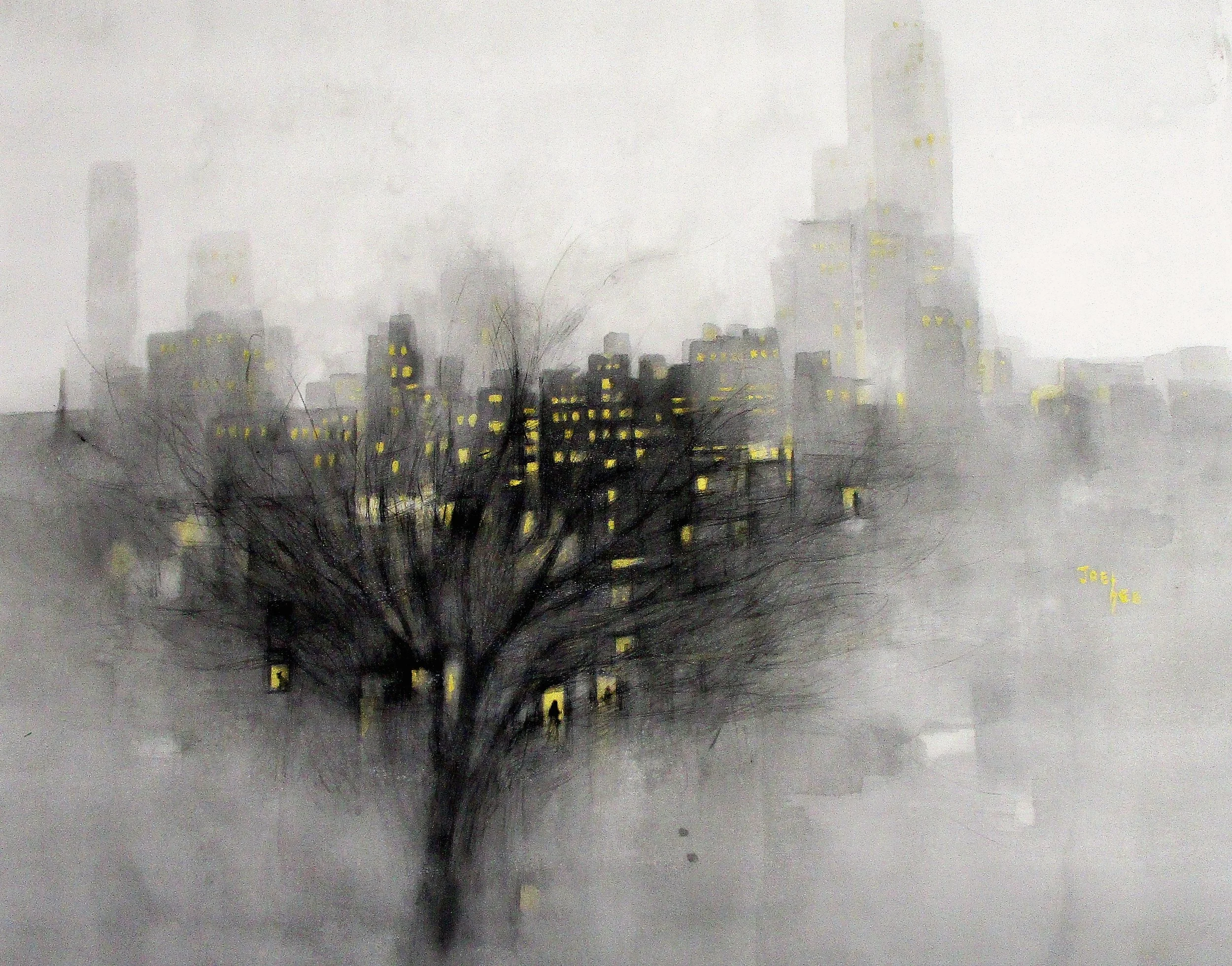
Winter city, 2025. Indian ink on silk canvas, 68x58cm
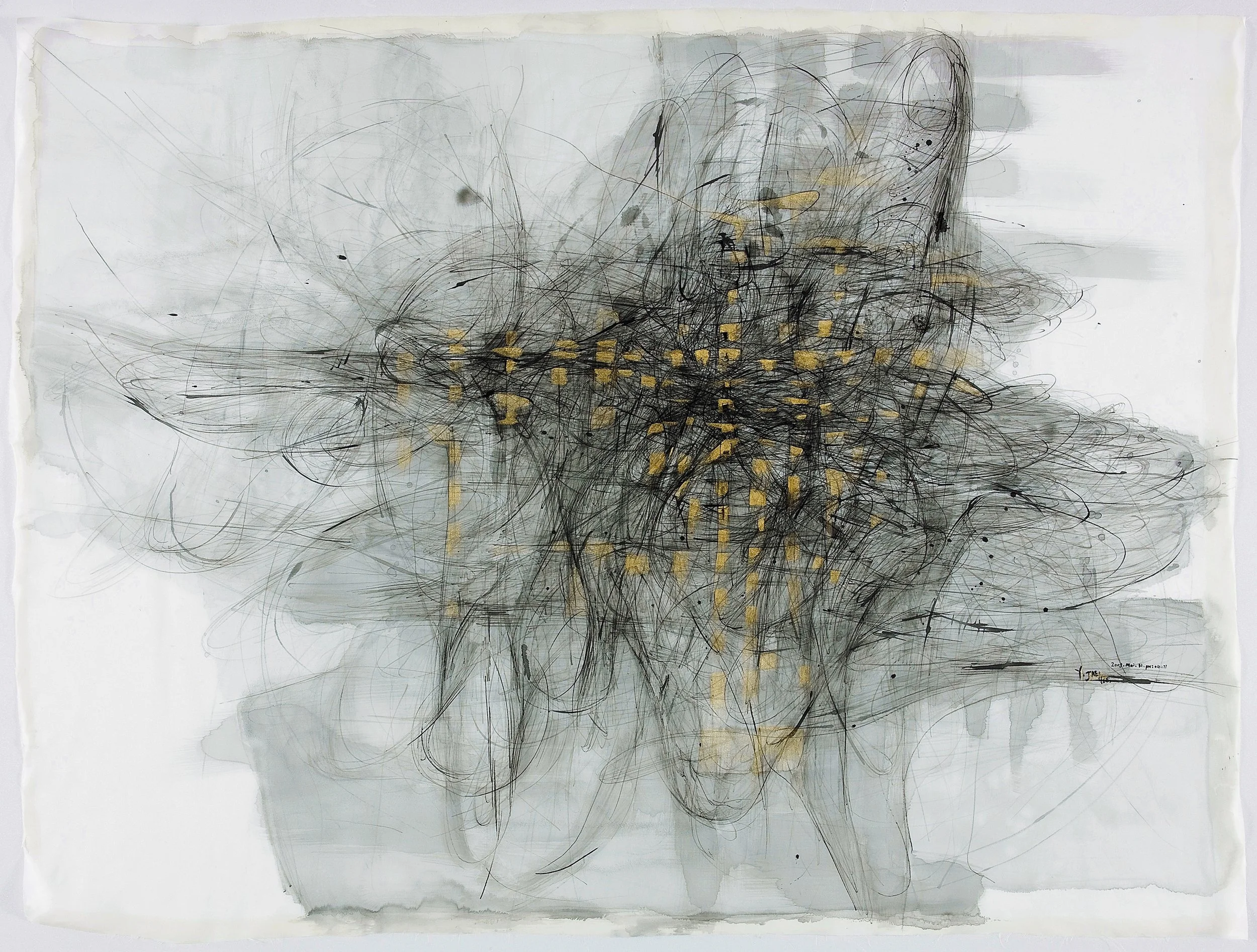
Misty,2021. Indian ink Drawing on silk canvas, 80x104cm
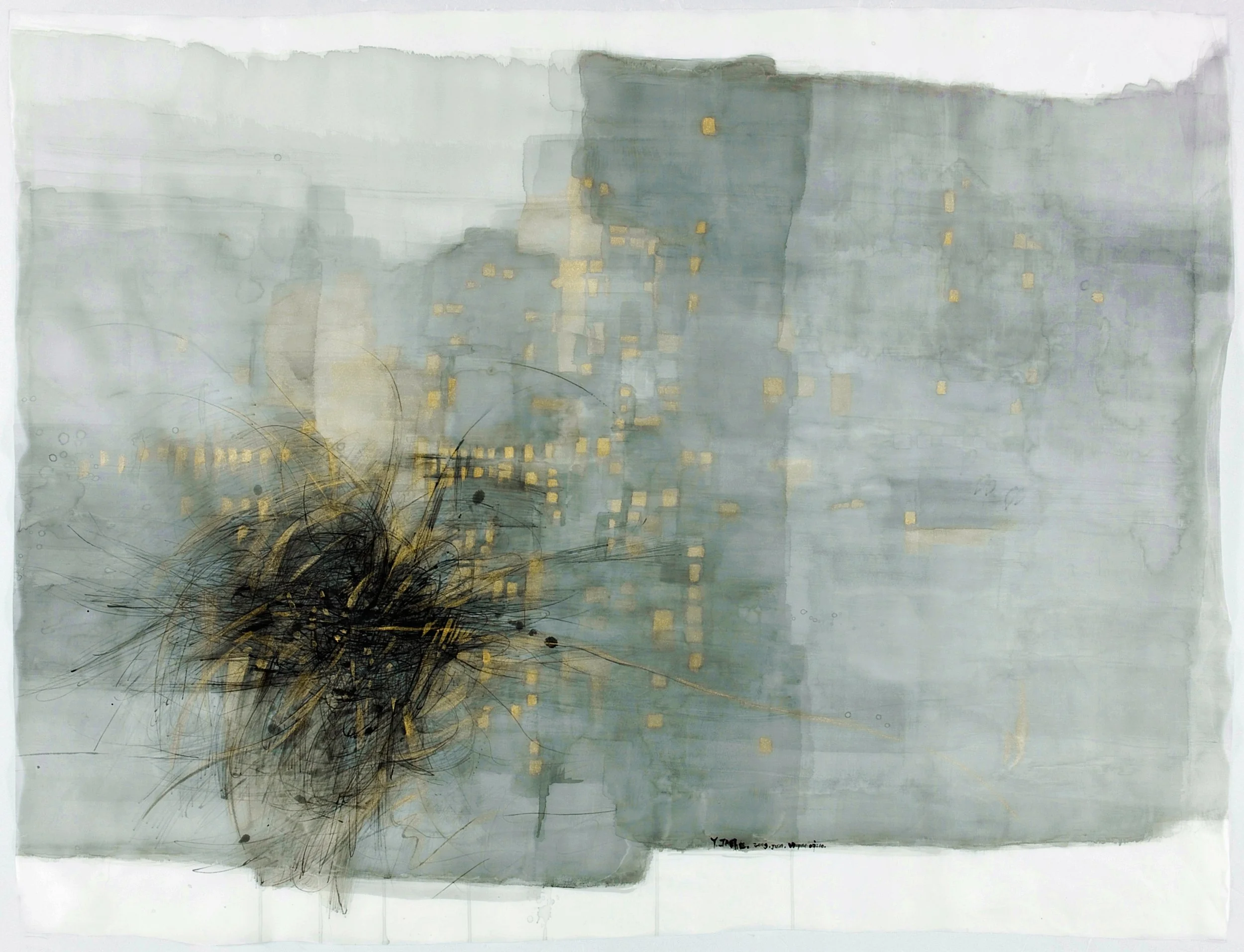
Misty, 2022. Indian ink Drawing on silk canvas,80x104cm
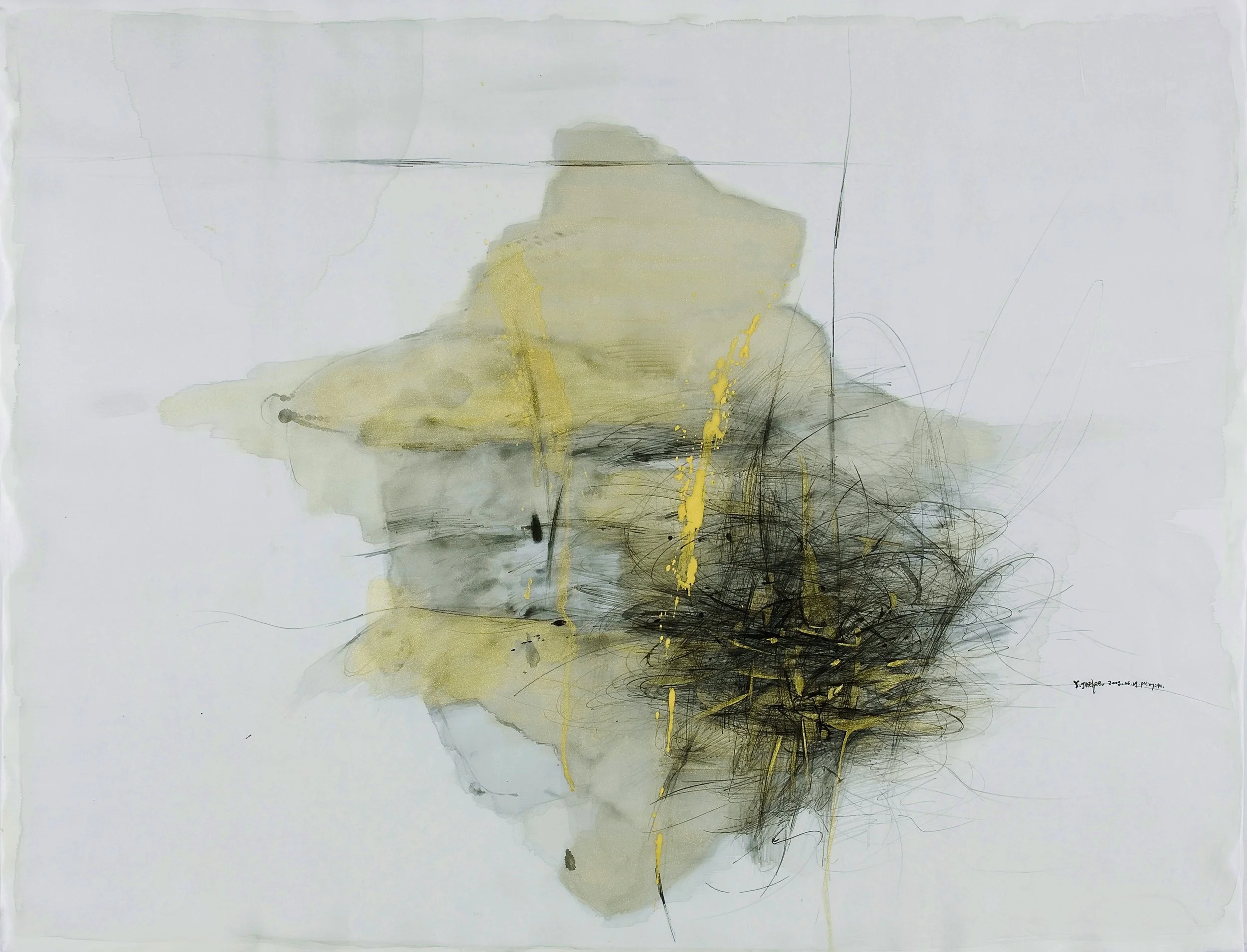
Memory, 2022. Indian ink Drawing on silk canvas, 80x100cm
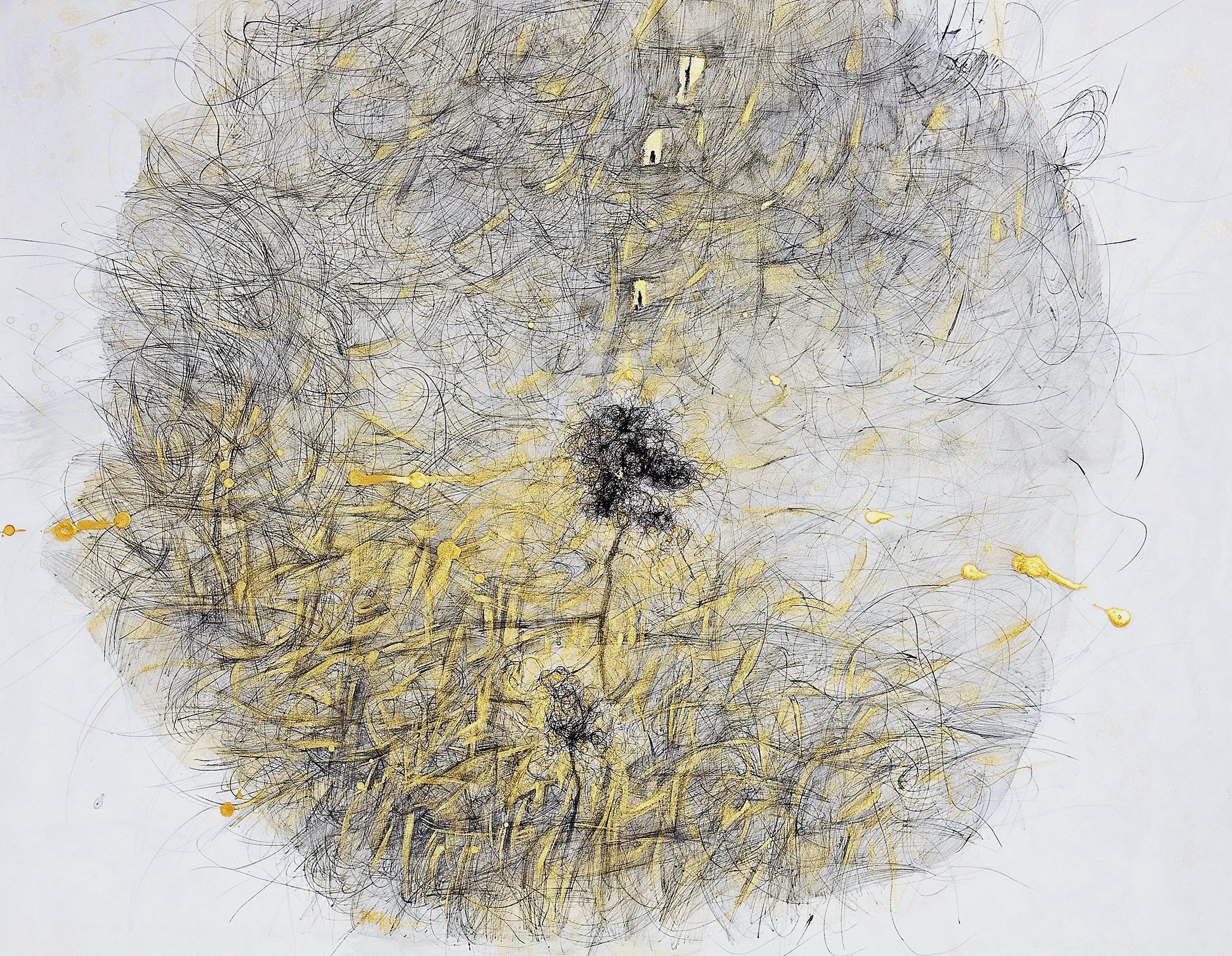
Dandelion lover,2026. Indian ink Drawing on silk canvas, 60x60cm
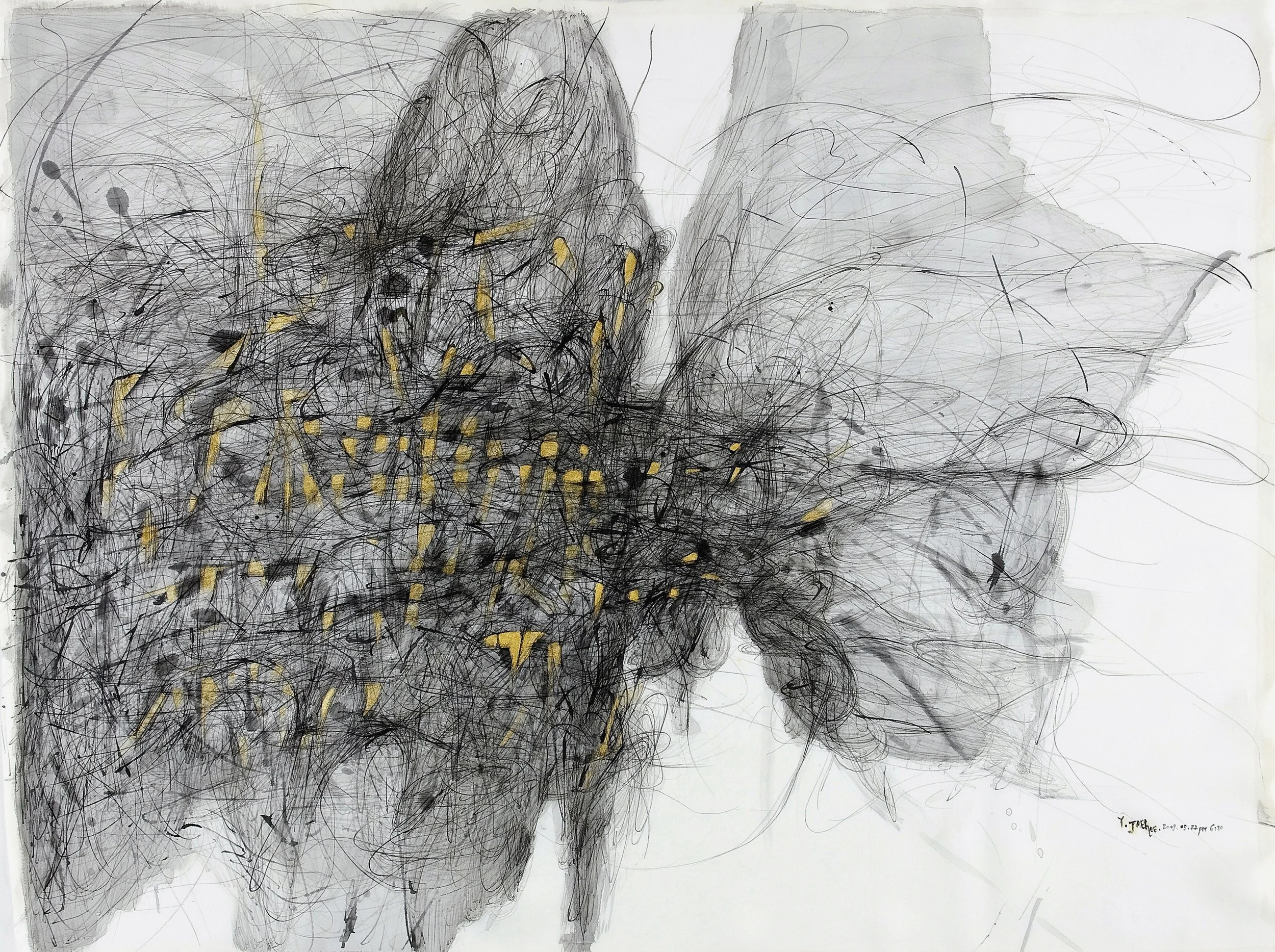
Night city, 2021. Indian ink Drawing on silk canvas, 80x104cm