
Mara Montagna
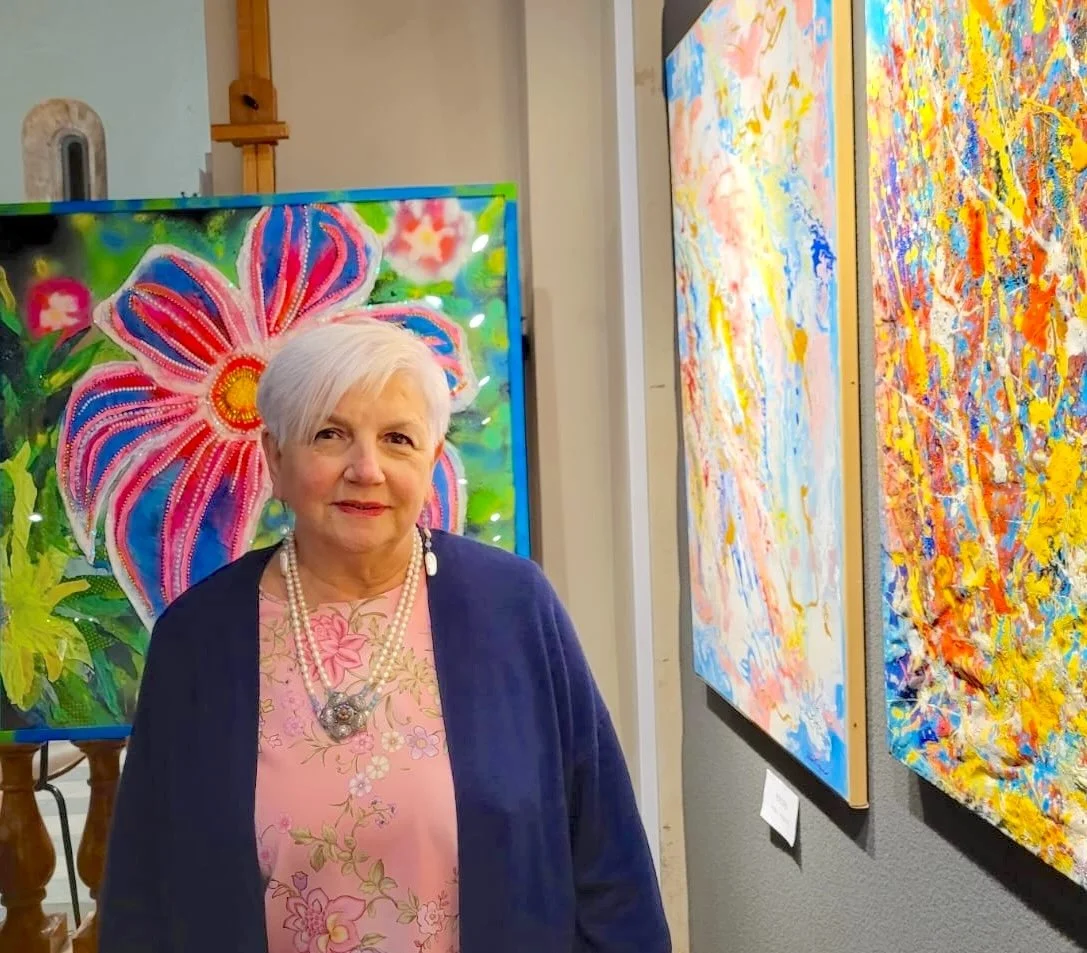
I am Mara Montagna and I am a painter.
I have always loved painting and drawing since I was a child, but my school and work paths have led me to teaching for 42 years.
However, I must say that as soon as I could I managed to find the right space for painting by attending the evening school of the Toschi art school in my city. This was a very nice experience of learning but also of sharing and exchange where I could finally talk about art among colleagues. Becoming an Art Master has legitimized me to consider myself a painter and to seek my artistic identity.
I also began to confront the outside world by making my first exhibitions in local galleries, then national, such as Palermo, Milan, Forlì, Cesenatico, Genoa, Mantua, and, receiving positive feedback, I continued to expand to international showcases such as the Luxembourg Art Prize, or the MEAM in Barcelona, also exhibiting with Effetto Arte in New York, Los Angeles, Miami and Washington.
Soon I will also exhibit in other international venues. I am among the artists presented on different associations such as Singulart, Gigarte and Contemporary art curator magazine. A space was dedicated to me in the broadcast "The second life, paradise can wait" on Rai3 broadcast on April 1, 2024.
Some of my works are represented in national art yearbooks and catalogs such as ART NOW and Artists 2024 and 2025. My curiosity leads me to look for new paths and in particular lately I dedicate myself to painting associated with collage that uses fabrics. I am interested in the combinations that I can achieve by mixing the different colors, designs, textures and textures that the fabrics associated with acrylic colors offer me. I love to produce works with bright colors and strong contrasts, my subjects are both figurative and abstract often represented in large sizes.
Mara, in your recent paintings, the figure, the animal, and the landscape seem to occupy the same chromatic and tactile register, as if hierarchy has been suspended in favor of a continuous surface of sensation. How do you negotiate this collapse of traditional pictorial hierarchy, and what does it allow you to say about the relationship between human presence and the natural world?
It seems to me that this is a completely normal thing, given that we share the same world with animals equally. It should be man who remembers that he belongs to the mammal family, to love nature more and to protect the environment with much more respect for the planet that hosts us. Animals and the landscape are constant, everyday presences in my life, and I know I am very lucky for that. I want to give them the space they deserve.
Your work repeatedly returns to the female figure as a bearer of narrative, emotion, and symbolic weight. Do you conceive of these figures as subjects in the classical sense, or as sites where different visual codes, materials, and histories converge and produce meaning?
Talking about the female figure for me is like talking about myself. It is an essential identity that, given my age, I have passed through and experienced in all its aspects, from childhood to seniority, in various family roles. The universal language that is always present, without wanting to be rhetorical, is that of feelings. Women are never banal, they bring themselves into everything they do and give themselves to those who know how to love them. And I try to always communicate meanings and emotions without placing limits on myself in the use of various expressive codes, because I feel the need to want to express the internal worlds, the ideas, experiences, lived experiences, dreams and realities that touch me.
The incorporation of fabric, rhinestones, and found materials introduces a tension between painting as illusion and painting as object. How conscious are you of this oscillation, and do you see your surfaces as resisting the flatness that modernist criticism once demanded?
Textures, surfaces, and gestures shape meaning even before the image. I find the layering of materials much more compelling and full of mystery than smooth surfaces, as much as I sometimes use them myself. I like complexity. It is true that, in works in which I create three-dimensional surfaces, I inexorably end up having to deal with decoration. This is something I don't mind, which I find very fun already in the search for fabrics and which is completed at the moment of execution. However, I do not feel that it compromises the meaning of the work because the matter becomes, to all intents and purposes, language.
Having spent more than four decades in teaching before fully dedicating yourself to painting, how does this prolonged engagement with pedagogy inflect your sense of artistic time, development, and authorship?
Teaching was a beautiful experience for me, where I was able to get the girls and boys I met passionate about art. Even those without special abilities were eagerly waiting for art class to have fun and always experiment with new techniques without fear of judgment. This had a liberating aspect on them and had created an expressive growth that made them more uninhibited and original. This has also created a professional evolution for me that has led me to new awareness. It gave me more confidence in my abilities and, along with returning to the night school desks myself, having the courage to show off my work and to see recognized, with pride and without fear of judgment, the authorship of my works.
The rural, communal environment of your childhood seems to persist in your iconography, particularly in your treatment of animals and flowers. Would you say that these motifs function as memory traces, or do they operate more as structural elements within your visual language?
I think the presence of animals and flowers in my work is an integral part of my pictorial language. I like to insert these elements that communicate a sense of peace and harmony with nature. I feel they are very reassuring and bearers of balance. Their representation often breaks away from the realistic version and takes on iconic and imaginative connotations that I can easily insert into my works.
Your palette is unapologetically intense, even exuberant, and seems to resist the austerity that often characterizes contemporary painting. Is this chromatic abundance a form of resistance, affirmation, or perhaps a strategy for destabilizing conventional emotional registers?
I'm an enthusiast for life even when, unfortunately, it's not always good. These contrasts and colors must not be missing for me, as in life you must find the strength to move forward every day and each color is like a little joy that lights up your day. Color is vitality. It strengthens our spirit and transmits positive energy.
The use of collage in your paintings introduces not only texture but also fragments of lived material culture. Do these fabrics carry specific biographical or cultural references, or do they function primarily as formal devices within the composition?
When I compose my works I don't think about formal choices but let myself be carried away by instinct in creating my chromatic and texture compositions. This choice continues and changes until what I have produced can speak to me and reflects what I wanted to express as much as possible. Even when I want to start from a more reasoned and intellectual choice in the end it is always the instinct that leads me to be satisfied with what I do.
Many of your works seem to hover between figuration and ornament, between narrative image and decorative field. How do you understand this ambiguity, and what role does decoration play in your conception of painting today?
Sometimes decoration may seem superfluous, but I feel it is a structural part of many of my works. Besides the fact that it is an expression of women's great skill in "making," it is through their love of decoration that women have created and continue to create so many wonderful works around the world. I don't underestimate it at all. I don't believe decoration should be considered less valid and important than what critics define as "art." My language seeks to express beauty, abundance, and harmony. I don't feel the need to express myself rigorously. I am complex and rich in so many different nuances; I don't intend to repress myself; on the contrary, it is precisely in the artistic act that I want to be free to express myself as I please, without limits.
In several compositions, animals are depicted with a gaze that rivals or even surpasses that of the human figure. Are these creatures intended as allegorical presences, psychological doubles, or as autonomous subjects within the pictorial field?
Animals are wonderful creatures in their own right to me, and I look at them with amazement and wonder. They are realistic presences despite their fanciful and imaginative representation.
You have spoken about the influence of artists who integrate fabric and rhinestones into painting. How did this discovery alter your understanding of what painting could be, and did it change your sense of artistic lineage?
It was a meeting that brought order and vision to what I sensed but couldn't concretely place in my productions. It was kind of a revelation to learn about the works of two black American artists I really like: Mickalene Thomas and Kehinde Wiley!
The scale of many of your works amplifies the tactile and chromatic intensity of the surface. What role does size play in your practice, and how do you think it transforms the viewer’s bodily relationship to the painting?
When I use layering, I do it without setting limits. I'll keep going as long as I'm convinced of the result. I paint for myself, I don't ask myself the question of how the observer will perceive it. I have noticed, however, that in the observer who appreciates what I do, a lot of curiosity is often about how I did the work. They ask me about the execution times and the difficulties they imagine I had to overcome. They are often intrigued by the artisanal aspect and the execution difficulty that my work entails.
Your practice seems to embrace both abstraction and figuration without fully committing to either. Do you see this oscillation as a reflection of personal experience, or as a broader commentary on the instability of pictorial categories?
Why should I set limits for myself? Why should I care about pictorial categories? I do what I like to do. I don't care about what has to put me in narrow, limiting categories. I enjoy experimenting and hope to continue doing so for a long time to come. My goal is not to please everyone. Now I'm also taking up photography, which was a youthful passion of mine, and I've also experimented with graffiti. Why shouldn't I try new experiences? Life should always bring innovation and new discoveries in order to be lively and exciting.
The theme of peace, courage, and resilience appears in several of your titles and subjects. How do you translate such ethical or emotional concepts into purely visual terms without resorting to illustration?
I leave it to the intensity of the gesture and the gaze of my protagonists to express the ethical or emotional concepts that are close to my heart. I also try to go through representations that are never too crude, because they produce too much pain for me. I express myself in positivity even though the issues can be dramatic.
Having exhibited in both local Italian contexts and international venues, how do you perceive the reception of your work across different cultural frameworks? Do certain motifs or materials resonate differently depending on the audience?
I'm aware that I'm quite divisive. My works are either loved or ignored condescendingly because they are seen as simple and naive. There are those who love me and those who denigrate me. My first major accolades came from Spain with whom I feel I have a great feeling. I seem to share with Spanish gallery owners the appreciation for color and vivacity of those who are not afraid of the risks that amaze. I also receive pleasant confirmations in the interest for my work from Germany and the United States.
The presence of strong, luminous skies and radiant landscapes suggests a persistent fascination with light as both atmosphere and symbol. What role does light play in structuring the emotional or conceptual space of your paintings?
It's true, in my works there is always a segment of sky animated by intense and lively clouds or by lights that tear through the skies. They always give me hope and complement my enveloping and immersive landscapes leaving glimmers of confidence in the future. I have always been fascinated by the majesty of the lowland skies, immense and without borders, like those I saw as a child and which enchanted my heart. It is like this today too. Light must never be lacking along with harmony. What I depict must make you feel good. There is already so much suffering in the world. I want to give beauty and joy of life. I want to find them in the dimension of everyday life, to realize every day how wonderful the world around us is.
Your trajectory into professional painting occurred later in life, after a long career in teaching. Do you feel that this temporal displacement has liberated you from certain expectations, or has it created new pressures regarding artistic production and recognition?
Let's just say I don't need recognition at work to earn a living, but ambition doesn't stop. When I receive praise, I'm happy about it, but I give the main judgment about myself and I'm very strict.
The tactile density of your surfaces seems to invite a reading of the painting as a constructed object rather than a window onto a scene. Do you think of your works more as environments of material experience than as representations?
I believe that the density of the surface does not compromise the meaning of what I want to express, I believe it can merge and become an enrichment of my expressive intent.
In works where female figures occupy dramatic or charged contexts, there is often a tension between vulnerability and empowerment. How do you negotiate this duality within the pictorial space?
I believe that each of us does not really know themself deeply. Sometimes we think we are fragile but then we discover our courage or our recklessness in the face of dangerous and unexpected situations. How many heroes or heroines didn't know they were one! Vulnerability and power, however hidden they may be, are inherent in us at the same time and it is up to us to discover them.
The coexistence of bright color, decorative pattern, and emotionally charged subject matter creates a complex visual rhetoric. Are you consciously engaging with the historical suspicion toward decoration in high art, or has this synthesis emerged more intuitively?
Let's say I'm not worried about the mistrust for decoration. The synthesis towards this coexistence certainly emerged intuitively because complexity is what most closely matches my expressive language. What's in my works reveals how my gaze interprets the subject and lets my personality speak for itself.
Looking at your recent paintings, one senses a practice driven by curiosity rather than adherence to a fixed program. Do you see your work as moving toward a coherent stylistic identity, or is the openness to experimentation itself the core of your artistic position?
I definitely prefer curiosity and experimentation because they make life more interesting and unexpected. I can still feel awe, discovery, and wonder. Long live life!
https://www.singulart.com/it/artista/mara-montagna
@mara_montagna_
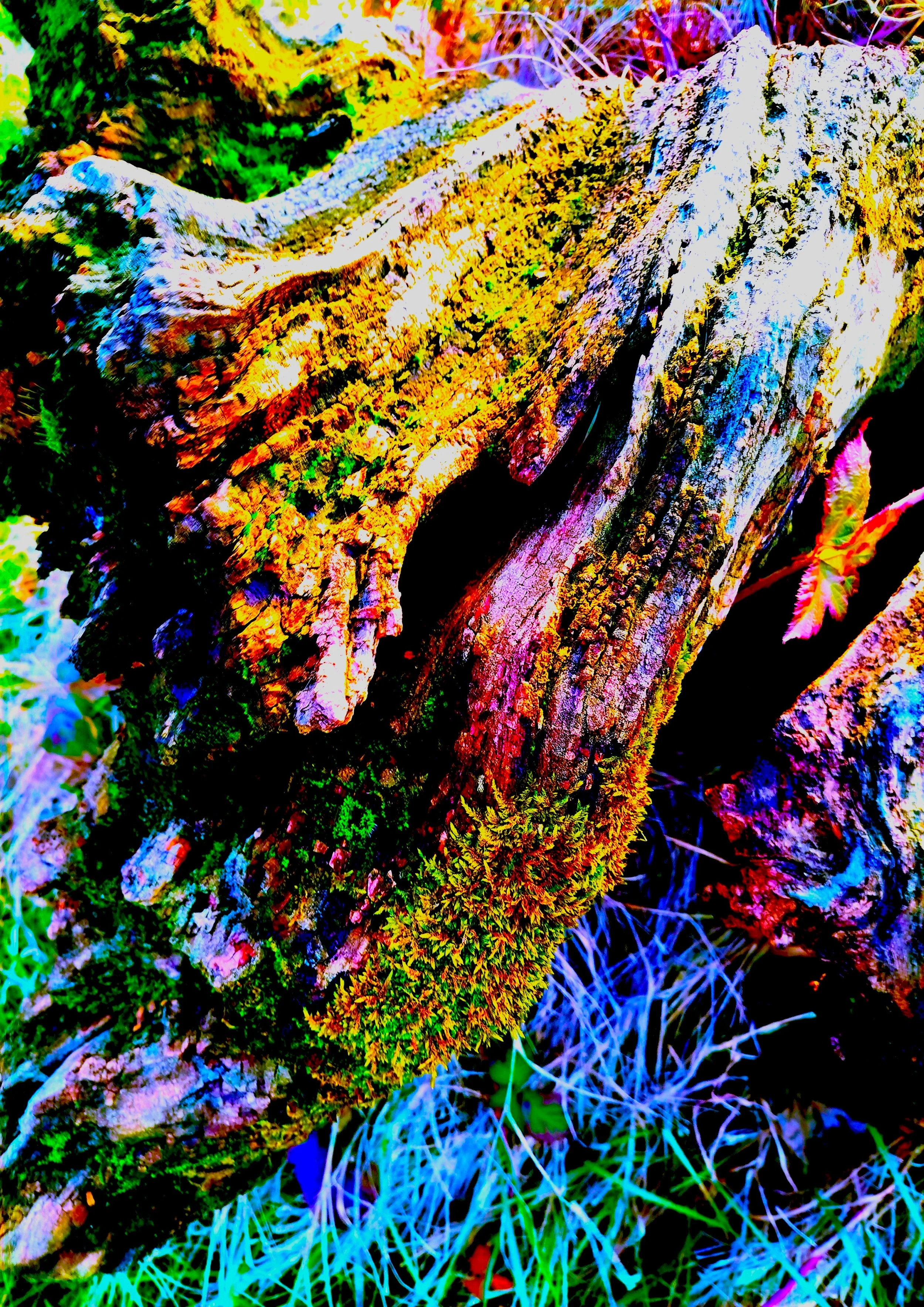
La casa dei Puffi, 2026
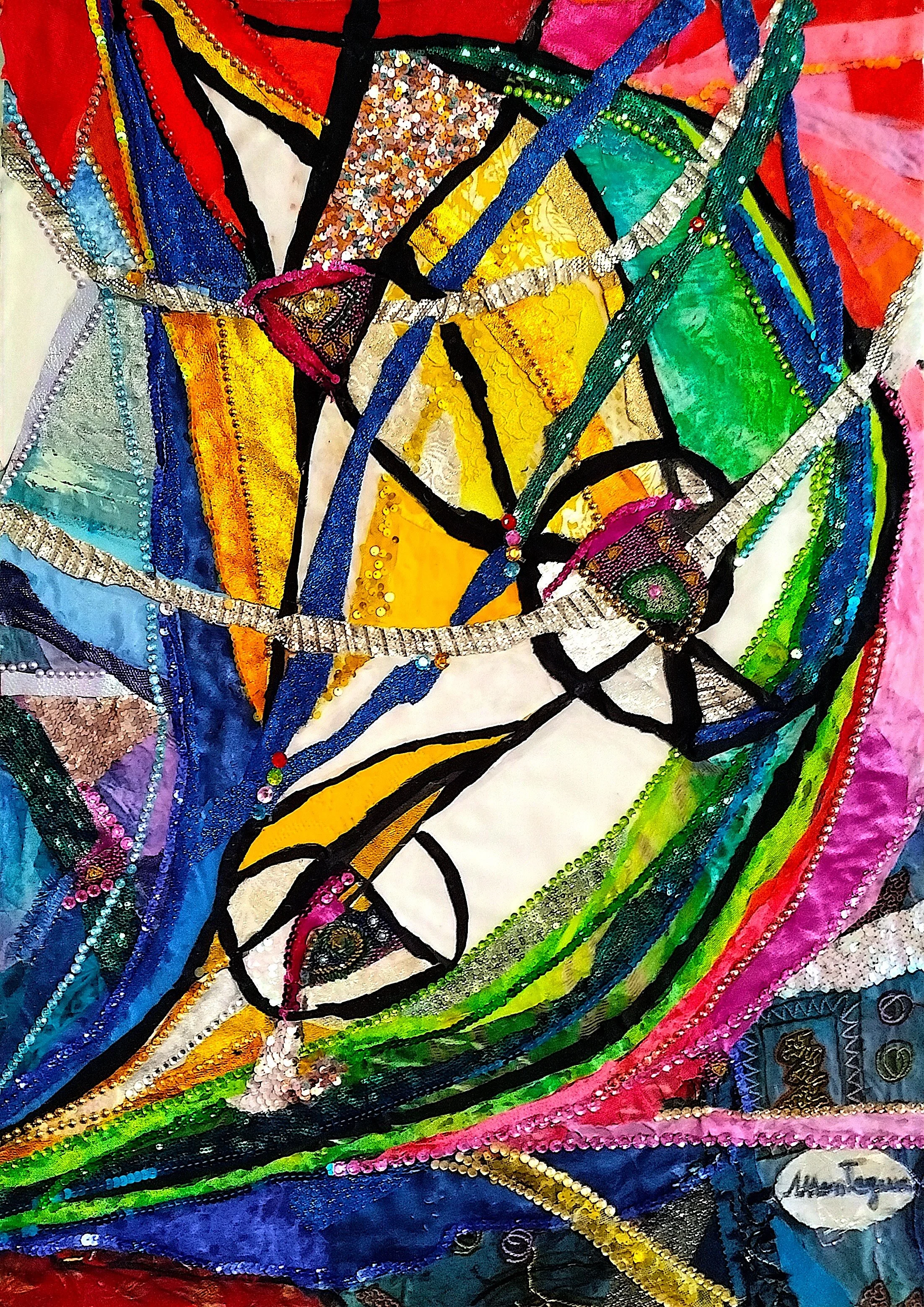
Cerca l'intruso, 2026
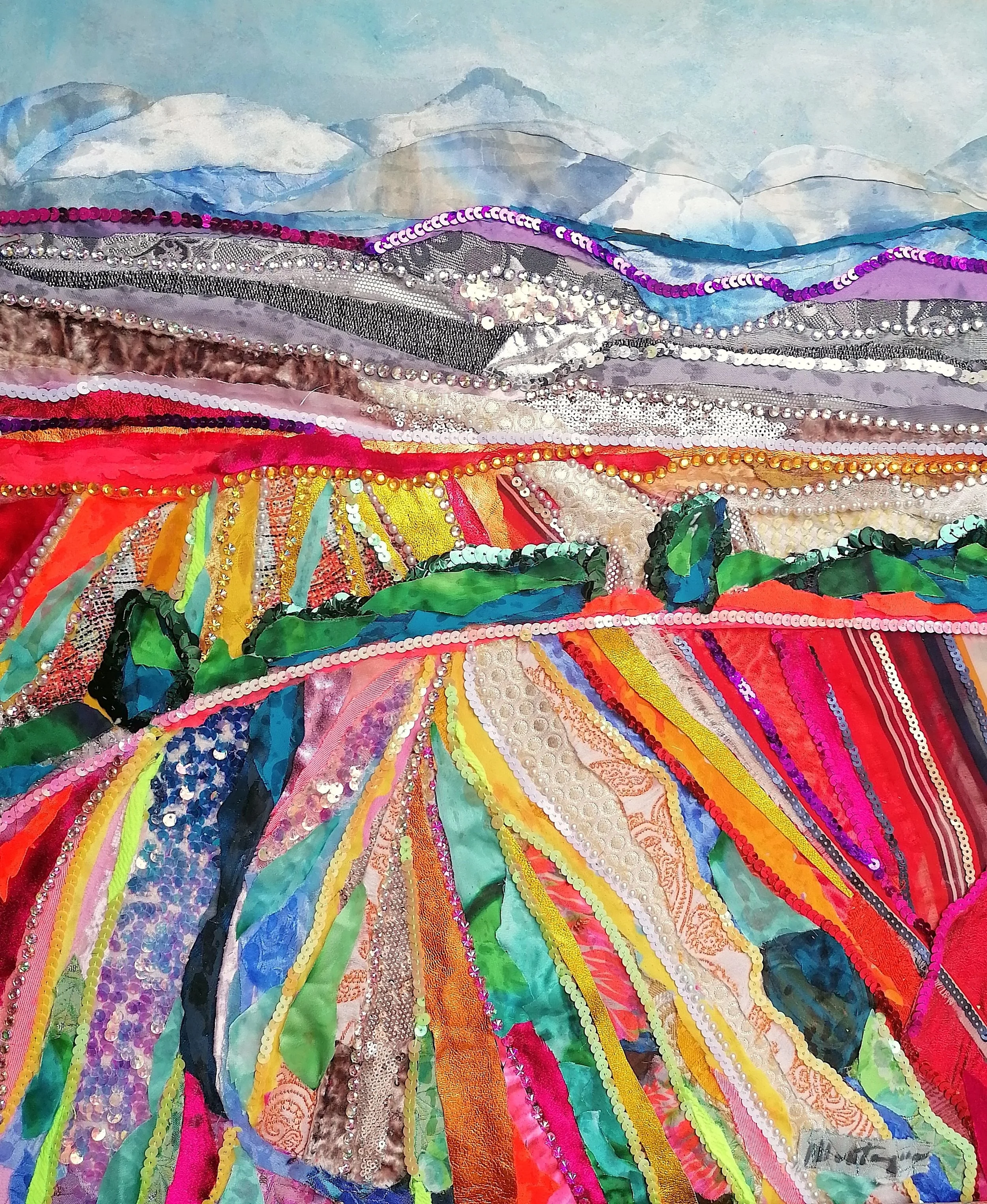
Territori, 2024
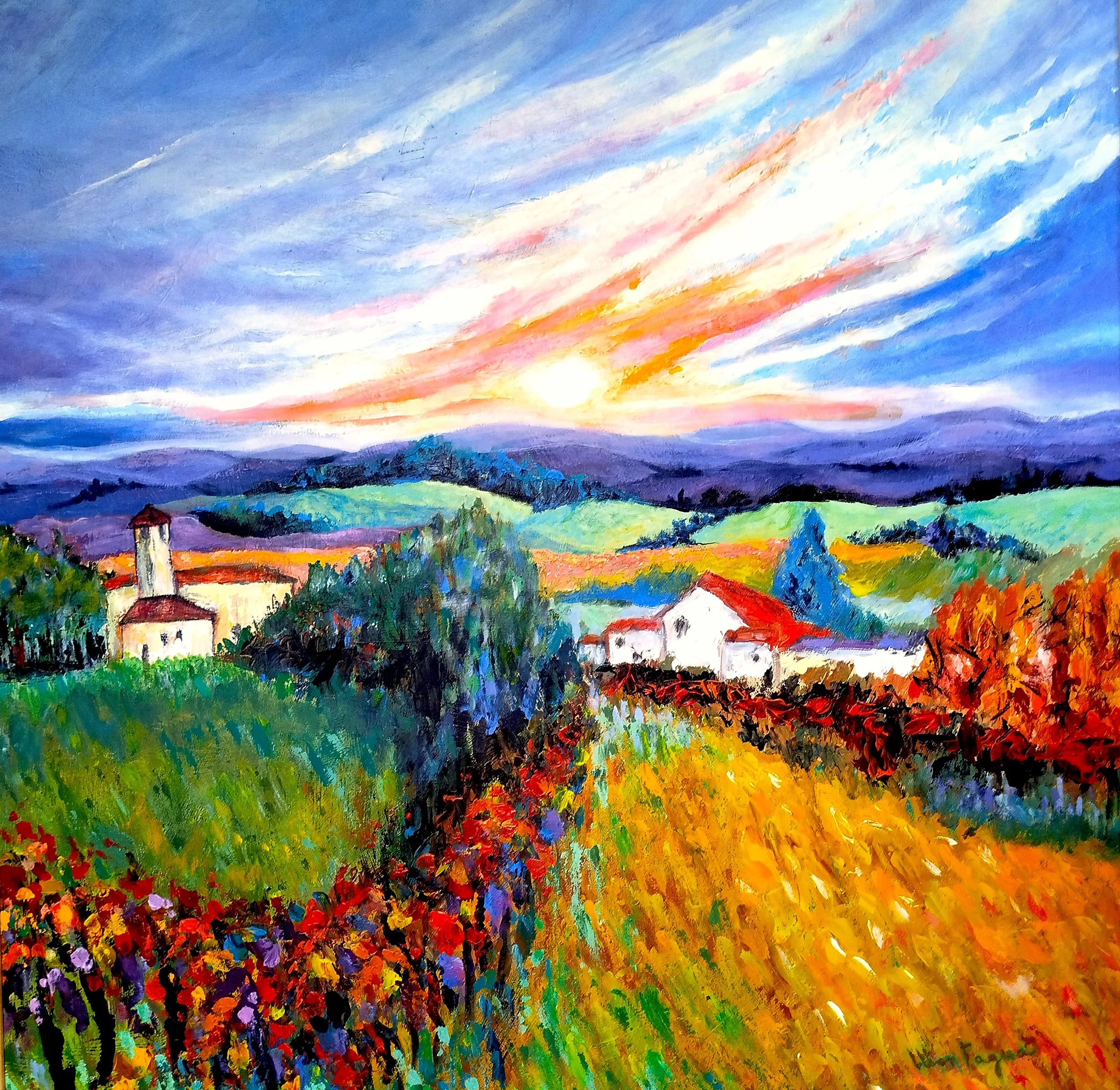
Campagna d'autunno , 2011
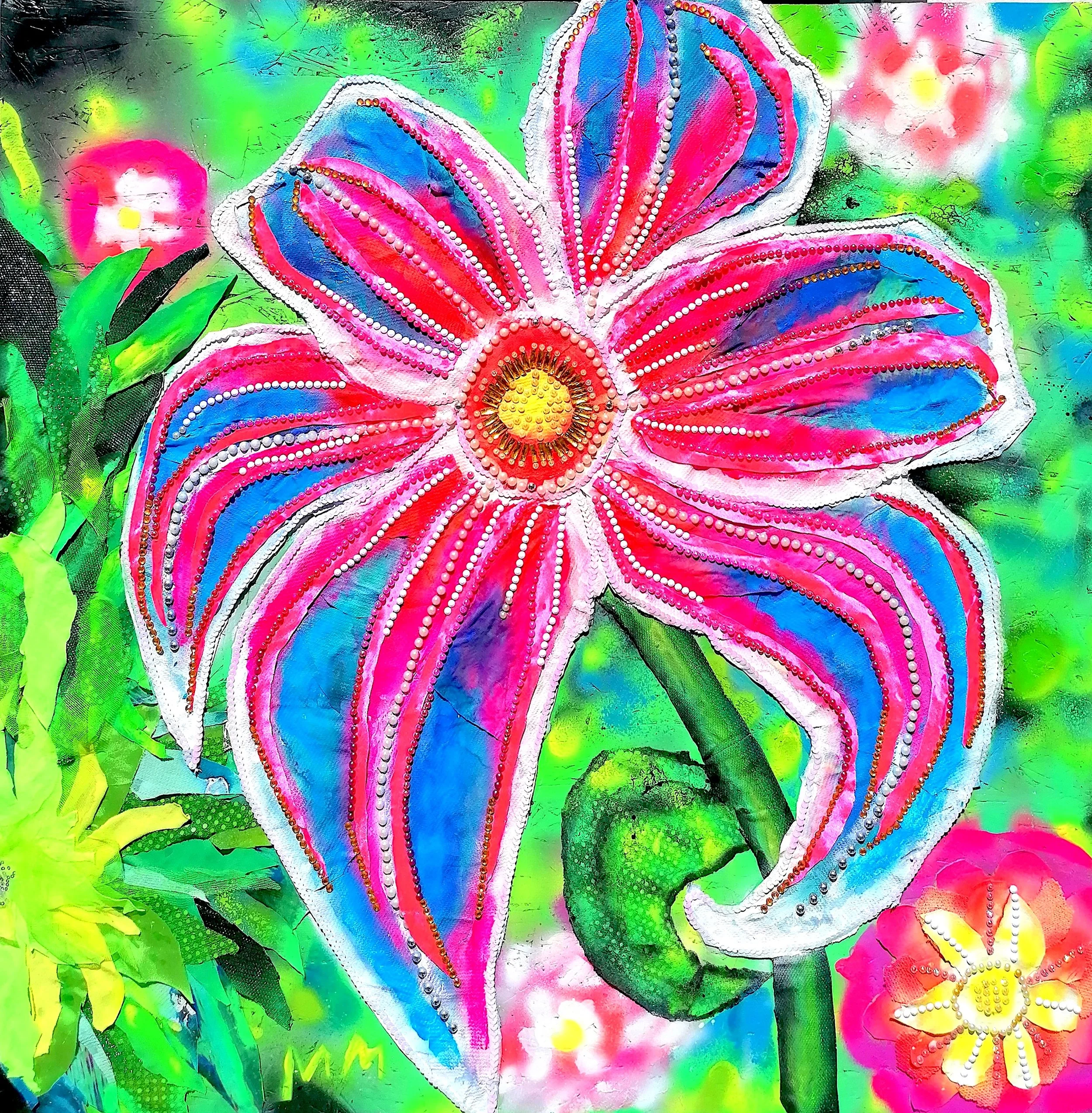
Giglio blu. 2022
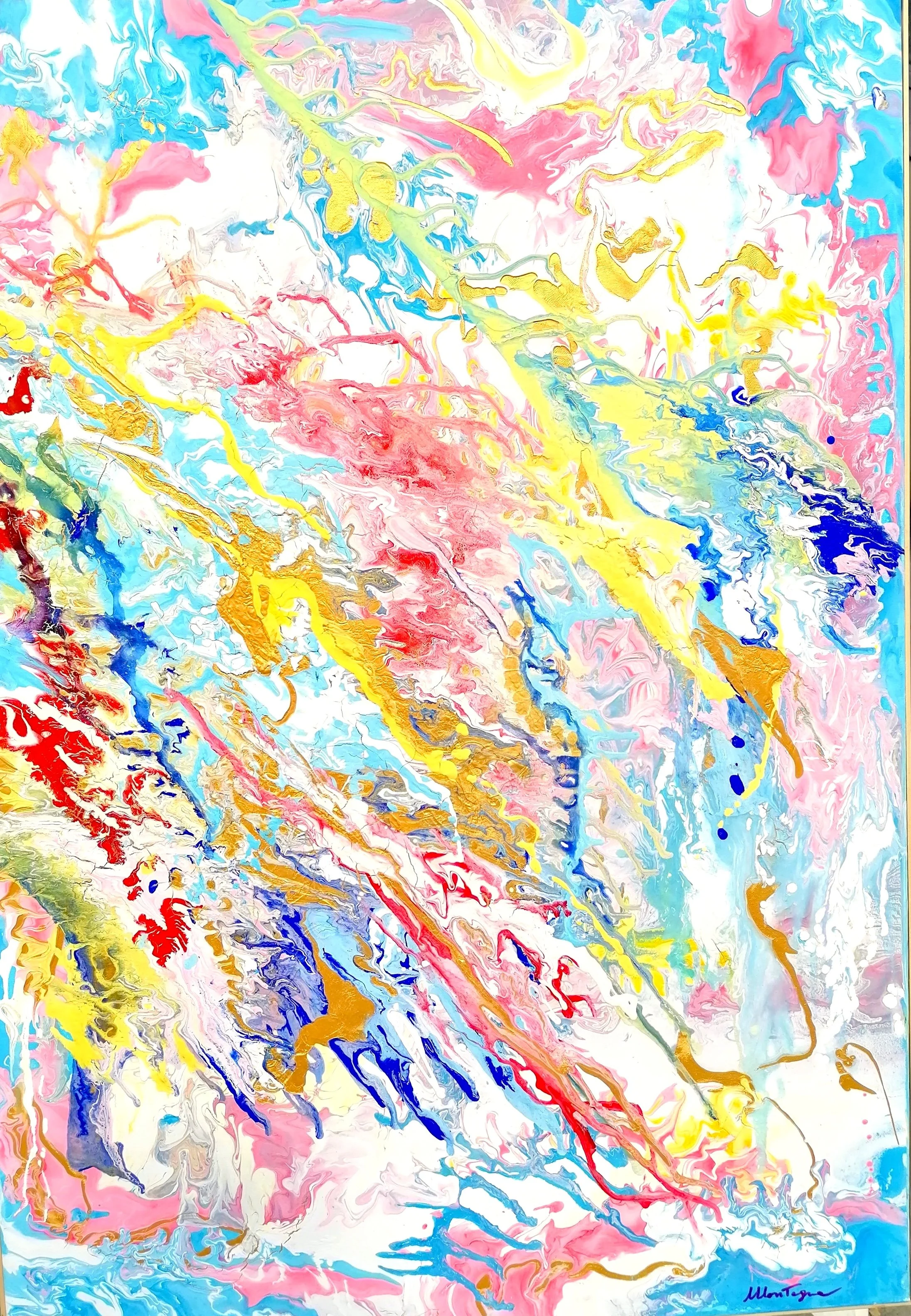
Percorsi, 2018
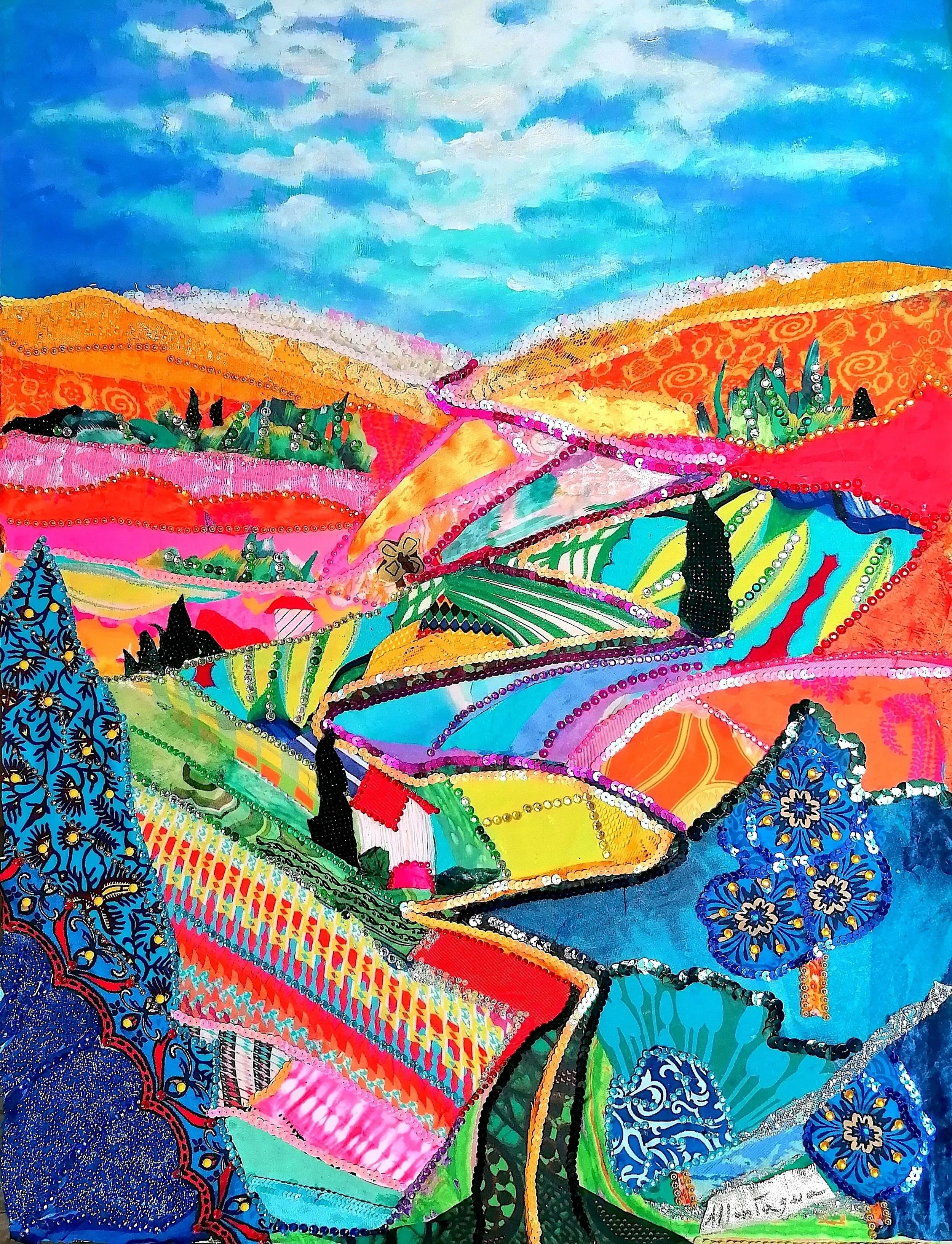
Nel canyon di Hockney, 2024
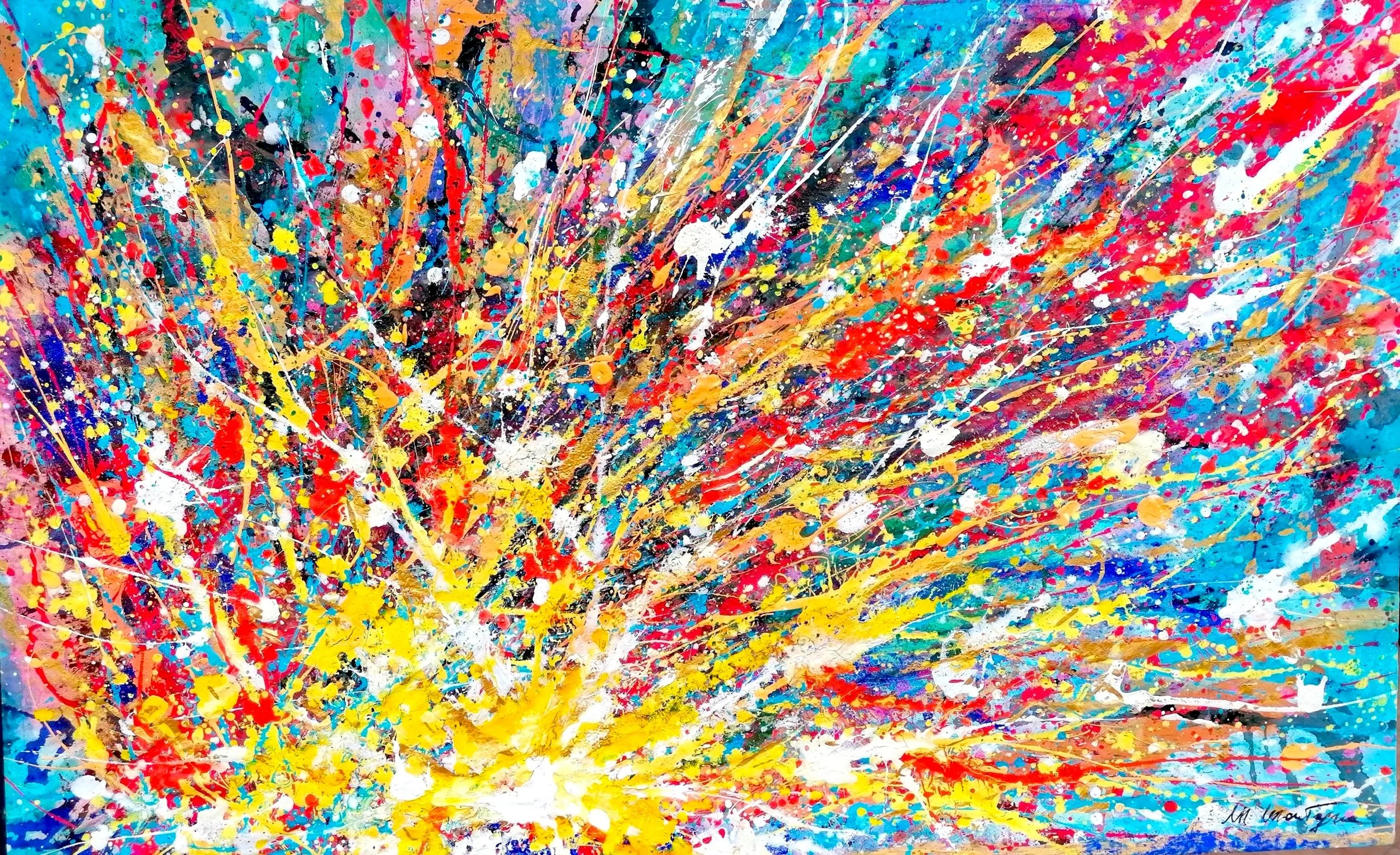
Energia, 2018
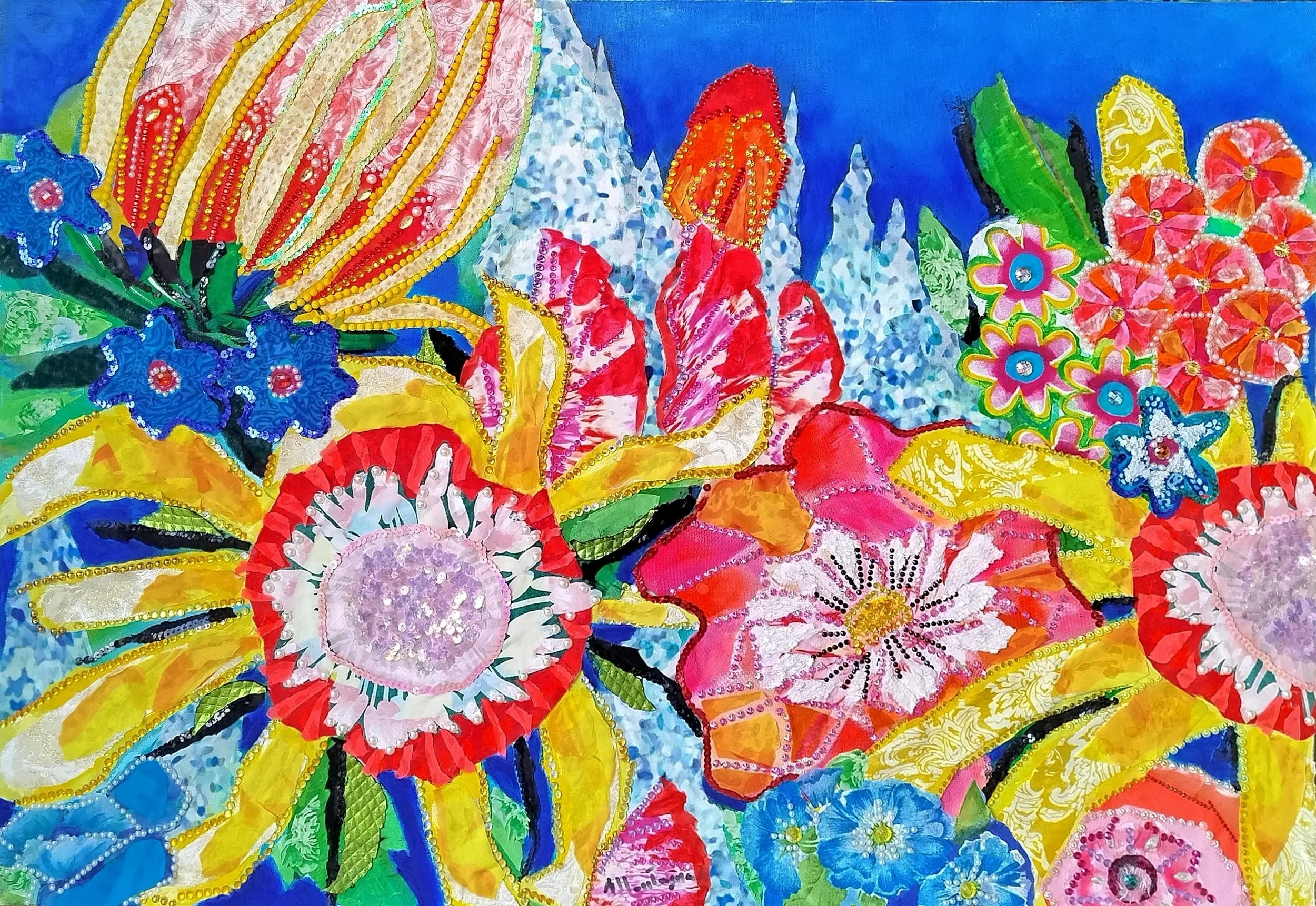
Fiori 2, 2025
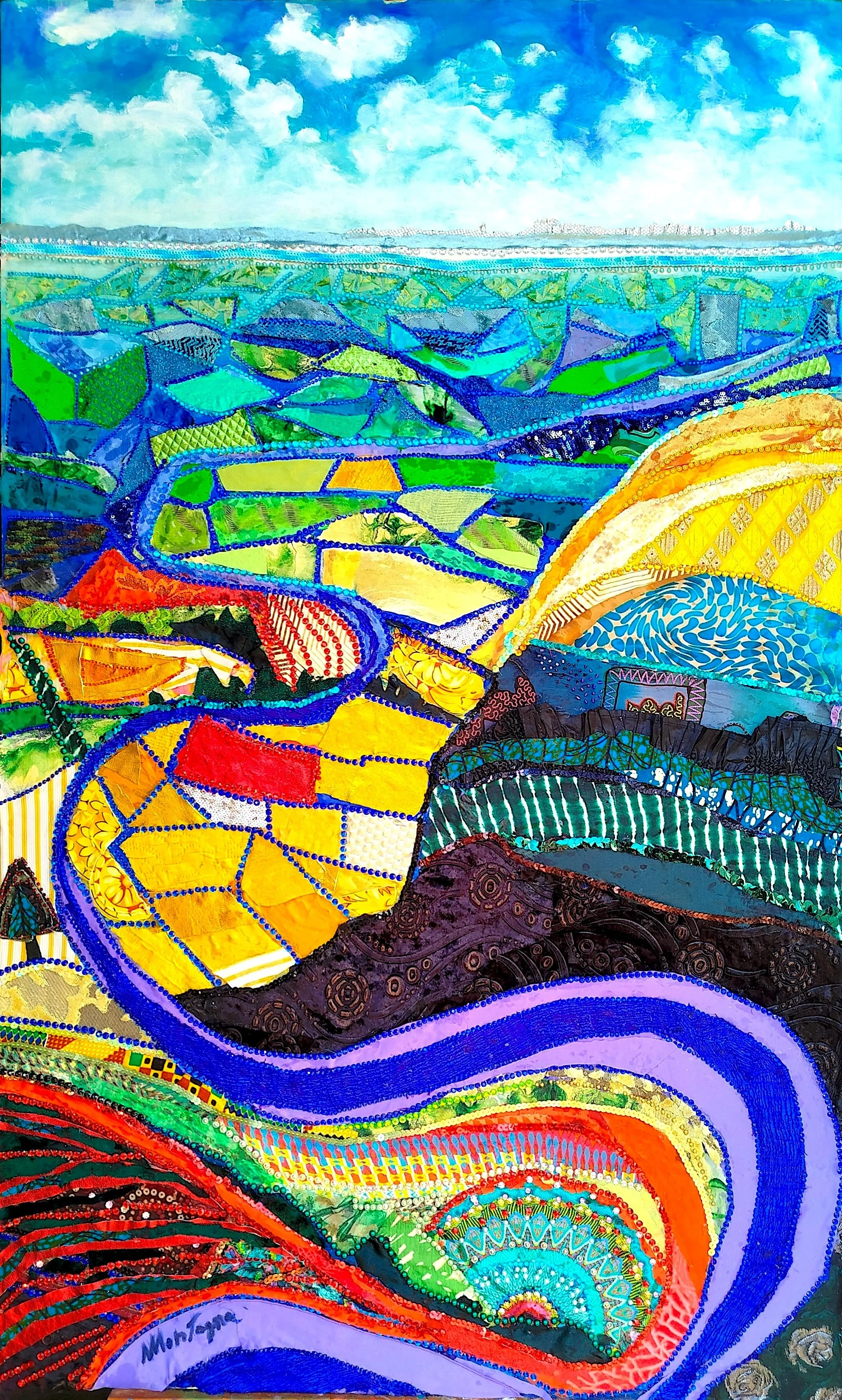
A spasso con David, 2025
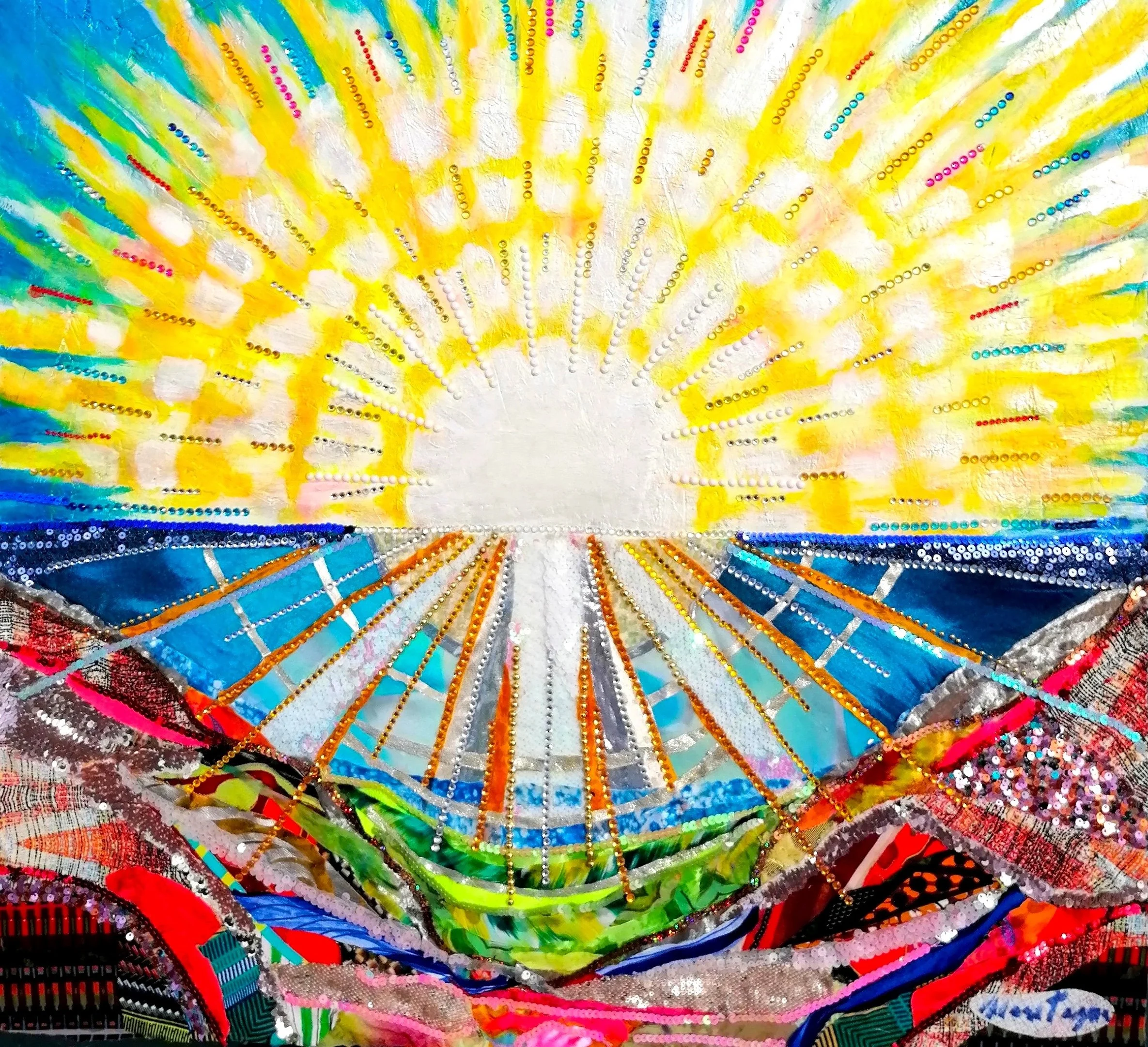
Il sole di Munk nello sguardo di Mara, 2025
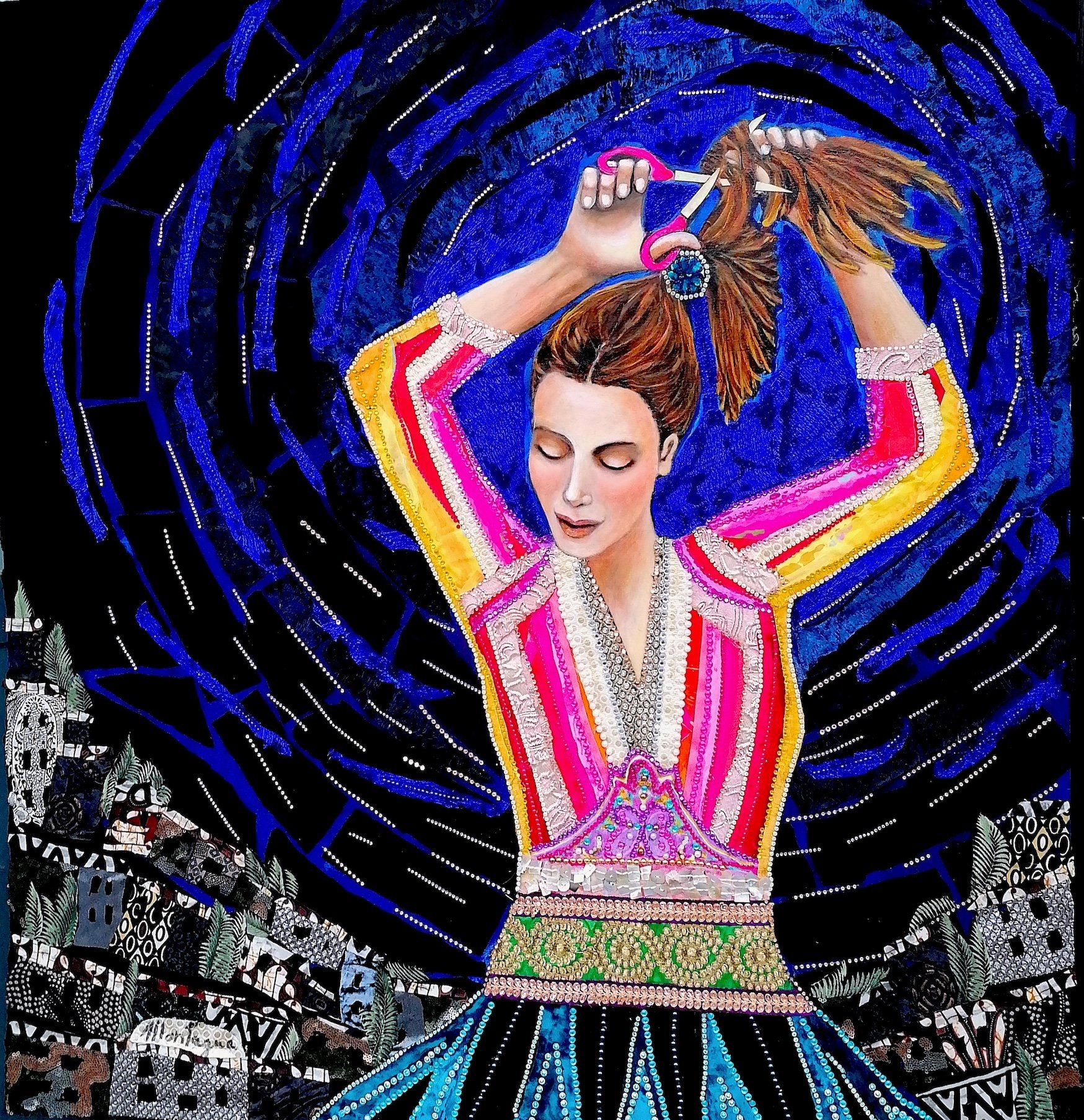
Il prezzo della libertà, 2022
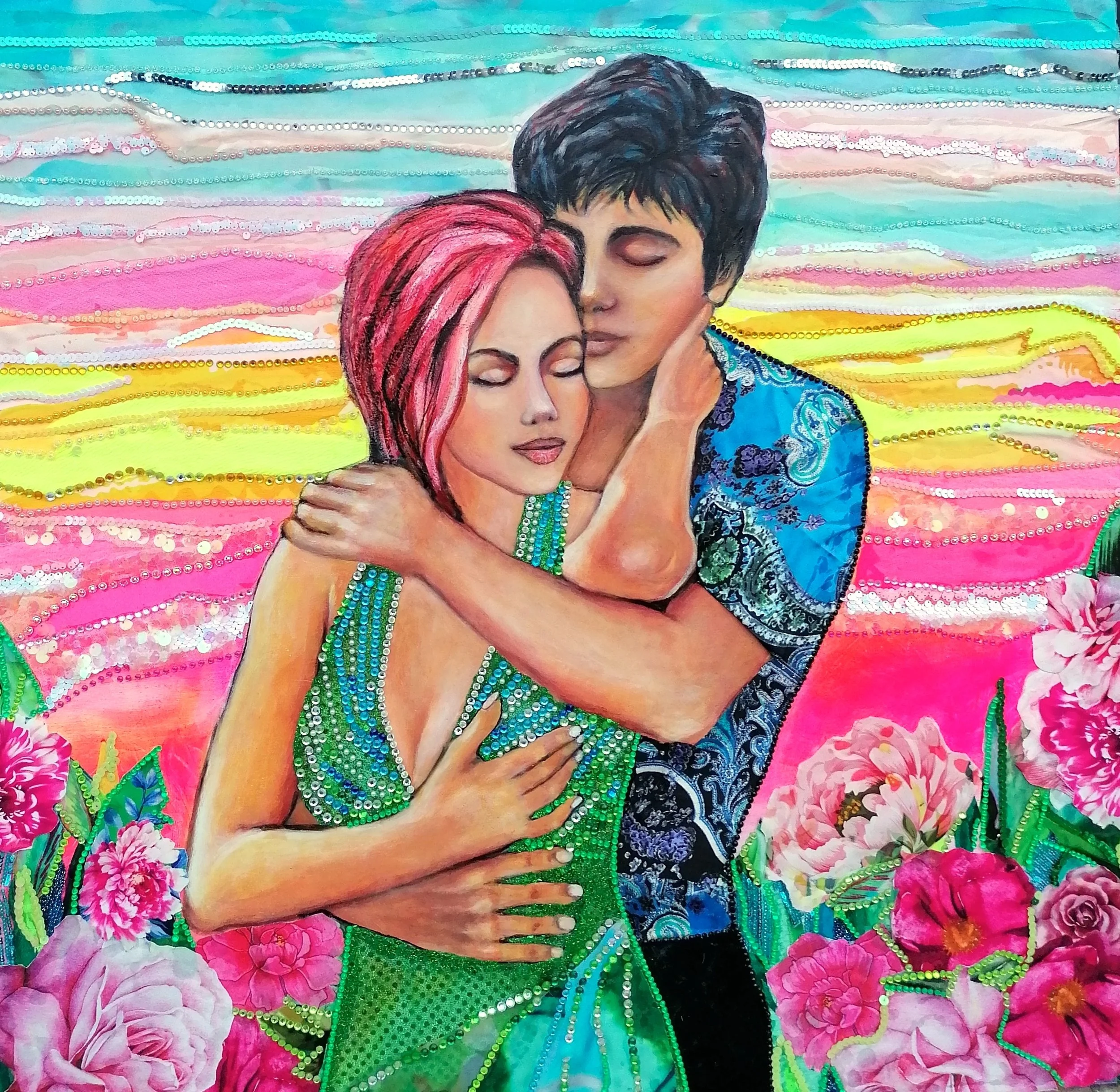
Nel tuo respiro, 2024
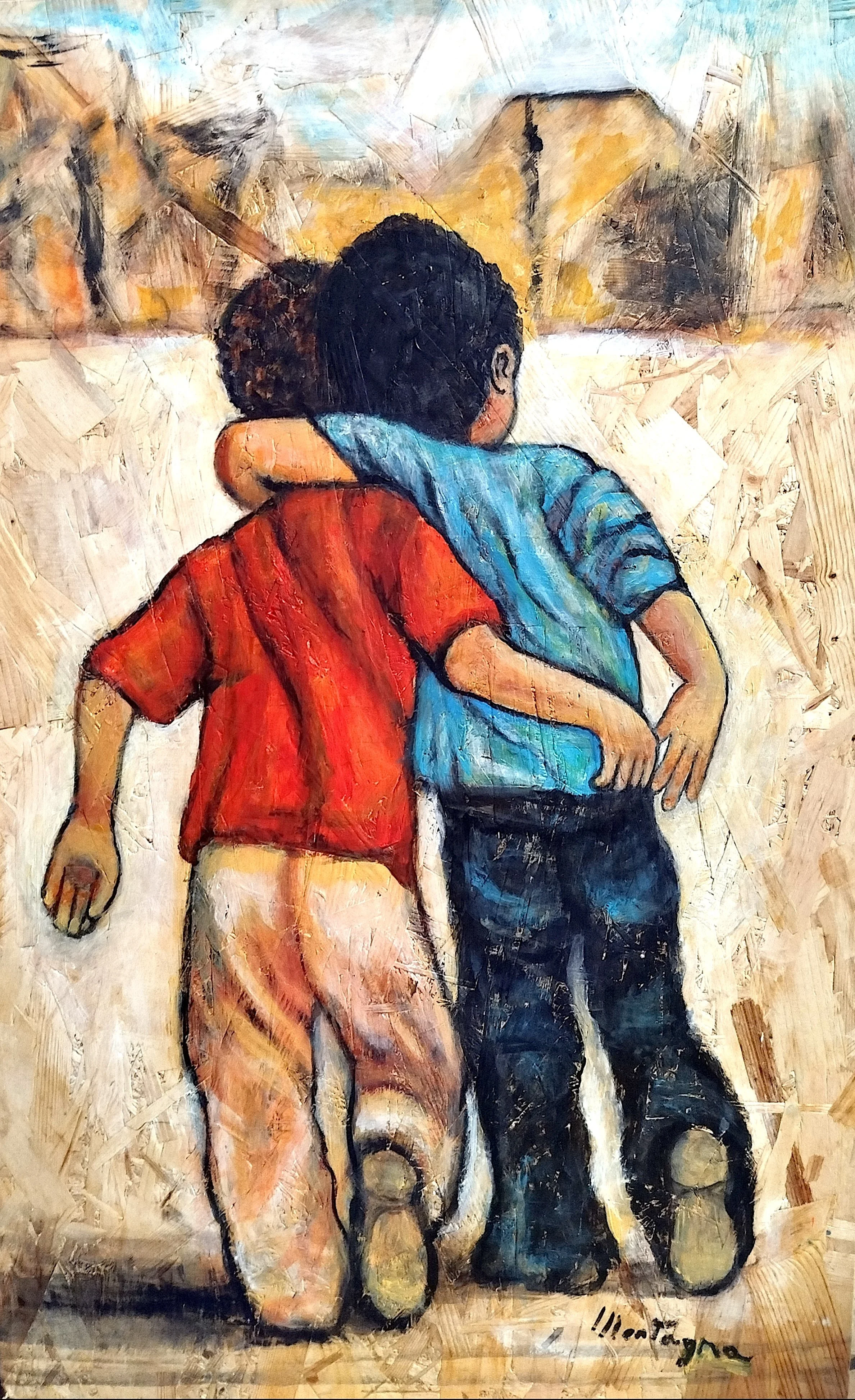
Amico mio, 2024
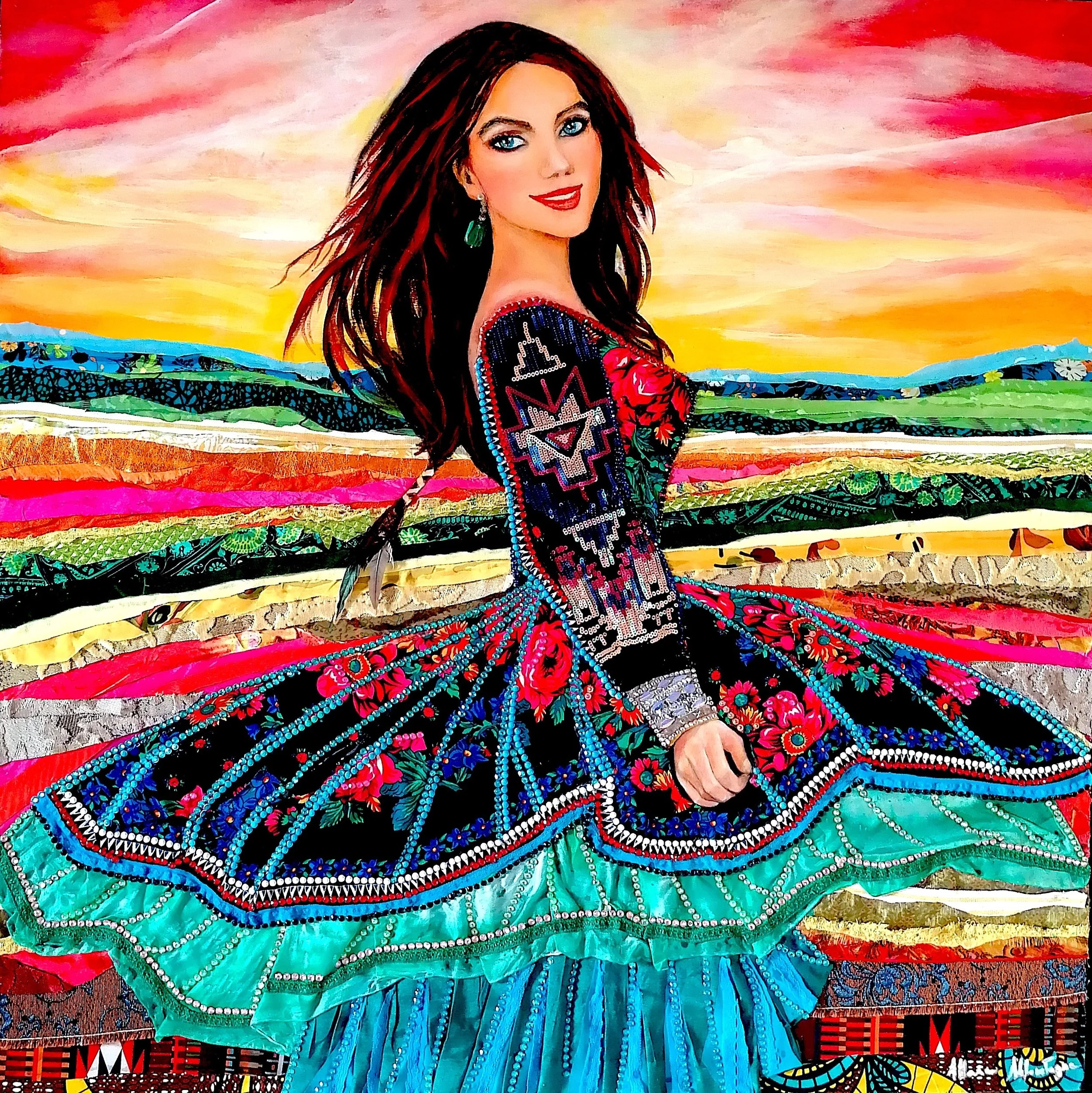
Anima gitana, 2022
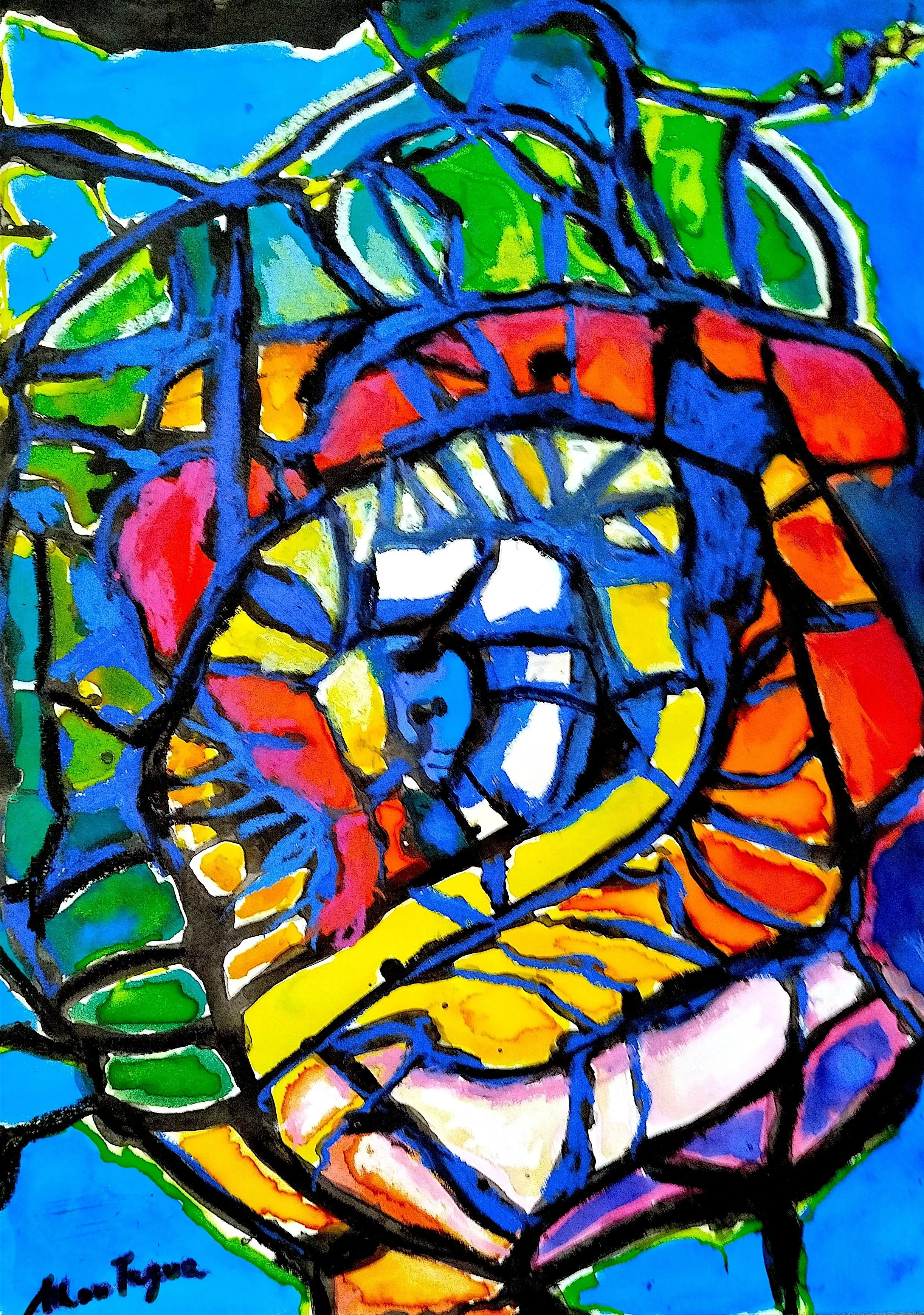
Tra le spire, 2025
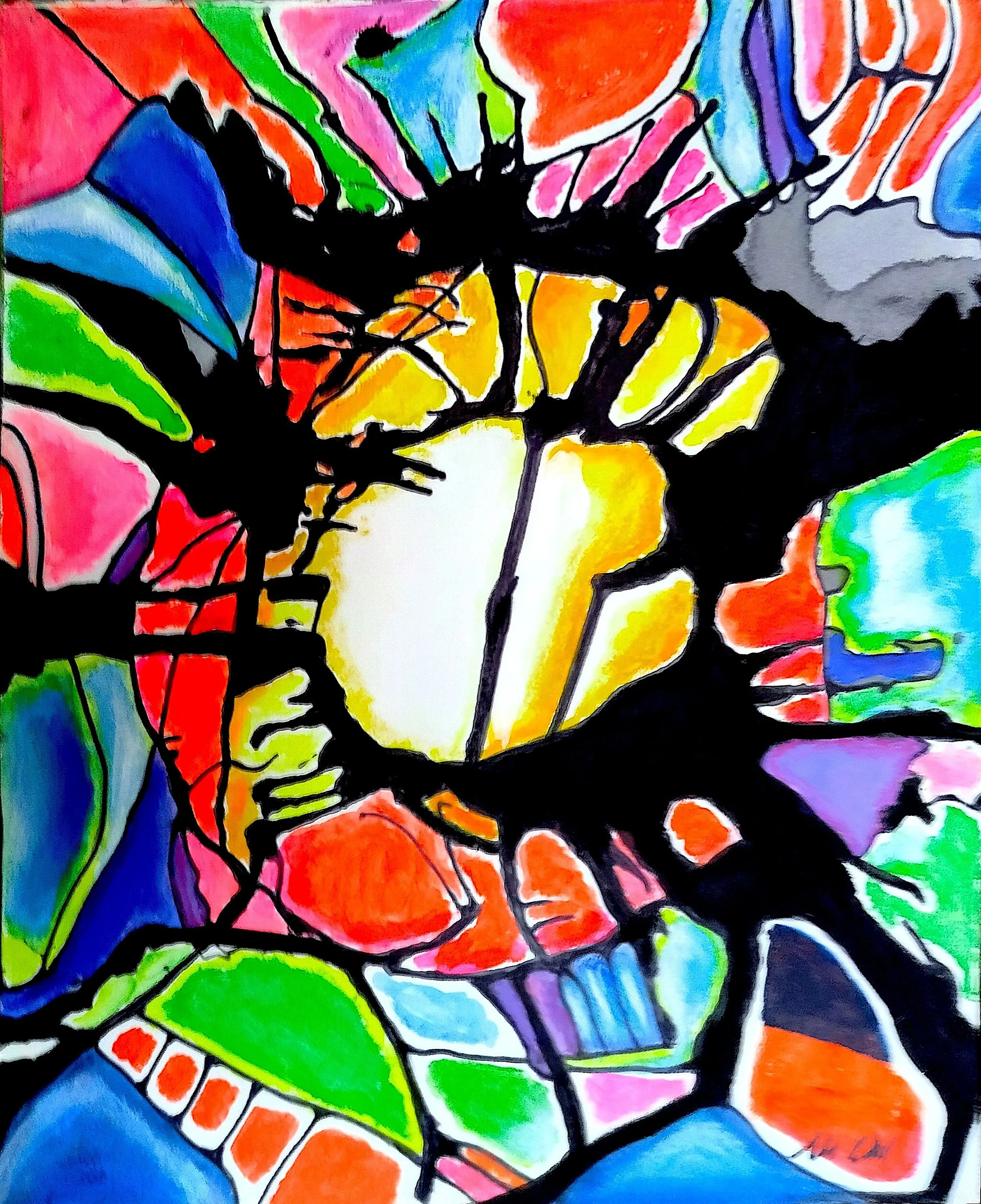
Colori liberi, 2025
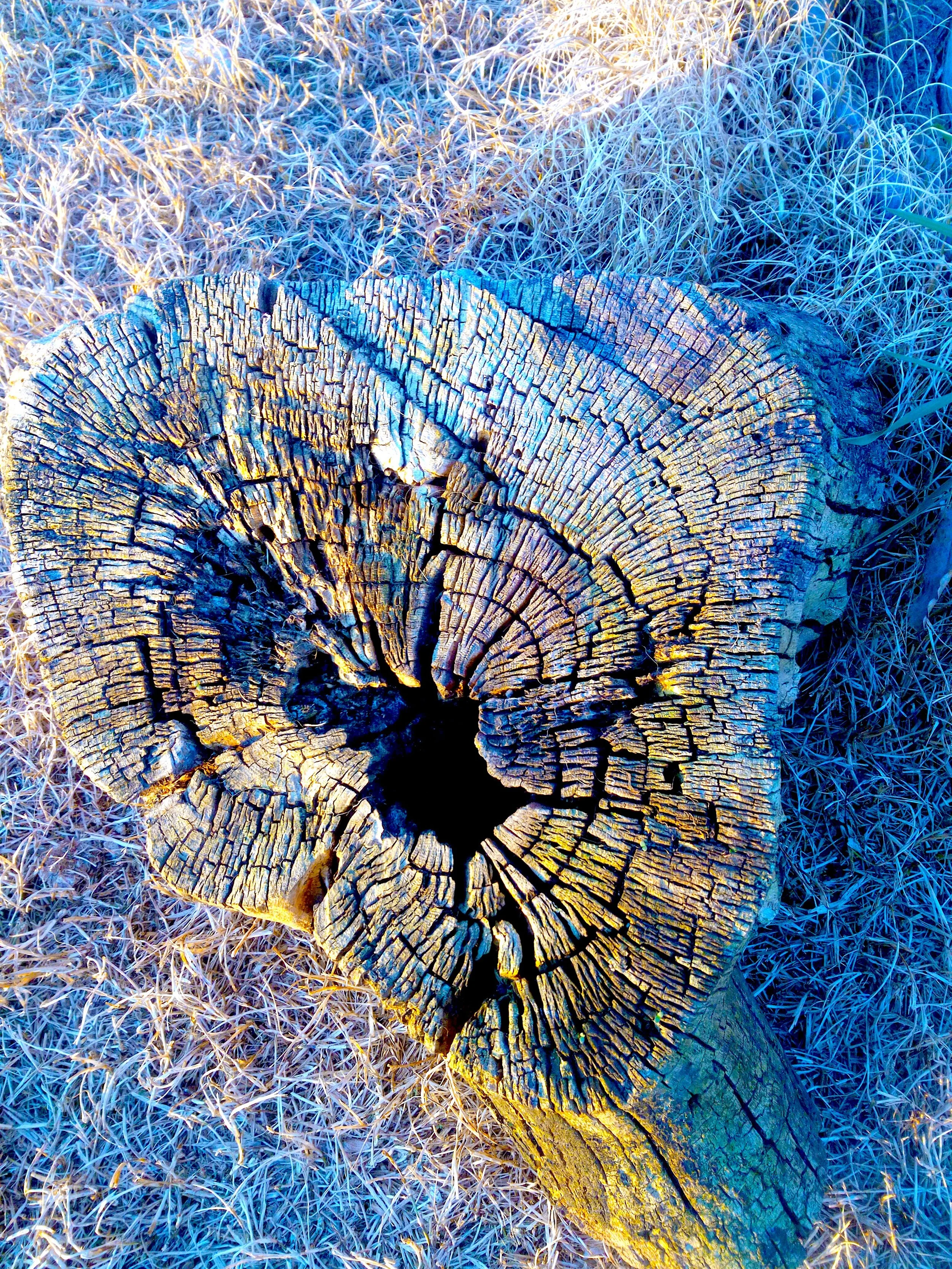
Ciò che resta, 2026
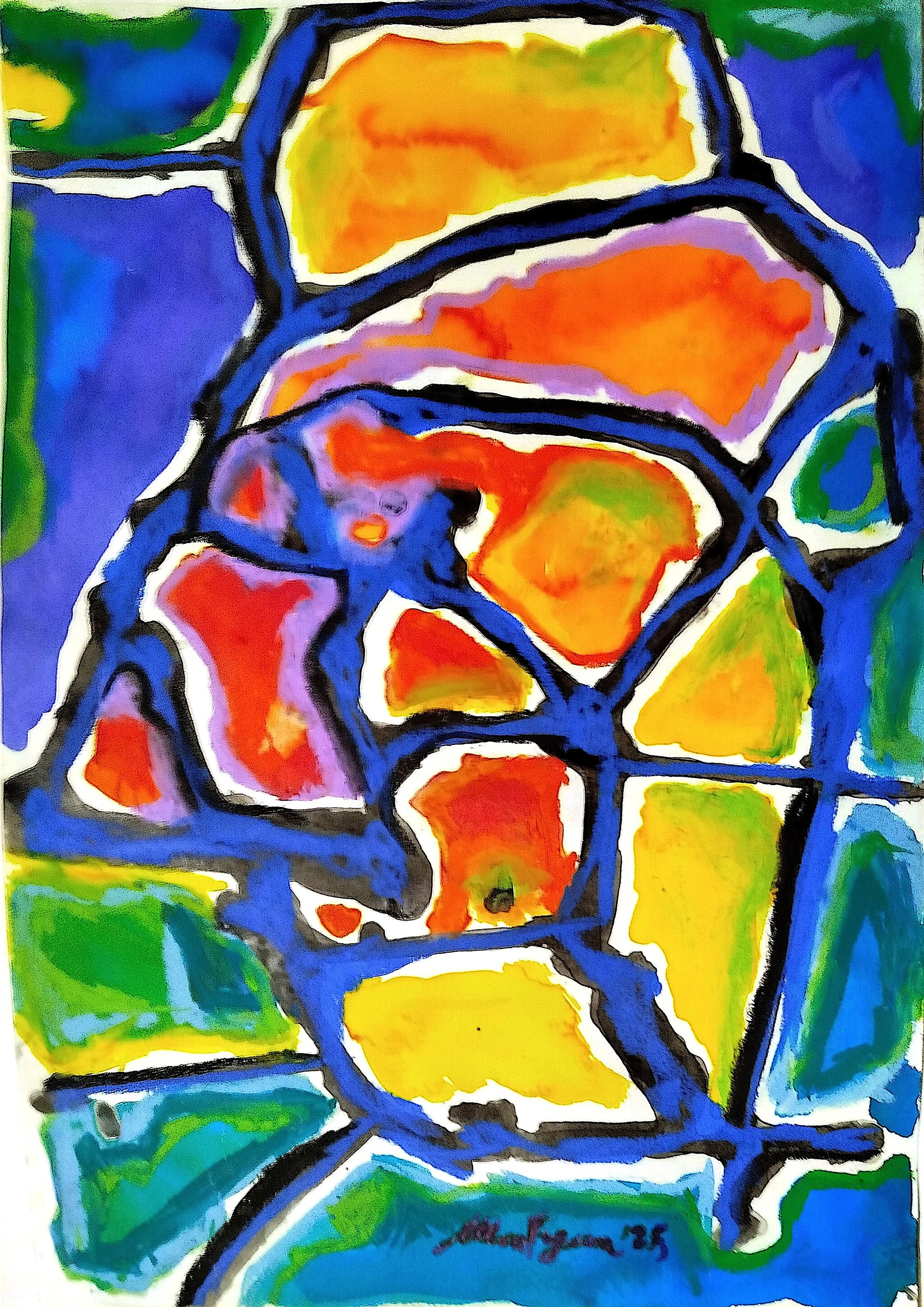
Incontri nel blu, 2025
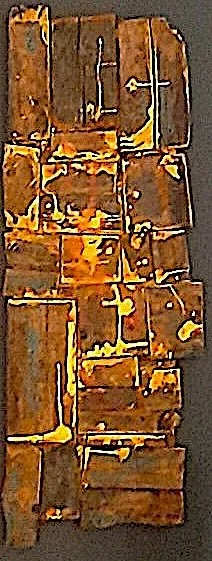
Mosaico di legno e oro, 2018