
Margaretha Gubernale
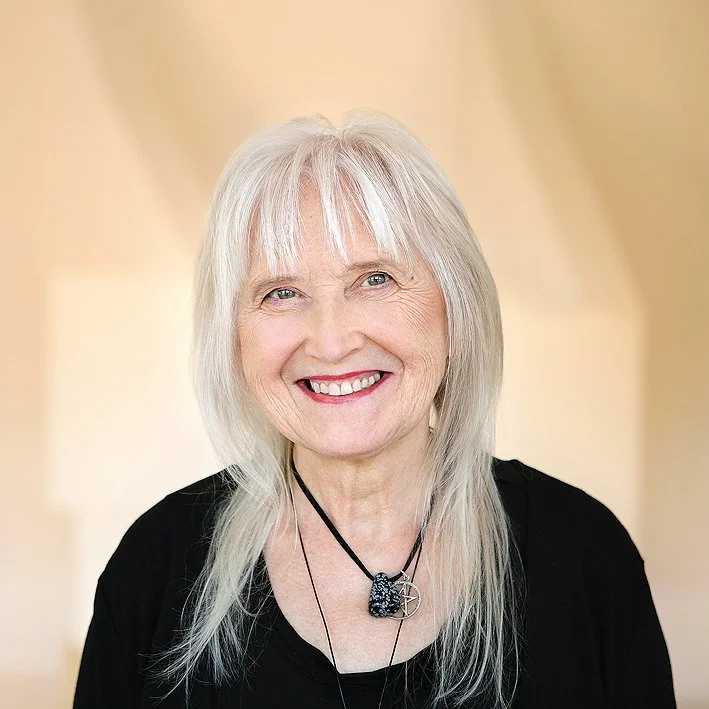
As an international artist, MARGARETHA GUBERNALE, of Zug, Switzerland, made many group and solo exhibitions worldwide, including on 1993 in the MONTSERRAT GALLERY, in 2011 in the AGORA GALLERY and in 2012 in the BROADWAY GALLERY, all of them in New York, USA, as well as exhibitions in Miami and Canada, in Germany, France and, 2014 among other in expositions a group exhibition in the Eiffel Tower, with SALVATORE RUSSO, Salle Gustave Eiffel, Paris, France. She took part in further exhibitions in England, Spain, Malta Austria, China, Switzerland and numerous in Italy. Among other exhibitions, she received the 1st prize 2016 MARGHERITA HACK from SPOLETO ARTE, an exhibition in Milan for free. In February 2018 and 2020 she took part in the Expositions ART CAPITAL, Grand Palais-Réunion des Musées Nationaux, Paris and 2024 ART CAPITAL in the Palais Éphémère, Paris, France, as well as in 2019, 2020 and 2021 at SWISSARTEXPO in Zürich Main-Station, Switzerland. In 2021 she participated in the three-month exhibition POETA MASSIMO TROISI, film director and actor of “Il Postino”, at Castel dell’Ovo, Napoli, Italy, also in the exposition in Procida and in exposition Artisti da Museo in Roma, Italy. In 2023 she held numerous digital exhibitions at various locations abroad with ARTBOXY and a digital solo exhibition at EuropaArt in Amsterdam. She also exhibited in the MAD GA LLERY and with her in the Times Square she had some of her pictures streamed to one of the screens there in four episodes. She has received many awards, including a gold medal at 2008 OLYMPIC FINE ART 2008 in Beijing, China. 2017 she got the 60 Top Artists Award, Metropolitan Art Museum Las Vegas, USA, and 2020 the Top 60 Masters ATIM AWARD, GRIMANDI GALLERY, New York USA, and the PAOLO LEVI PRIZE at Palazzo Clerici, Milano, Italy. In 2024 she was honoured with the Trophy by the ORGANIZATION EDMC-EUROPE, Les Éditions des Musées et de la culture-Europe. In 2024 she participated also through the organization CONTEMPORARY ART MANAGEMENT in the monthlong aircraft exhibition at Vueling, Spain. She is nominated in many artbooks and magazines, so 2024 in Future of Art Global with Masterpiece Award from CONTEMPORARY ART CURATOR with magazine. In 2025 she received the EL GRECO AWARD with book and 2026 the COLLECTORS ART PRIZE – Art Legends of Our Time with book.
Margaretha, In your paintings, where symbolic parables drawn from nature are interwoven with abstract spiritual thought, how do you negotiate the tension between the visible world and the invisible metaphysical structures that seem to underlie it, and in what way does this negotiation define the very ontology of the image you construct?
The picture "Declaration Day of the Angular Moon" shows a clear example of a narrative parable about an impending dismantling and conversion of the romantic moon in favour of the lack of raw materials and the earth's war strategy. There is the last ear of corn in a pot as a memorial, which points to the war-damaged grain fields. The abstract idea is underpinned by two planets, the yellow Venus with sulphur content and the red Mars with iron deposits and the blue earth, with its water. The two planets and the earth are kept in the three primary colours and, in contrast to the angular moon, remain round because they were still able to preserve their original substance. The woman is connected to the earth with an umbilical cord and carries its properties with her.
Your work frequently invokes anthroposophical ideas of Akasha, elemental forces, and the spiritualization of matter; how do you translate such complex philosophical frameworks into painterly language without allowing the canvas to become merely illustrative of doctrine rather than a site of experiential revelation?
In the picture “Holy Forest with Yggdrasil” a woman admires the creation in a section of the forest in awe. She is one with nature. But she could have recognized that the forest has breathing lungs, that water and earth forces live here and that the forest takes on the task of stabilizing the slope, because all of this is there in the picture. The picture appears to the viewer as a re-revelation of unity with God and nature in the highest harmony.
In considering your notion of “parareality,” which integrates water, earth, air, and fire into a unified symbolic field, how do you conceive of the painting as an energetic system rather than a static object, and what role does the viewer play in activating these elemental correspondences?
In 2019, I created the image “Fausta thinks Humility” because I suspected that placing the war equipment in front of the lion's den could cause a dangerous war to break out, which later happened, because a garden fence was to be honoured. In it I presented the four elements as four iron books that must be respected, because not respecting them out of arrogance leads to the use of nuclear weapons. However, the situation is different in the picture “The Magician”, where the magician depicted is surrounded by the four elements. In this second case the image is not energetic but static and explains the doctrine.
Many of your compositions balance organic natural forms with abstract symbolic geometries; do you see this synthesis as a continuation of the historical ambitions of Symbolism, or as a rupture that proposes a new cosmological model for contemporary painting?
I propose balancing organic natural forms with abstract, symbolic geometries as a cosmological model for contemporary painting (see the painting “Priska meditates”).
You speak of symbolism as a magical staircase toward the universe; could you elaborate on how the act of painting itself becomes a ritual ascent, and whether the studio functions for you as a contemplative or initiatory space?
It is not the studio that helps build the spiritual staircase to the universe, but nature is the initiation space; Only the elaboration of what has been collected takes place in the studio (see picture “The Widening”).
In your reflections on form, you describe harmony as the integration of multiple forms into an overarching unity; how do you approach composition so that this unity emerges organically, rather than appearing as a predetermined symbolic scheme imposed upon the canvas?
In nature, many forms are present in a single creation and are harmoniously connected. Therein lies my observation about the democratic use of forms. Harmony arises through adaptation and a certain tolerance (see “Priska ponders over the Meaning of Life”).
Your writings suggest that colour operates not only emotionally but also ideationally, as a symbolic language; how do you determine when a colour should act as a sensuous experience and when it should function as a philosophical sign?
Please follow this scene and think and feel for this example “The Sorcerer’s Apprentice” (with Goethe): First there is the blue, pure air around the whole scene. The ideal of an advanced invention of AI. There stands the brown, earthy bull, ready to collect and swallow everything. There sits on the left the bright yellow dressed figure of hope for success, even though the magician is absent. In the middle, the victim, a second woman, in a hot red dress, stands fanatically delighted in front of the bull in order to empty her brain into it. Placed on the bull, a third woman with a blue dress and a red clown mouth sits proudly and confident of victory. Below, a woman wearing an earth-coloured dress is crying and bending over the coffin with the black cloth of failure because the algorithms gave the wrong result. Here the symbol of colour moves first into ethics, then into thinking and feeling, and the respective value of the symbol is not comparable and cannot be confused and has a wide tension.
There is in your paintings a recurring sense of the cosmic drama, where celestial bodies, forests, rivers, and human figures appear as participants in a larger metaphysical narrative; how consciously do you construct these narratives, and how much do they arise intuitively during the act of painting?
My sketches are one big battle. All changes take place on the sketch. I also decide the colour before the painting process. There are no coincidences. Everything is related to the theme (see the picture “Three Graces on the Lake Zug”).
In the tradition of modernist abstraction, the painting was often conceived as autonomous and self-referential, yet your work seems to reintroduce transcendental meaning; do you see your practice as a critique of modernist autonomy or as a transformation of its principles into a spiritual register?
Even at a young age I saw the dawn and knew what the evening would bring. I knew where a certain amount of thinking would lead, which is why my early works seem more comforting. You could say that it is a question of transforming my principles in a spiritual register, because I am very tolerant towards the works of other artists and do not see myself as an art pope (see the picture “Revelation of the Flame of Life”).
The notion of the four elements in your “parareality” text suggests a taxonomy of artistic tendencies; how does your own work move between these elemental categories, and do you experience certain paintings as dominated by one element over the others?
According to this taxonomy, my works move in blue with orange; I strive for a whole. There are also pictures in green with a little red. With each picture I complete a cycle. There are no drowning images. My preferred colour is blue (see a green picture "Uproot Roots").
In many of your works, the female figure appears as a contemplative or ritual presence within the landscape; do you consider these figures as allegorical embodiments of spiritual forces, or as mediators between the viewer and the symbolic cosmos you construct?
The figure in my pictures underlines the meaning of the picture through their gestures. The figure speaks directly to the viewer and explains the symbolic content of the cosmos (see the picture “The Spiral of the Backward and Forward Speed”).
Your long international career spans decades of shifting artistic paradigms, from late modernism to the digital era; how has your symbolic language evolved in response to these changes, and what has remained constant at the core of your vision?
I stayed true to my basic attitude (see the picture “Sound from Universe”).
You often describe symbolism as a means of making the invisible readable and plastically manifest; could you speak about the moment in the painting process when a form ceases to be merely decorative and becomes charged with symbolic necessity?
When I depict the image "Priska's extended Arm", this transparent white arm, which moves away from Priska's physical arm, is the symbolic arm and represents an active force that flows from Priska.
The relationship between abstraction and representation in your work often appears as a tightrope walk, as you have described it; what are the risks inherent in this balancing act, and how do you prevent either pole from overwhelming the other?
The two poles of abstraction and representation each have their own tasks, mainly to help each other reciprocally in explaining the narrative. They cannot overpower each other (see the picture “Now”).
In your view, does the contemporary world still possess a shared symbolic language, or must the artist today construct an entirely personal cosmology in order to address spiritual or metaphysical concerns?
Ask please: C.F. Young and look at William Blake's pictures and study Zen (see the picture "Yin and Yang").
Your paintings seem to oscillate between intimate, almost devotional spaces and vast cosmic vistas; how do you determine the scale, both literal and symbolic, at which a particular idea must be expressed?
The scale of the picture does not depend on the content of the picture, nor on its importance, but rather depends on being able to present the content of the parable without leaving any gaps (see the picture “Maintain the Forest”).
You have written that symbolism guides the human being toward the universe through all five senses; how do you conceive of painting, a primarily visual medium, as capable of evoking such multisensory or synesthetic experiences?
Since the mind is eternal, all five senses are also restored in spiritual form. I'm talking about symbolism outside of the screen (see the painting "The Ash").
In the historical arc you describe, from prehistoric mystical symbolism to a future art immersed in the divine, where do you situate your own practice, and do you see it as a bridge between archaic spiritual languages and a yet-to-be-formed artistic future?
A thread runs through time. Time can only be measured with an artificially set zero. As a result, symbolism becomes a bridge between archaic and spiritual language and an artistic language that has yet to be formed, unless an end point is set for it (see the picture “Creation of Measure”).
The interplay of structure and dissolution in your discussion of form suggests a philosophical concern with order and chaos; how does this dialectic manifest itself in the textures, gestures, and spatial tensions of your canvases?
Autumn leaves lie on the ground. In this way, they lie in miserable chaos, in dissolved forms, above and below each other as fertilizer for the coming growth in the middle of solid forms (see the picture “Mary of Hope in Autumn”).
When you consider the viewer encountering your work for the first time, do you imagine them deciphering a symbolic code, entering a contemplative state, or undergoing a subtle transformation of perception, and what kind of inner experience do you ultimately hope the painting will catalyse?
When the viewer stands in front of some of my pictures for the first time, he or she feels that an unfamiliar wind is blowing through these works. He is fascinated by this rare harmony, adjacent to the compositions of Gluck, while in certain other pictures he asks me worried questions, which I am happy to answer (see the picture “Fire of God”).
https://www.margarethagubernale.org
https://www.gubernale.com
facebook.com/margaretha.gubernale/
instagram.com/mgubernale
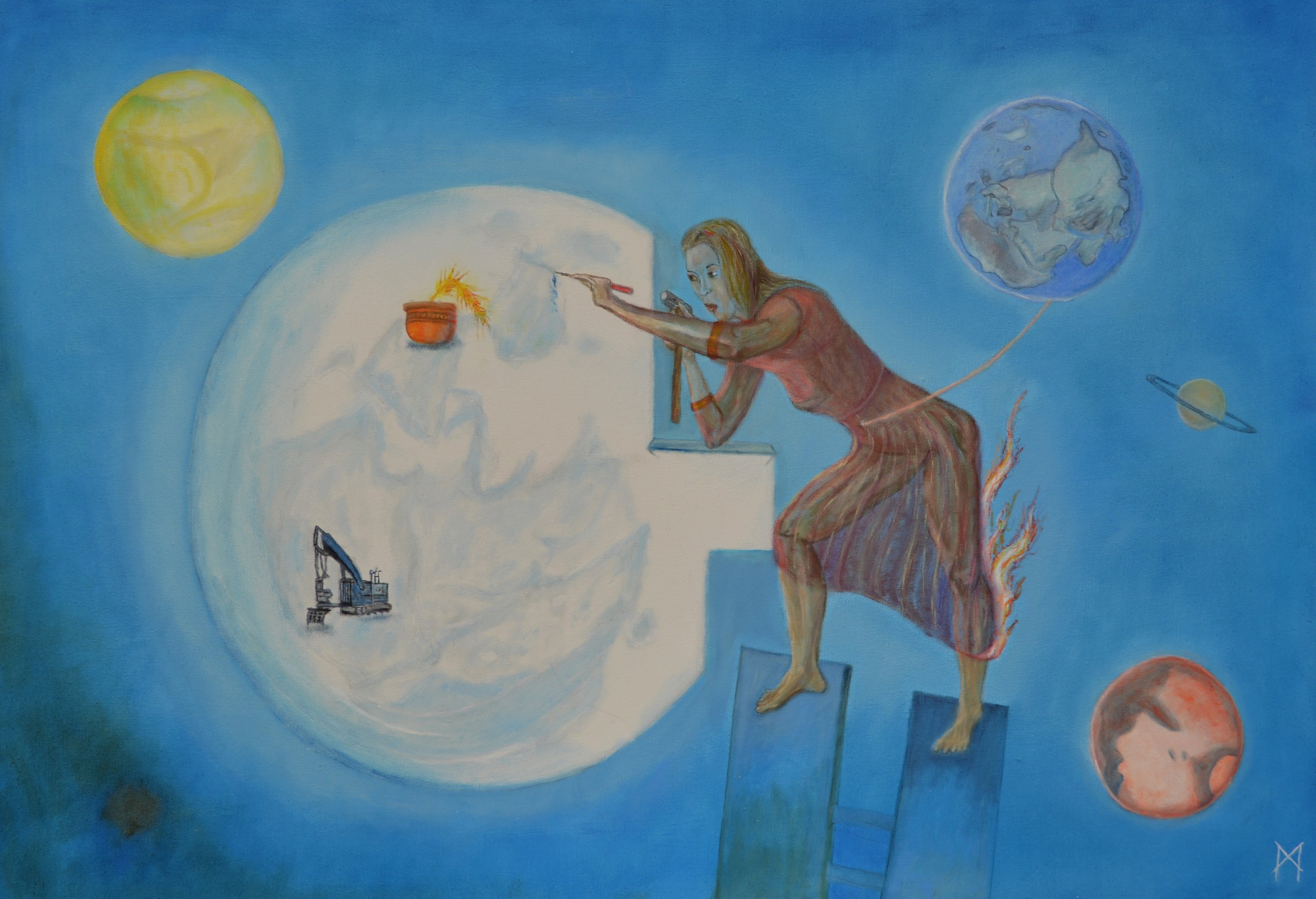
Declaration Day of Angular Moon, 2025, oil on canvas, 70 cm x 100 cm
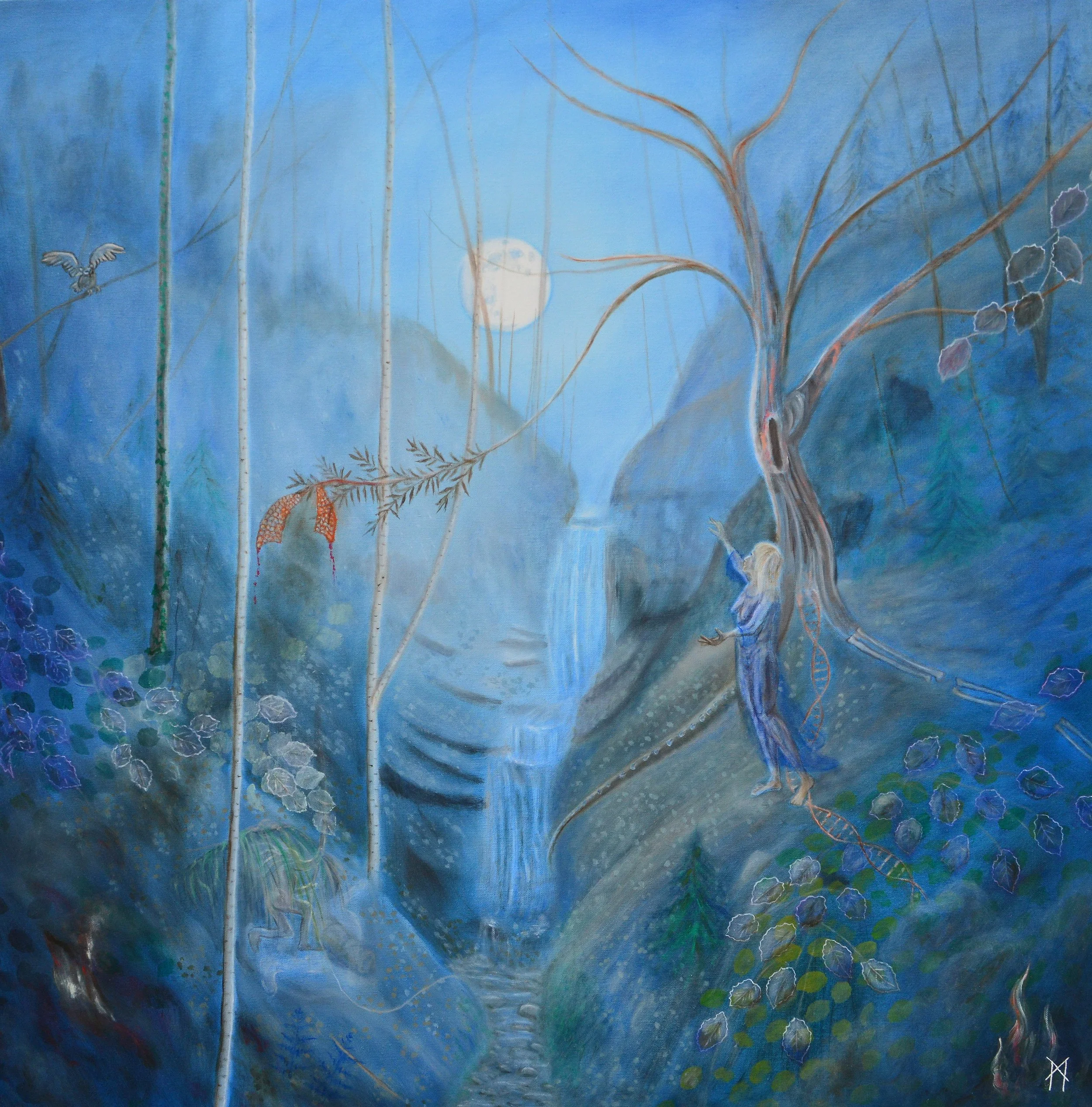
Holy Forest with Yggdrasil, 2014 oil on canvas, 100 cm x 100 cm
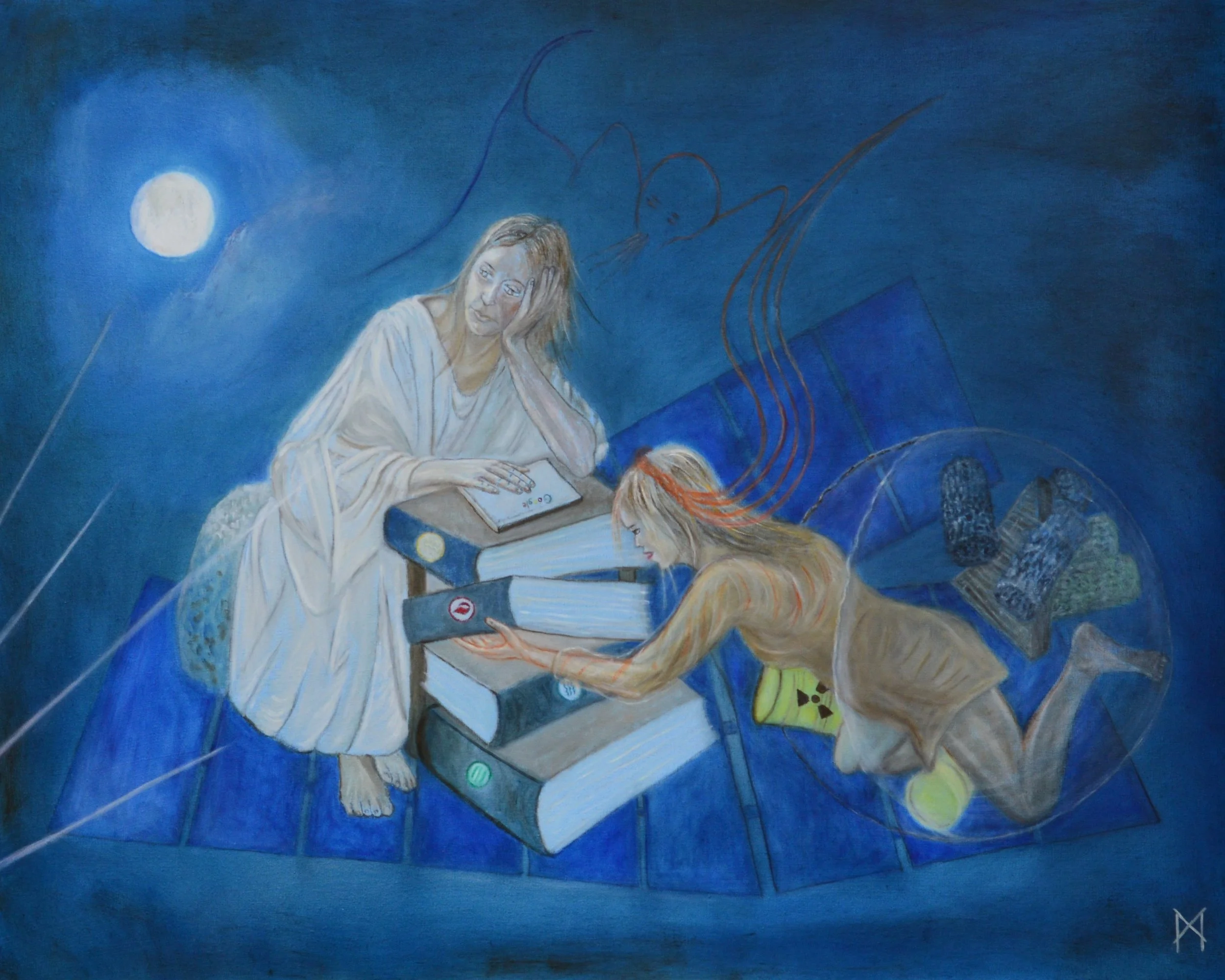
Fausta thinks Humility, 2019, oil on canvas, 80 cm x 100 cm
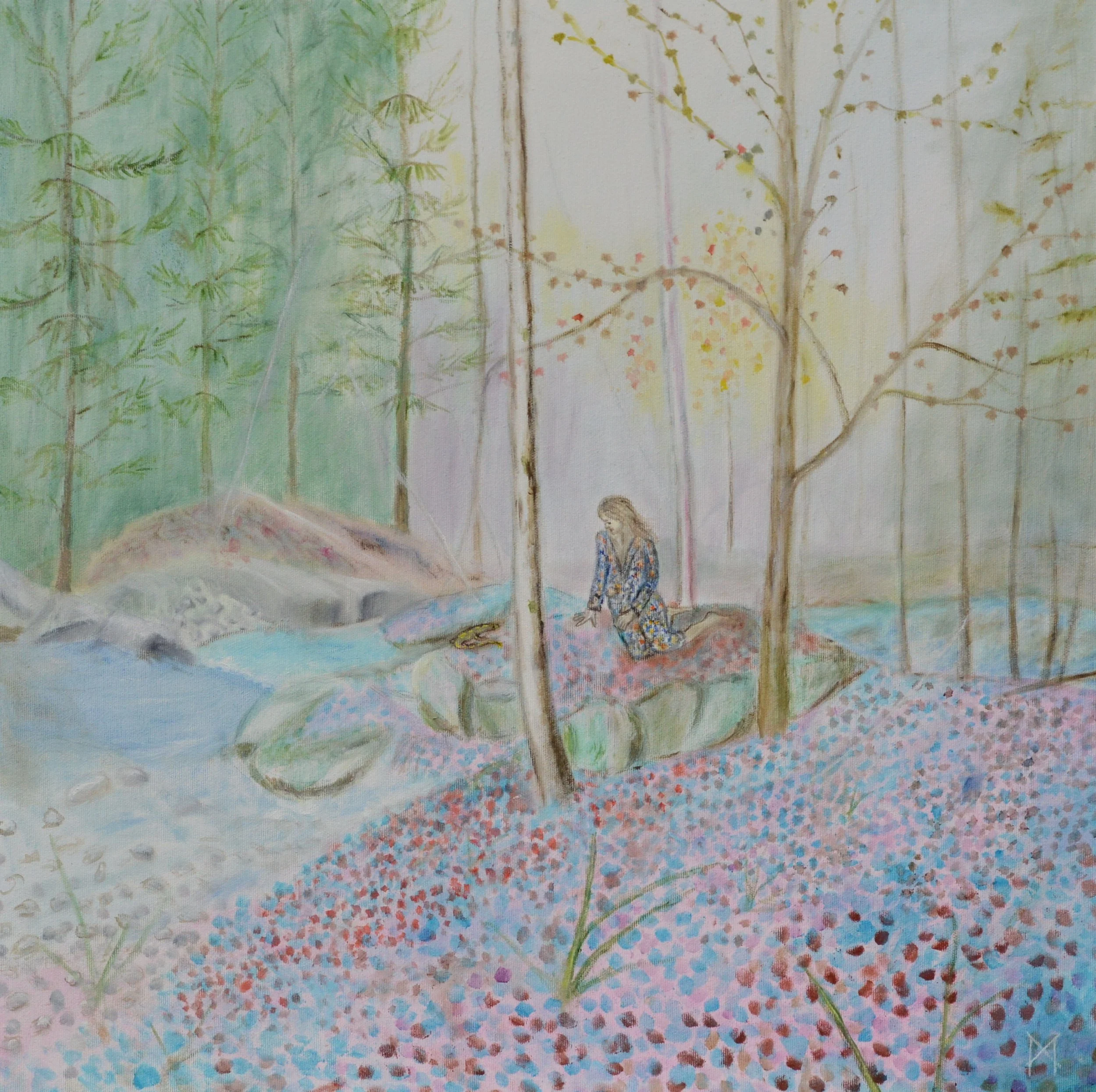
Priska meditates, 2022, oil on canvas, 60 cm x 60 cm
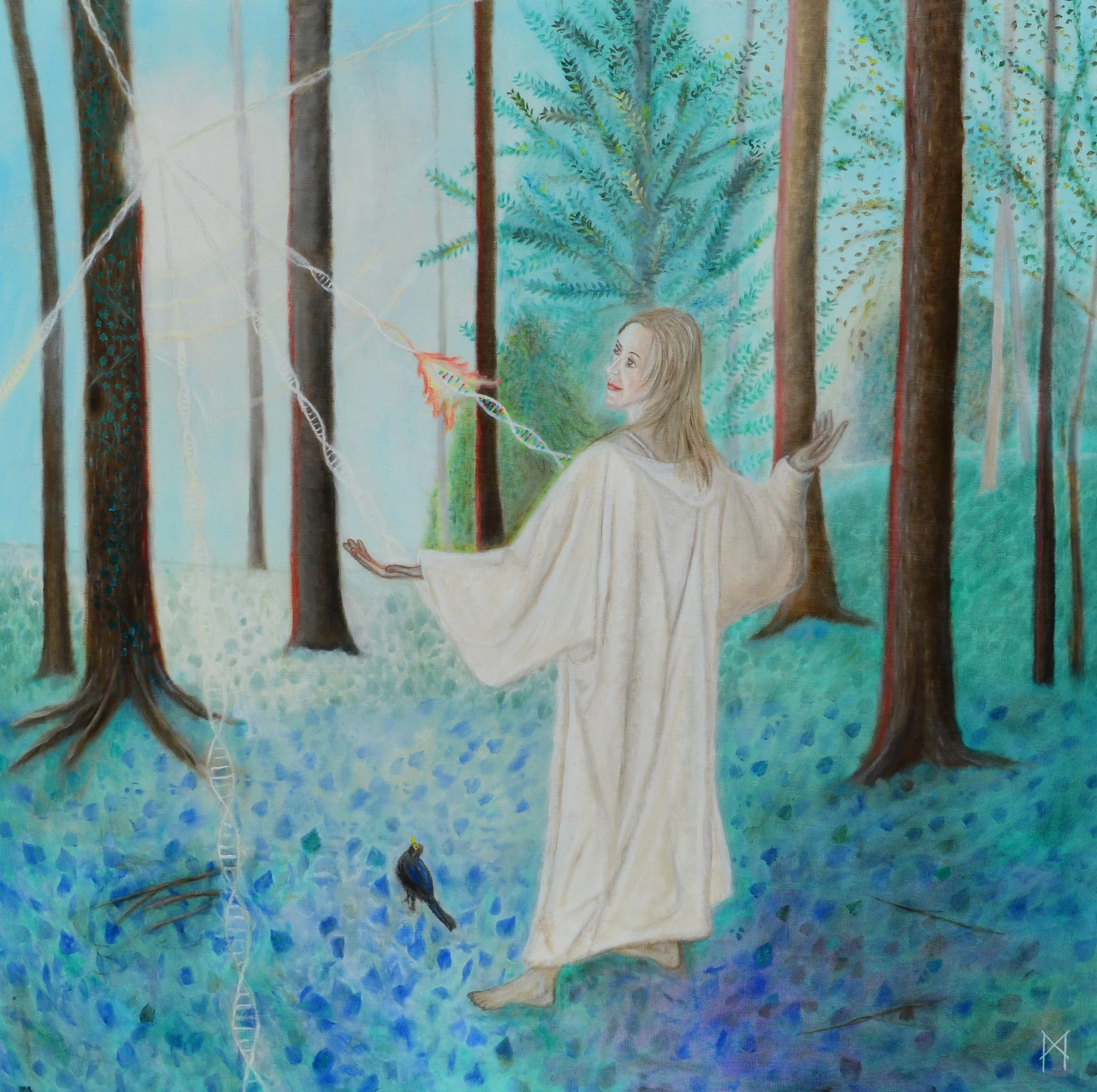
The Widening, 2021, oil on canvas, 100 cm x 100 cm
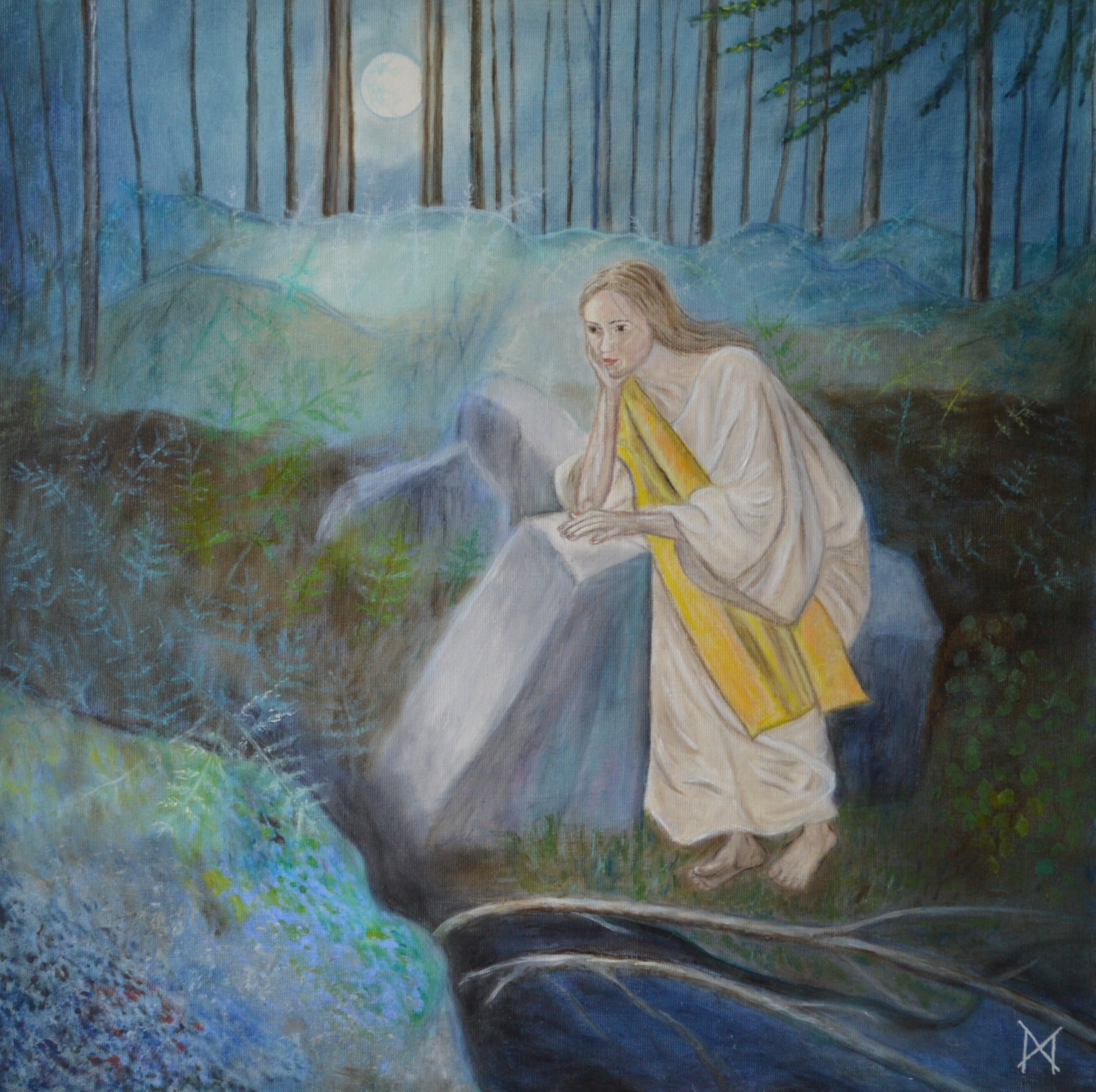
Priska ponders over the Meaning of Life, 2022, oil on canvas,60 cm x 60 cm
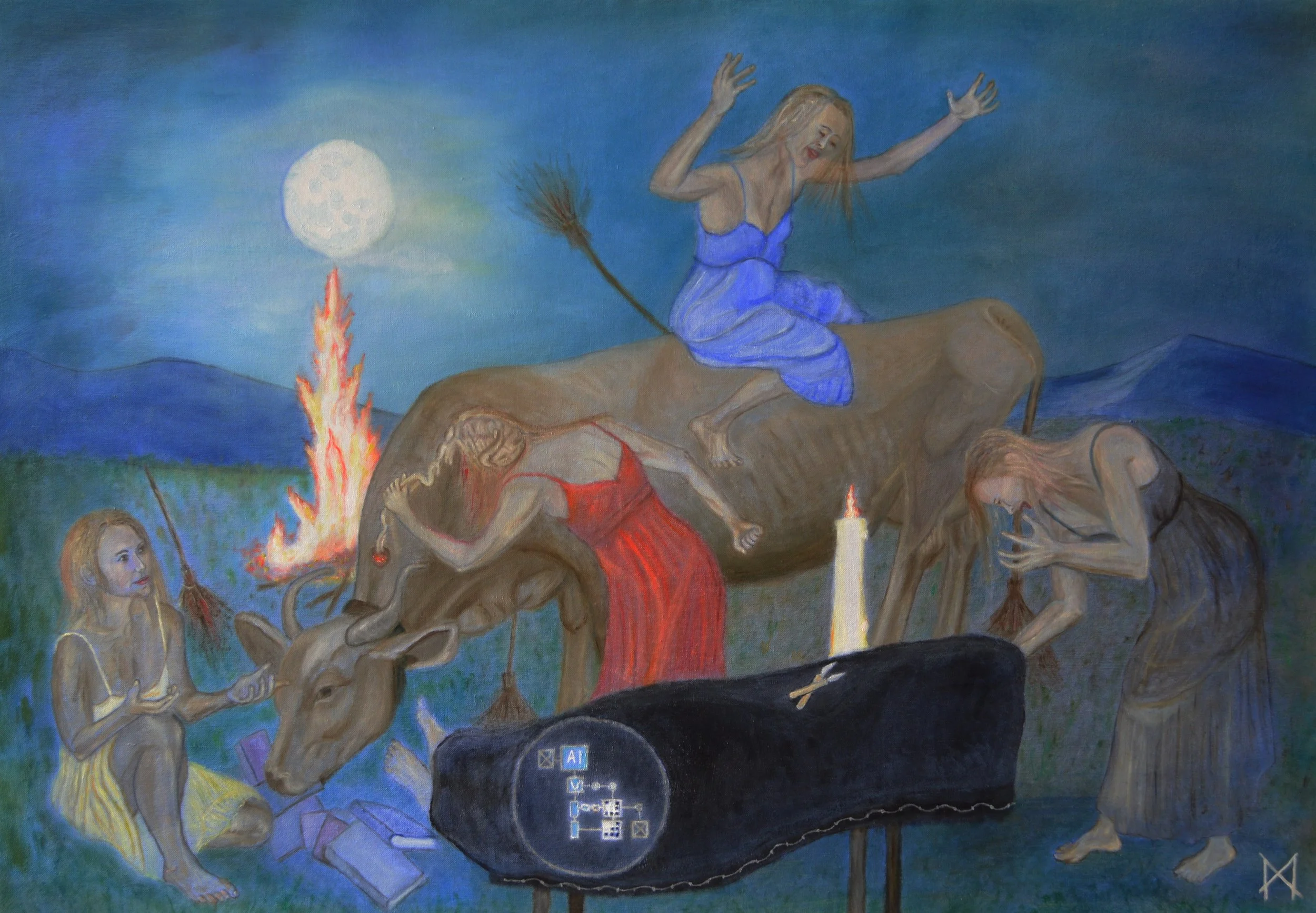
The Sorcerer's Apprentice (with Goethe), 2024, oil on canvas, 80 cm x 100 cm
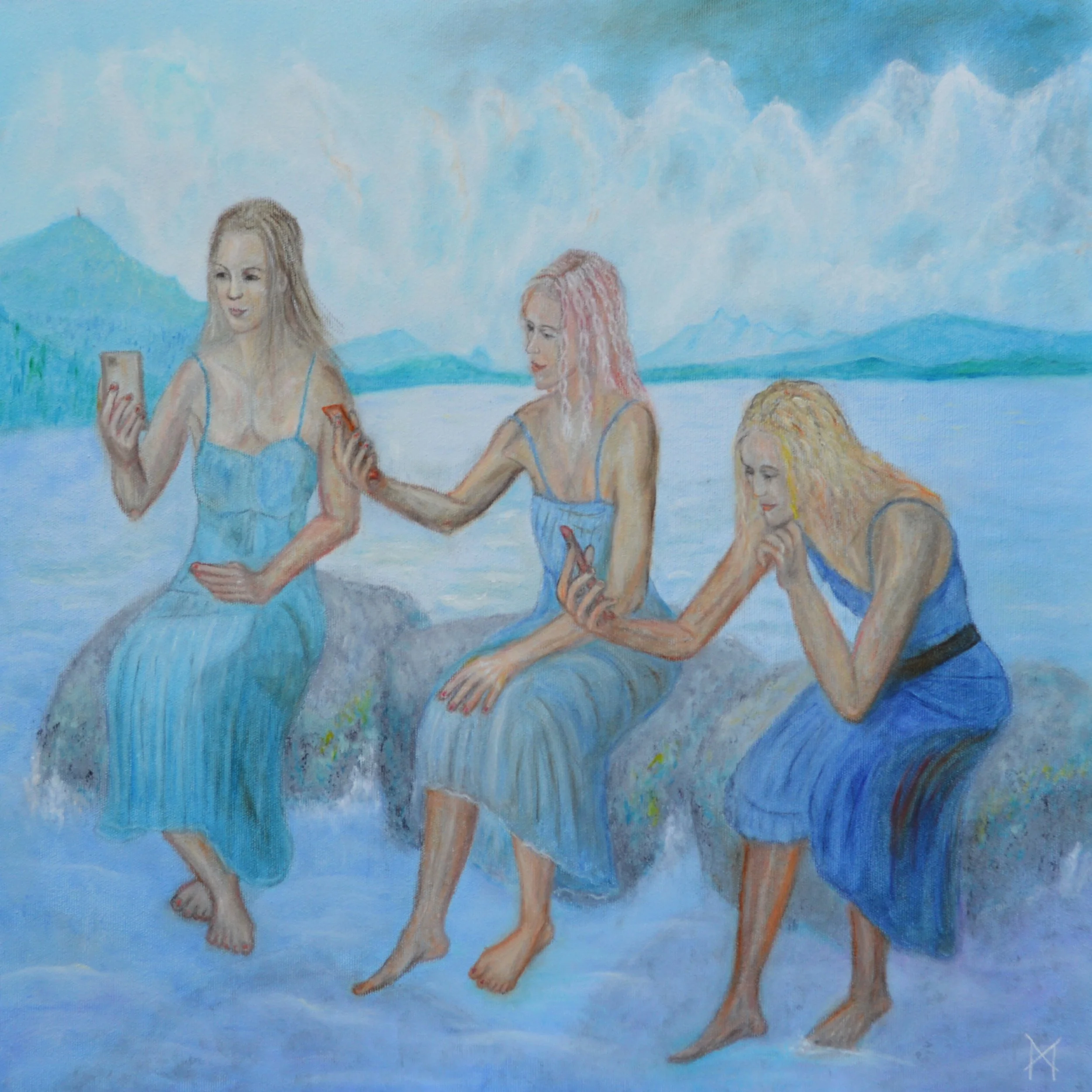
Three Graces on the Lake Zug, 2023, oil on canvas, 60 cm x 60 cm
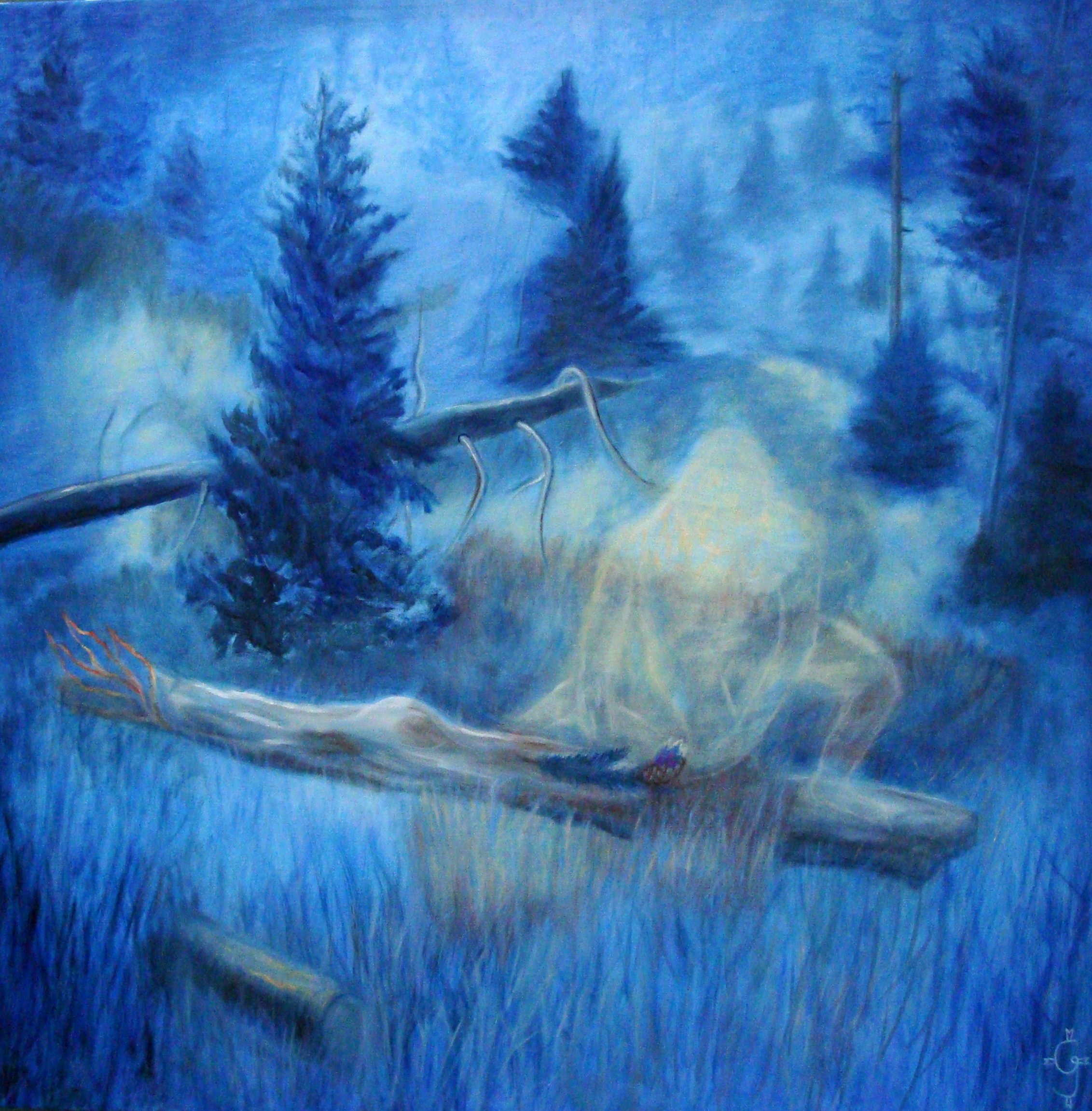
Revelation of the Flame of Life, 2009, oil on canvas, 100 cm x 100 cm
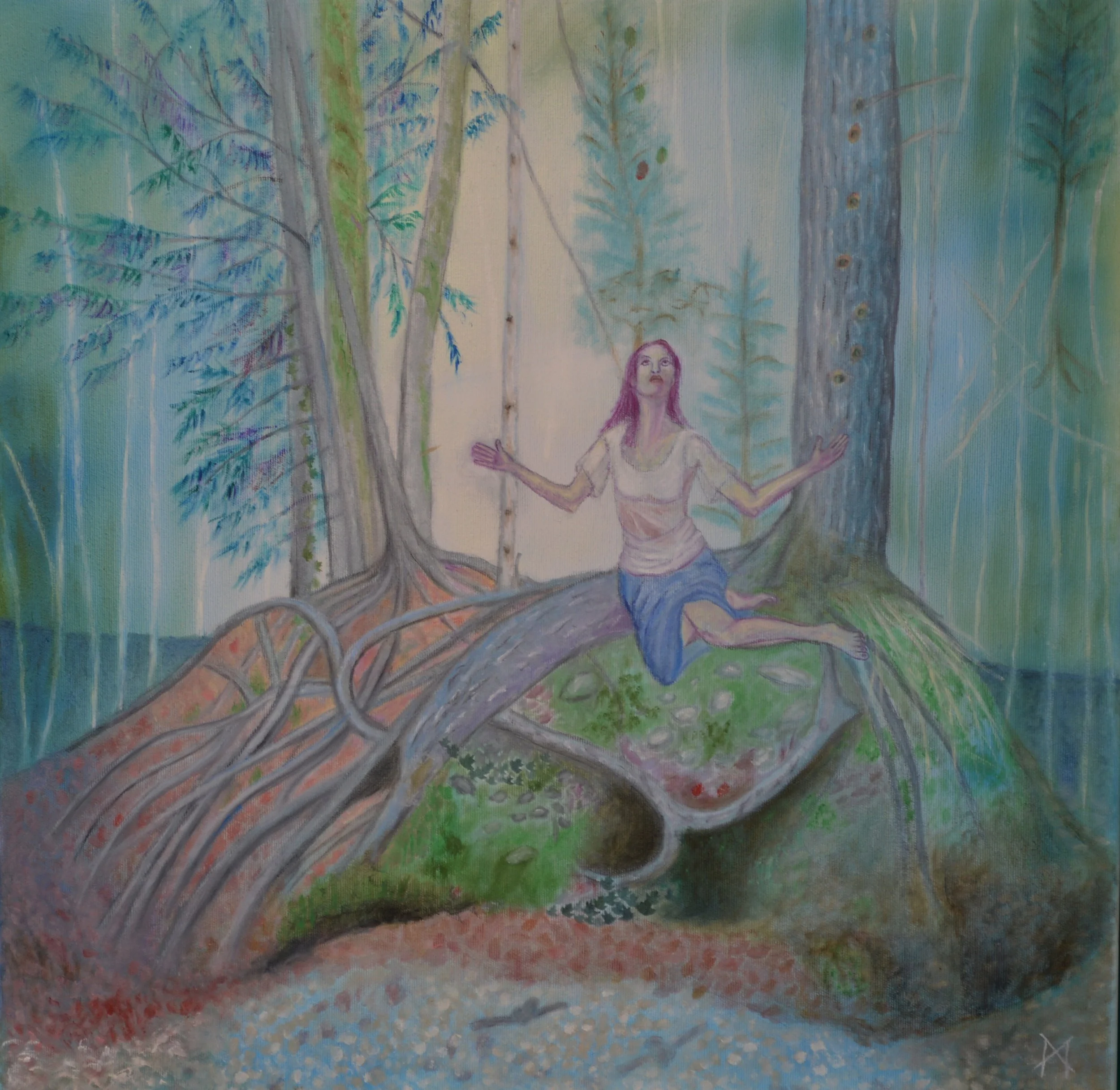
Uproot Roots, 2023, oil on canvas, 60 cm x 60 cm
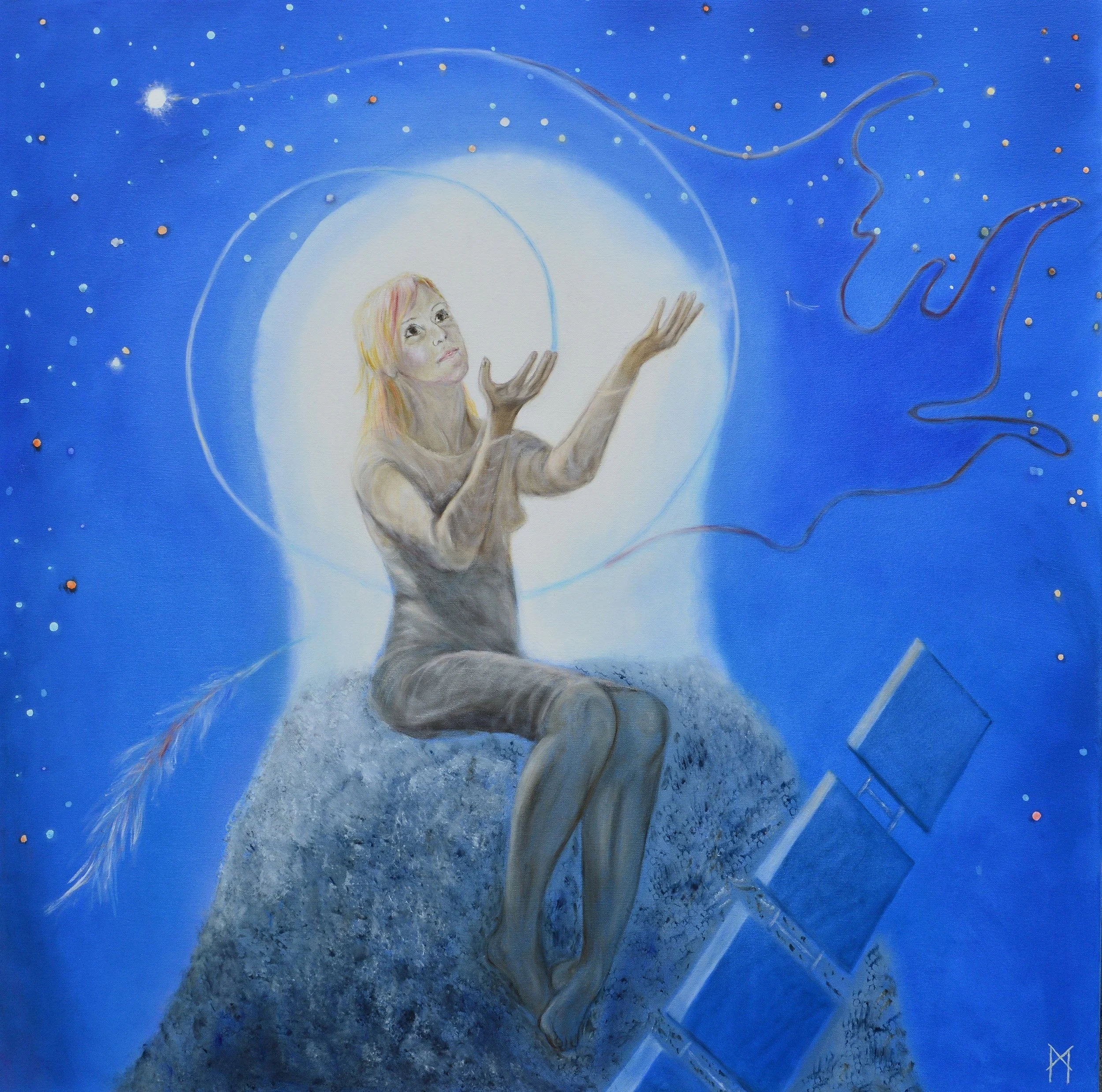
The Spiral of Backward- and Forwardspeed, 2016, oil on canvas, 100 cm x 100 cm
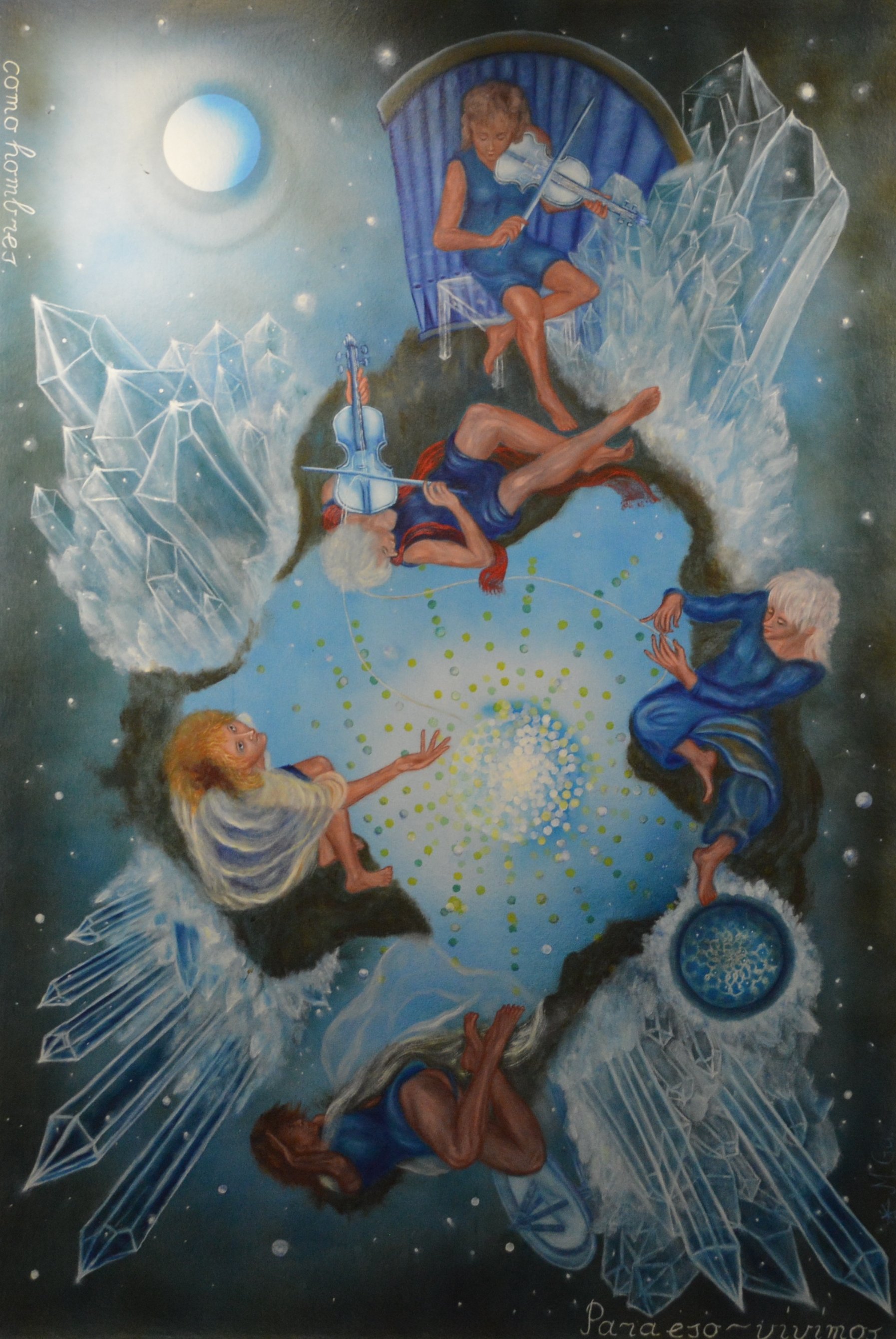
Sound from Universe, 2005, oil on canvas, 180 cm x 120 cm
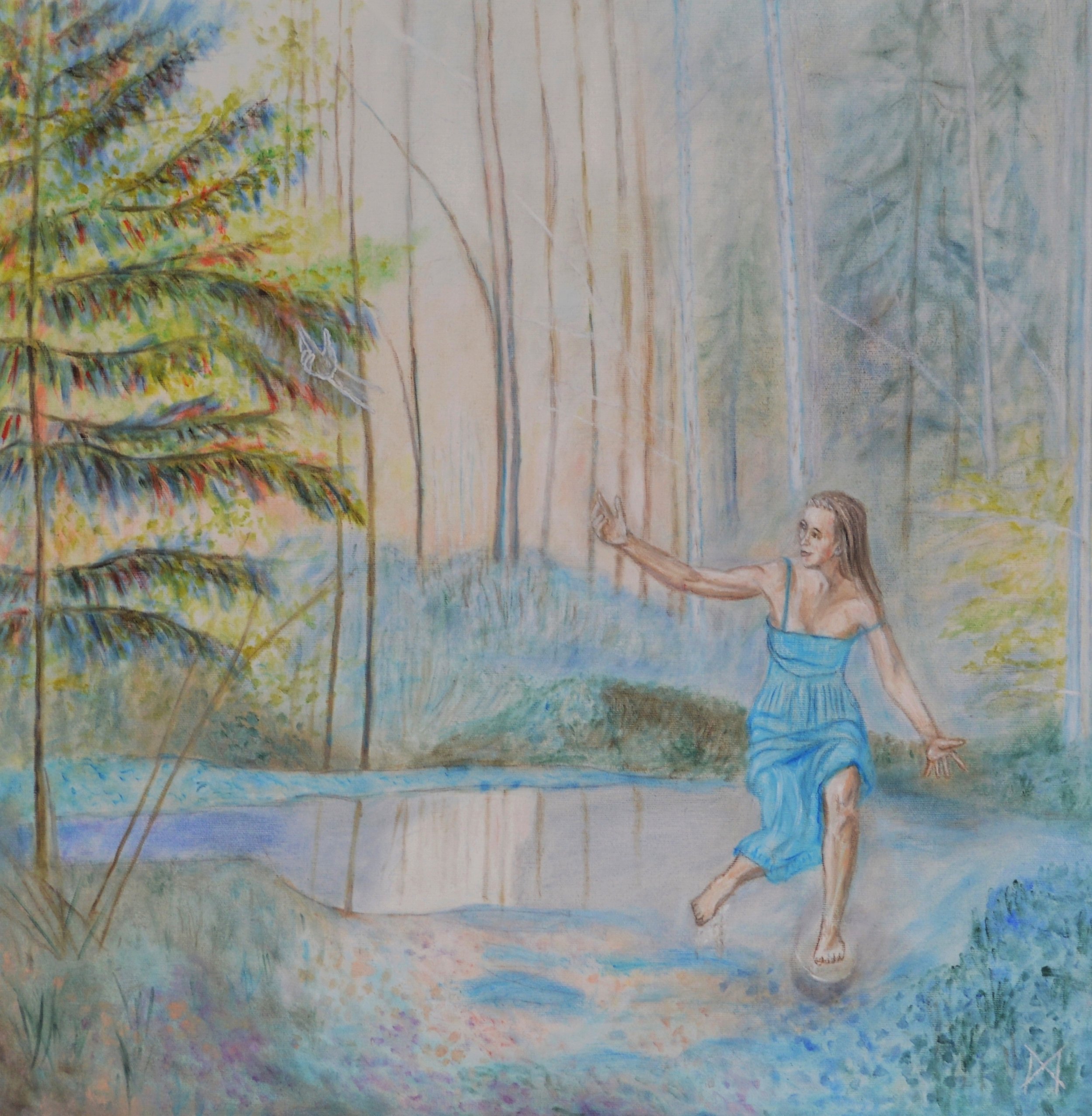
Priska's extended Arm, 2022, oil on canvas, 60 cm x 60 cm
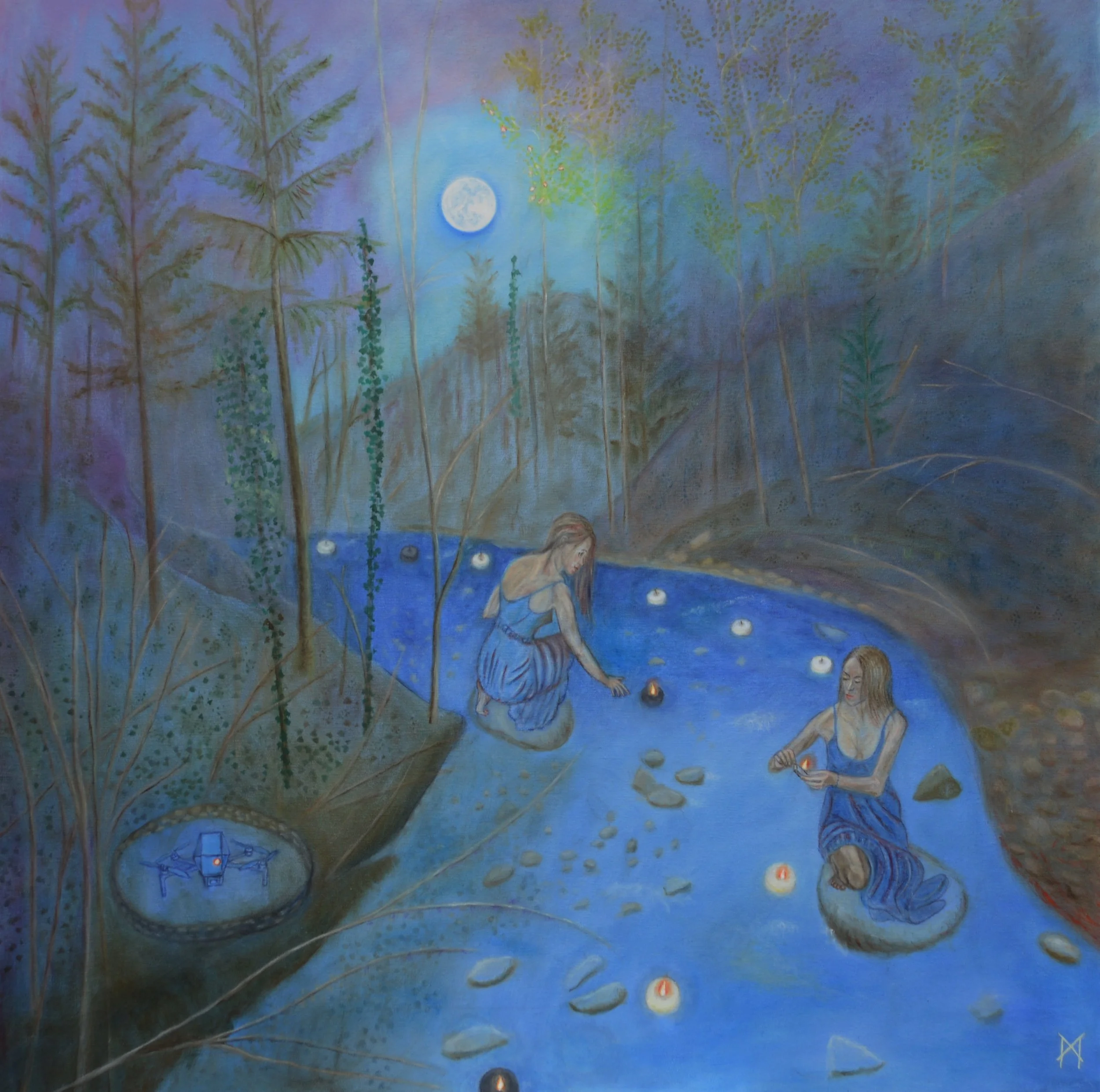
Now, 2023, oil on canvas, 100 cm x 100 cm
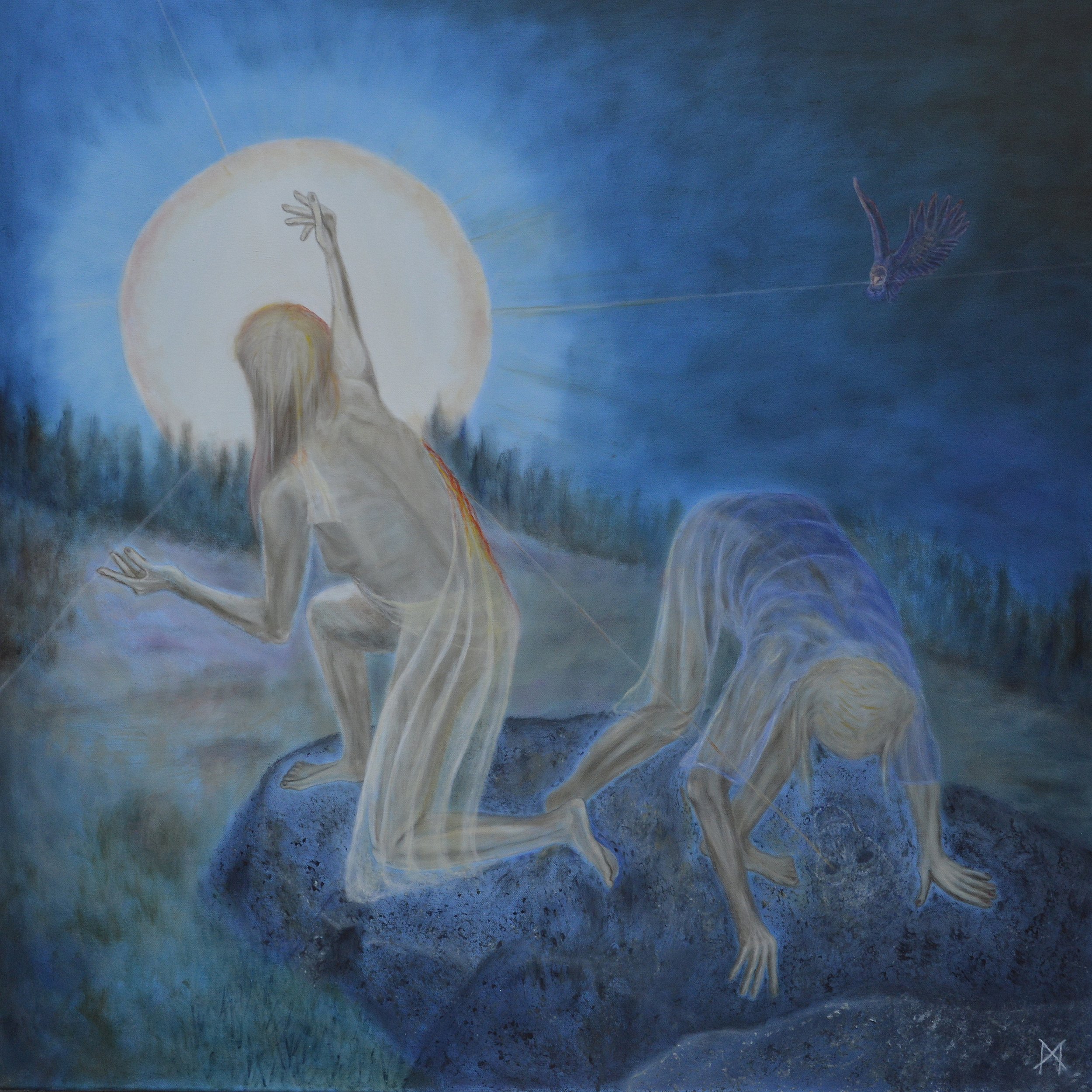
Yin and Yang, 2017, oil on canvas, 100 cm x 100 cm
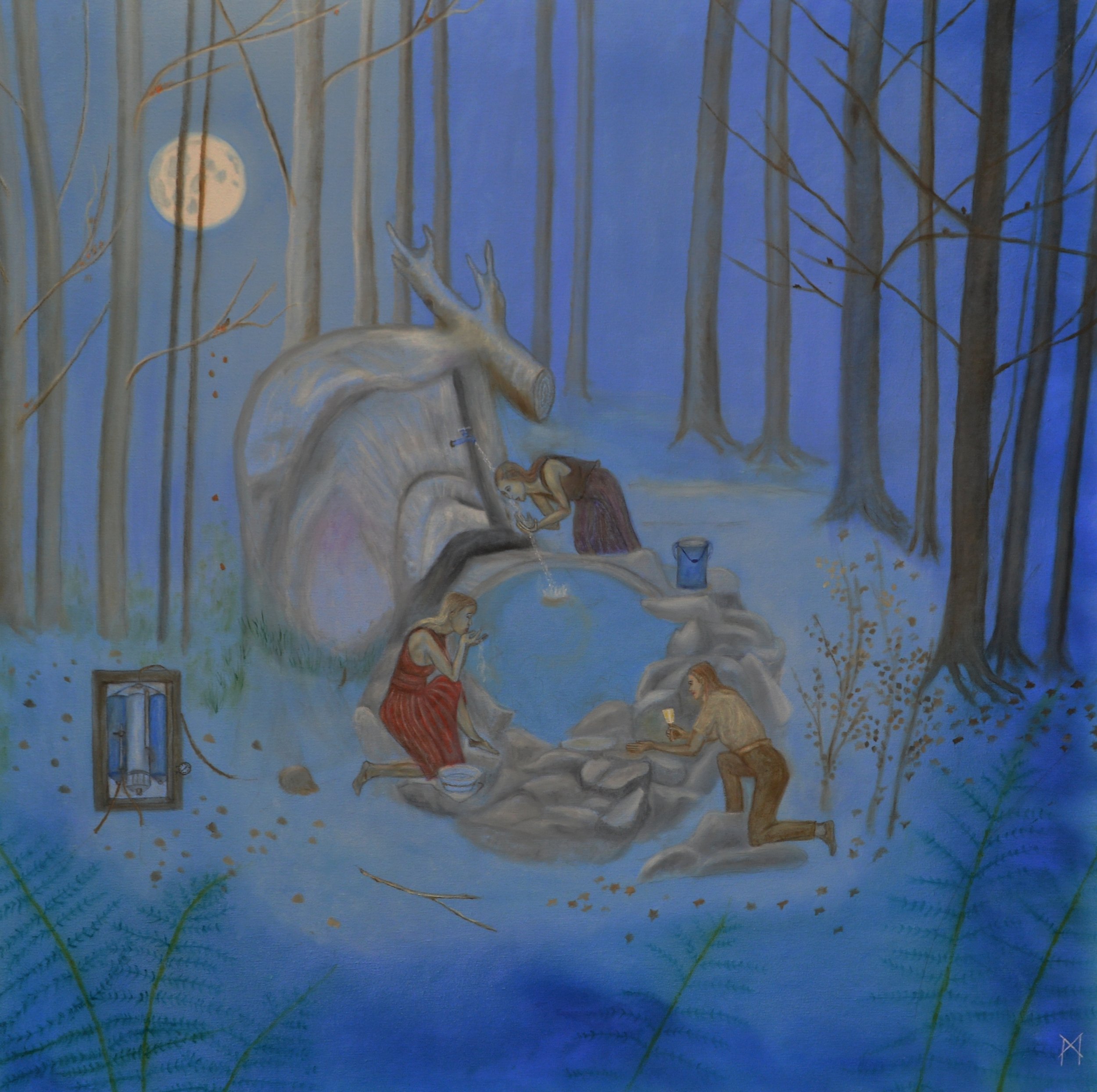
Maintain the Forest, 2025, oil on canvas, 100 cm x 100 cm
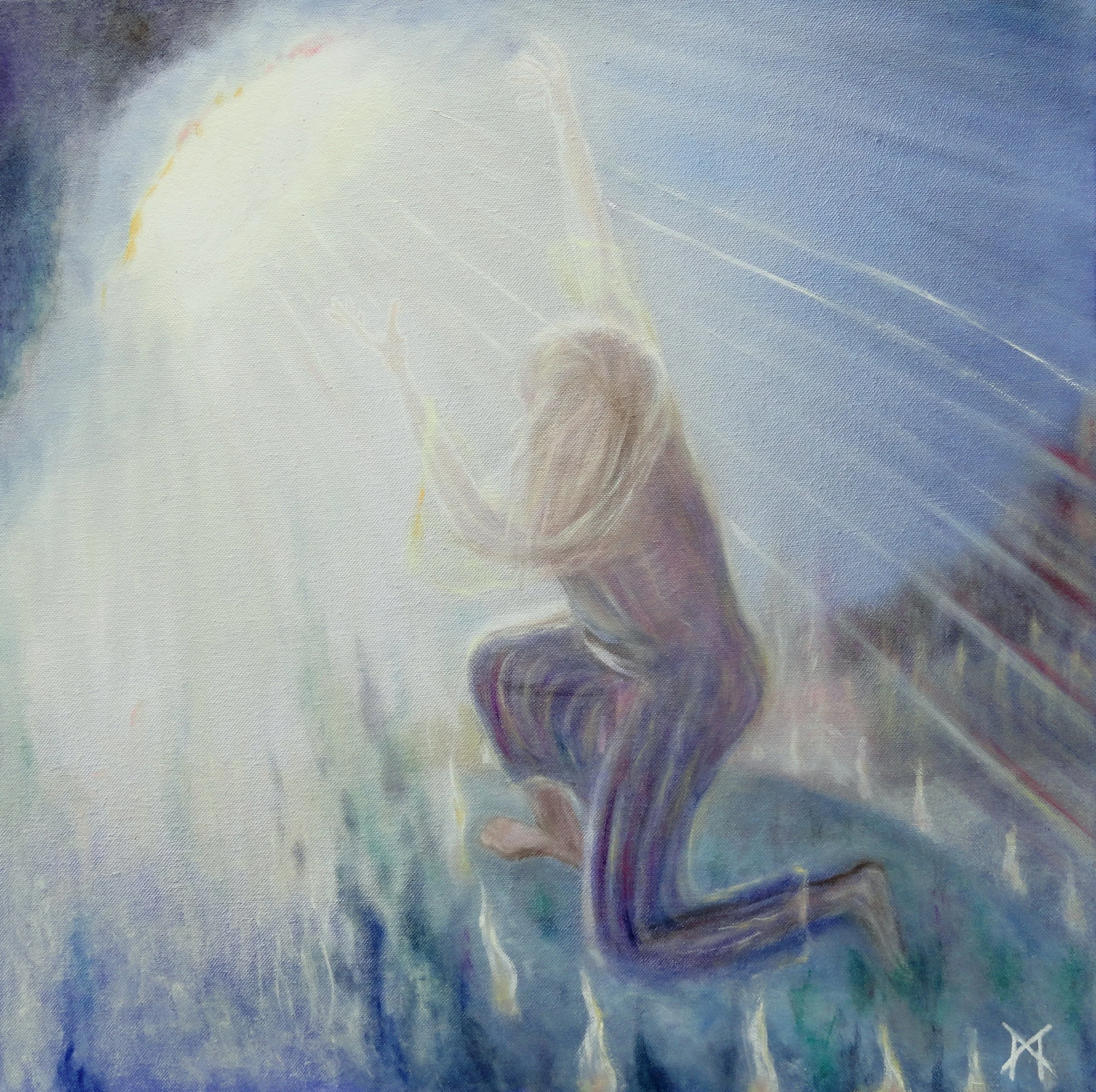
Illumination, 2012, oil on canvas, 65 cm x 50 cm
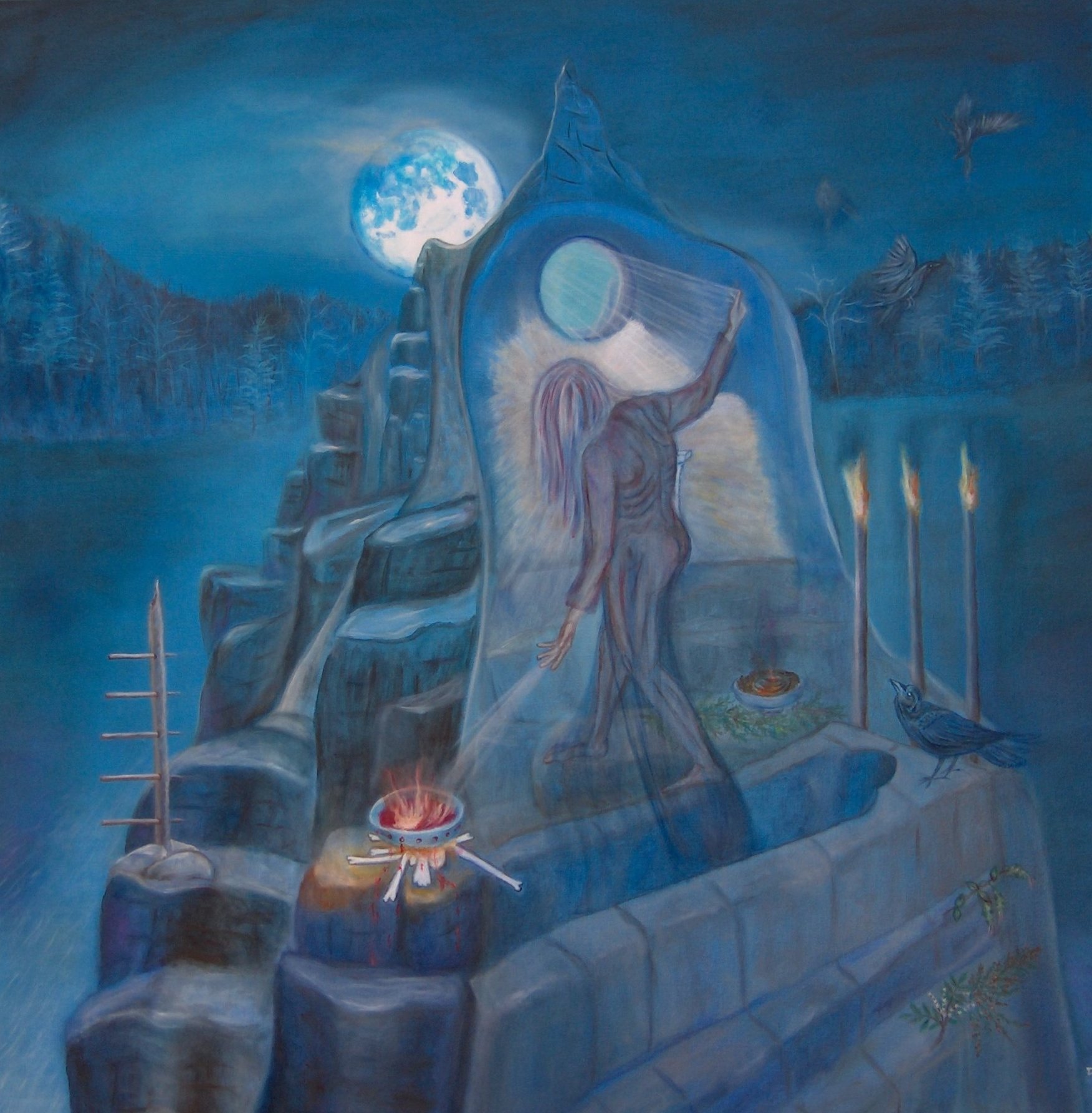
Creation of Measure, 2010, oil on canvas, 100 cm x 100 cm
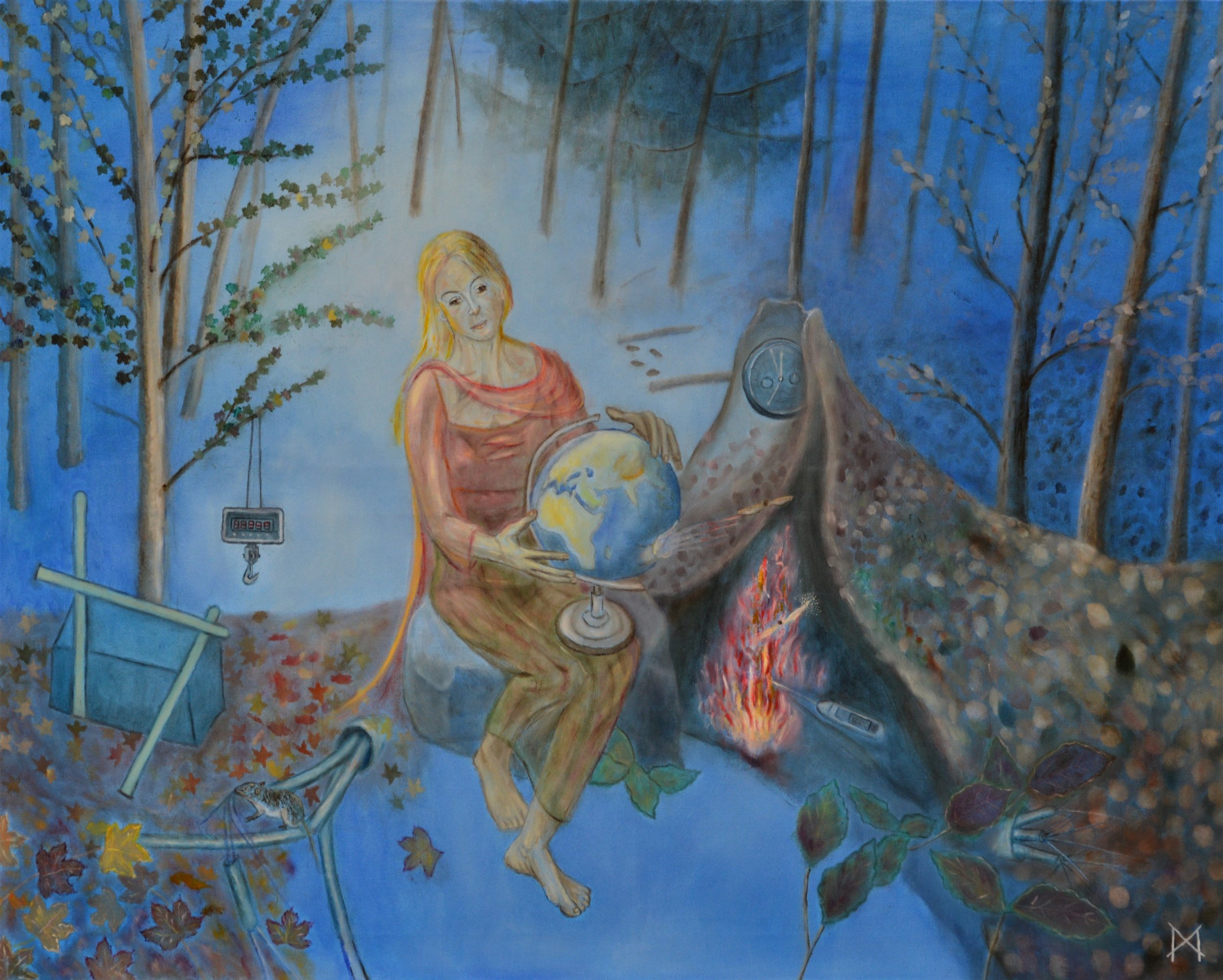
Mary of Hope in Autumn, 2018, oil on canvas, 80 cm x 100 cm
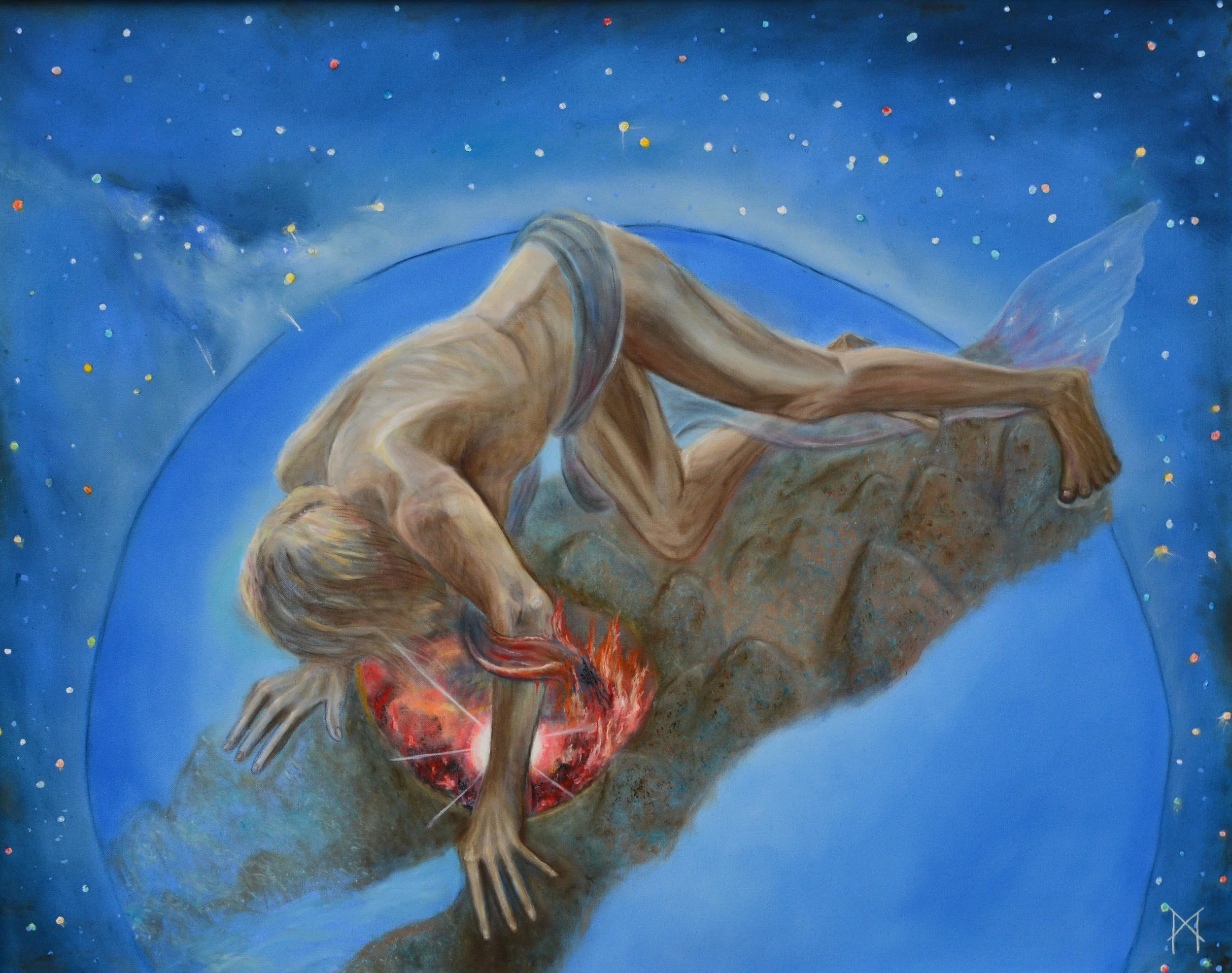
Fire of God, 2015, oil on canvas, 80 cm x 100 cm