
Symona Colina
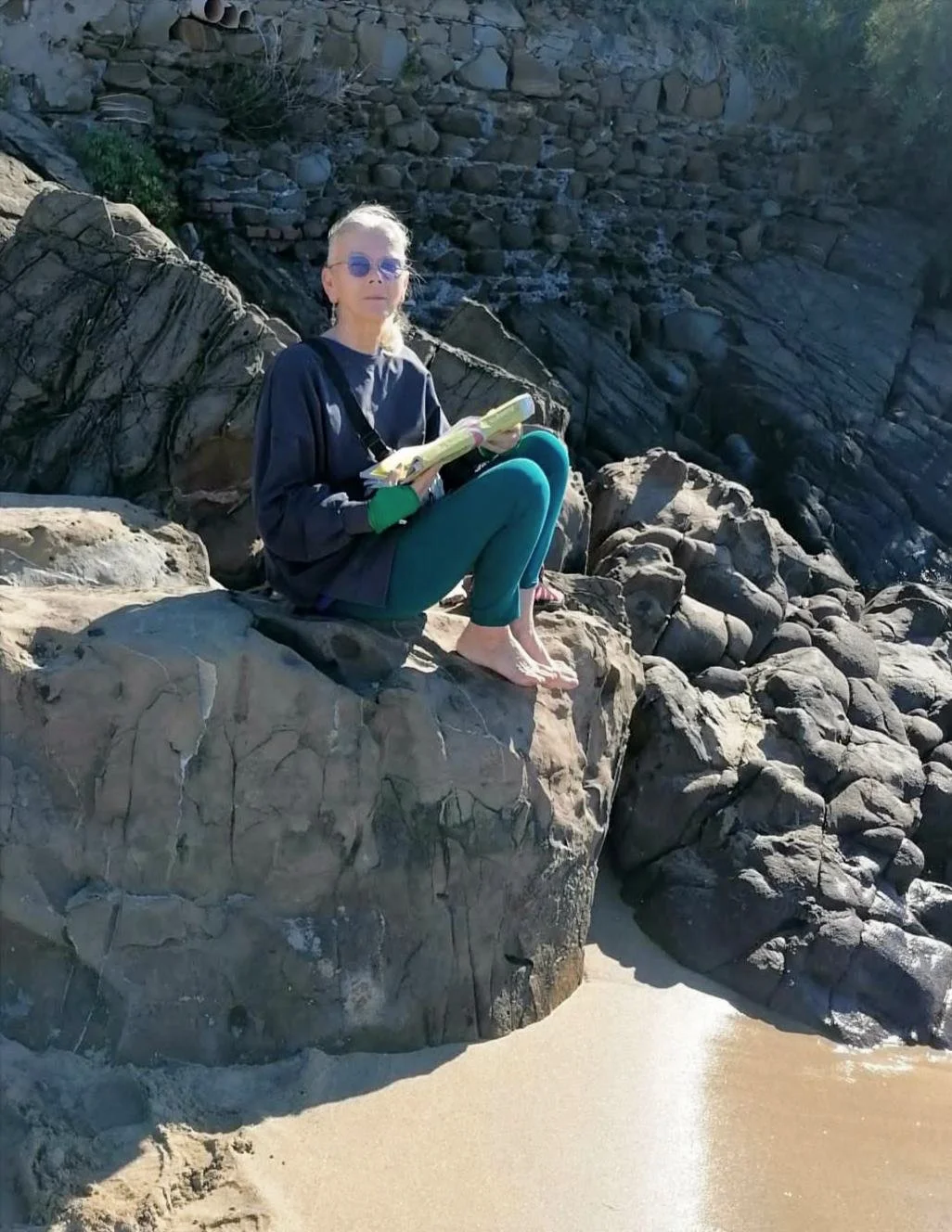
Symona Colina is a Dutch-born visual artist (born 1954). She lives and works in Italy, is known for both large canvases and intimate drawings that emphasise rhythm, line, and the sensation of movement, exploring perspective. Symona Colina’s practice bridges abstraction and lyrical figuration and layered spatial fields as organising metaphors. Perspective becomes a metaphysical realm rather than a purely technical device. Recurring motifs include vortex‑like forms, luminous orbs, and biomorphic structures rendered in saturated palettes. Symona Colina has exhibited at major fairs and institutions across Europe and the United States, including Palazzo Vecchio (Florence), Carrousel du Louvre (Paris) and numerous galleries and biennials in Rome, Amsterdam, Turin, and Prague.
Selected awards and honours include:
Collectors Art Prize - Legends of our Time, Contemporary Art Curator Magazine - 2025
El Greco - Premio de las Bellas Artes, International Cultural Management - 2025
The premier artist prize, Contemporary Art Station - 2025
Future of Art Global Masterpiece Award, Contemporary Art Curator Magazine - 2024
Global Art Virtuoso Elite Artistic Career Achievement Award - 2024
Primo Premio Firenze, Fiorino d'Oro - 2022
Premio Astarte 1°Classification Painting - 2010
Il Premio Internazionale Lorenzo il Magnifico - Premio del Presidente – 2009
Writers and curators have highlighted Symona Colina’s philosophical approach to perspective and the contemplative quality of her compositions. Interviews and artist profiles appear in Contemporary Art Curator Magazine, Exibart, and other art‑industry outlets.
Symona, your articulation of perspective as a “surrounding” condition rather than a fixed optical system seems to displace the Renaissance paradigm of linear construction. To what extent do you consider your work a critique of perspectival rationalism, and how does this reconfiguration of spatial logic operate within the phenomenological field of the viewer?
Perspective as “surrounding” rather than linear construction
For me, perspective is not a fixed optical system but a condition I move within. When I draw or paint, I’m not organising space from a single, stable point; I’m inhabiting it. It feels closer to breathing than to constructing.
So rather than critiquing Renaissance perspectival rationalism, I simply step outside of it.
I’m interested in the moment before space becomes geometry — when it is still fluid, relational, and responsive to the body.
In my work, spatial logic emerges from this lived, shifting encounter rather than from a predetermined grid.
Phenomenologically, this means that space in my work is not something the viewer looks ‘into’ but something they are ‘inside’. The drawing becomes a field of forces — densities, rhythms, chromatic pressures — that reorganise themselves as the viewer moves or lingers.
There is no privileged viewpoint; instead, perception unfolds as a kind of wandering.
The “surrounding” condition is a spatial atmosphere that holds the viewer, inviting them to sense rather than measure. In this way, the work proposes a spatial experience grounded in presence and embodied attention rather than in rational construction.
In your description of drawing as a process that begins with a point, almost a proto-event, you evoke a generative logic akin to both musical notation and cosmological expansion; how do you negotiate the tension between control and contingency in this unfolding, and does the line function for you as inscription, trace, or something closer to a temporal residue?
When I begin with a point, it feels like the first vibration of something coming into being — a small event that already contains a direction, a breath, a possibility.
From there, the line unfolds almost like a musical phrase or a pulse of energy expanding outward.
I guide it, but I don’t dominate it.
Control and contingency are always intertwined; I set the conditions, but the drawing grows according to its own internal rhythm.
The line becomes a trace of that unfolding — not just an inscription, but a residue of time passing through my hand.
The line operates as a temporal gesture: it records the duration of my attention, the microdecisions, hesitations, accelerations.
It is both an action and the memory of that action.
The tension between control and contingency is what keeps the work alive — the line is never merely a mark on a surface, but a lived moment extended into form.
In this sense, the drawing becomes a field where time, movement, and perception converge, and the viewer encounters not only the finished form but the temporal residue of its becoming.
Your repeated invocation of “wind” as both metaphor and structuring principle suggests an invisible yet determining force; might this be understood as an index of the immaterial conditions of perception, and if so, how does it resist being subsumed into the romantic trope of artistic intuition?
When I speak about “wind,” I’m not referring to a poetic metaphor but to the fundamental condition of air - everything that exists where solids are not.
Air surrounds every form, both in the world and on the surface of a drawing.
It is the medium through which movement, pressure, and direction become perceptible.
In my work, “wind” names this invisible but determining field.
It is not intuition in the romantic sense; it is the spatial reality that shapes how forms grow, bend, or disperse.
I try to make that field visible without illustrating it.
Phenomenologically, “Wind” functions as an index of the immaterial conditions that structure perception: the currents, tensions, and flows that precede any solid form.
It is the dynamic space between things - the carrier of movement, the atmosphere that holds the viewer and the work in the same continuum.
By working with this idea, I resist the notion of intuition as a private, mystical force.
Instead, I treat perception as something shared and environmental.
The “Wind” in my drawings is the lived space that surrounds us all - a field of relations rather than a symbol of inspiration.
The chromatic and linear proliferations in works such as Storm or Fairytales appear to oscillate between biomorphic abstraction and optical density; how do you situate these forms in relation to the historical lineage of abstraction, from Wassily Kandinsky to Hilma and Klint, without collapsing into either spiritual transcendentalism or formalist autonomy?
These proliferations come from sensing space as a field of pressures, flows, and intensities.
The forms are not symbols of nature, nor are they closed formal systems; they are traces of how perception is shaped by the invisible conditions around us - the air, the movement, the shifting horizon of attention.
This positions my work within abstraction as an exploration of experiential forces rather than metaphysical meaning or formal purity.
The viewer encounters a surface where perception is unsettled: forms seem to grow, dissolve, and reassemble.
That instability is intentional; it mirrors the way we inhabit space itself - always surrounded by air, always moving within something we cannot see but constantly feel.
In ’Storm’ and ‘Fairytales’, the chromatic and linear forms grow as if they are carried by currents; they unfold, thicken, and disperse.
This creates an oscillation between something biomorphic and something optically dense, but neither direction is my goal.
The forms arise from movement itself, from the way air surrounds and shapes everything that is not solid.
Because of this, I relate to the history of abstraction not through spiritual transcendence, as in Kandinsky or Hilma and Klint, nor through strict formal autonomy.
Instead, I work from the lived forces that move through space.
The paintings grow from the inside outward, and the poem that sometimes follows becomes the final layer of that same movement.
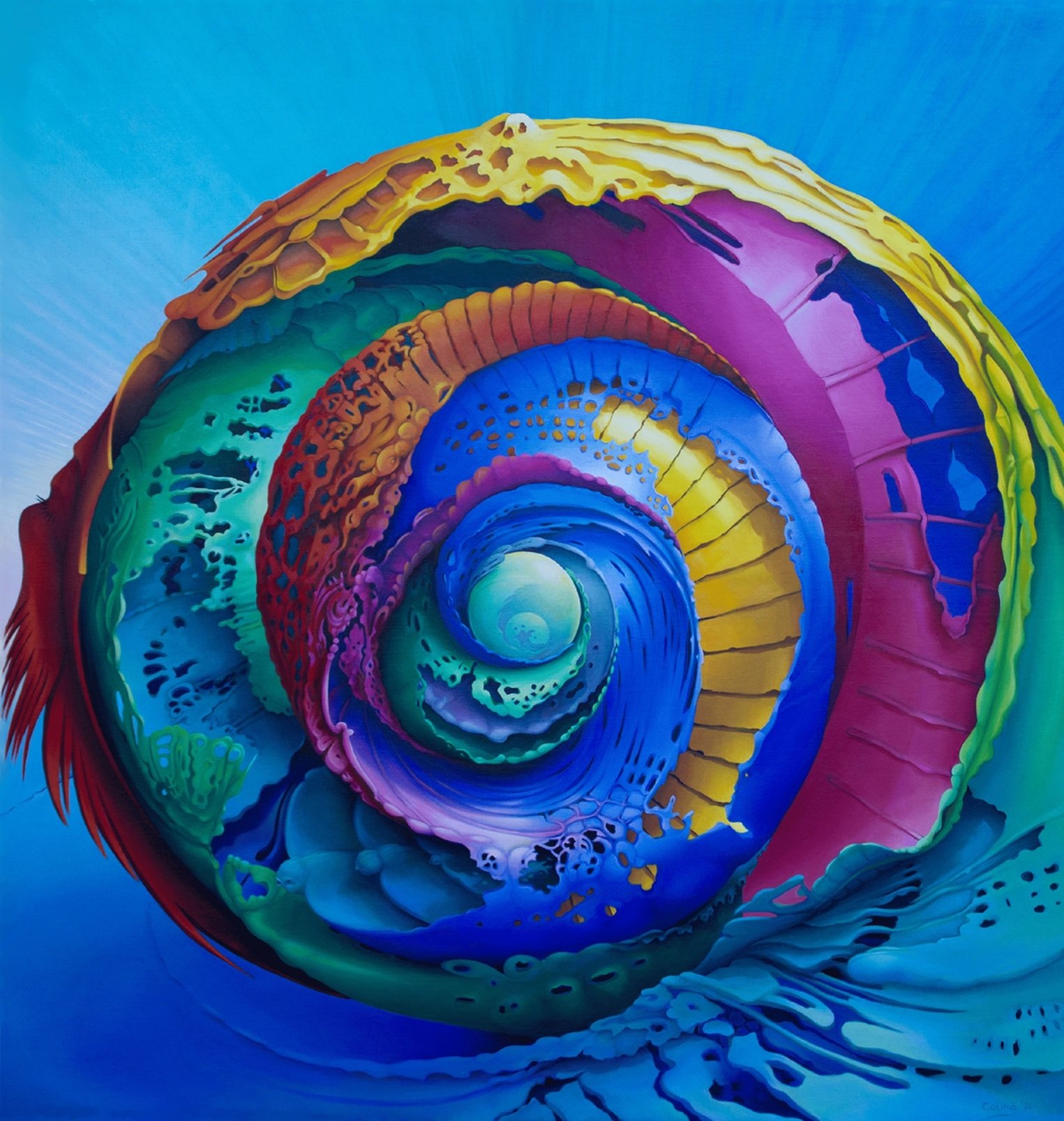
‘Storm’, Oil on Canvas – 100x90 cm
Storm
A raging Storm
Rolling thunder
In the nearby distance
Shatters silence
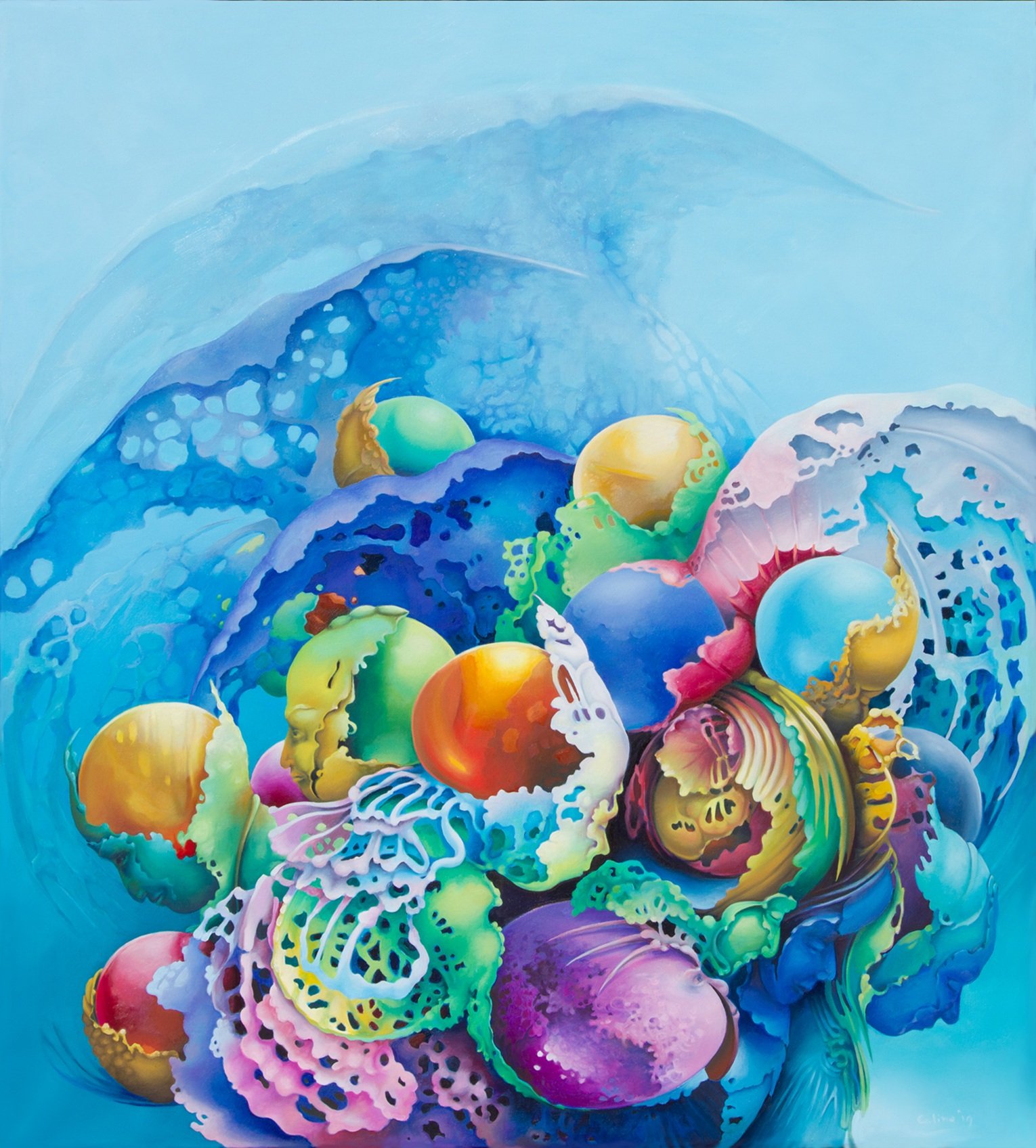
‘Fairytales’, Oil on Canvas – 100x90 cm
Fairytales,
Once upon a time…
Fairytales glow,
From inside-out to outside-in...
Once...
Truth be told,
Within time,
In the end,
After all,
A spark remains...
Your emphasis on “Interfaces” implies a threshold condition, an in-between space where perception, material, and concept converge; could you elaborate on how these interfaces function structurally within the work, and whether they operate as sites of rupture, continuity, or epistemological instability?
The horizon in my work is not a line but a structure.
In the real world and on the canvas, space is built through height, width, length, and depth - and the horizon is the point where these dimensions organise themselves into perception.
It’s a stable orientation, not something that moves or shifts.
I don’t travel toward it; instead, I hold it in my mind.
In that sense, the horizon becomes the meeting point between my inner awareness and the outer world.
It is literal, perceptual, and metaphysical at once.
For me, spatial perception is a form of awareness.
The horizon is where the visible ends, but sensing continues - a threshold where the known and the unknown touch.
Because of this, the horizon becomes a constructed space: a field where inner and outer experience entangle.
It is not a boundary but a condition that allows space to appear.
In the paintings, this horizon is not drawn; it is felt.
It shapes how the forms grow, how depth opens, and how the viewer enters the work.
Your proposition of a “Song to See” suggests not merely a synesthetic analogy but a reconfiguration of aesthetic categories themselves; how does this collapsing of auditory and visual regimes challenge the conventional boundaries of medium specificity, and what new conditions of perception does it open within the act of viewing?
When I describe my work as “A song to see,” I don’t mean that the painting surrounds the viewer as sound does.
A painting hangs on a wall; it is fixed.
What surrounds us is perception itself — the way feelings, music, and spatial awareness move through us.
My paintings participate in that perceptual field.
The rhythm of a line, the tension of a form, the structure of space: these are visual elements that behave like sound in the way they resonate within the observer.
Seeing and hearing are entangled in awareness. I think I see; I hear.
For me, the auditory and the visual arise from the same internal movement.
Rhythm, pressure, breath, and spatial tension - these are not limited to one sense.
They shape how we feel space, how we orient ourselves, and how we perceive depth.
A painting does not physically surround the viewer, but it enters the same perceptual atmosphere that music and emotion inhabit.
“A song to see” means that the work vibrates within the observer’s awareness, not through sound but through the structure of perception itself.
The slow accretion of graphite or oil in your surfaces suggests a temporality that resists immediacy; how do you conceive of duration within your work, and is the finished piece to be understood as a sedimentation of time or as an interruption of it?
Duration in my work is not about time passing but about holding a state of awareness.
Time doesn’t really enter a twodimensional surface for me; it’s not a dimension I try to represent. When I work, I’m not accumulating time but maintaining concentration.
The slow accretion of oil or graphite is a discipline, a routine, a way of staying inside a perceptual state.
The finished piece is not a sedimentation of time or an interruption of it.
It is simply the moment when awareness has reached its form.
“I think I see” is a timeless condition.
Awareness fades into infinity; time passes by but does not enter my consciousness as I work.
The materials are patient - they don’t interrupt.
What ends the session is not time but the loss of concentration when my hands tyre.
So, the work is not temporal in the usual sense. It is built from attention, not duration.
The painting holds the trace of that awareness, not the trace of time.
Your engagement with organic growth, where forms seem to evolve rather than be composed, raises questions about authorship and intentionality; to what degree do you relinquish compositional authority to the internal logic of the work, and how does this position intersect with broader discourses on process based art?
My work engages organic growth not as a stylistic choice but as a structural condition.
The forms do not feel composed because I do not approach them as compositions to be controlled. Instead, I treat the work as a space of exchange — a dimensional field where height, width, and depth are given, but the movement within that field is generated through resonance.
For me, resonance is the only real movement available in painting.
Nothing shifts unless the relation between me and the work vibrates.
In that sense, authorship is not a matter of imposing form but of listening to the internal logic that emerges as the work grows. I do not relinquish authority; I relocate it.
The authority lies in the exchange between painter and painting, not in the dominance of one over the other.
This position intersects with processbased discourse, but from a different angle.
Processbased art often foregrounds material agency or the relinquishing of control.
Processbased art often foregrounds material agency or the relinquishing of control.
It is about recognising that the work’s internal logic and my own perceptual horizon meet in a shared space — a single layer that can be entered from many sides.
The work evolves through this reciprocal vibration.
It is neither authored solely by me nor by the material; it is authored in the resonance between us.
In that sense, the organic growth in my paintings is not the absence of intention but the presence of attunement.
The work grows because I allow its logic to unfold, and I respond to it.
The result is not a composed image but a field of relations - a space where interpretation remains personal, and where the viewer later enters the same exchange from their own horizon.
Given your long-standing engagement with European art histories, from the spatial paradoxes of M. C. Escher to the atmospheric luminosity of J. M. W. Turner, how do you negotiate influence without citation, and what does it mean for your work to inhabit, rather than reference, these historical conditions?
My engagement with European art histories is not a matter of citation but of inhabitation.
Artists like M. C. Escher and J. M. W. Turner form part of the perceptual architecture I grew up inside - not as references to be quoted, but as conditions that continue to shape how space and light are understood.
Their work is not something I point toward; it is something I move through.
Escher’s spatial paradoxes and Turner’s atmospheric luminosity both operate within a field where perception is unstable, where space is not fixed but continually negotiated.
I don’t borrow their imagery.
Instead, I work inside the same questions: how space folds, how light dissolves, how perception shifts without boundaries.
Influence becomes a form of continuity, not citation — a resonance across time rather than a gesture of reference.
This is why my work inhabits these historical conditions rather than illustrating them.
The painting becomes a space of exchange; a single layer entered from many sides.
The internal logic of the work grows through attunement rather than control.
I don’t relinquish authorship; I relocate it into the resonance between myself and the emerging form.
The work evolves through this exchange, much like Turner’s atmospheres or Escher’s recursive structures evolve through their own internal tensions.
To inhabit history is to allow its unresolved perceptual questions to remain active.
It means letting those vibrations continue without repeating their forms.
My paintings participate in the same ongoing conversation about space, light, and the instability of seeing - not by referencing the past, but by living inside its conditions and extending them forward.
Your assertion that “infinity apparently comes within reach” through spatial contemplation risks a metaphysical claim that sits uneasily within contemporary critical discourse; how do you reconcile this pursuit of the infinite with the material constraints of the medium, and does your work ultimately propose resolution or perpetuate an unresolved oscillation between the finite and the boundless?
When I speak of infinity “coming within reach,” I’m not making a metaphysical claim in the classical sense.
I’m describing a perceptual condition - a moment when spatial contemplation loosens the boundaries of the finite without ever escaping material reality.
Infinity, for me, is not a destination but a tension, a vibration that arises when the limits of the medium and the boundlessness of perception meet.
Painting is, of course, materially finite: a surface, a scale, a set of pigments.
But perception is not bound by those limits. It moves, expands, folds, and reconfigures itself.
My work operates in the space where these two forces - the finite and the boundless - enter into exchange.
The painting becomes a dimensional field in which height, width, and depth are fixed, yet perspective remains without boundaries.
Infinity is not depicted; it is felt as resonance.
This is where my practice diverges from metaphysical ambition and aligns more closely with phenomenological inquiry.
I’m not proposing transcendence.
I’m attending to the way perception stretches itself inside material constraints.
The infinite appears not as an absolute, but as an oscillation - a continual negotiation between what is given and what can be imagined, between the surface and the space it opens.
So, the work does not resolve the tension between the finite and the infinite.
It keeps it alive.
The painting holds that oscillation, not as a contradiction to be solved, but as a condition to be inhabited.
The infinite “comes within reach” only because the viewer’s perceptual horizon expands inside the work’s material limits.
What emerges is not metaphysics, but a form of attunement - a resonance between the constraints of the medium and the boundlessness of perception.
In that sense, my work perpetuates the oscillation rather than resolving it.
The painting becomes a site where the finite and the infinite coexist in a shared vibration.
Infinity is not claimed; it is approached, momentarily, through the movement of perception within the stillness of matter.
https://www.symonacolina.info/
https://www.facebook.com/Beeldendekunst
https://www.instagram.com/whispered.wind
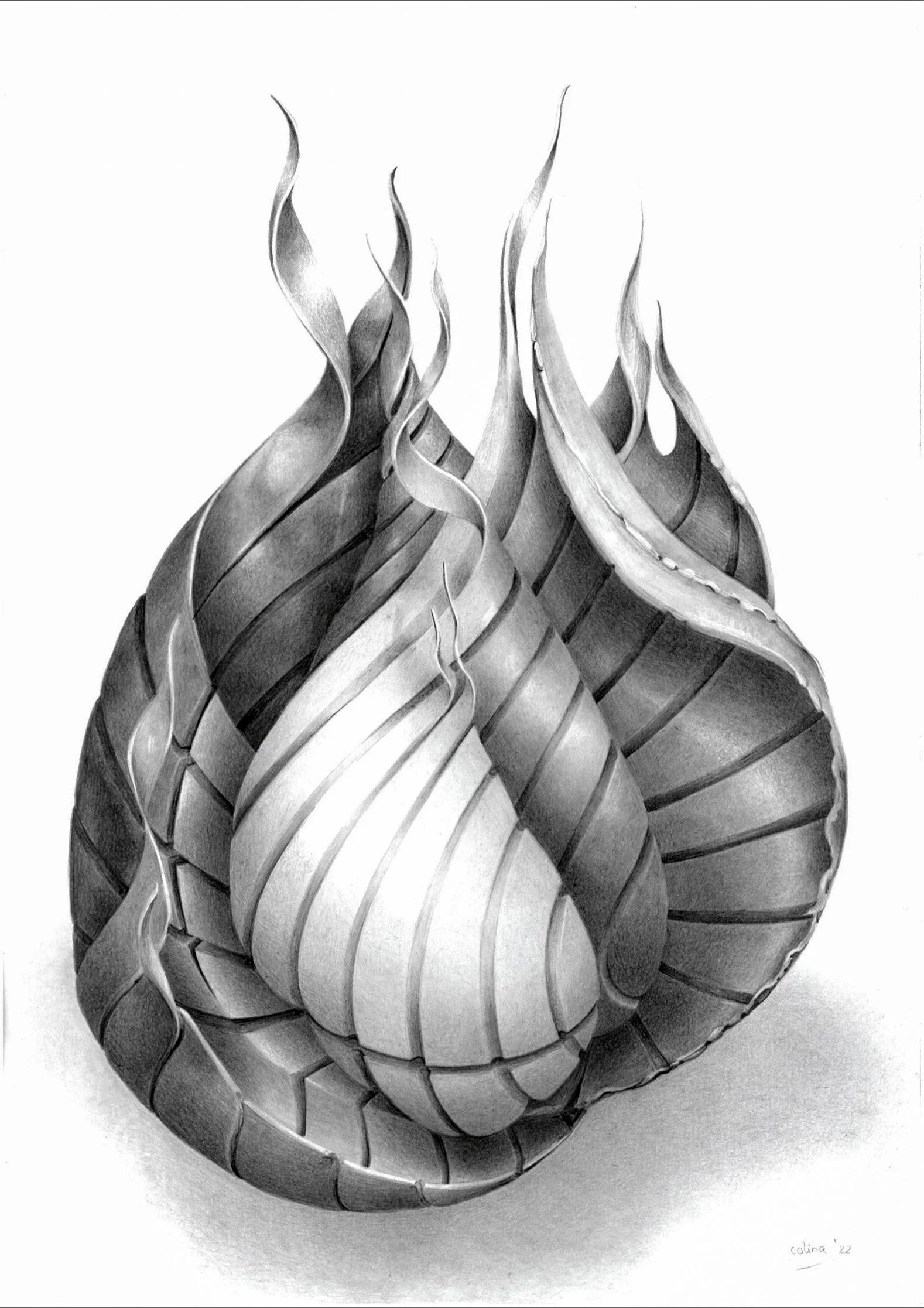
Antracite - Pencil on Paper, A3
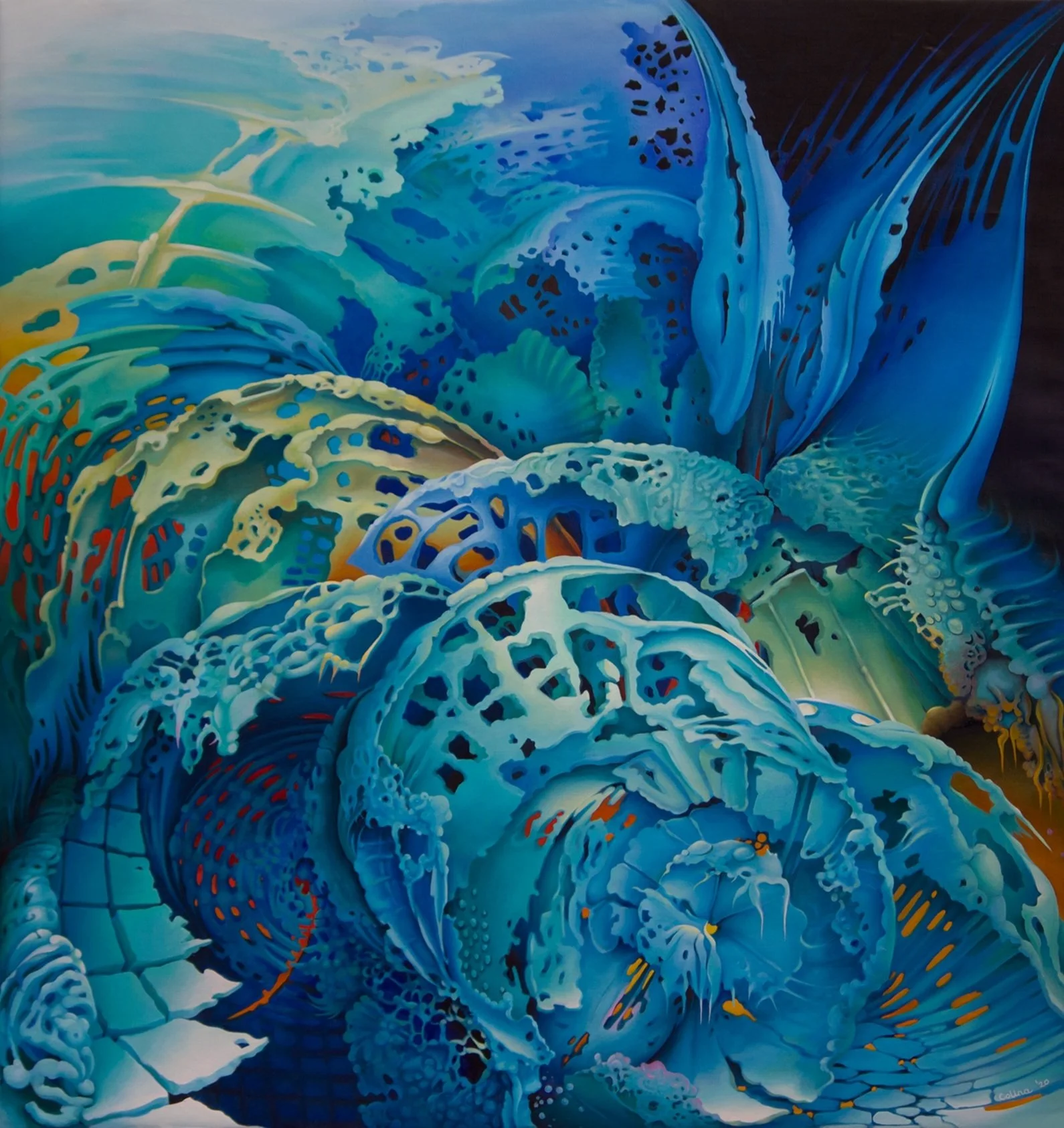
Cinders - Oil on Canvas: 100 x 90 cm
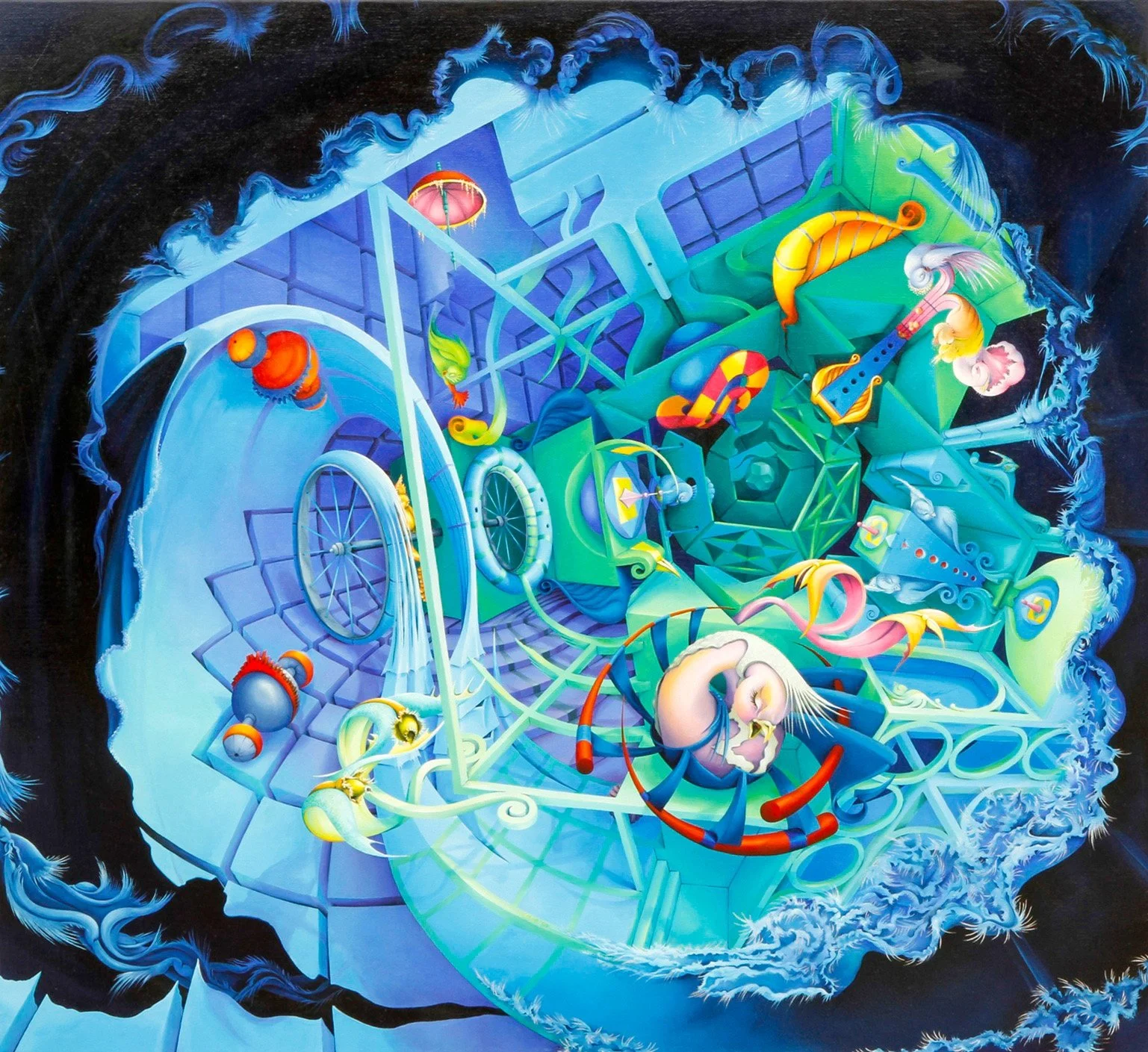
Dodecaedron - Oil on Canvas: 100 x 110 cm
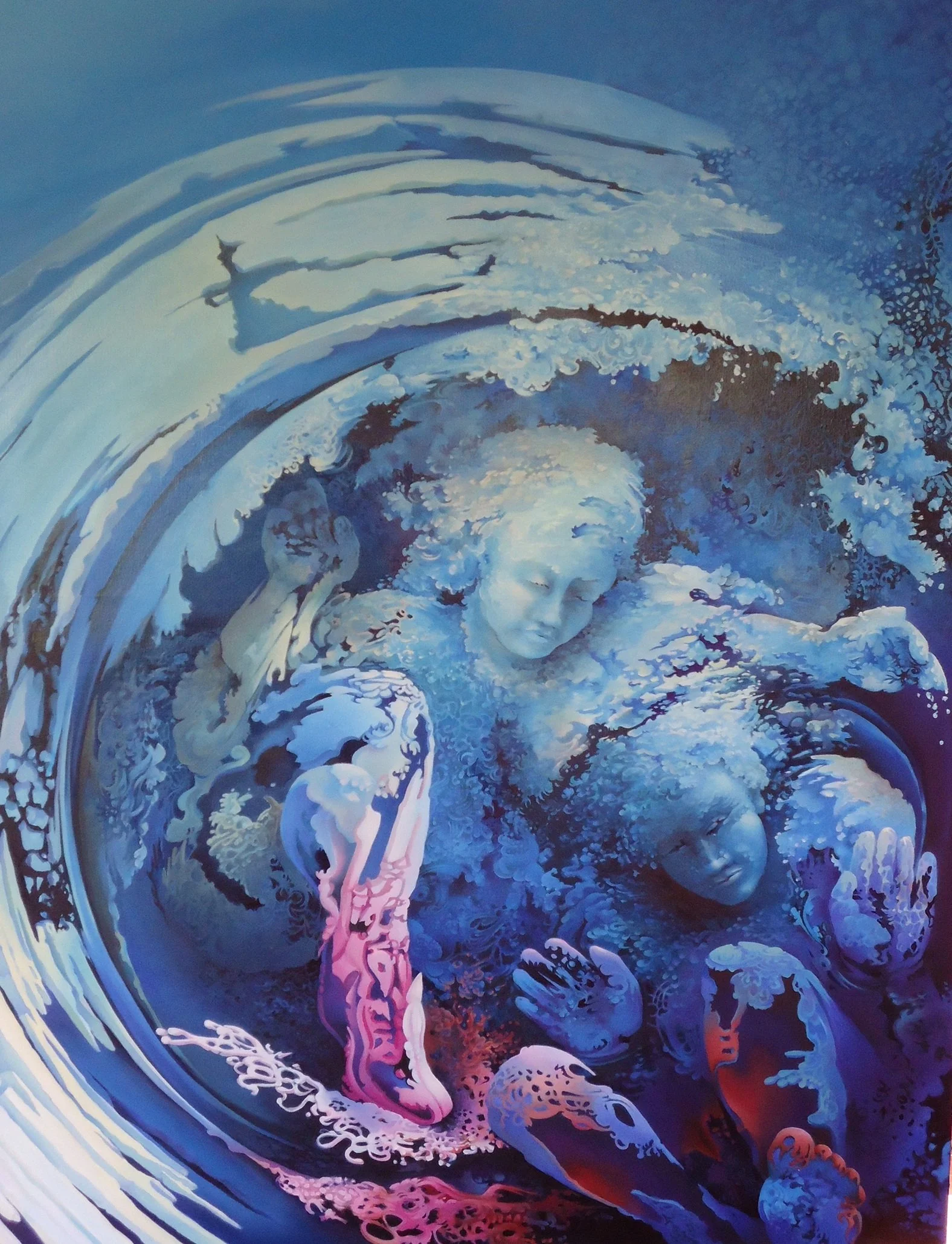
Ecumes de mère - Oil on Canvas: 80 x 100 cm
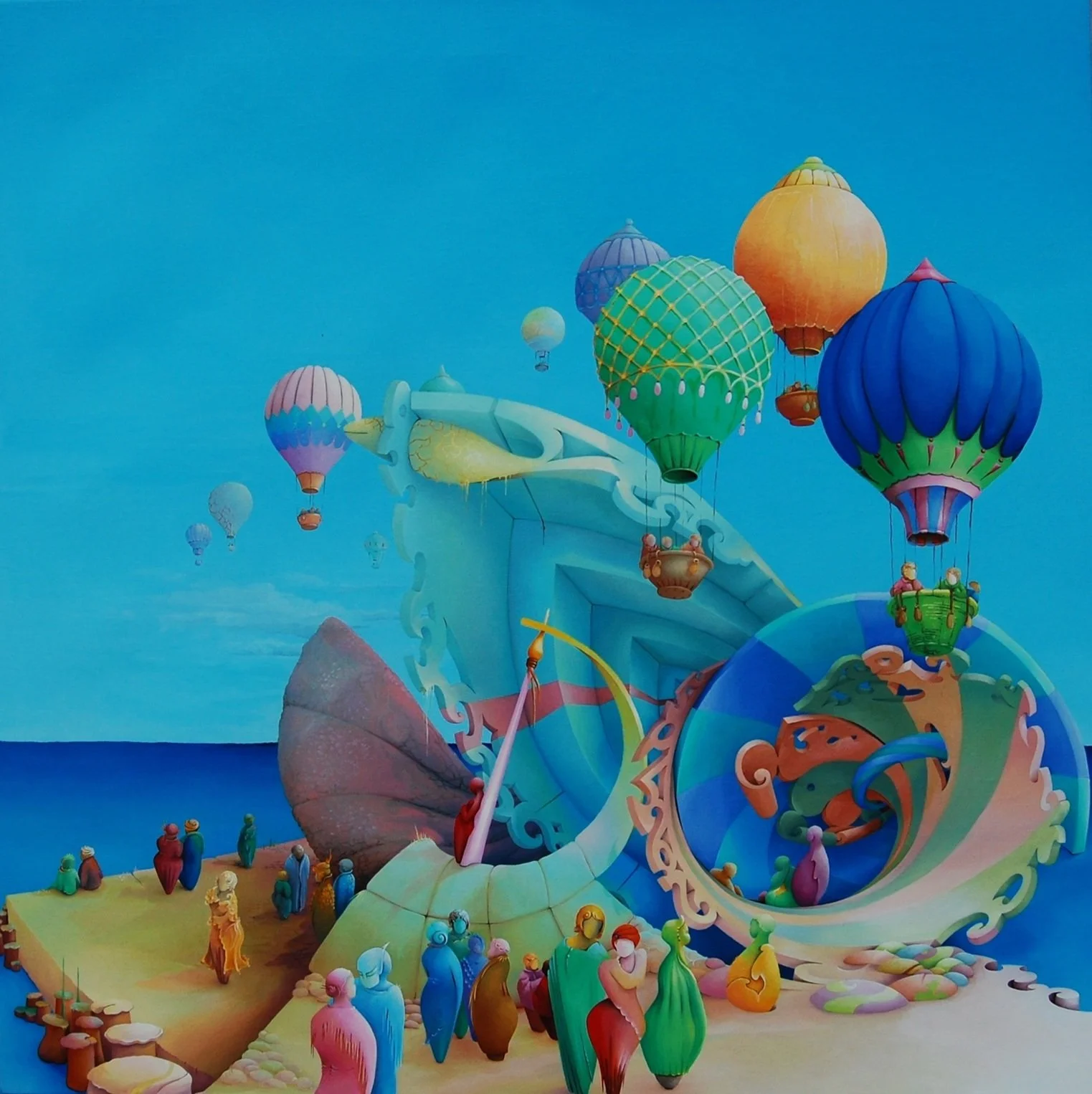
Fiera - Oil on Canvas: 110 x 110 cm
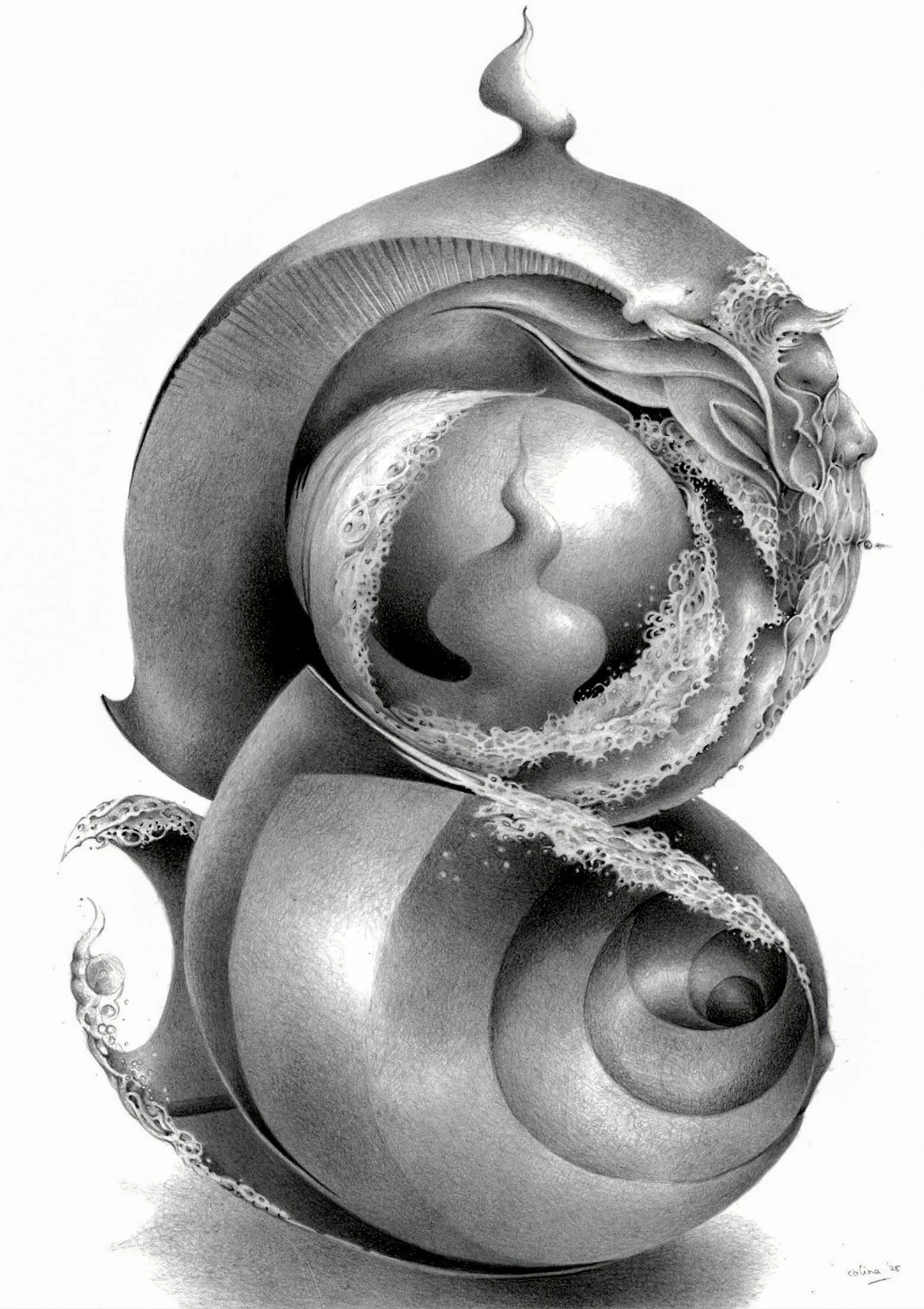
H 8 (Motorized) - Pencil on Paper, A3
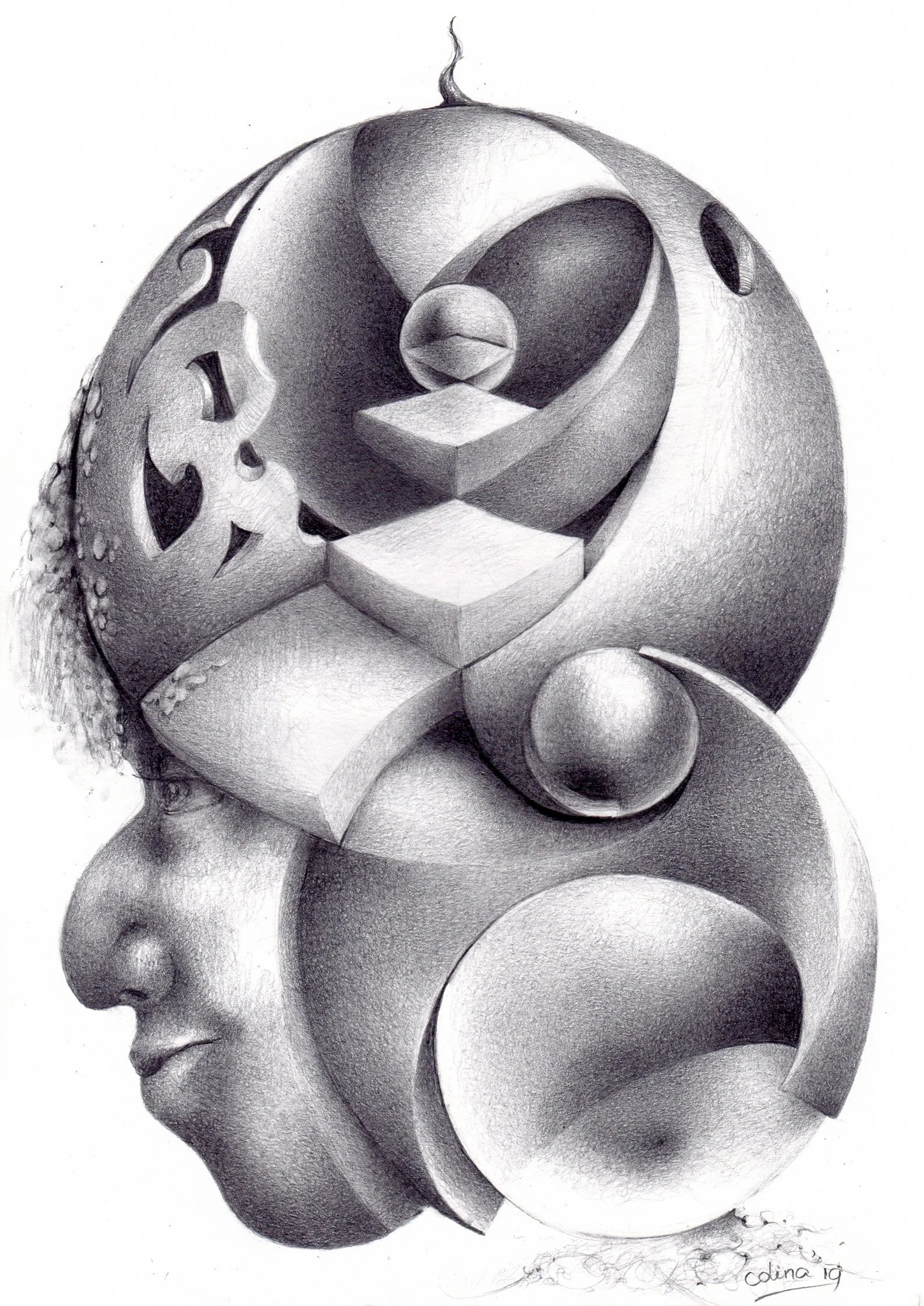
Il Matematico - Pencil on Paper, A4
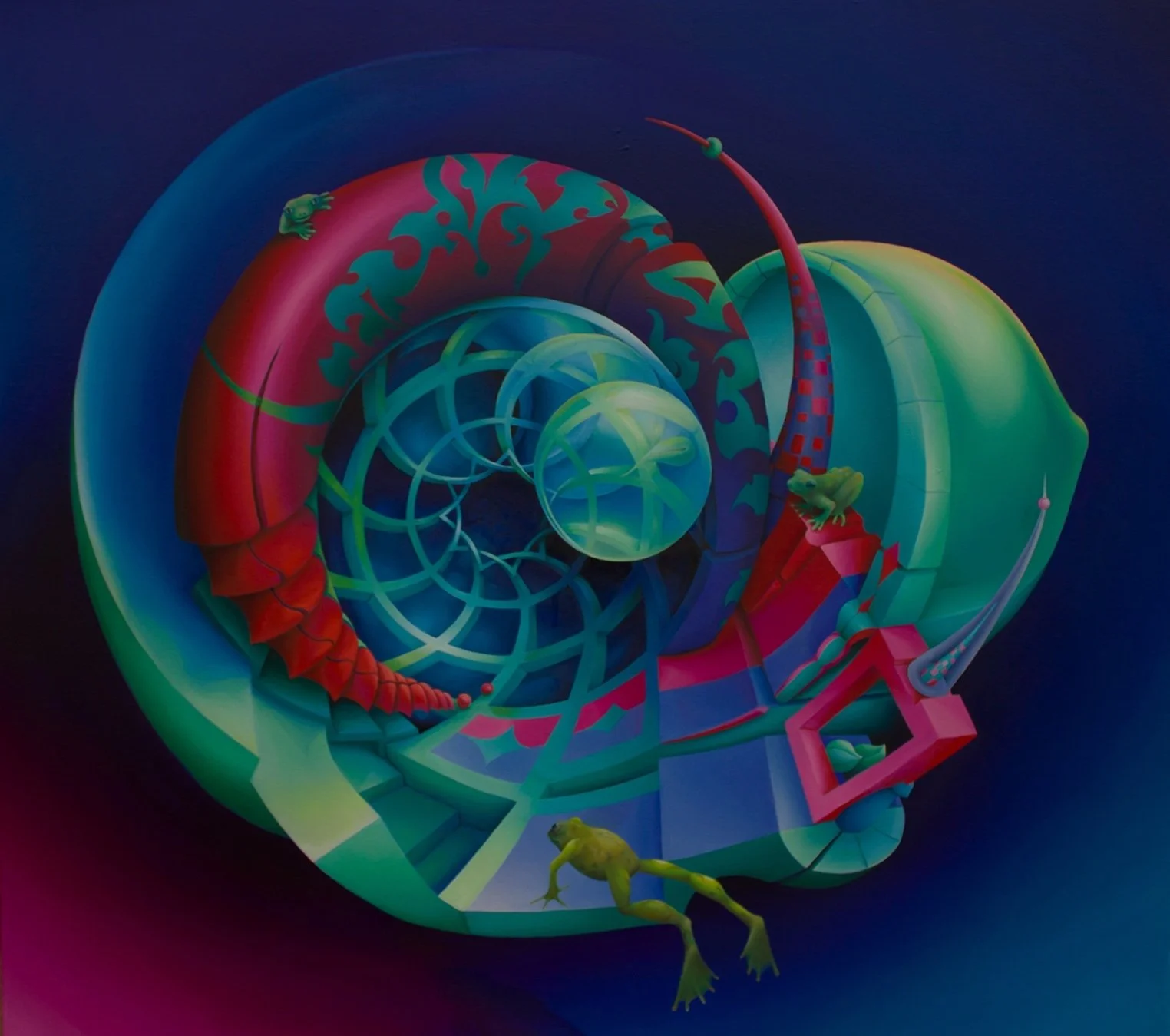
Jumpers - Oil on Canvas: 80 x 90 cm
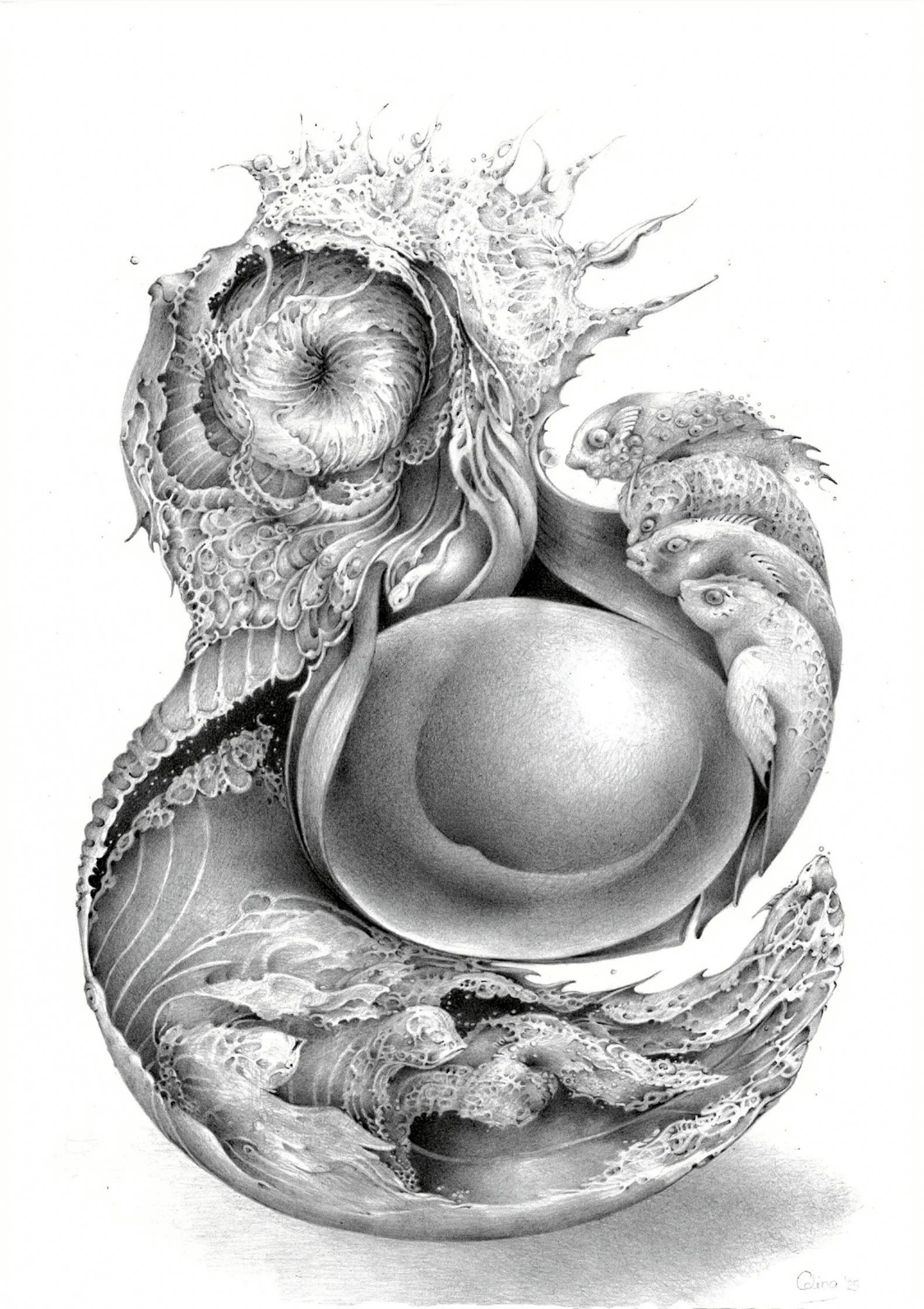
Metamorfosi - Pencil on Paper, A3
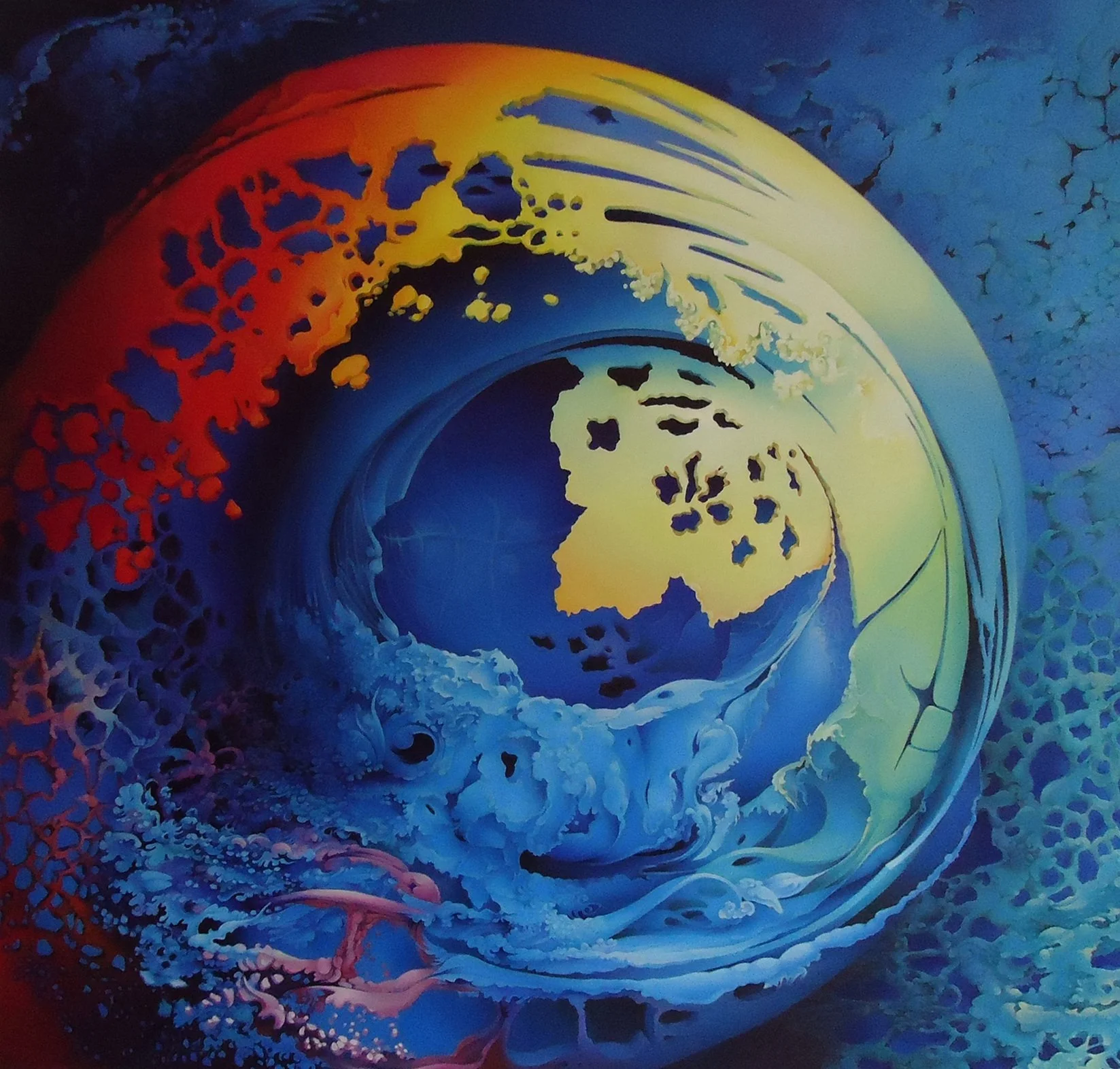
Open Water - Oil on Canvas: 80 x 90 cm
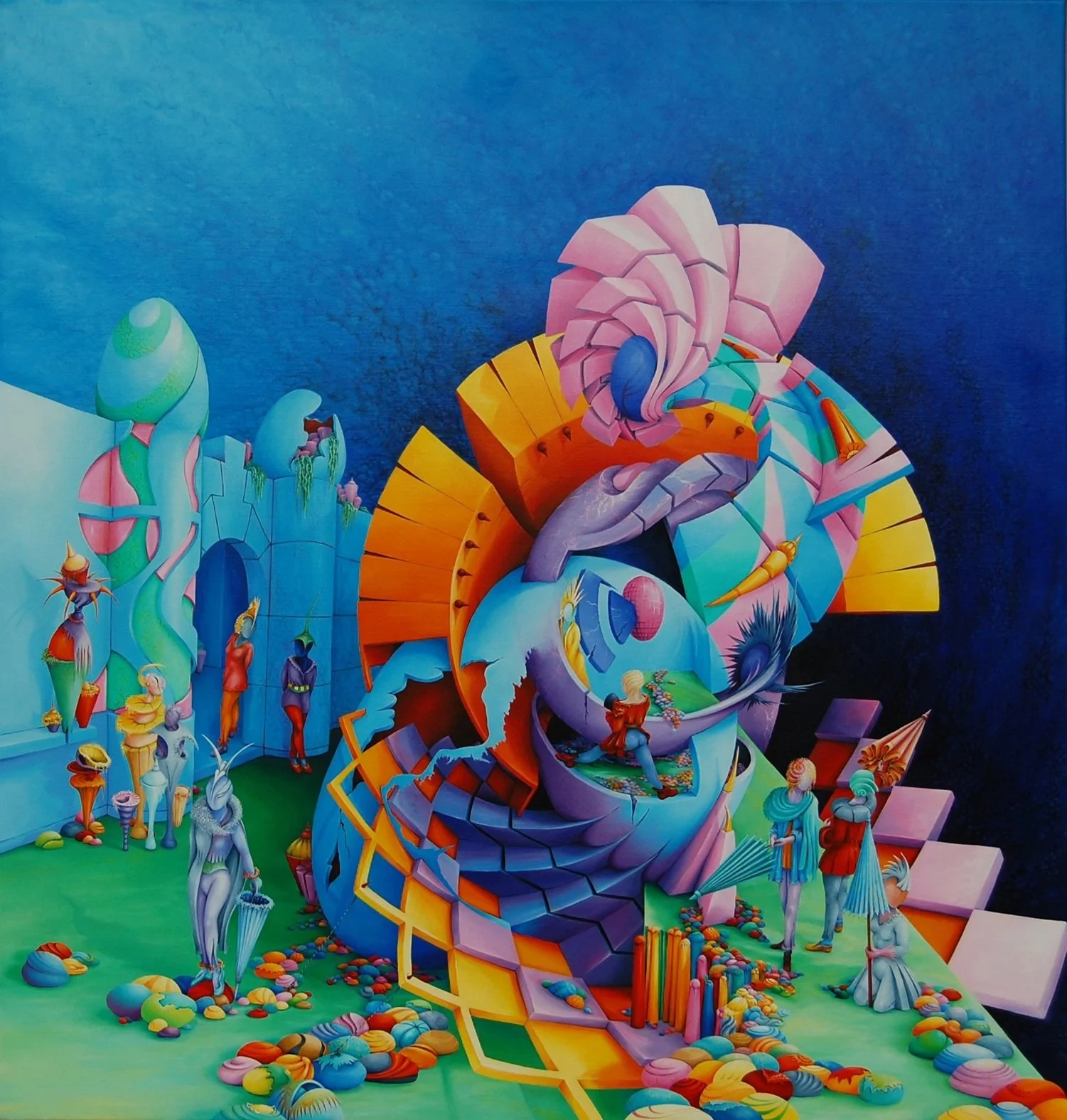
Parapluutjes - Oil on Canvas: 100 x 105 cm
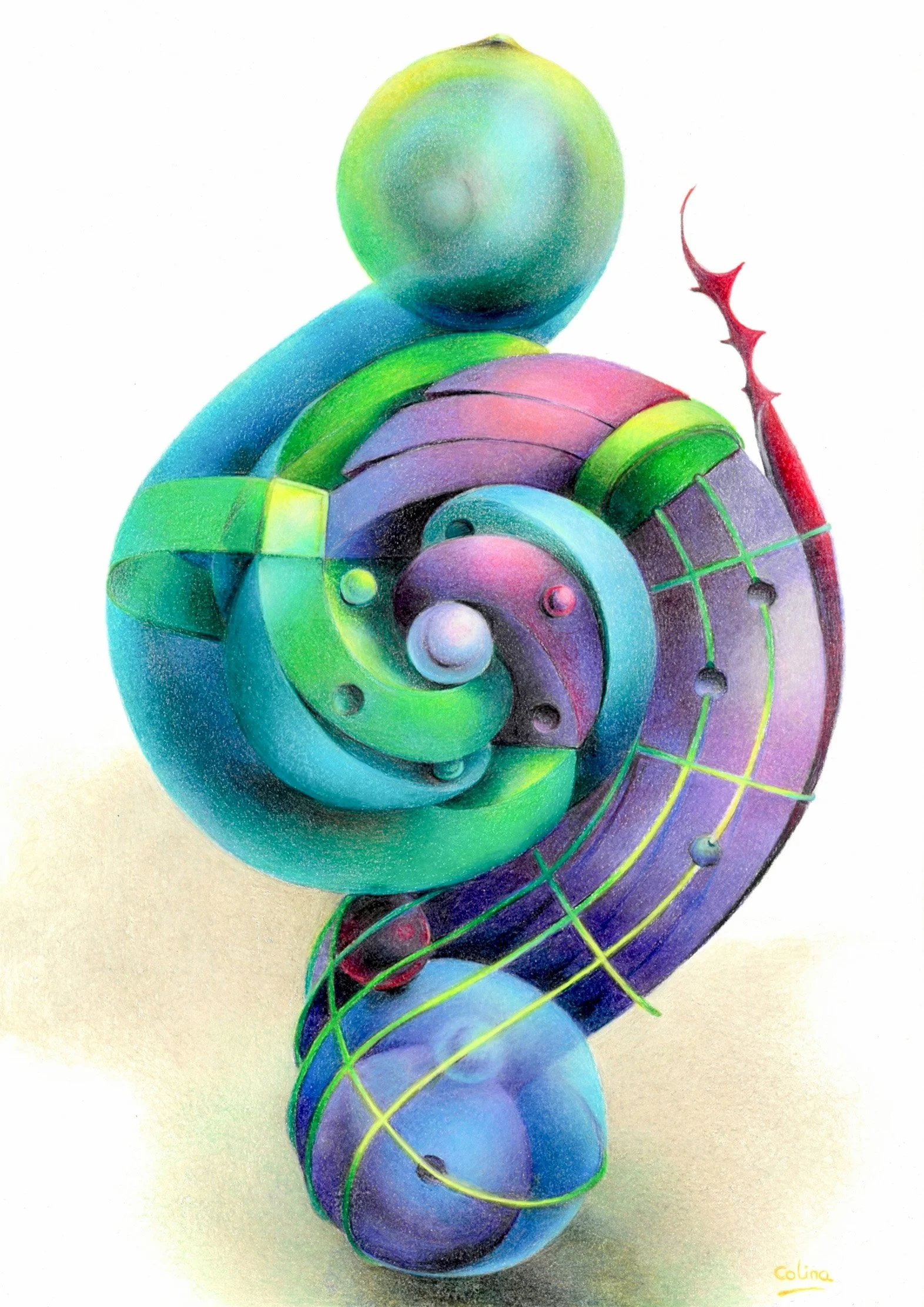
The Ballad of the Seahorse - Pencil on Paper, A3
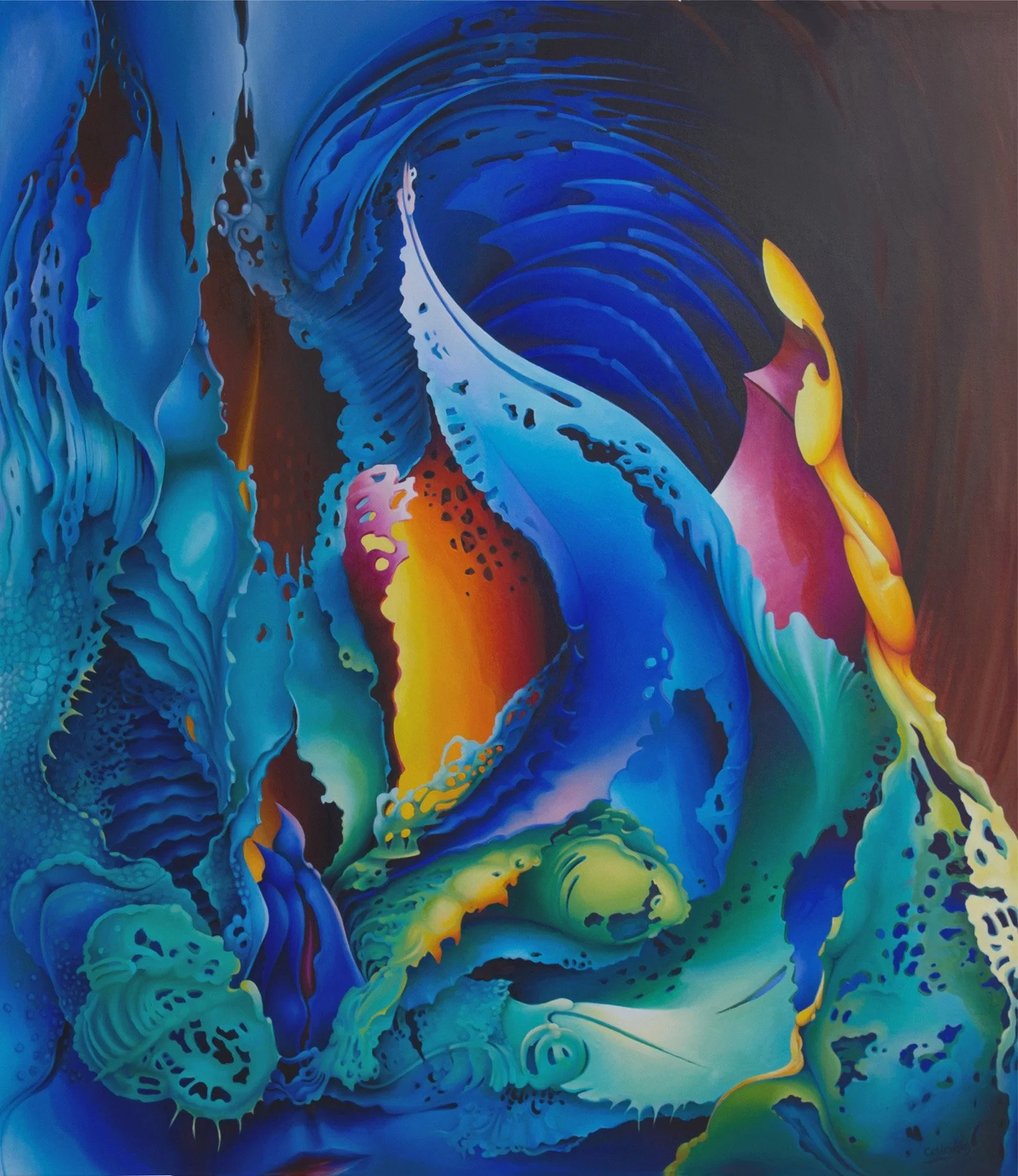
The Breathing - Oil on Canvas: 100 x 90 cm
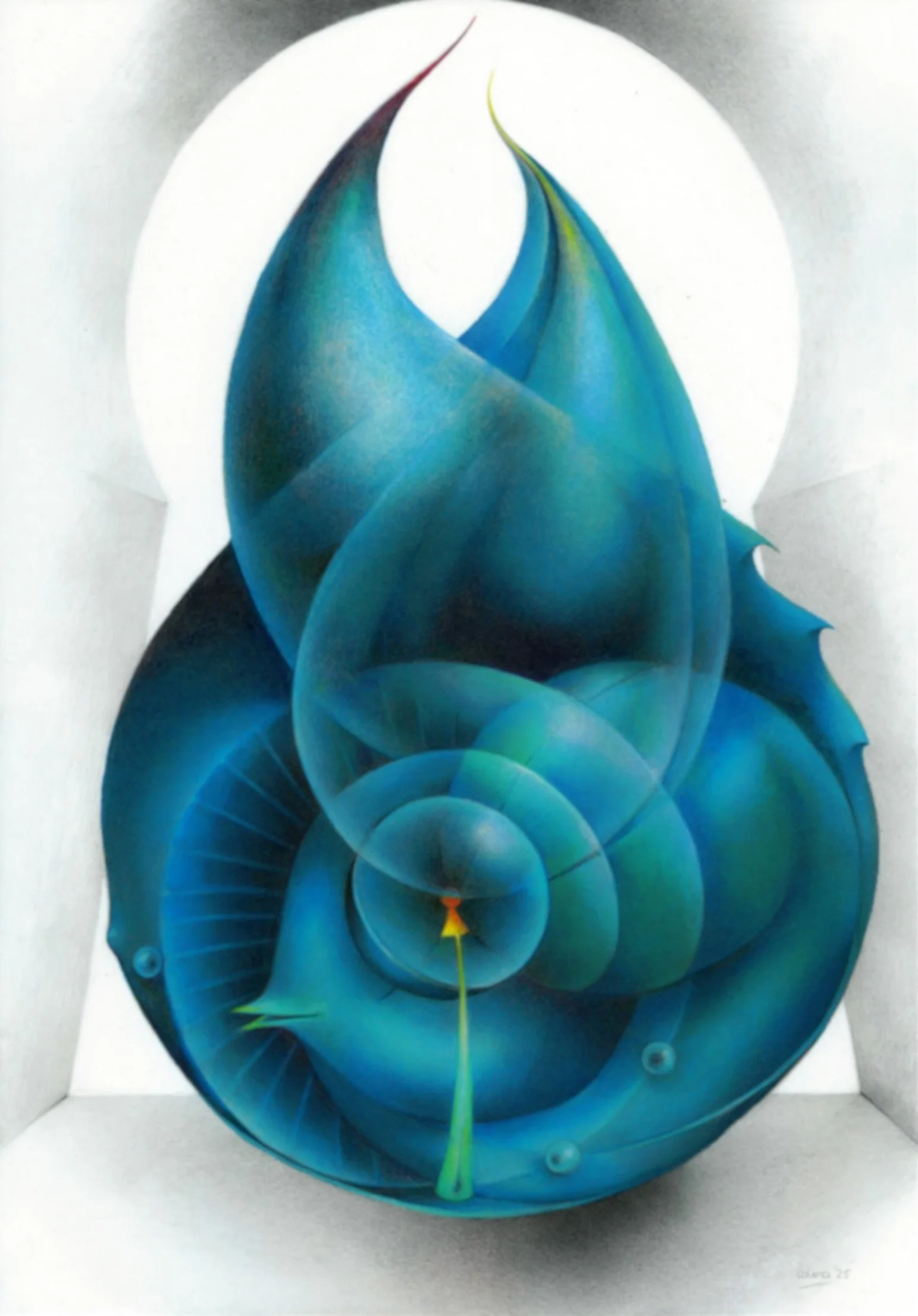
The Shadow Key- Pencil on Paper, A3
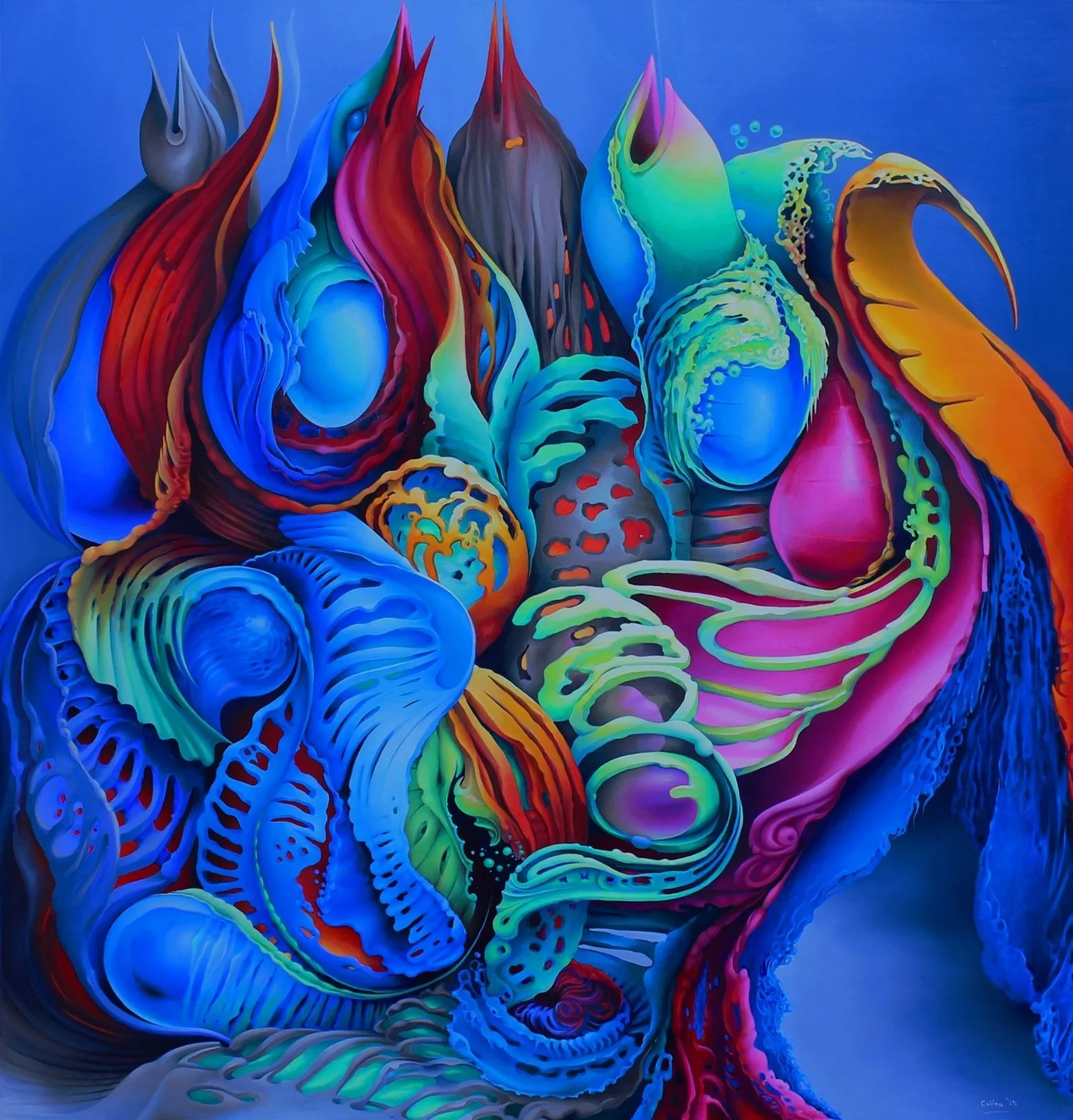
The Wall - Oil on Canvas: 95 x 90 cm
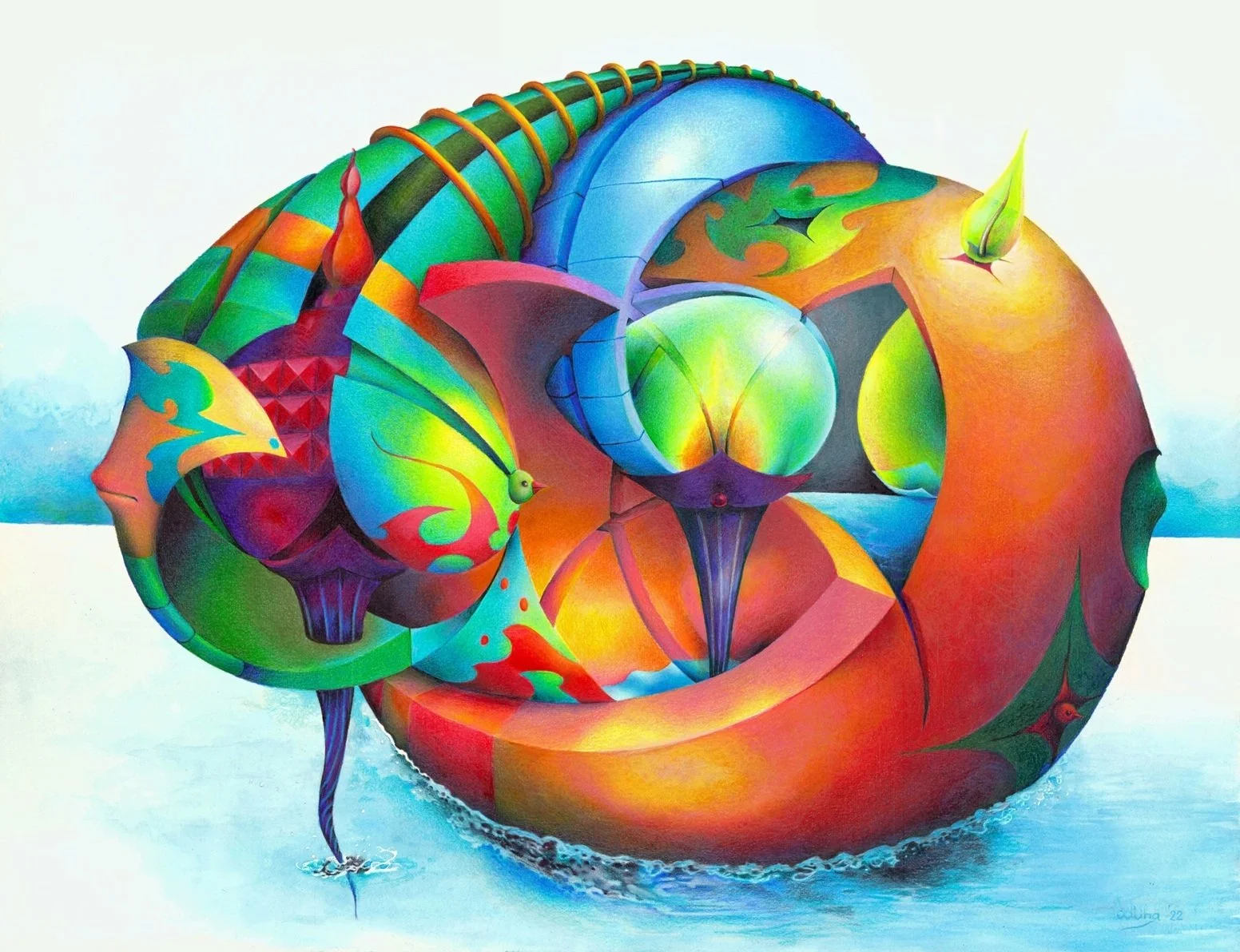
A Different Horizon - Pencil on Paper, 56x76 cm
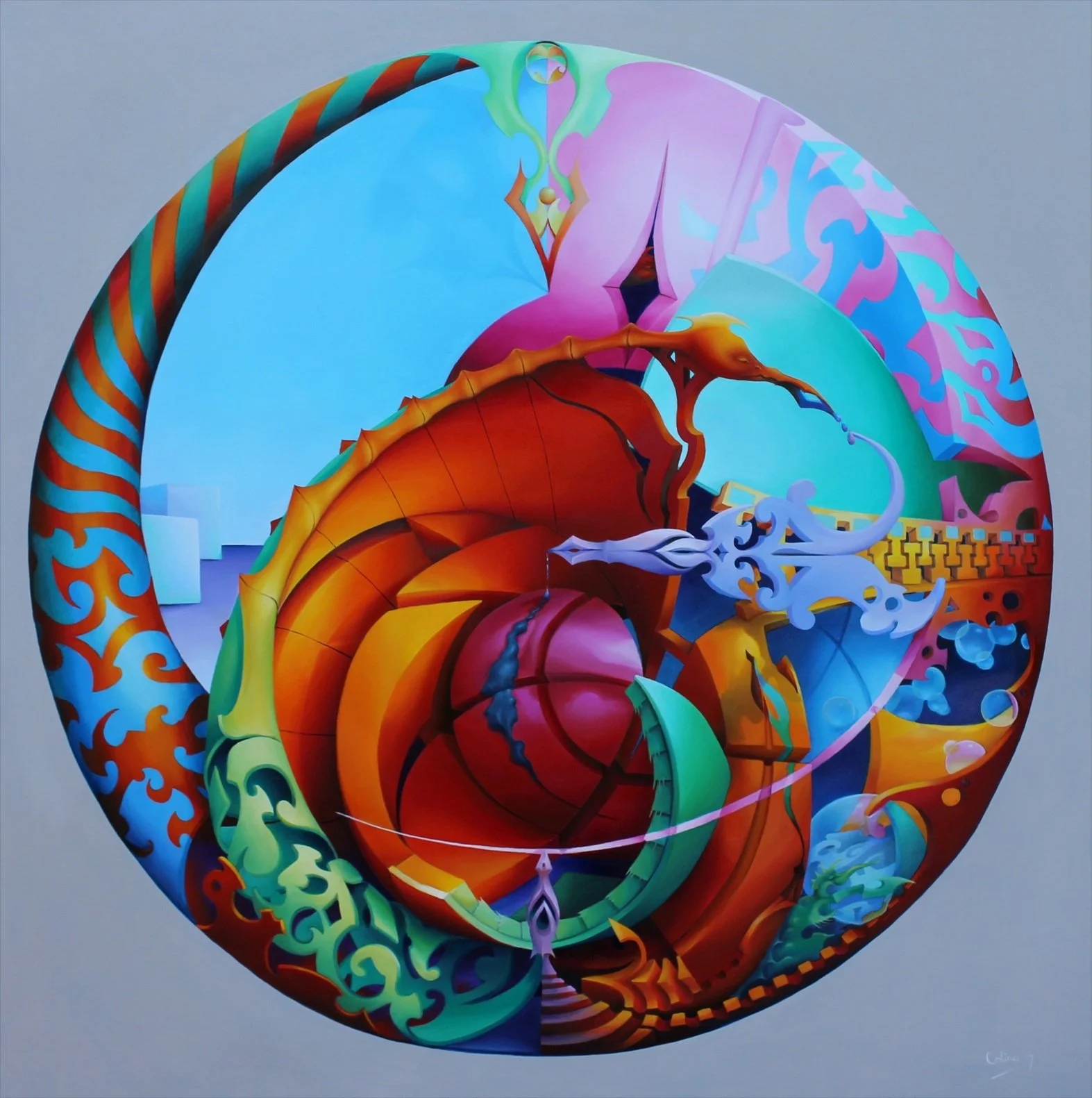
Thunderball - Oil on Canvas: 100 x 100 cm
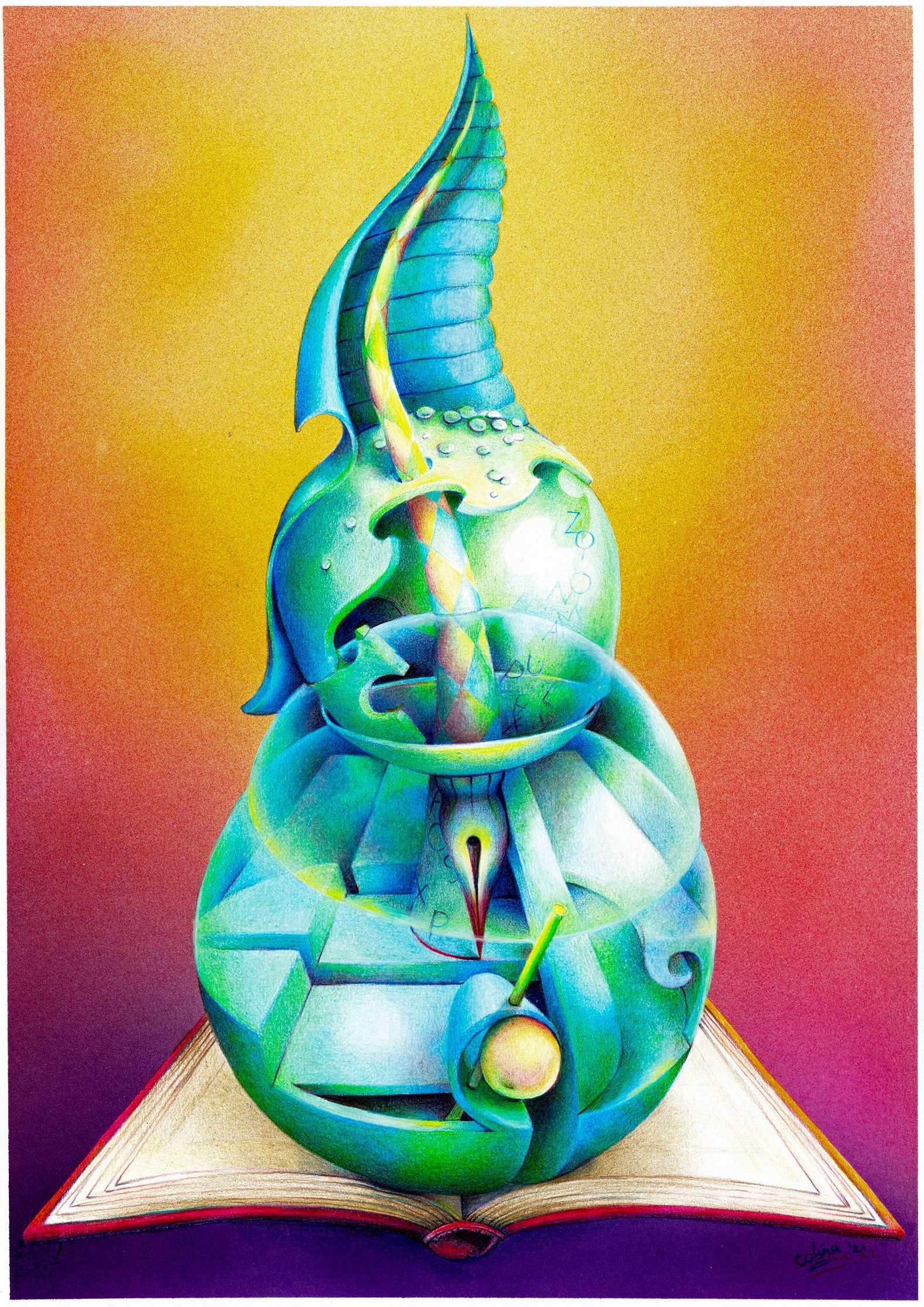
The Inkpot - Pencil on Paper, A3