
Virginie Bailly
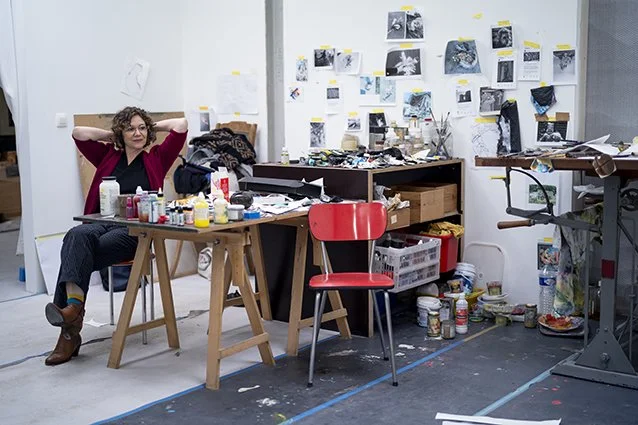
Virginie Bailly lives and works in Brussels. Her multidisciplinary work is symbolised by five key concepts: luminosity, gesturality, friction, expansion and the moment. It often originates from a multiple perspective, the impression of a photographic image and a reflection on the surrounding space, which is becoming increasingly complex and chaotic. The questioning of these experiences translates into a process in which the succession of intense transparent layers, combined with contrasting light intensity and an eye for white spaces, is crucial to creating depth, form and emotion. The combination of different techniques and the interplay between action, rest and letting things happen without a fixed goal, but allowing the image to shatter, blur and soften with paint and colour, creates a lively, dynamic construction that cannot be grasped at a glance. Her paintings are like mental landscapes in which splinters of reality, motifs, current events and fragments from art history are reduced to ephemeral remnants.
Hilde Nijs, 2026
Virginie Bailly
°1976, Brussels
Lives and works in Brussels, Belgium
Education
2000–03: Postgraduaat, Hoger Instituut voor Schone Kunsten, Antwerpen (BE)
1995–99: Vrije Kunsten, optie schilderkunst, Hogeschool Sint-Lukas Brussels, laureate schilderkunst 1999 (BE )
1998: Socrates exchange, Ecole Supérieure des Beaux-Arts Montpellier (FR)
Awards
2022: Commission for a painting for the apse in a chapel, Reichenau (AT)
2015: STRABAG Art Award International, Strabag Kunstforum Vienna, (AT)
2007: Laureaat Prijs Jonge Belgische Schilderkunst, Paleis voor Schone Kunsten Prix Jeune Peinture Belge, / Palais des Beaux-Arts, Brussels, Belgium
2000: nomination Gaverprijs, Waregem (BE)
1999: Talens Prijs voor Schilderkunst, Sint-Lucas Brussel, Brussels, (BE)
Solo exhibitions
2024: Virginie Bailly, Huisburg, Duisburg (B)
2019: A sedimentation of the mind, Transit Galerie, Mechelen (BE)
2018: Summer Perspectives, curated by Frederik Vergaert, Hosted by Mimi Huys, Knokke (BE)
Lichtung, Galerie Straihammer und Seidenschwann (AT)
2017: Effervescent, Transit Galerie, Mechelen (BE)
2016: Pareidolie, Galerie Straihammer und Seidenschwann (AT)
2015: Summit fever, STRABAG Kunstforum, Vienna (AT)
Le Mont Analogue. De Garage, Mechelen (BE)
2014: Tablatuur, Transit galerie, Mechelen (BE)
2013: Interpunctions, YIA ART FAIR #03, Transit Galerie, Bastille Design Center, Paris (FR)
Espèces de points, Phoebus, Rotterdam (NL)
2011: De logica van de mierenhoop, Transit Galerie, Mechelen (BE)
2009: Vide - Plein, galerie Transit, Docks Art Fair, Lyon, (FR)
Landscape on Table, galerie Transit, Mechelen (BE)
2008: Ben jij dat op die berg van rijst?, De Bond, Brugge. Curated by Michel De Wilde (BE)
Behind the wall there’s a mop for every day, KULAK, Kortrijk Curated by Christa Vyvey (BE)
Group exhibitions (selection)
2025: huMANN Identities, De Toverberg verbeeld, Ninove (BE)
A Female Touch, Gallery Sofie Van den Bussche, Brussel (BE)
2024: Landscape II, Artecont Galerie, Vienna (AT)
2023: Salon Blanc, Virginie Bailly – Kato Six, Oostende (BE)
Senza Parole, Virginie Bailly, Gallery Sofie Van den Bussche ( BE)
2022: Two Positions in Painting, Virginie Bailly – Emmanuelle Quertain, Hopstreet Gallery,Deurle (BE)
Herentals (BE)
25 + 1 Strabag Art Award, Art Lounge, Vienna (AT)
2021: VLAK, De Halle,Geel (BE)
2019: Summer Perspectives, Hosted by Mimi Huys (BE)
Arture#9, Curated by Sven Vanderstichelen (BE)
2017: Workflow, CC Zwijgershoek, St-Niklaas, Curated by Wim Wauman (BE)
Odelay, Daniel Karrer – Virginie Bailly, CCHA, Hasselt (BE)
2015: Looking Back/Going Forward, Galerie Straihammer und Seidenschwann (AT)
A Belgian Politician, Galerie Marion De Cannièrre, Antwerp (BE)
A fraction too much Friction, Ermias Kifleyesus, Sofie Haesaerts, Virginie Bailly, Galerie d’Apostrof, Meigem (BE)
2001: De Toets van de schilder, Biennal of Painting, Museum van Deinze en de Leiestreek, Curated by Wim Lammertijn. (BE)
Schriftuur, De Bond, Brugge. Curated by Michel De Wilde (BE)
LandscapesCitiesPeople, Netwerk, Aalst. Curated by Frank Maes (BE)
2010: DesRives - Ontdubbeling, Dominique Leroy-Virginie Bailly,curated by Marina Pirot,Nantes,(FR)
2009: Landschappelijk, Roger Raveel museum, Deinze. Curated by Piet Coessens (BE)
Fading, museum Elsene. Curated by Sven Vanderstichelen (BE)
2008: Behind the wall there’s a mop for every day, Xu Huijing –Virginie Bailly, Chinese European Art Center, Xiamen, (CH)
2007: Prix de la Jeune Peinture Belge/Prijs Jonge Belgische Schilderkunst, Palais des Beaux-Arts/Paleis voor Schone Kunsten, Bruxelles/Brussel (BE)
2006: Freestate, Militair hospitaal, Bredene. Curated by Hendrik Tratsaert-Lieven Vd Abeele (BE)
Wat Is / Wat Zou Kunnen, W139, Amsterdam. Curated by Kristof Van Gestel (NL)
Artist - in - residence progams
2021 Château de Suronde, Rochefort-sur-Loire, France
2015 STRABAG Kunstforum, Vienna, Austria
2012 Isola Comacina, Italy
2008 Chinese European Art Center, Xiamen, China
2006 Vis-à-Vis Artlab, Xiamen, China
Work in public collections
Nationale Bank van Belgie (B)
Ministerie van Buitelandse Zaken België (Viëtnam)
Musée d’Ixelles (B)
Biography
Herbarium, 2011
Parafrasen, 2015
Odelay, 2017
Virginie, your paintings seem to operate less as stable compositions than as provisional fields in which image, gesture, and fragment compete for visibility. How do you conceive of the canvas as a site of negotiation between representation and erasure, rather than as a surface destined for resolution?
I perceive the white canvas or paper as an open, boundless space, more like a three-dimensional space than a flat surface. As the start of a climb, I had to imagine myself as a mountaineer. In terms of the process, layers of painting and mixed-media interventions are built up upon one another. Each intervention is an ‘action’ that constantly formulates a response to the previous one. Every action, whether figurative, recognisable, gestural, abstract, rational or intuitive, possesses an autonomous power and correlates with the other elements. The spaces in between connect the colourful painterly diversity of a field of tension in the making. The friction, the suspension created by the interplay of attracting and repelling visual building blocks and layers of meaning, forms a mental landscape. My works are thrilling experiences; they are unfolding in the making.
Much of your work appears to treat the image as a residue, a sediment left behind by processes of collision, layering, and dissolution. To what extent do you think of painting as an archaeological act, in which meaning is unearthed rather than constructed?
In Robert Smithson's collected writings, Virginie Bailly came across the idea that our minds and the earth are in a constant state of erosion "(...) mental rivers wear away abstract banks, brain waves undermine cliffs of thought, ideas dissolve into stones of ignorance, and conceptual crystallisations disintegrate into deposits of granular reason. (...) Her artistic practice translates into a flowing river where the water leaves sediments on the banks of the mind. Unlike most artists, she does not work as an observer. She does not look at reality from a distance, but stands in the middle of the mud of reality itself. This allows her to connect and shape all kinds of influences from within, making experience and the aspect of time important parts of the painting process. Her paintings are like mental landscapes in which splinters of reality, motifs, current events and fragments from art history crystallise into fleeting residues, like the rising water of a river. (...) Excerpt from the text ‘A Sedimenation of The Mind, Floris Dehantschutter, 2019
You often speak of luminosity, friction, expansion, and the moment as structuring principles. Are these formal devices, psychological states, or conceptual tools for rethinking the ontology of the image itself?
As a painter with a penchant for the Old Masters and the glacis technique, clarity as a pictorial force is of great importance in my work and working method. The Old Masters built up their works from thin to thick using transparent layers and also employed additive colour mixing. In this way, they achieved depth, spatiality, contrasts and vivid colours. I owe the shimmering and optical depth in my work to them, and to Joachim Patinier in particular. The tension in my work arises precisely from the interplay and fusion of gestural, expressive actions and direct, incisive brushstrokes with the use of clear, transparent interventions.
In your paintings, fragments of photographic sources, historical references, and painterly gestures coexist without fully merging. Do you see this as a critique of the modernist ideal of unity, or as a reflection of a more contemporary condition of perceptual overload?
In today’s world, we are inundated daily with thousands of stimuli and a deluge of information. As an individual and an artist, I do not observe reality from a distance, but stand right in the midst of it and allow myself to be swept away. From the richness, diversity and variety that are burned into my retinas and fill my mind every day, the urge to create, to stack, arises. I stack and climb; like a mountaineer, I look both at the distant view and at the detail.
There is a palpable tension between the immediacy of gesture and the slow accretion of translucent layers in your work. How do you negotiate the temporal contradictions between instantaneous mark and prolonged process?
The tension that arises between the pace of the Old Masters’ technique and the alla prima technique, the immediacy of gestural actions, poured patches and more controlled forms, reflects my state of mind and my thoughts. I look at the various works I am working on, and the way I feel or think at that moment will determine what action the works require. All actions arise quickly or without hesitation. Very directly in the moment, including when applying the transparent layers and glazes. The drying time creates the interval between two direct actions. The time between each action varies because observing the work after each intervention often takes longer than the painting itself.
The surfaces of your paintings often seem to oscillate between construction and collapse, as though the image were perpetually on the verge of disintegration. Is this instability a formal strategy, or does it mirror a broader cultural or political atmosphere?
The philosopher François Cheng wrote in his book ‘Vide et Plein, le langage pictural chinois’: ‘Only through emptiness can things attain their full measure and human beings approach the universe at the level of totality.’ Cheng speaks of the importance of the power of the first stroke on a white sheet, which must be able to make all the white space vibrate. I have taken this to heart and applied it to my own practice. The tension between emptiness and fullness, construction and deconstruction, is central to my work through the autonomy of each action, the power of each stroke, and their relationship to one another. My work is not unstable, but rather unfolding developments or mental landscapes.
Your notion of the “mental landscape” suggests a topography of thought rather than a depiction of physical space. How do you translate the abstract terrain of memory, media, and history into painterly form without resorting to illustration?
By being in the moment and acting on it. Eye, mind and hands are connected. Thus, abstraction, the process of abstracting and figuration are one and the same when I am at work. Anything can become a motif, a colour or a form. The visual elements are my toolbox that opens up when I think and act. A current event becomes a red blotch, I interpret a shrill sound as yellow, an image of war can become a script or a more recognisable drawing; it depends on how I feel it and experience it visually. Painting is therefore an overwhelming, exhausting experience for me. Afterwards, however, I do have more energy; I feel recharged.
Many of your works contain what might be described as interruptions, voids, blank passages, or areas of suspension. Do these spaces function as moments of resistance against the density of imagery, or as structural pauses within a larger visual syntax?
More as a contrast than as a connection within a larger visual syntax. Francis Smets had this to say about the spaces in my work: ‘The energetic intensity of the homage to multiplicity arises in the “space between” the forms.’ Emptiness and fullness are reversible. The spaces between in my works function in much the same way as punctuation: they serve to connect and can also draw the viewer’s gaze into the work.
You frequently draw from images of environmental catastrophe and current events, yet the final works resist direct narrative or documentary reading. How do you balance the ethical weight of these references with the autonomy of abstract form?
I primarily distil forms, forces, vibrations and structures from these images, which become motifs for me. I use these motifs to construct a new reality, a mental landscape in which, above all, the traces and residues of the past, the present and the present moment resonate.
Your practice seems deeply informed by a logic of erosion and sedimentation, reminiscent of certain strands of post-minimalist or land art thinking. Do you see your paintings as temporal objects, shaped as much by duration and decay as by intentional composition?
As mentioned earlier, Smithson’s work is a huge source of inspiration for me when it comes to the concepts of sediment and ruin. The ruin, as a symbol of erosion and the passing of time, but also as a pillar of memory, is a recurring motif in my installations, video work, drawings and paintings. The brick is also an important motif, symbolising building and creation, and referring to my working method. It also refers to the power of making that ‘first mark’. There are other motifs in my work, such as the banana peel as a humorous touch and a symbol of a slip-up. In itself, a canvas is not an ephemeral surface, as the landscape was for Smithson. I see the canvas purely as a white surface, a veduta or a conduit for the gaze onto which I project ideas.
In several works, figural fragments emerge only to be partially obscured or absorbed back into the pictorial field. What role does the human body play in your work, as subject, as structure, or as a site of disruption?
The human body is a building block, just as a tree, a brick, a banana peel or a balloon can be. These are motifs with a recognisable quality and a sense of reference, through which I create a visual and conceptual landscape. In this way, a hand can be linked to gestures from art history or current events, reminding us of ‘Noli me tangere’ and so much more.
The material density of your surfaces suggests an almost architectural approach to painting, as though the canvas were being built rather than painted. How has your interest in architecture shaped your understanding of pictorial space?
Both my parents studied and teached landscape architecture and my sister is an architect. We have both developed a love for the urban and natural landscape and for ecology. When I was four years old, I drew the structured chaos of the antennas on the rooftops of Brussels. When I walk around a city, my gaze takes in every possible form of structure. Not just architectural ones, but rather the skeleton, the construction of every possible shape or surface.
Your process seems to privilege contingency and openness over fixed intention. At what point does the painting begin to assert its own logic, and how do you recognize when that internal logic has reached a critical threshold?
At the start of the process, chance plays a major role. As the image develops, more ideas creep in, and the challenge lies in finding a visual and conceptual balance by observing what the work brings to me and how it can evolve further without the image becoming a mere sum of its parts. Being present in the moment and waiting for the right moment to act is crucial here. The work can exist when all the elements are in place.
There is a sense in your work that images are not simply presented but are in the process of becoming or dissolving. Do you think of painting as a medium uniquely suited to capturing this state of transition?
For me, painting combined with mixed media on paper or canvas is the medium in which I see the greatest challenge. The collage elements represent a new strand within this exploration. Through them, I question the art of painting for myself, and the recognisable becomes an easier motif.
But my installations can just as easily give shape to my concepts. These ‘moulds for the gaze’ bring my painterly concepts into sharp focus. They act as a conduit to reality and reflect my idea of the ambiguous gaze.
The interplay between transparency and opacity in your layers creates a complex visual depth that resists a single point of focus. Is this multiplicity of viewpoints a deliberate strategy to challenge the authority of the spectator’s gaze?
Absolutely, that is my greatest challenge and source of joy when creating. Just as the punctuation in the works of the old masters, or the dynamism in a work by Rubens, draws our gaze into the artwork, so I wish to challenge the viewer through technique, pictorial diversity and layers of meaning.
Your paintings often seem to hover between abstraction and a kind of fractured figuration. How do you position your work in relation to the historical debates between these two poles?
The painters with whom I identify and who inspire me deeply are those who, whatever the period in art history, manage to elevate their paintings beyond the visible image. It is not merely a question of the coexistence of abstraction and figuration; it goes far beyond that. When a painting becomes a fusion of technical, thematic and pictorial exploration, when the tension between all these elements creates a space for reflection, then, in my view, a painting is a good work.
For instance, I admire the vibrancy and sense of strangeness in Giorgione’s ‘The Tempest’, and the dynamic combinations of abstract pink planes and figuration in Giambattista Tiepolo’s work fascinate me immensely. Joachim Patinir, like no other, is able to create depth using the glacis technique. Henri Matisse’s ‘L’atelier Rouge’ and the colourful paintings of Pierre Bonnard are a constant source of inspiration for the way in which they create a sense of space through colour and contrasts. Chaïm Soutine, Cy Twombly, Raoul De Keyser, Per Kirkeby and Arnulf Rainer are my masters when it comes to brushwork and action. Jean Brusselmans for structuring the image and bringing together diverse motifs. The contemporary artists who inspire me today are Sara Sze, Albert Oehlen, Cecily Brown, Julie Mehretu and Bastian Börsig.
In an era dominated by digital images and instantaneous visual consumption, your paintings insist on duration, complexity, and resistance to quick reading. Do you see this as a political stance, a formal necessity, or both?
Both.
If we consider your paintings as sites where reality, memory, and art history are continuously eroded and recomposed, what kind of viewer do you imagine encountering them: an observer, an archaeologist, or perhaps a participant in the very process of sedimentation that the work enacts?
An observer who takes the time to look, to contemplate, and to let the mental landscape that my works represent sink in. Everyone, with their own perspective, knowledge, interests and background, will experience my works from a different angle. The longer you look, the more the artwork reveals to you.
www.virginiebailly.com
Instagram:@virginie8bailly
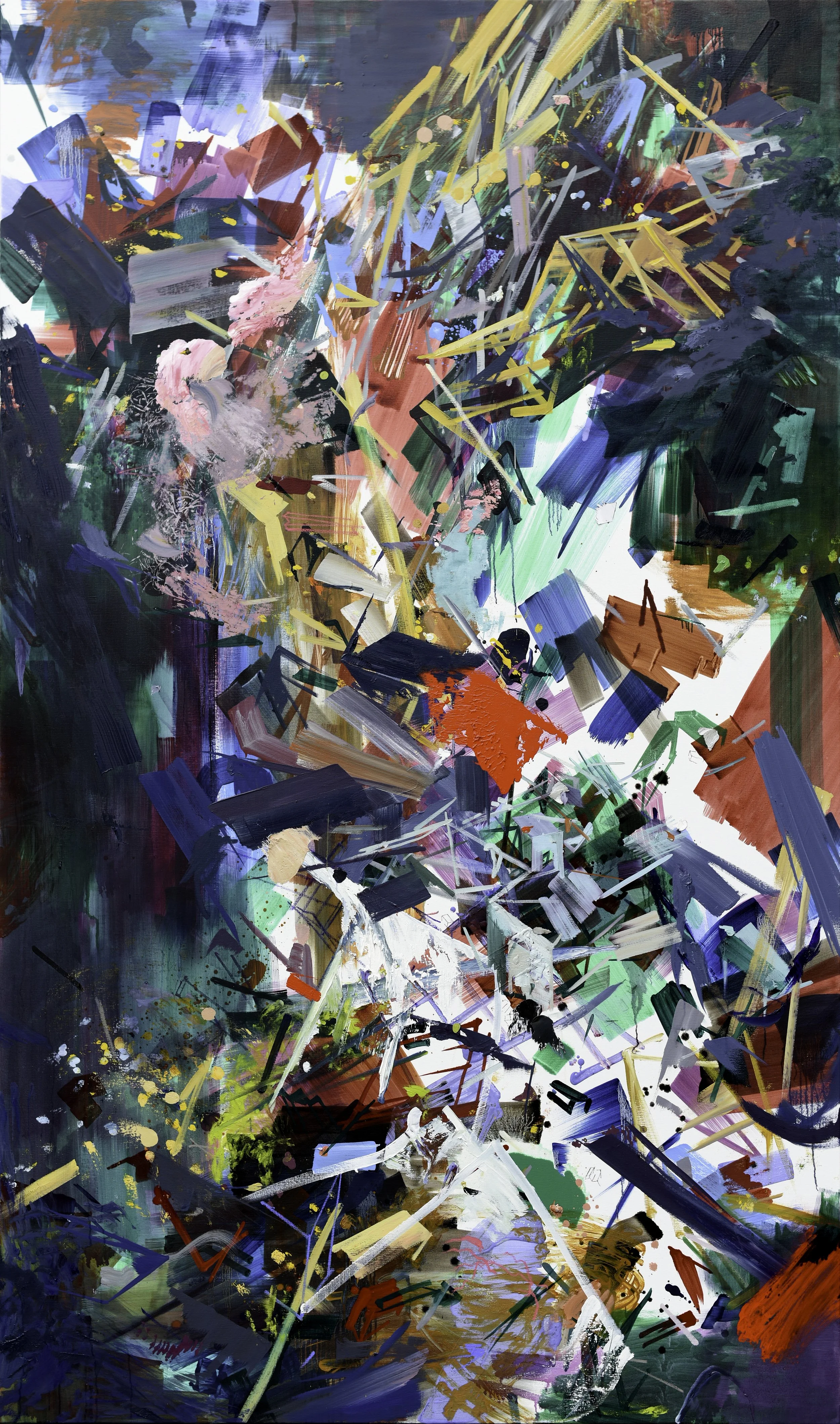
Interpuncties P31, 2016, 160 x 275 cm. Oil paint on canvas
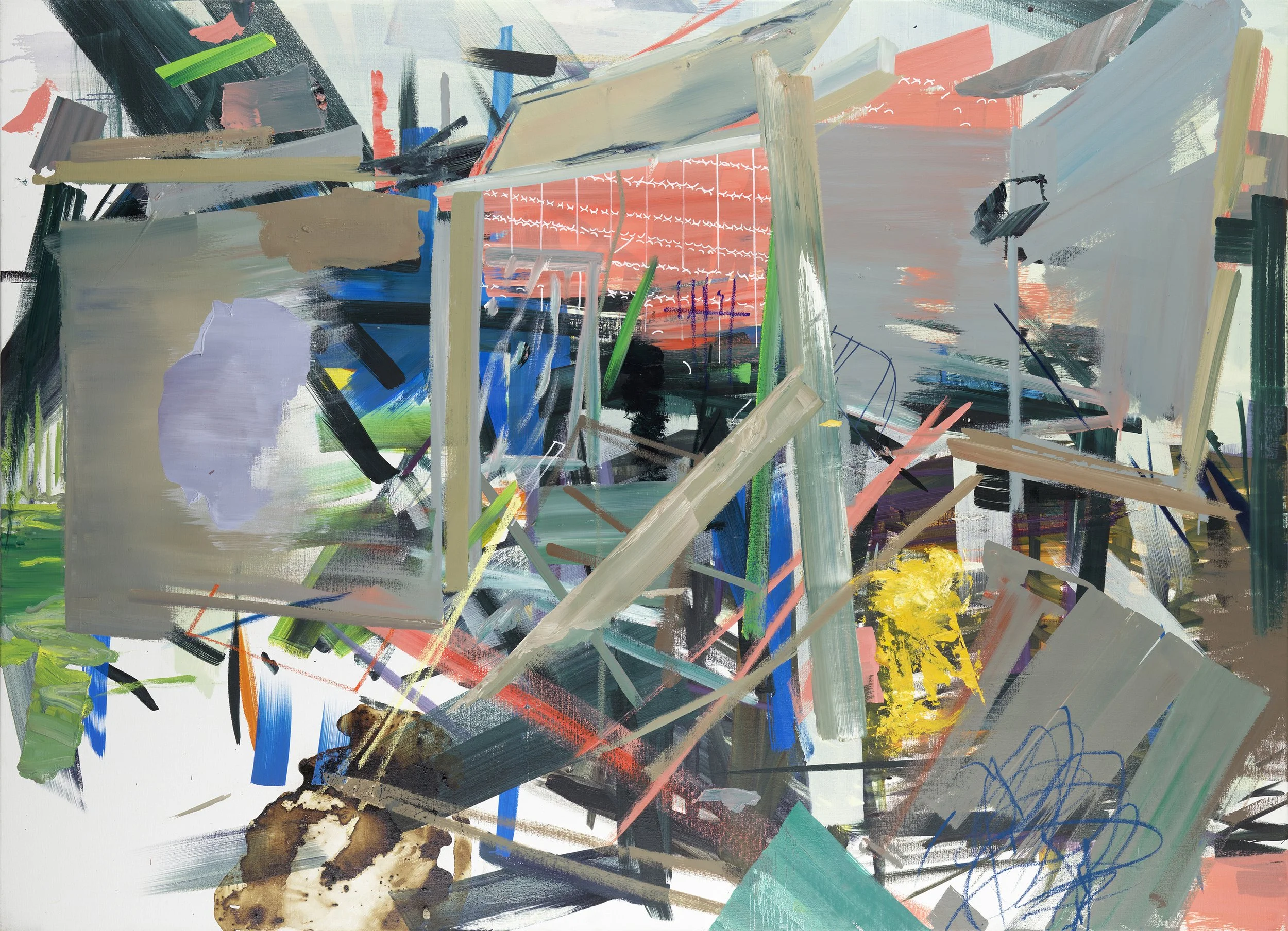
Le Corps Disloqué P13 ( Maelbeek 3),2018, 120x165 cm. Oil paint and mixed media on canvas.
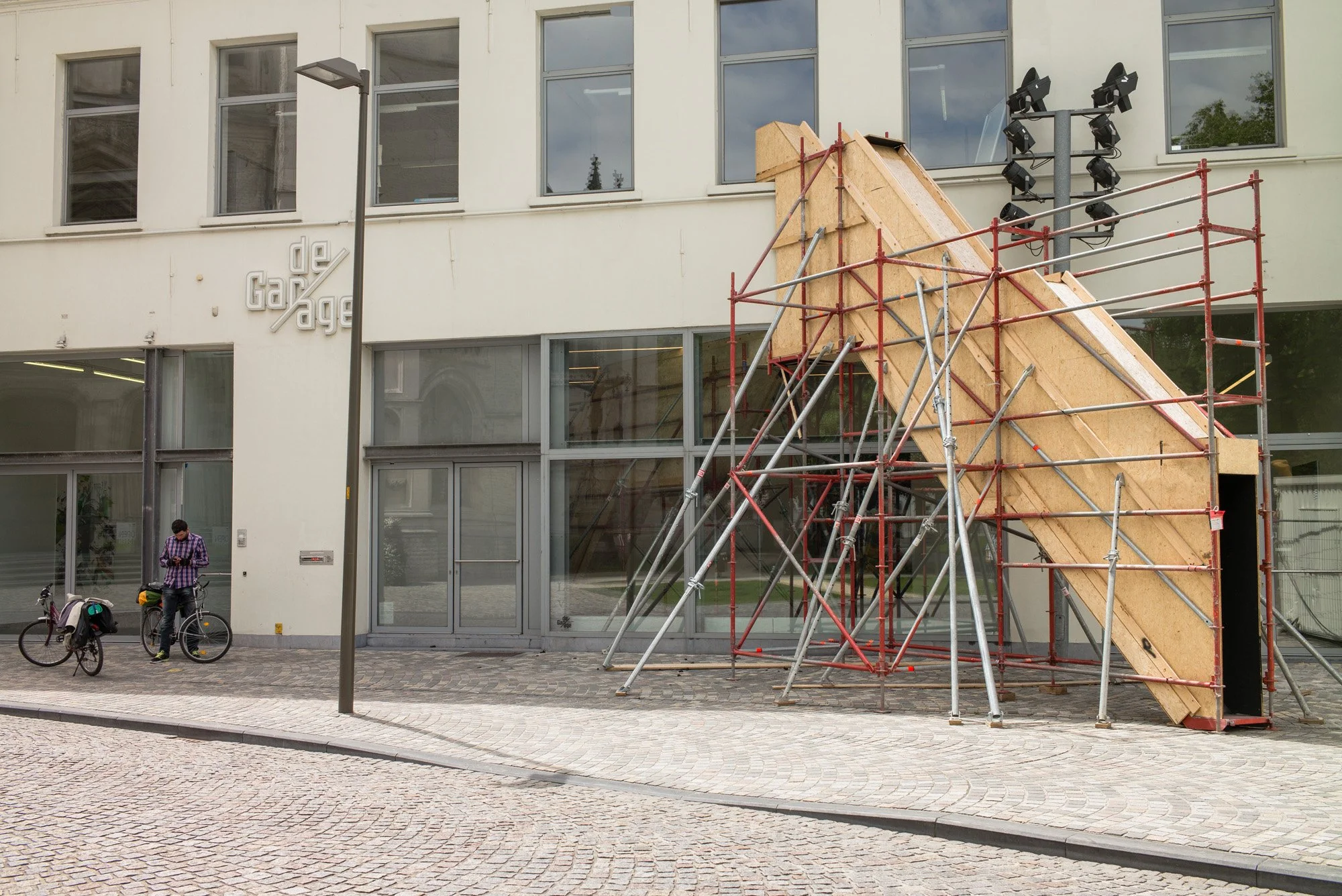
Le Mont Analogue, in-situ installation at De Garage, Mechelen (B), 2015, 70 x 220 x 17,50 cm. fibreboard, scaffolding and black paint.
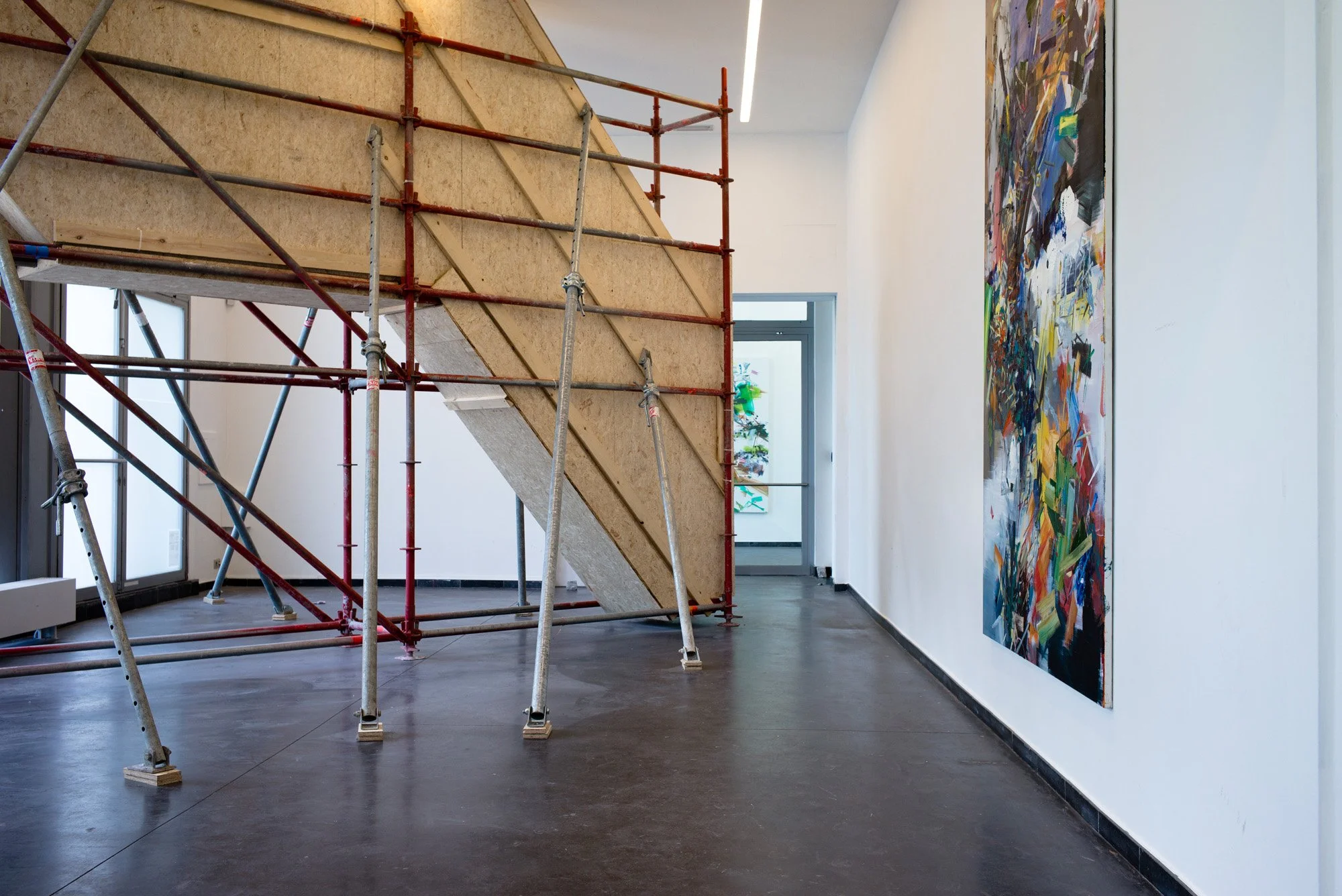
Le Mont Analogue, in-situ installation at De Garage, Mechelen (B), 2015, 70 x 220 x 17,50 cm. fibreboard, scaffolding and black paint
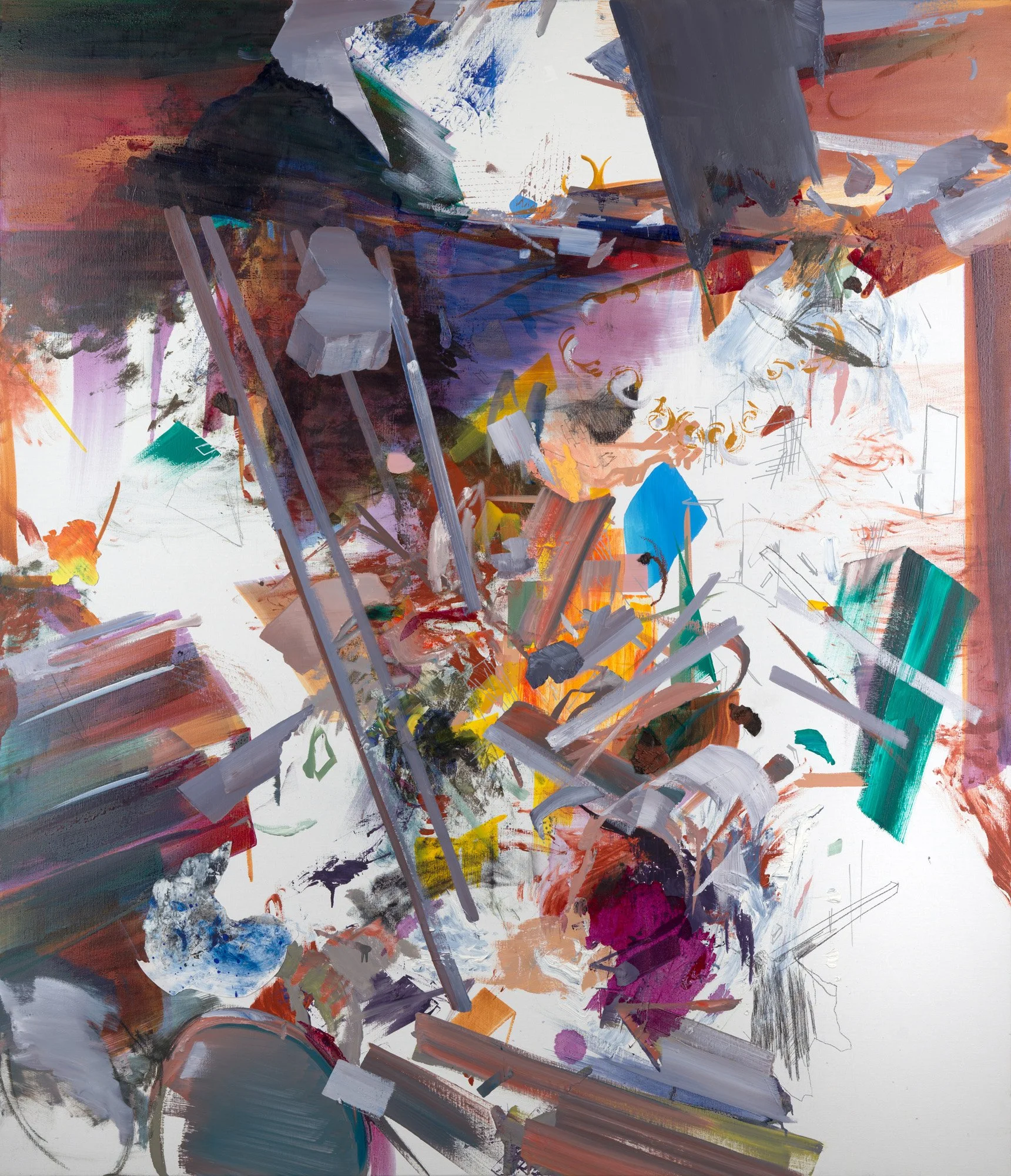
Le Corps Disloqué P15 (Donetsk), 2018, 180 x 155 cm. oil paint and mixed media on canvas
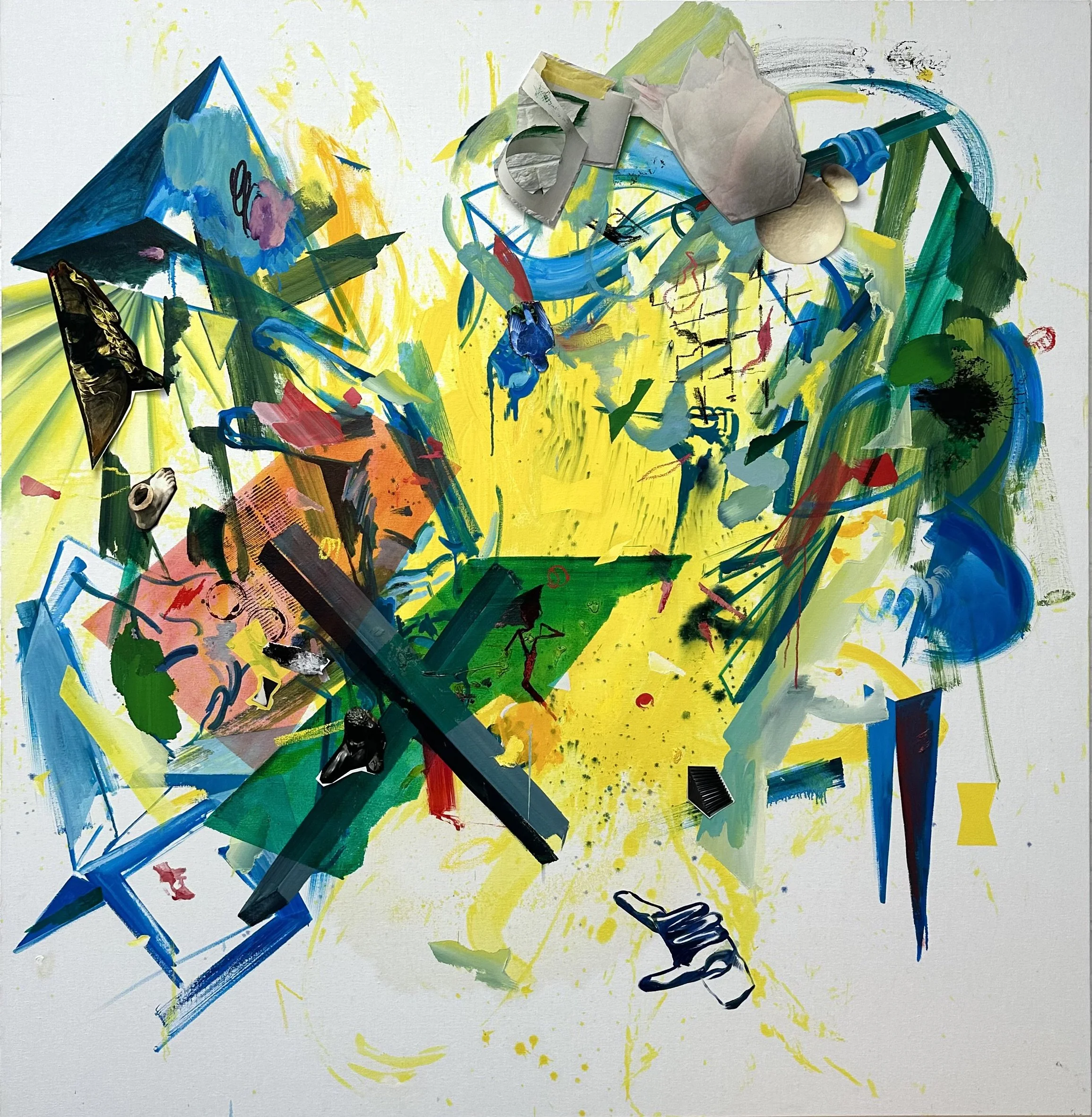
Rebel Rebel P01, 2023, 175 x 170 cm. Oil and mixed media on canvas
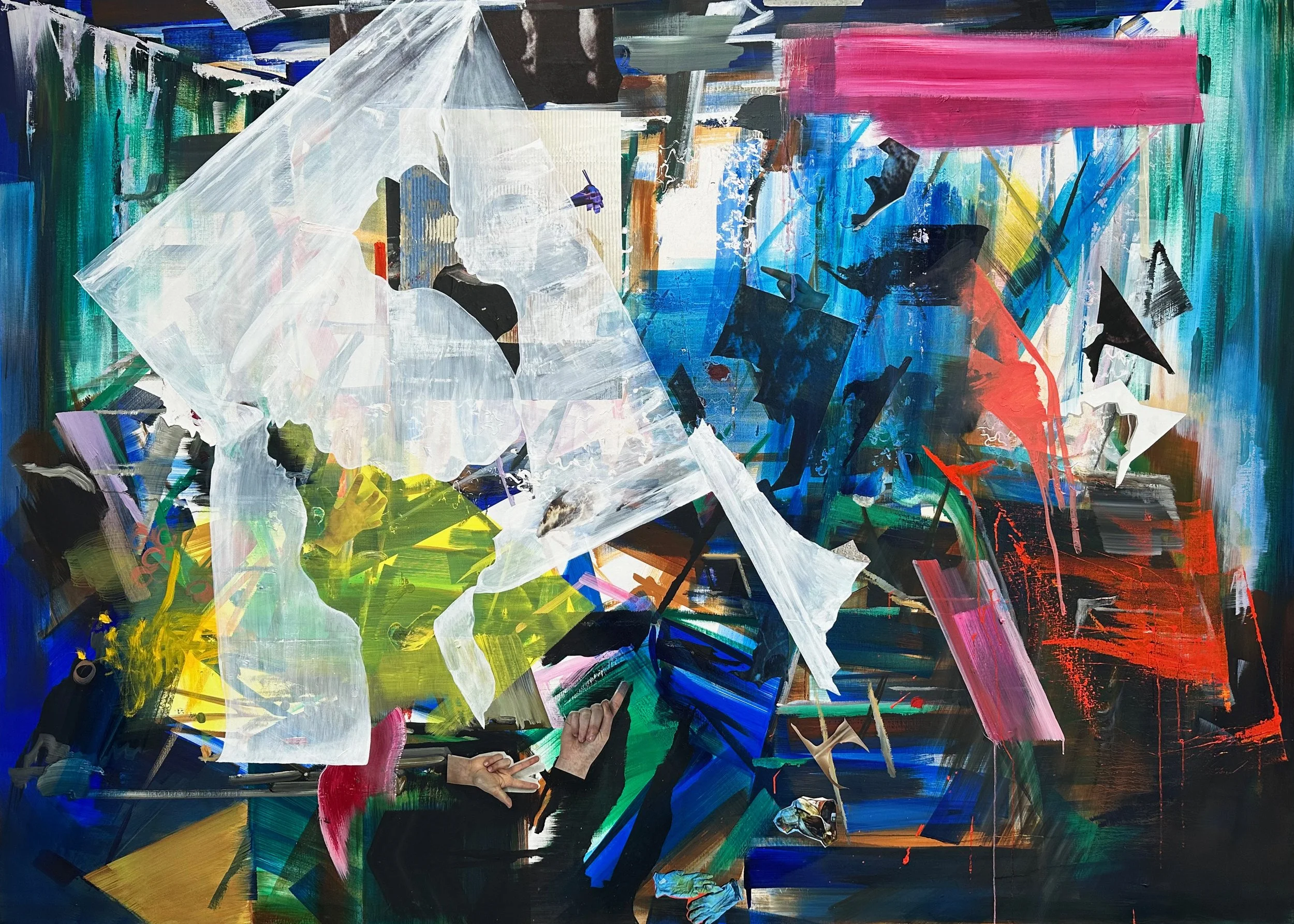
Questions-negligables P02, 2025, 180 x 250. Oil and mixed media on canvas
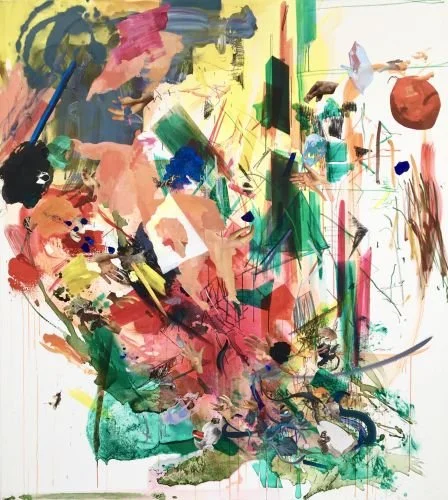
Noli me Tangere P02, 2022, 200 x 180 cm. Olieverf en mixed media op doek
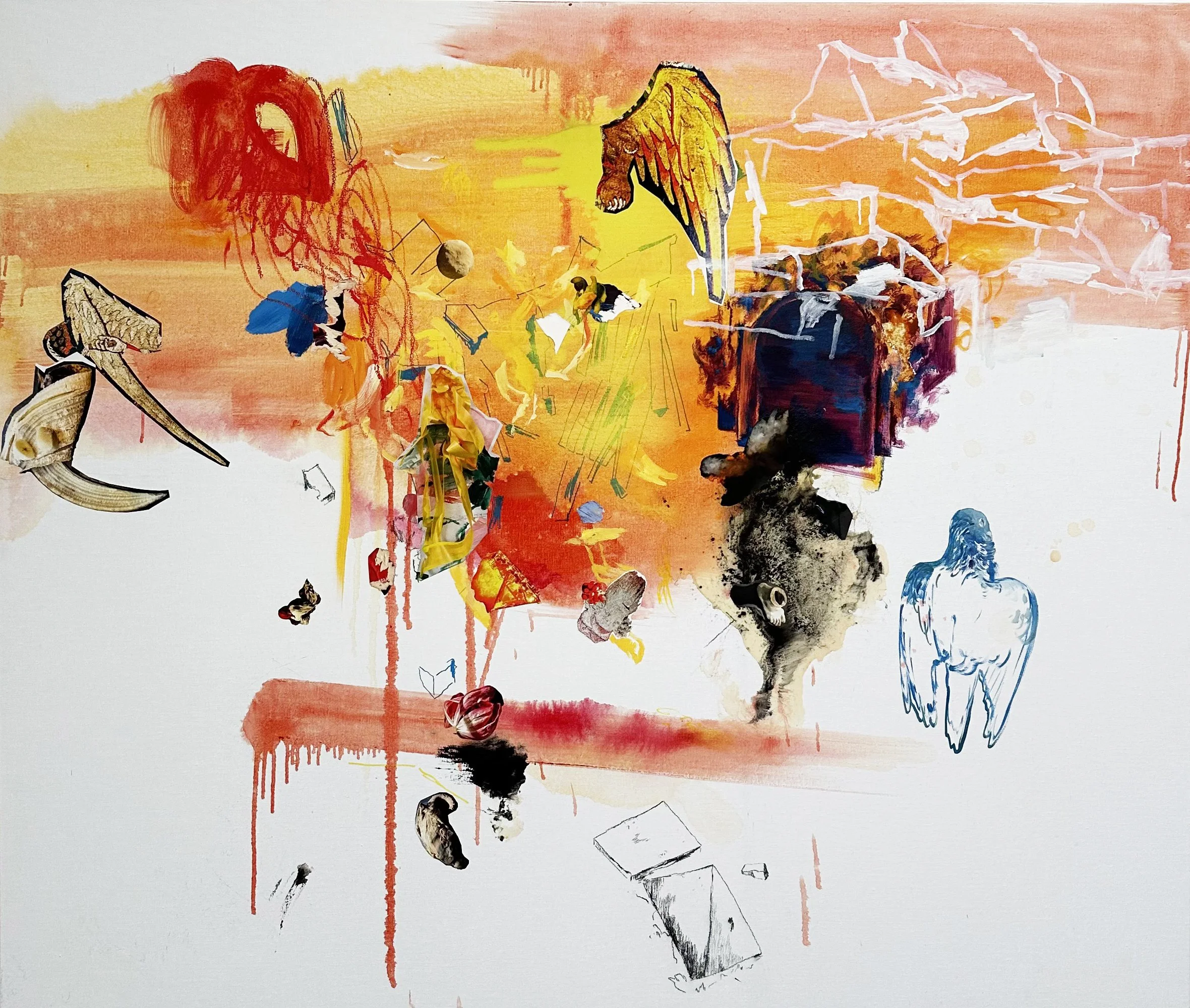
Angeln P03, 2023, 140 x 165 cm. Oil and mixed media on canvas
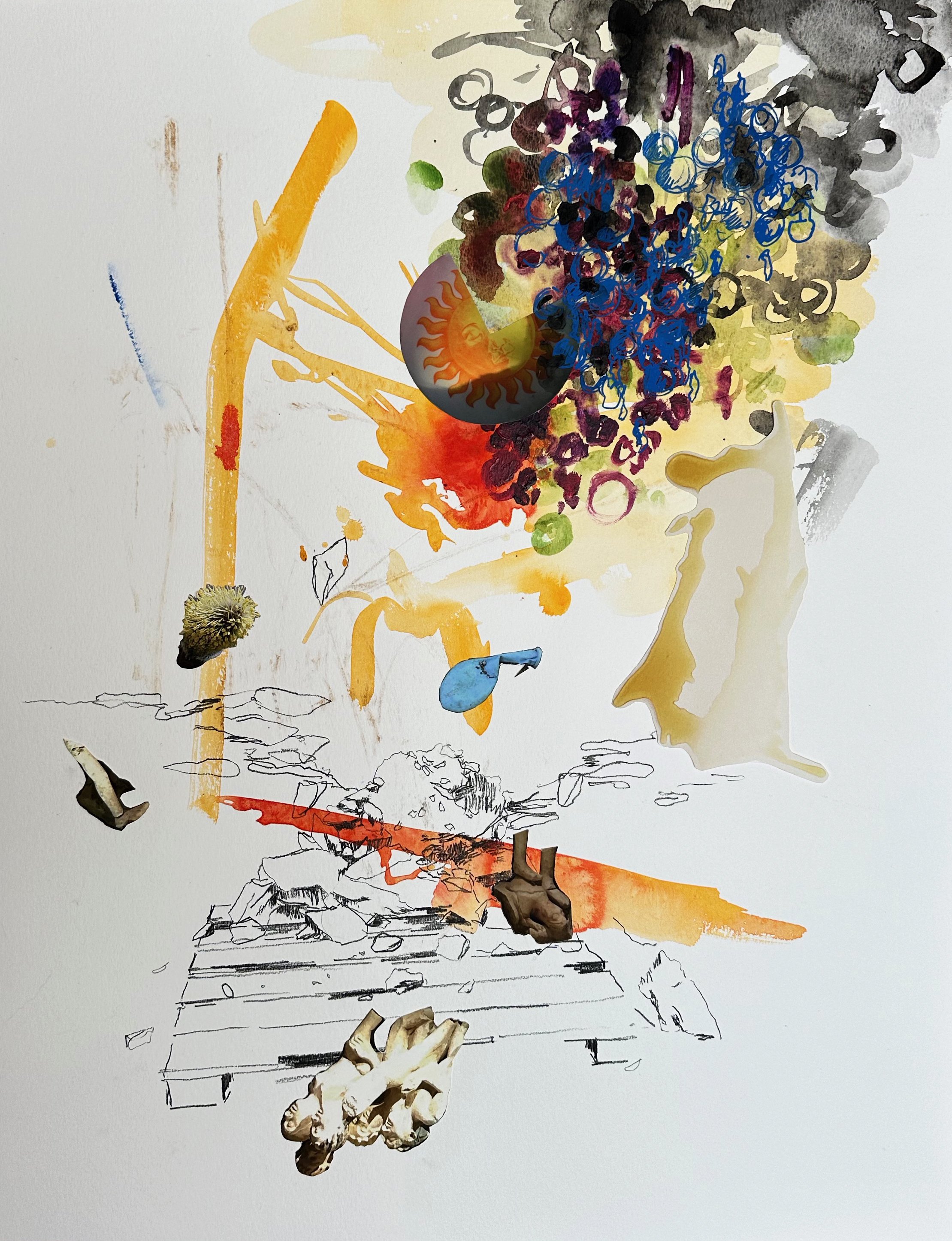
Révélations D05, 2021, 50 x 65 cm. Mixed media on Arche paper
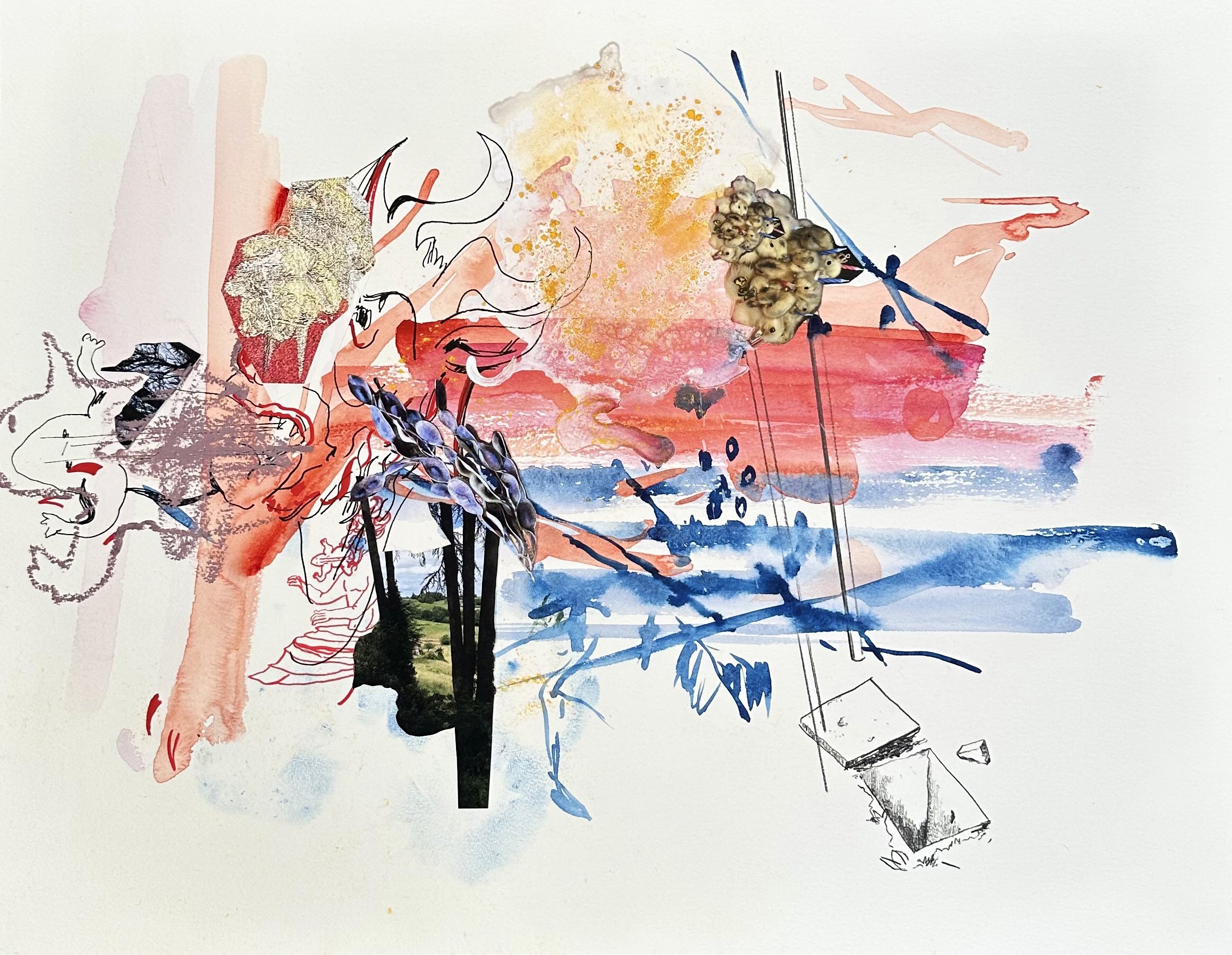
Révélations D06, 2021, 50 x 65 cm. Mixed media on Arche paper
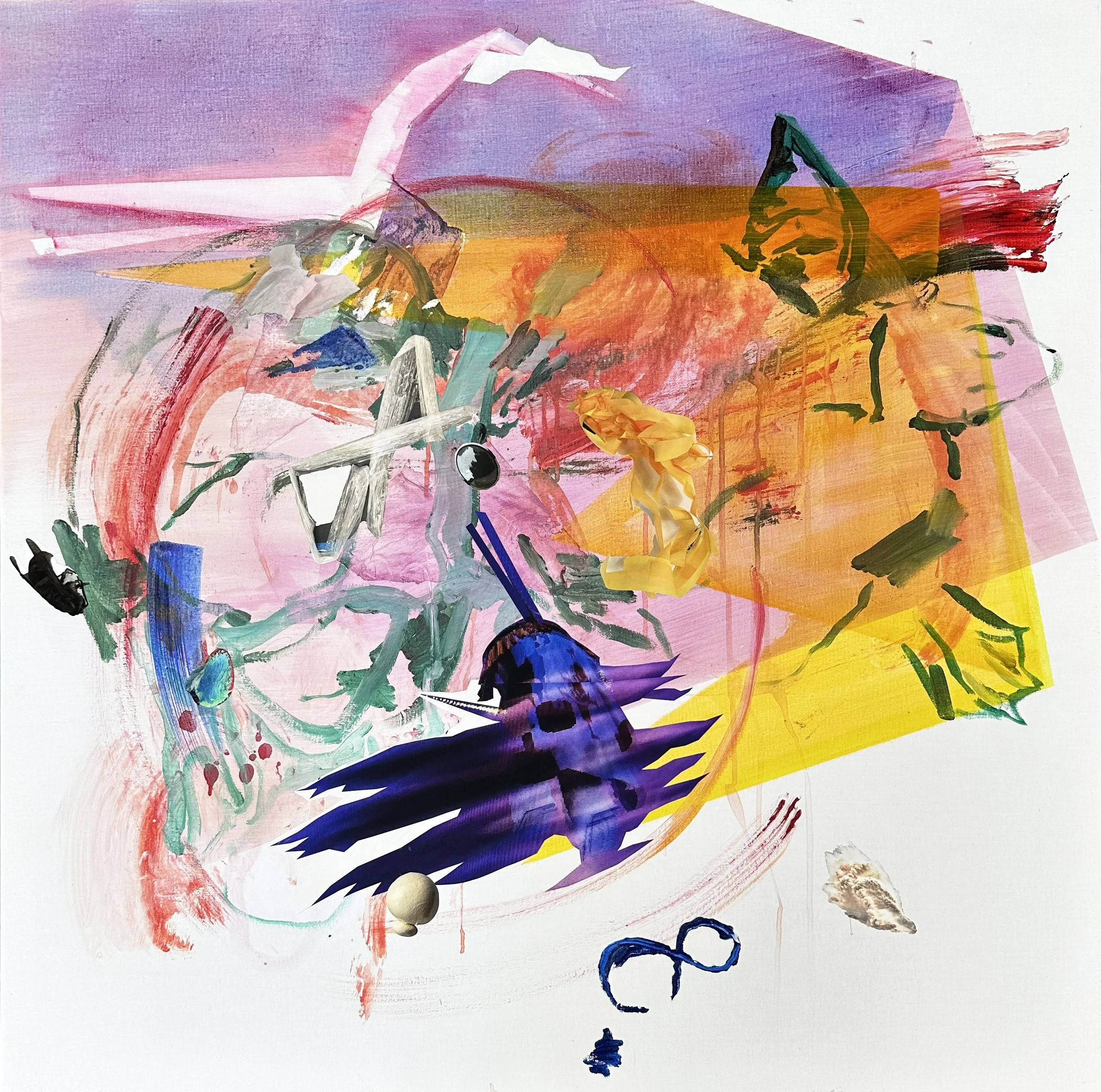
Aberratie P04, 2023, 100 x 100 cm. Oil paint and mixed media on canvas.
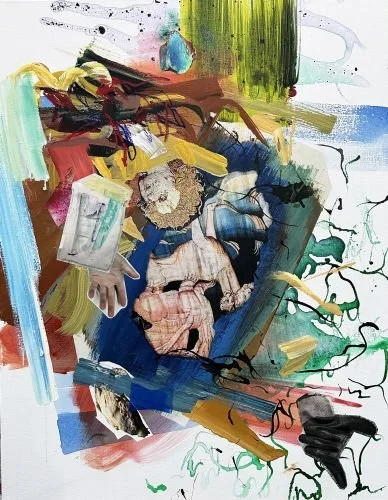
Zwik/Zwerm P04, 2023, 115 x 90 cm. Oil and mixed media on canvas
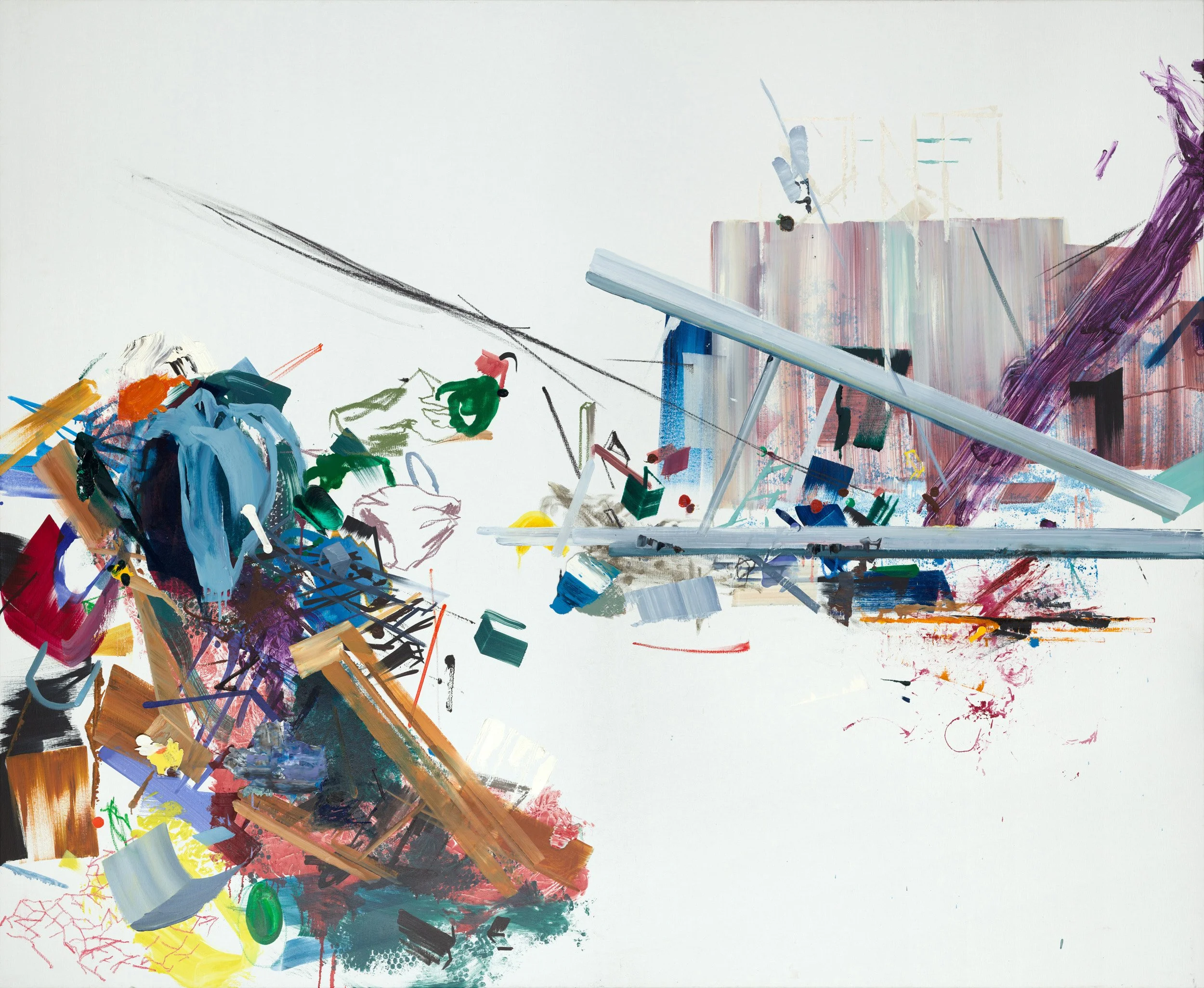
Interpuncties P29, 2016, 180 x 220 cm. Oil paint and mixed media on canvas
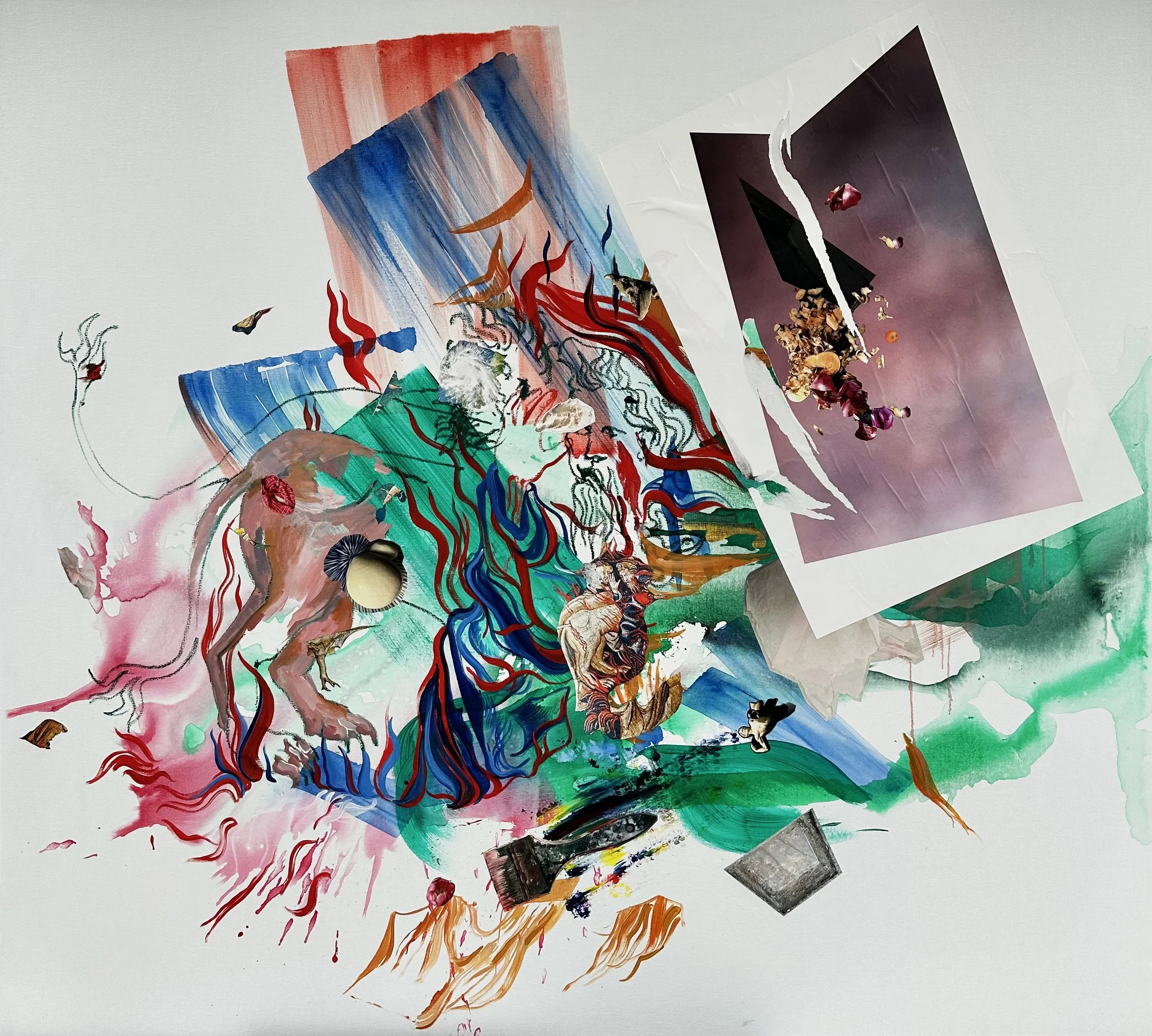
Révélations P09, 2022, 180 x 200 cm . Oil and mixed media on canvas
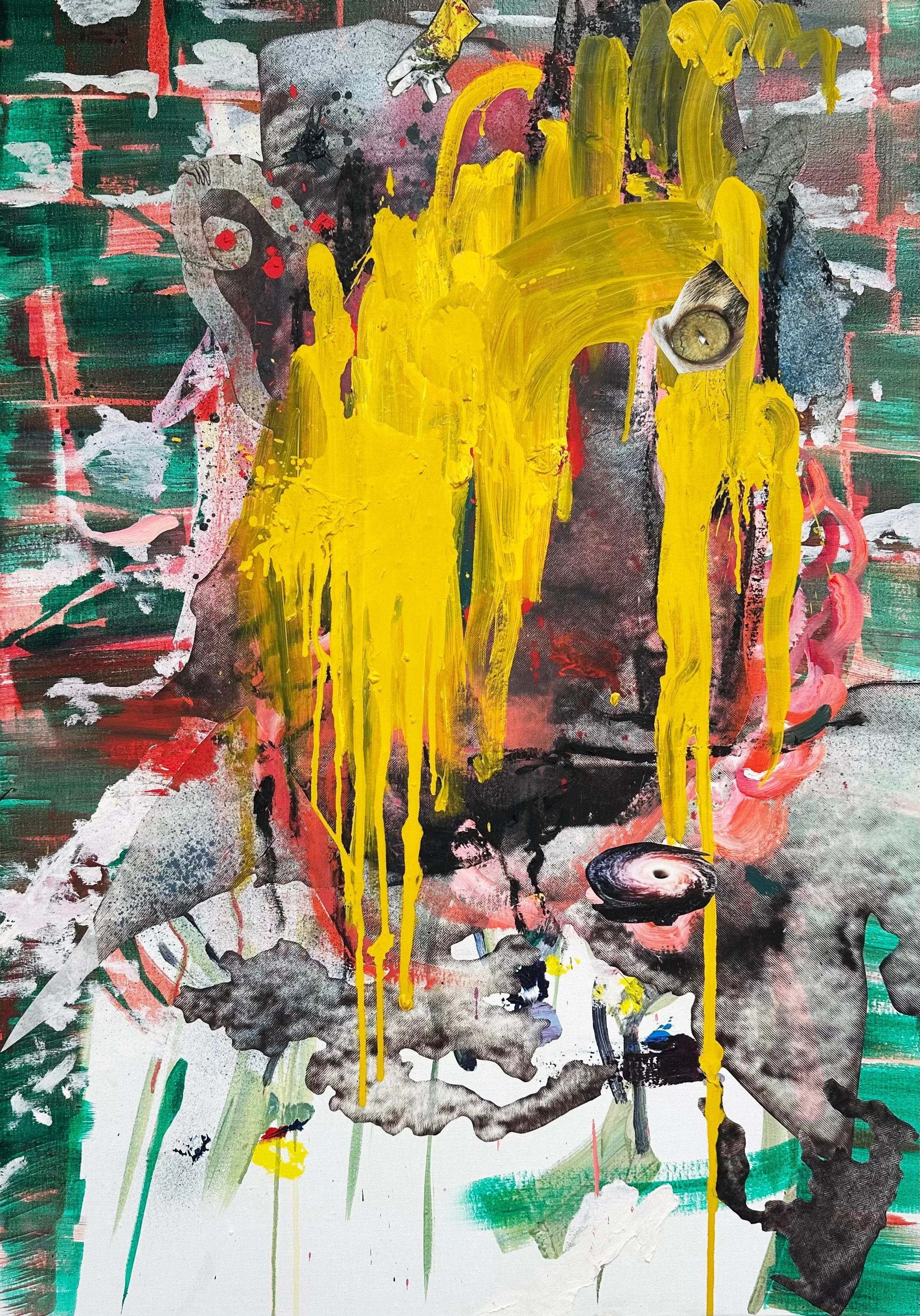
La Gaffe P01, 2025, 100 x 70 cm. Oil and mixed media on canvas
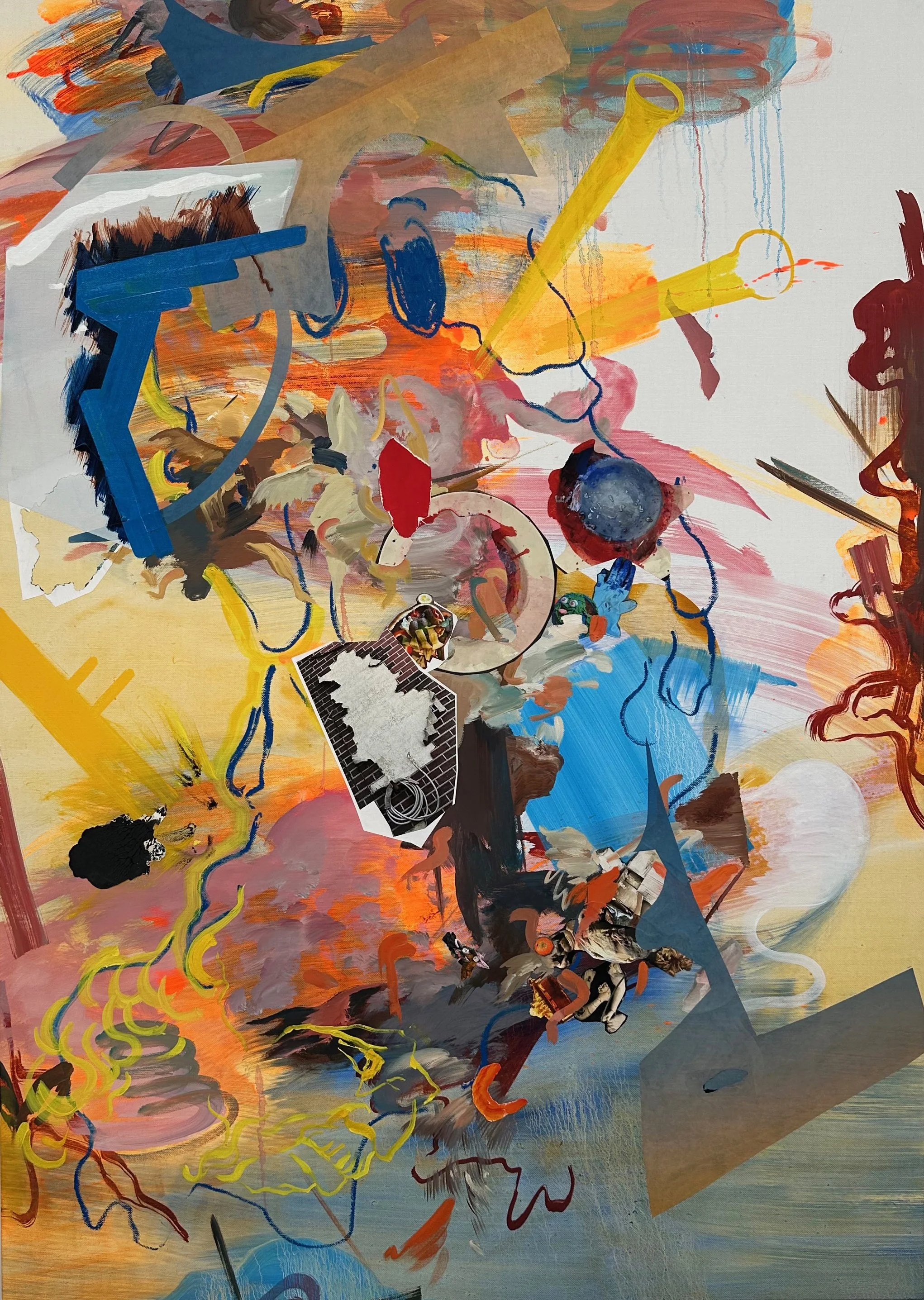
La Gaffe P05, 2025, 160 x 140 cm. Oil and mixed media on canvas
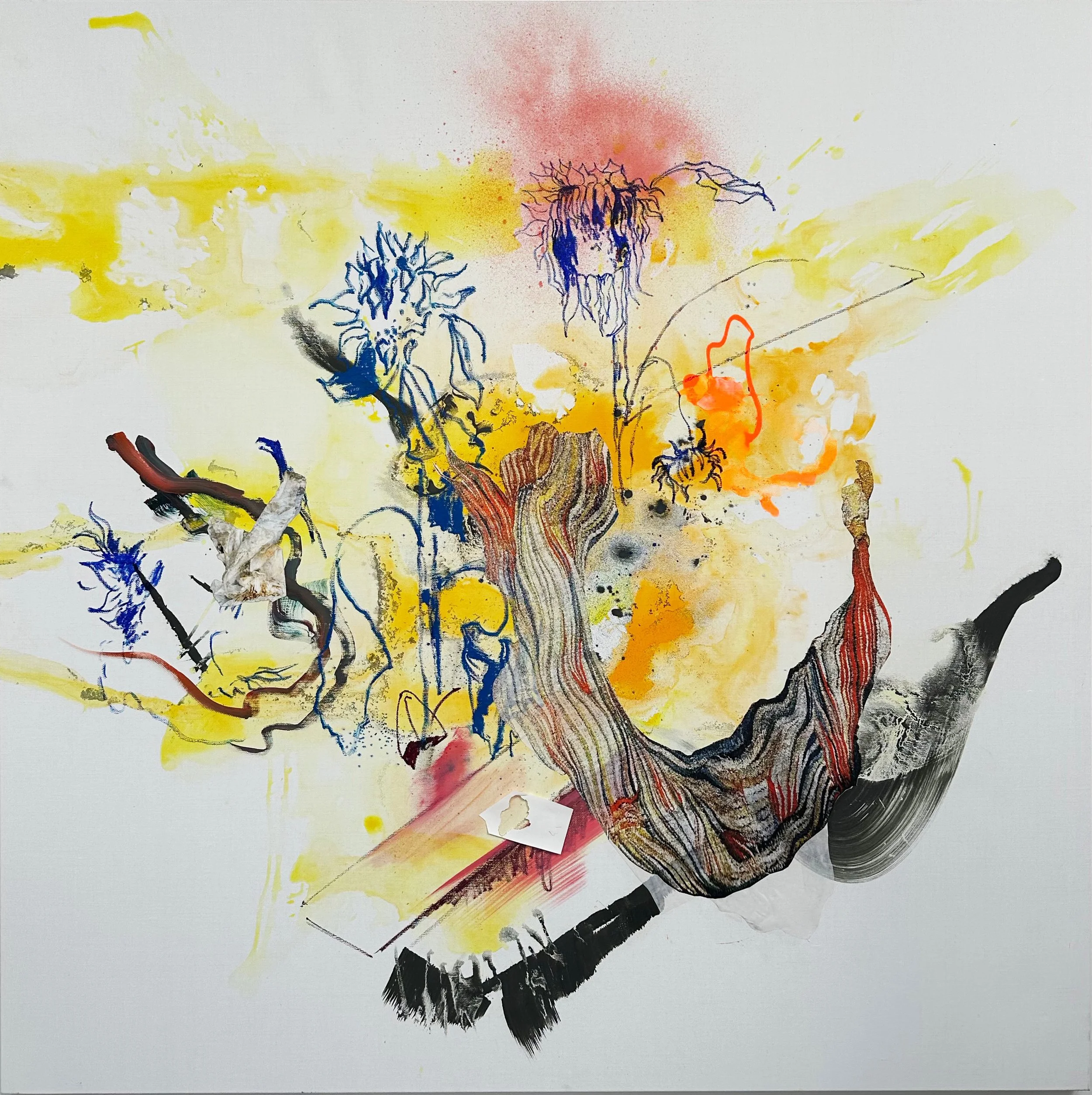
Rebel Rebel P02, 2023 160 x 160 CM. Oil paint and mixed media on canvas
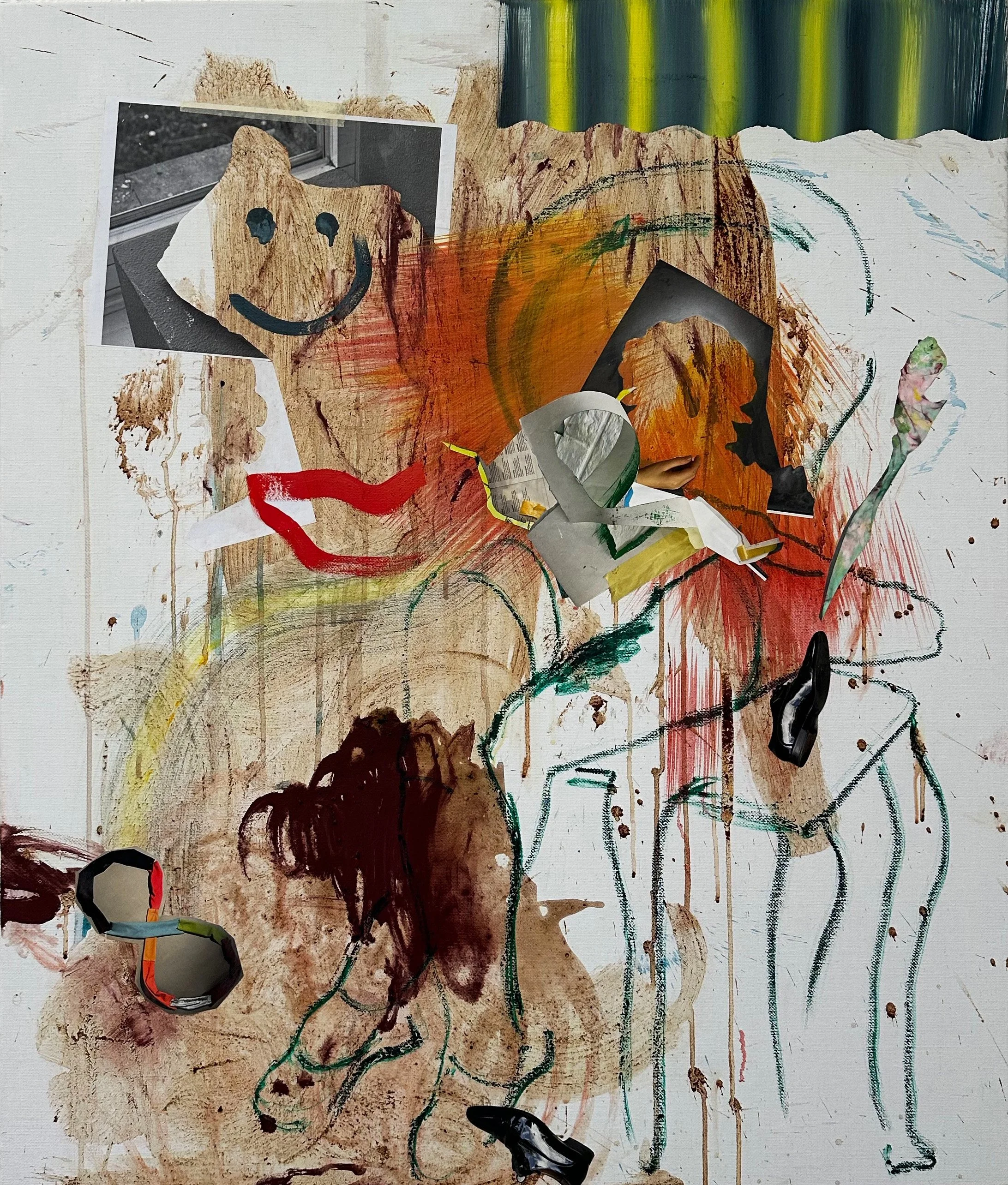
La Gaffe P07, 2026, 100 x 85 cm. Oil paint and mixed media on canvas
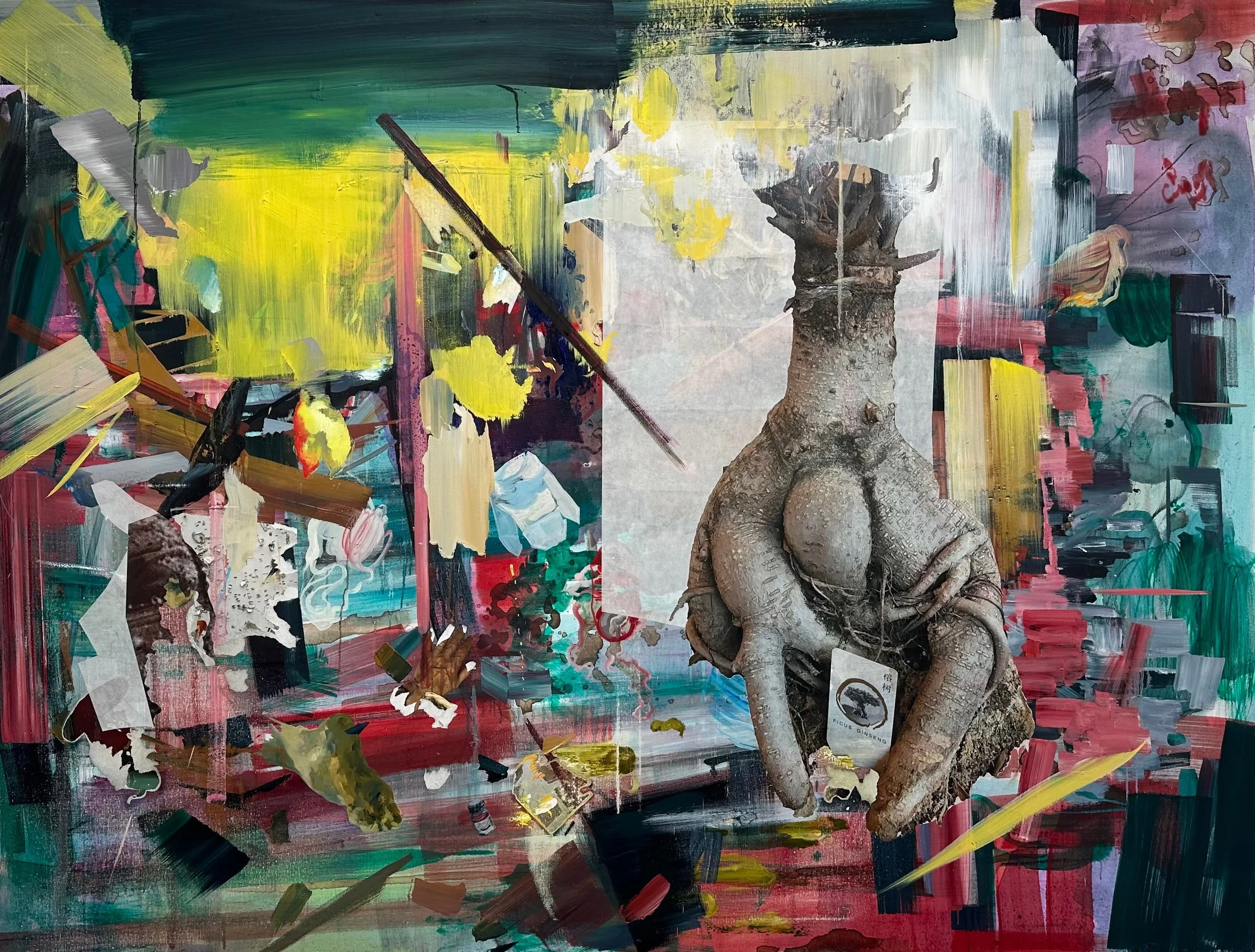
Questions négligables P01, 2025, 175 x 230. Oil and mixed media on canvas